


After about ten trips to Belgium (Brussels, Bruges, Ghent, Dinant, Liège, Namur, Ostend and the coast twice…), it was high time to dedicate an article to Belgian food. Between fries, chocolate, beer and waffles, Belgium already ticks every box for food lovers.
But reducing Belgian cuisine to this famous foursome would be a mistake. The country is full of traditional dishes, regional recipes and specialties that are sometimes little known but delicious. On every trip, we also stumbled upon memorable food events: the best shrimp croquette contest in Ostend, local festivals celebrating seafood and food festivals in Namur.
In short, Belgium is a true food destination in its own right, and here’s everything you need to taste on your trip. Ready to dig in?
✤✤✤
What to eat in Belgium?
Belgium is a must-visit destination for food lovers in Europe. Between Flemish traditions and Walloon influences, Belgian cuisine stands out for its generous portions, its comfort food and its iconic local products.
From crispy fries to sweet waffles, Flemish carbonnade and craft beers, each region has its own culinary specialties.
This guide introduces you to the must-try Belgian dishes, the typical dishes of each region and the food experiences not to miss on a trip to Brussels, Bruges or Ghent.
Must-try traditional Belgian dishes
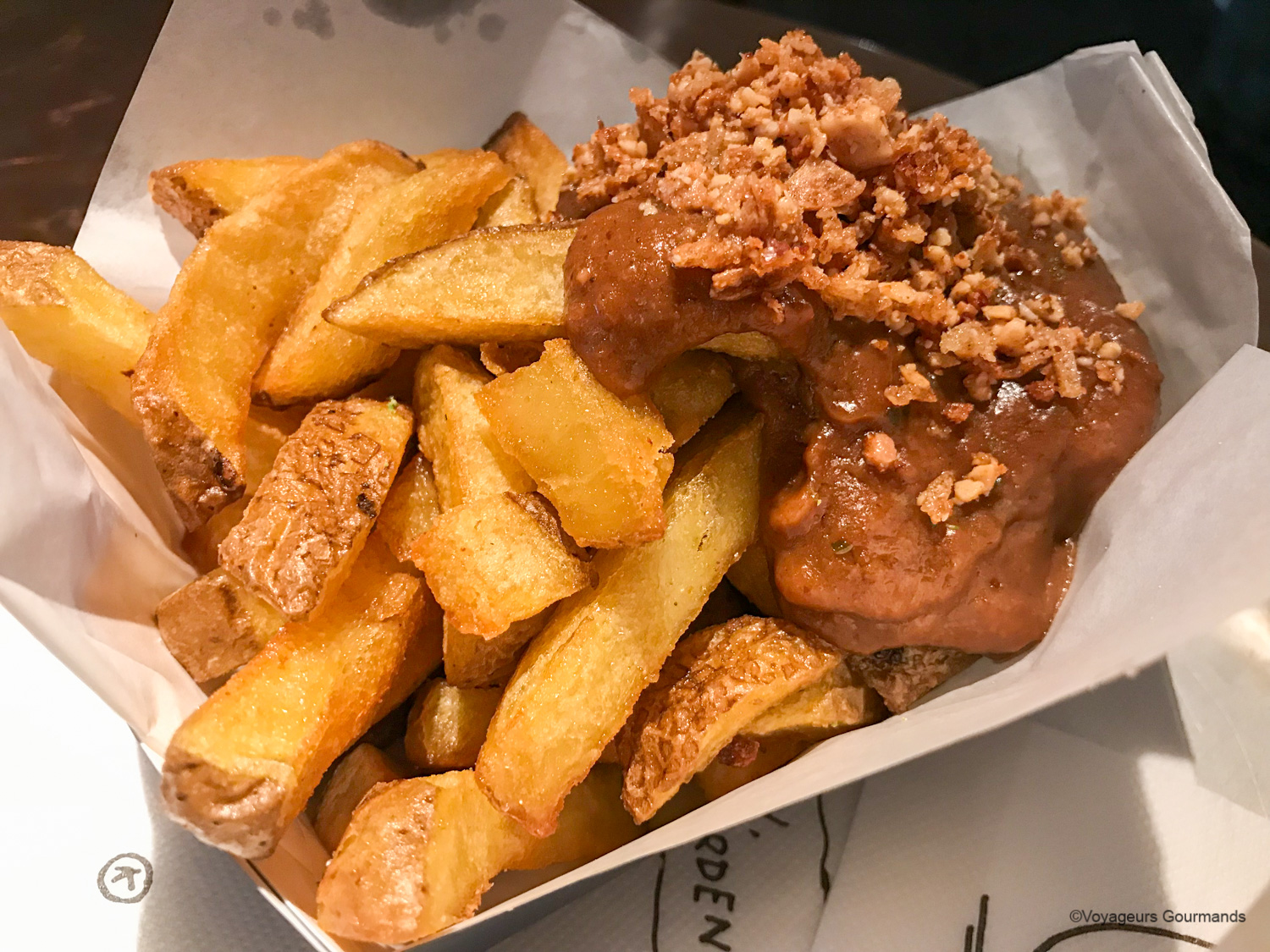
Belgian fries
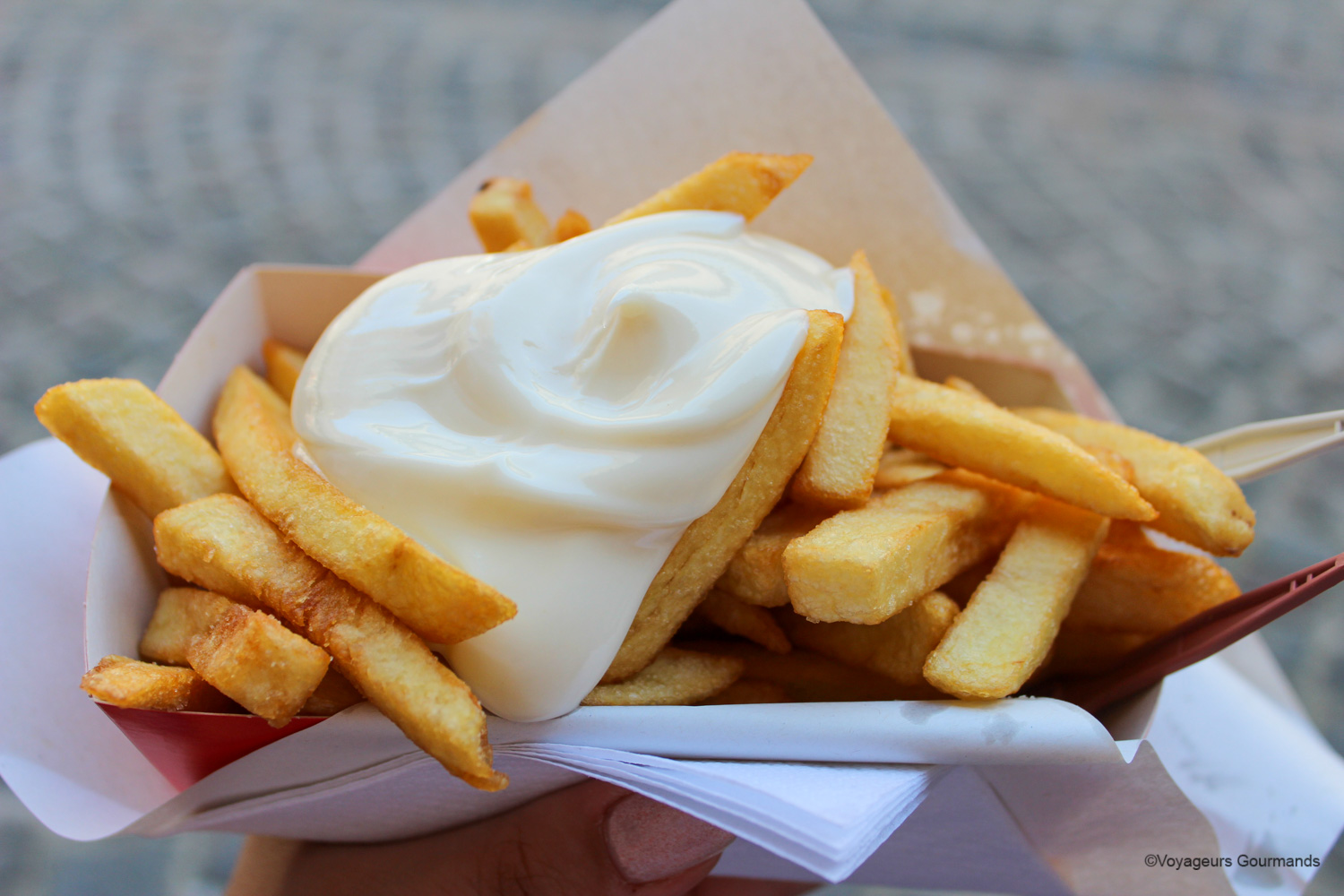
A national symbol, Belgian fries are golden, crispy on the outside and soft on the inside. They’re traditionally served in a paper cone with a wide choice of sauces and eaten at the famous friteries (fry shops), a true institution in the country. Their secret is the double frying, often done in beef fat, which gives them their unique texture.
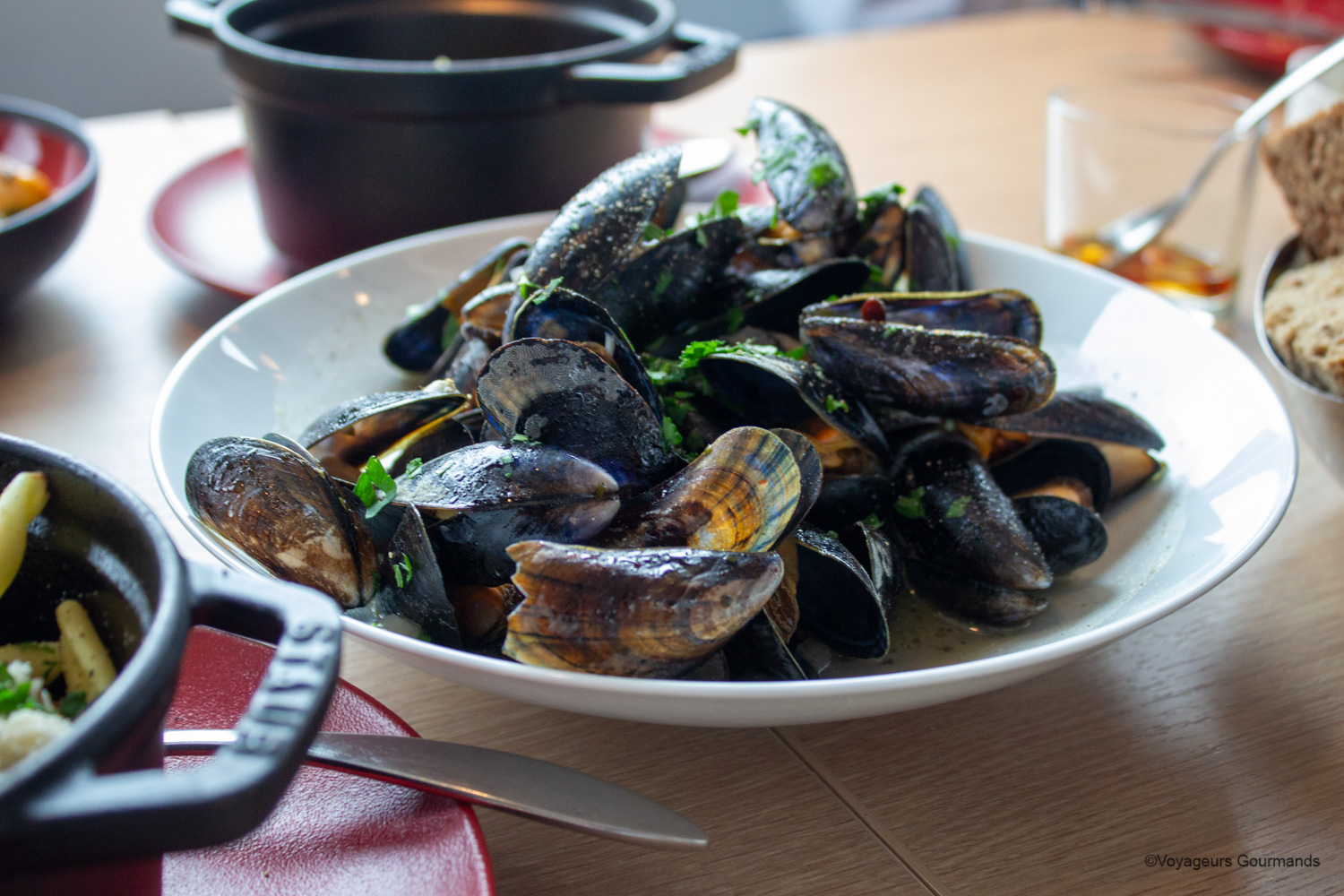
Moules-frites (mussels and fries)
Fries go hand in hand with… moules-frites! It’s a perfect combo you’ll find all over Belgium, with countless recipes: marinière, with beer, garlic, cream or even cheese… And of course, they come with those famous crispy fries!
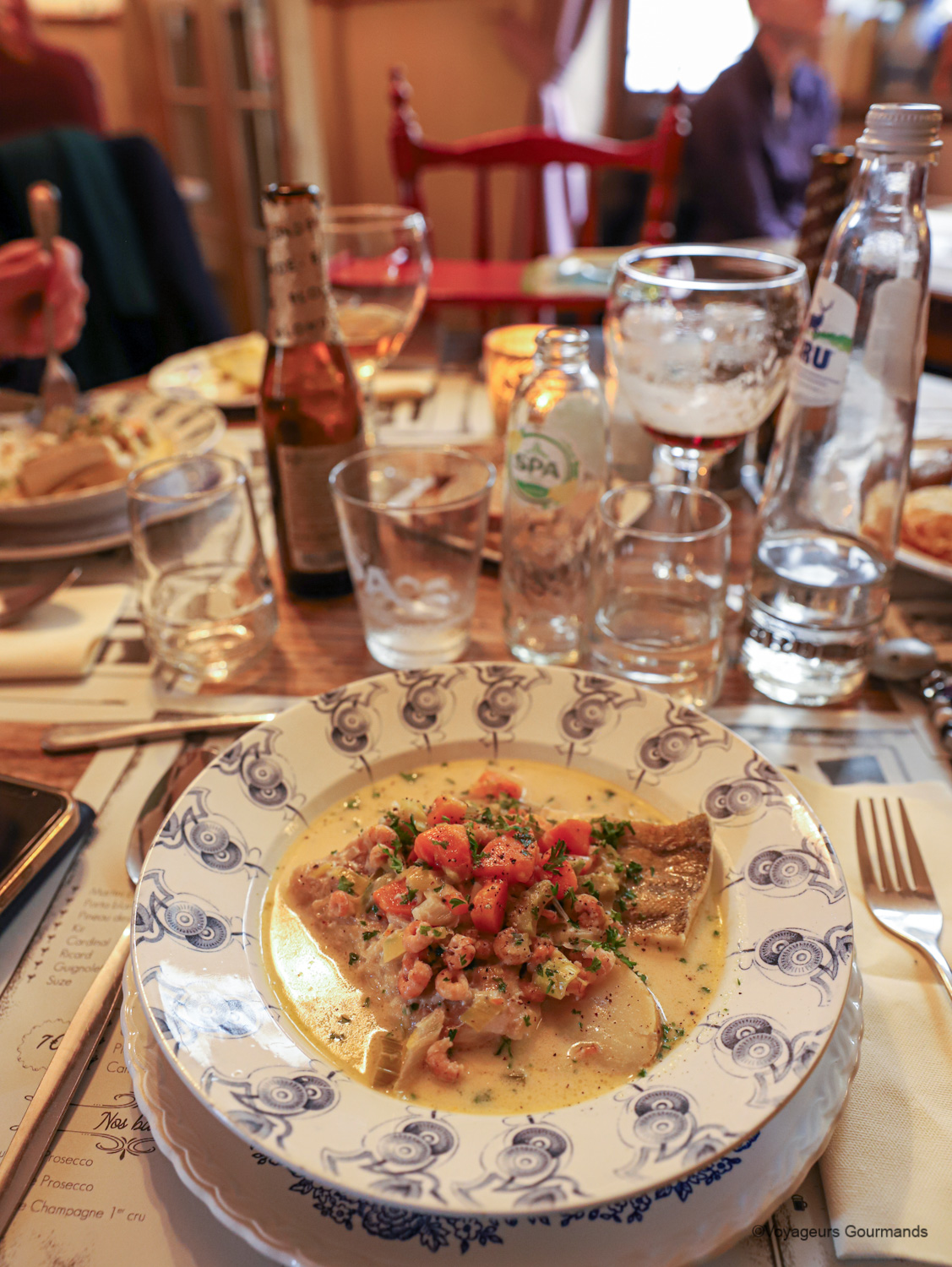
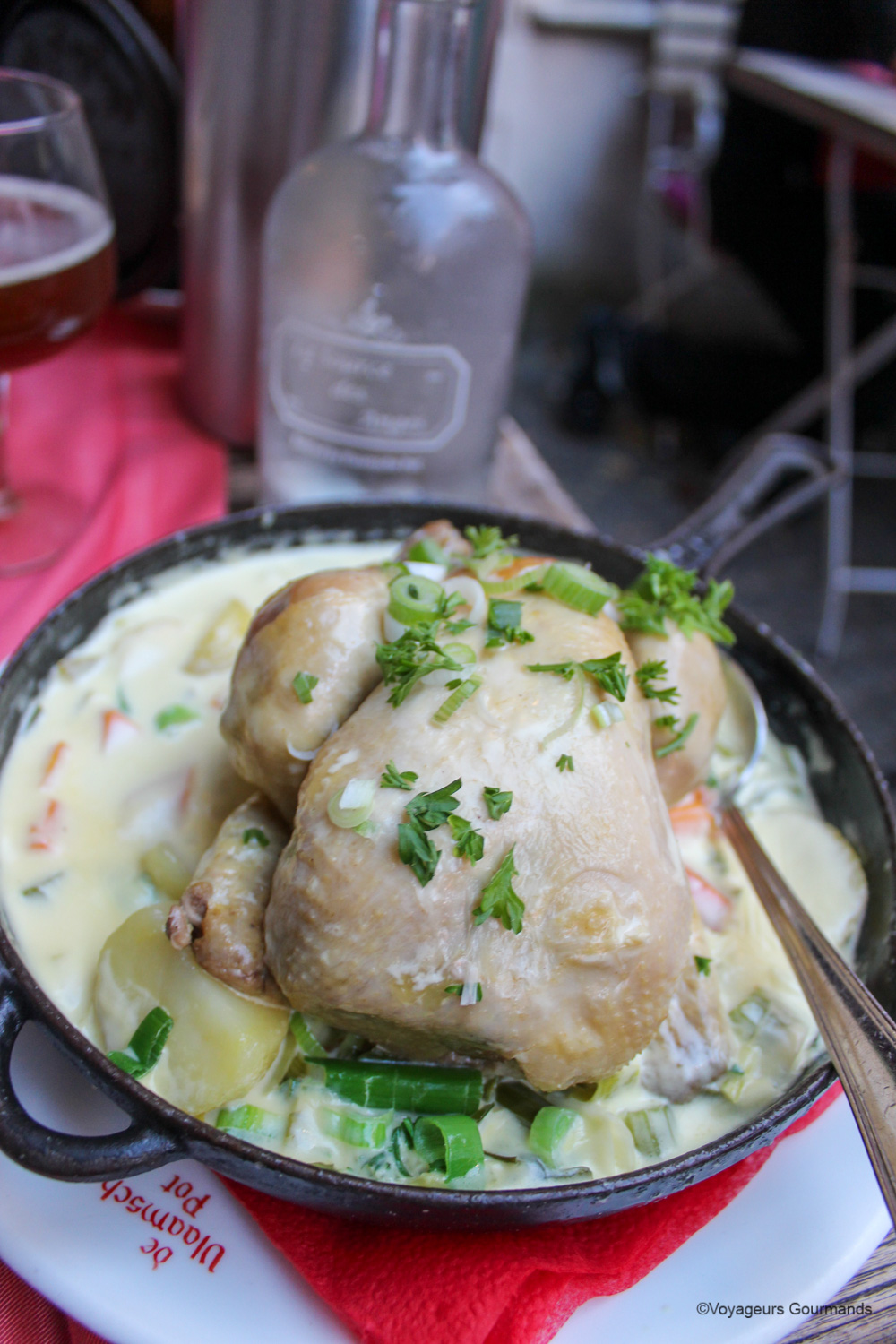
Waterzooi
Here’s a dish you’ll find both in Belgium and in northern France. Originally from Flanders, waterzooi is traditionally made with fish, but you can also find it with chicken. It’s cooked in a vegetable broth (potatoes, carrots, leeks or celery), with a little cream added at the end. Its name comes from the way it’s cooked: in Dutch, waterzooi means “boiling water.”
Flemish carbonnade
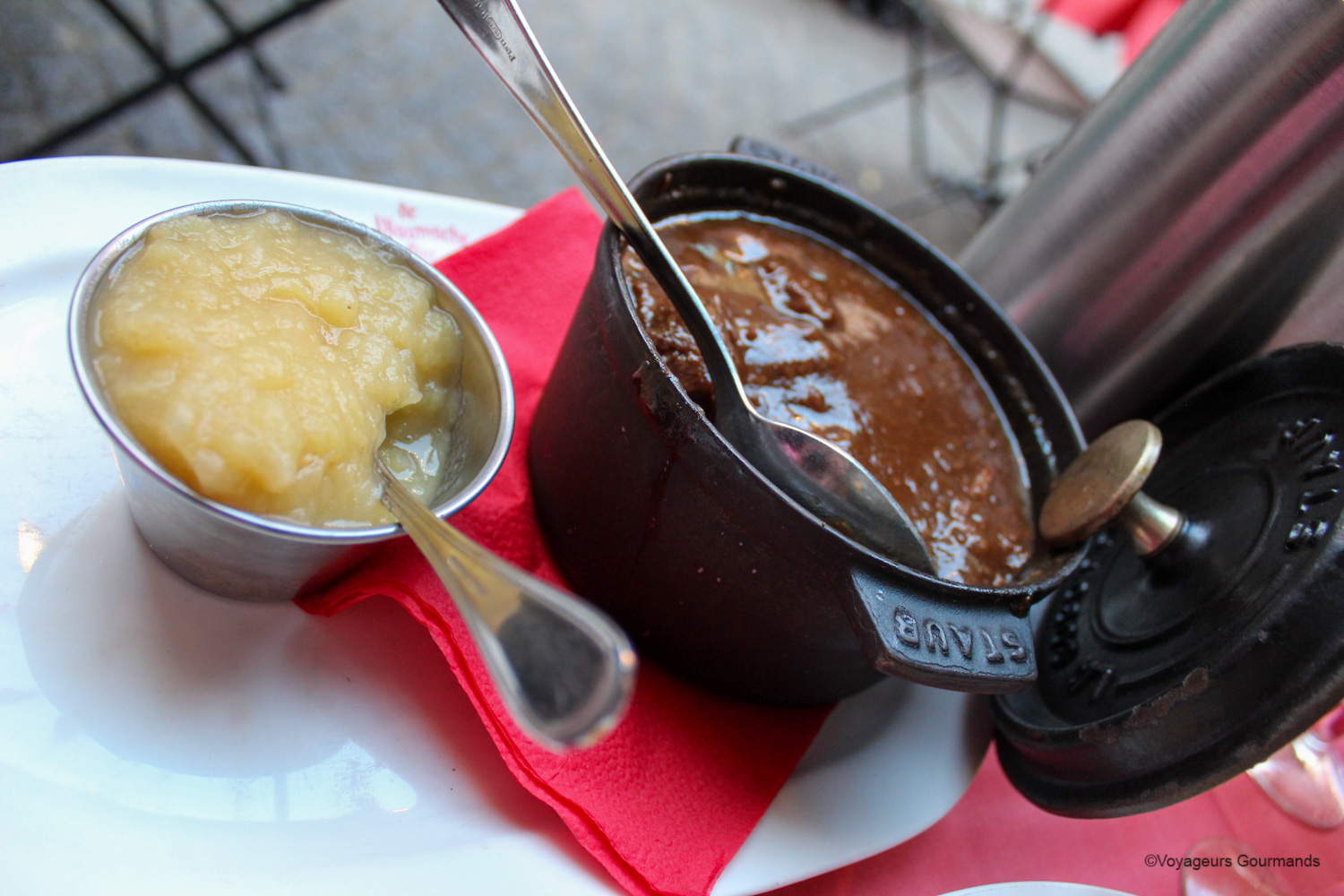
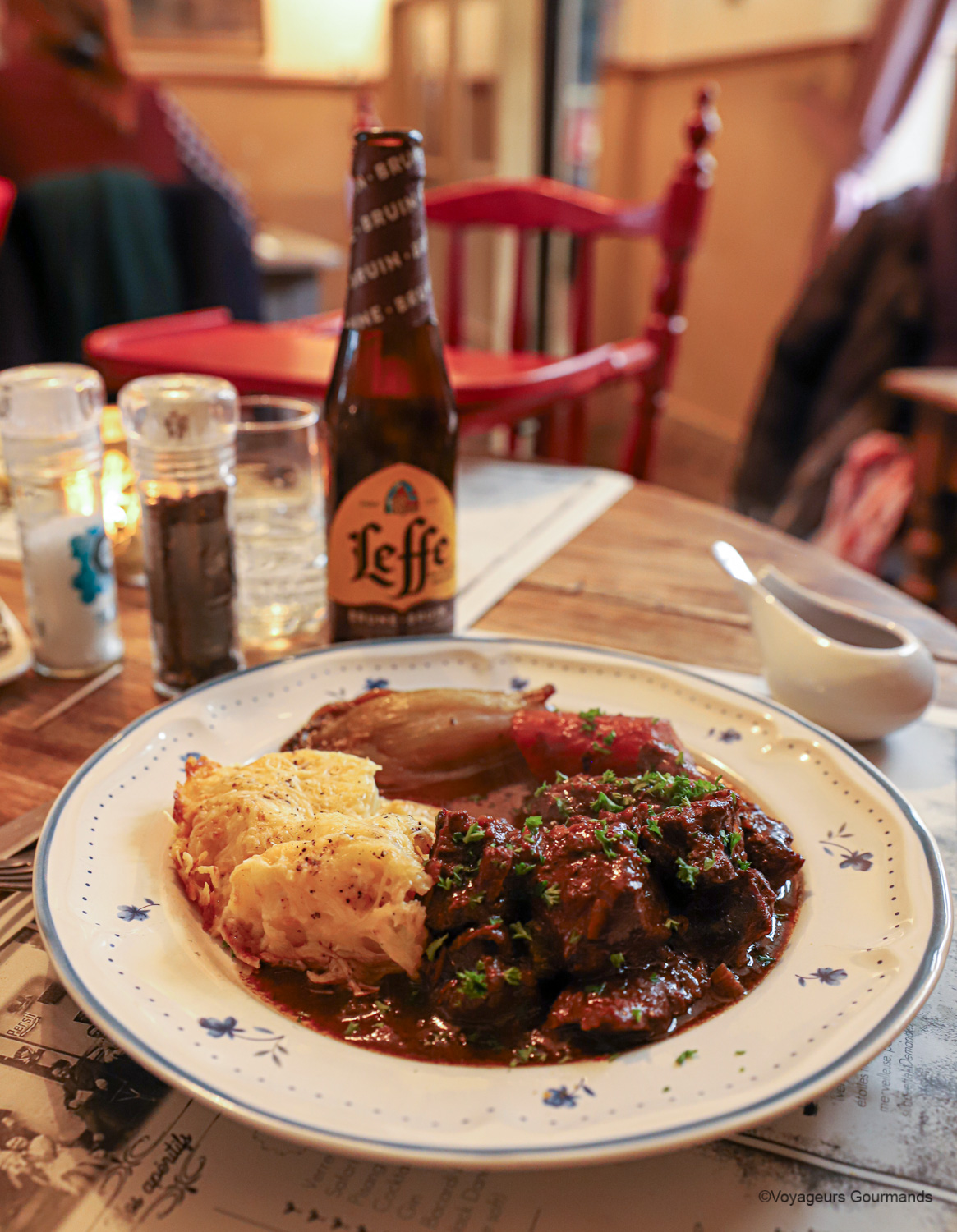
This Belgian dish is made of beef braised in beer, flavoured with spices and onions… and, yes, also served with fries. It’s said to have been invented by coal miners, who originally grilled their leftover meat over coal, which gave it the name carbonnade. You’ll also find it in northern France, in the famous estaminets (traditional taverns).
Belgian waffles
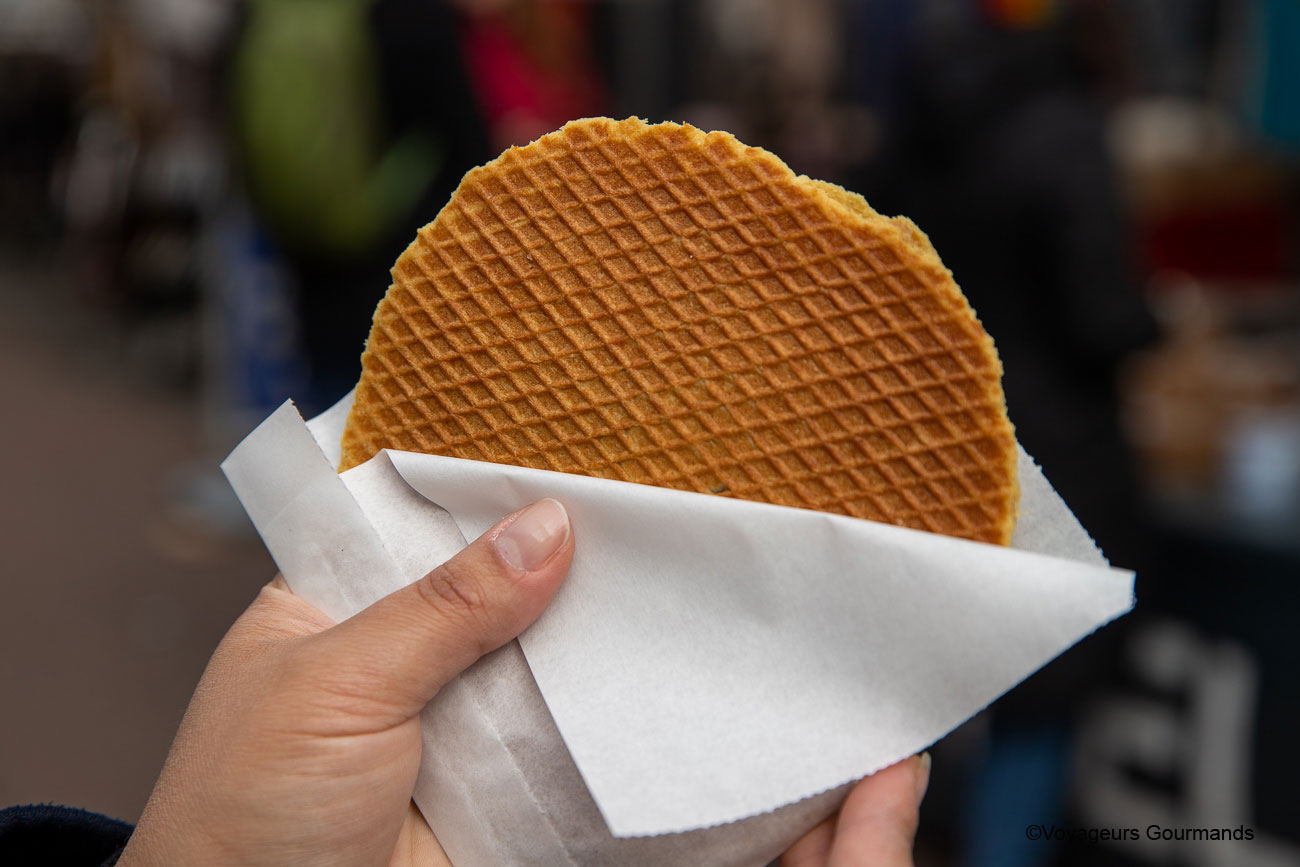
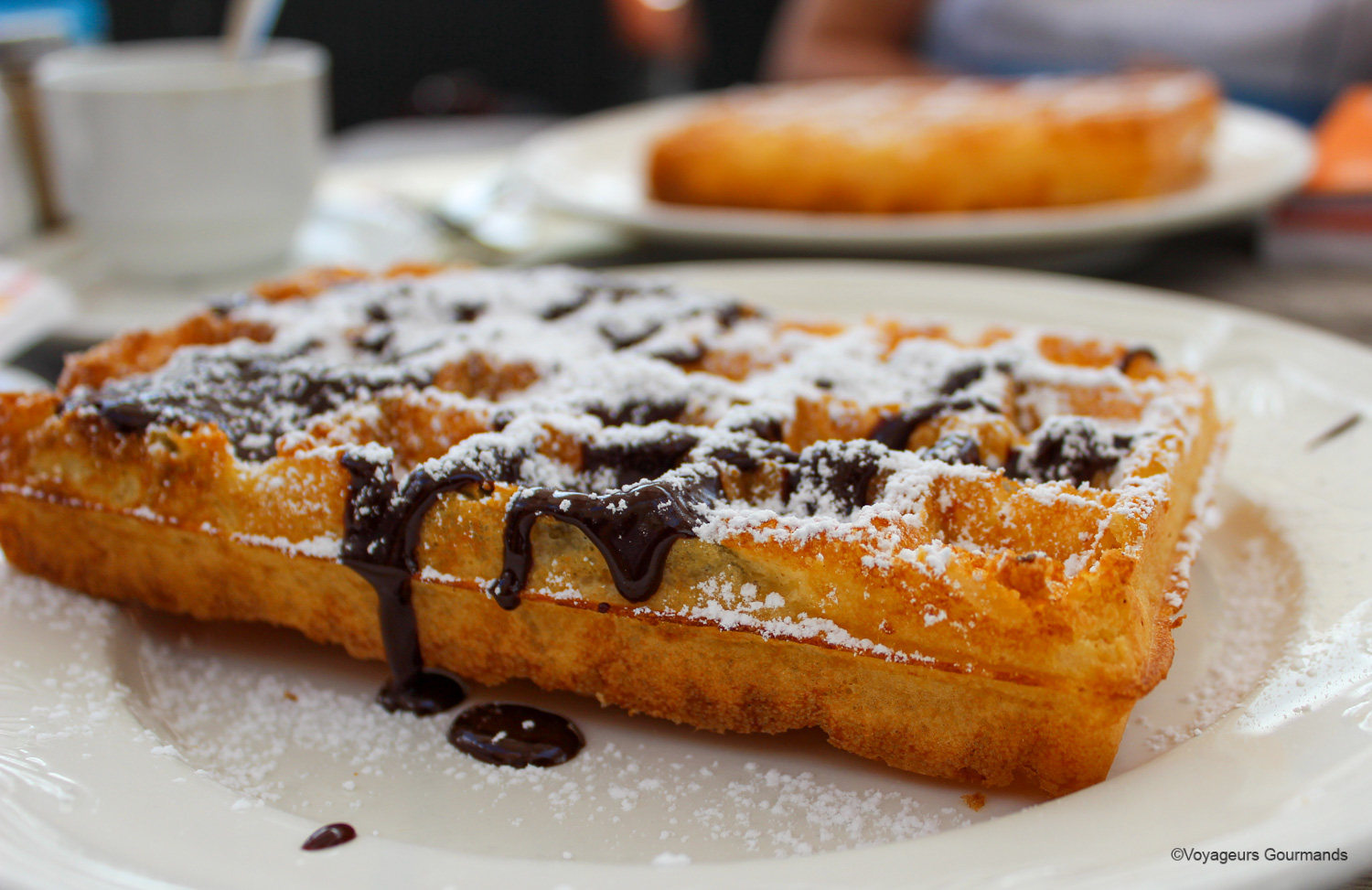
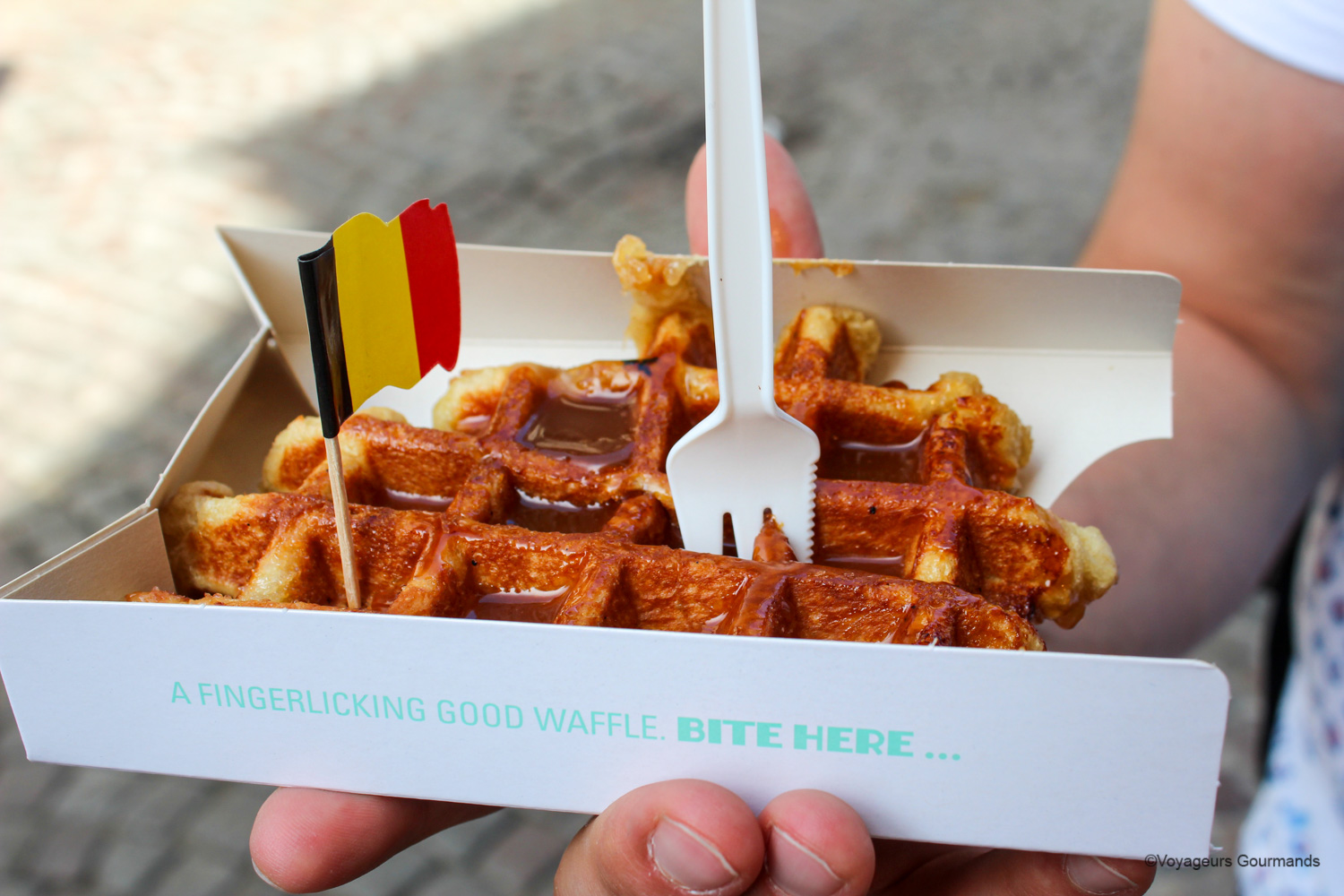
You all know what a waffle is, but did you know that Belgium has two different types of waffles? Liège waffles vs. Brussels waffles. (Actually, I should even say three types if you count the very thin, crispy filled wafer biscuits you can also find: I’ve included a photo of each, don’t worry, ha ha!)
Liège waffles are thick, sweet and indulgent, with rounded edges. The traditional recipe contains pearl sugar, which gives them their sweet, crunchy taste. You can then top them with whatever you like: melted chocolate, salted caramel, strawberries, whipped cream…
Brussels waffles, on the other hand, are rectangular, much thinner and crispier. They don’t have the thickness of Liège waffles, and you can also top them with anything you like!
The thin filled waffle is, as its name suggests, filled, ha ha! I’m mentioning it anyway because it is a waffle, but its origin is a bit unclear… Personally, we’ve eaten them in the Netherlands (our article on what to eat in Amsterdam is right here) and in Lille too!
Let’s be honest, I prefer Liège waffles, they’re so much more indulgent!! What about you, which ones do you prefer?
Belgian beer
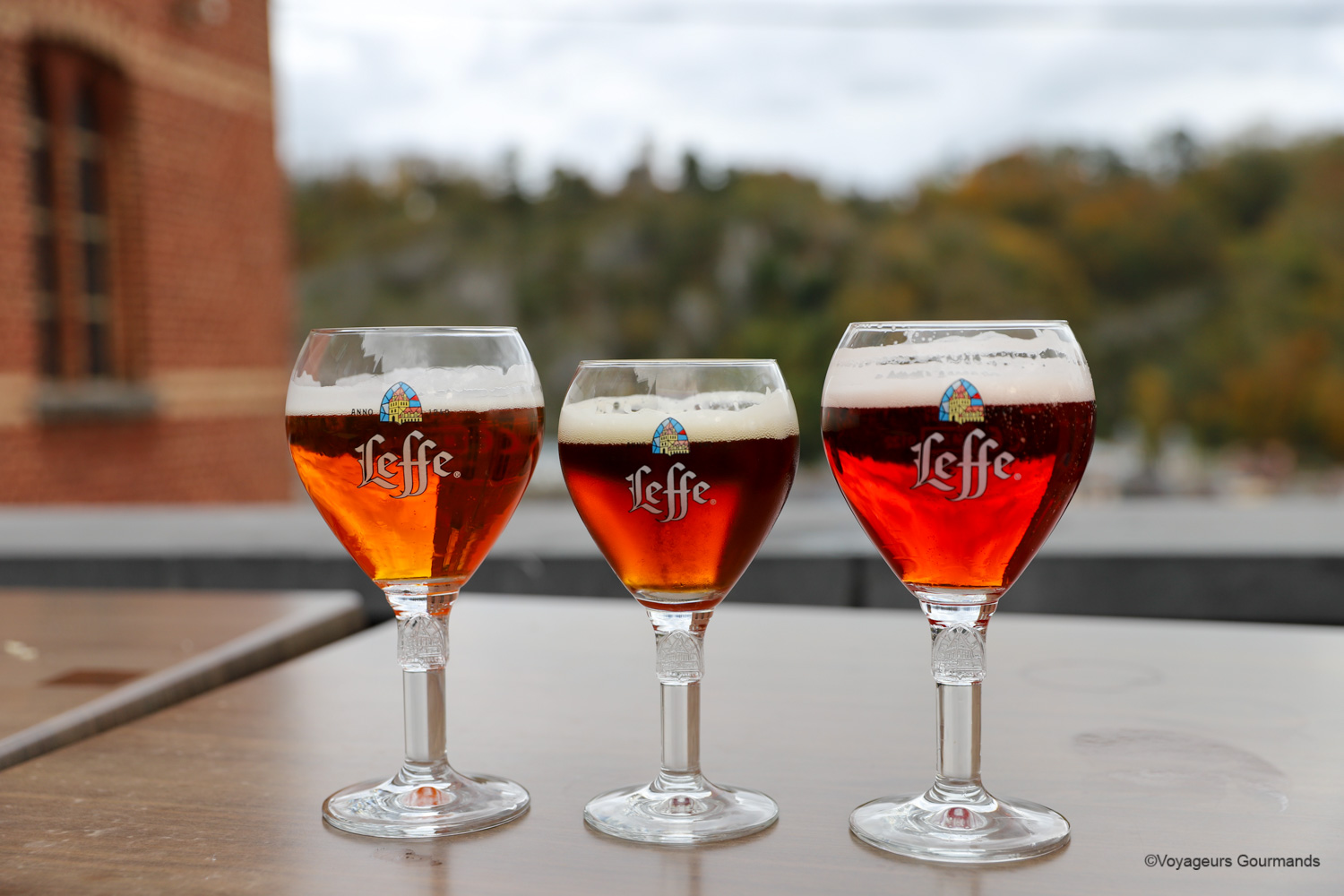
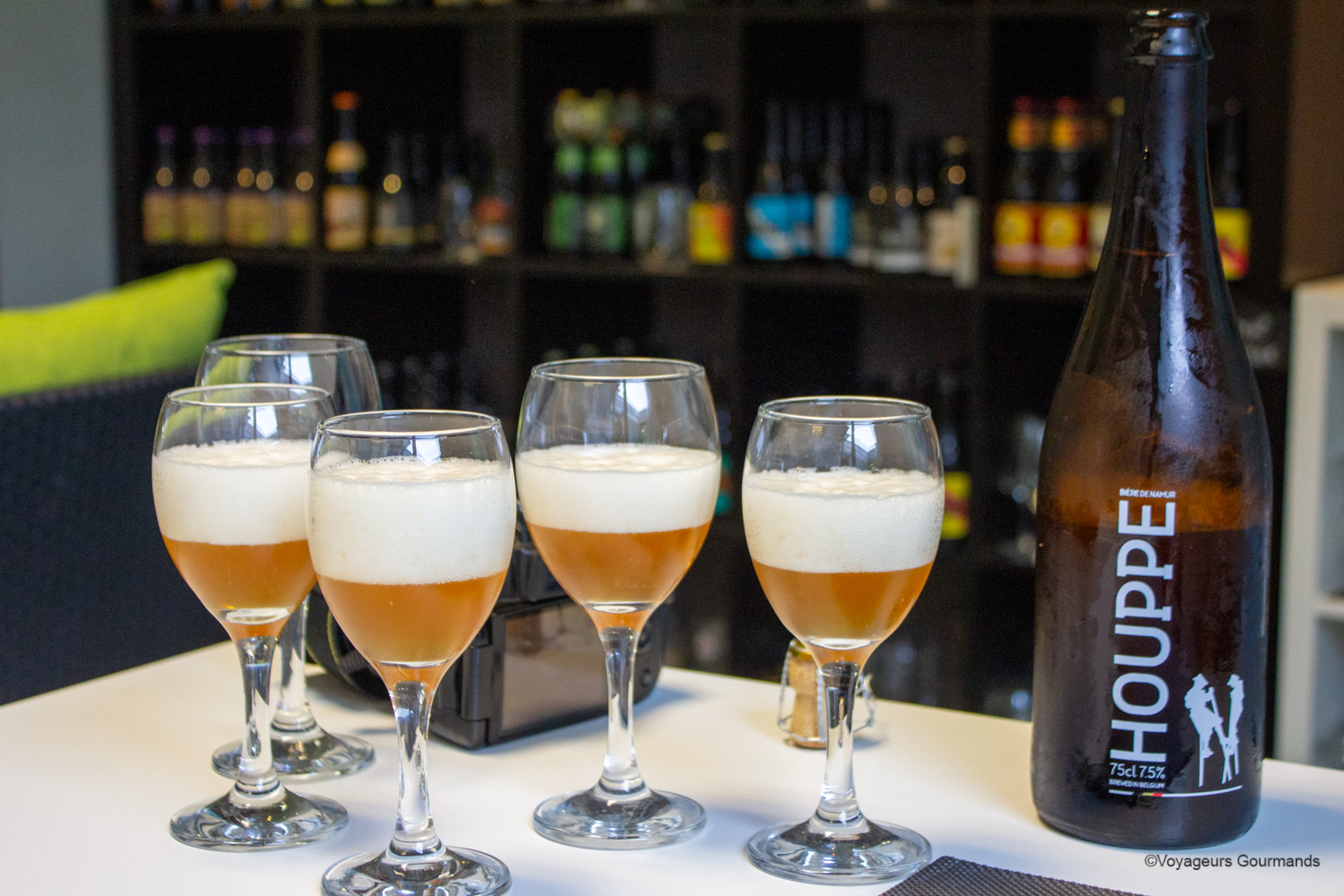
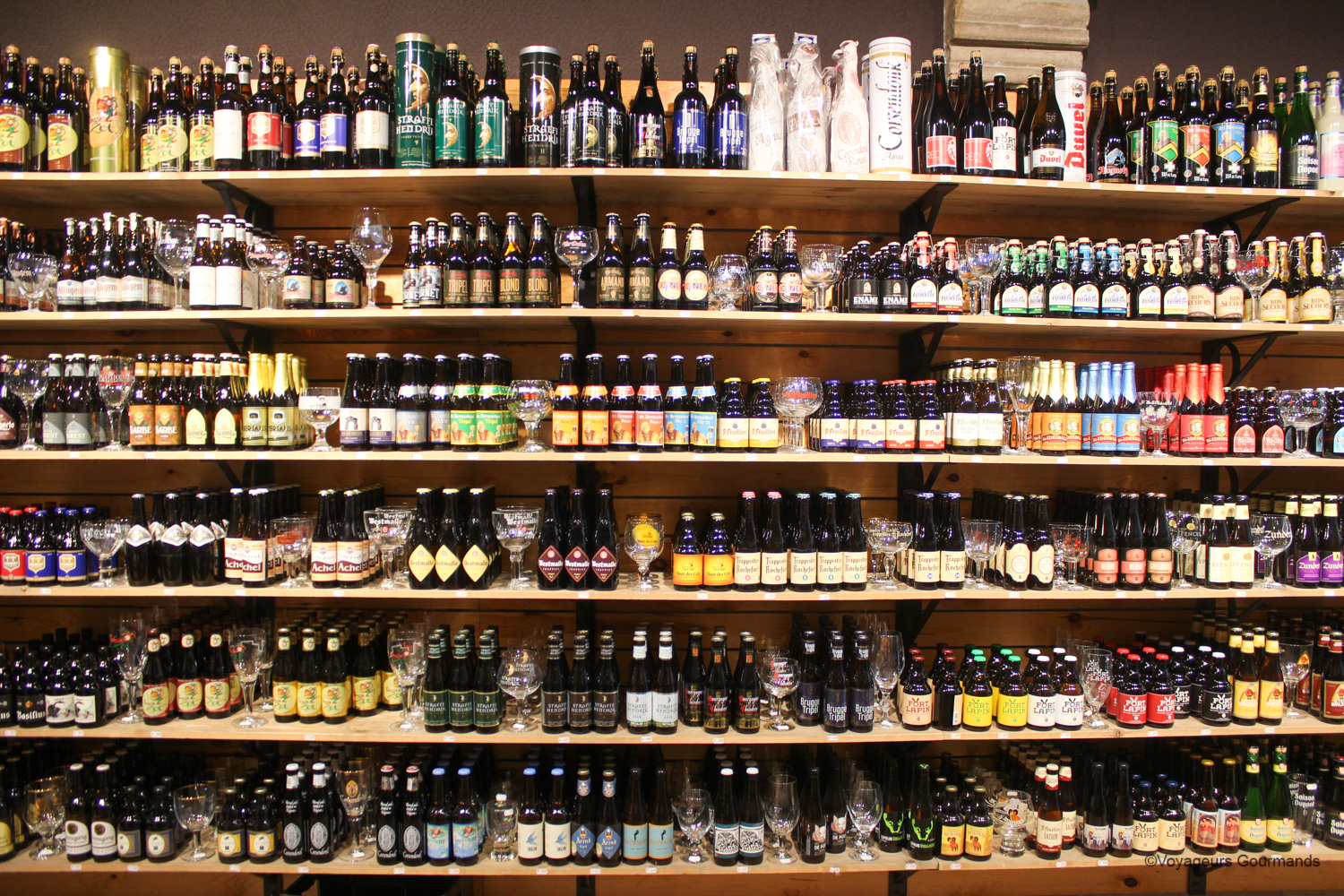
Belgium is world-renowned for its brewing culture and the exceptional variety of its beers. There are hundreds of them, from craft brews to historic monastic recipes. Beer is considered true cultural heritage there, recognized by UNESCO. This richness comes from strong regional traditions and know-how passed down through generations. With at least 700 Belgian beers out there today, you’re sure to find one to go with your Belgian food!
Couque de Dinant
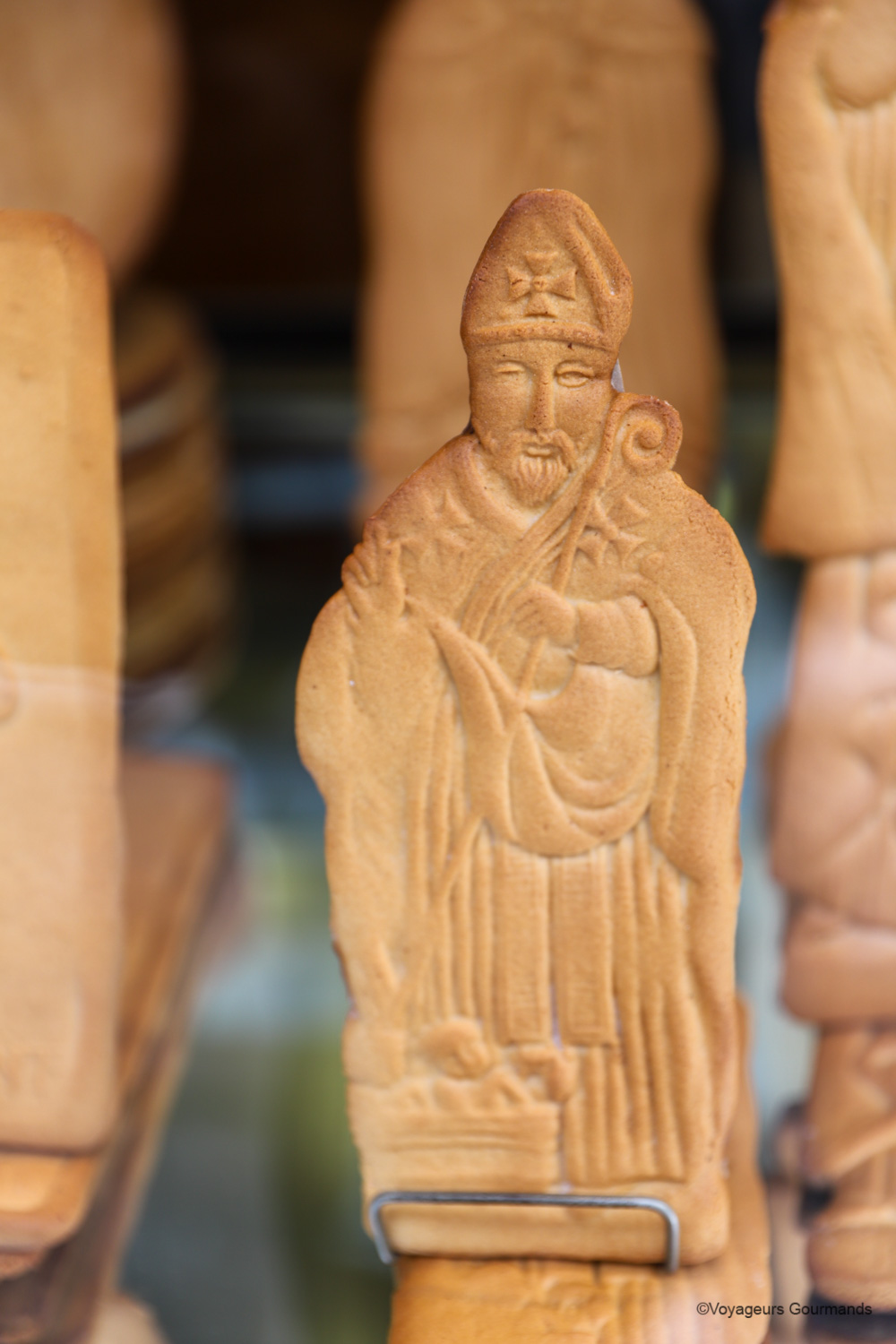
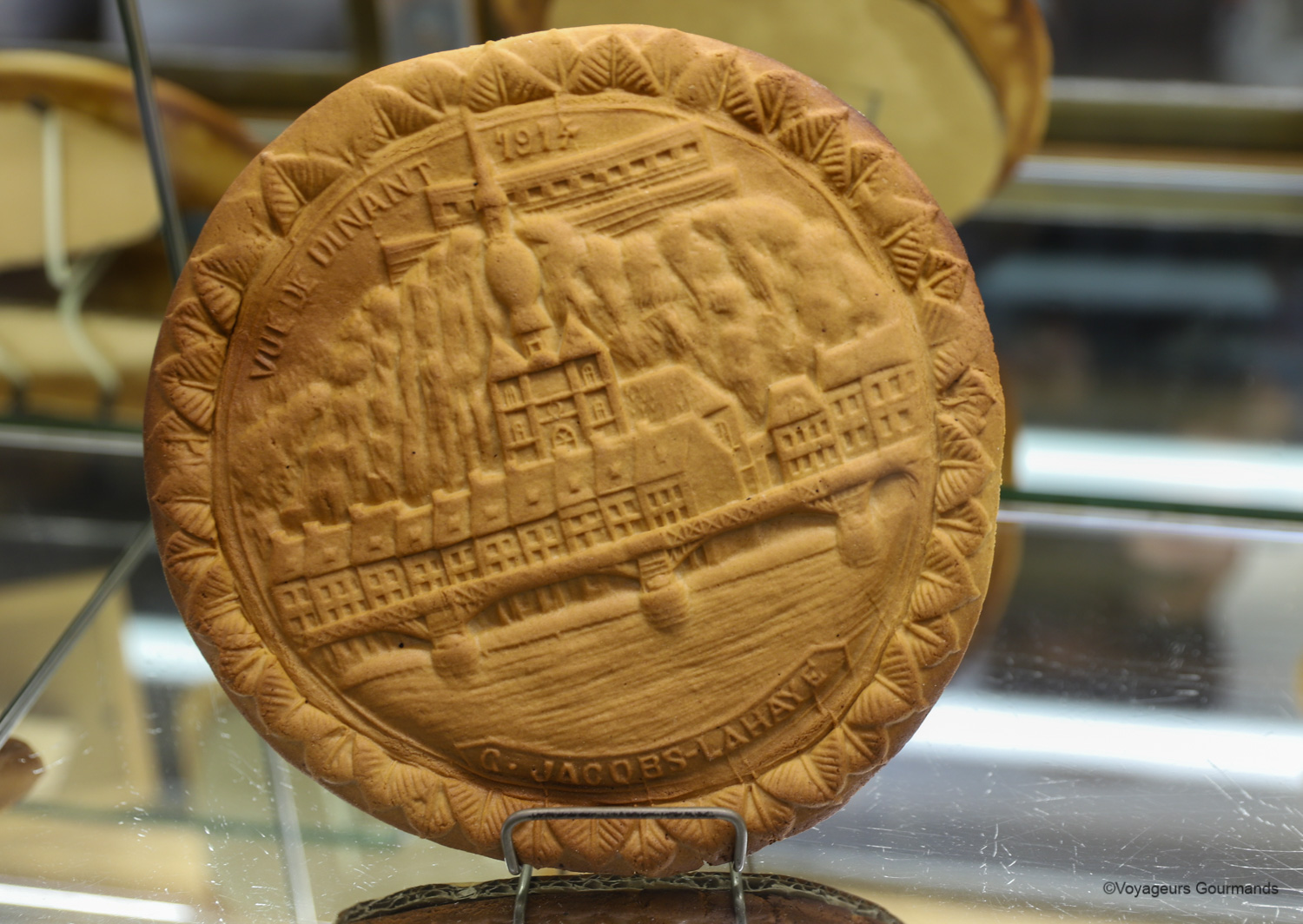
I didn’t know about this specialty before visiting Dinant. Originally from the town of Dinant, hence its name, the couque is a very hard, crunchy biscuit made with honey and flour. What makes it special is that it comes in thousands of shapes and sizes: figures, animals, characters… There’s something for everyone!
Shrimp croquettes
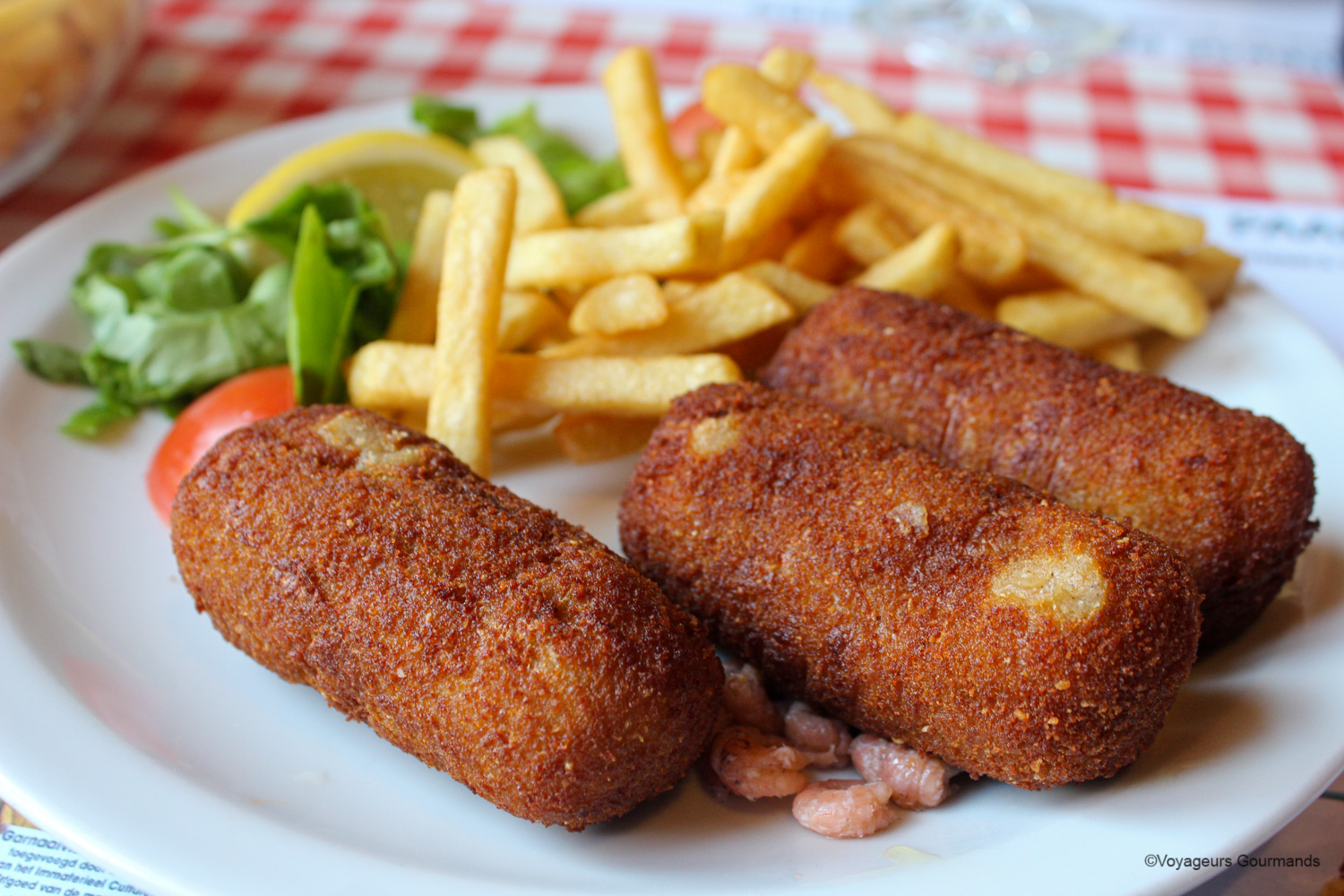
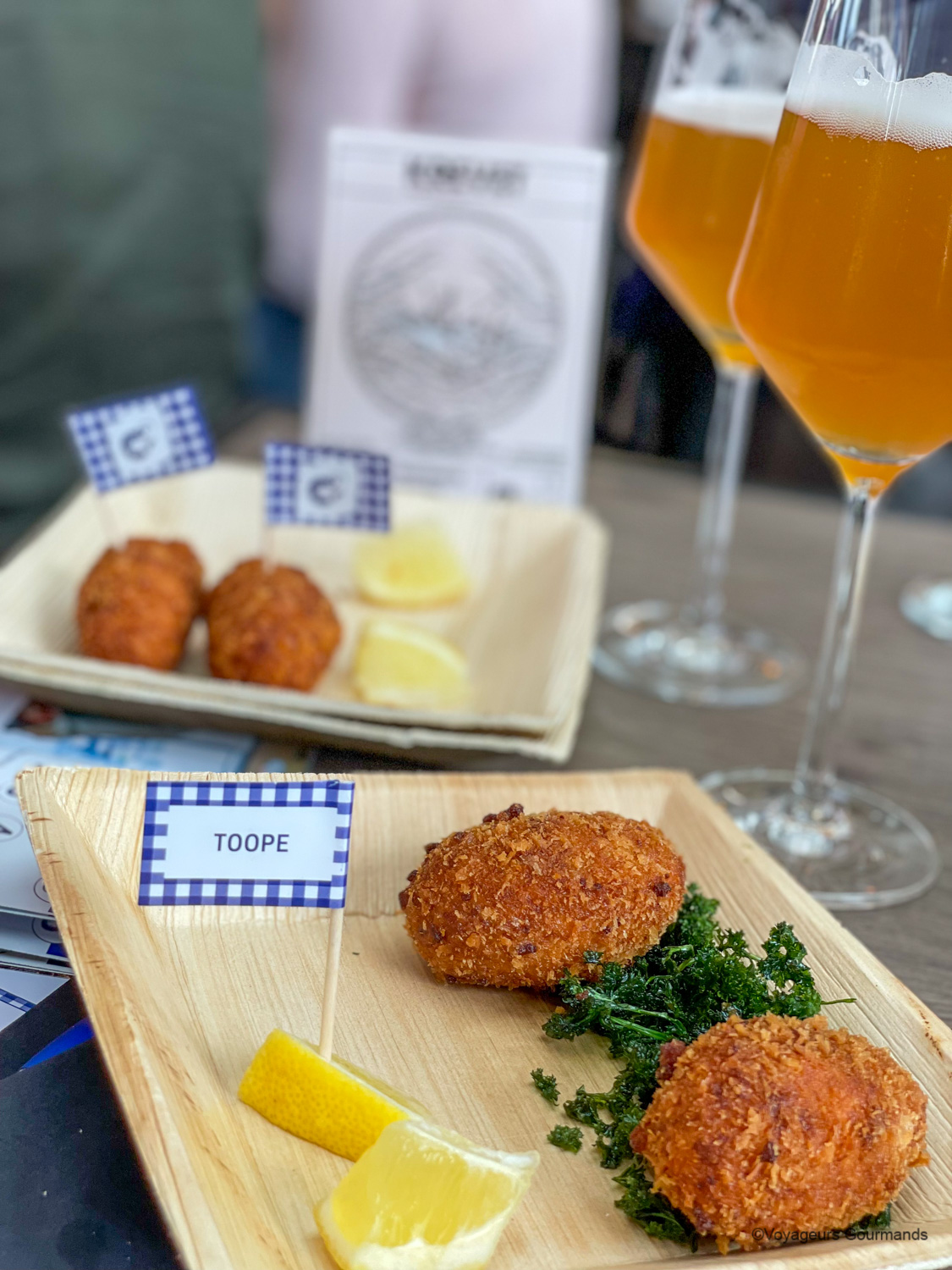
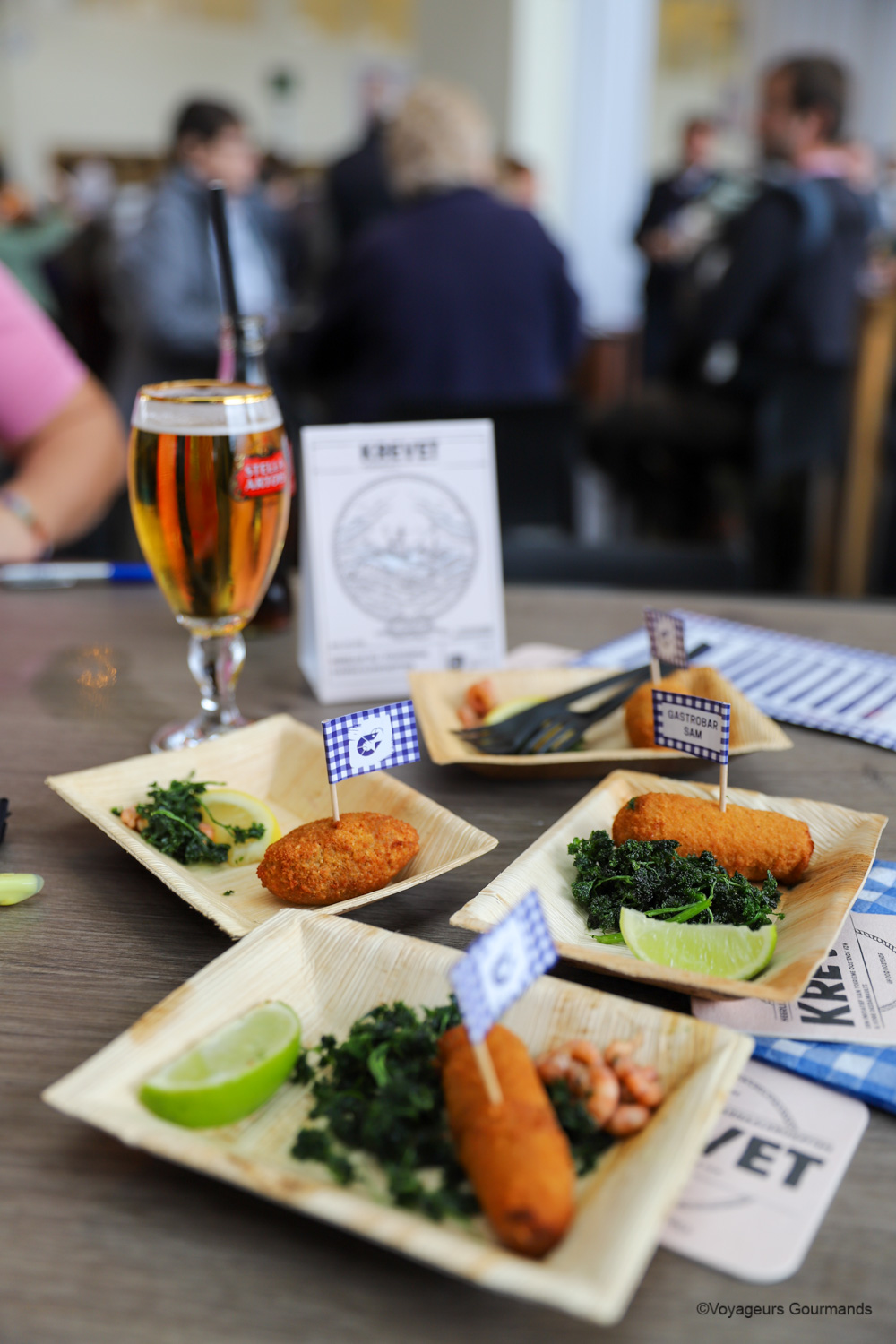
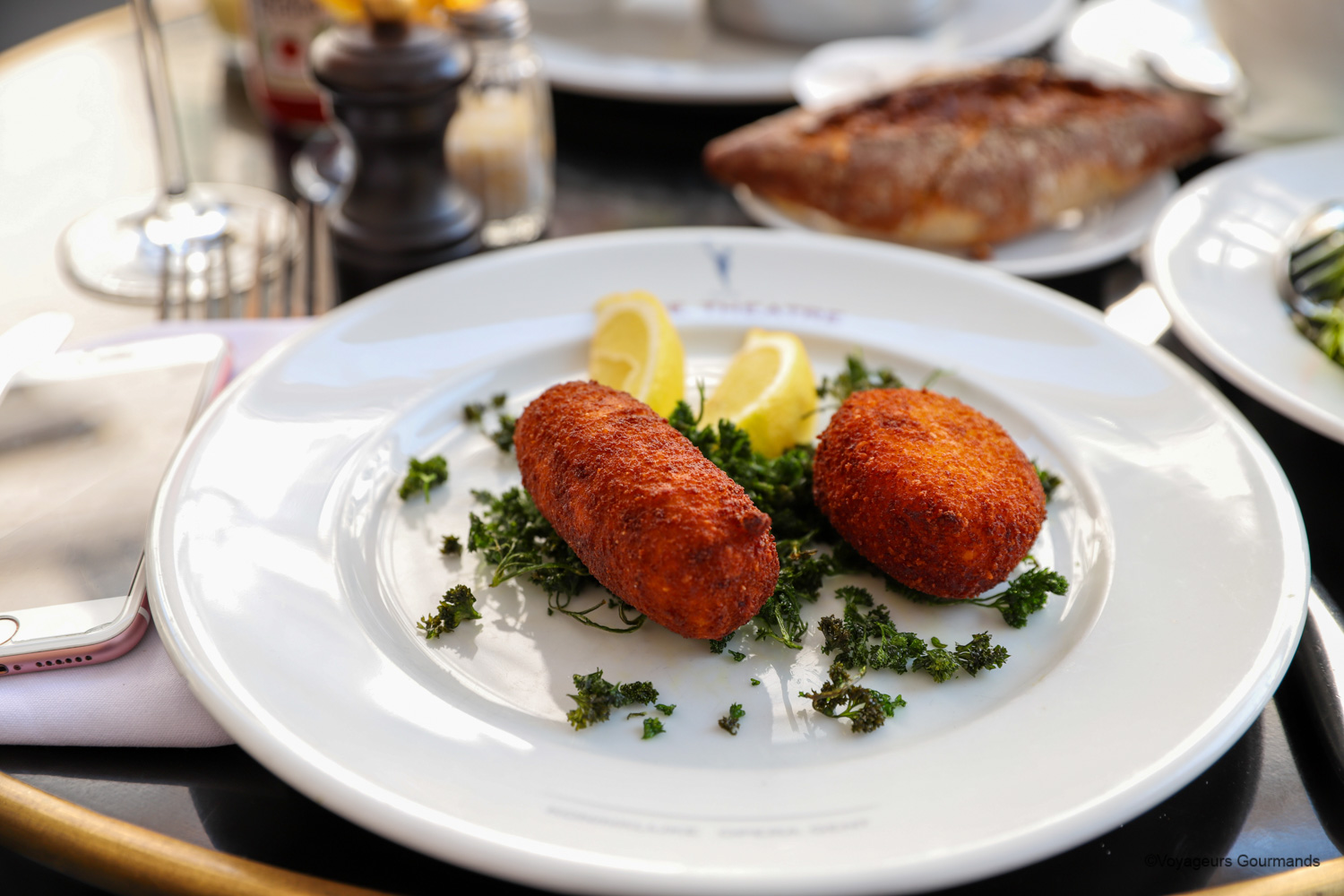
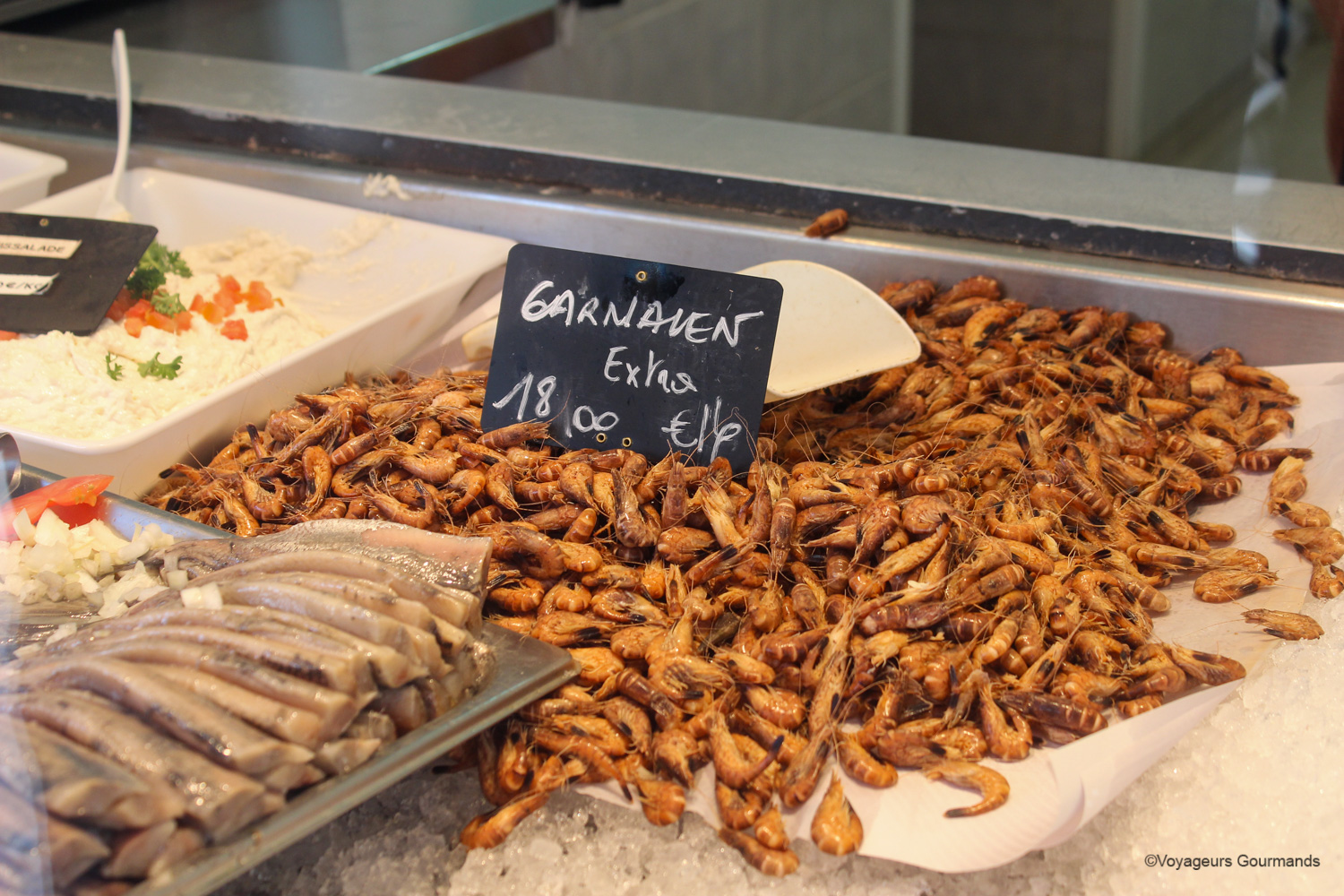
Shrimp croquettes are a Belgian culinary specialty. They’re small breaded and fried fritters made with grey shrimp and béchamel sauce (a butter and milk sauce, for those who don’t know béchamel). Some chefs add parmesan or spices such as chilli to give them a kick. We were lucky enough to attend the horseback shrimp fishing festival and even take part in the best shrimp croquette contest in Ostend! Apparently, that’s where you’ll find the best ones, and we could really feel how proud locals are of this Belgian classic.
Stoemp
Stoemp, or Belgian mash, is a Brussels specialty! It’s mashed potatoes mixed with vegetables, often carrots, leeks or cabbage, and it’s usually served as a side with sausages or grilled meat. It’s a dish we also tried in Amsterdam!
Chicons au gratin (endives with ham)
Chicons au gratin, endives wrapped in ham and baked in a cheese sauce, have a somewhat unclear origin: northern France, Belgium, the Netherlands, all three? Let’s not argue about it, but it’s definitely a great classic of Belgian cuisine.
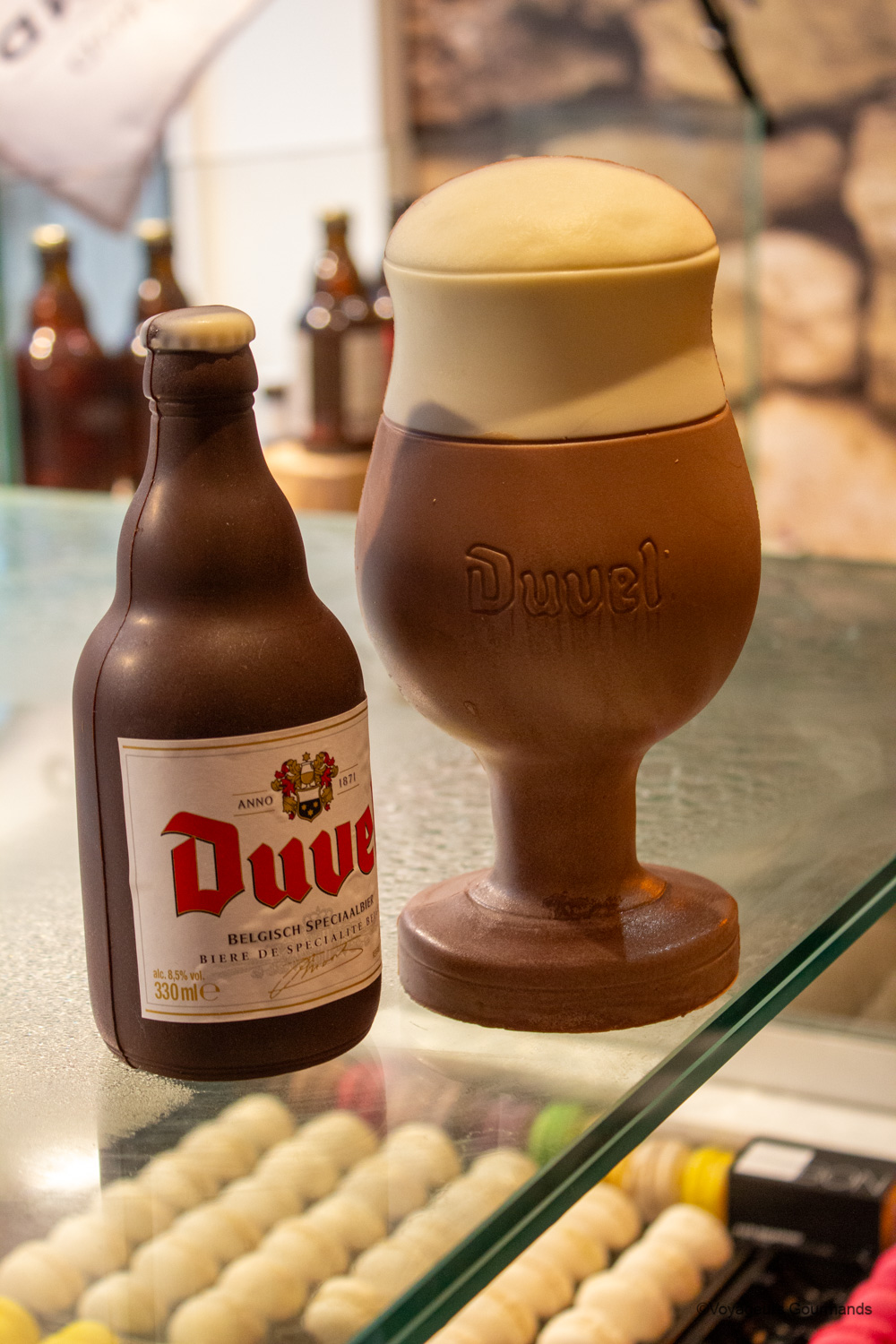
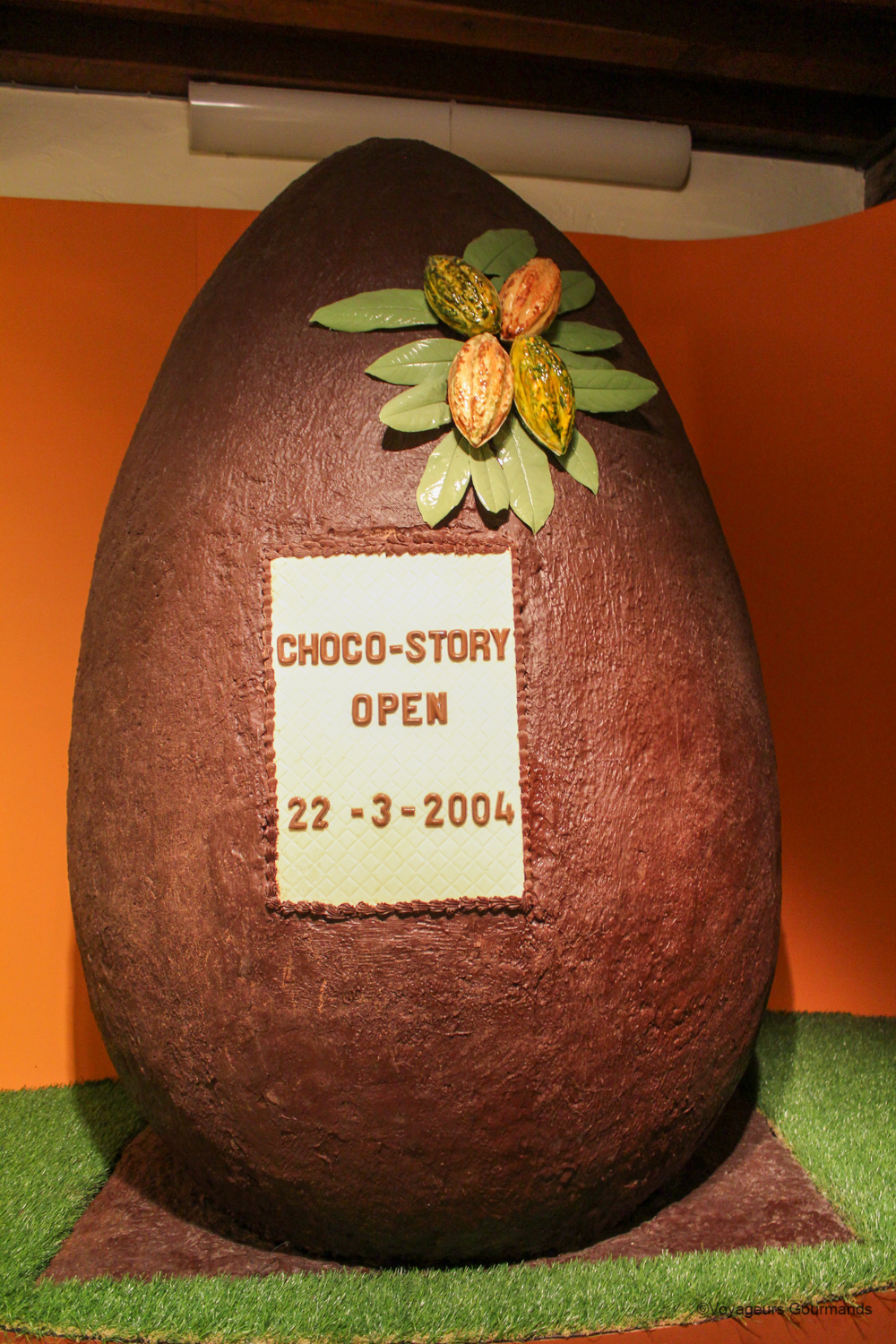
Belgian chocolate
Belgian chocolate is famous worldwide for its quality and craftsmanship. Pralines, truffles, ganaches or bars: Belgian chocolatiers carry on an old tradition built on top-quality ingredients. Tasting chocolate in Belgium is an essential part of the trip, whether in a small artisan chocolate shop or a renowned chocolate house. I’ll leave you with this article on Belgian chocolate by my fellow blogger friend at Au goût d’Emma.
Speculoos
Quick side note: many people now call it “Biscoff”… but that’s actually the brand name of Lotus biscuits! The real name is still speculoos, and I keep calling it speculoos, ha ha! Created in Flanders, it actually goes back to Dutch sailors who brought spices back from Asia: cardamom, cinnamon, cloves… The spiced biscuit was born, and since spices were so rare, it was only eaten on special occasions! And to think it now often comes with your coffee on a café terrace…
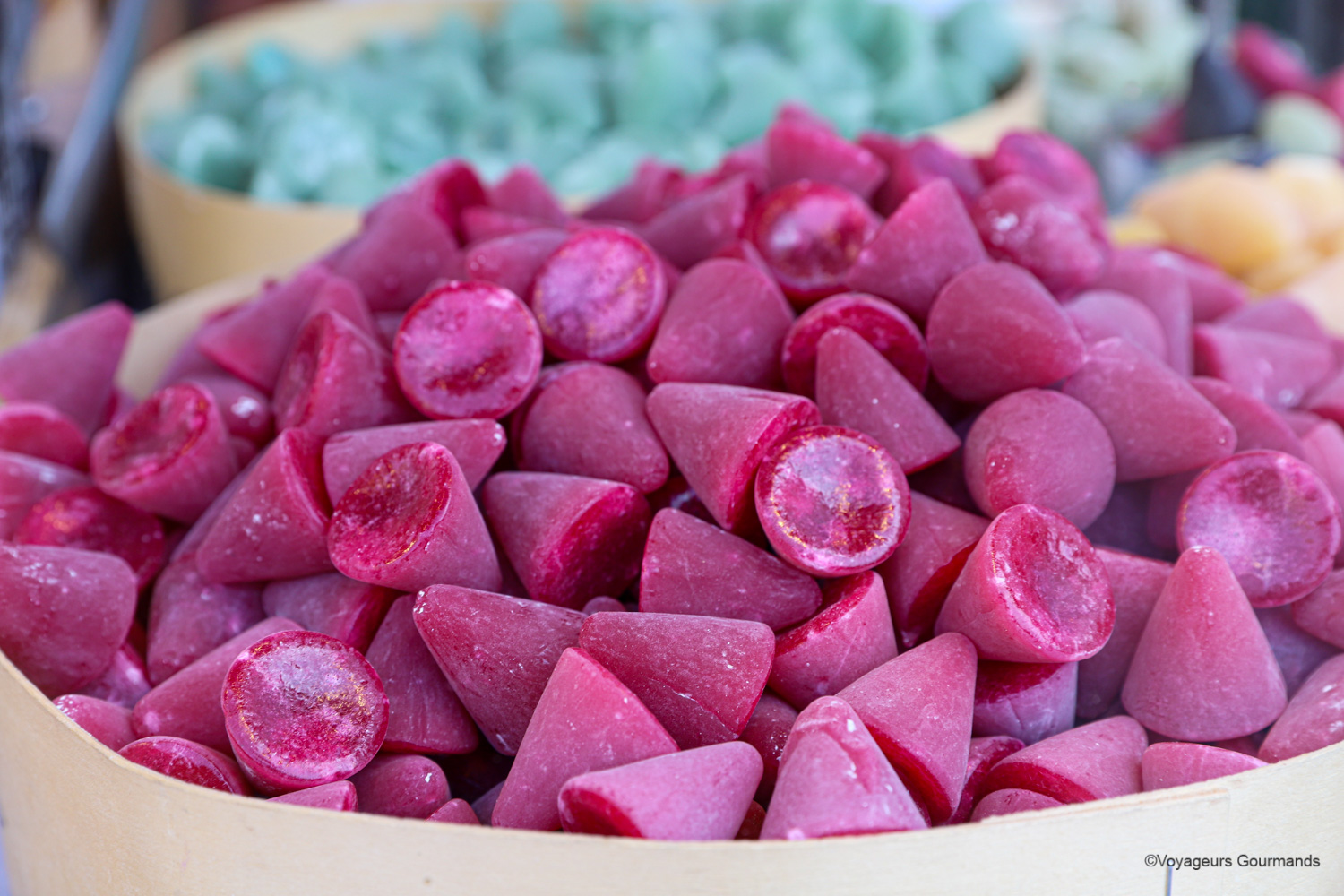
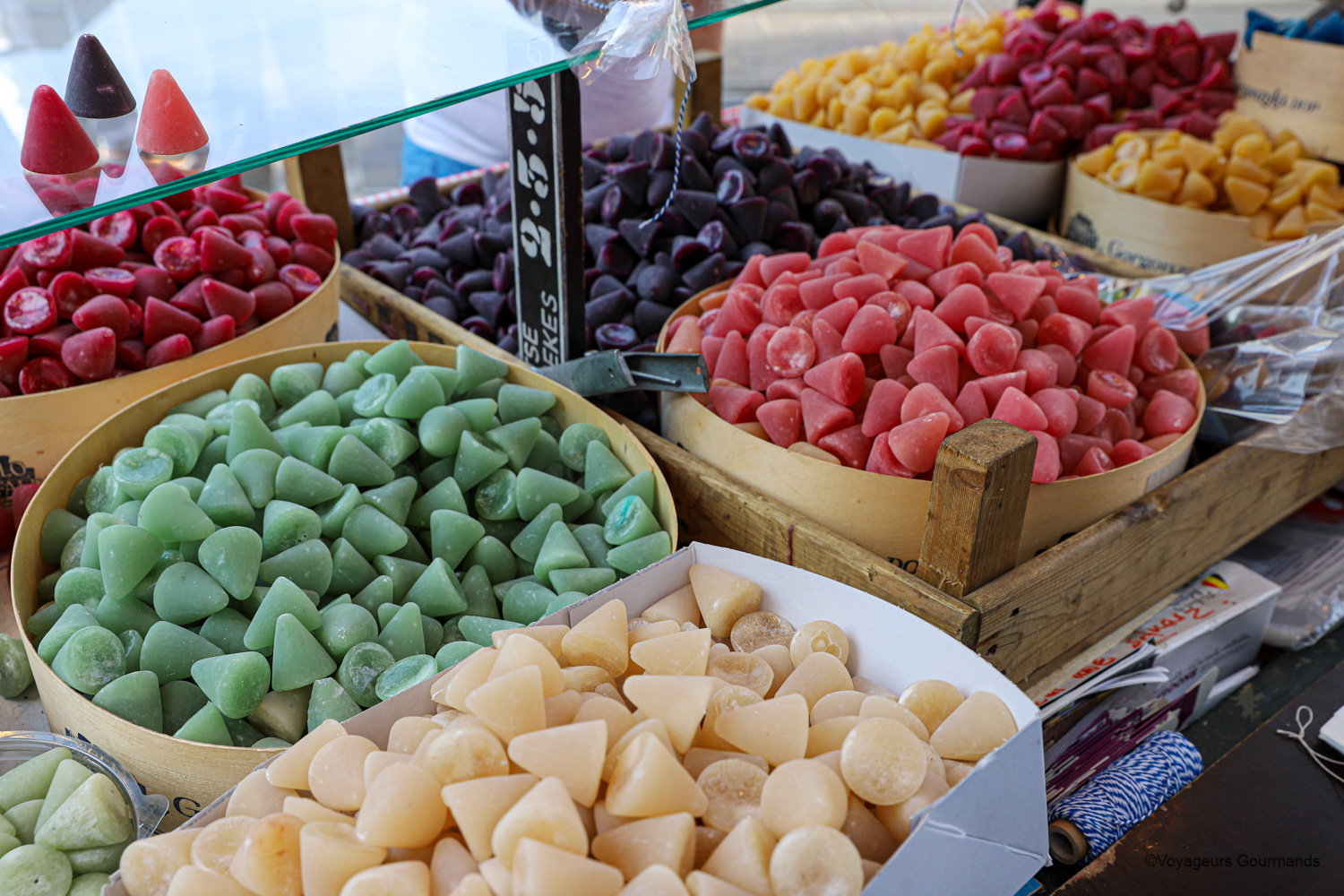
Cuberdons
Just like the couque de Dinant, I didn’t know about cuberdons before visiting Ghent. Also nicknamed “Ghent noses,” they’re iconic sweets from the Ghent area. Their conical shape and hard shell hide a deliciously liquid, sweet centre, originally flavoured with raspberry or violet; nowadays you can find them in every flavour. Personally, I loved them!!
Boulets à la liégeoise (Liège meatballs)
You can’t talk about Walloon cuisine without mentioning boulets à la liégeoise! These are large meatballs made of minced pork and beef, smothered in a sweet-and-sour sauce made with sirop de Liège (a thick spread of reduced apples and pears), onions and sometimes raisins. In Liège, it’s even called “sauce lapin” (rabbit sauce), even though there’s no rabbit in it, ha ha! And guess what they’re served with? Fries, of course.
Tomate-crevettes (shrimp-stuffed tomatoes)
A great classic of Belgian brasseries, especially on the coast: a hollowed-out tomato filled with North Sea grey shrimp mixed with mayonnaise. It’s simple and fresh, but it all comes down to the quality of the shrimp, ideally peeled by hand. You’ll find it as a starter or a light main course, often served with… fries (you’re starting to get the idea).
Vol-au-vent
Vol-au-vent is Belgium’s answer to a creamy chicken pie: a puff pastry shell filled with chicken, small meatballs and mushrooms in a rich, creamy sauce. Very popular in Brussels brasseries, it’s the ultimate comfort food when it’s cold outside.
Américain (or filet américain)
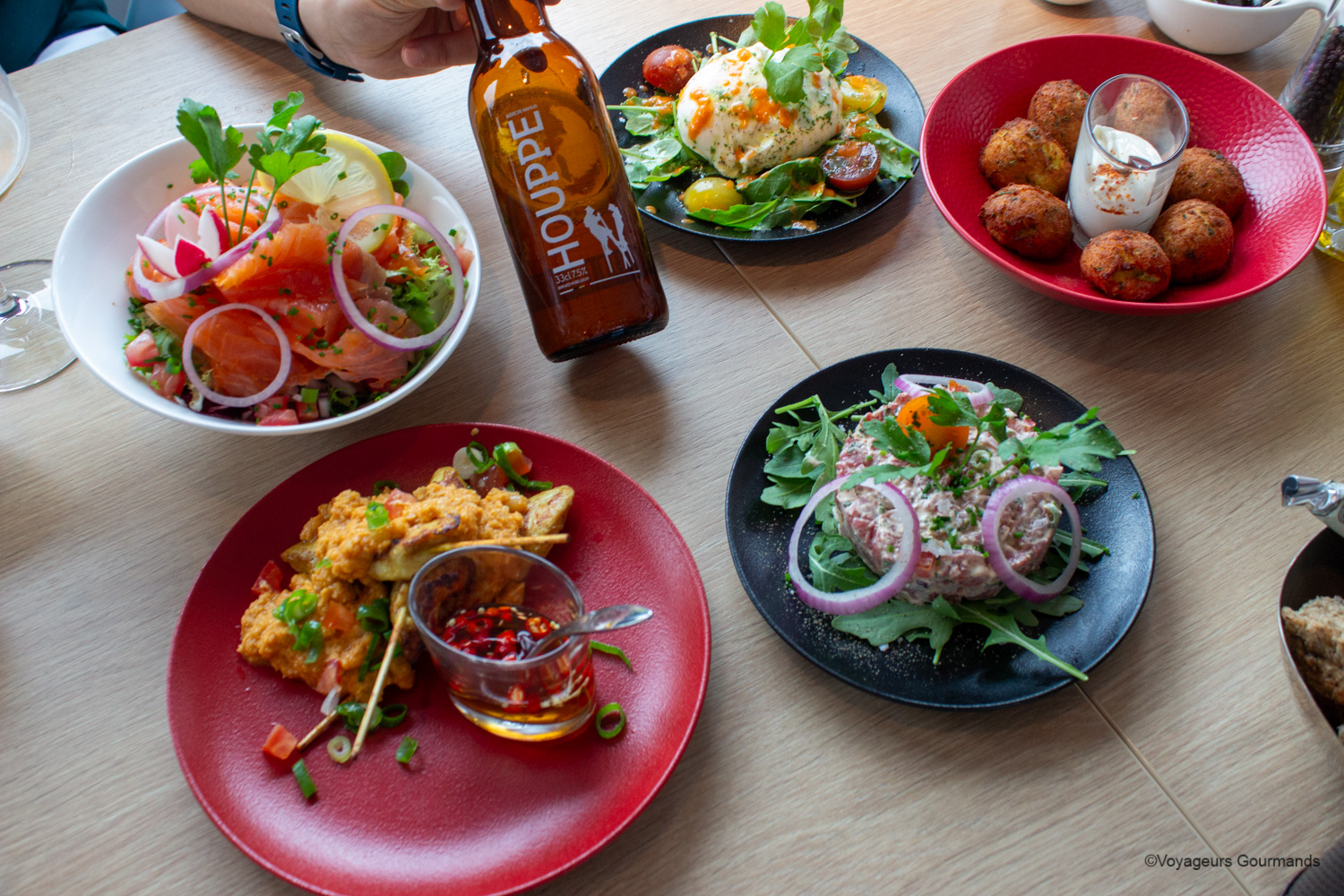
Don’t be caught off guard when ordering an “américain” in Belgium: it’s steak tartare, raw minced beef seasoned with mayonnaise, capers, onions and spices. It’s eaten as “américain frites” at a brasserie, or spread in a pistolet (the small round Brussels bread roll) for a sandwich to take away.
Eel in green sauce (paling in ’t groen)
More surprising, this Flemish specialty is made with chunks of eel cooked in a green sauce of fresh herbs: sorrel, chervil, parsley, mint, tarragon… It’s served hot or cold, with fries or bread. It’s a dish for the adventurous, found mainly in traditional restaurants in Flanders and Brussels.
Rabbit in beer
Just like carbonnade, beer often finds its way into the kitchen: rabbit is slowly braised in gueuze or kriek (cherry beer), with onions, thyme and sometimes prunes. The result is tender and slightly tangy, a typical dish of the estaminets and brasseries of the Brussels region.
Mitraillette
Belgium’s most generous sandwich! Half a baguette stuffed with meat (fricadelle, burger, chicken…), fries and a good dose of sauce: andalouse, samurai, américaine… You order it at friteries, often late at night, and fair warning: it’s hard to eat gracefully, ha ha!
Tarte au riz (rice tart)
For dessert, tarte au riz is a true institution in Wallonia, especially in Verviers: a brioche-like crust filled with vanilla rice pudding, sometimes flavoured with saffron. It’s a must at village fairs and kermesses, and it’s eaten cold with a good cup of coffee.
Belgian food by region
Brussels: tradition and street food
Brussels is a true showcase of Belgian food. You’ll find all the country’s great classics, like fries, waffles and chocolate, but also a strong street food culture.
This is where you’ll find the famous moules-frites, served in many traditional brasseries, but also more local specialties like the Brussels pistolet or the mitraillette, that super-generous sandwich stuffed with meat and fries.
Brussels is also a great starting point for discovering artisan chocolatiers and the city’s many iconic friteries.
Flanders: comfort food and iconic beers
Flanders is the heart of traditional Belgian cuisine, with rich, slow-cooked dishes deeply rooted in the local terroir.
This is where you’ll find the famous Flemish carbonnade, beef braised in dark beer, as well as waterzooi, originally from Ghent, a mild and creamy dish made with fish or chicken.
Flanders is also a must for Belgian beer, with many craft breweries and a strong tradition of abbey and Trappist beers.
Ghent is also the home of cuberdons, those little cone-shaped sweets with a liquid centre, and of Ghent-style waterzooi. For the more adventurous, Flanders is also where you can try eel in green sauce, cooked with fresh herbs.
Wallonia: sweet treats and local traditions
Wallonia offers a sweeter, more artisanal cuisine, with iconic specialties like the Liège waffle, dense and caramelized thanks to pearl sugar.
This is also where you’ll find the famous couque de Dinant, an extremely hard honey biscuit, as well as Liège specialties: boulets with sauce lapin, salade liégeoise (green beans, potatoes and bacon) and sirop de Liège to spread on bread. Not to mention Herve cheese, with its bold character, and Verviers rice tart to end on a sweet note.
The Belgian coast: grey shrimp and seafood
On the Belgian coast, from De Panne to Knokke, the star is North Sea grey shrimp. You’ll find it in croquettes, in tomate-crevettes or simply in a paper cone to snack on while strolling along the promenade. In Ostend, the stalls at the fish market (the Vistrap) are perfect for a quick bite of shrimp, whelks or freshly made fish soup.
The coast is also where we made our best food memories in Belgium: horseback shrimp fishing in Oostduinkerke and the best shrimp croquette contest in Ostend… we tell you all about it just below!
Food experiences in Belgium
Belgium isn’t just about its culinary specialties: it’s also a country where food is celebrated all year round through countless events and local festivals. Cooking contests, beer festivals, food markets and celebrations of local products set the rhythm of life in each region and showcase local know-how.
During our various trips, we were lucky enough to attend some pretty unique events, like the election of the best grey shrimp croquette in Ostend, a true local institution where chefs compete in creativity around this iconic product of the Belgian coast. We also discovered the famous horseback shrimp fishing in Oostduinkerke, listed as UNESCO Intangible Cultural Heritage, a rare tradition that perfectly illustrates the strong bond between the sea and Belgian food.
✤✤✤
We hope this article made you hungry! Which Belgian specialties are your favourites? Did you discover any new dishes in this article? Tell us everything!

*Please drink responsibly.
Belgian food FAQ
Frequently asked questions are here!
What are the main Belgian food specialties?
The main specialties are fries, waffles, Flemish carbonnade, waterzooi, Belgian beer and chocolate.
What is the most famous traditional Belgian dish?
Belgian fries are considered the country’s most iconic dish.
What are Belgium’s most famous sweet treats?
Waffles and Belgian chocolate are the two best-known sweet specialties.
What is the national dish of Belgium?
There’s no official national dish, but moules-frites (mussels and fries) are often considered Belgium’s national dish, along with fries served in a paper cone at friteries.
What food is Brussels famous for?
Brussels is known for its rectangular waffle, stoemp, moules-frites, vol-au-vent and its many chocolatiers, not to mention the mitraillette from the friteries.
What Belgian food can you bring home?
Chocolate, speculoos, Belgian beer, cuberdons, couque de Dinant and sirop de Liège are the easiest food souvenirs to bring home.