


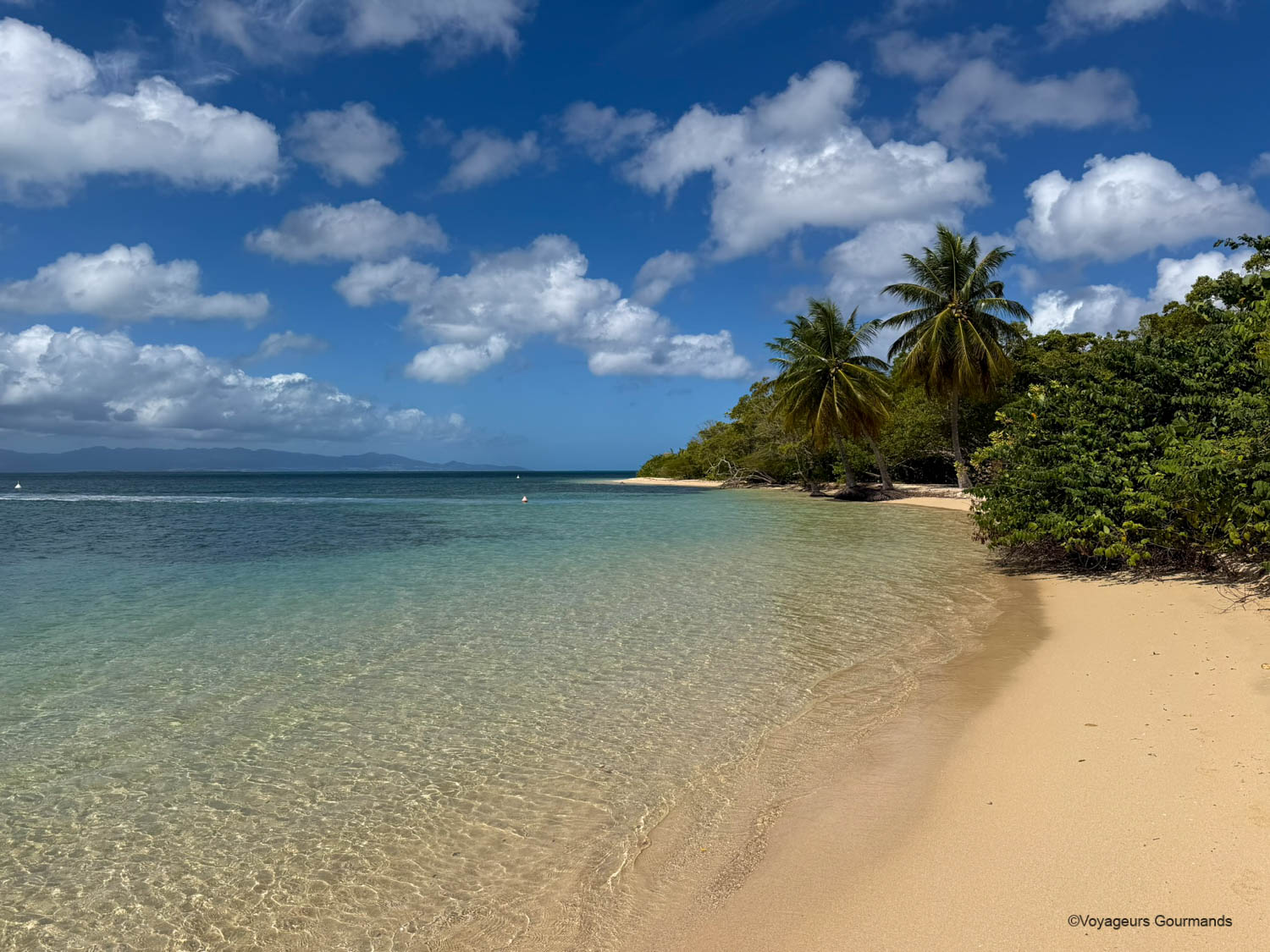
Lagoons on Grande-Terre, wild beaches on Basse-Terre, coves in Les Saintes: Guadeloupe offers a variety of beaches you rarely find in a single archipelago. There is something for everyone, from family beaches where you can stand up far out to deserted coves at the end of a trail.
During our 10-day road trip in Guadeloupe in March, we tried out as many beaches as we could with our son. Some won us over, others a little less, and that is exactly what I share with you here.
In this guide, I share the beaches we discovered, sorted by island and with our honest opinion, plus a few beaches we didn’t manage to visit but which are well worth the detour.
✤✤✤
Best beaches in Guadeloupe at a glance
| 🌴 In brief | ✨ What you need to know |
|---|---|
| Our favourites | Pointe Sable, near Port-Louis ❤️ and Anse Laborde, in the north of Grande-Terre |
| For families | Sainte-Anne town beach, Bois Jolan, Raisins Clairs Beach |
| For snorkelling | Malendure, Pain de Sucre Beach (Les Saintes), islets of the Grand Cul-de-Sac Marin |
| For sunsets | Grande Anse in Deshaies |
| For a wild beach | Anse Tillet, Trou à Man Louis, Anse Crawen |
| Best time to go | Dry season, from December to April |
| Getting around | A car is essential, plus a boat for Les Saintes and the Grand Cul-de-Sac Marin |
| What to bring | Water shoes, mask and snorkel, reef-safe sunscreen |
The best beaches on Grande-Terre
Grande-Terre is the postcard side of Guadeloupe: white sand, lagoons sheltered by the coral reef and a calm sea. This is where you’ll find the most practical beaches if you’re travelling with children.
Sainte-Anne town beach
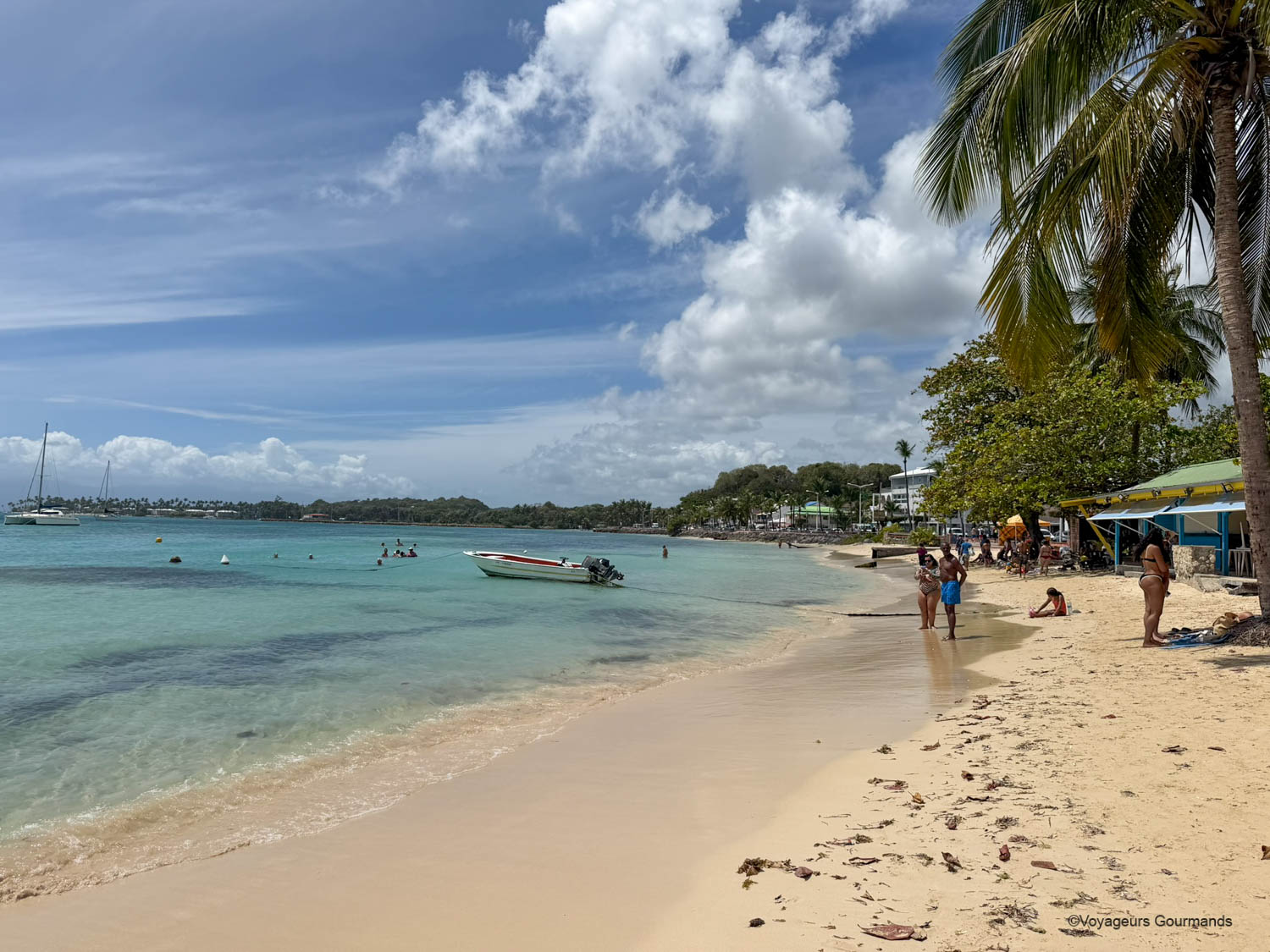
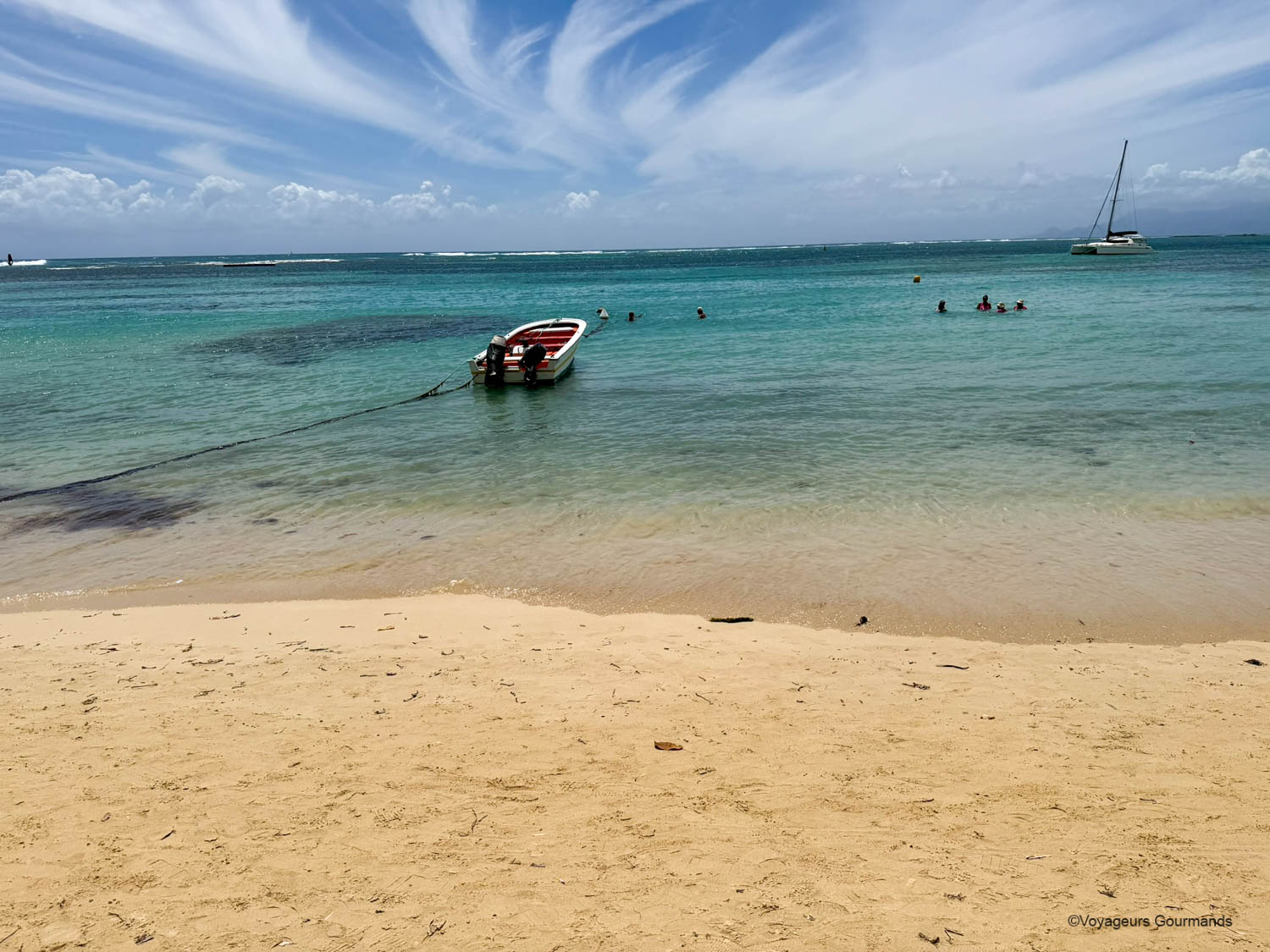
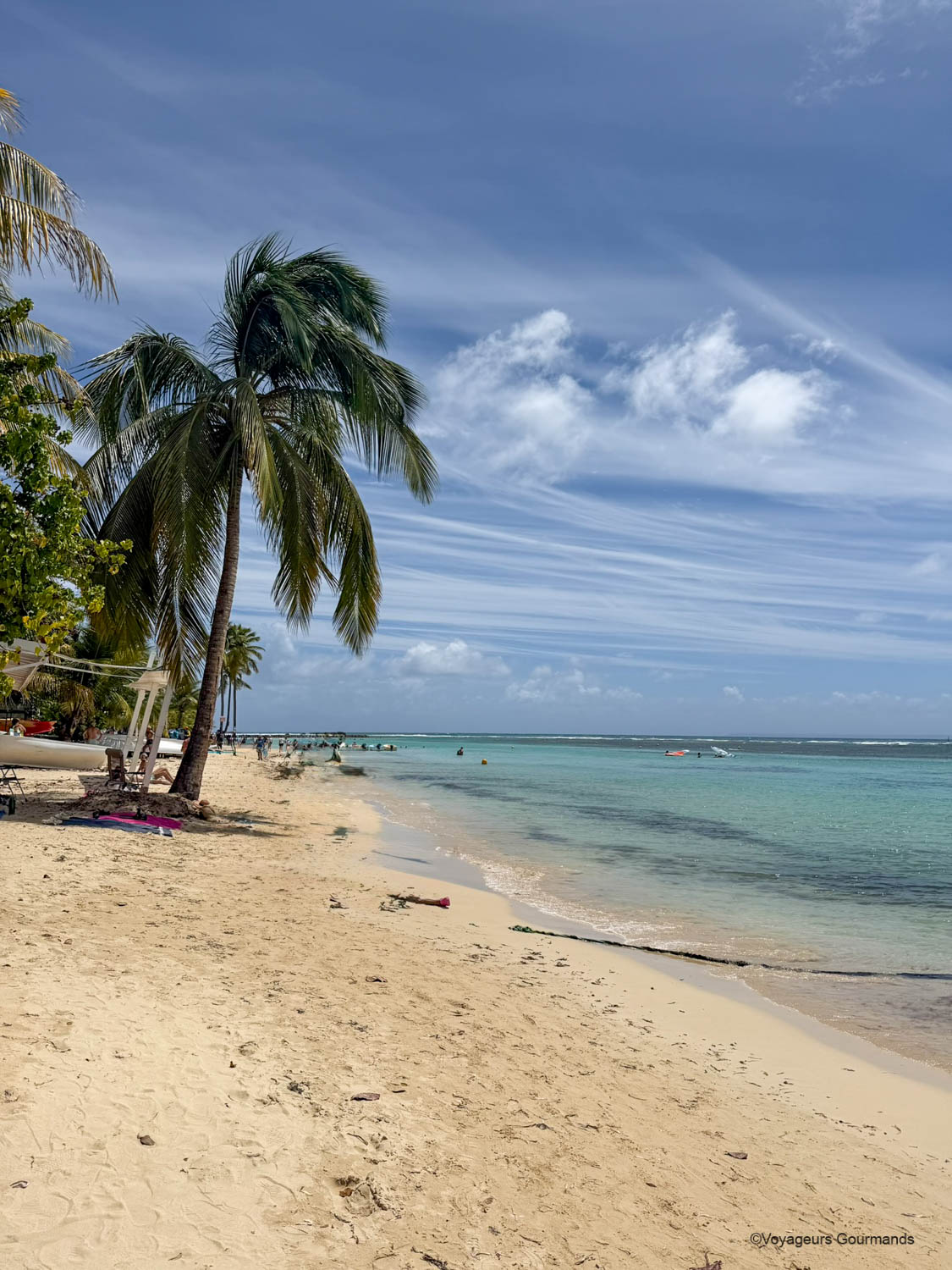
Right in the heart of Sainte-Anne, this beach lets you combine a stroll around the village with a swim. The water is calm and shallow, the coconut palms provide shade and the little stalls sell coconut sorbet and bokits. This is where we finally settled after the Pointe des Châteaux: we found it more practical with a child than the beaches of Saint-François.
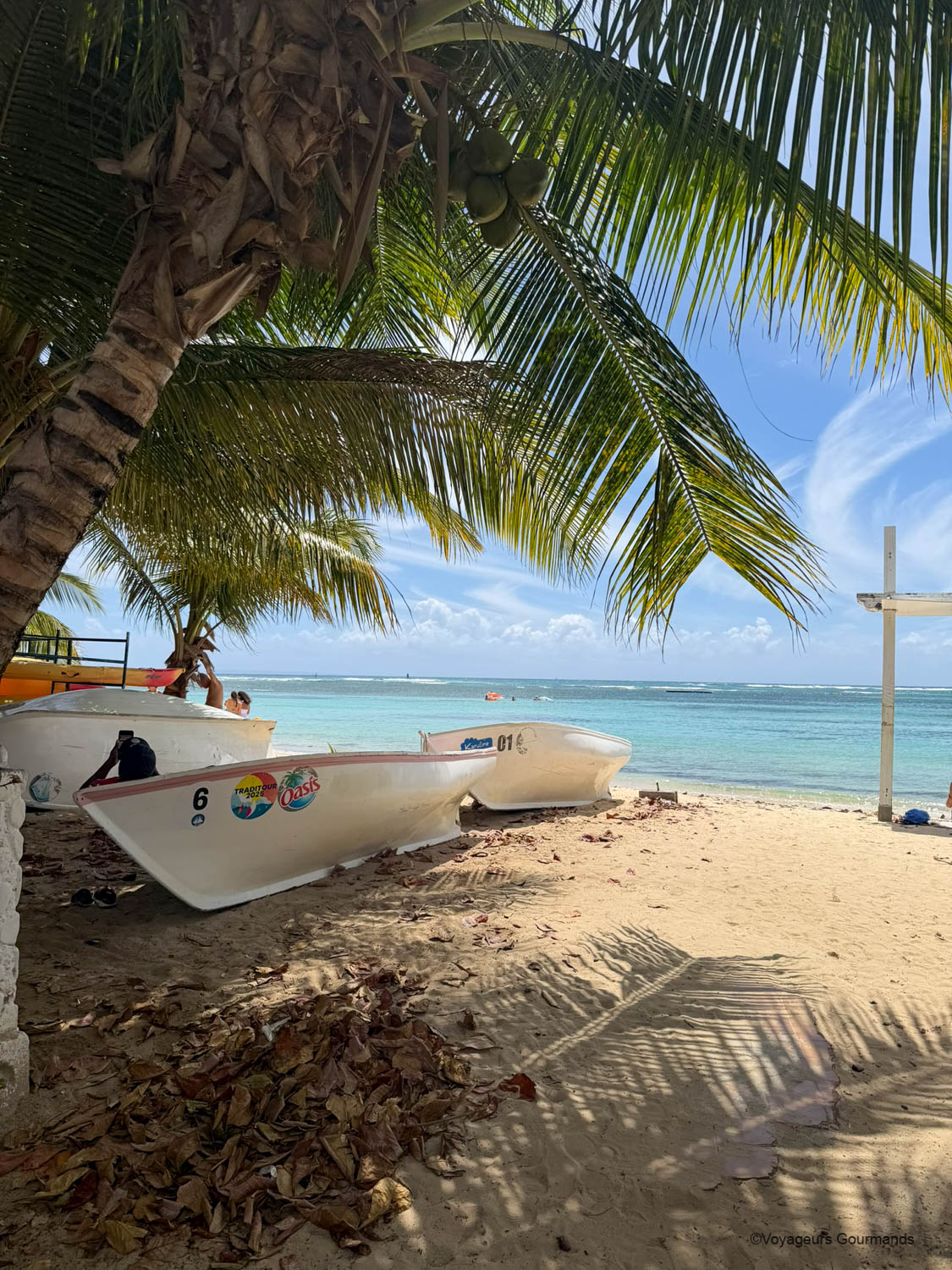
Caravelle Beach
La Caravelle is one of the most photographed beaches in Guadeloupe, and everyone told us it was not to be missed: white sand, coconut palms and a well-sheltered lagoon. Part of the beach runs along the Club Med, but access remains public, as it does along the whole coastline. We’ll be honest: we never saw it! We couldn’t find the entrance: we ended up in a dead end leading to a paid car park, with no idea whether it actually led to the beach, so we turned back. If you go, check the access carefully before setting off.
Bois Jolan
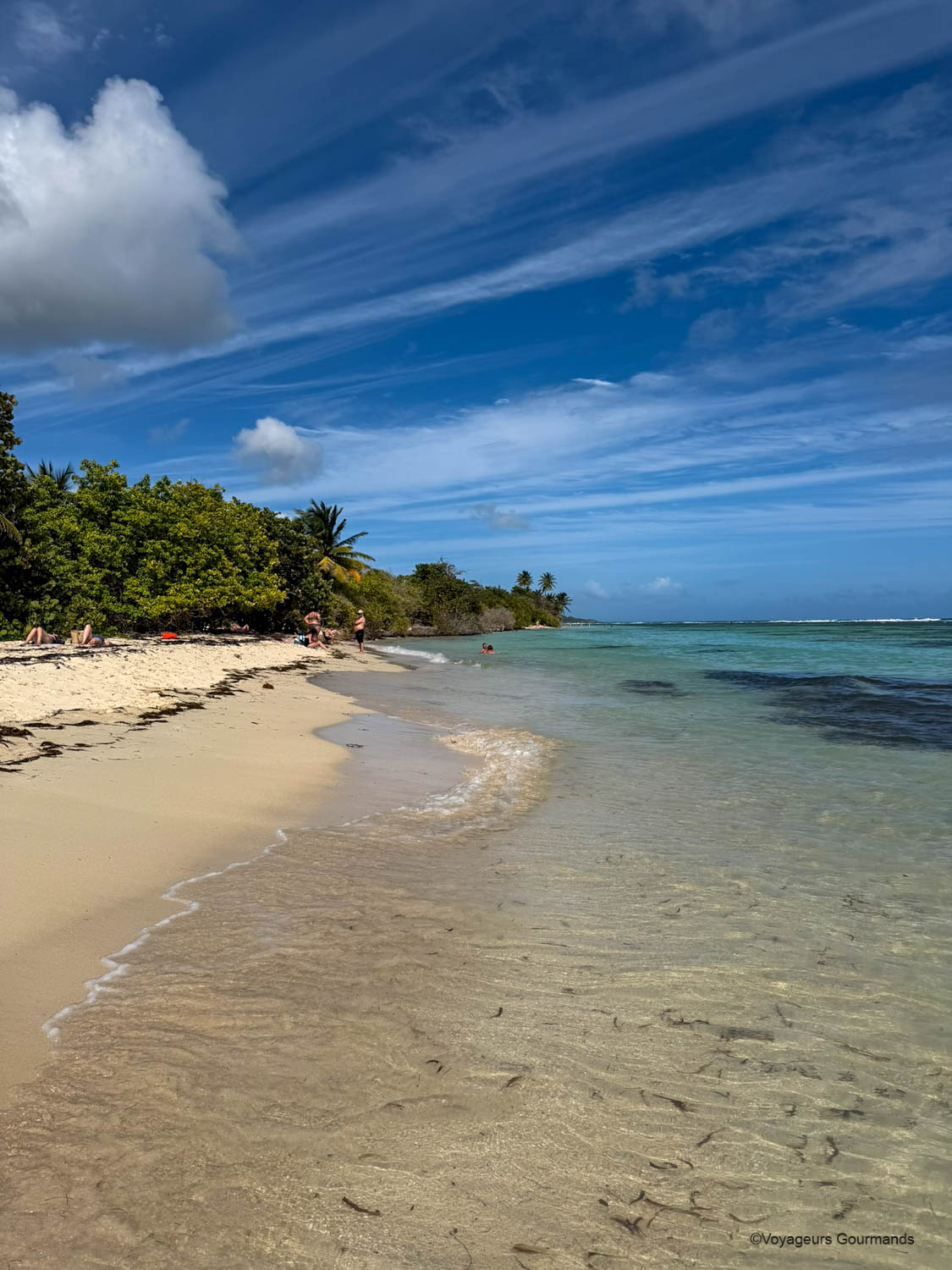
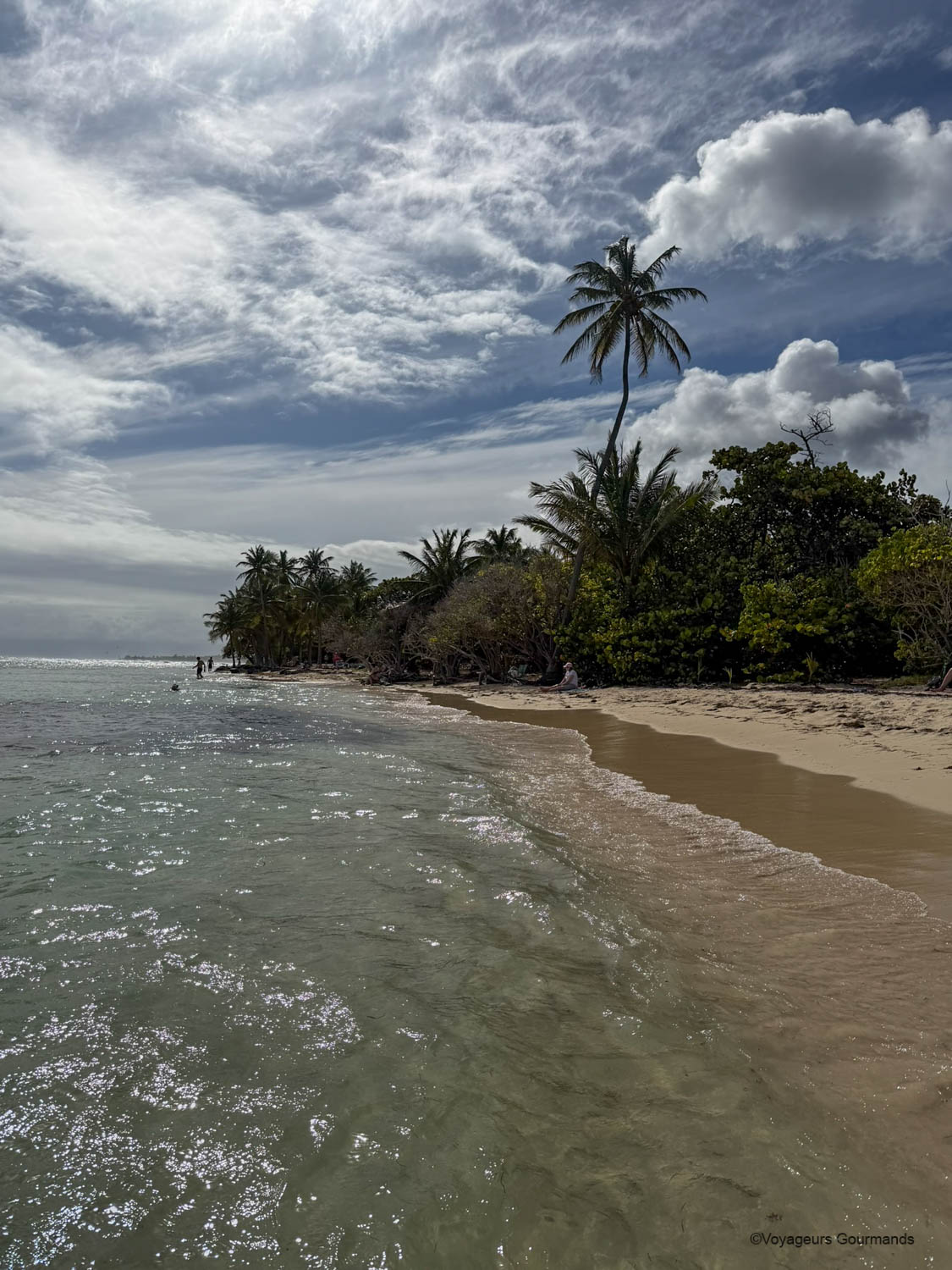
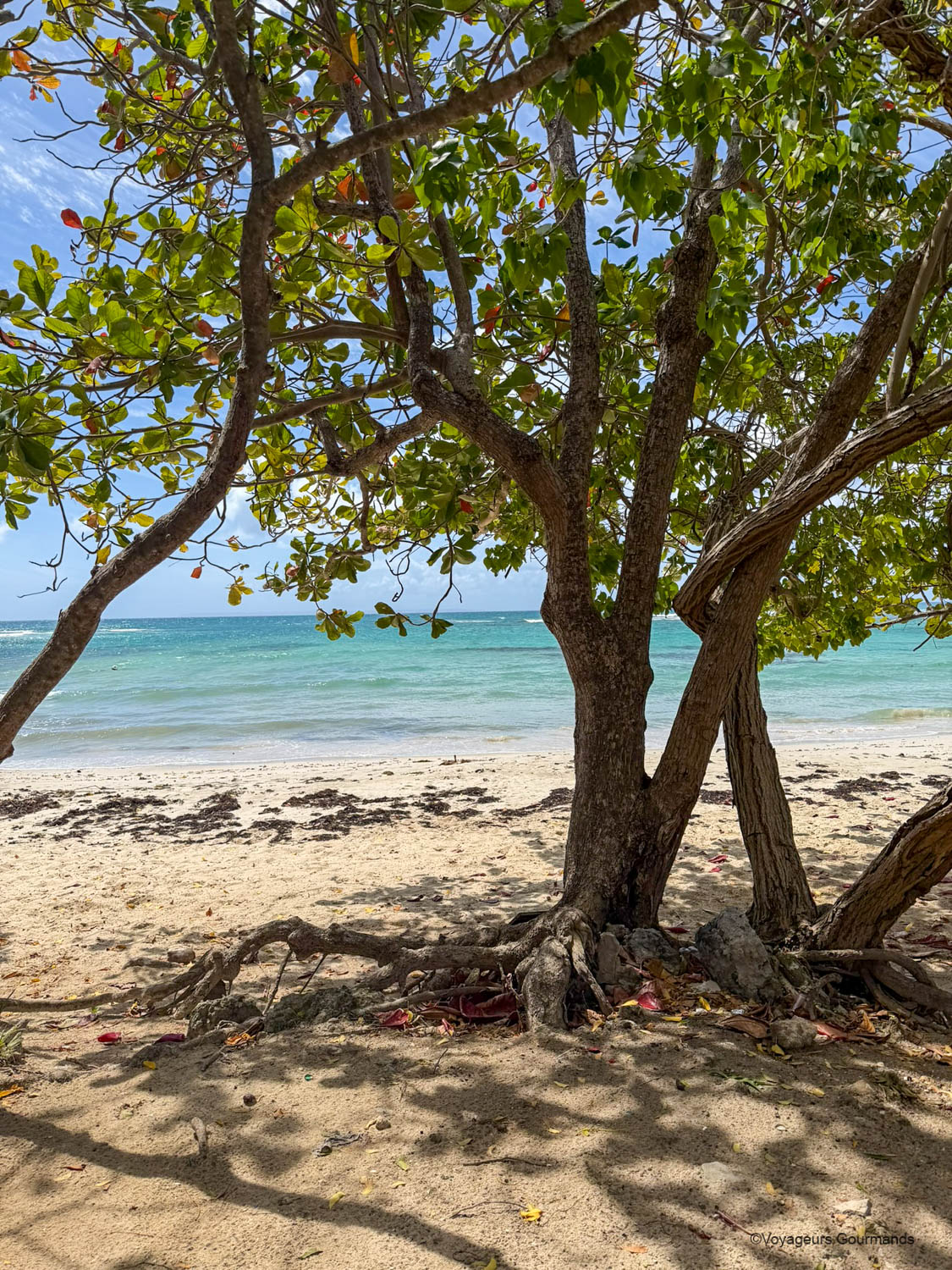
Quieter than the town beach, Bois Jolan is a long beach lined with sea grape trees, where it’s easy to find shade for a picnic. The lagoon is very shallow: you can walk a long way while still standing, which is reassuring with children. We found it rather pretty, but where we were, there was no restaurant, café or ice cream stand… just when we were craving a little ice cream! So bring some snacks. The weather turned threatening and we ended up leaving.
Raisins Clairs Beach
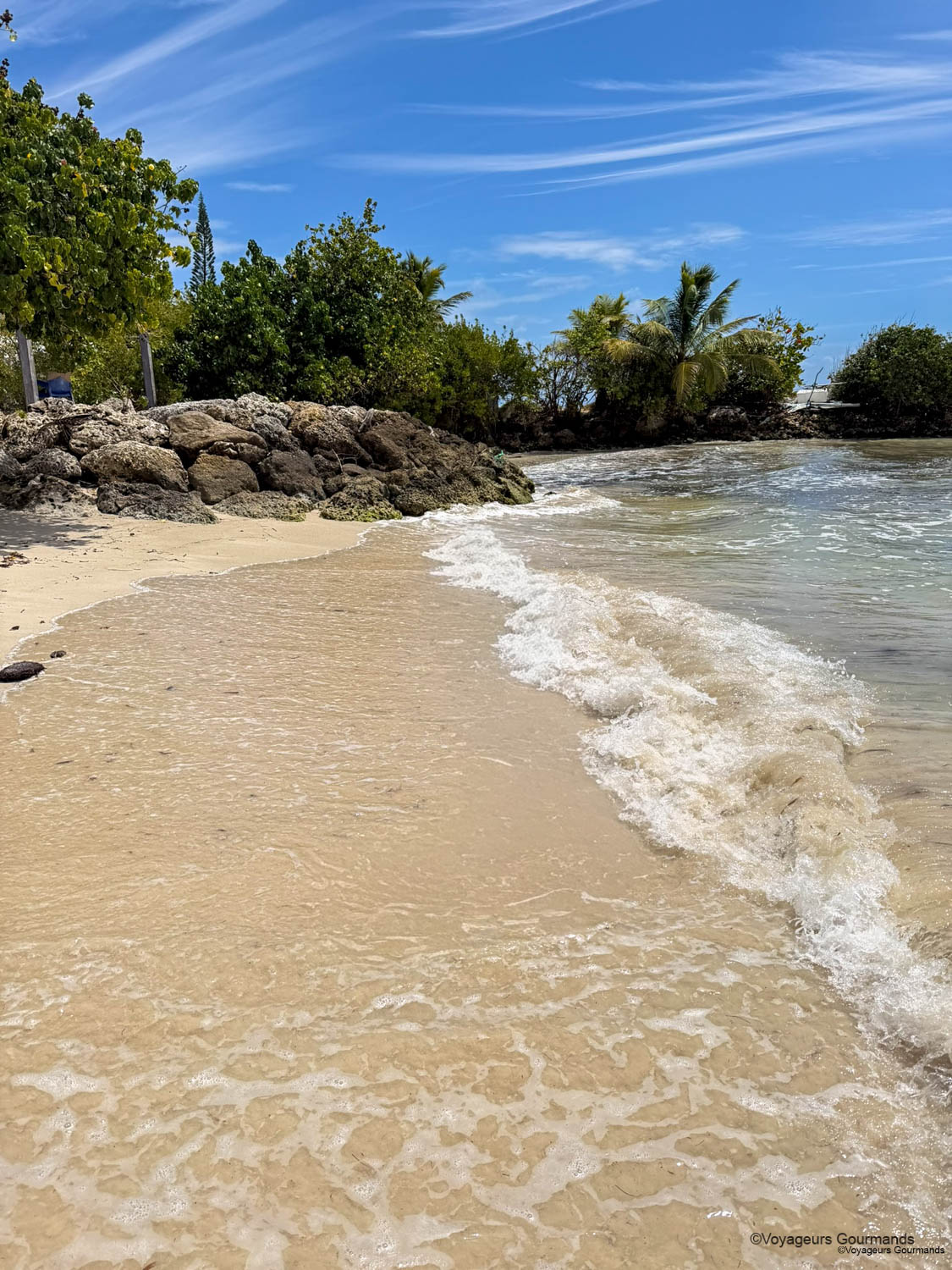
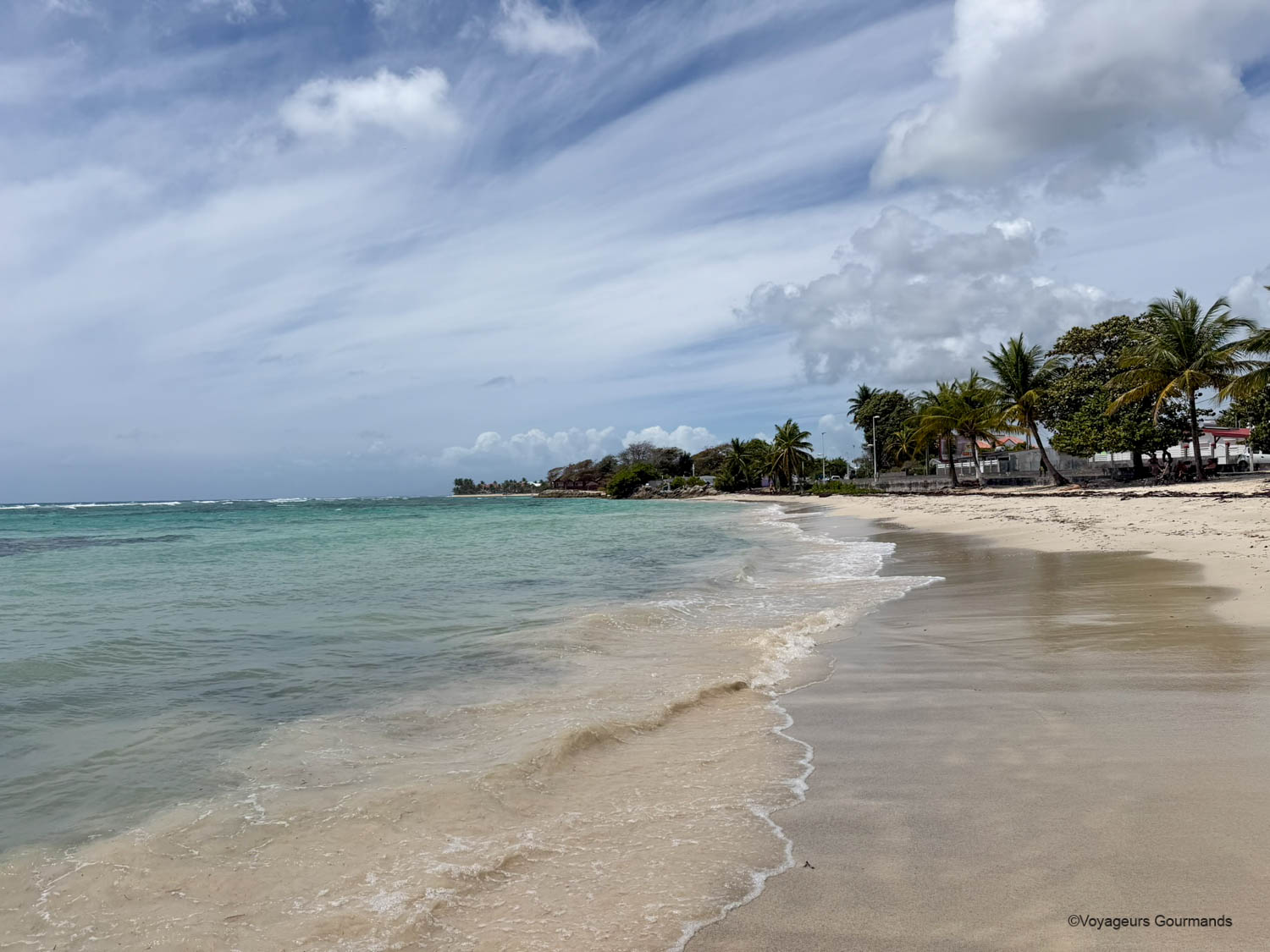
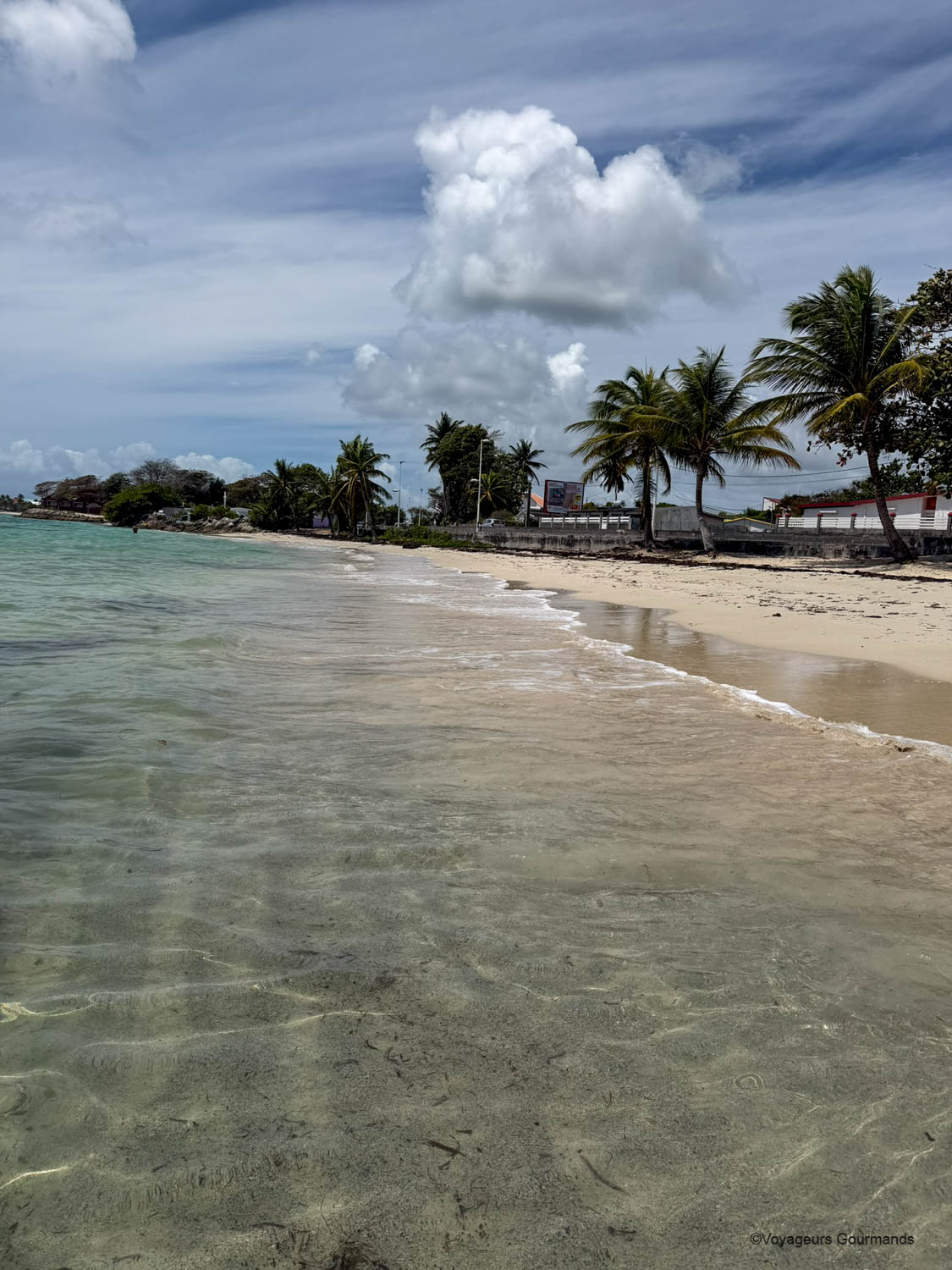
In Saint-François, Raisins Clairs is a classic family beach, with its sheltered lagoon and trees to shelter from the sun. We stopped here after the Pointe des Châteaux and the small Saint-François market.
La Douche: a quick stop if you’re in the area
On the road to the Pointe des Châteaux, La Douche is not a swimming beach but a natural curiosity: the waves rush into rocky cavities before shooting skywards like a small geyser.
The show depends a lot on the swell. When the sea is rough, the spray can be impressive; when it’s calm, the visit comes down to a quick photo stop. As for us, we were expecting something far more spectacular and were a little disappointed.
If you’re already near the Pointe des Châteaux, the stop only takes a few minutes. However, I wouldn’t drive several dozen kilometres just to see it.

Datcha Beach
In Le Gosier, Datcha Beach faces the Îlet du Gosier. It was the last beach of our trip, where Lucas had his final dip before heading home. Handy bonus: it’s only about fifteen minutes from the airport, perfect for a last swim on departure day. And for a last meal with your feet in the sand, several restaurants line the beach.

Trou à Man Louis
Next stop: the north of Grande-Terre, where the atmosphere changes completely, with cliffs, wind and far quieter beaches. We spent a day there, which I describe in our article on the wild north of Grande-Terre. First stop in Anse-Bertrand: Trou à Man Louis, a small hidden beach that few people know about. Access requires some care depending on the state of the sea, but the secluded setting is worth the detour: no crowds, just the sea, the wind and a truly wild atmosphere. We didn’t stay long, as lunchtime was approaching…


Anse Laborde
Anse Laborde, also in Anse-Bertrand, completely won us over! The sand is actually pink, incredible! The beach was almost deserted, and the clear, fairly calm water is great for both swimming and snorkelling. Bonus: a few restaurants nearby for lunch without getting back in the car.


Le Souffleur Beach
In Port-Louis, Le Souffleur Beach offers a long stretch of light sand and a generally calm sea. However, it gets very busy: when we were there, it was hard to find a quiet spot despite its size. We only stayed long enough for a coconut sorbet! Facing west, it’s still a good option for watching the sunset.


Pointe Sable, on the edge of the Grand Cul-de-Sac Marin
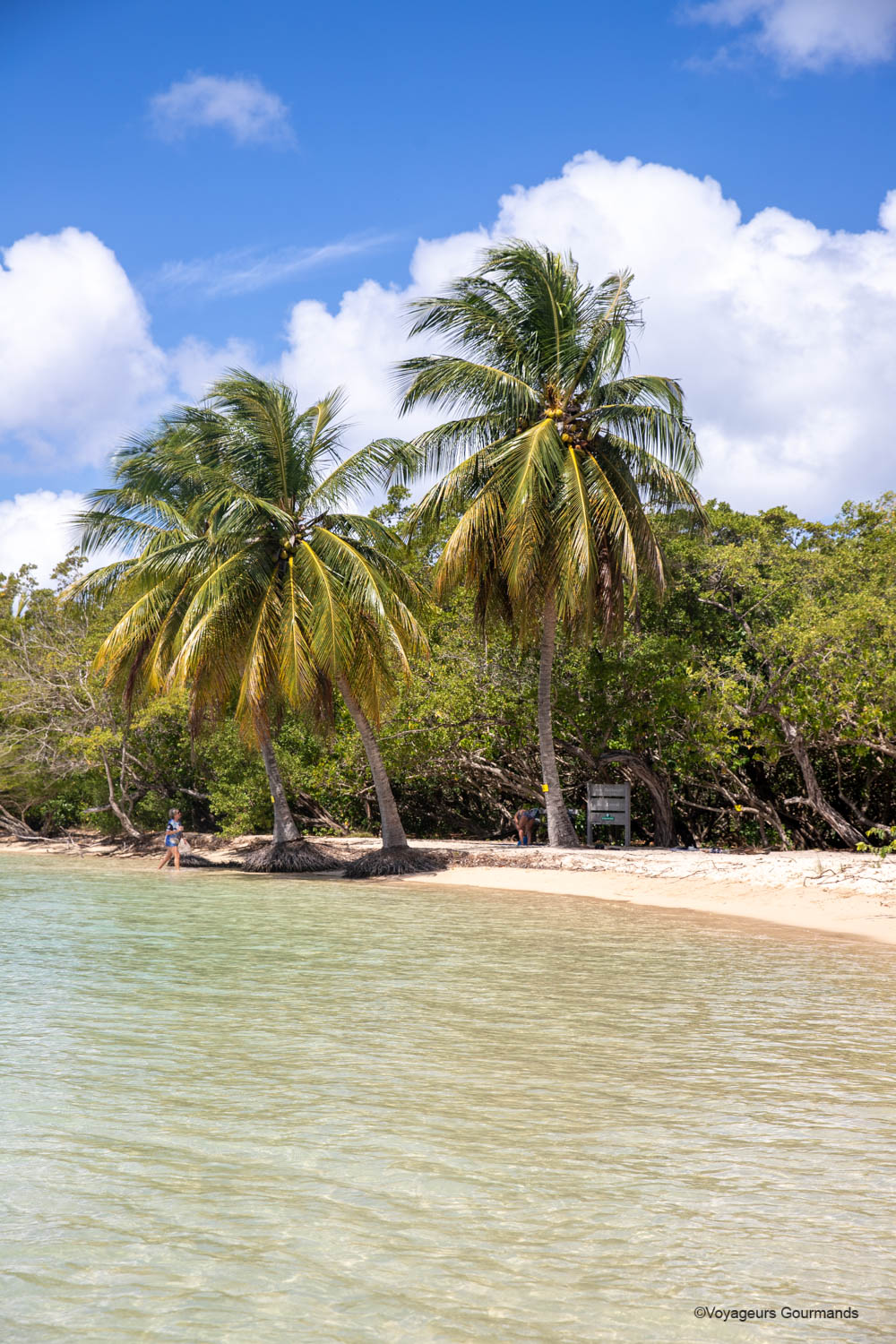
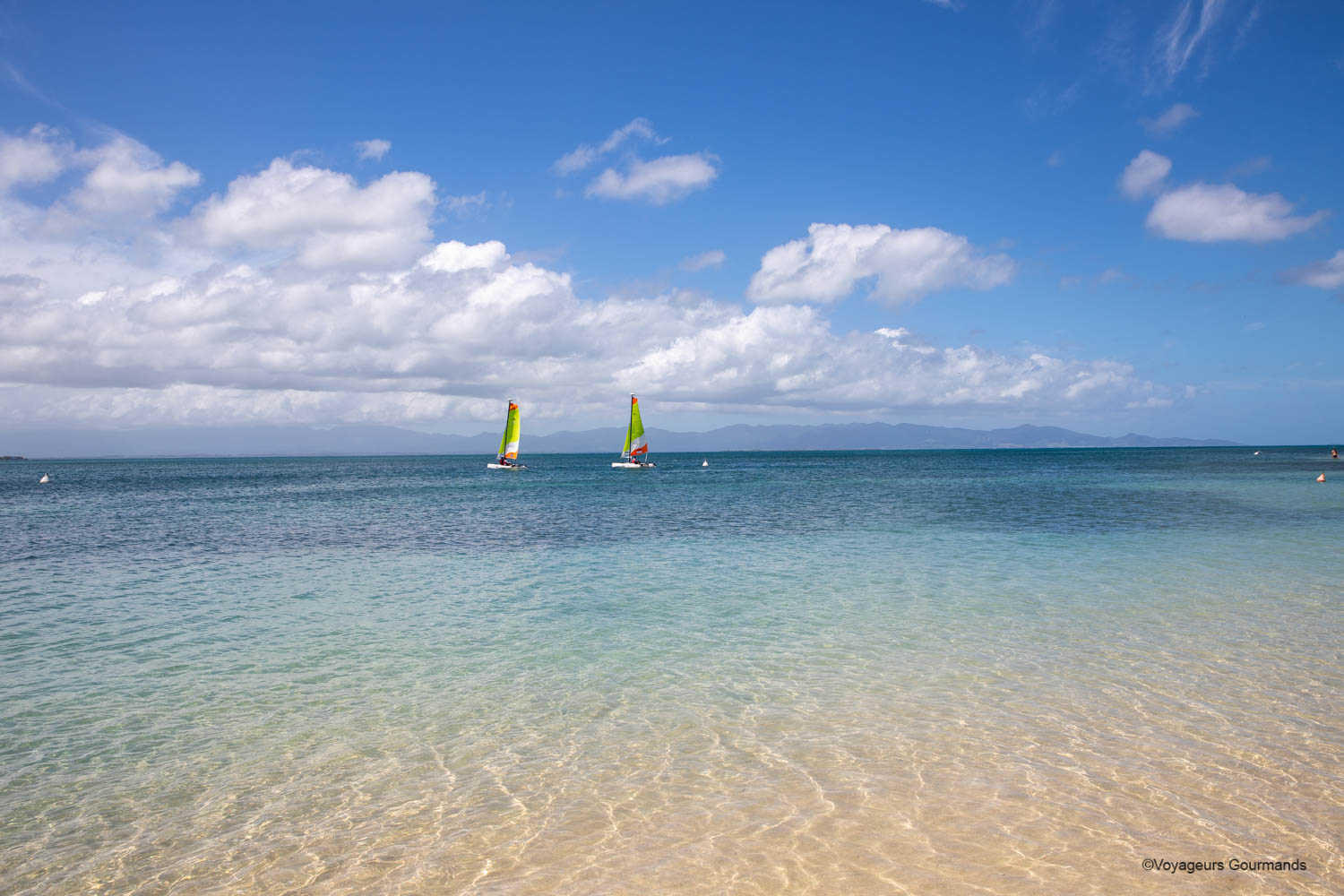
We discovered Pointe Sable on a boat trip in the Grand Cul-de-Sac Marin, the huge lagoon between Grande-Terre and Basse-Terre. Setting off from Morne-à-l’Eau, we crossed the mangrove and went snorkelling in crystal-clear water, before ending the trip on this beach.
Pointe Sable lies on the west coast of Grande-Terre, near Port-Louis. Our guide told us you can also get there on foot, but it’s a long walk. And a long walk means a deserted beach! By boat, it’s much easier… and far more beautiful.
Verdict: the most beautiful beach of our holiday! Fine sand, shallow, crystal-clear water, the perfect place to unwind after a morning at sea. Remember to book your boat trip well in advance: places often sell out several weeks ahead.
The wild beaches of Basse-Terre
Basse-Terre is the other face of Guadeloupe: golden or dark sand, rainforest running down to the sea and bigger waves. We stayed three nights in Deshaies, at the Jardin des Colibris, ideal for exploring the beaches of the west coast.
💡 Good to know
On the Basse-Terre side, the sea can be rough and the currents strong, especially at Grande Anse. Swim near lifeguard stations where there are any, and always respect the flags.
Grande Anse, in Deshaies
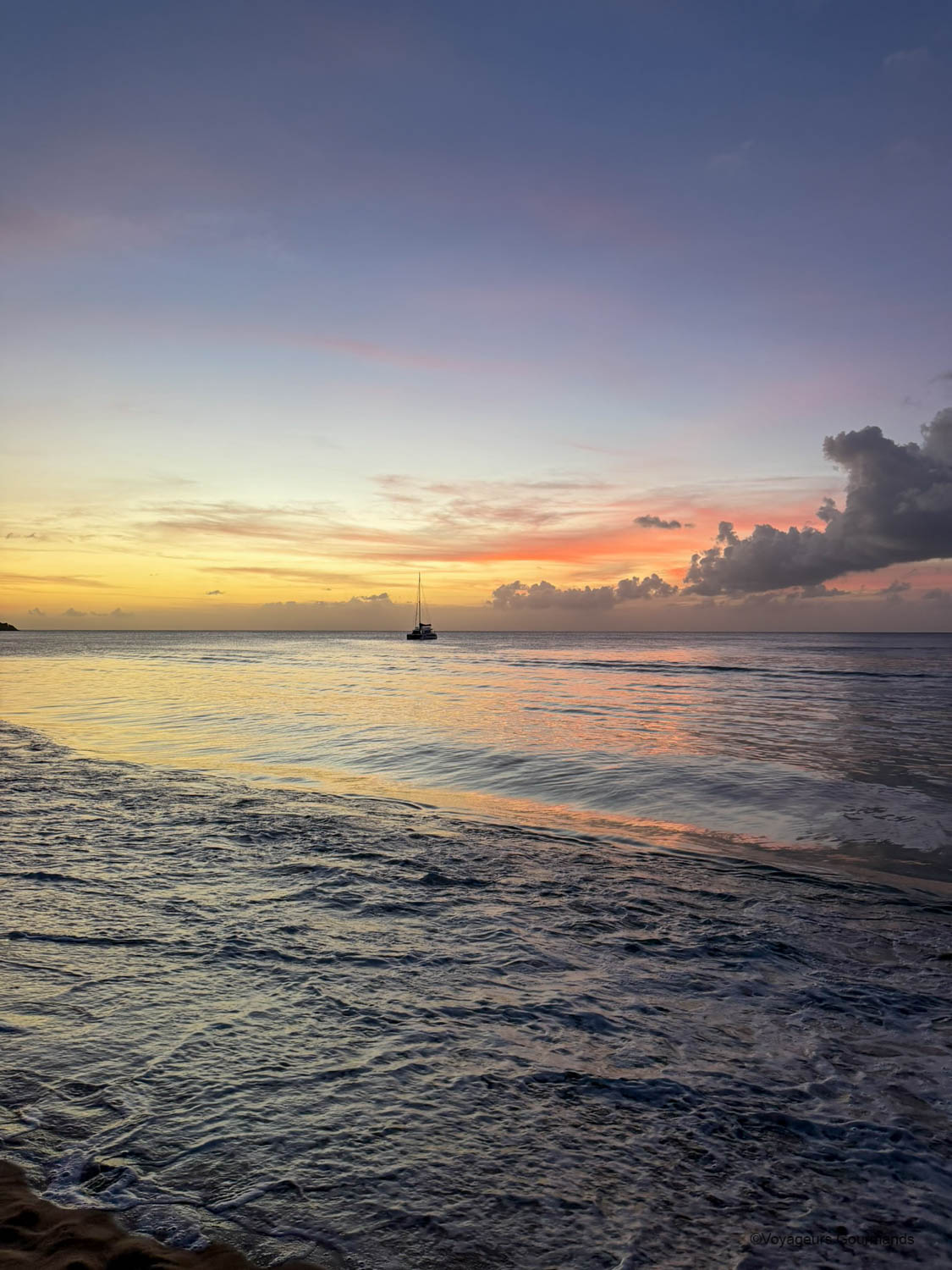
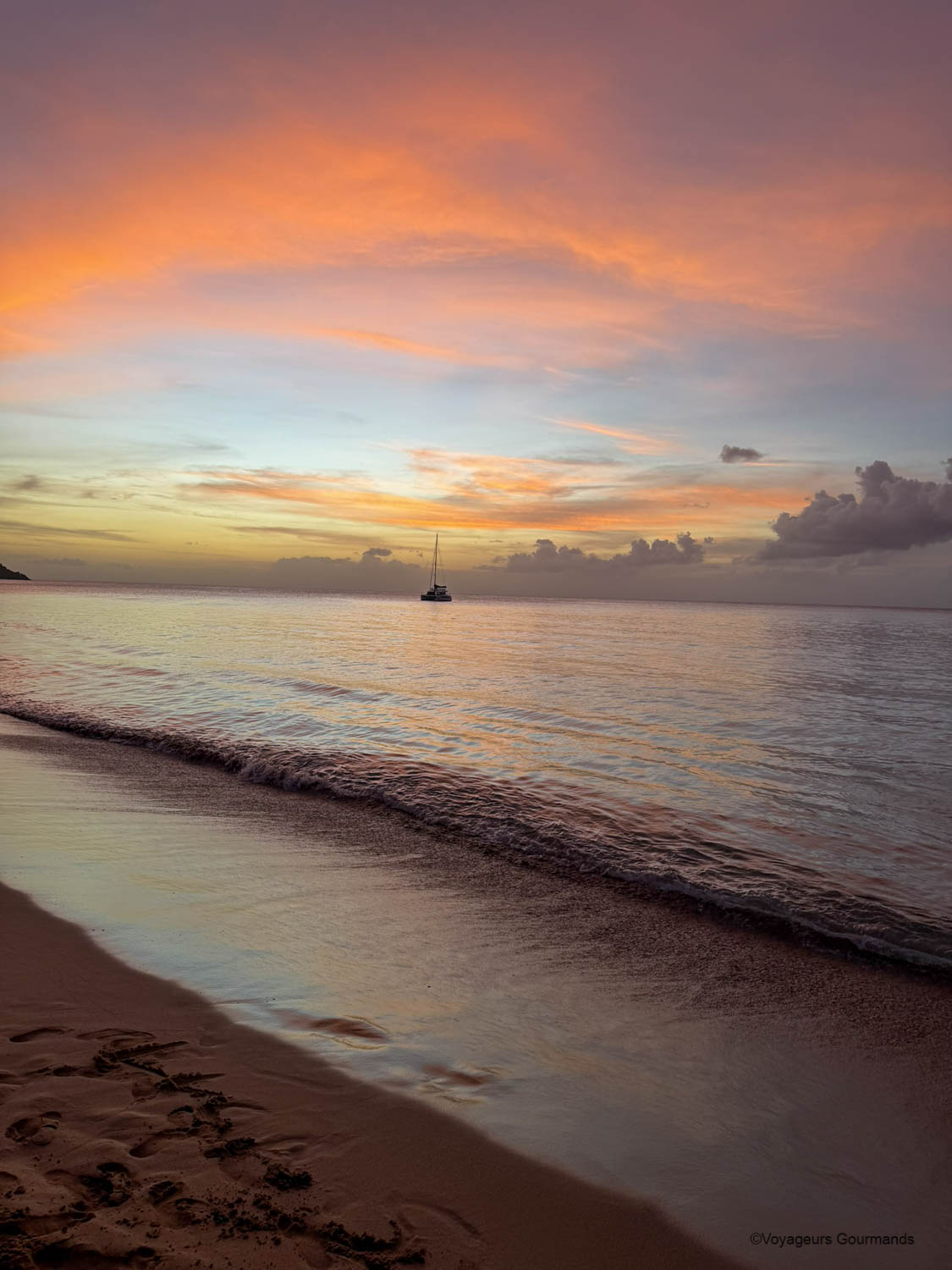
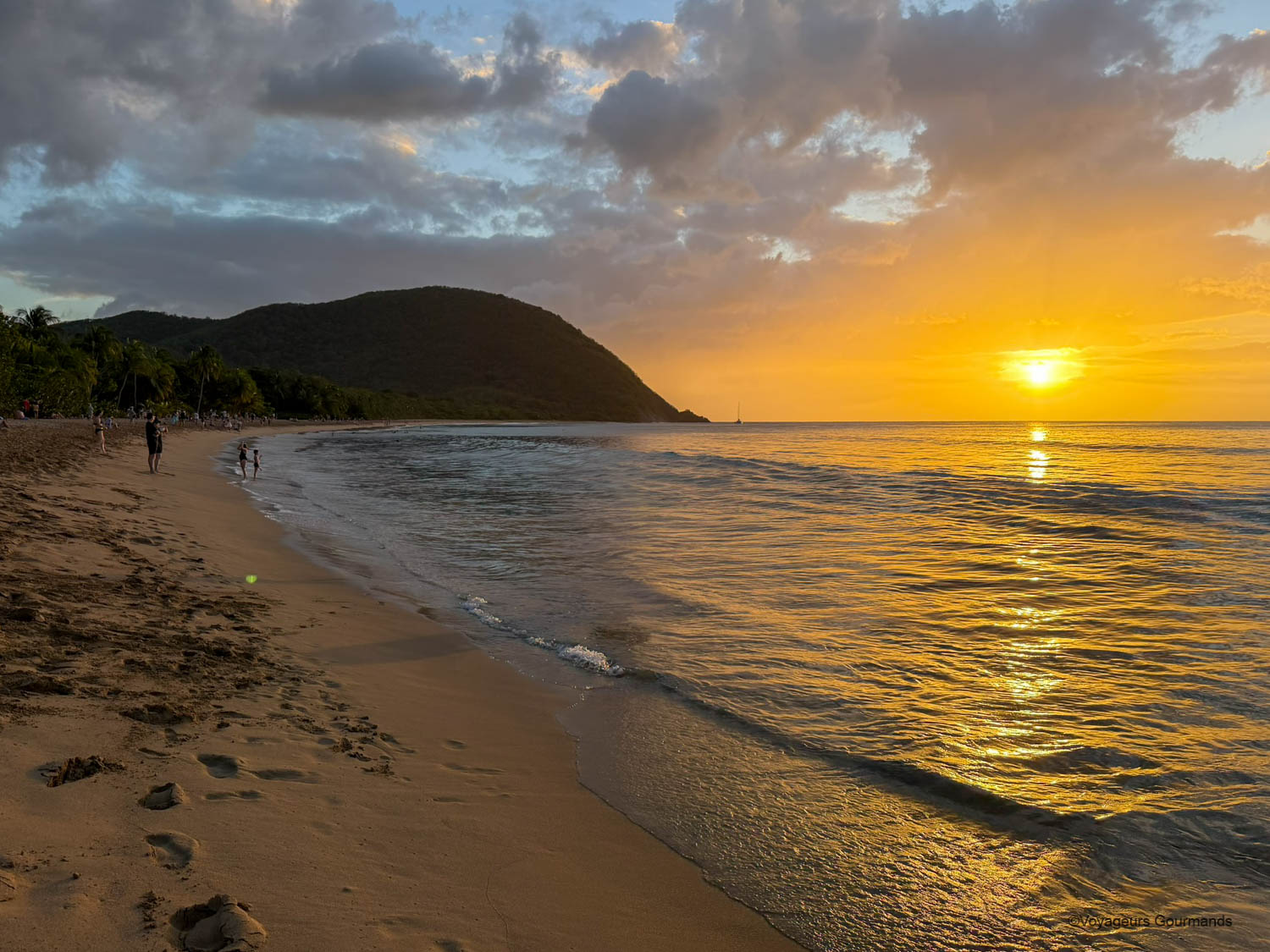
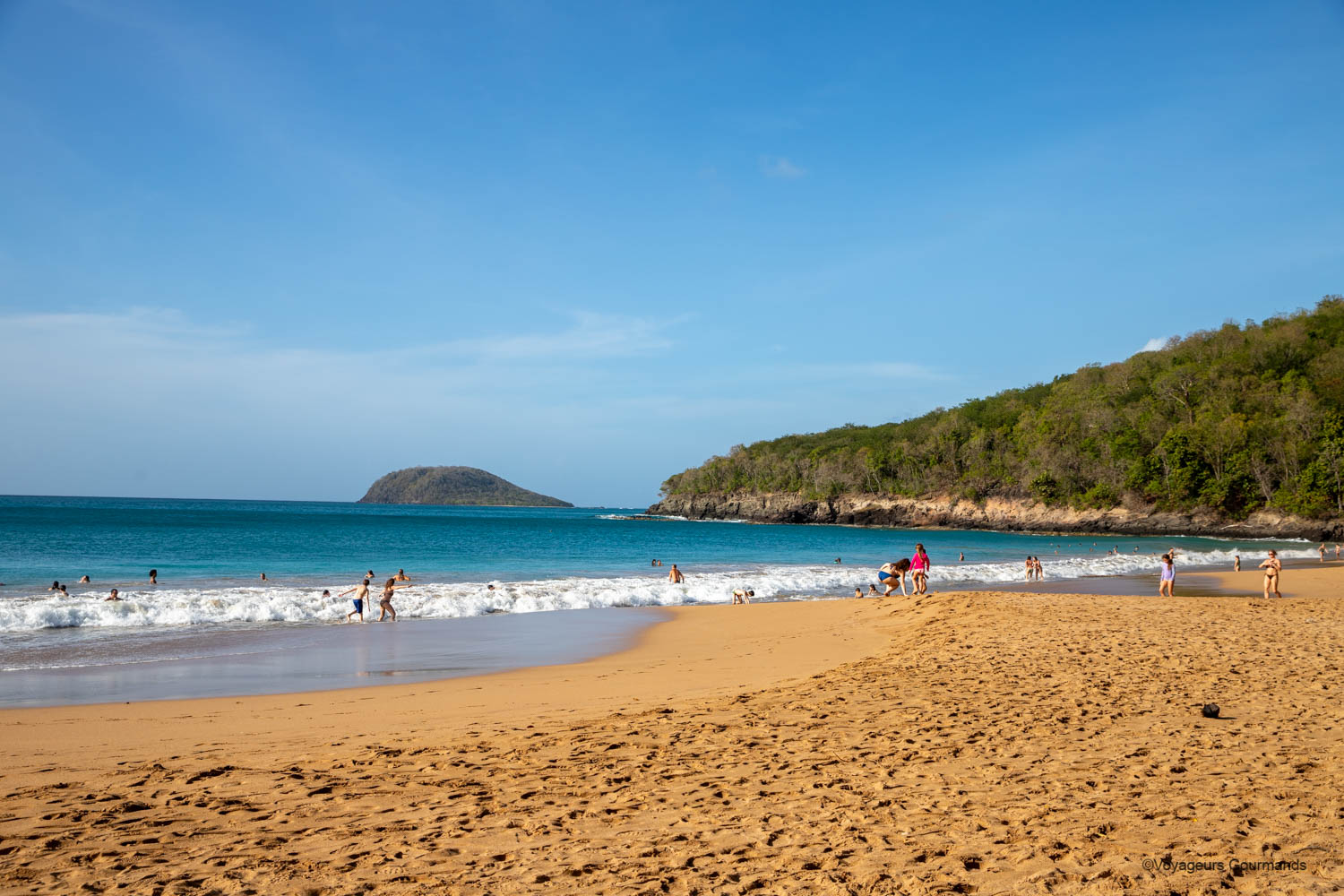
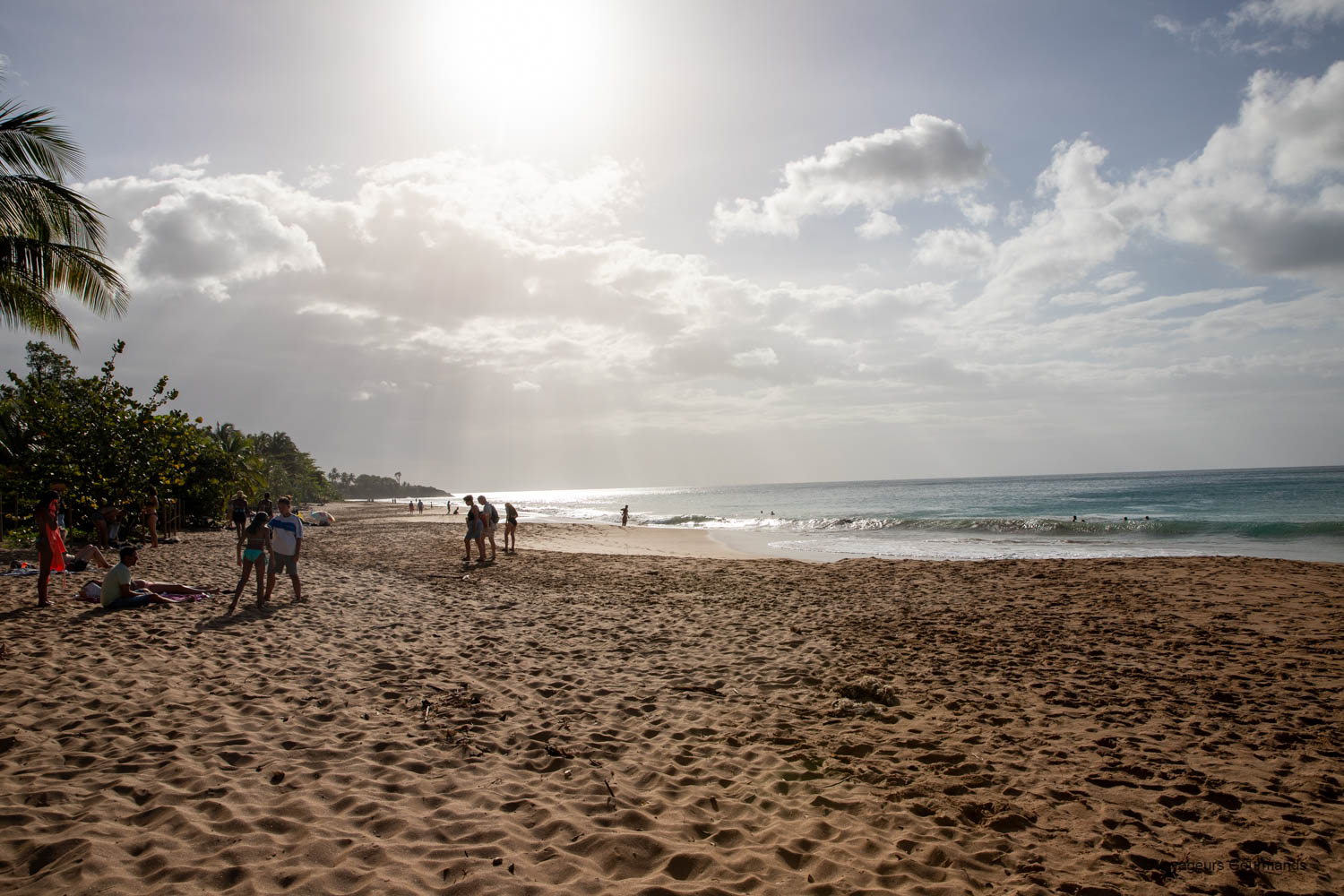
Grande Anse is a huge bay of golden sand lined with green hills, often listed among the most beautiful beaches in Guadeloupe. We loved it so much that we came back several evenings in a row for the sunset: this is where we saw the most beautiful ones of our whole trip. When the sea is calm, swimming is lovely; when the waves pick up, it’s best to be careful.
Anse Tillet
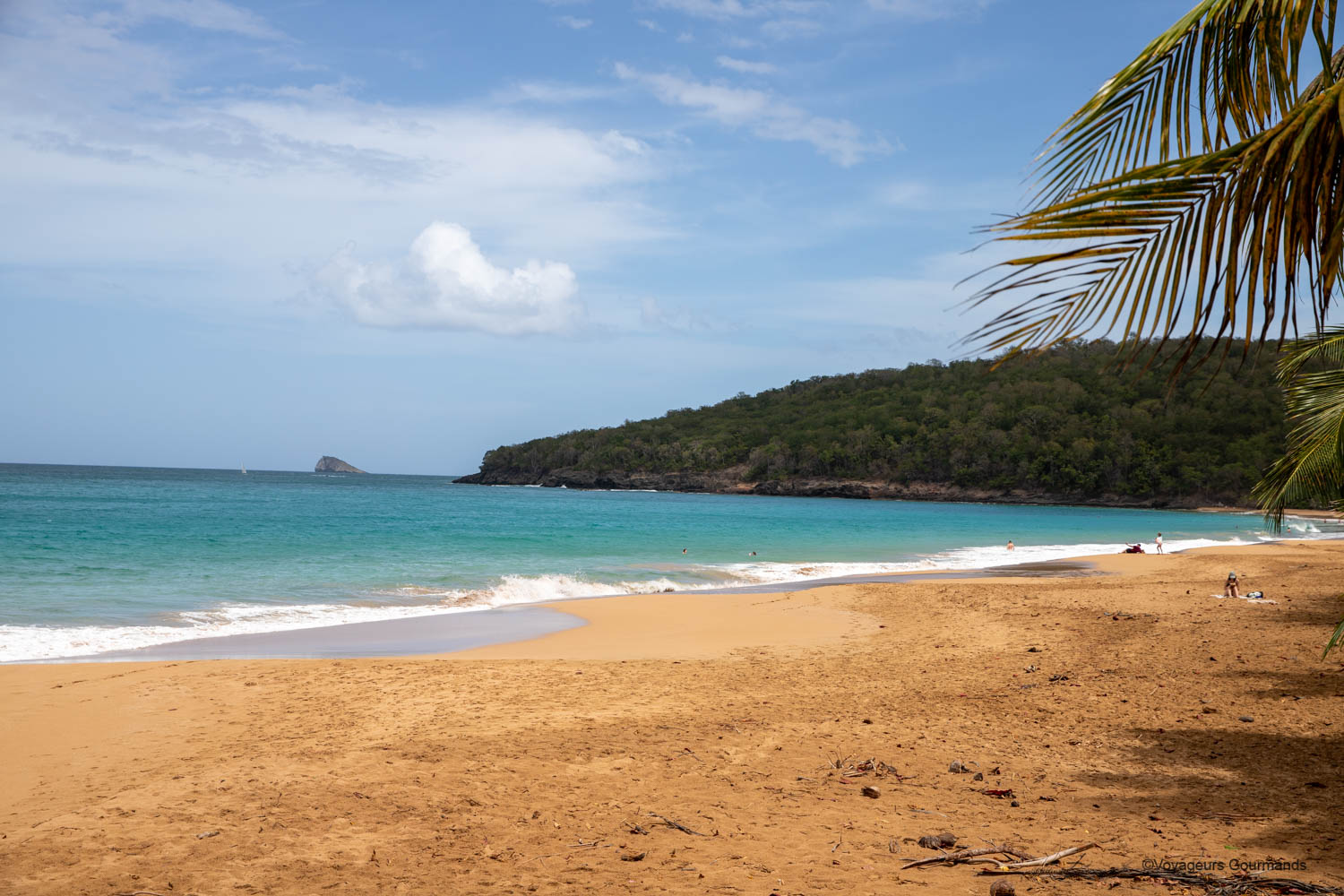
Near Deshaies, Anse Tillet is reached via a short trail. Wilder and much quieter than its neighbours, it makes a lovely nature break. We combined it with a visit to the Deshaies Botanical Garden, a few minutes’ drive away.
Malendure Beach
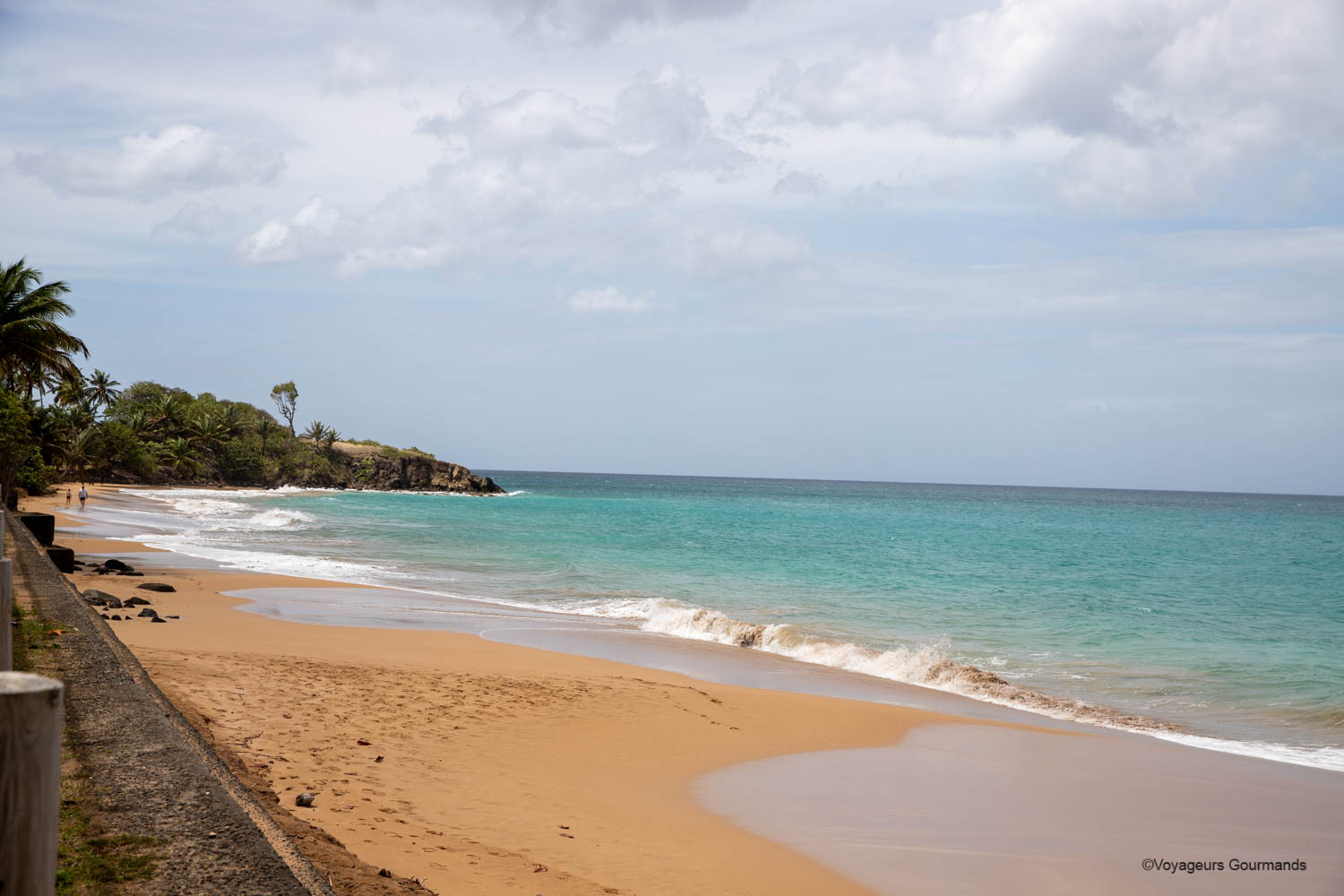
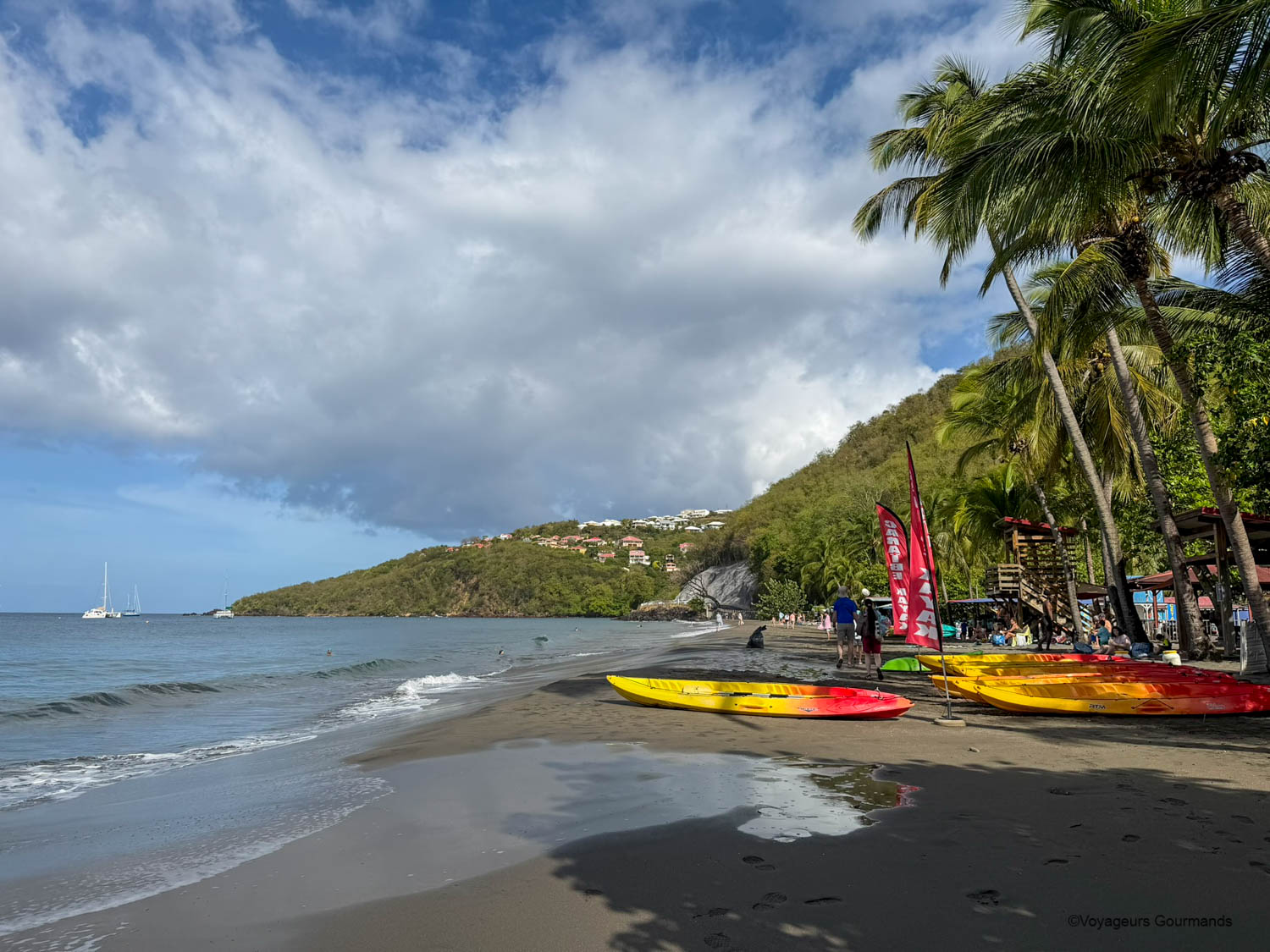
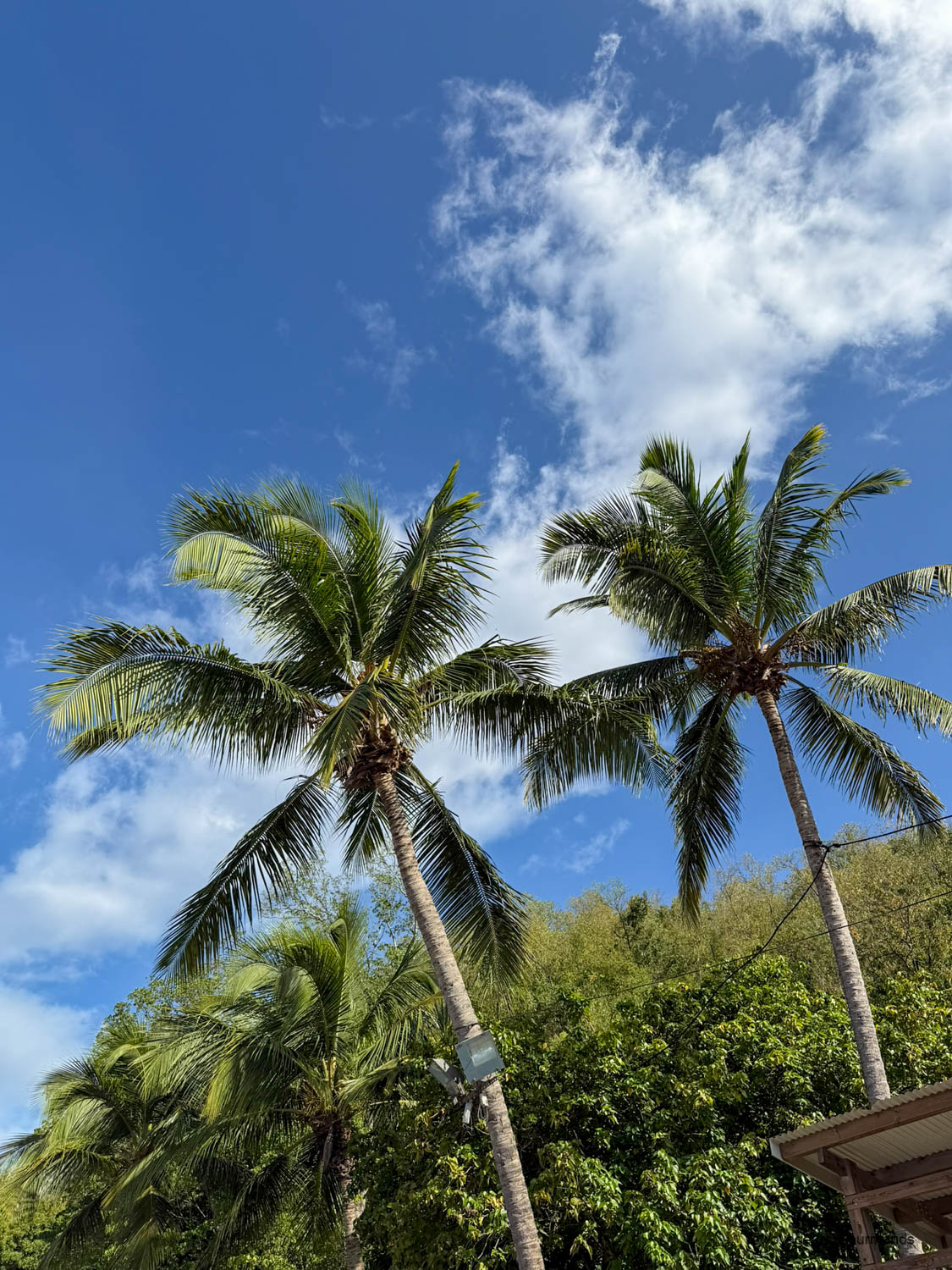
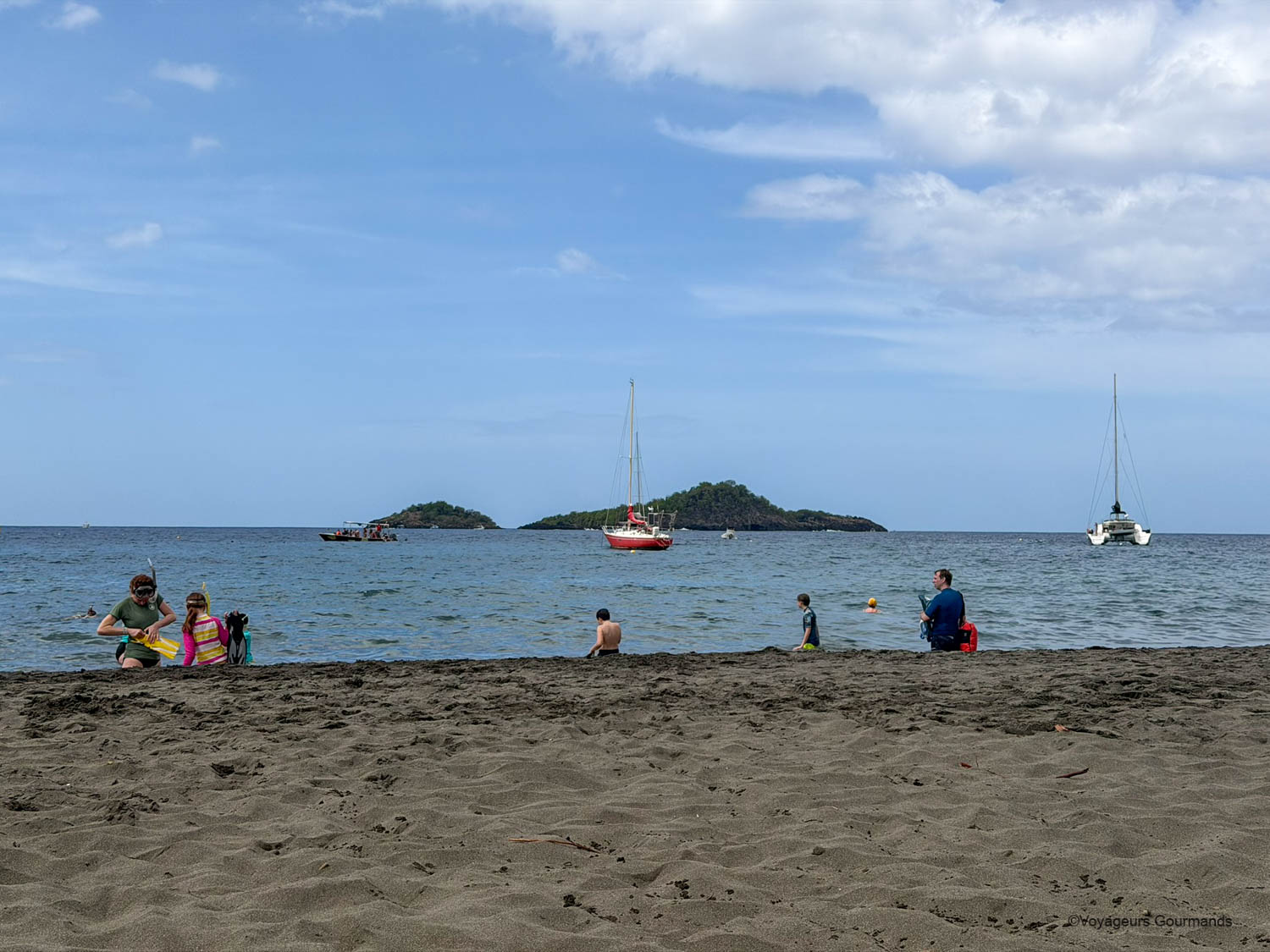
In Bouillante, opposite the Cousteau Reserve, Malendure is Guadeloupe’s best-known snorkelling spot, especially for the turtles that come to feed close to the shore. Its black volcanic sand contrasts with the white sand of the Grande-Terre beaches.
We were there by 7.30 am (thanks, jet lag!), but not a single turtle in sight, probably because of the rain over the previous days. A big disappointment for me… The seabed of the reserve is still a wonderful place to explore with a mask and snorkel.

The best beaches in Les Saintes
In Les Saintes, you hop from cove to cove on Terre-de-Haut, the main island. We spent a day there, one of the highlights of our trip, which I tell you about in our article on what to do in Les Saintes in one day.
Pain de Sucre Beach
Probably my favourite beach in Les Saintes, even though it was very crowded. At the foot of the Pain de Sucre hill, the water is very clear and teeming with fish: it’s an excellent snorkelling spot. Be careful, the access path can be slippery after rain.


Pompierre Beach
Lined with coconut palms and tucked away at the end of a cove, Pompierre is one of the best-known beaches on Terre-de-Haut. When we were there, it was quite windy and there was some sargassum, which is why we preferred Pain de Sucre. In good weather, it’s still a safe bet for a swim.


Anse Crawen
A local we met at Pain de Sucre told us about Anse Crawen, a quieter spot where we might see turtles. That was all it took to convince me! Once again, no luck with the turtles, but we did come across… some little goats on the beach. If you’re looking for a wild, peaceful spot, this is the perfect place.


Other beaches to discover: Marie-Galante, La Désirade, Petite-Terre
We weren’t able to visit them (our trip to Petite-Terre was cancelled the day before due to the weather…), but these islands are said to have some of the most unspoilt beaches in the archipelago:
- Marie-Galante: long white-sand beaches and calm lagoons, with very few people.
- La Désirade: wild coves and a timeless atmosphere.
- Petite-Terre: a nature reserve only accessible by boat, famous for its crystal-clear waters, turtles and iguanas.
A tip: book this kind of excursion early in your stay. If it’s cancelled, you’ll still have time to reschedule.
💡 Good to know before hitting the beach in Guadeloupe
Sargassum seaweed regularly washes up on some beaches, especially on the east- and south-facing coasts. The situation changes from day to day: check before you go and always have a back-up beach in mind. Also pack reef-safe sunscreen, water shoes and a mask and snorkel.
✤✤✤
Our 3 favourite beaches in Guadeloupe
If I had to pick just three: Anse Laborde for its pink sand, Pointe Sable for its lagoon and Grande Anse for its sunsets. But the best thing about Guadeloupe is going from a calm lagoon to a wild beach in just a few kilometres. Hire a car, set off early in the morning to enjoy the beaches before the crowds, and let yourself be surprised!
FAQ – Best beaches in Guadeloupe
Frequently asked questions are here!
What is the most beautiful beach in Guadeloupe?
It all depends on what you’re looking for. Our two favourites are Pointe Sable, near Port-Louis, on the edge of the Grand Cul-de-Sac Marin, and Anse Laborde, in the north of Grande-Terre, with its pink sand. For an easy-to-reach postcard beach, Caravelle Beach in Sainte-Anne has a reputation as a must, and for sunsets, nothing beats Grande Anse in Deshaies.
Where can I find white-sand beaches in Guadeloupe?
White-sand beaches are mainly on Grande-Terre: around Sainte-Anne, Saint-François and Le Gosier, and in the north, in Anse-Bertrand and Port-Louis. Their calm, shallow lagoons are perfect for swimming with the family.
Where to go snorkelling in Guadeloupe?
The best spots are Malendure Beach, opposite the Cousteau Reserve, Pain de Sucre Beach in Les Saintes and the islets of the Grand Cul-de-Sac Marin, reachable on a boat trip. You can see tropical fish, coral and, with a bit of luck, turtles.
Is La Douche worth the detour?
La Douche is a natural curiosity near Saint-François, where the waves rush into the rocks. The show depends heavily on the swell: when the sea is calm, it’s of limited interest. It’s mainly a quick stop if you’re already near the Pointe des Châteaux.
Is there sargassum on Guadeloupe’s beaches?
It happens, especially on the east- and south-facing coasts. The situation changes from day to day: check locally before you go and always have another beach in mind.