


Cuba. Its vintage cars, its music, its dancing, its cigars, its beaches, its complicated history and its “restrictions”… This is the country that sparked our very first conversation, back in late 2010, more than 7 years ago. Choosing it for our honeymoon felt like the obvious choice.
And now we can say it… Cuba. Everything we had imagined and more. Its varied landscapes, lush green valleys, lively towns, jungle, wildlife and plants… its horses, its cowboys and its good humour… but also that opening-up that is so slow to come… The young people, a little jaded by the situation in their country… The engineer who became a taxi driver… The children asking us for caramelos or chewing gum, and the elderly ladies asking us for soap… Another taxi driver, also retrained, who would love to travel with his family but cannot… A country that touched us in so many ways…
In this article, we share the itinerary of our 2-week Cuba road trip along with all our practical tips. We will then tell you about the highlights of the trip in separate articles.
✤✤✤
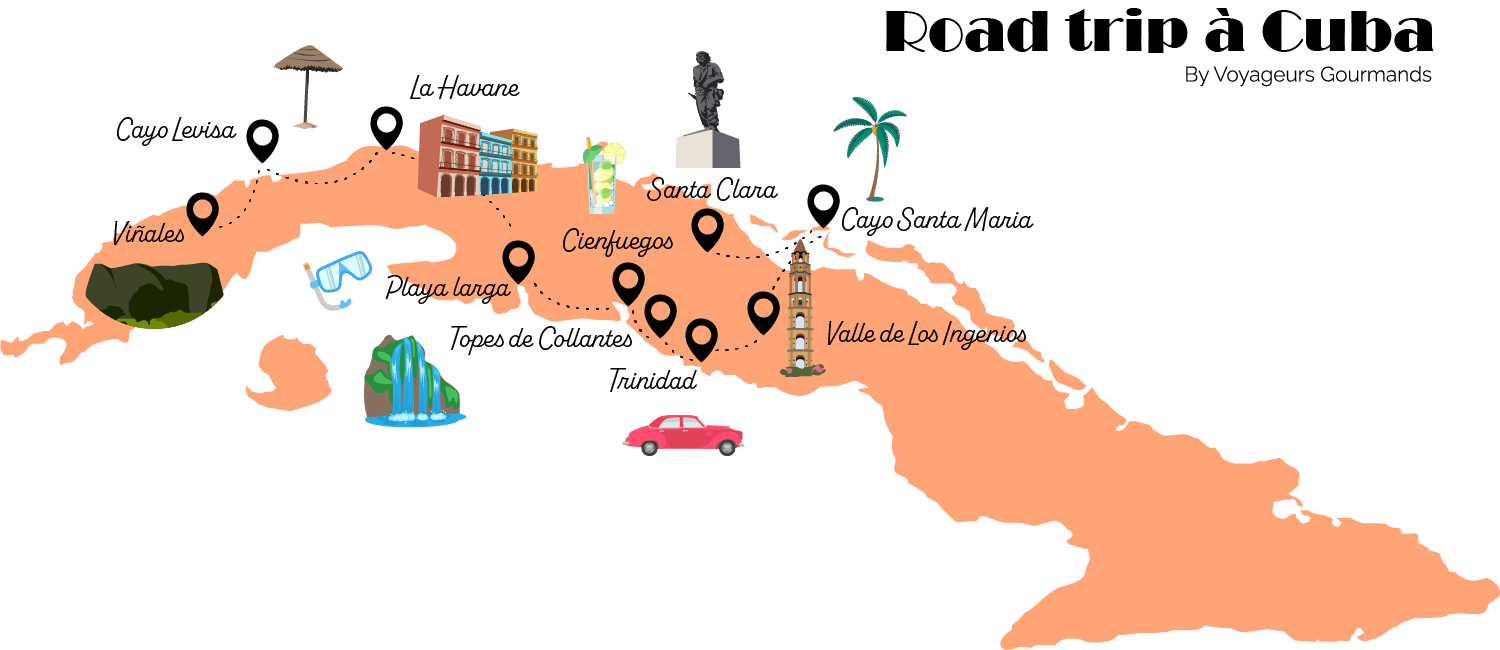
What to do in Cuba in 2 weeks
| Havana | 3 nights |
| Viñales | 3 nights |
| Cayo Levisa | 1 day (day trip) |
| Playa Larga | 2 nights |
| Cienfuegos | stopover (no overnight stay) |
| Trinidad | 4 nights |
| Cayo Santa Maria | 1 night |
| Havana | 1 night (return) |
Cuba road trip: our 15-day itinerary
For this 2-week trip, we chose to focus on the west of the island. Although some distances are fairly reasonable, travel times are rather long… We opted for taxis and buses because car hire was simply far too expensive (€1,500 for 10–12 days). We were on our honeymoon and wanted to take our time, which is why we chose 15 days. With 10 days in Cuba, I think you could still visit Havana, Viñales and Trinidad.
Days 1 to 4: visiting Havana
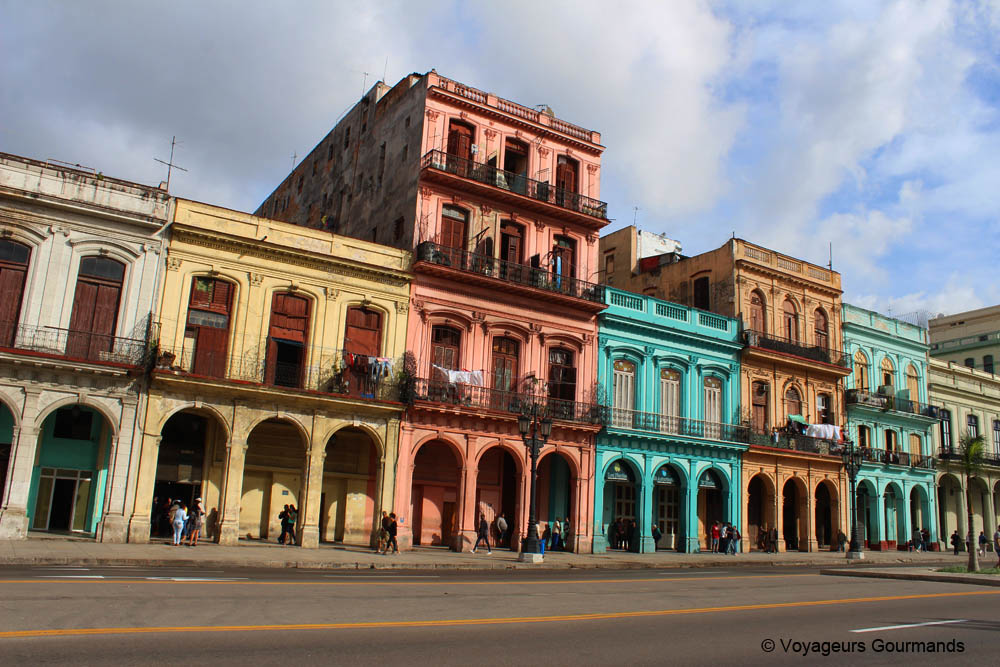
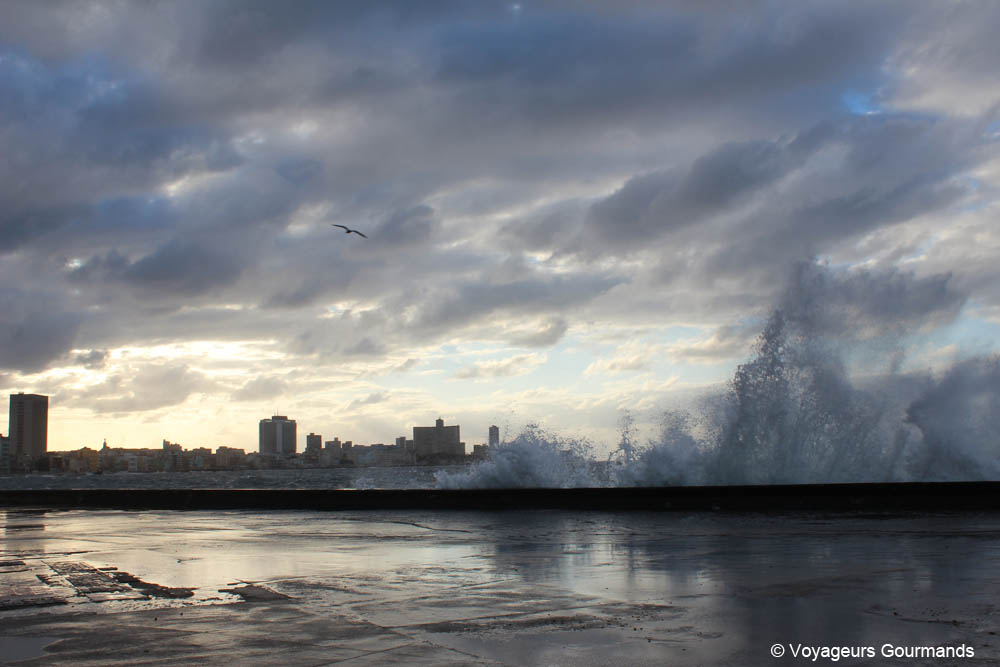
Our Cuban adventure begins in the capital, where we land at around 2.30pm on a Saturday and stay for 3 nights. We mainly explore the Habana Vieja, Centro Habana and Vedado districts. Museums, walks along the Malecón, the remains of old fortresses or simply wandering the streets: there is plenty to do. Our article with all the details: visiting Havana in 3 days (in French).
➺ Our first place to stay in Havana, in Habana Vieja, was a real favourite: a casa run by the sweetest little grandmother! We highly recommend it: Hostal la Cecilia.
Days 4 to 7: discovering Viñales and its mogotes
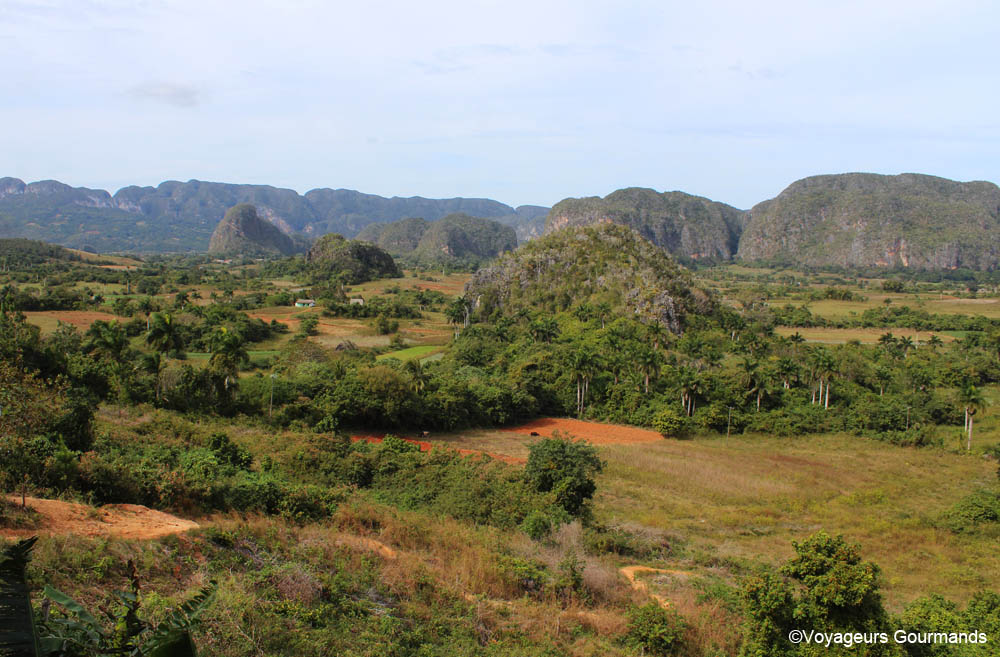
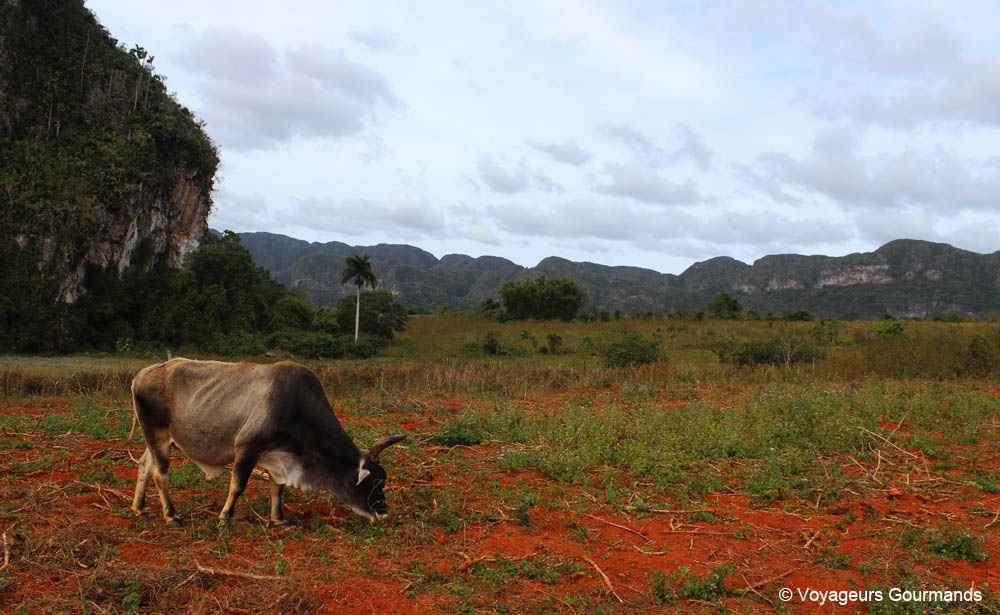
On Tuesday morning, we take a shared taxi to Viñales and its valley of mogotes, arriving at around 1pm. On the agenda: horse riding, hiking, a beach trip and even a visit to the largest cave in Cuba, the Cueva de Santo Tomás. Our days were packed! Our article on the Viñales Valley and its surroundings (in French).
➺ Where we stayed in Viñales: Casa de Amarilis y Leonel, which I couldn’t find online again. A lovely couple, but the house doesn’t have a great view of the mogotes…

Day 7: day trip to Cayo Levisa
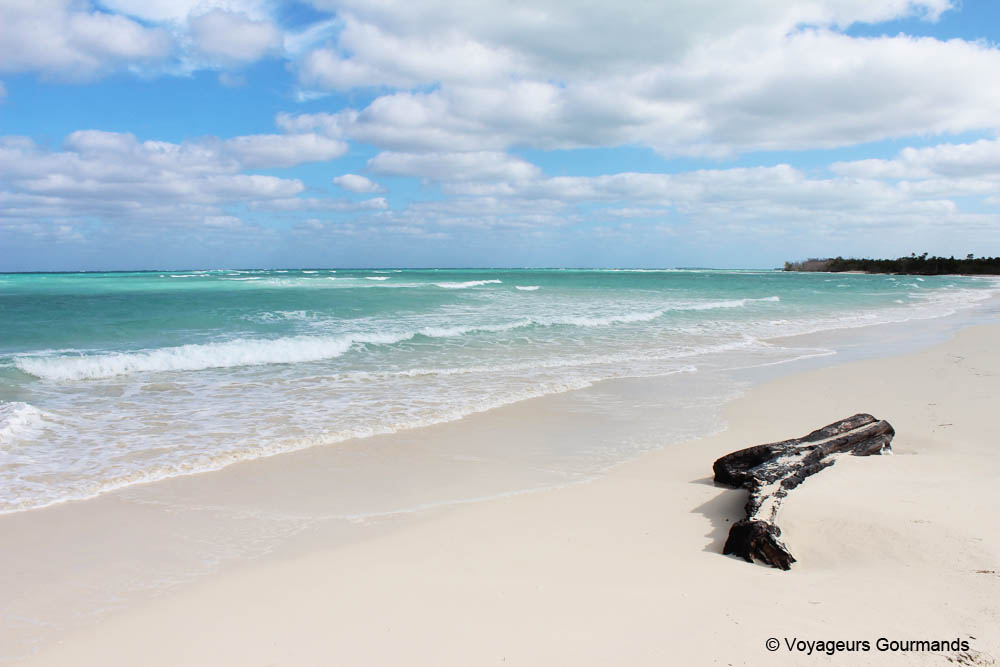
To rest a little after all those activities in Viñales, we went on a day trip to Cayo Levisa. The island is stunning and the water an incredible blue, but strong gusts of wind stopped us from making the most of it. We tell you all about it in our article on Viñales and its surroundings (in French).
➺ Night in Viñales in the same casa as before.
Days 8 and 9: Playa Larga and the Bay of Pigs
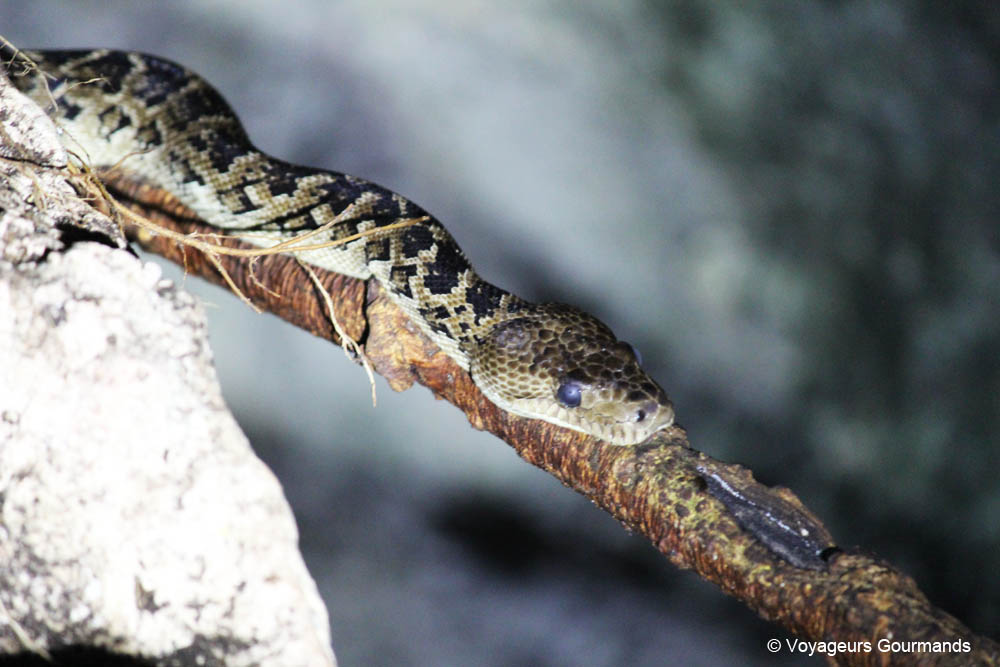
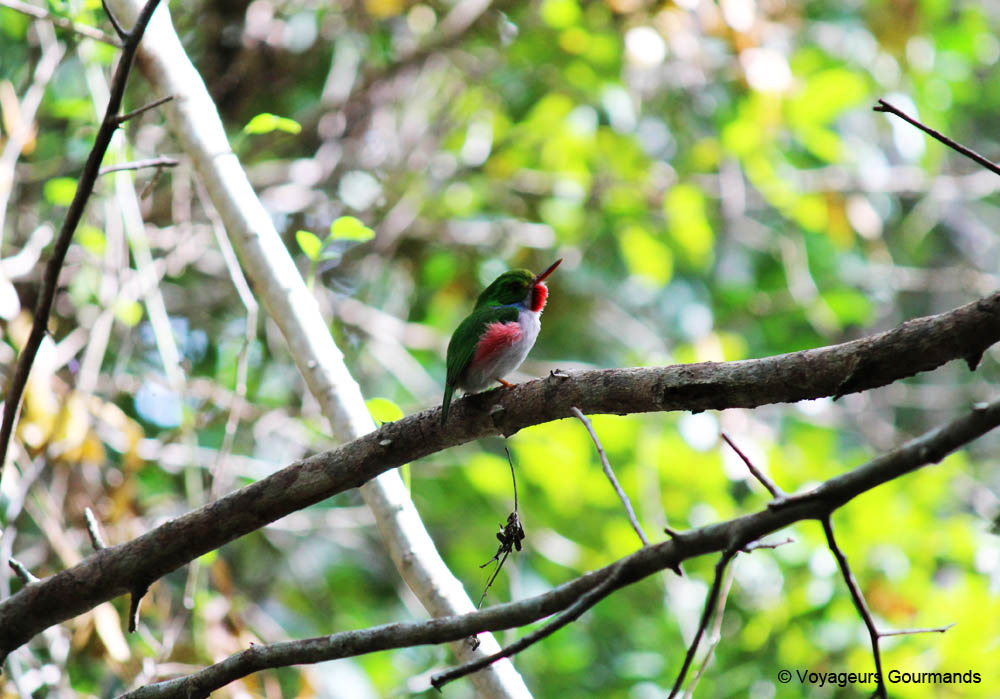
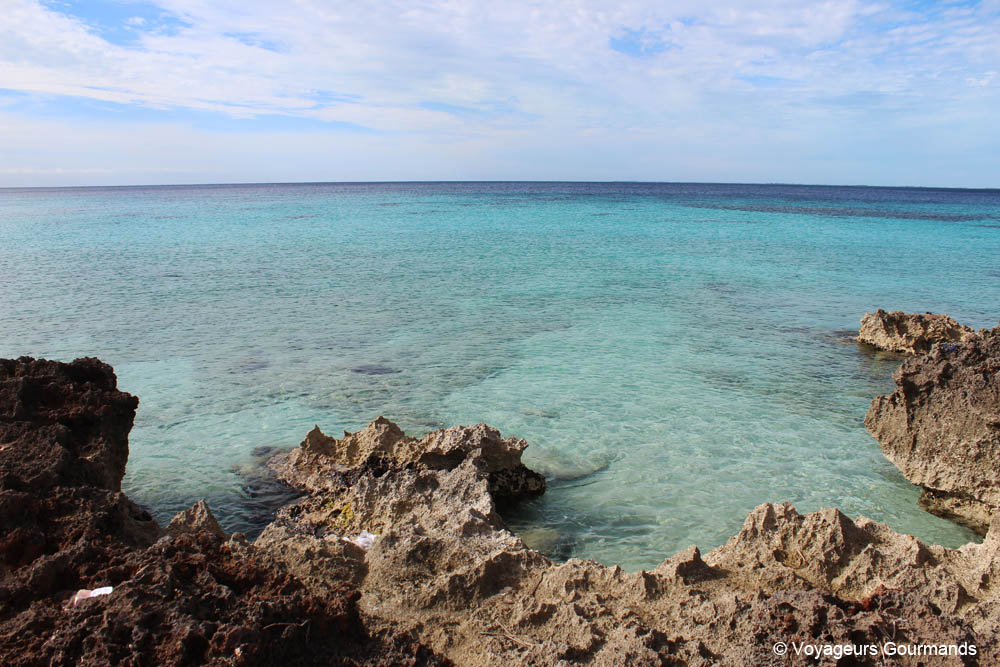
To avoid an 8-hour journey between Viñales and Trinidad, we stopped at Playa Larga. The area offers a nature reserve and rich sea beds… but excursions only run in the morning. So we stayed 2 nights instead of the one we had planned, to make the most of it. On Sunday, after a long snorkelling trip, we leave for Trinidad at around 3pm. Our full article on this stop: Playa Larga and its surroundings (in French).
➺ Nights in Playa Larga at Casa Enrique, with a very good breakfast and dinner too.
Day 9: a stop in Cienfuegos
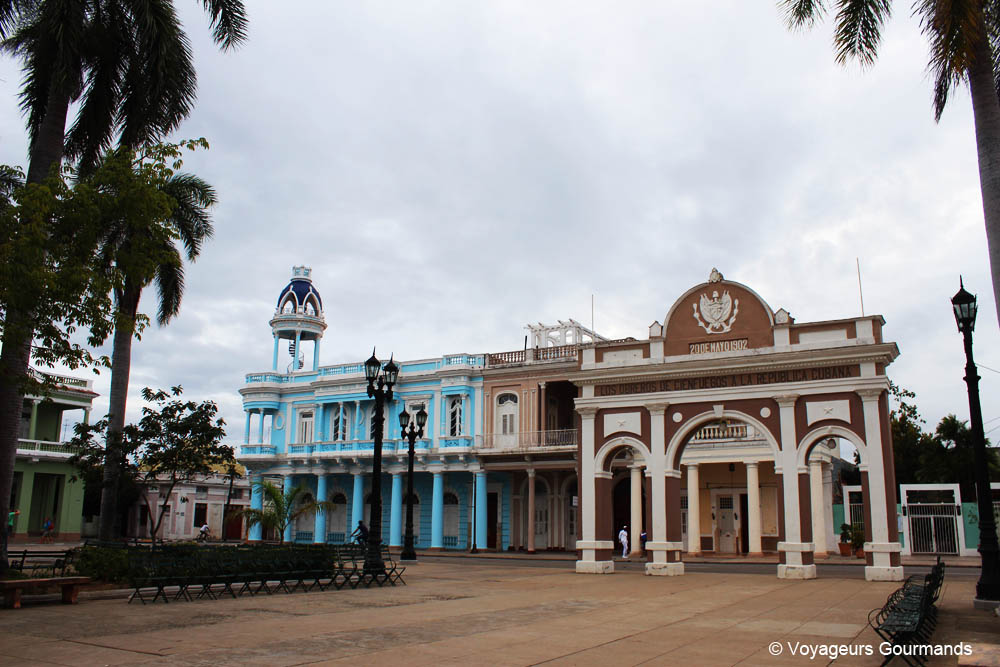
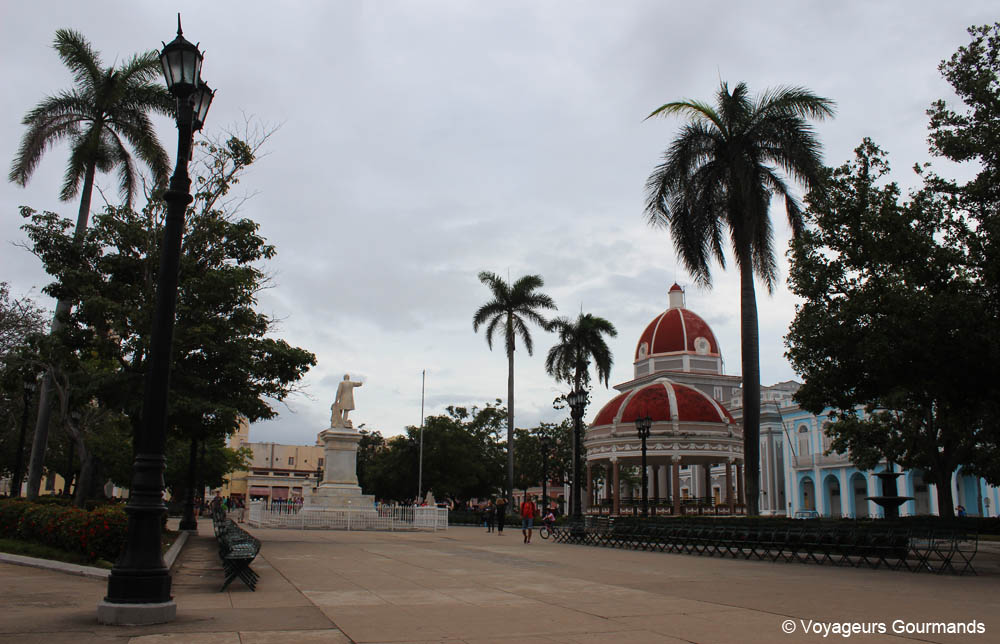
On the way to Trinidad, we ask our taxi driver to stop for a while in Cienfuegos. After chatting with several locals and travellers, we had decided not to stay there, as there are apparently fairly few activities and sights… The historic square around José Martí Park, however, is simply stunning with its colonial buildings.
It is still worth mentioning El Nicho, one of the 4 parks of Topes de Collantes: organised excursions there are run from Cienfuegos, and its hiking trails are easier to reach from here (they are closer).
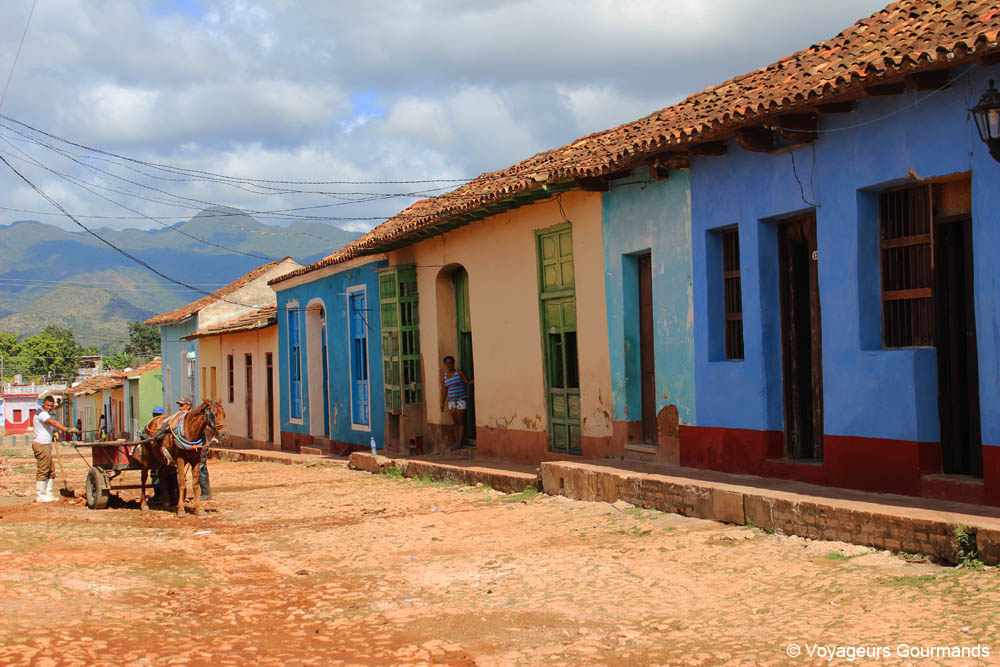
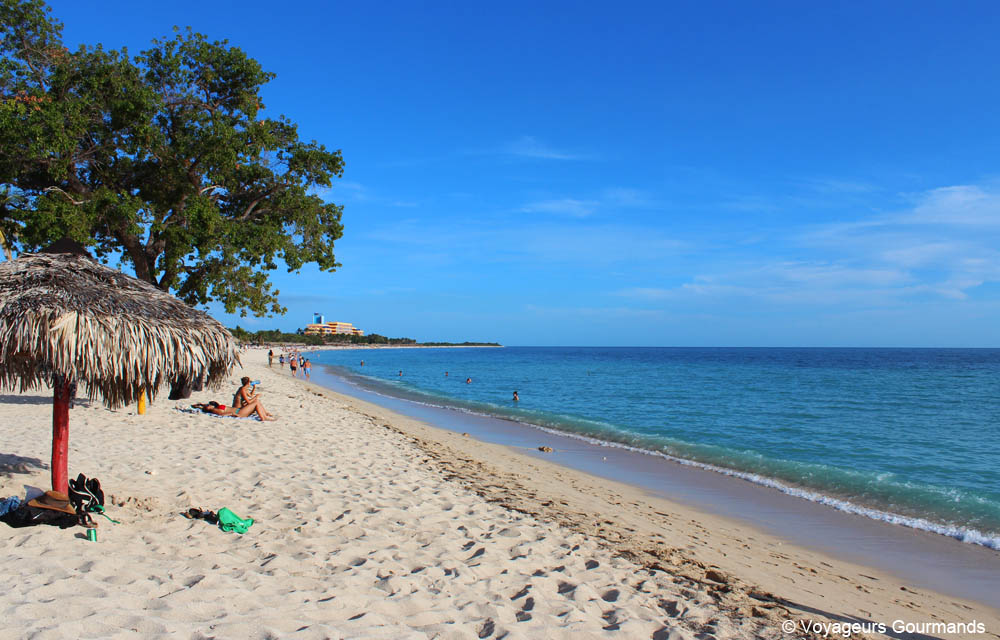
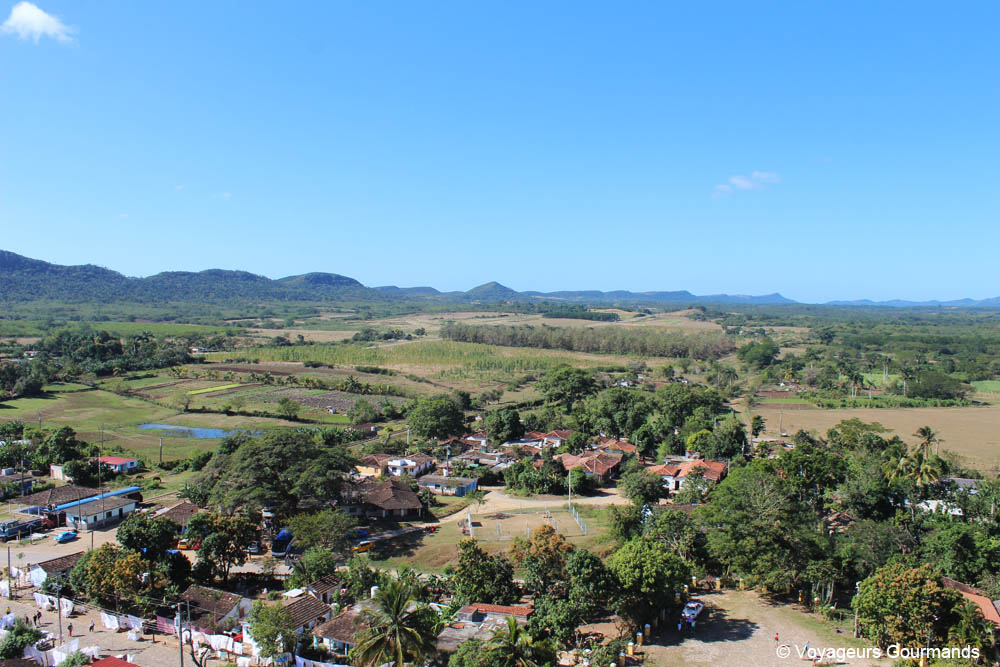
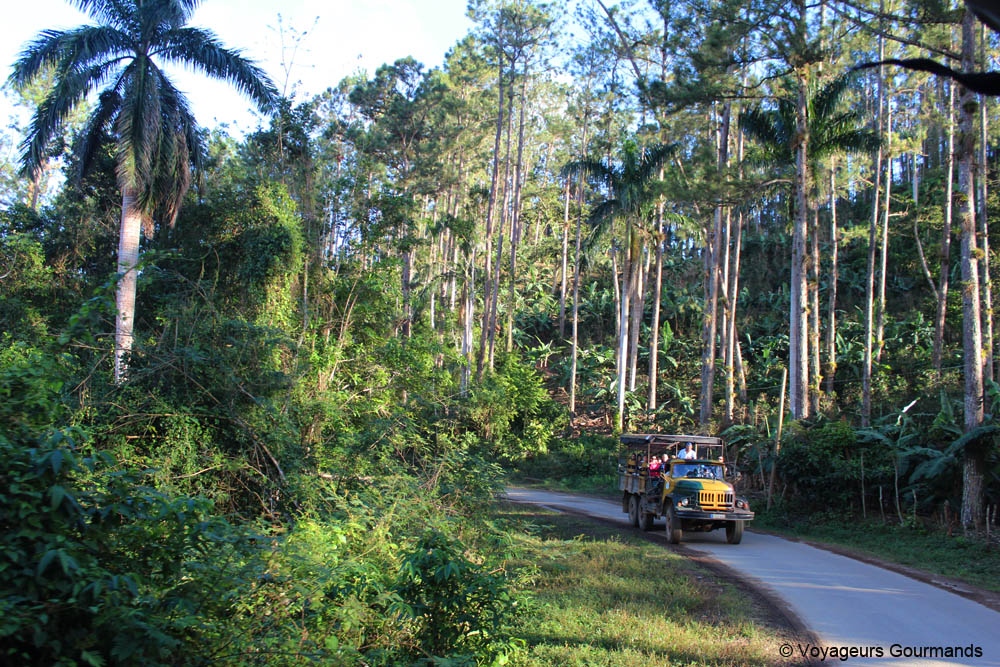
Days 9 to 13: visiting Trinidad and its surroundings
We reach Trinidad at nightfall and, as in Playa Larga, we extended our stay by one night. We spent one day wandering its streets and discovering its beach, one day in the Valle de los Ingenios and the third day in Topes de Collantes nature park. Early on Thursday morning, we take a shared taxi to the other side of the island to discover one of its famous cayos… Our article on Trinidad and its surroundings and our day in Topes de Collantes (in French).
➺ Nights at Casa Victor: well located, not too expensive, with a good breakfast, but a really rather lukewarm welcome! I can’t find a good link for this casa, sorry!
Day 14: Cayo Santa Maria
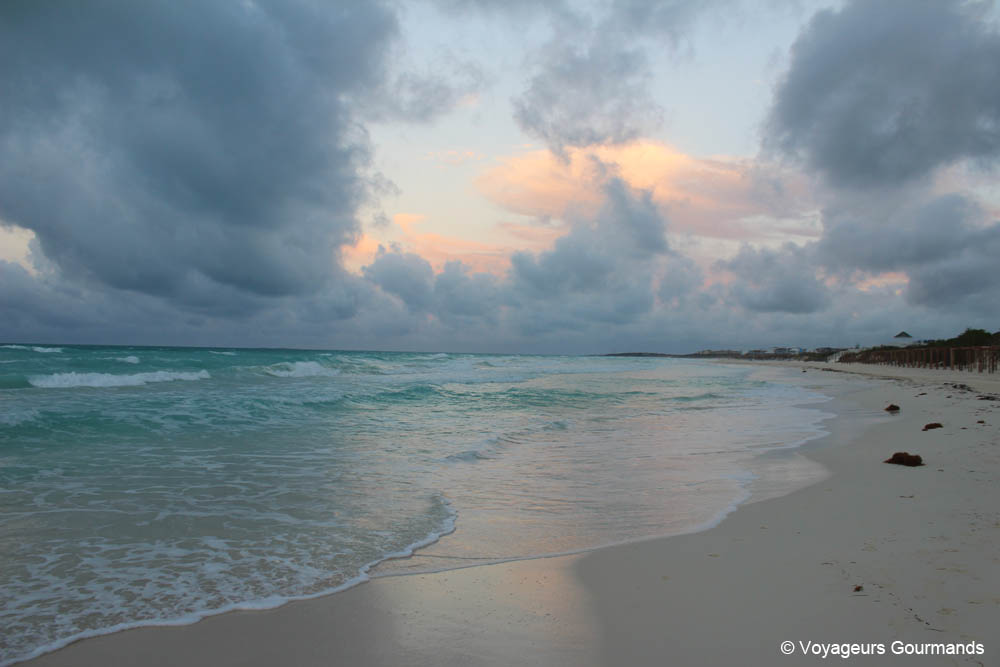
After changing our plans so many times, we end up spending only 24 hours on the cayo… But it was probably fate, as the weather isn’t on our side and it isn’t the most beautiful beach we saw in Cuba! The first half-day is sunny, but when we wake up the next morning the sky is threatening and the rain joins us at around 11am…
We wrote a short article about this stop, even though we didn’t see anything special apart from the beach, the pool and the all-you-can-eat buffet! We wouldn’t really recommend our hotel (Starfish Cayo Santa Maria), as the room smelt very damp and the bathroom was in rather questionable condition… All for 75 CUC per person per night, bearing in mind there were no casas on this cayo and this hotel was the cheapest all-inclusive. Our article on Cayo Santa Maria.
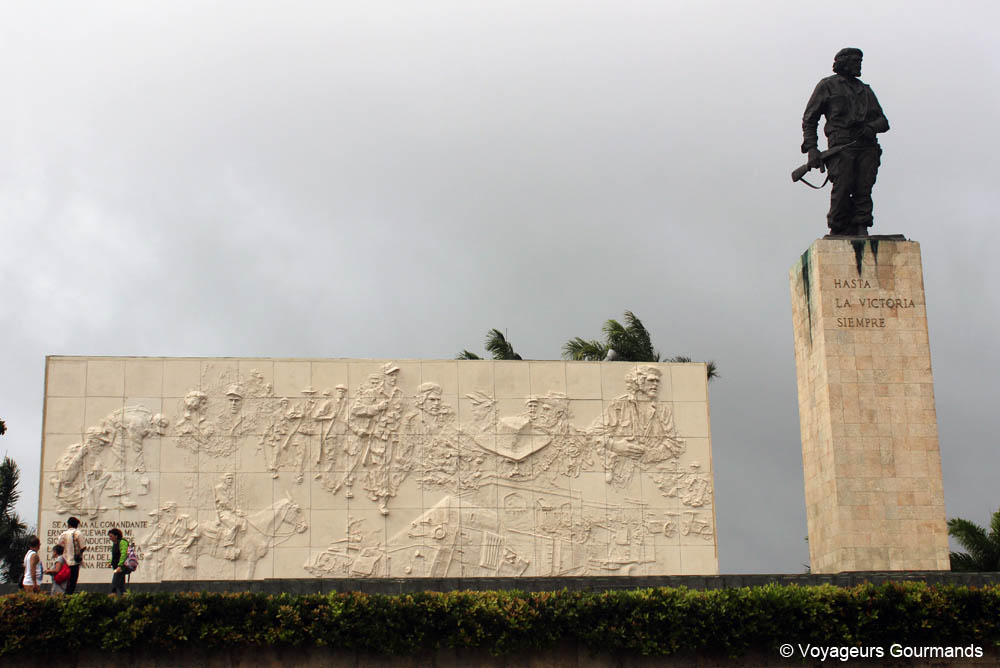
After lunch, we take the bus to Havana, a 6-hour journey… With a bonus stop in Santa Clara and its famous Revolution Square.
Day 15: back to Havana
We come full circle by returning to Havana the day before our flight, so as not to risk missing it. Souvenir shopping and last strolls round off our Cuban road trip!
✤✤✤
Cuba road trip: practical information
Before you go:
➺ The tourist card: you can get it from the Cuban embassy with your passport and a copy of your plane tickets. It cost €25 per person (price in January 2018). You can collect it for someone else, but it will cost around €20 extra… We arrived 30 minutes before the embassy in Paris opened and, luckily, there weren’t many people. Once inside, we waited another 30 minutes. There are also specialist agencies that obtain this precious document for you remotely, so you receive your Cuban tourist card at home. Handy if you’re short of time, live far from a Cuban consulate or embassy, or if their opening hours don’t suit you.
➺ Proof of insurance: you will need an insurance certificate covering the whole length of your stay. You may be asked for it at customs or if something goes wrong. Many bank cards include travel insurance: simply call the number on the back of your card to get one.
➺ What to pack: mosquito repellent of every kind, soothing cream for bites (despite the repellent, we got loads), a good first-aid kit (so you don’t have to go hunting for a pharmacy out there), tissues (thanks Kiki!), and we also took toilet paper… If you plan to go snorkelling, take your own gear; otherwise hiring it locally costs 5 to 10 CUC.
Our Cuba budget:
Flights = €497 per person, booked one month before departure.
Accommodation = €594: 13 nights in casas, 1 night in a hotel (for two).
Transport = €450: shared taxis, private taxis, one bus (for two).
Food = €500 (for two).
Excursions & visits = €400 (for two).
Other = €86: souvenirs, Wi-Fi cards, etc. (for two).
That’s a total of around €1,500 per person for 15 days. Bear in mind it was our honeymoon, so we treated ourselves when it came to food and activities. We also paid for a rather expensive private taxi to make the most of the journey between Playa Larga and Trinidad (via Cienfuegos).
Please note: these amounts date from our trip in 2018 and are mainly meant to give you an idea of how the budget breaks down. Allow for inflation since then, especially on flights and accommodation.
Currency in Cuba
Important update: since January 2021, Cuba has abolished the CUC (the former “tourist” currency) and unified its currency around the CUP, the Cuban peso. During our trip in 2018 we were still juggling both currencies, which the original article covered at length, but that is no longer the case: today you will only deal with the CUP.
The exchange rate fluctuates and often differs between the official rate and the “real” rate used locally (informal market), so we recommend checking the current rate just before you leave rather than relying on a fixed figure. You can exchange your euros at the airport, in banks and at exchange offices (cadecas), or withdraw CUP directly from cash machines in the main towns.
You can choose to:
➺ Withdraw cash from ATMs: we saw some in Havana, Viñales and Trinidad, but not in Playa Larga. It depends on whether your bank charges high fees.
➺ Exchange your euros: at the airport, in banks or at exchange offices (cadecas). When we arrived at the airport the rate was good, so we exchanged money there first. There is a counter just outside on the left and, for us, there was no one there, so we made the most of it! I mention this because we had read (and Céline had warned me) that Cubans queue a lot for all sorts of things… and it’s true! So if you’re going to exchange money, plan carefully so you don’t waste time (the same goes for buying the Wi-Fi cards I mention below, or even bottled water). Also be careful not to end up with too many CUC at the end of your stay, as the rate in the other direction is really unfavourable. We saw a rate of 1.25 CUC for 1 euro, so we preferred to withdraw a large sum at first and then fine-tune our budget: we came home with about 3 CUC in our pockets as a souvenir!
Where to stay
➺ Casas particulares: these are homestays… We may have idealised the idea, imagining we would share a few meals with our hosts… but no. We spent almost every night in a casa, except on Cayo Santa Maria where we stayed in a hotel.
We always had rooms with a private bathroom. The most expensive was in Havana at 59 CUC (but one of the most beautiful casas of our trip: Hostal la Cecilia), and the cheapest were 25 CUC a night (Trinidad and Viñales). We sometimes had dinner in the casas, and it was always delicious and very generous (between 8 and 12 CUC)! Breakfasts were just as generous, for 5 CUC per person in all our casas.
Don’t worry about not booking ahead: there are casas absolutely everywhere! In some places it felt like there were more casas than “normal” homes… If, on the other hand, you like knowing where you’ll be staying, or want to choose the location, it’s better to book. I slightly regretted it, especially in Viñales (Casa Amarilis y Leonel), as our casa didn’t have the breathtaking views that some others had…
➺ Hotels: of course there are hotels too, with higher prices. We saw some magnificent ones, especially in Havana, real monuments. We spent 1 night in a hotel, on Cayo Santa Maria, for 75 CUC per person, and it was rather disappointing.
Before leaving, we had only booked 3 nights in Havana; the rest was booked along the way, by phone, through casa owners’ contacts, etc.
Where and what to eat in Cuba
We have written a detailed article on Cuban food specialities! Here is a glimpse of a breakfast in a casa particular, and of a delicious lobster, THE dish of our trip! We had all our breakfasts in casas at 5 CUC per person, and they were very complete: coffee, fruit juice or smoothie, fresh fruit, bread and butter (the butter isn’t great, though), sometimes biscuits, and always eggs! There are lots of restaurants everywhere we went. We’ll share good addresses in our articles on each town.
As for specialities, the most common dishes are chicken, lobster and pork. Beef is very rare. Everything comes with rice and vegetables, and fruit for dessert! You won’t find many cakes or pastries. On the other hand, Cubans are cocktail experts: Cuba Libre, Mojito, Canchánchara… There’s plenty of choice!
Getting around on a Cuba road trip
Car hire: this is the option we would have preferred, as it gives you more freedom on a Cuba road trip… but given the price of the rental alone, we soon gave up on the idea. The roads on the island are indeed quite damaged, with big potholes, but they aren’t all dirt tracks either, as we had read on some websites… For your information, Cubans avoid driving at night because many places are poorly lit, and also because you come across horses, cows and pedestrians on the road…
The bus: the cheapest option of all, but the slowest… The timetables aren’t always convenient either, with departures at 10am and arrival at 3pm or 4pm in the next town, which means losing almost a whole day… We only took it once, between Cayo Santa Maria and Havana, because the price was really good (30 CUC per person instead of 200 CUC for a taxi). The two companies are Viazul and Transtur.
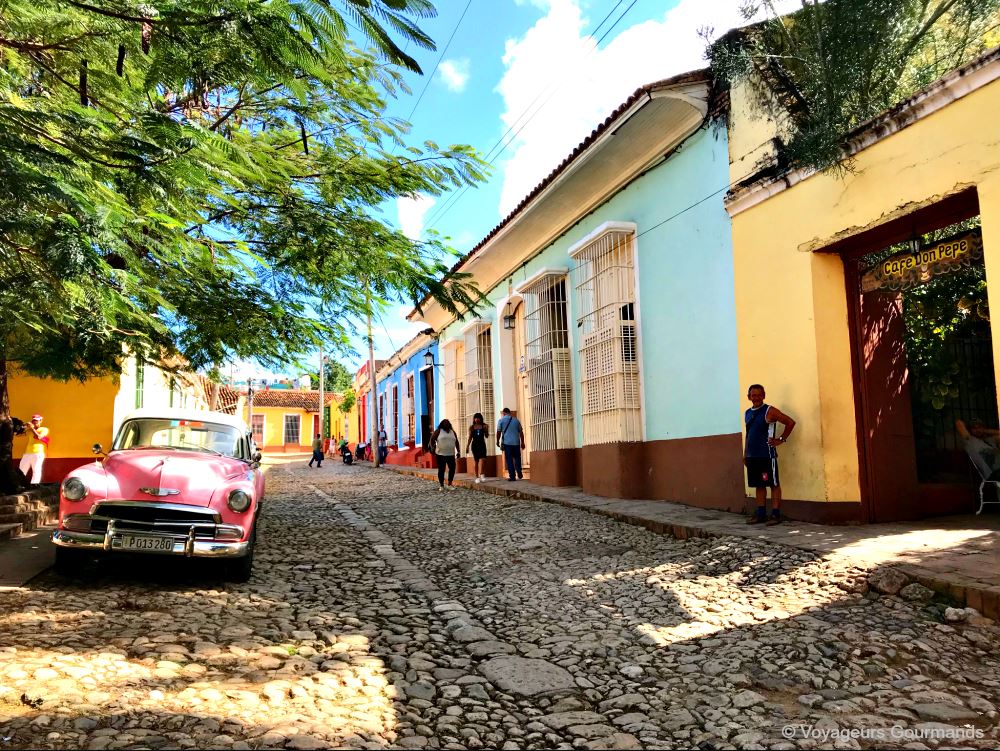
Taxis: there are shared taxis and state/private taxis. The latter are the yellow taxis which, in theory, have a meter. We say in theory because in Viñales they charged us the same fares as the other taxis. To be honest, in the end we weren’t even sure there was a real difference… Shared taxis are filled up by their drivers, so you pay less. Our main takeaway? Always, always negotiate, and if a driver won’t accept the route or time you want, you’ll find another one.
Airport ⇔ Havana
On arrival, our casa had offered us a taxi service by email for 30 CUC, which we declined because we wanted to manage on our own. He then came back with an offer at 25 CUC, which we finally accepted so as not to stress after a 9-hour flight… On the way back, our last casa also offered us a taxi for 25 CUC: it was the owner’s husband who, once at the airport, put an A4 sheet on his windscreen with “taxi” written on it! Ha ha!
How to get internet in Cuba
This is one of the things we didn’t really look into before leaving, but it quickly became a problem once we arrived. As we hadn’t booked any casas, or even shortlisted any for some towns, we wanted to be able to go online to help us choose. I should point out that we left with a Lonely Planet guide, but it was rather out of date on a lot of information, including accommodation.
Getting online is simple, in theory. You need to buy an Etecsa Wi-Fi card and then find a hotspot to connect. The cards are sold at Etecsa, the national operator: 1 hour = 1 CUC. Don’t buy them in hotels, which add hefty margins (1 hour for 3 CUC or even 4.50 CUC). Try to go to Etecsa early in the morning, as the queues are long… It’s best to buy several at once… Then there are internet hotspots in parks and in large hotels. Sometimes in certain restaurants and casas too, but the connection there is generally not very good. In any case, hotspots are easy to spot: it’s wherever there’s a crowd in a place that seems to be of “no interest”.
✤✤✤
Our Cuba road trip truly delighted us! The beauty and diversity of the landscapes, the country’s cultural heritage, the kindness of the people, our new firsts (horse riding, riding in an American bus and a Russian lorry, driving a train for a minute and a half, going into a cave on our own, etc.)… We were also deeply touched by our conversations with some young people, even if some Cubans try to hide it… Daily life is really complicated for them and, even if you know about the embargo, once you talk with the people affected, it’s a different story…
The one tiny downside is that we expected to feel a little more out of our comfort zone, but that takes nothing away from the wonderful honeymoon we had!

Cuba road trip FAQ
Click here to read our Cuba road trip FAQ
What to do in Cuba in 2 weeks?
In 15 days, you have time to combine Havana, the Viñales Valley, a relaxing break on a cayo (Cayo Levisa or Cayo Santa Maria), Playa Larga for snorkelling and diving, and Trinidad with its surroundings (Valle de los Ingenios, Topes de Collantes). This is exactly the itinerary we describe in this article, focusing on the west of the island so you don’t spend your whole trip travelling.
How long do you need to visit Cuba?
To see the highlights (Havana, Viñales, Trinidad), allow at least 10 days. With 15 days, you can take your time and add a beach break on a cayo. To explore the east of the island as well (Santiago de Cuba, Baracoa), you should plan for 3 weeks.
What budget should you plan for a 15-day road trip in Cuba?
For our trip, we spent around €1,500 per person for 15 days (flights, casas particulares, transport, food and excursions included). It was our honeymoon, so we travelled in some comfort: you can easily travel on a tighter budget by negotiating taxi fares harder and eating more simply.
What is the currency in Cuba?
Since 2021, Cuba has had only one official currency: the CUP (Cuban peso). The former dual-currency system (CUC/CUP) that existed during our trip has been abolished.