


Lobster, pollo con arroz, exotic fruit and cocktails. That pretty much sums up what we ate on our two-week road trip around Cuba… Don’t get us wrong: we often ate the same things, but we loved every bite! Because supplies are hard to come by, Cuban restaurants, and Cuban food in general, revolve around what is easy to produce on the island: rice, beans, potatoes, lots of fruit, a few vegetables, pork, chicken and fish.
Cuban cuisine wasn’t exactly renowned until fairly recently, but many young chefs have been working to change that. In this article, we share the Cuban specialities we tasted during our stay, the ones we missed (sniff…), the desserts, the street food and the drinks. And because things on the island have changed a lot since our trip, we also tell you what you need to know to eat well in Cuba today.
✤✤✤
Cuban food at a glance
| 🇨🇺 Category | 🍴 Our pick |
|---|---|
| Must-try dish | Arroz con pollo, chicken served with rice |
| Speciality to try | Lobster, grilled, with butter or in a sauce |
| National dish | Ajiaco, a stew of meats and root vegetables |
| Side dishes | Moros y cristianos, tostones, yuca con mojo |
| Desserts | Flan, guayaba con queso, cucurucho from Baracoa |
| Street food | Cuban pizza, pan con lechón, croquetas, churros |
| Drinks | Mojito, Cuba libre, daiquiri, canchánchara, guarapo |
| Price of a meal | Around €5 for lunch, about €10 for a three-course dinner |
| Where to eat | In casas particulares and paladares |
Meals in Cuba
We were blown away by the meals in the casas! We always got astronomical amounts of food and, above all, really good-quality meals. So whenever we could, we chose to have dinner at our casa to enjoy some home cooking and try traditional Cuban dishes.
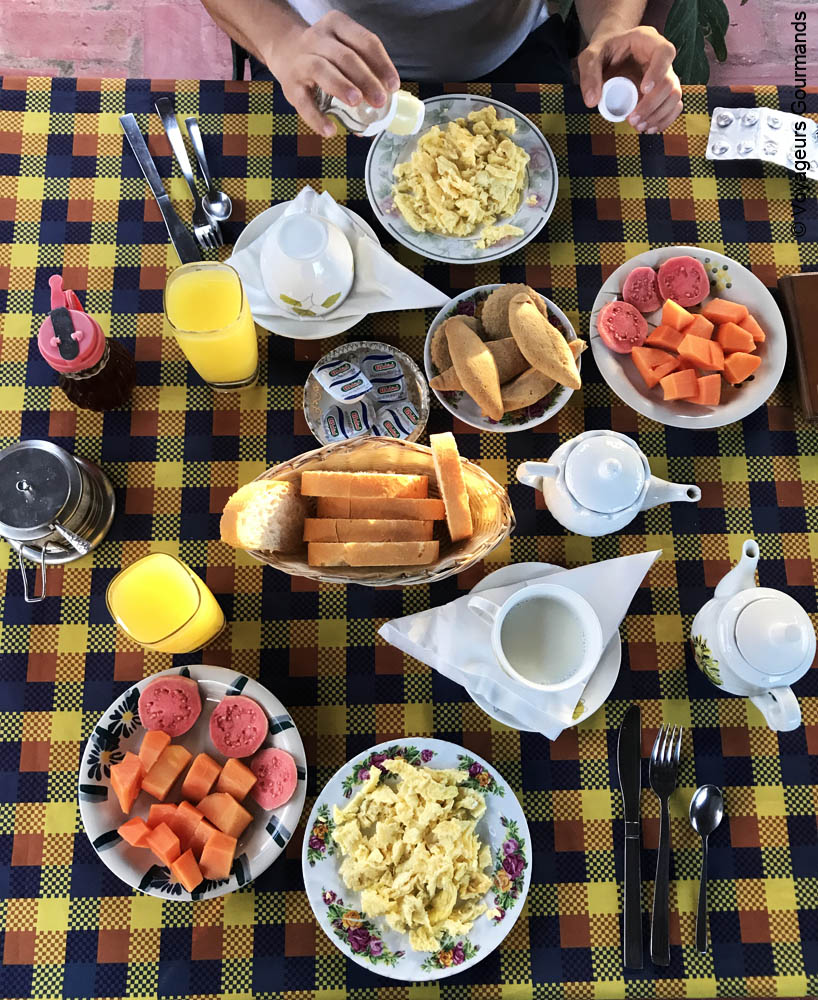
➺ For breakfast, we always had coffee or white coffee, orange juice or a smoothie, then fresh fruit and eggs with a bit of bread. Sometimes, though less often, there were crackers, biscuits, ham and cheese.
➺ When we travel, we usually grab a quick lunch: a sandwich or something simple.
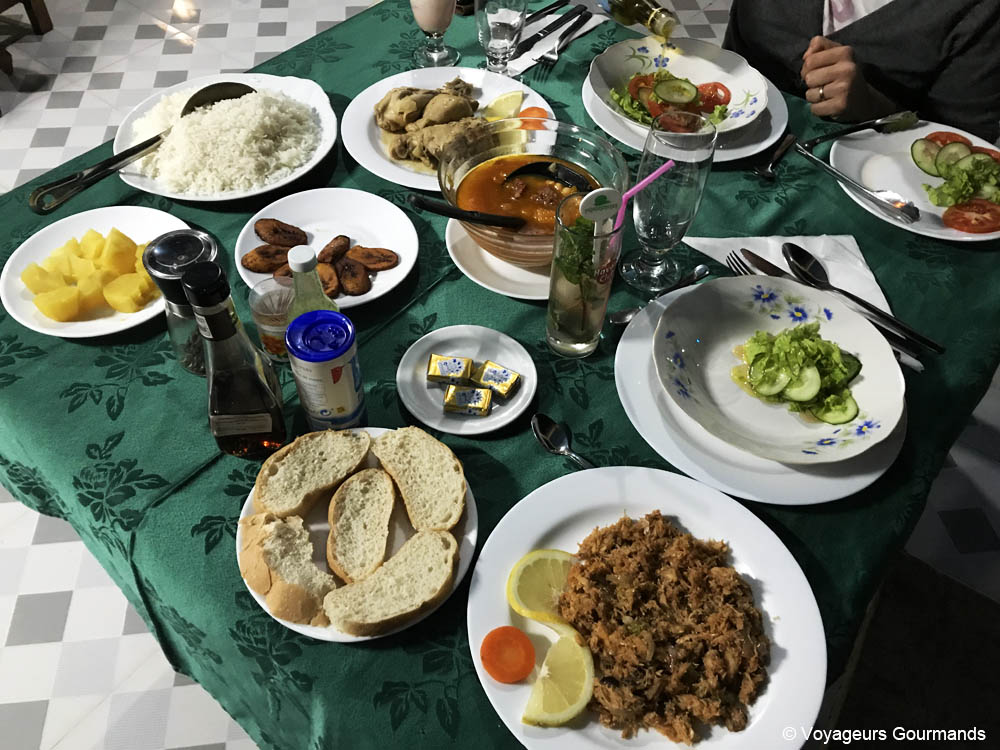
➺ For dinner, we ate at our casas particulares whenever possible. Sometimes because we couldn’t be bothered to go out and find a restaurant, but also for the reasons above. We always got plenty of dishes for not much money, and the quality was always excellent. With your main course, you’ll sometimes get a salad (lettuce, tomatoes), then rice, black beans and one or two vegetables. Bananas, fried, boiled or as crisps, are a regular side too.
Cuban food: the traditional dishes we tried
Chicken and arroz con pollo
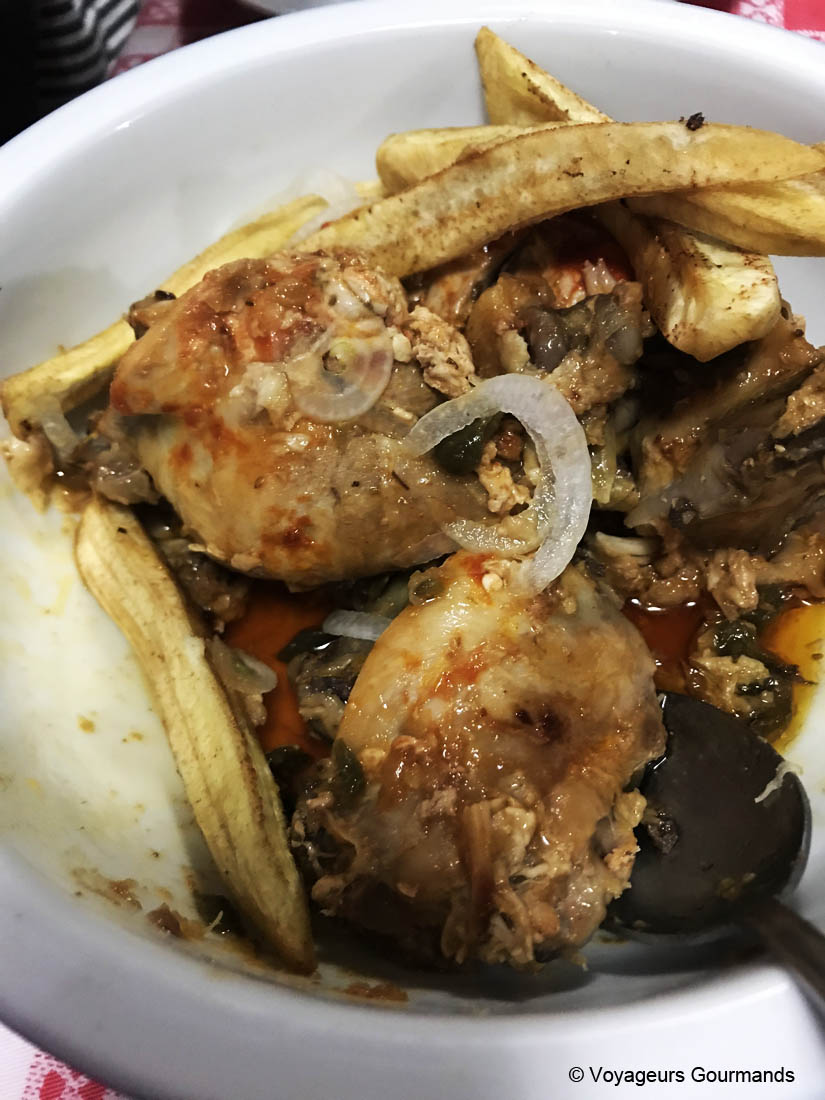
Probably one of the dishes you’ll see most often. The famous arroz con pollo, chicken served with rice, or sometimes with moros y cristianos (rice and black beans). We also had grilled chicken, or chicken in criolla sauce, a delicious Creole seasoning that reminded us of Martinican food! The photo isn’t the most appetising, but we promise it was really good!
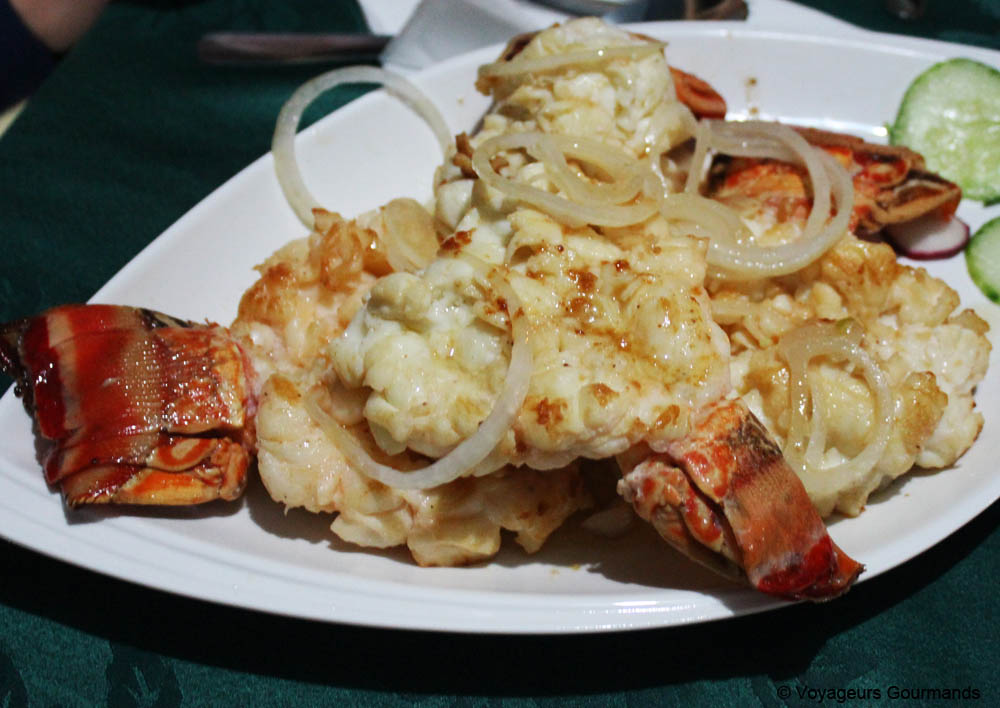
Lobster
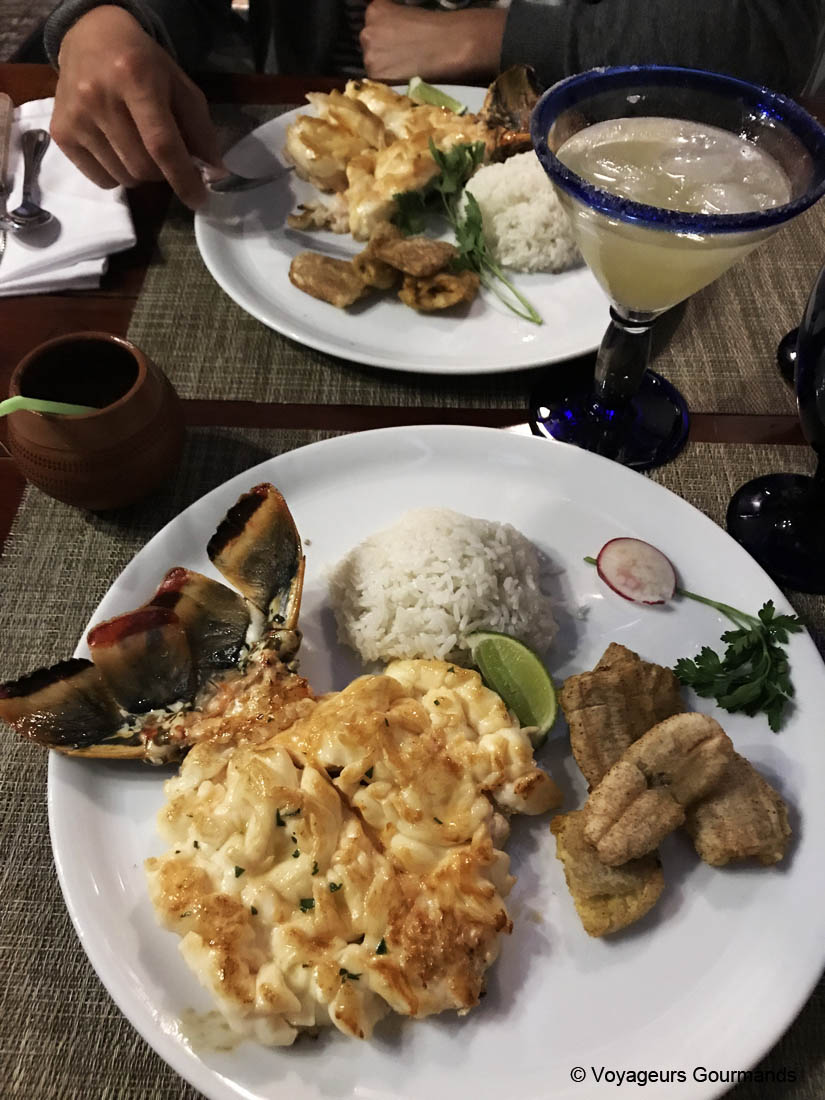
And here’s the second speciality we ate the most: lobster! A bit pricier than the other dishes, but so cheap compared with Europe that we treated ourselves! Grilled, with butter, in tomato sauce, with tagliatelle and plenty of other recipes await you… Yum!
Cochinito and the Cuban sandwich
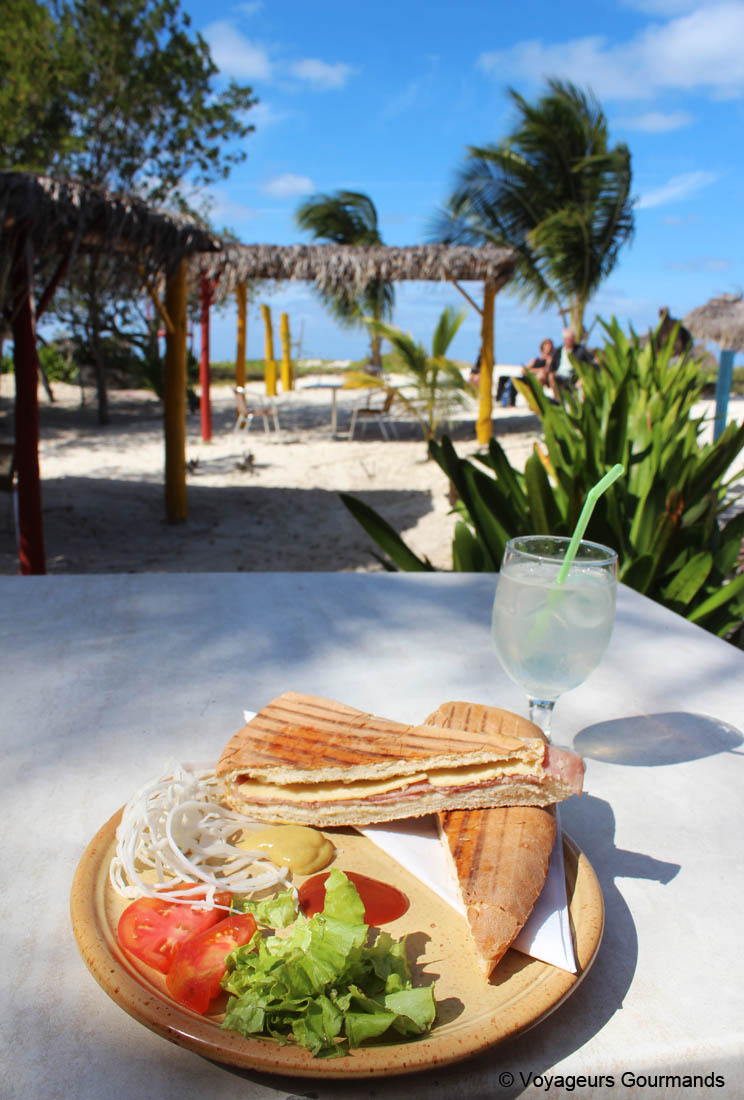
Pork is everywhere in Cuba: after chicken and lobster, it’s what we saw most on restaurant menus. We had it a few times, but we mostly fell for the cubano sandwich! Pork escalope with… ham! A slightly odd combination, but delicious!
For special occasions, especially Christmas Eve, Cubans prepare lechón asado: a suckling pig marinated in mojo (garlic, citrus, oil) and roasted for hours. If you’re ever offered some, don’t hesitate!
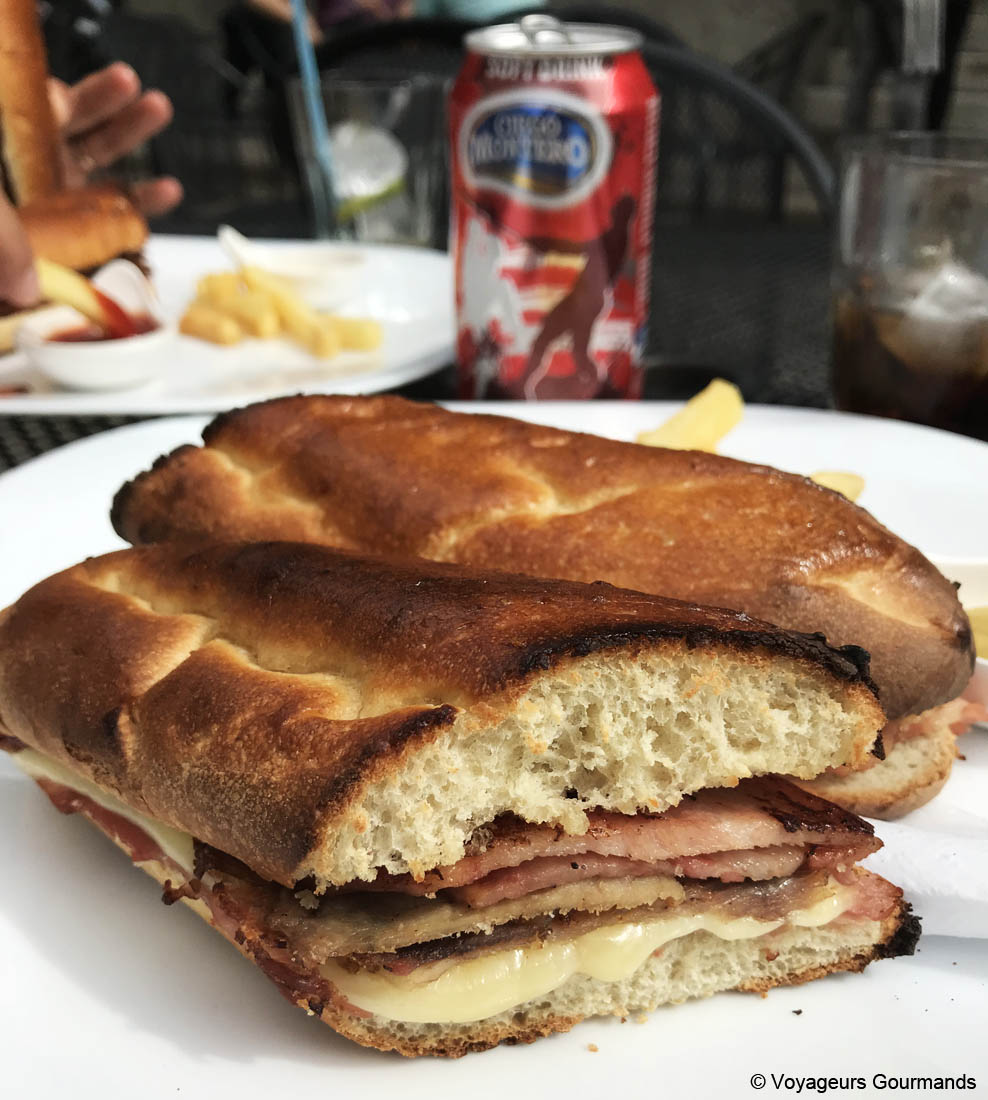
Plantains: tostones and maduros
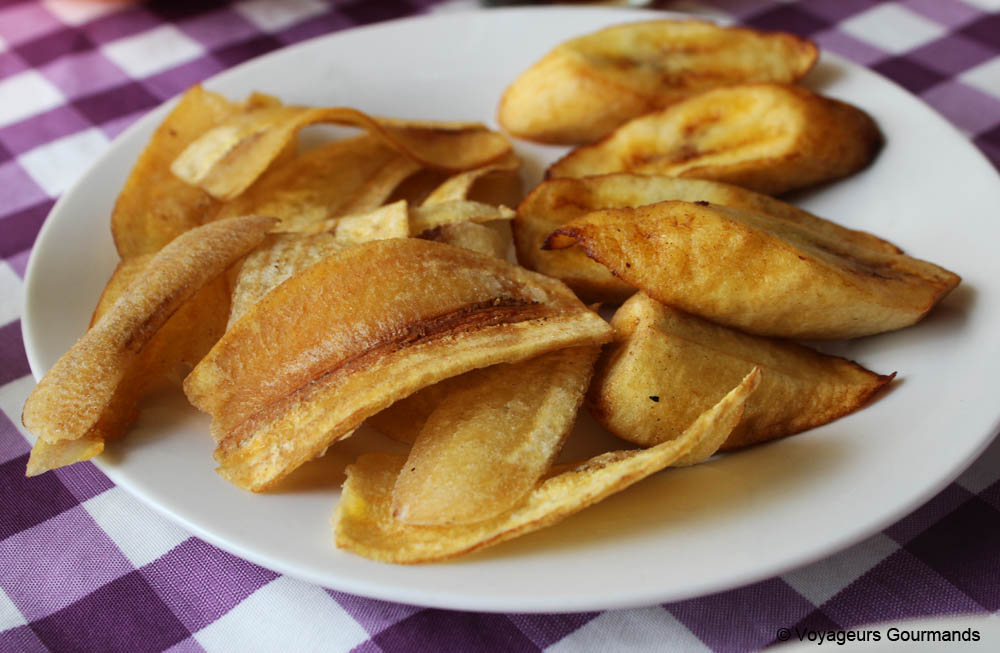
Bananas in every shape and form, but above all tostones: slices of green plantain, flattened and fried. As a snack, as a side… I never eat bananas, yet I loved discovering all the different ways they’re cooked in Cuba! You’ll also come across maduros, ripe plantains fried until sweet and soft.
Crab
Perfectly seasoned crab meat, a real treat! We mostly saw it in Playa Larga and Trinidad.
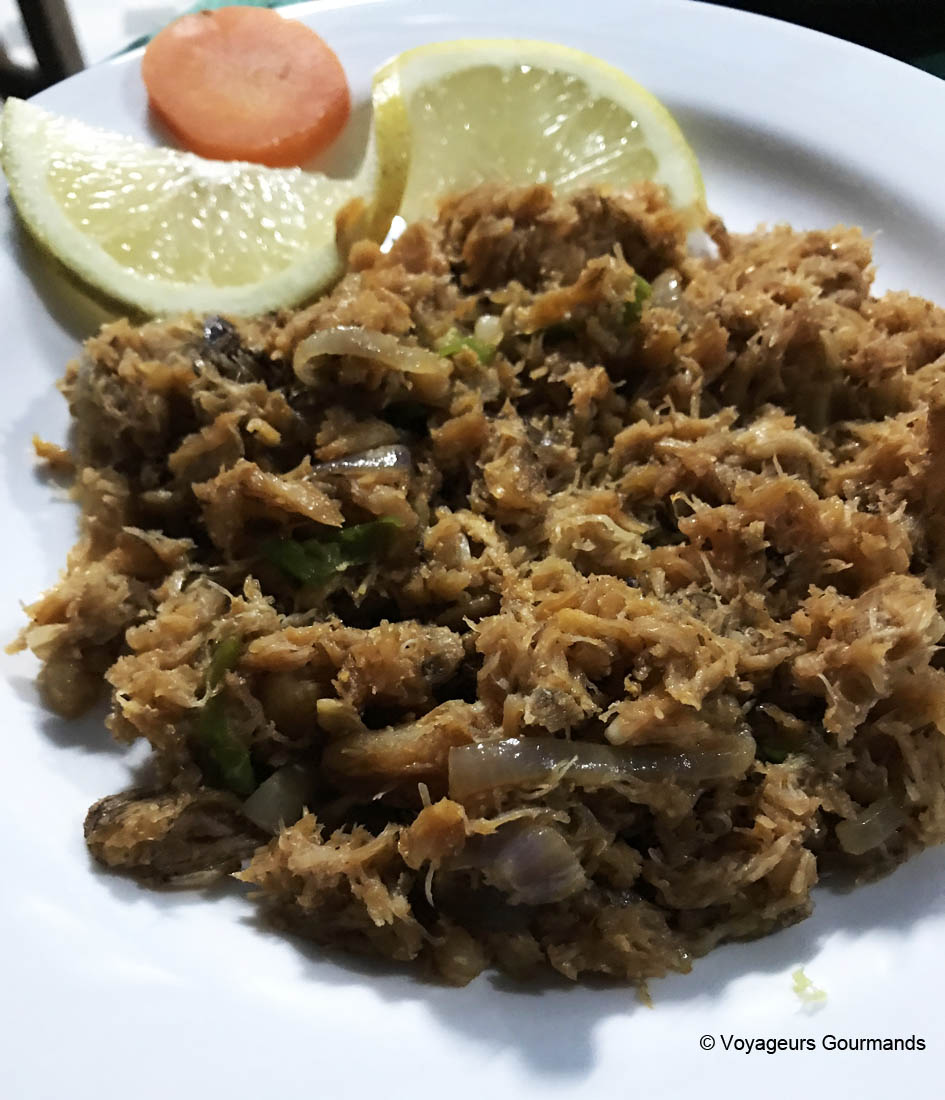
Moros y cristianos
We had this side with almost every meal! It’s black beans cooked with white rice, and the name means “Moors and Christians”, because of the colours of the dish. We also often had several types of rice in the same meal.
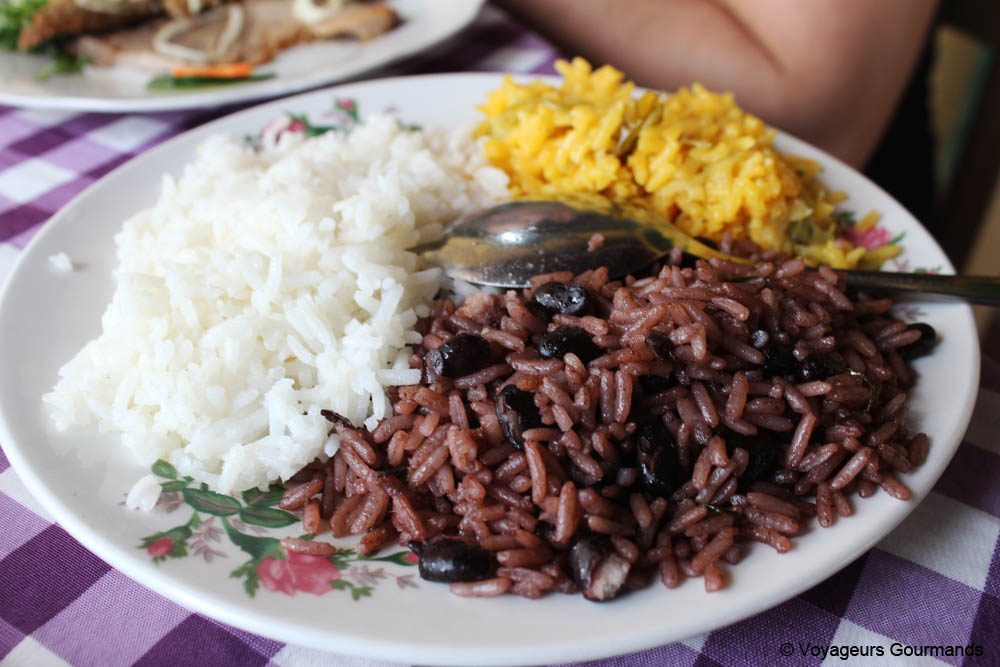
Other traditional Cuban dishes (the ones we missed!)
Of course, in two weeks we didn’t have time to try everything, especially as there are lots of specialities in regions we didn’t visit. And above all, we never saw beef in restaurants or casas! No surprise there: in Cuba, cattle slaughter is tightly controlled by the state, so beef remains rare and expensive. Here are the traditional dishes we missed… and that you might be lucky enough to find.
Ropa vieja
Probably the best-known Cuban dish abroad. Its name means “old clothes”, because the beef, slow-cooked with tomatoes, peppers and onions, is shredded into strips… like scraps of fabric. It’s served with rice and plantains.
Picadillo
Picadillo a la cubana is a homely dish of minced meat cooked in tomato sauce with olives and sometimes raisins. It’s often served with white rice and a fried egg.
Ajiaco, Cuba’s national dish
Often described as the national dish, ajiaco is a hearty stew combining several meats and root vegetables: cassava, malanga, sweet potato, corn, plantain… A real summary of the island’s history, blending Taíno, Spanish and African heritage.
Yuca con mojo
Boiled cassava drizzled with mojo, a sauce made with garlic, oil and bitter orange juice. Simple, but incredibly effective as a side!
Congrí
The cousin of moros y cristianos: rice cooked with red beans, often with bacon or pieces of pork. You’ll mostly find it in the east of the island, around Santiago de Cuba.
Tamales and papas rellenas
Tamales are parcels of fresh corn dough, sometimes filled with pork, steamed in corn husks. We didn’t have any in Cuba, but we tried them in Mexico, where they’re a real institution: we talk about them in our article on Yucatán food! Papas rellenas are mashed potato balls stuffed with meat, breaded and fried. Perfect for a quick lunch!
Crocodile meat
It’s a speciality of the Zapata Peninsula, around Playa Larga, where crocodiles are farmed. We saw it on menus… but we’re not sure we’d have dared to try it!
Exotic fruit and vegetables
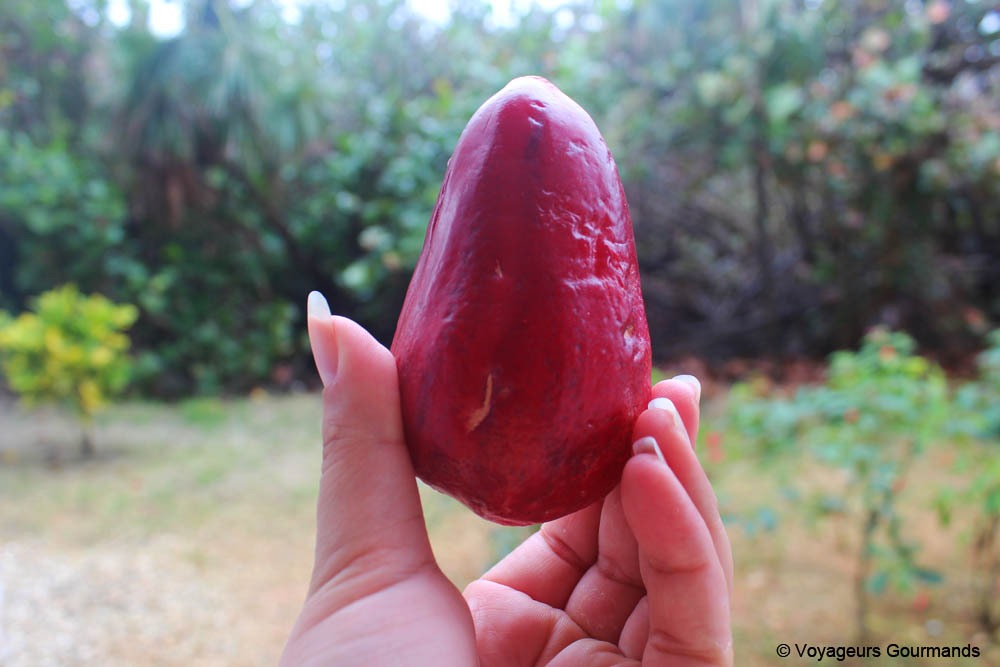
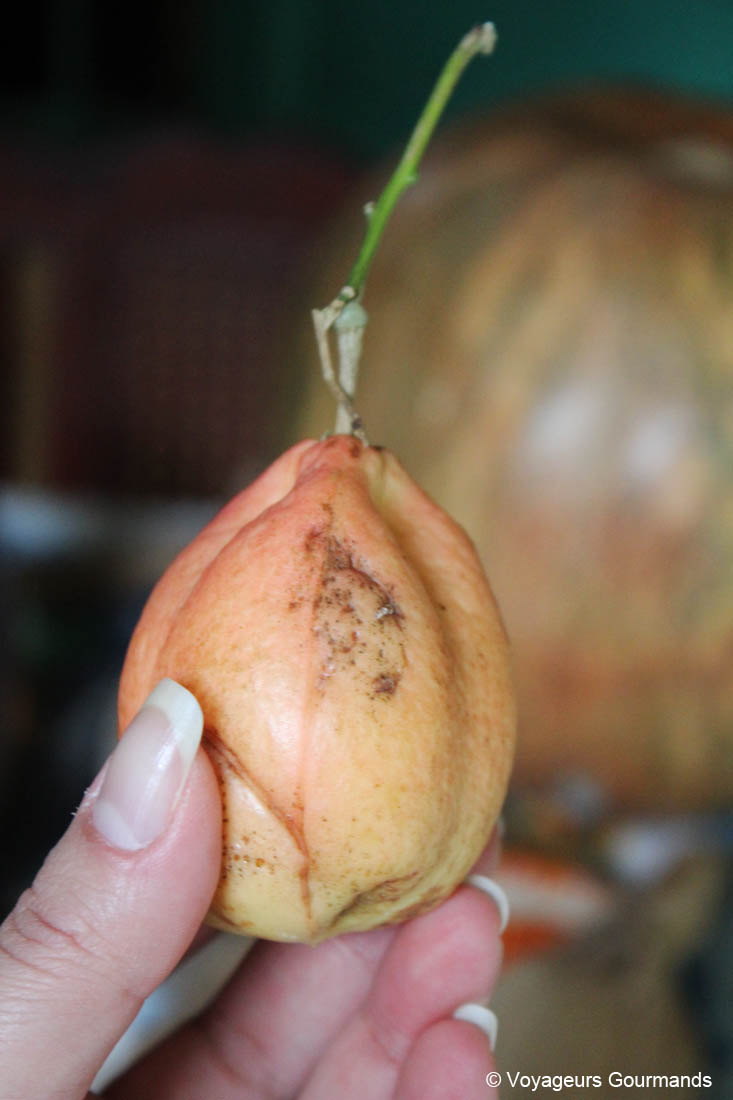
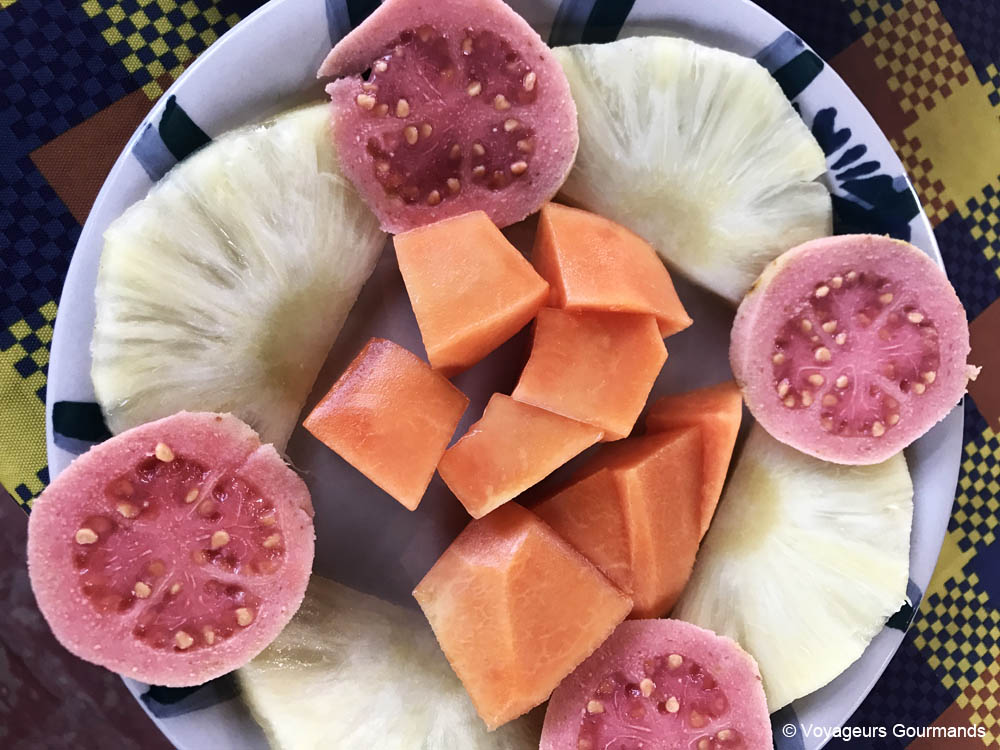
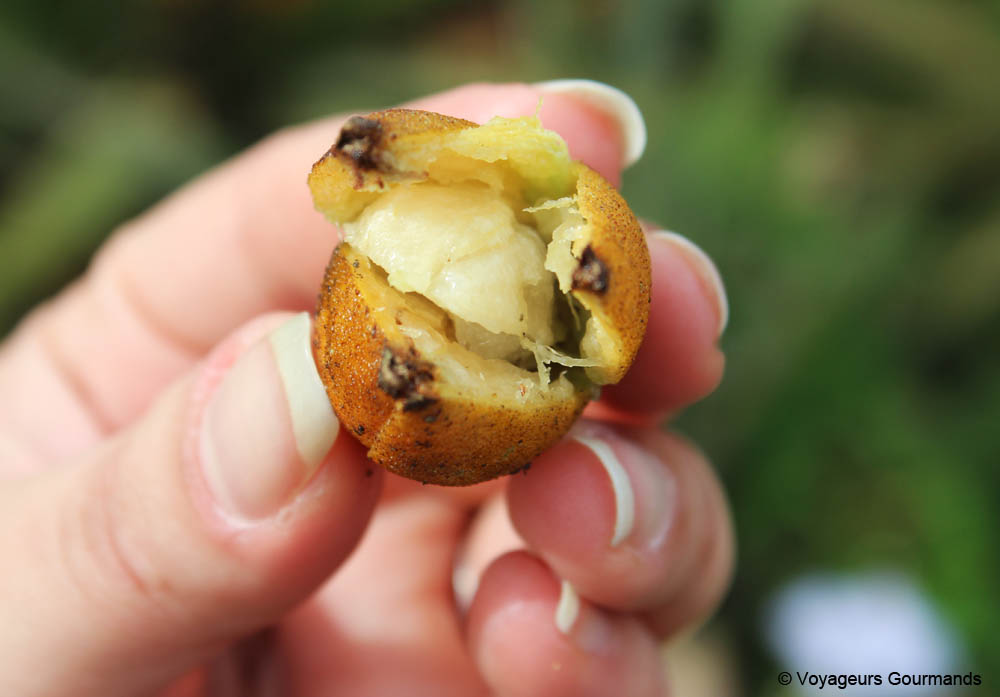
Pera manzana, papaya, coconut, guava, yam, cassava (yuca) or taro… The great thing about eating at casas particulares is that we got to try a few exotic vegetables. As for fruit, we often bought it from street vendors, but above all, there was always plenty of it at breakfast! In the Viñales Valley, on a guided tour, we saw all kinds of exotic fruit we’d never seen before!
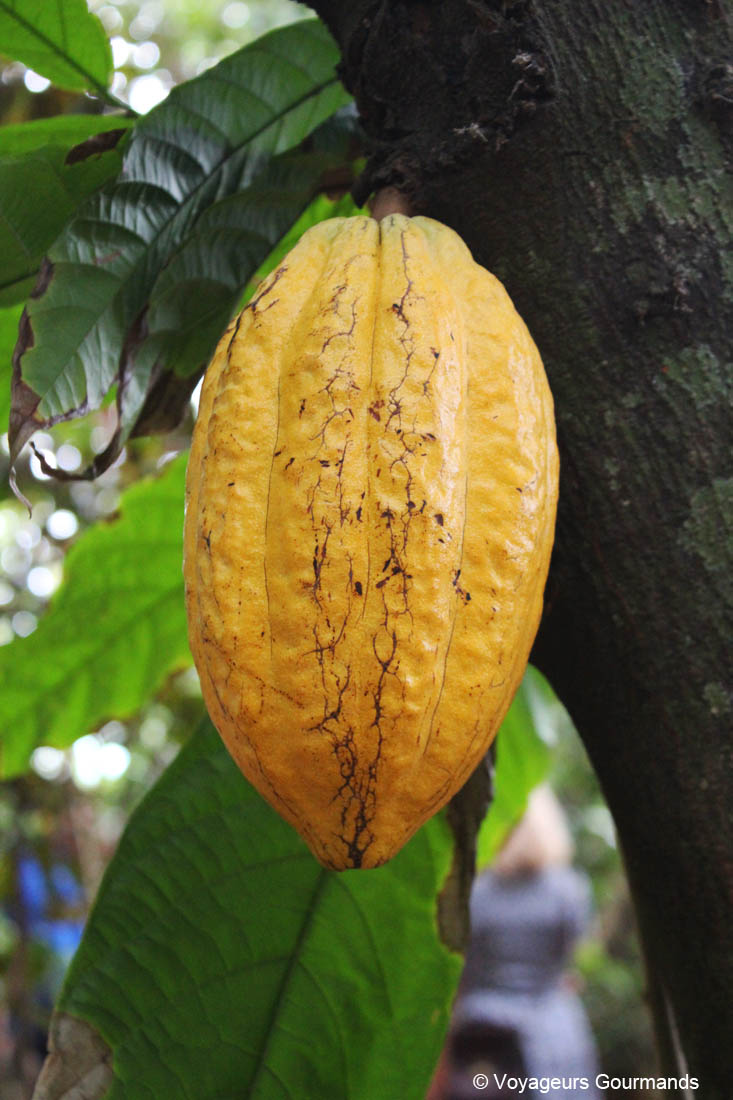
Cuban desserts
When it comes to sweet treats, Cuban food is all about coconut, guava and condensed milk. Here are the desserts you’ll come across most often:
- flan, a caramel custard and the star of every dessert menu;
- arroz con leche, a rice pudding flavoured with cinnamon and lemon;
- guayaba con queso, guava paste served with a piece of cheese, the ultimate sweet-and-savoury combo;
- cucurucho, a Baracoa speciality: grated coconut, sugar and fruit wrapped in a cone made from a palm leaf;
- coquitos, small coconut sweets;
- and ice cream from Coppelia, Havana’s famous ice cream parlour, where Cubans have been queuing for decades.
Cuban street food
For our quick lunches, street food was perfect! Small counters or simple house windows sell food for just a few coins:
- Cuban pizza, with a thick base and plenty of cheese, often folded in half so you can eat it on the go;
- pan con lechón, a roast pork sandwich;
- croquetas, ham or chicken croquettes;
- churros, dusted with sugar;
- maní, roasted peanuts sold in paper cones;
- granizado, crushed ice topped with syrup, very welcome when it’s hot!
Cocktails, rum and drinks
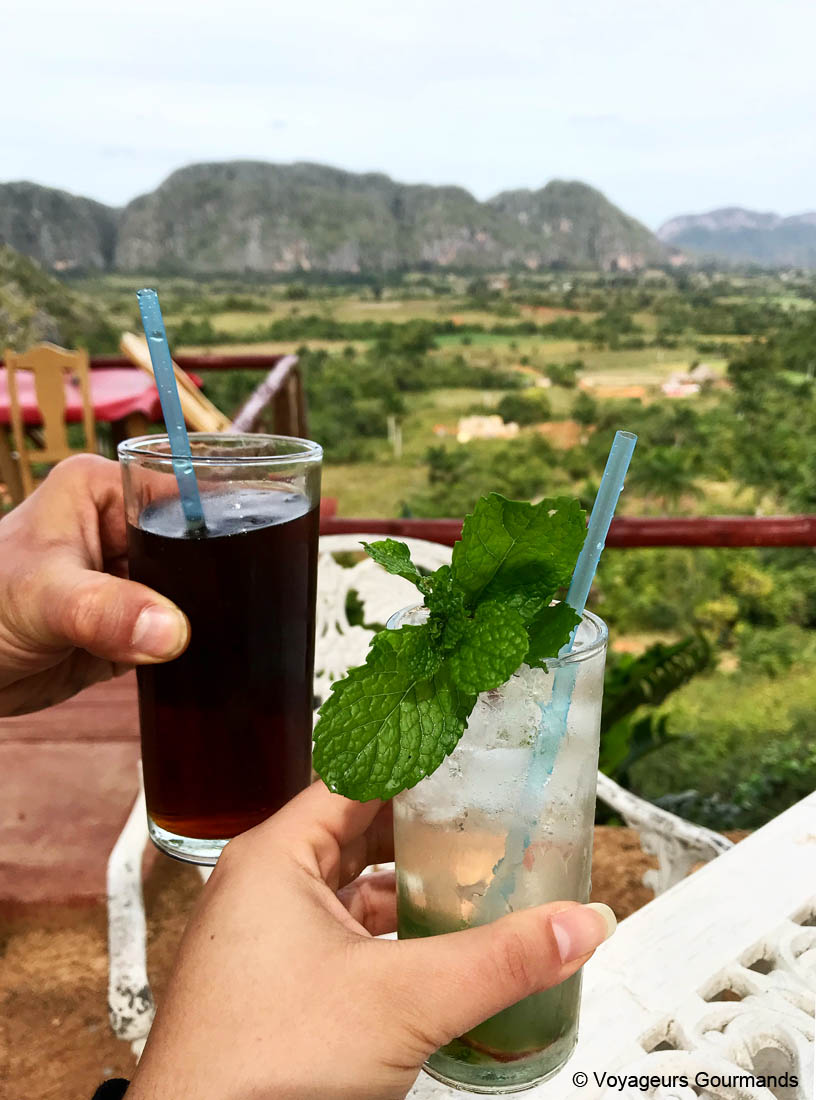
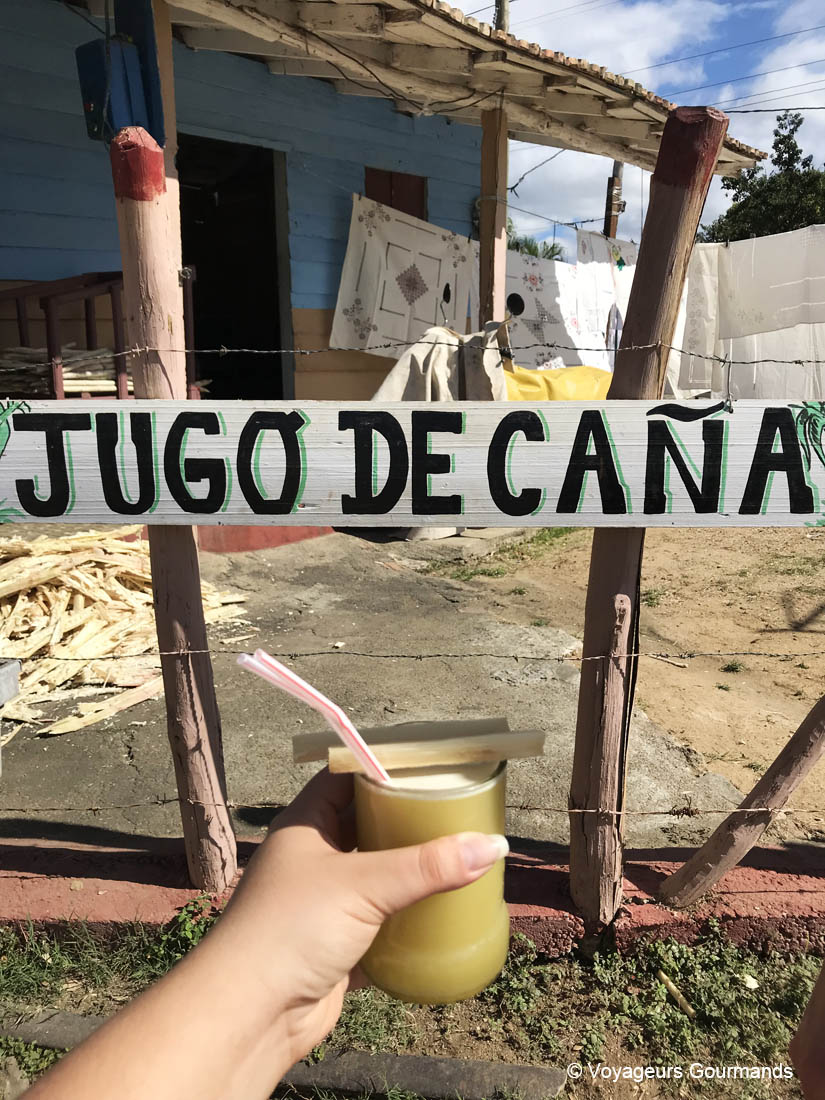
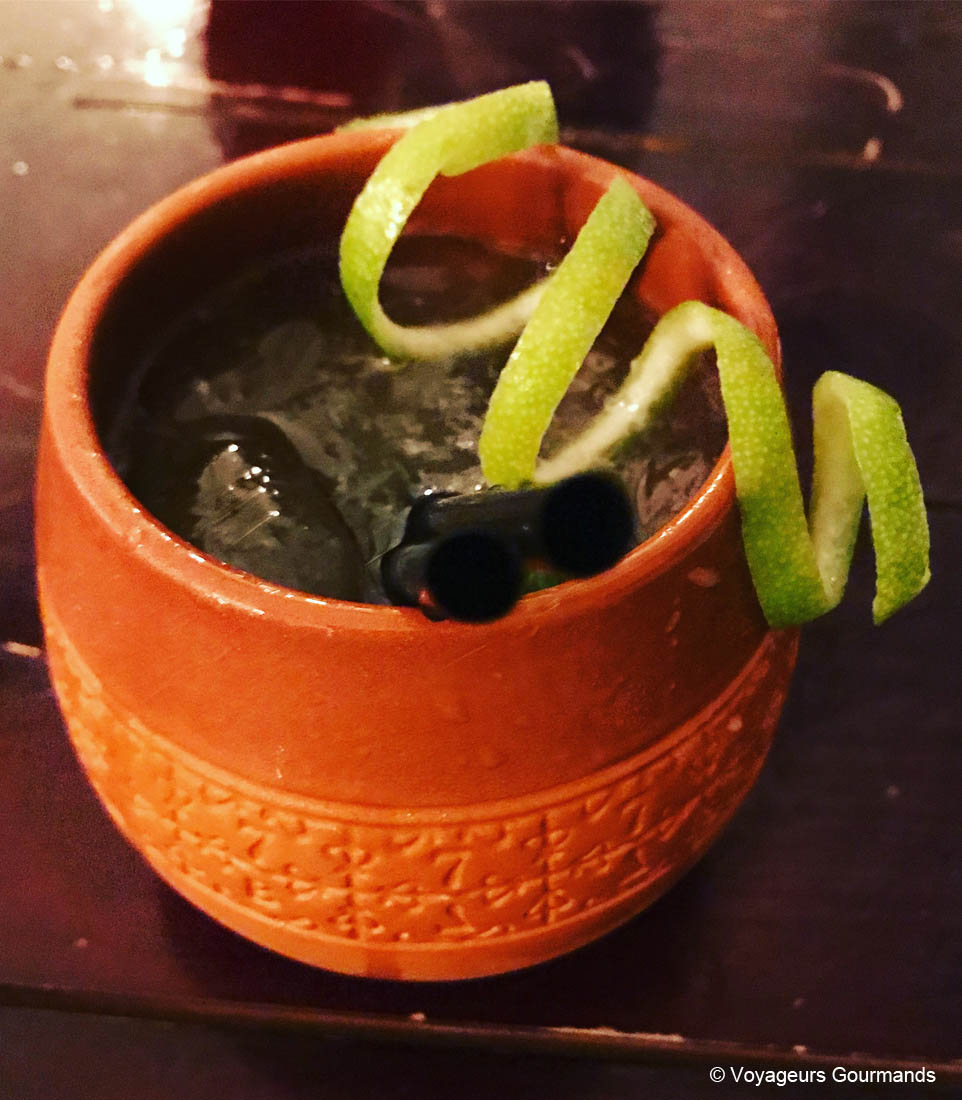
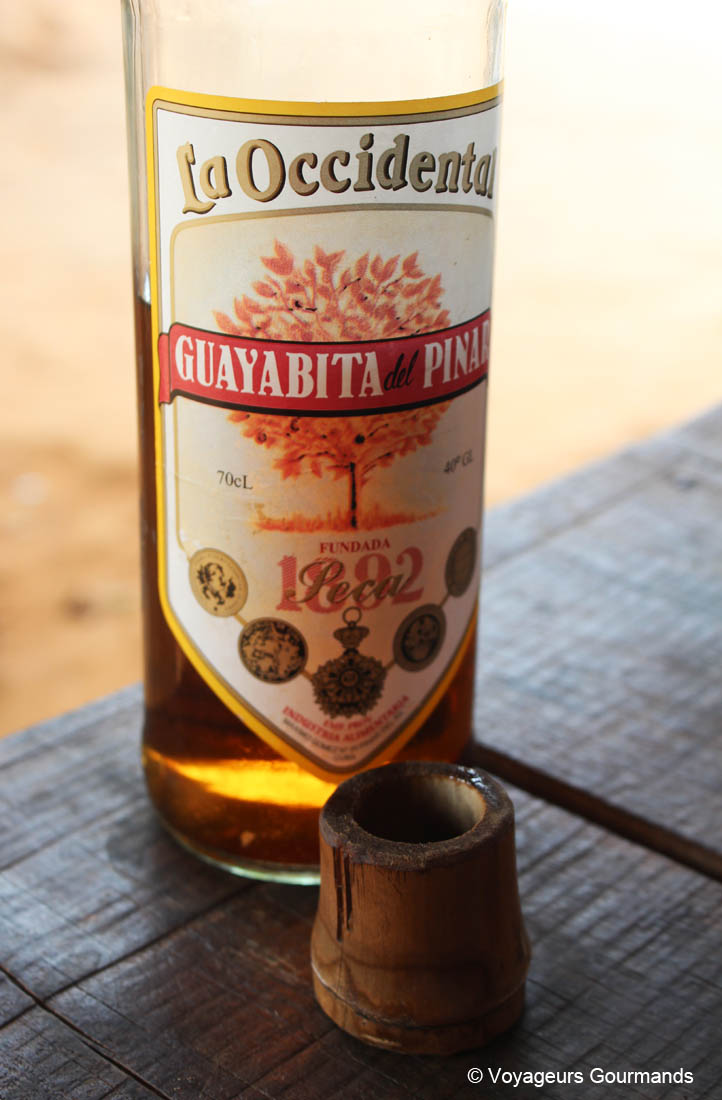
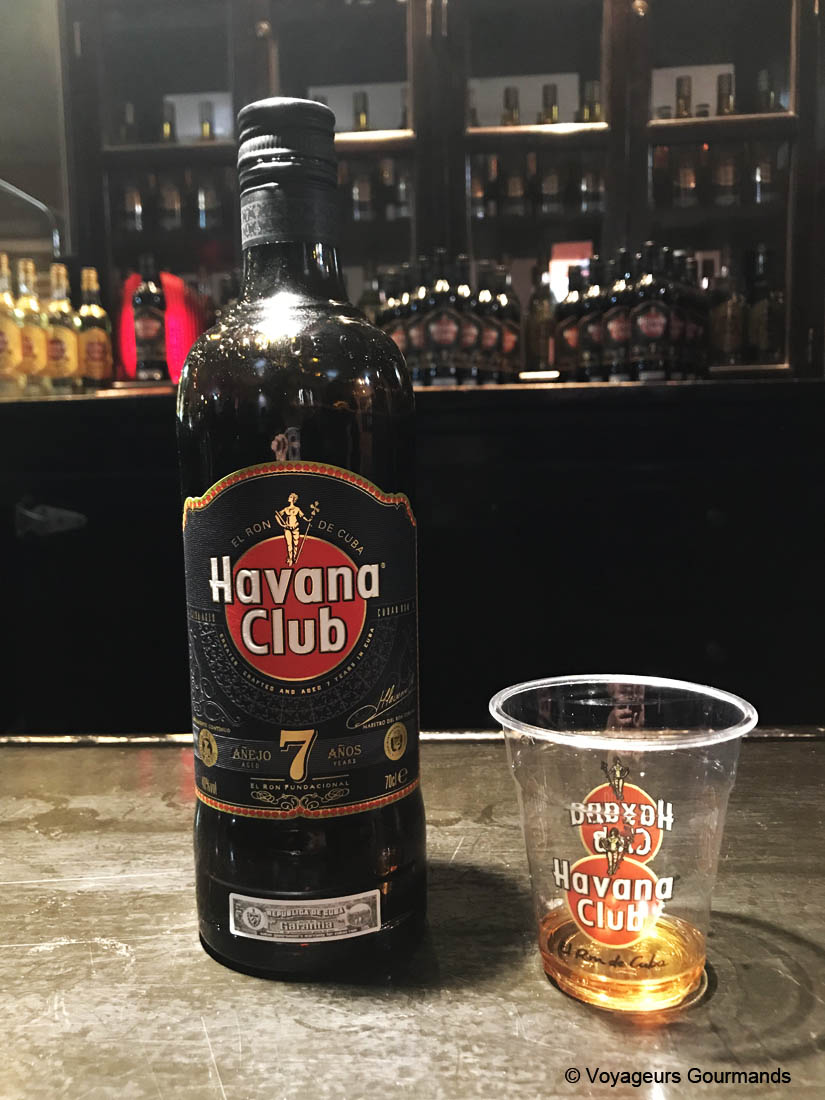
Rum is a real institution in Cuba, and of course you can tell from the drinks. Many cocktails are rum-based, like the Cuba libre, the mojito, the daiquiri or the Hemingway Special. Cuban coffee also plays a big part: it’s served short and sweet! We also tried some delicious sugar cane juice (jugo de caña or guarapo) and lots of smoothies!
Our favourite sweet discovery, in Trinidad: the canchánchara cocktail, made with honey, lime and rum… You’ll also get to try TuKola, the national soft drink, created to make up for the lack of Coca-Cola. In fact, there are plenty of orange, lemon and cola sodas… For beer, the two local brands are Cristal and Bucanero. Finally, if you’d like to learn more about rum, head to the museum dedicated to it in Havana* (a good one to fit into your plans to visit Havana in 3 days).
Eating in Cuba today: what has changed
Our trip was at the end of 2018, and the situation in Cuba has changed a lot since then. The island is going through a severe economic crisis: food and fuel shortages, power cuts, inflation… In 2026, some hotels even had to close because of fuel shortages. In practice, restaurant menus may be shorter than before, some products may be unavailable and prices can change quickly.
Our tips if you’re going:
- check the latest situation just before you leave (official travel advice, forums, recent reviews);
- favour casas particulares and paladares (private restaurants), which are often better stocked;
- pack a few snacks for long journeys;
- budget-wise, allow around €5 for a simple lunch and about €10 for a three-course dinner in a mid-range restaurant (October 2026 prices), with lobster costing a little more.
Must-try Cuban specialities
In our opinion, several dishes are unmissable, as are a few drinks. But if we had to pick just five:
- lobster;
- chicken with its traditional rice and black beans;
- the Cuban sandwich;
- the mojito;
- plantains.

✤✤✤
Cuban food may not be very sophisticated, but we always ate really well! The produce was always good quality, and we thoroughly enjoyed all that lobster and those cocktails! To plan the rest of your trip, find all our articles about Cuba, including our guide to Cayo Santa María. And you, which Cuban dish would you most like to try?
*Please drink responsibly.
FAQ
Your questions answered here!
What is the national dish of Cuba?
Ajiaco, a stew of several meats and root vegetables (cassava, malanga, sweet potato, corn, plantain), is often considered Cuba’s national dish. Ropa vieja, shredded beef in tomato sauce, is also one of the island’s most iconic dishes.
What is typical Cuban food?
The dish you’ll see most often is arroz con pollo, chicken served with rice, usually alongside moros y cristianos (rice and black beans), fried plantains and a little salad. Lobster and pork are also very common on menus.
What is the typical drink in Cuba?
Rum is king in Cuba and goes into the most famous cocktails: the mojito, the Cuba libre and the daiquiri. In Trinidad, try a canchánchara (rum, honey and lime). For something alcohol-free, Cuban coffee, short and sweet, and guarapo, fresh sugar cane juice, are must-tries.
How much does a meal cost in Cuba?
Based on prices collected in October 2026, allow around €5 for a simple lunch and about €10 per person for a three-course dinner in a mid-range restaurant. With the economic crisis the island is going through, prices change quickly, so check before you go.
Is the food good in Cuba?
Cuban food is simple, but on our trip we always ate really well, especially at casas particulares, where meals were generous and home-cooked. Since then, the economic crisis has led to shortages: menus may be more limited than before, and paladares and casas remain your best options.