


How did a last-minute booking turn into one of our favourite experiences in Guadeloupe? The Grand Cul-de-Sac Marin wasn’t even on our list: it became our plan B after our trip to Petite-Terre was cancelled. And yet, between the mangrove of the Canal des Rotours, the wild islets and Pointe Sable, the most beautiful beach of our whole stay, this half-day at sea won us over completely.
You can reach the Grand Cul-de-Sac Marin from two departure points: Sainte-Rose, on the Basse-Terre side, where most full-day catamaran trips leave from, or Morne-à-l’Eau, on the Grande-Terre side, via the Canal des Rotours. We chose the second option, with a gentle start through the mangrove.
✤✤✤
Grand Cul-de-Sac Marin at a glance
| 🌴 In short | ✨ What you need to know |
|---|---|
| Where | In the north of Guadeloupe, between Grande-Terre and Basse-Terre |
| Departure | Morne-à-l’Eau (small boats, like our saintoise) or Sainte-Rose (catamaran) |
| Duration | Half day (leaving at 8.30am or 2pm) or full day, depending on the trip |
| Price | From €45 per person (our half-day trip, aperitif included) |
| Itinerary | Canal des Rotours, Îlet Macou, snorkelling on the coral reef, Pointe Sable, Îlet aux Oiseaux |
| With children | Yes, it’s a short trip, but no life jackets are provided: bring some for the children |
| Best time to go | Dry season, from December to April, for calmer seas and clearer water |
Our experience in the Grand Cul-de-Sac Marin
We had originally planned a trip to Petite-Terre, but it was cancelled a few days beforehand. I really wanted to replace it with another boat trip, and I’d heard great things about this one.
Alcino wasn’t very keen. To be fair, I’d sold it to him as “a trip into the mangrove”… when the Grand Cul-de-Sac Marin is so much more than that: a lagoon, islets, a coral reef and deserted beaches.
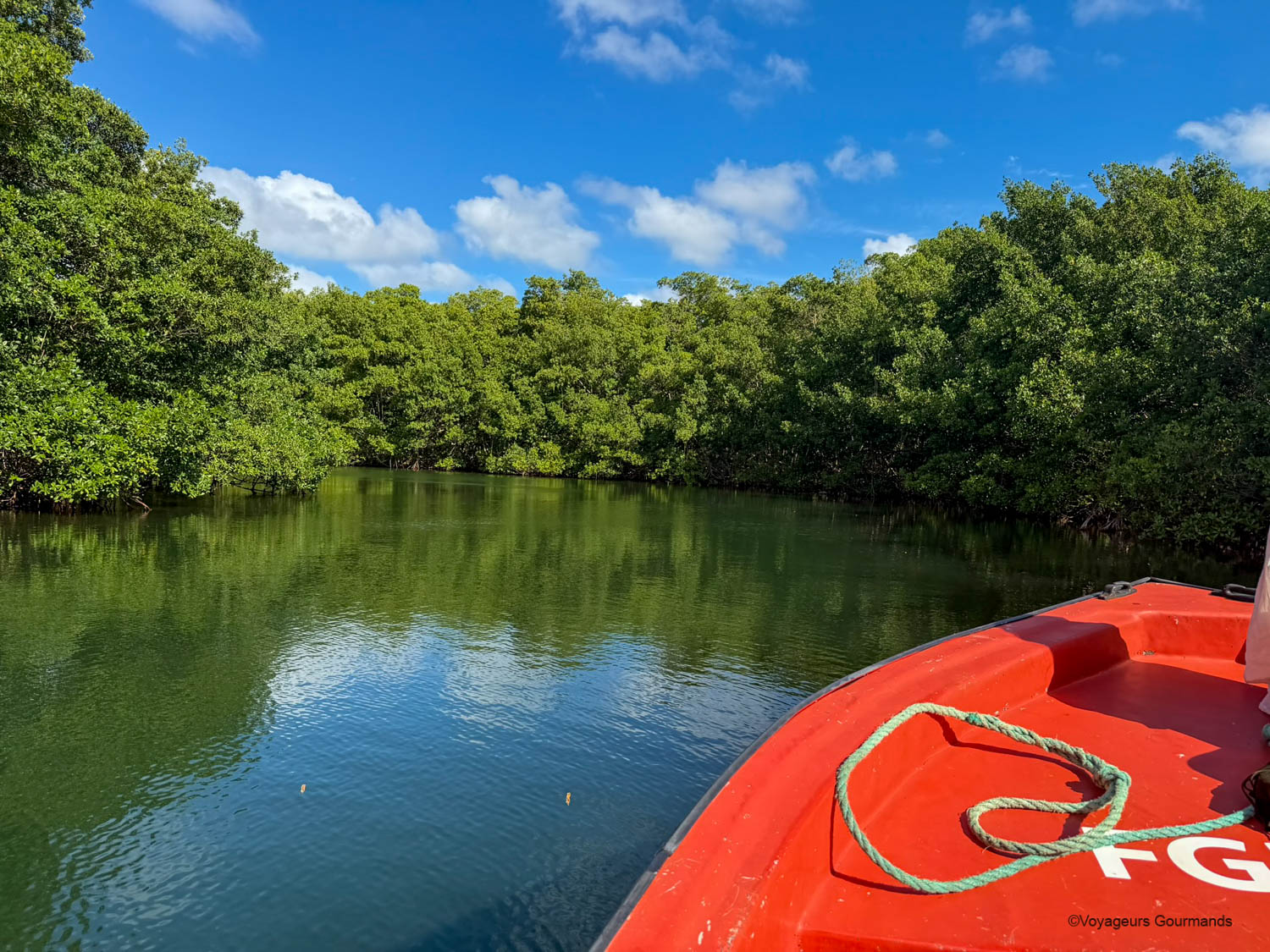
We meet early in the morning, at 8.30am, while the light is still soft over the mangrove. We leave Morne-à-l’Eau slowly and, before long, we’re heading deep into the Canal des Rotours.
Once in the canal, we move very slowly. The mangrove trees form a dense, almost maze-like setting, and our guide stops near their roots to tell us about the crabs that live here. He also explains that the canal is getting drier and drier, so the boat has to be manoeuvred carefully. It’s quiet, barely disturbed by the engine and a few birds flying overhead.
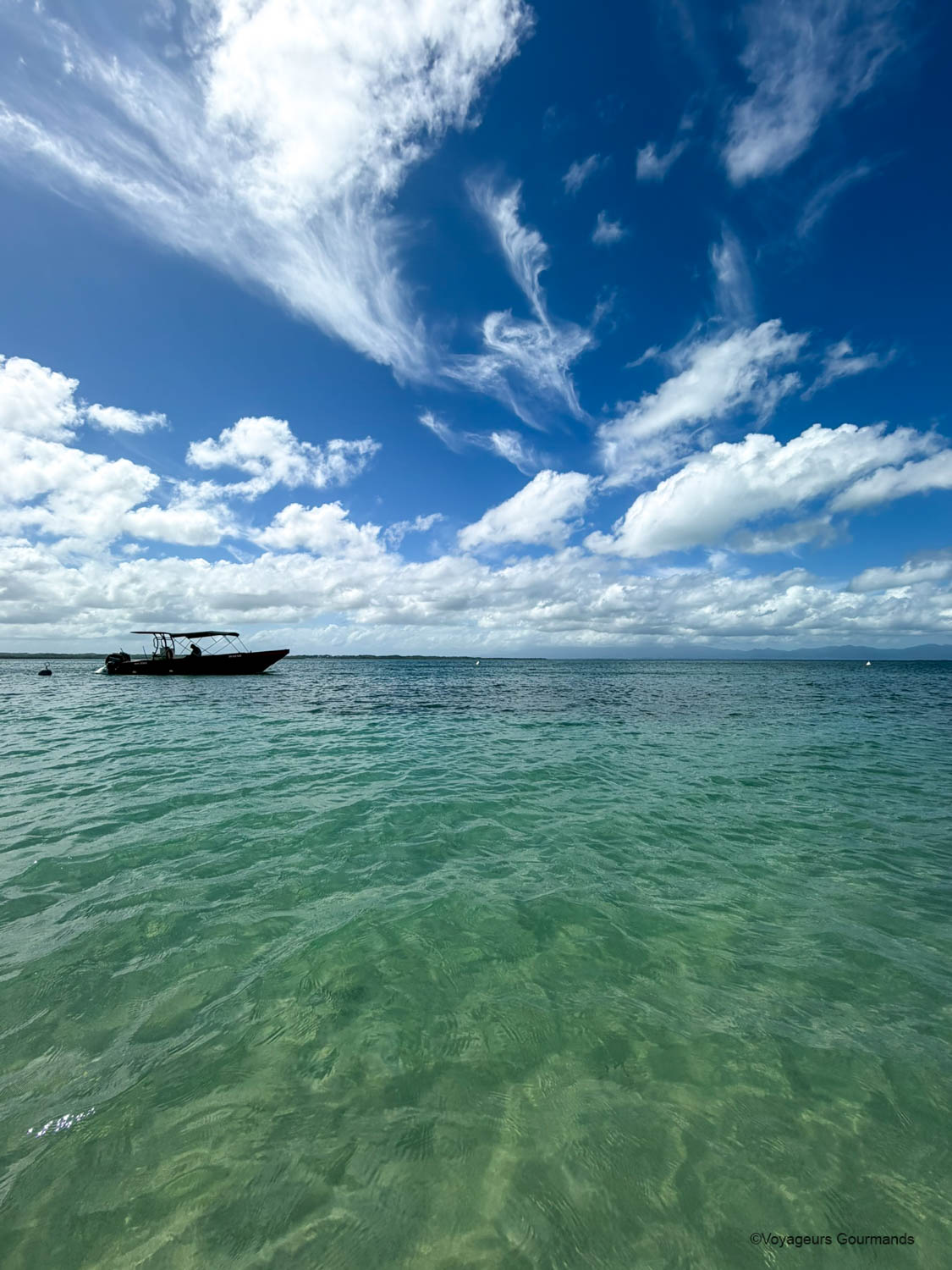
Then, at the end of the canal, he speeds up and the Grand Cul-de-Sac Marin lagoon opens up in front of us. Wow! Everything widens, the blue becomes lighter and vaster: it’s just so beautiful.


First stop: Îlet Macou
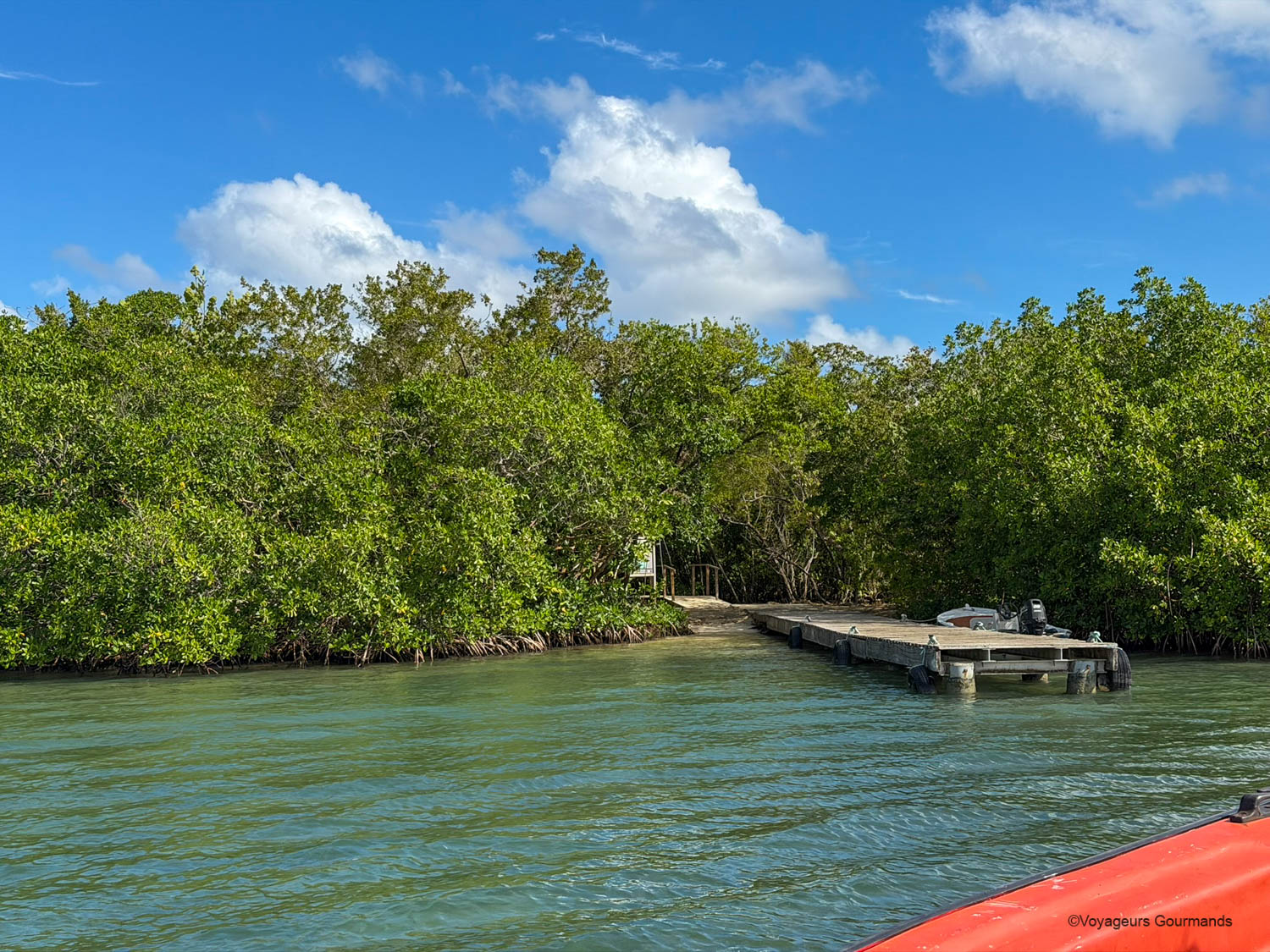
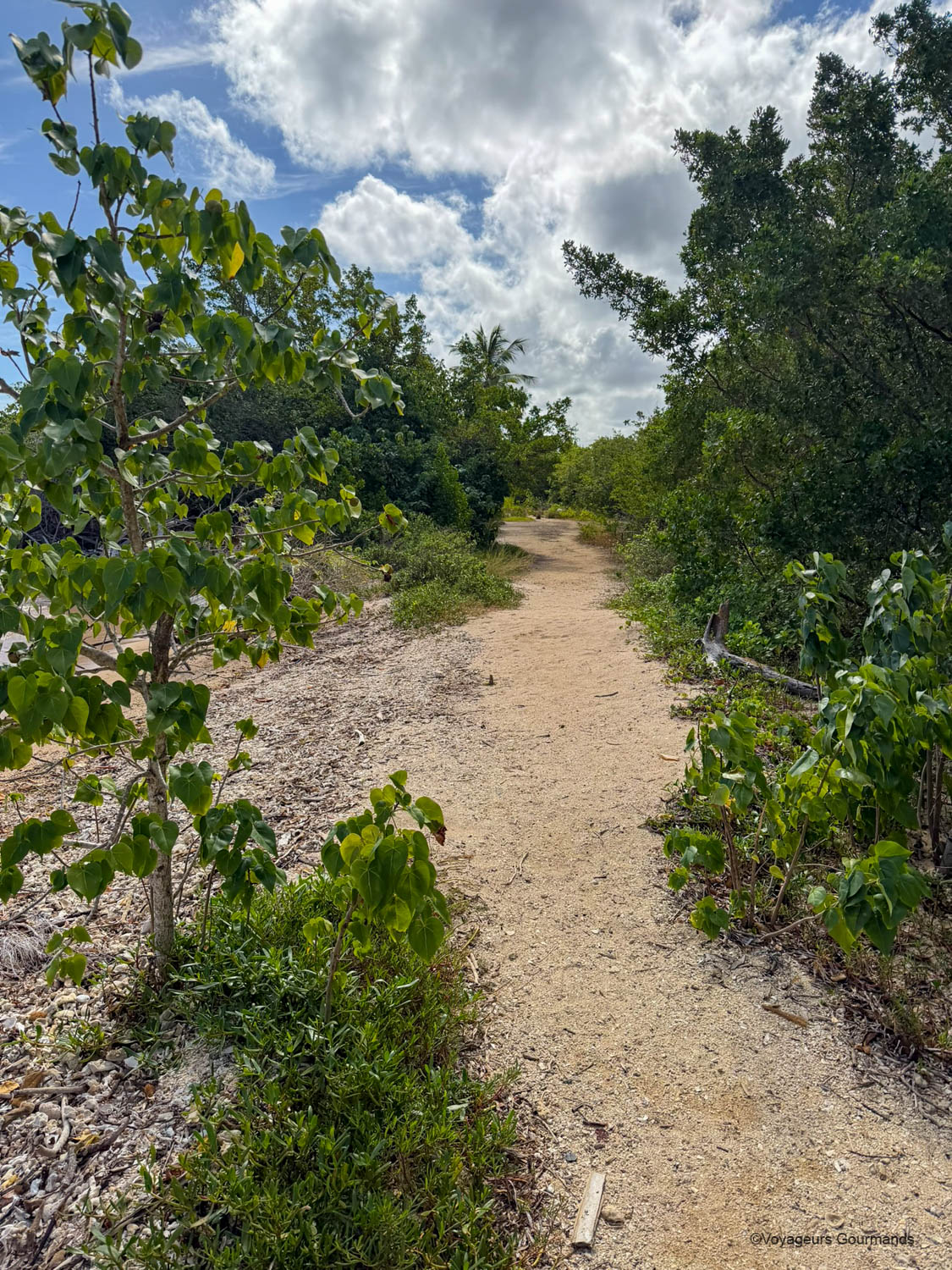
Îlet Macou is our first stop. We land on a small strip of pale sand surrounded by turquoise water, with no one else around but our group. After a five-minute walk, we reach a small chapel with an incredible view of the sea. It’s quite unusual to come across a chapel in the middle of an abandoned islet! It’s dedicated to Notre-Dame-de-la-Garde, protector of sailors lost at sea: passing fishermen come here to pray and leave queen conch shells as offerings.



Snorkelling on the coral reef
A little further on, by the coral reef, our guide suggests jumping in for some snorkelling. I don’t need asking twice, but the sea is really rough that day, and I’m quickly back on board.
So it all depends on the conditions on the day: when the sea is calm, the coral reef is a renowned spot for seeing tropical fish, coral and seagrass beds. And if it’s too choppy, no regrets: the rest of the trip more than makes up for it!

A break at Pointe Sable
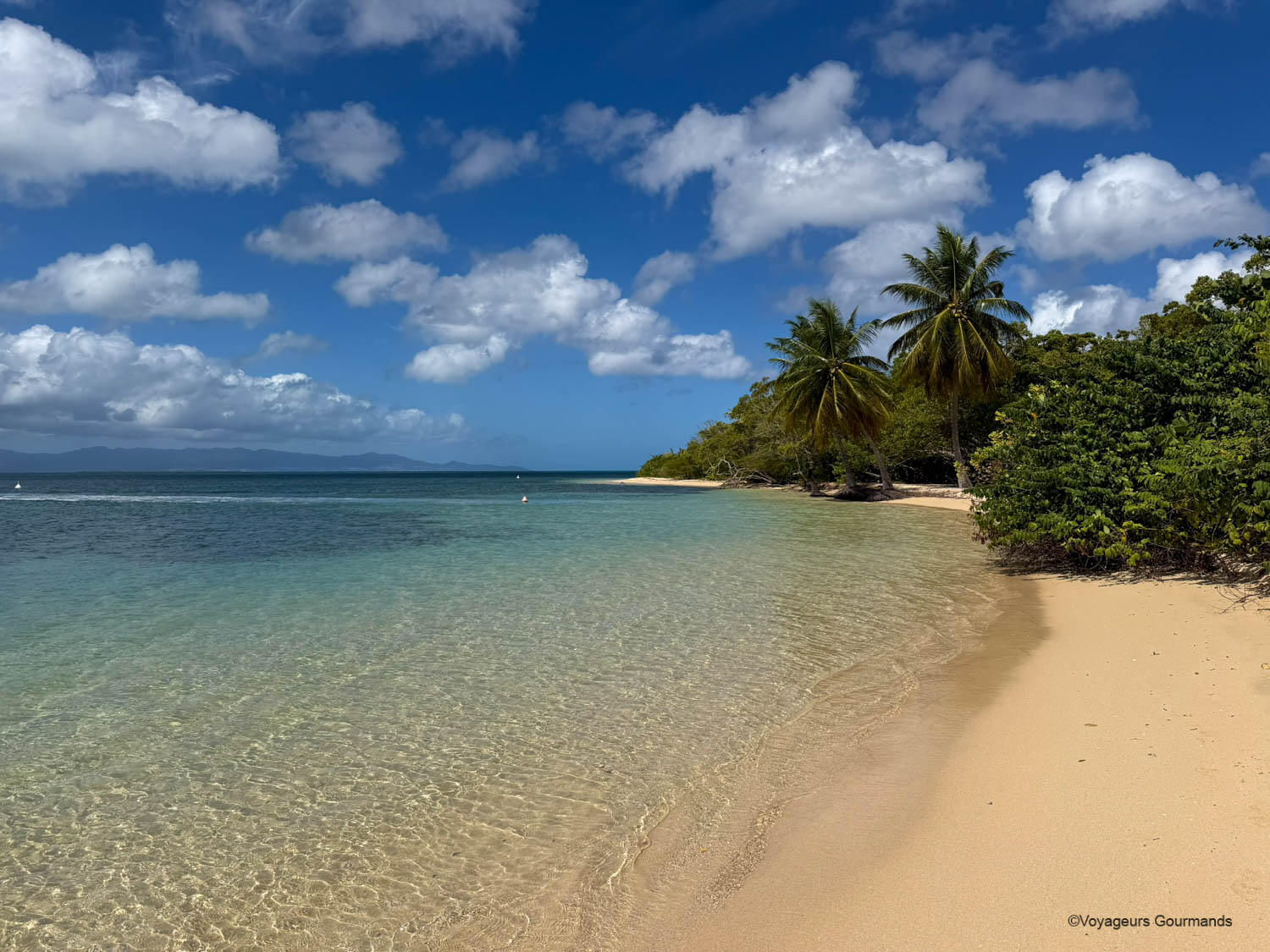
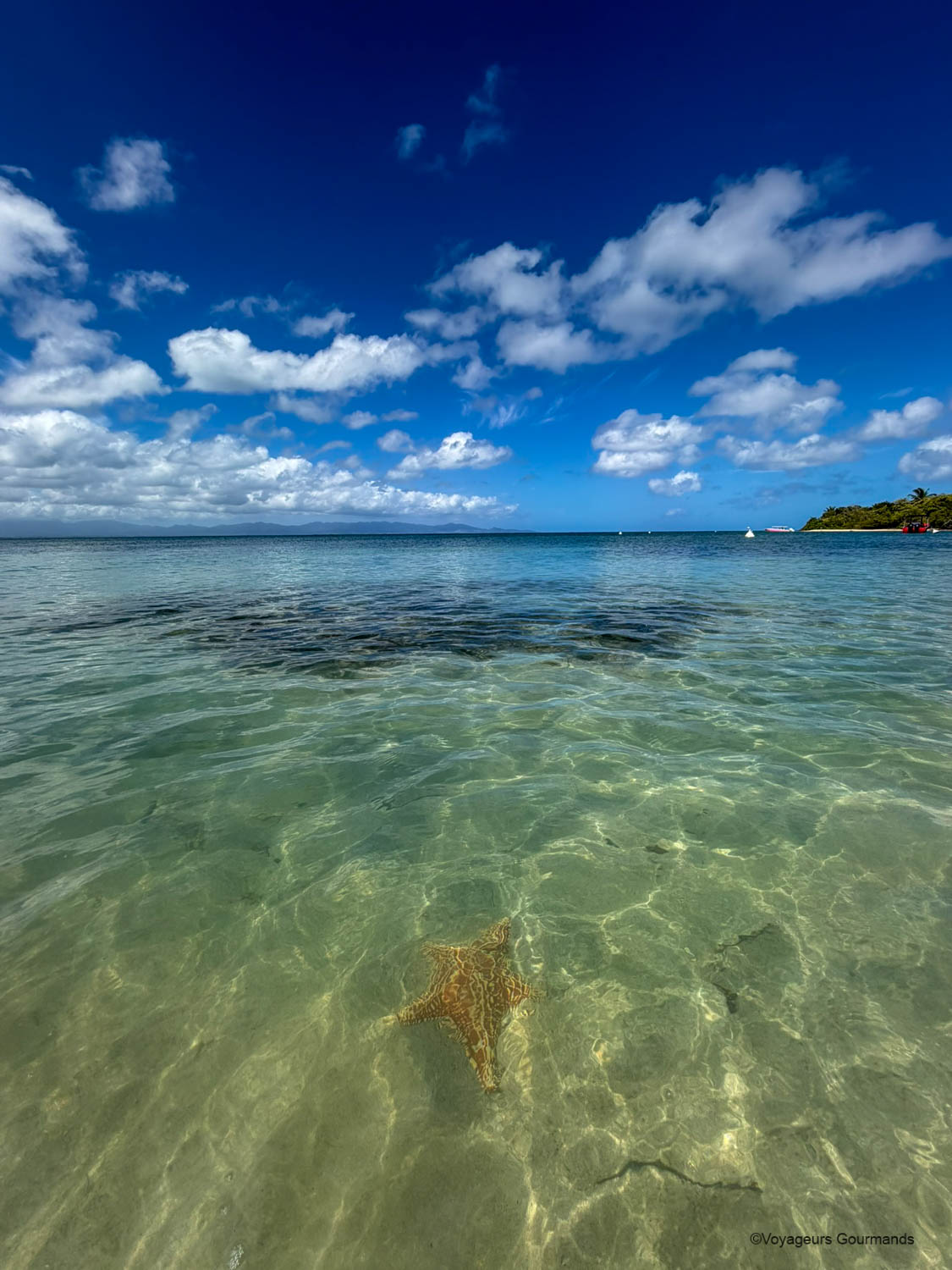
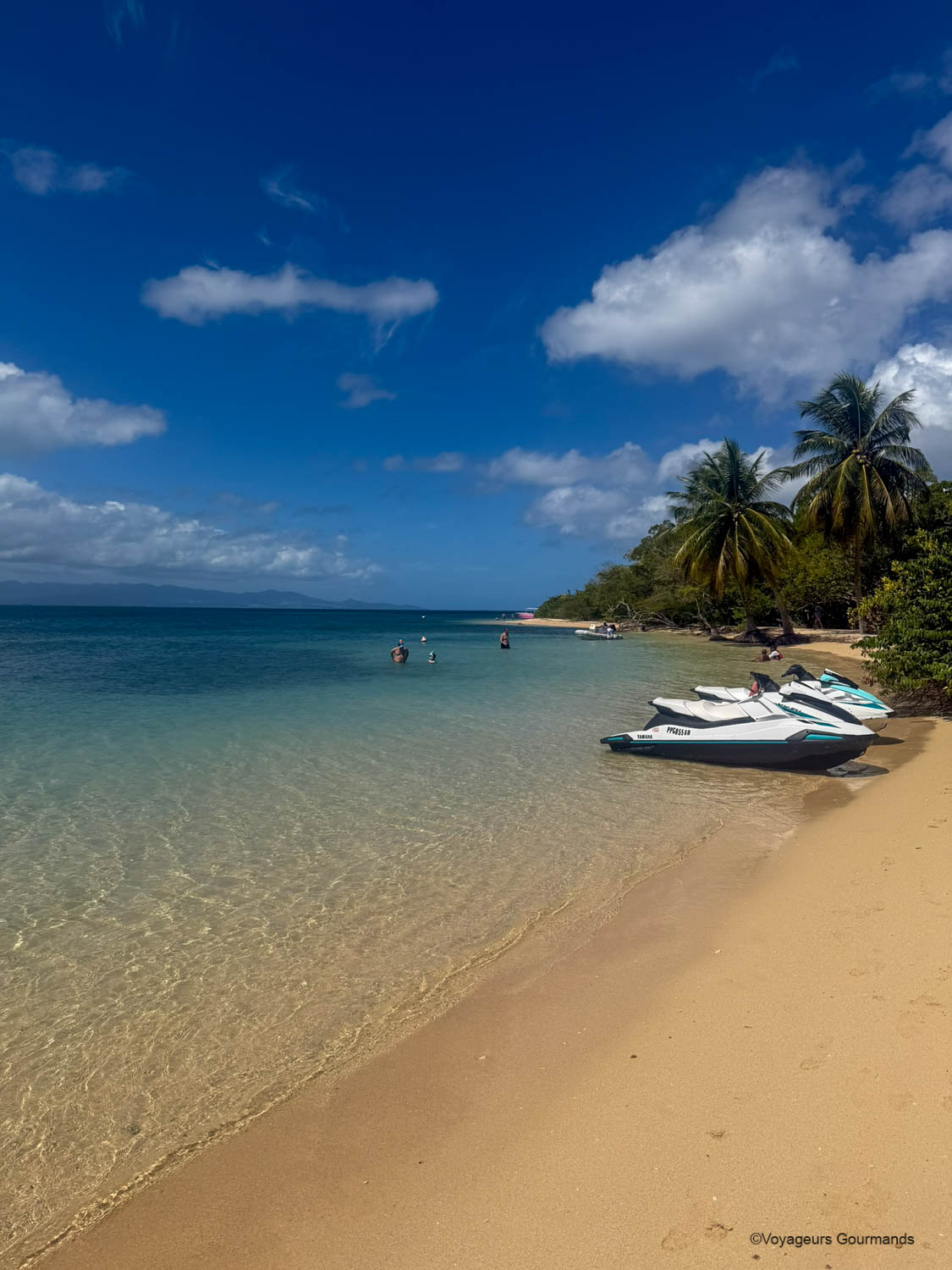
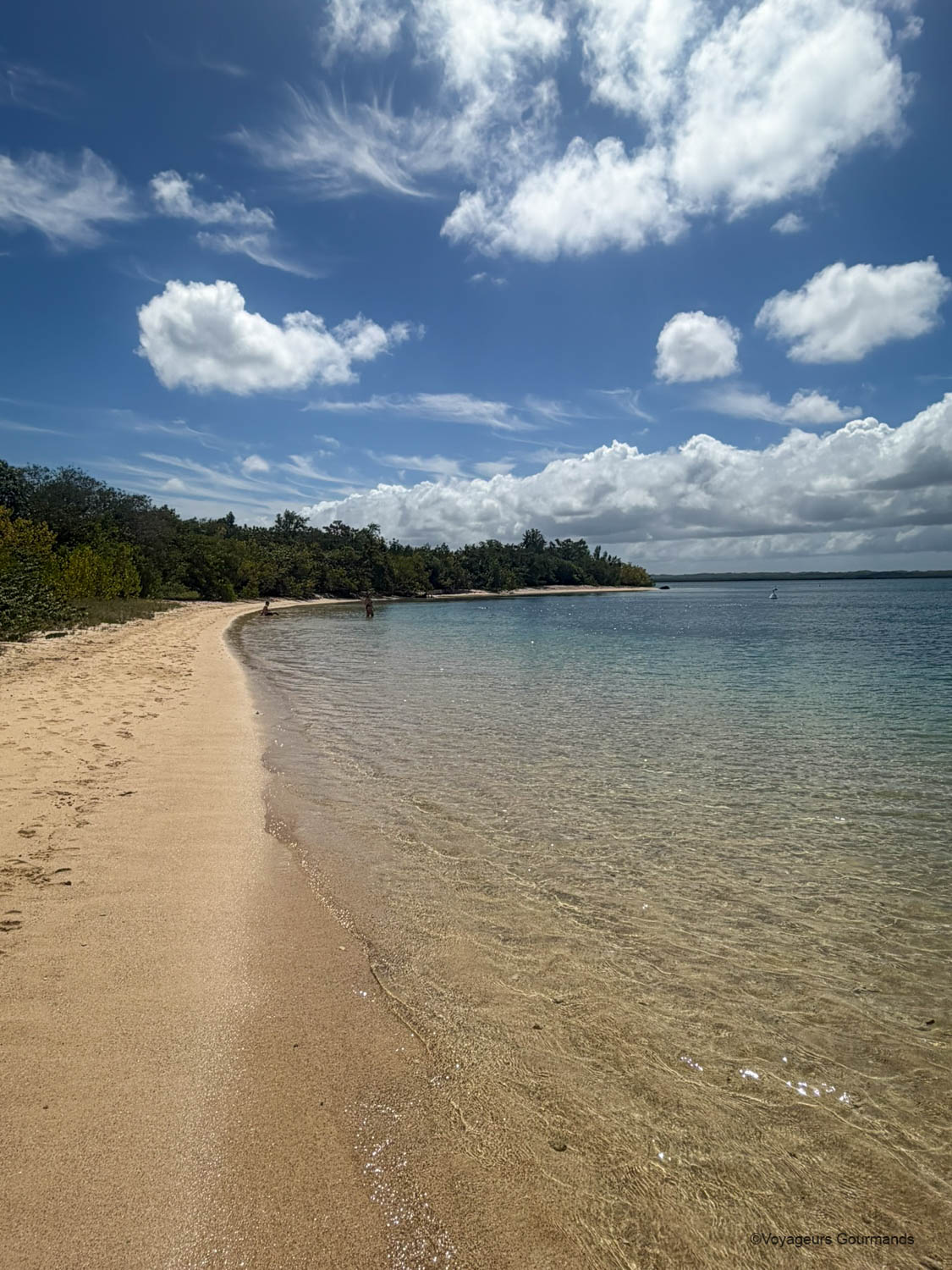
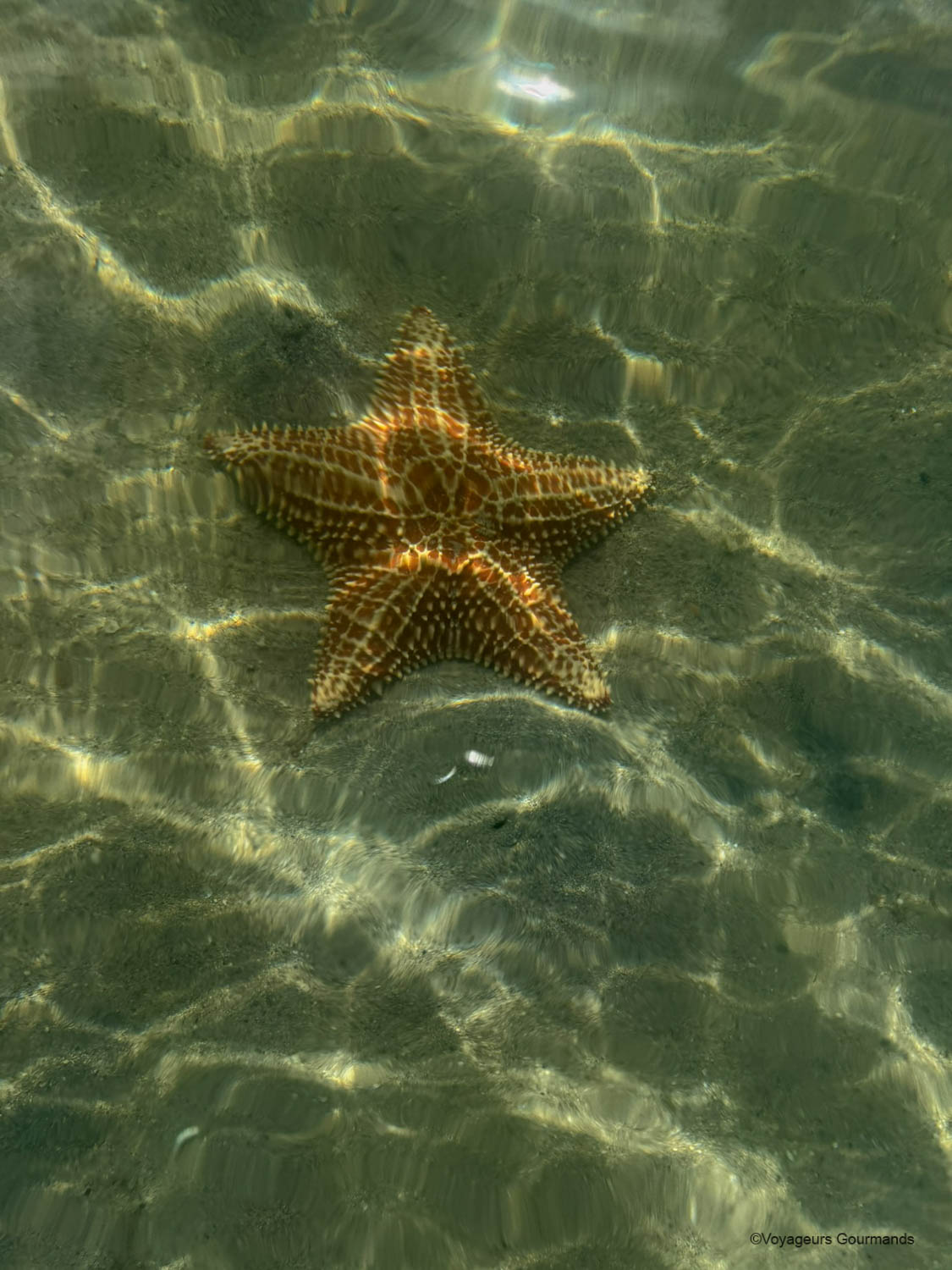
Next, we head for Pointe Sable beach, and it’s easily the highlight of the trip. Only reachable by sea or after a long walk, the beach is almost deserted. We stay there for quite a while, long enough for more snorkelling, and we see lots of big starfish. For me, it’s the most beautiful beach of our whole stay, and we saw plenty (we share them all in our guide to the best beaches in Guadeloupe).
Îlet aux Oiseaux
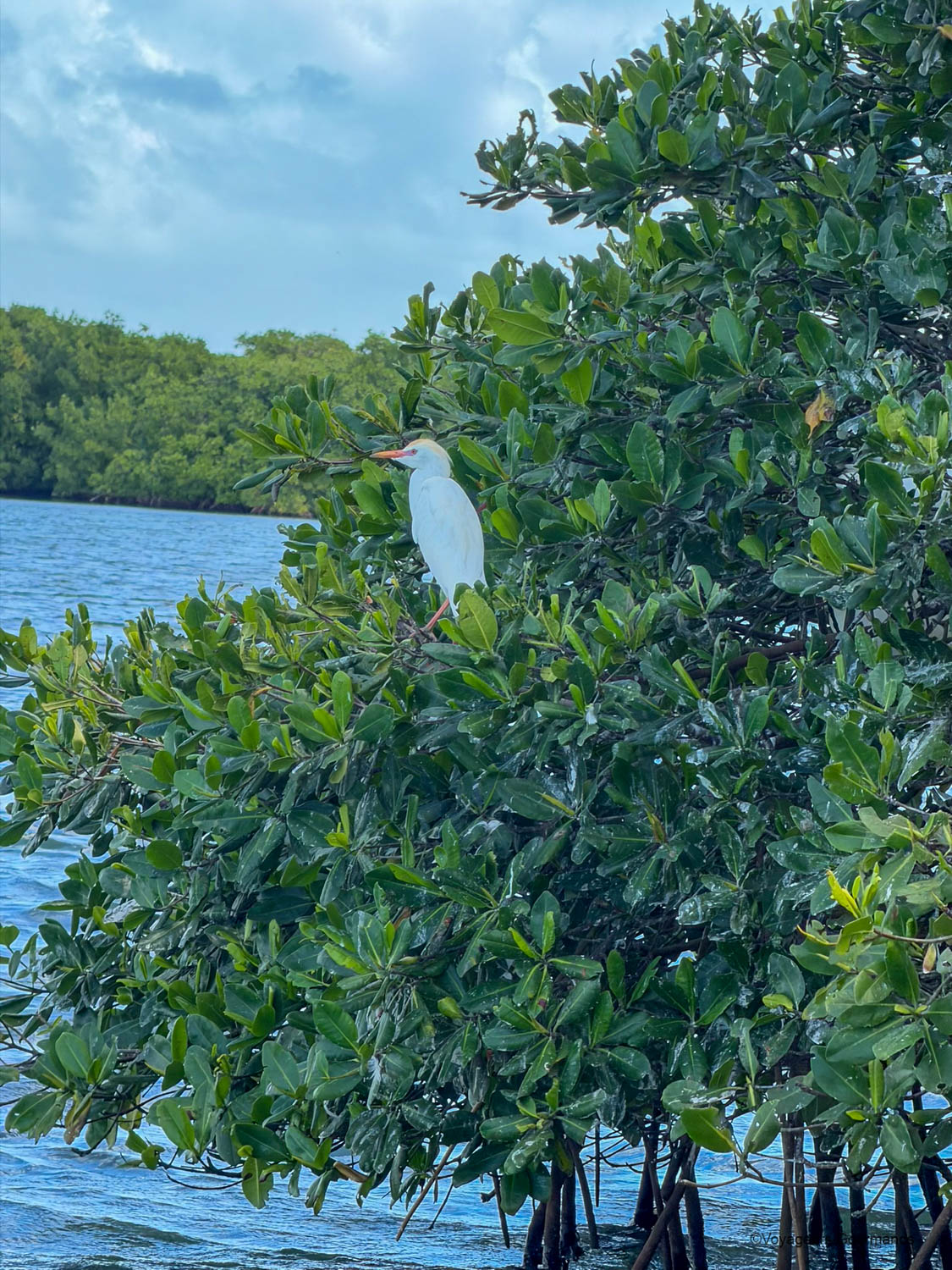
Last stop before heading back: Îlet aux Oiseaux. Here, the atmosphere changes again. This is a protected area, where the birds are clearly at home.
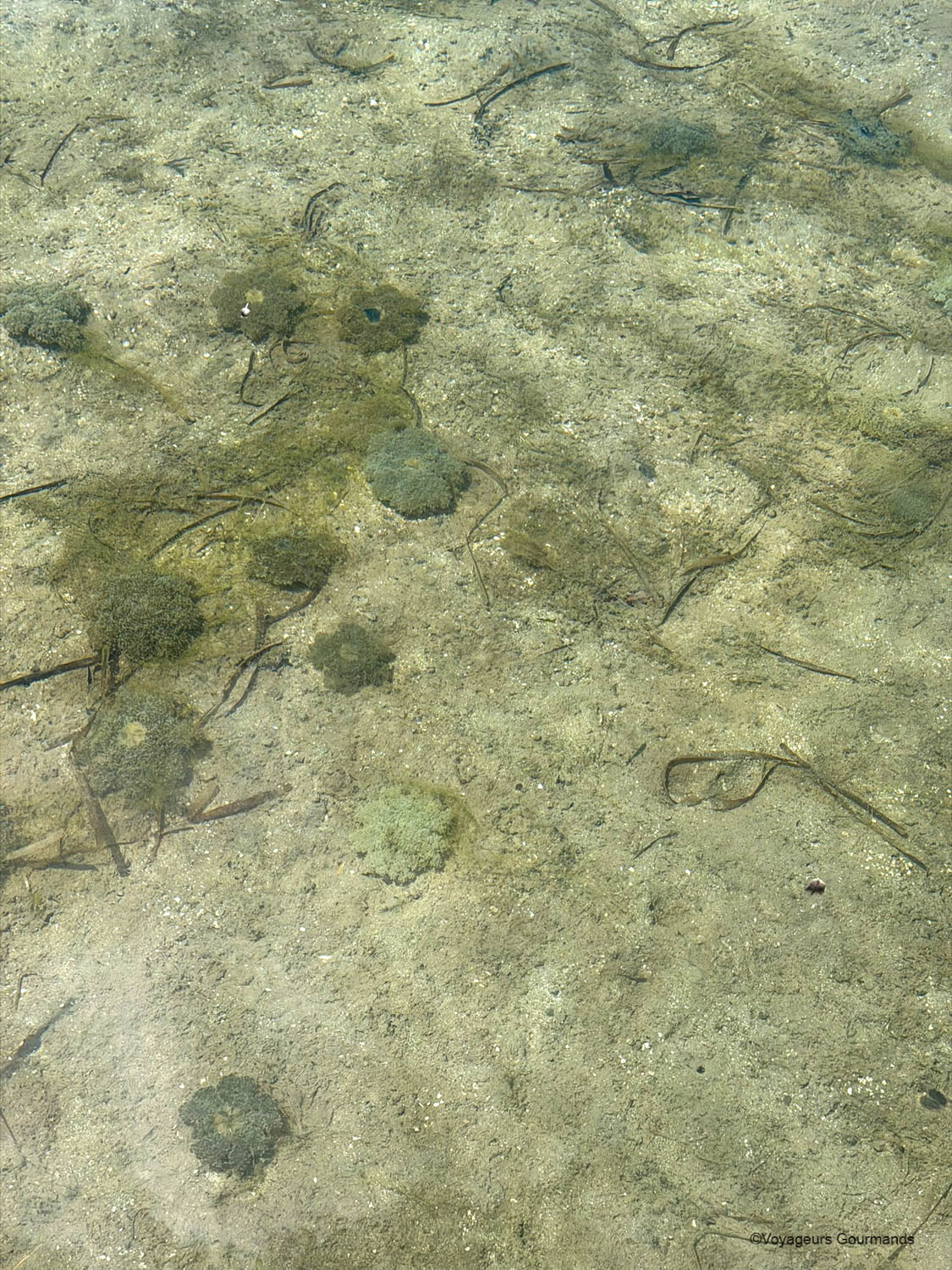
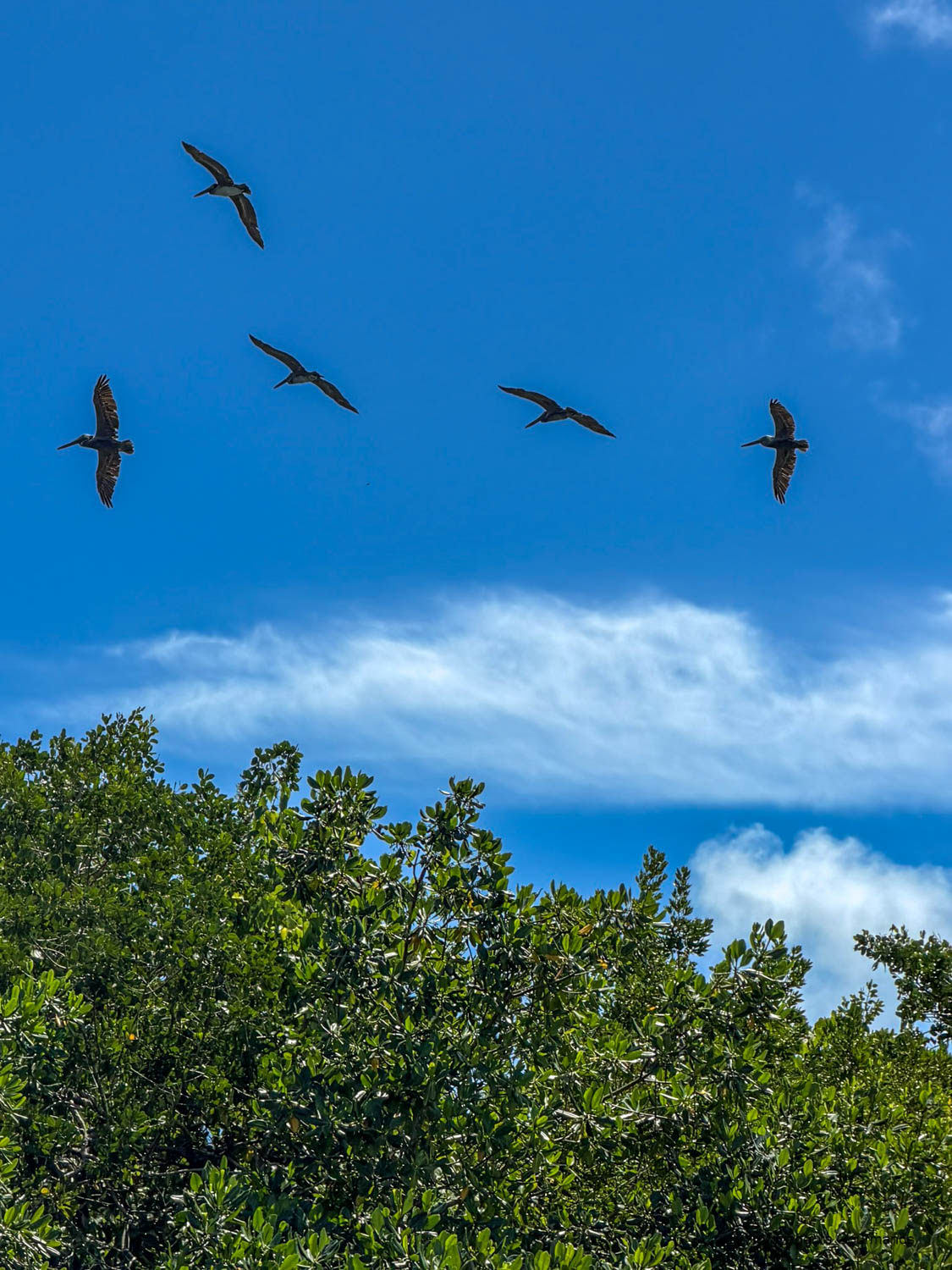
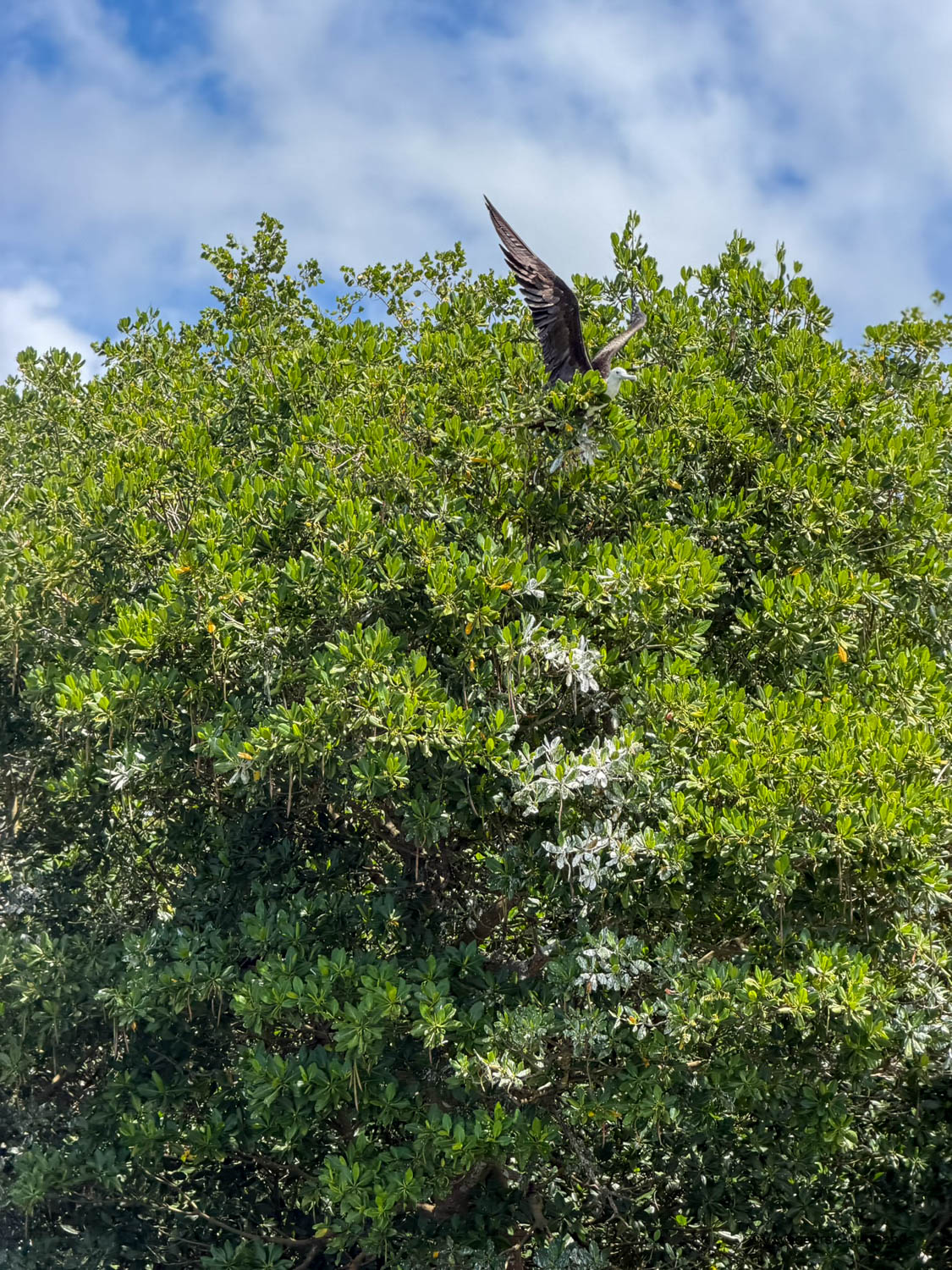
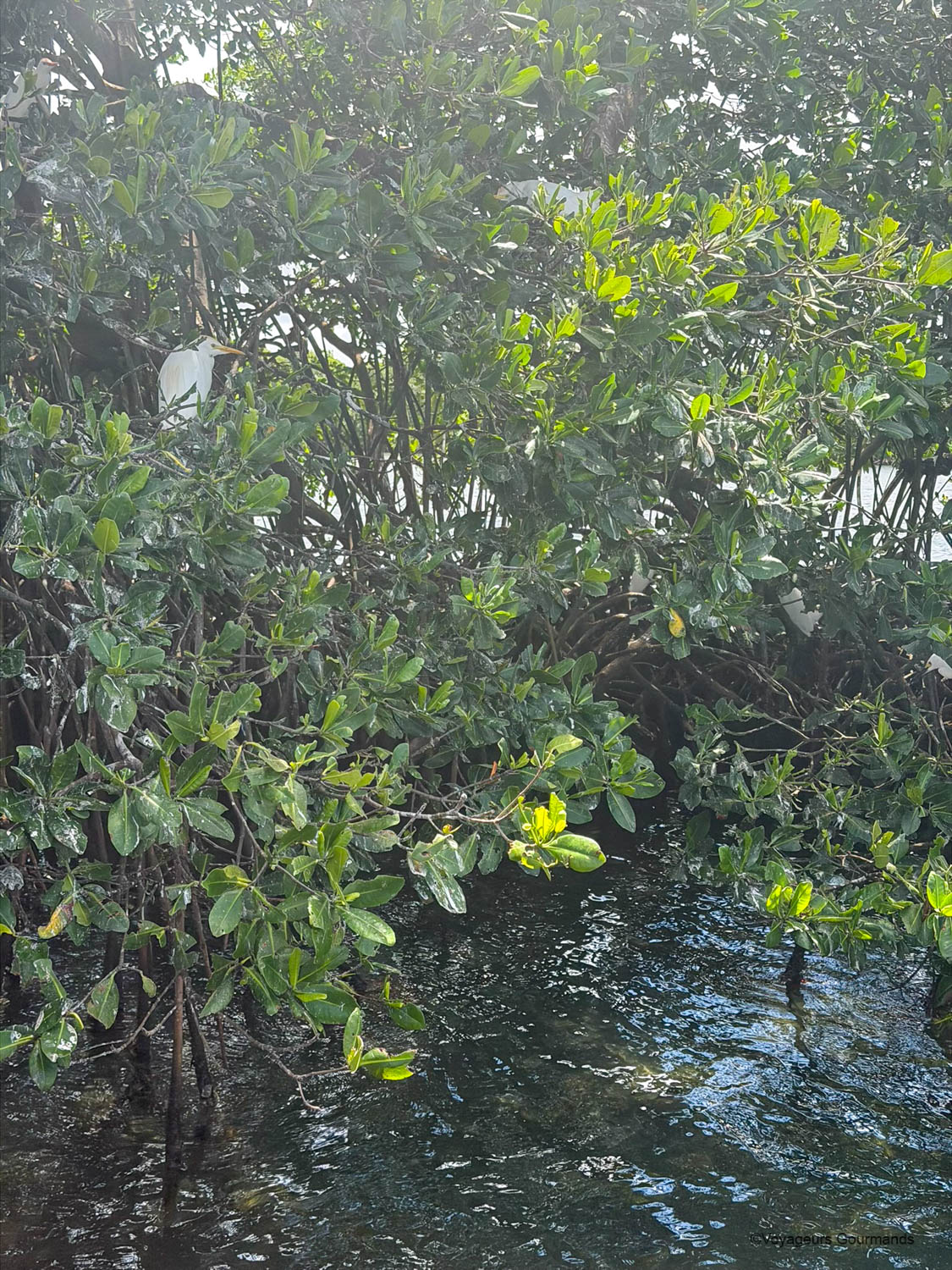
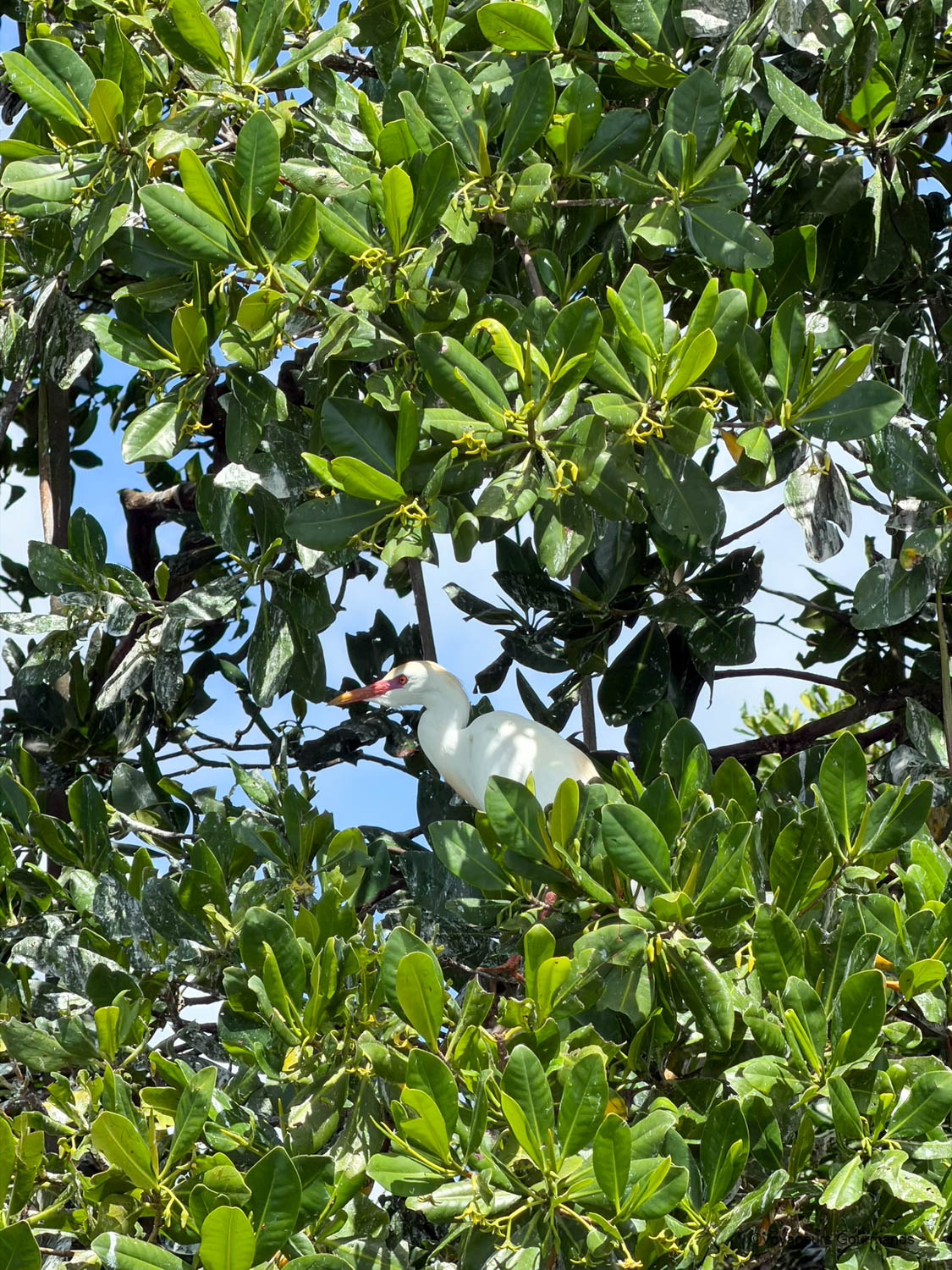
They’re everywhere in the mangrove trees, and a few frigatebirds circle above our heads. In the water around the islet, we also spot lots of upside-down jellyfish: lying on the seabed, they look like flowers!
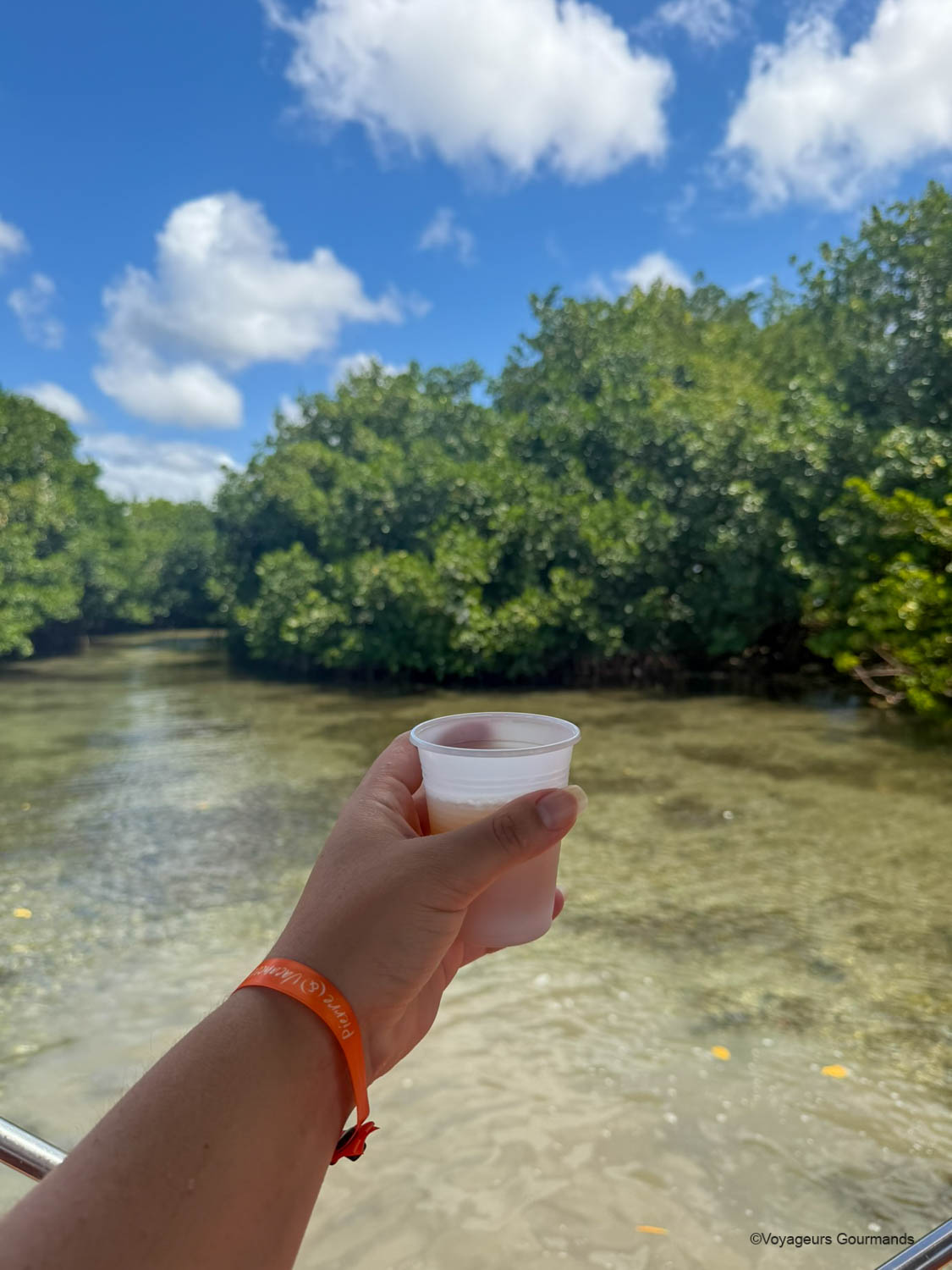
After this last stop, it’s time for the aperitif, served on board: a really convivial moment, especially as there are only eight of us at most. Then it’s back to Morne-à-l’Eau through the Canal des Rotours, with the feeling of having enjoyed a real escape.
Where is the Grand Cul-de-Sac Marin in Guadeloupe?
The Grand Cul-de-Sac Marin lies in the north of Guadeloupe, between Grande-Terre and Basse-Terre. This large bay of around 15,000 hectares is protected by a coral reef some 30 kilometres long. Part of it is classified as a core area of the Guadeloupe National Park, and the site is also recognised as a wetland of international importance (Ramsar).
What makes it unique is the combination of several ecosystems in one place: mangrove, seagrass beds, coral reefs and islets. It’s one of the richest natural areas in the archipelago.
Grand Cul-de-Sac Marin boat trip: which one to choose?
The choice mainly depends on where you’re starting from and the kind of atmosphere you’re after. From Morne-à-l’Eau, trips are usually shorter, on small boats. It’s ideal if you want to make the most of your time and see the highlights of the lagoon in a few hours, between mangrove, islets and snorkelling. That’s what we did with Marcus’s half-day saintoise trip, a small-group outing that covers all the essentials in under five hours.
From Sainte-Rose by catamaran, the experience is gentler and more immersive. You take your time sailing, enjoy the space on board, and often a meal or an aperitif in a very relaxed atmosphere. It’s a particularly pleasant option for couples or families. Another difference from Morne-à-l’Eau: trips from Sainte-Rose often include a snorkelling stop over a shipwreck, a lovely surprise to add to your swim. You can, for example, book this trip from Sainte-Rose, or this full-day outing if you’d like to take your time on the lagoon.
Otherwise, the itinerary is fairly similar from one option to another: mangrove, Îlet Macou and Îlet aux Oiseaux, snorkelling on the coral reef and a break at Pointe Sable beach.
💡 Good to know
Wear your swimsuit under your clothes and bring a towel, a hat, water and reef-safe sun cream: this is a protected area. Water shoes are handy for getting off the boat onto the islets. Note: fins, masks and snorkels are neither provided nor lent, so remember to bring your own. The aperitif, however, is included.
Visiting the Grand Cul-de-Sac Marin with children
It’s a trip that works well for families: the boat journeys are short, and switching between sailing, islets and beach keeps children from getting bored. The only downside is that no life jackets are provided on Marcus’s trip. Remember to bring some, especially if your children aren’t strong swimmers or if the sea is a little rough, as it was that day by the coral reef.
Nobody has to get in the water, though. Between the chapel on Îlet Macou, the hermit crabs, the starfish at Pointe Sable and the birds of Îlet aux Oiseaux, little ones have plenty to marvel at without even putting on a mask.
✤✤✤
If you love nature and the sea, you’ll love this trip to the Grand Cul-de-Sac Marin, I’m sure of it!
What started as a simple plan B turned out to be one of our best memories of Guadeloupe. The slow pace of the Canal des Rotours, the little chapel on Îlet Macou, the upside-down jellyfish at Îlet aux Oiseaux… and above all Pointe Sable, that almost deserted beach where we could have stayed for hours. Even Alcino, who was expecting “a trip into the mangrove”, came back won over!
If you’d like to have the same experience, I recommend Marcus’s half-day saintoise trip: he was our guide, and we discovered the lagoon in great conditions. A fisherman by trade, he knows the lagoon’s ecosystem inside out and takes small groups (8 people maximum) on board a saintoise, the traditional fishing boat of the region.
FAQ – Grand Cul-de-Sac Marin
Click here for the frequently asked questions about the Grand Cul-de-Sac Marin
Can you visit the Grand Cul-de-Sac Marin without a tour?
Not really: the area is protected and is explored by boat, either with an authorised operator or by hiring a boat (with or without a skipper, depending on your licence).
Do you need to be able to swim to snorkel?
No, but it’s best to be comfortable in the water. Life jackets aren’t always provided (they weren’t on our trip): check before booking or bring your own.
How long does the trip last?
Allow half a day (around 4.5 hours for our trip, from 8.30am to 1pm) or a full day, depending on the option you choose.
Is it suitable for children?
Yes, the boat journeys are short and the stops varied. Just remember to bring life jackets for the children, as they aren’t always provided.
When is the best time to go?
The dry season, from December to April, usually brings calmer seas and clearer water.