


After our trip to Martinique, we knew Creole food would be on the menu in Guadeloupe… and that we were in for a treat. Colombo, accras, bokits, coconut sorbet: we weren’t disappointed!
Guadeloupean cuisine blends African, Indian, European and Caribbean influences. The result is highly fragrant, not necessarily spicy, and always generous. Here are the specialities we tried on the island, the ones we’d happily eat again, and where to find them.
✤✤✤
Guadeloupe food at a glance
| 📌 Info | ✨ Guadeloupe food in brief |
|---|---|
| 🍛 Signature dish | Chicken or goat colombo |
| 🥪 Street food | Bokit and salt cod accras |
| 🍰 Typical dessert | Tourment d’amour from Les Saintes and coconut sorbet |
| 🍹 Drink | Ti-punch made with rhum agricole |
| 🛒 Where to eat local | Markets, lolos and bokit food trucks |
| ❤️ Our favourite | Grilled spiny lobster and chatrou fricassee |
Must-try Creole dishes
Colombo
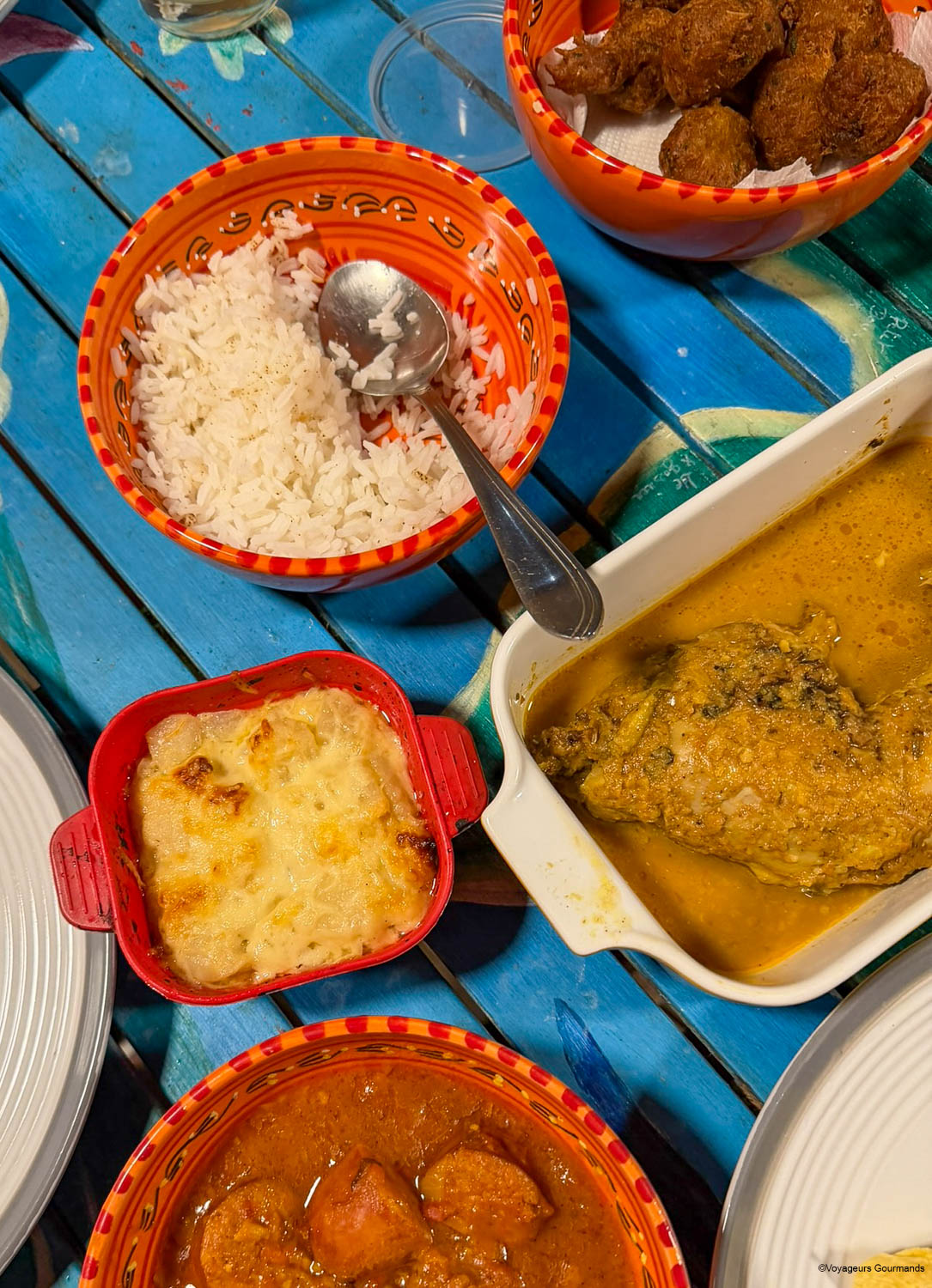
It’s the dish everyone associates with Guadeloupe. It arrived with the Indian indentured workers who came to the island after the abolition of slavery. Colombo is a stew flavoured with the spice blend of the same name: turmeric, coriander, cumin, fenugreek and mustard seeds. You’ll mostly find it made with chicken, but the goat version is the most traditional. It’s served with white rice. We had ours at our accommodation in Trois-Rivières, An Eol Caraïbes: delicious!
Poulet boucané (smoked chicken)
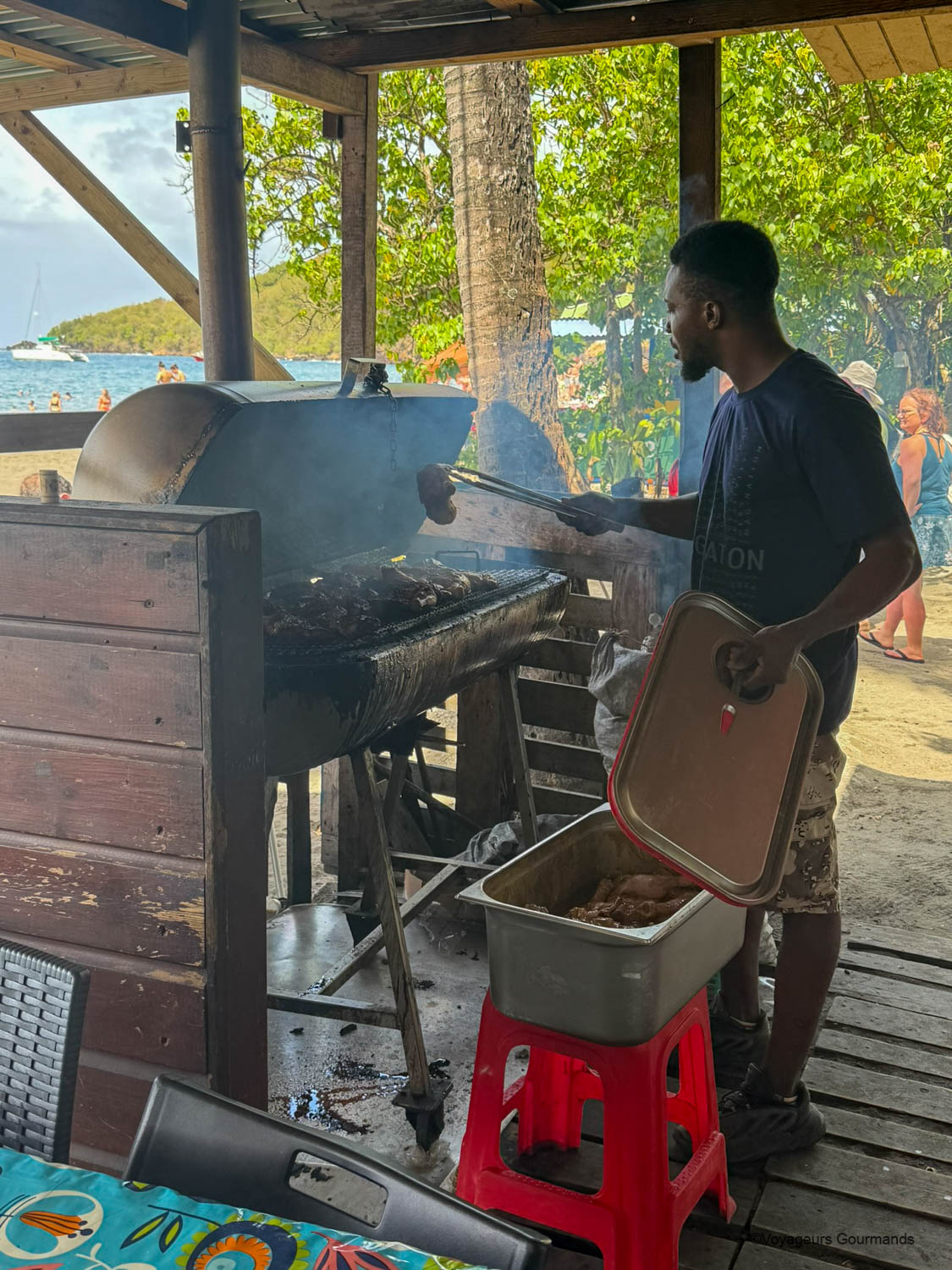
Marinated chicken is slowly smoked in large drums set up by the roadside, often at weekends. You can spot these stalls from afar thanks to the smoke. The skin is caramelised and the meat very tender, with a real smoky flavour. You’ll usually find it at these stalls rather than in restaurants. I had very fond memories of it, but this time I enjoyed it less: it was often overcooked for my taste.
Fish court-bouillon and blaff
These are the two most common ways of cooking fresh fish. In a court-bouillon, the fish simmers in a sauce of tomato, onion, chilli and lime. Blaff is lighter: the fish is poached in a lime-infused broth with aromatics. Its name is said to come from the sound of the fish dropping into the water.
Creole black pudding (boudin créole)
It’s thinner and much spicier than the black pudding found in mainland France. It’s eaten hot as an aperitif, and paired with a ti-punch, it’s the classic duo. We found it on Malendure beach, alongside bokits and accras.
Chatrou fricassee, conch and ouassous
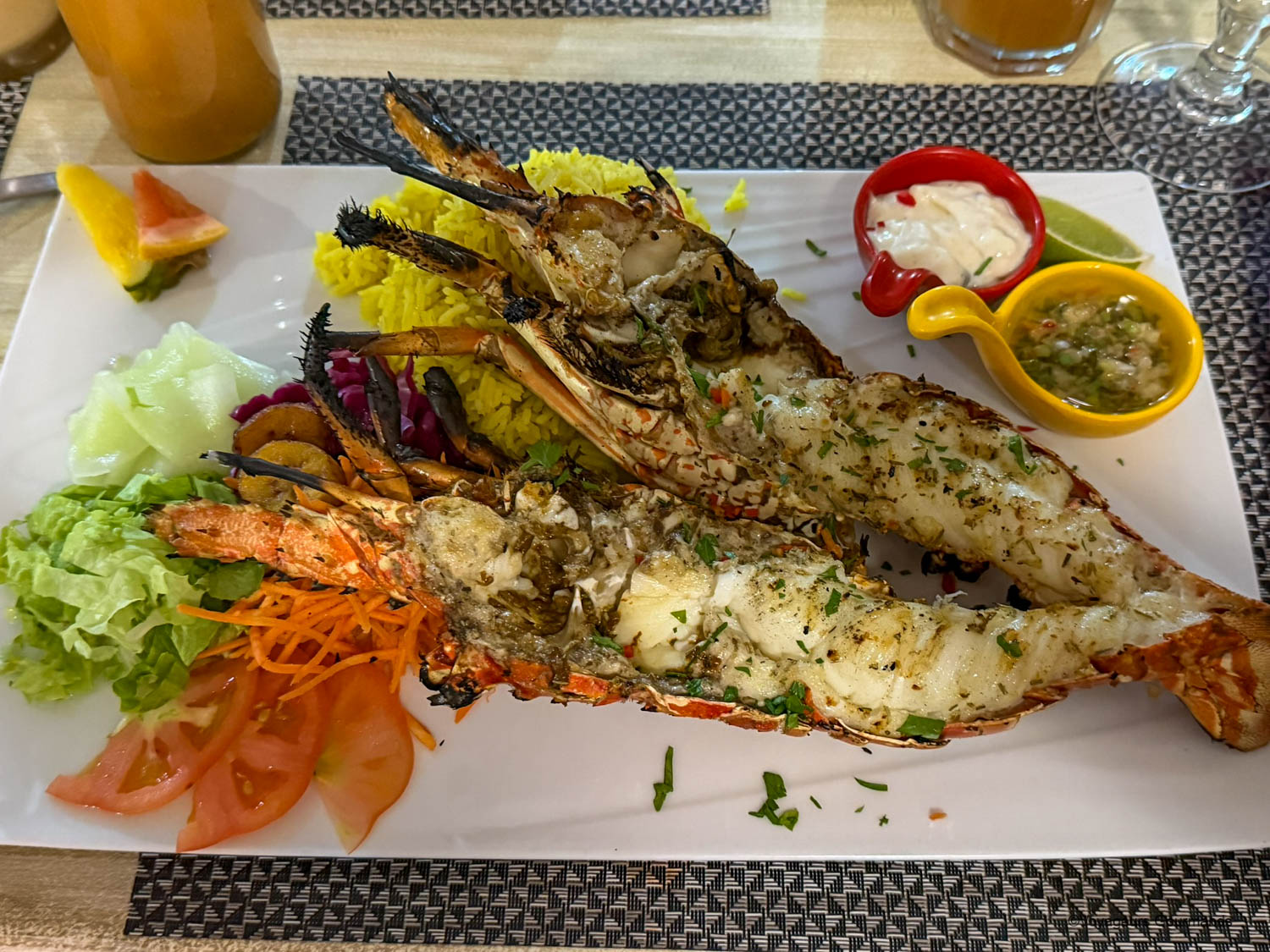
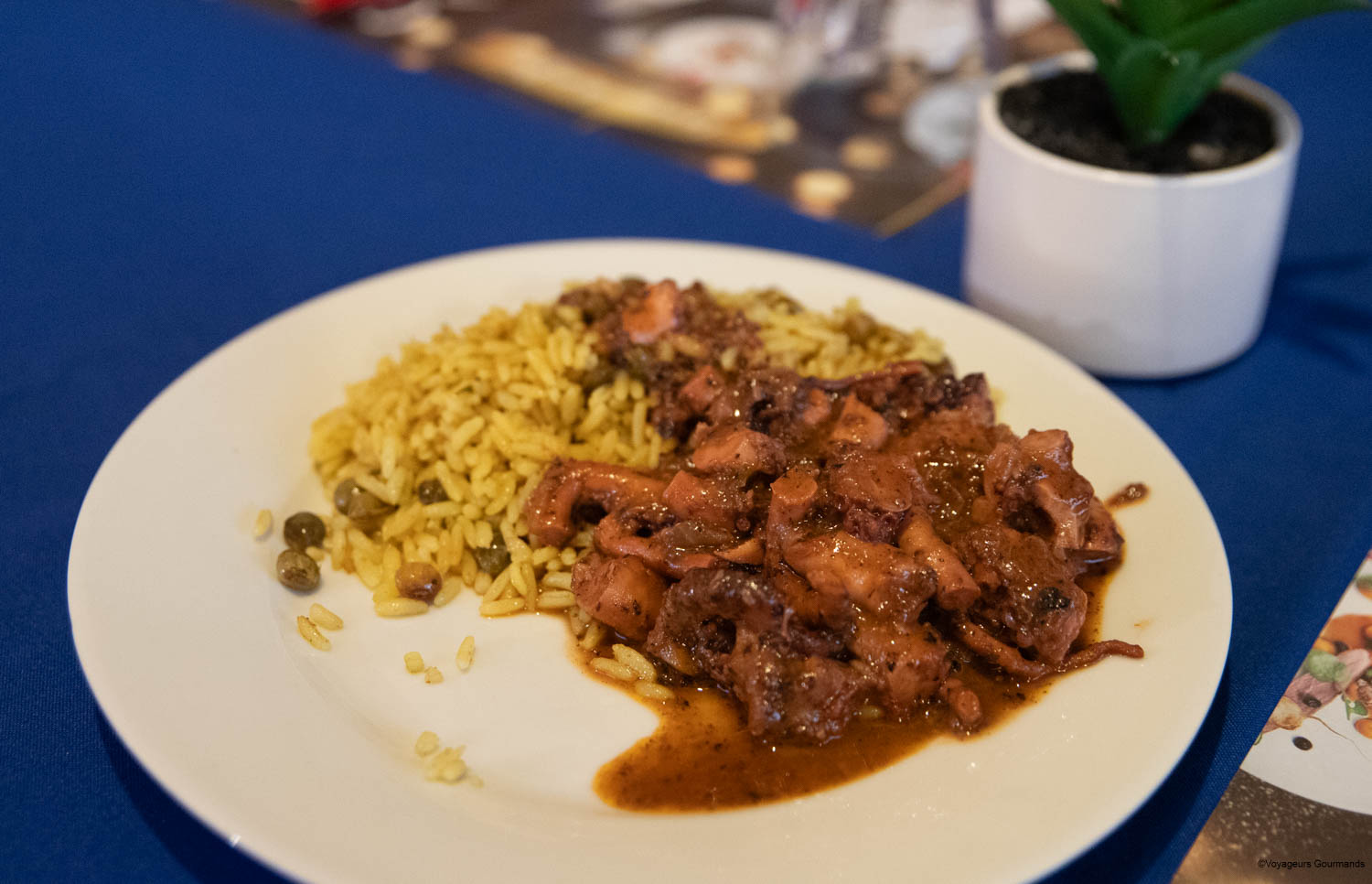
Chatrou is a small octopus, cooked as a fricassee in tomato sauce. A real favourite! Lambi (conch) is a large shellfish with firm flesh, served as a fricassee or on skewers. Ouassous are large freshwater crayfish, often flambéed or served in a sauce. All three are typical of seafront restaurants. And for a treat, there’s grilled spiny lobster, found on menus all over the island. It’s my favourite dish: we had it at Le Lucullus in Sainte-Anne.
Matété de crabe (crab rice)
It’s the Easter dish par excellence: rice slowly cooked with land crab, very spicy and full of flavour. If you’re in Guadeloupe at that time of year, you’ll see it everywhere.
Dombrés
These are small flour dumplings poached in a sauce, with prawns or red beans. Simple, hearty home cooking that you’ll find in local eateries rather than in tourist restaurants.
Guadeloupe street food
Bokit
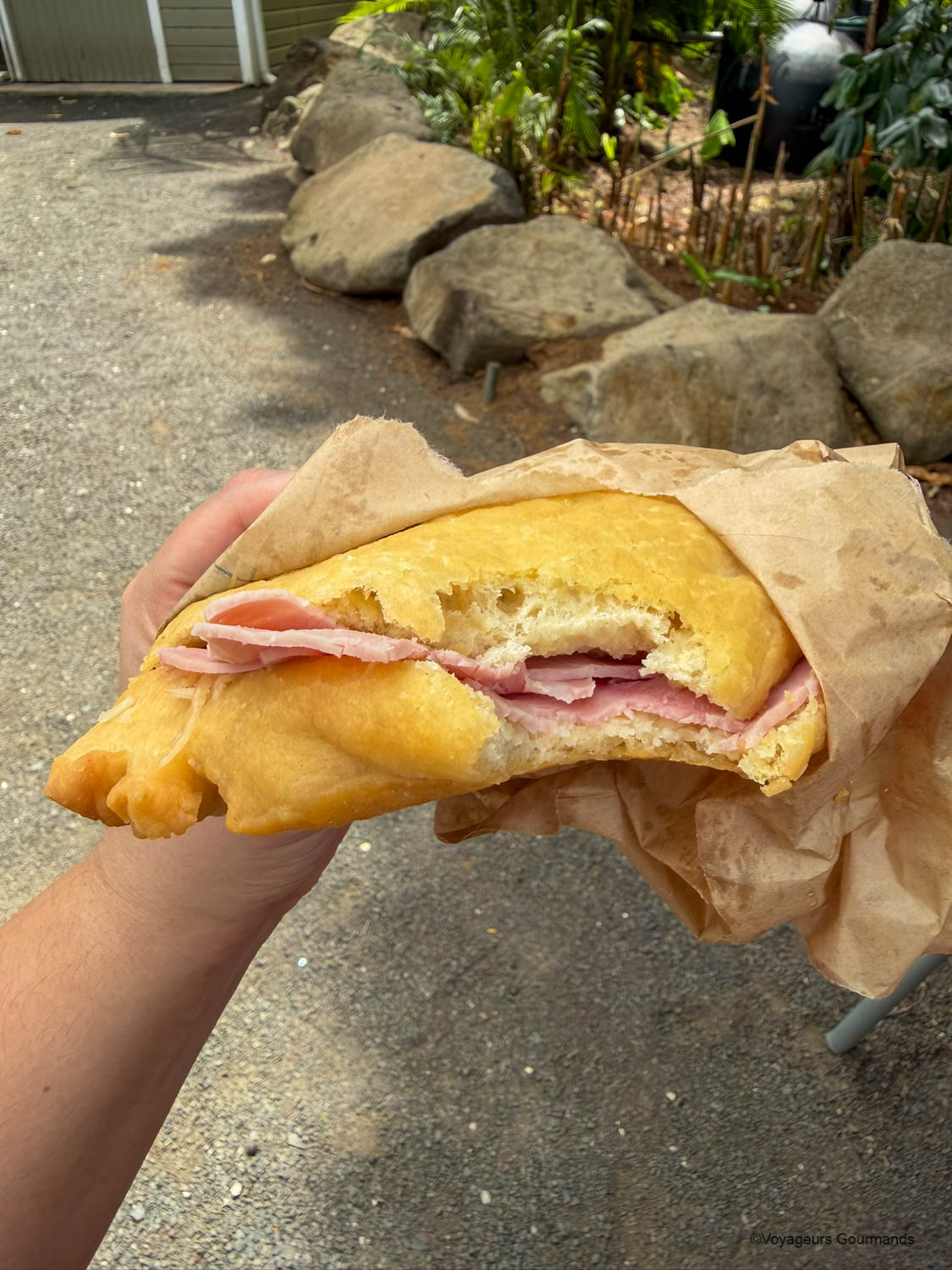
It’s Guadeloupe’s sandwich: a puffy, golden fried dough that’s split open and filled with chicken, salt cod, tuna, ham and cheese or salad. It’s certainly not light, but we never left a crumb. You’ll find bokits at food trucks and small stalls, especially in the evening. We also had some at the snack bar of the Deshaies Botanical Garden for a quick lunch. In Pointe-à-Pitre, we grabbed ours on the go at Bokit +, on Place de la Victoire, so as not to waste time between visits.
Accras
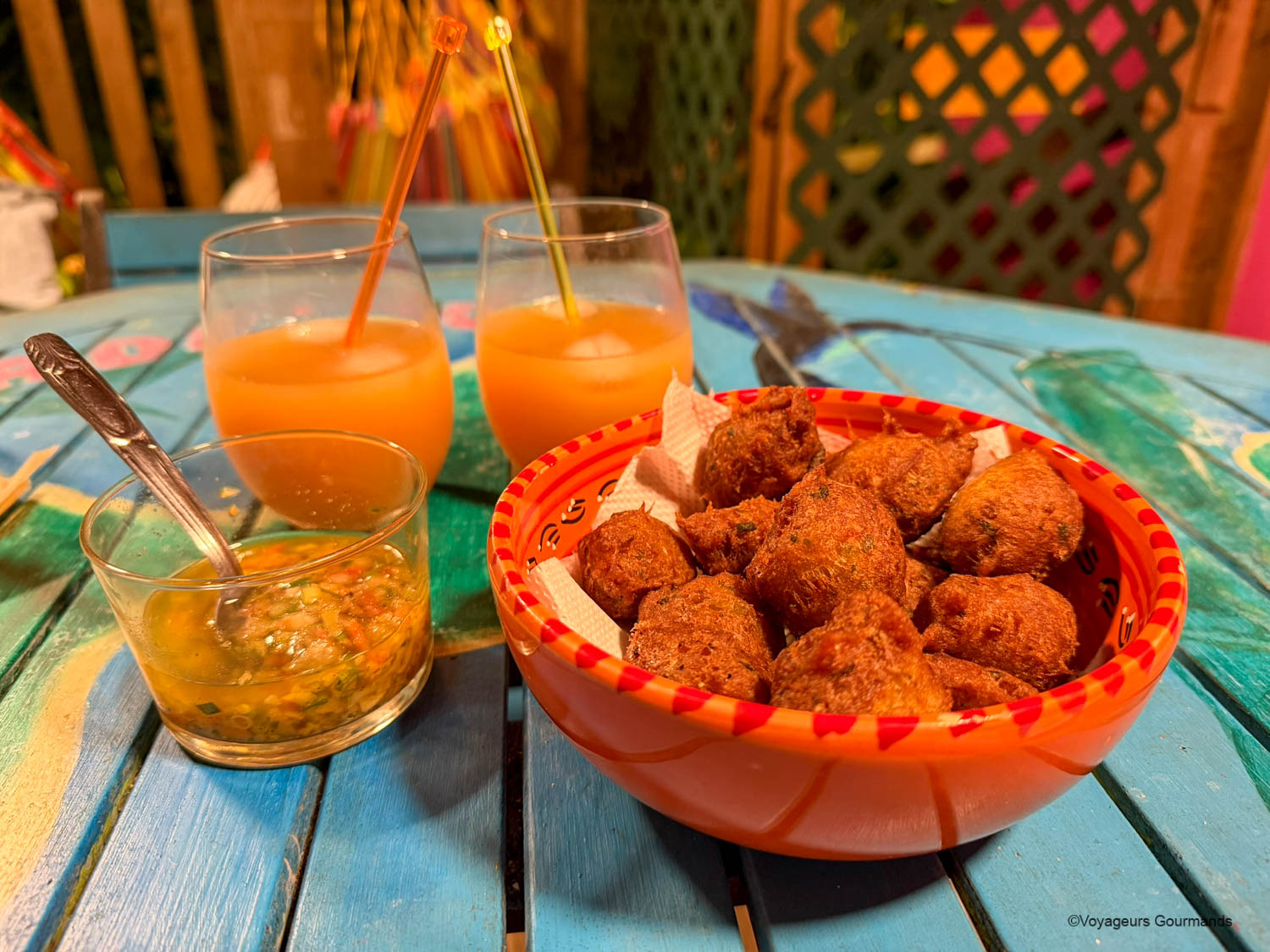
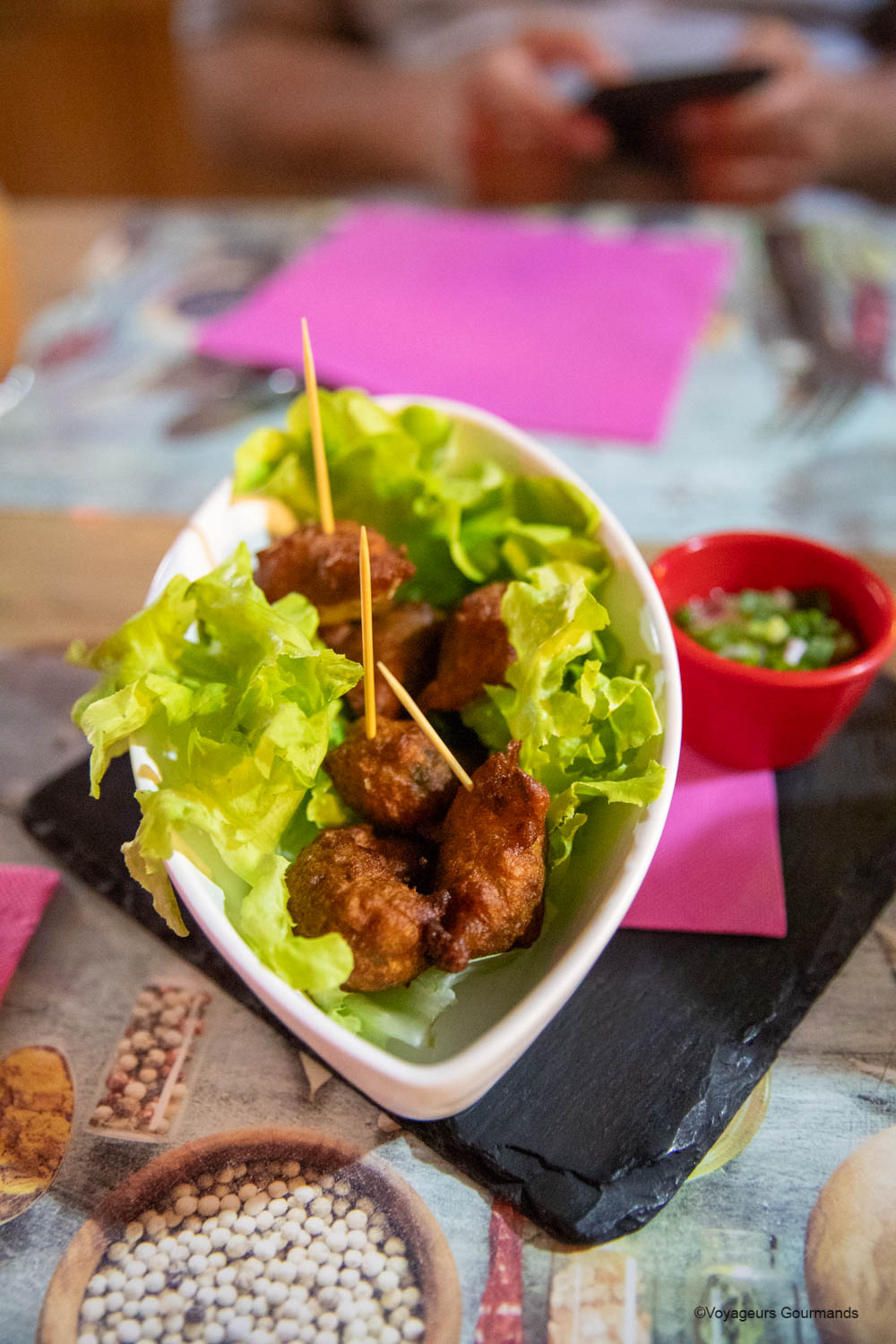
These small salt cod fritters are crispy on the outside and soft on the inside. They’re served everywhere: as an aperitif, as a starter, at markets. There are also vegetable versions (pumpkin, christophine) and prawn ones. We ate them everywhere!
Kassav
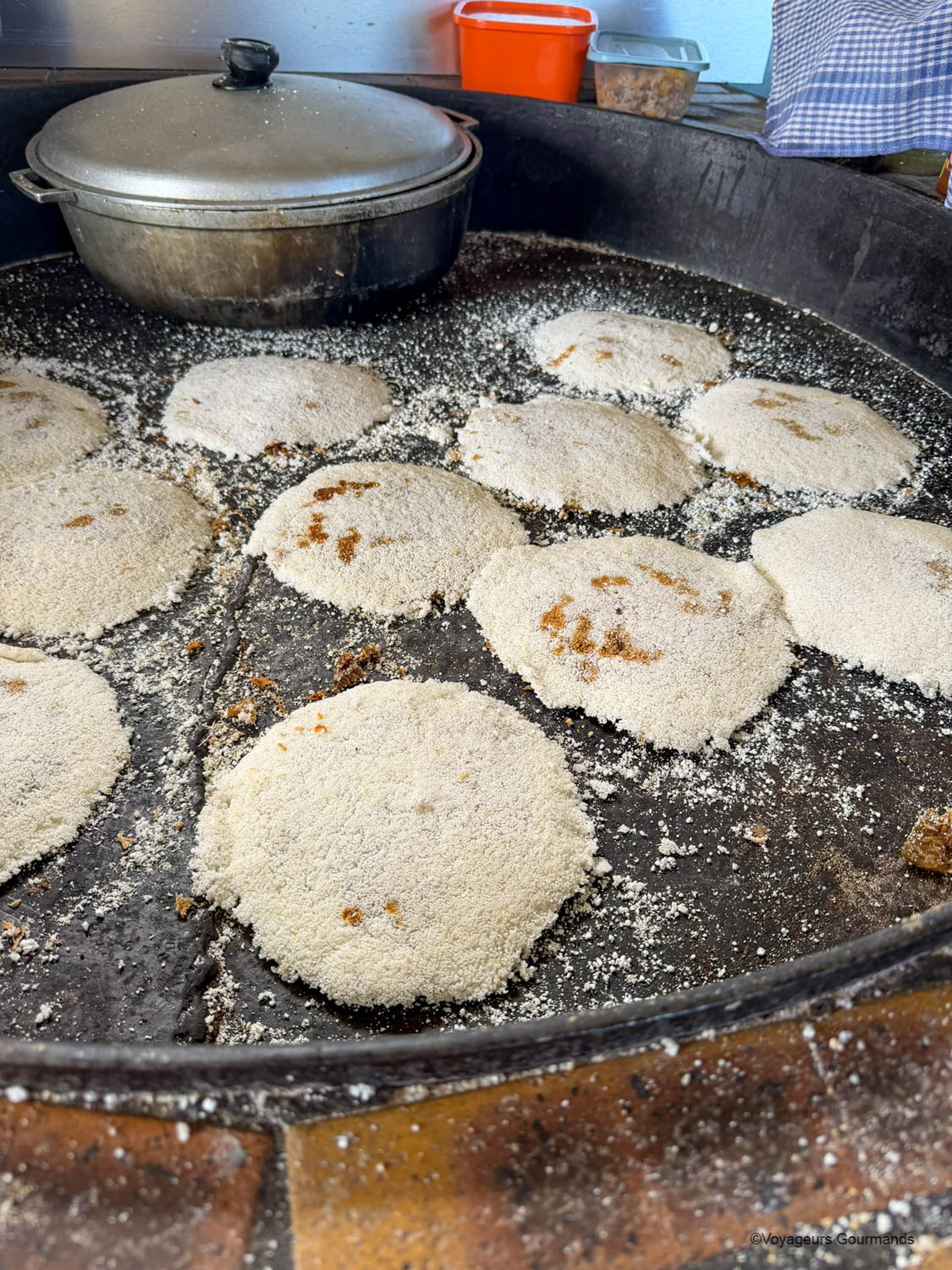
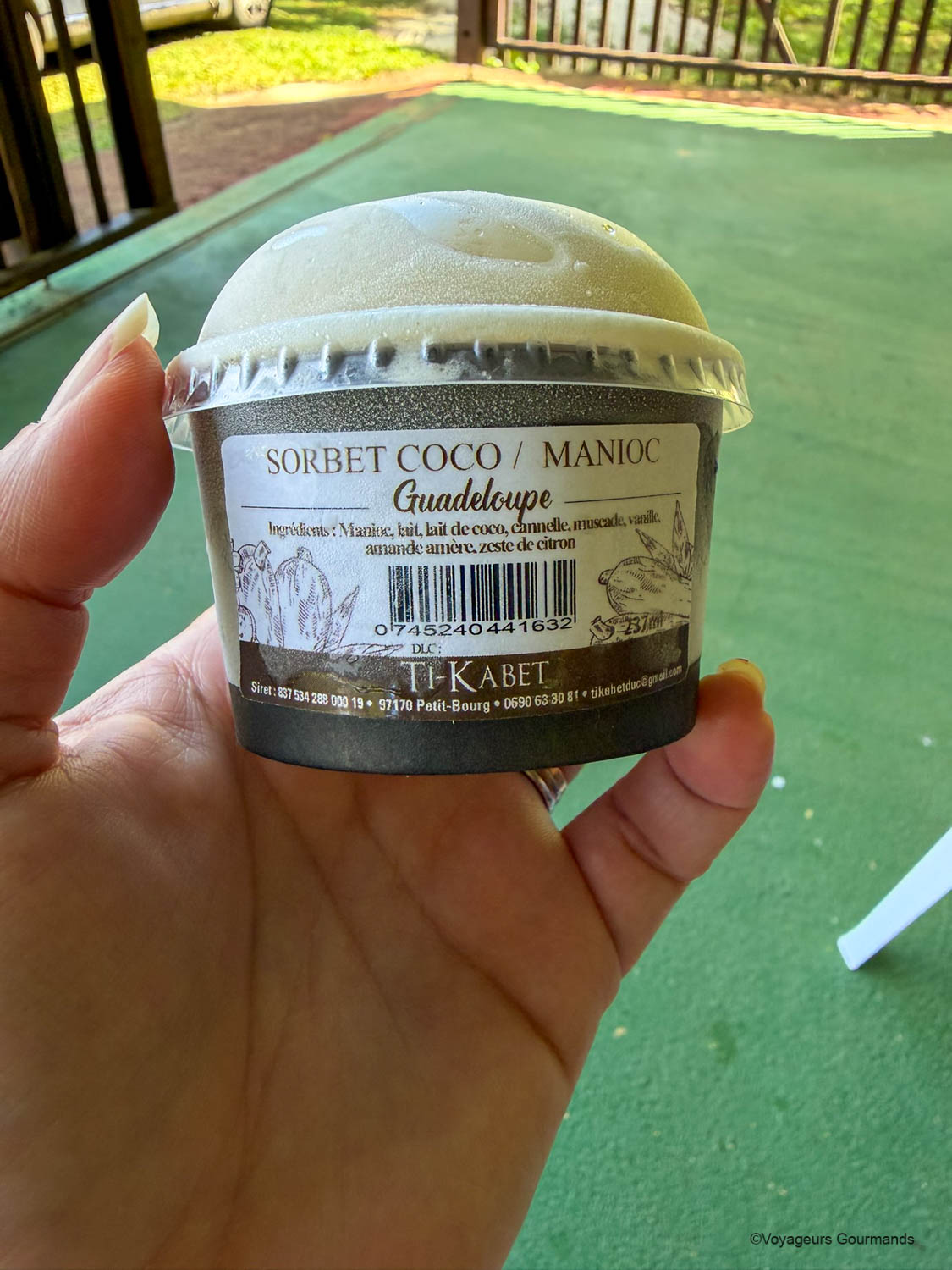
It’s a cassava flatbread cooked on a griddle, then filled: coconut, guava, cheese, or sometimes savoury fillings. Inherited from the Amerindians, this speciality is still made the traditional way in kassaveries. We discovered it at the Kassaverie Ti-Kabet, where you can watch the flatbreads being made before tasting them at lunch. A real discovery!
Side dishes and sauce chien
Almost every dish comes with rice (white, or « collé », cooked with red beans) and local vegetables: yam, sweet potato, plantain, breadfruit, christophine gratin or mashed giraumon (Caribbean pumpkin).
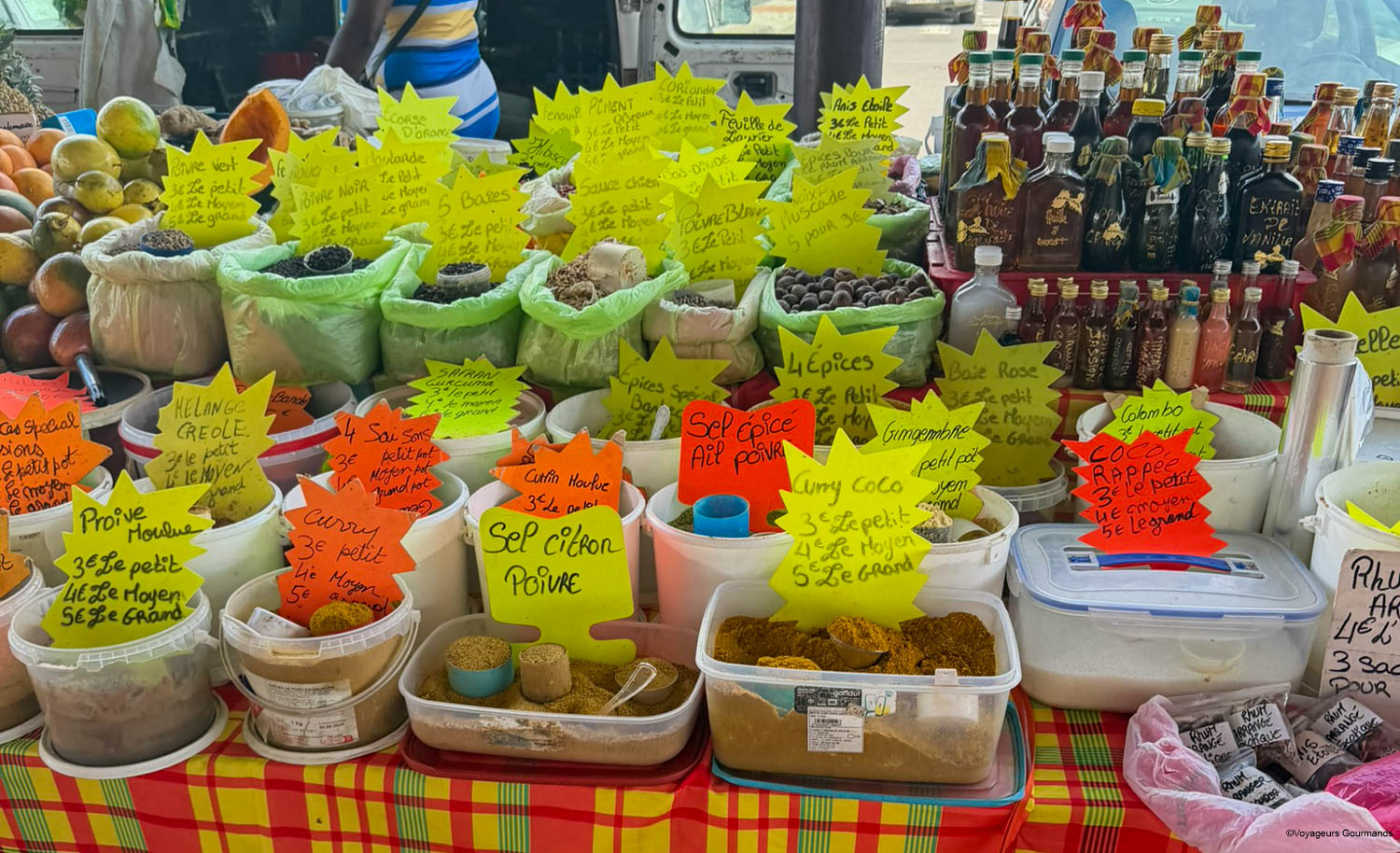
And on the table, there’s always sauce chien: chives, onion, garlic, parsley, chilli, lime, oil and a little hot water to bring it all together. It goes with grilled fish, meat and accras. It’s fresh, tangy and spicy without being fiery. I even brought spices home to make it myself.
Creole desserts and sweet treats
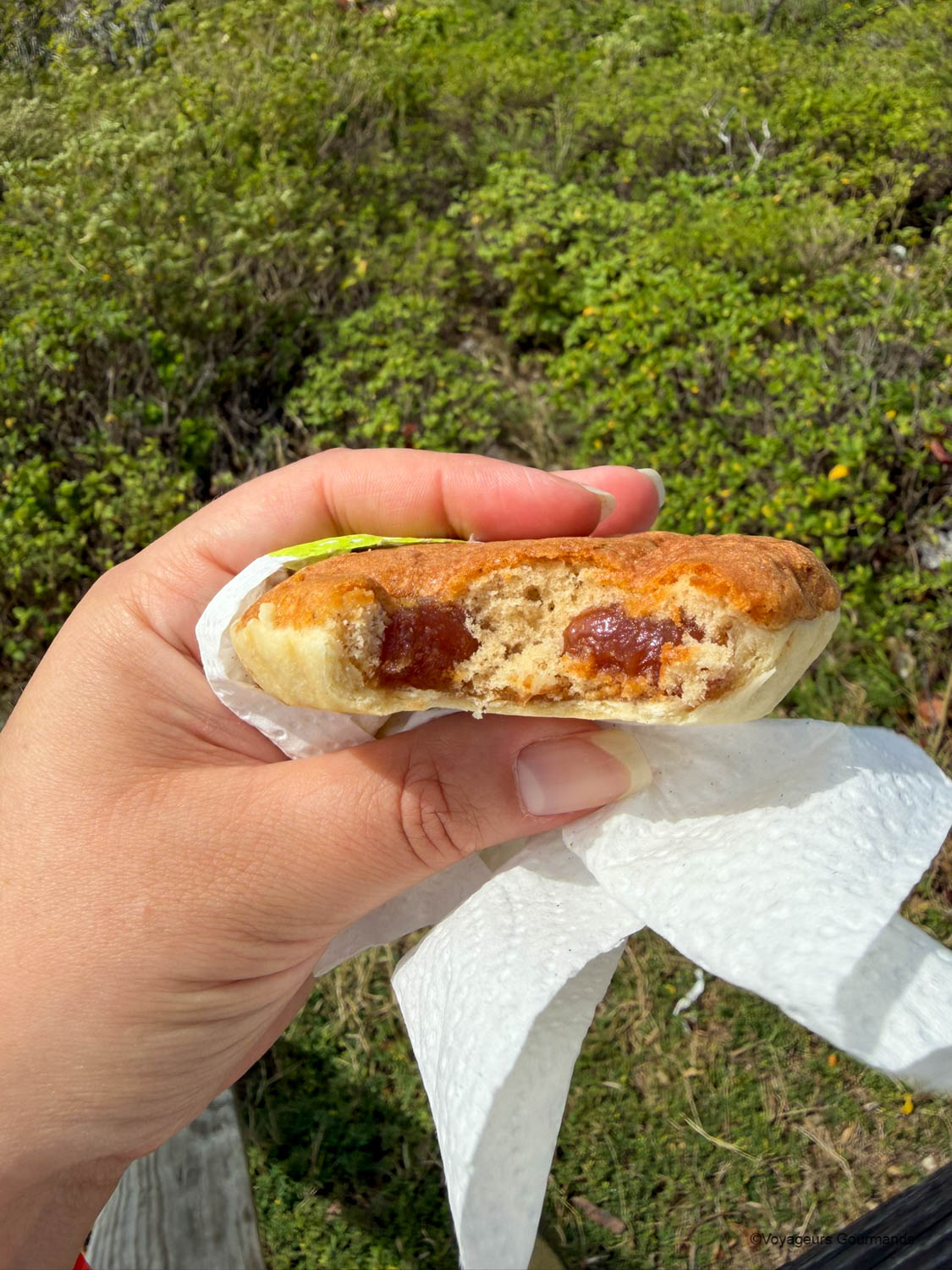
Tourment d’amour is the dessert of Les Saintes: a shortcrust tart filled with coconut, guava or banana jam and topped with sponge. You can buy it as soon as you arrive at the Terre-de-Haut ferry pier, where sellers wait for the boats. We tell you more about it in our guide to visiting Les Saintes in a day.
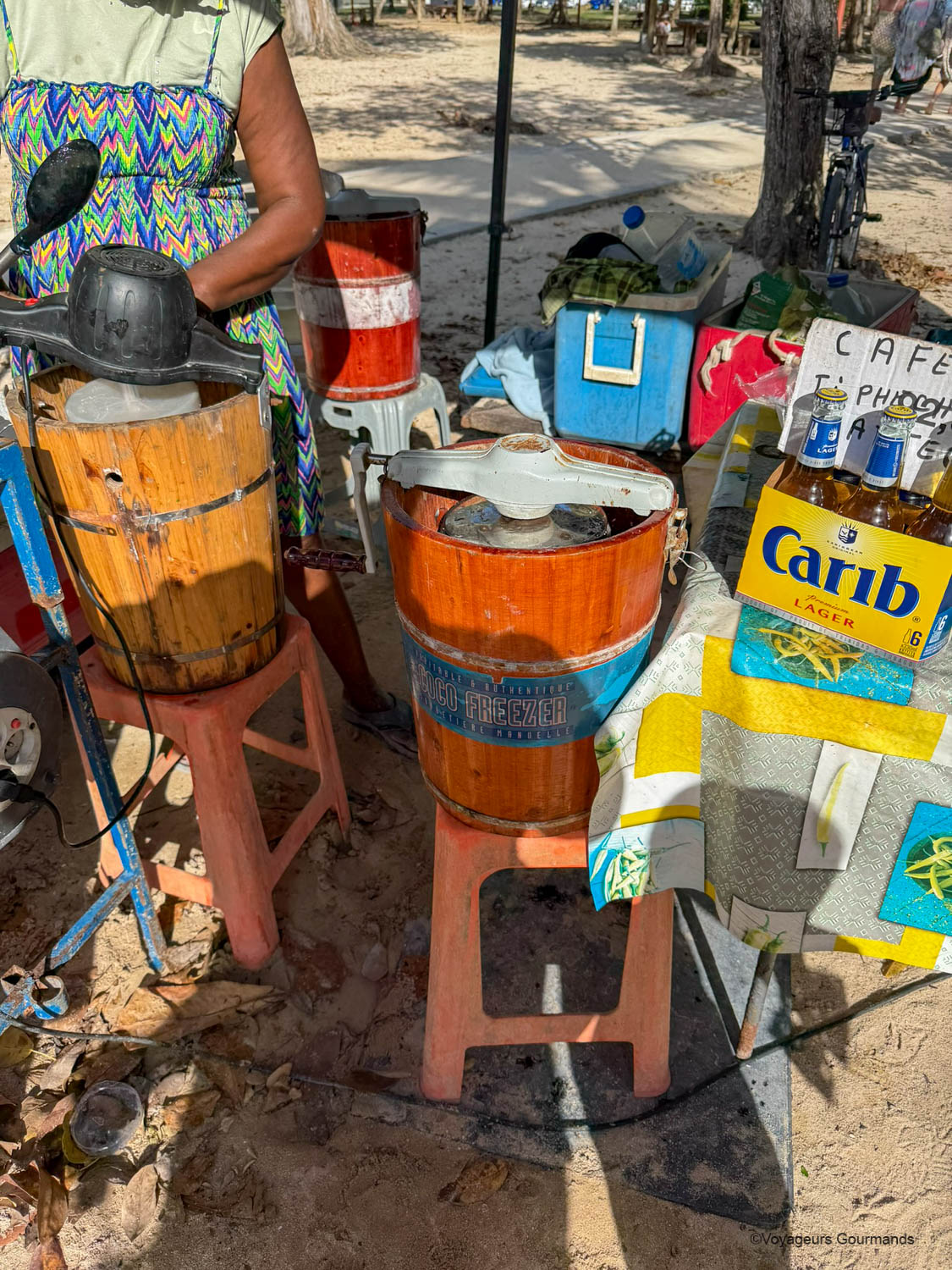
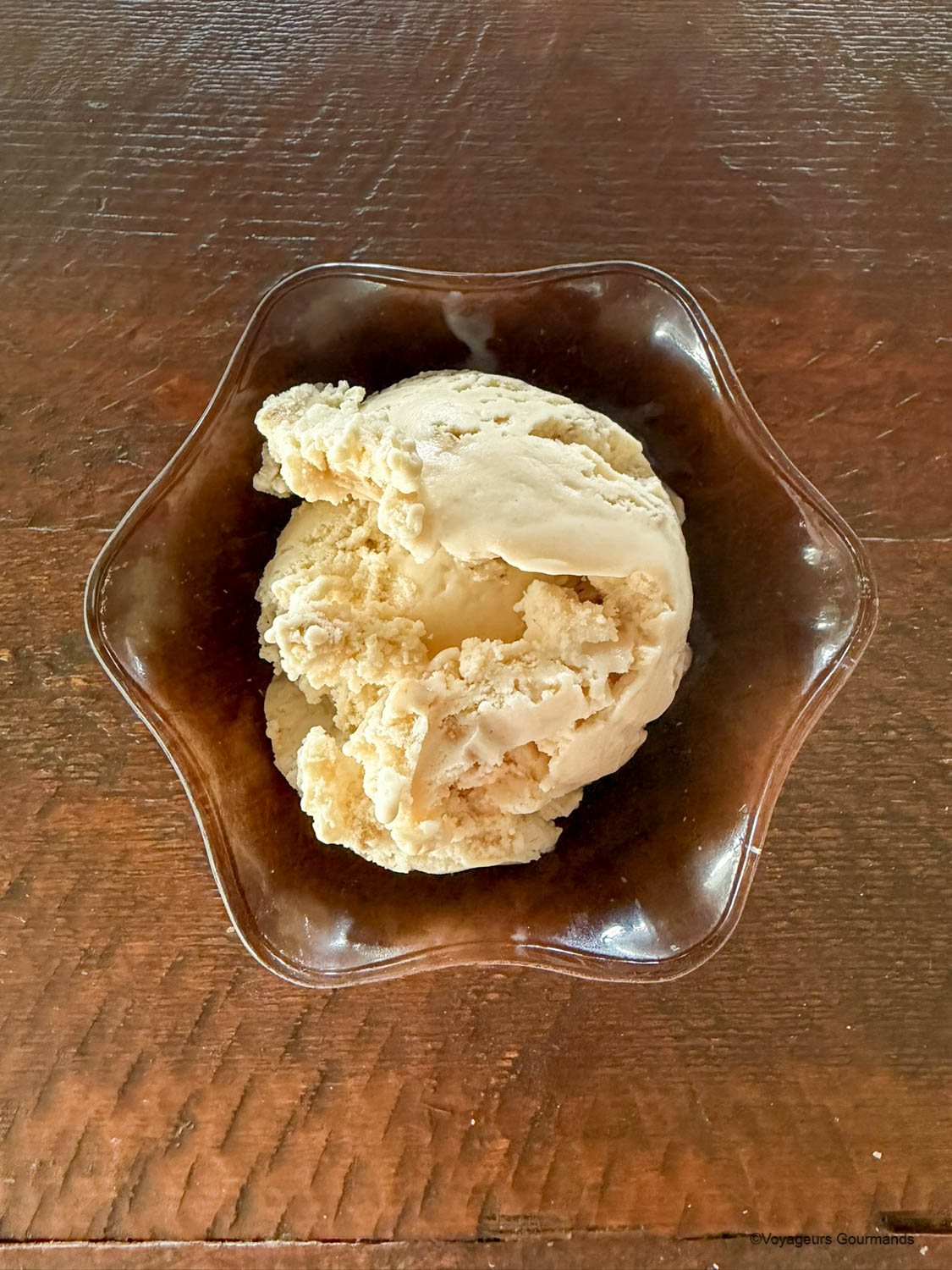
Coconut sorbet is made in front of you in a hand-cranked ice cream maker, on the beach or at markets. We had one on the beach. Personally, I prefer peanut ice cream… but coconut sorbet remains an institution on the butterfly island. For artisan ice cream, we recommend Fabienne Youyoutte: a real treat. Coconut flan and coconut blancmange are the desserts you’ll see most often at the end of a Creole meal. For those with a sweet tooth, there’s also sik a koko, a caramelised coconut sweet, and pain au beurre, a dense brioche traditionally eaten with thick hot chocolate.
Tropical fruit and fresh juices
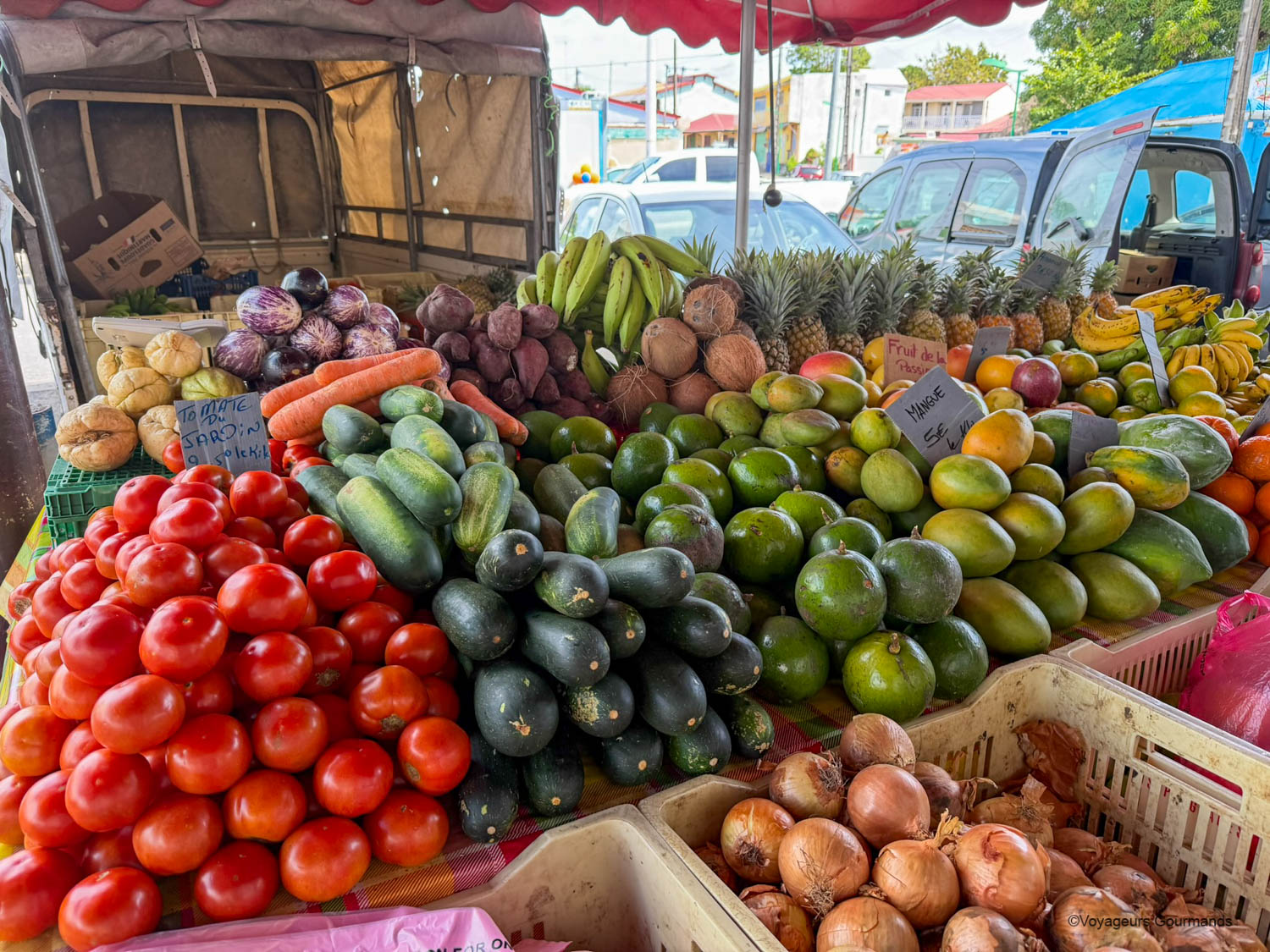
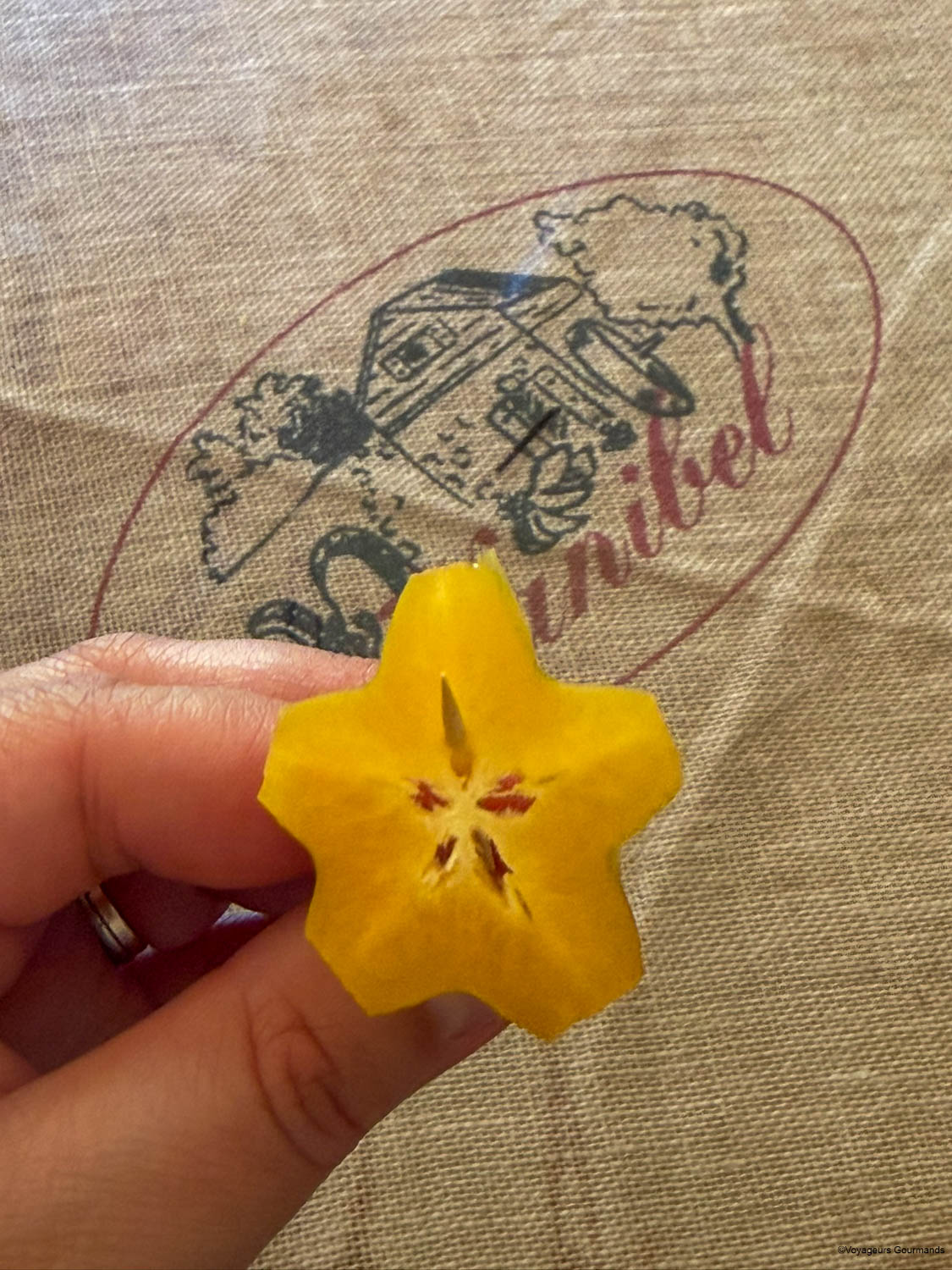
Mangoes, guavas, maracudjas (passion fruit), star fruit, sugar apples, quenettes… At the markets, the fruit stalls are a sight in themselves. A special mention for soursop, whose creamy white flesh tastes somewhere between pineapple and strawberry. It’s enjoyed as a juice or a sorbet.
By the roadside, you’ll also find freshly pressed sugar cane juice. And for kids and grown-ups alike, there’s sinobol: crushed ice drizzled with syrup.
Rum, ti-punch and other drinks
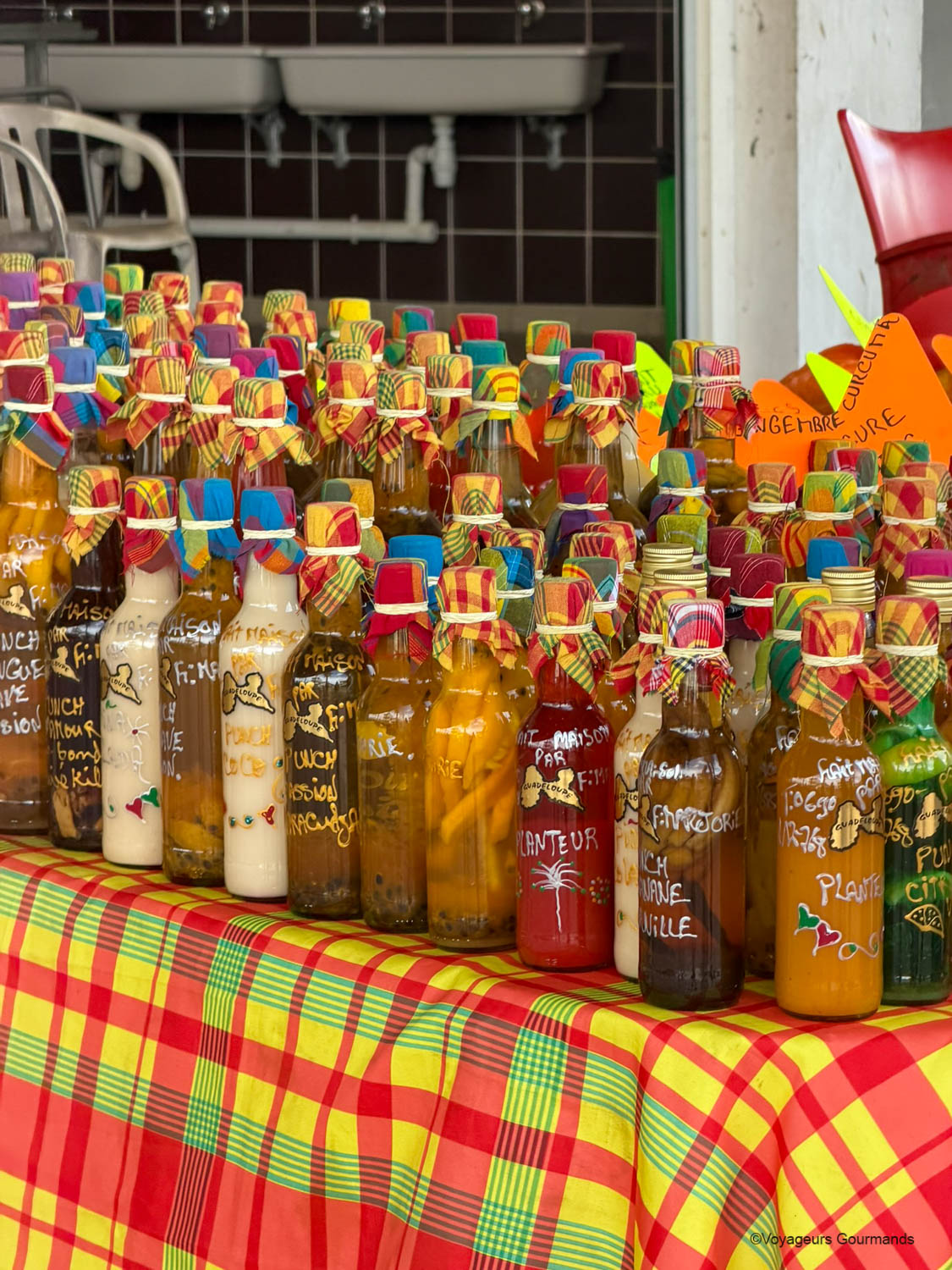
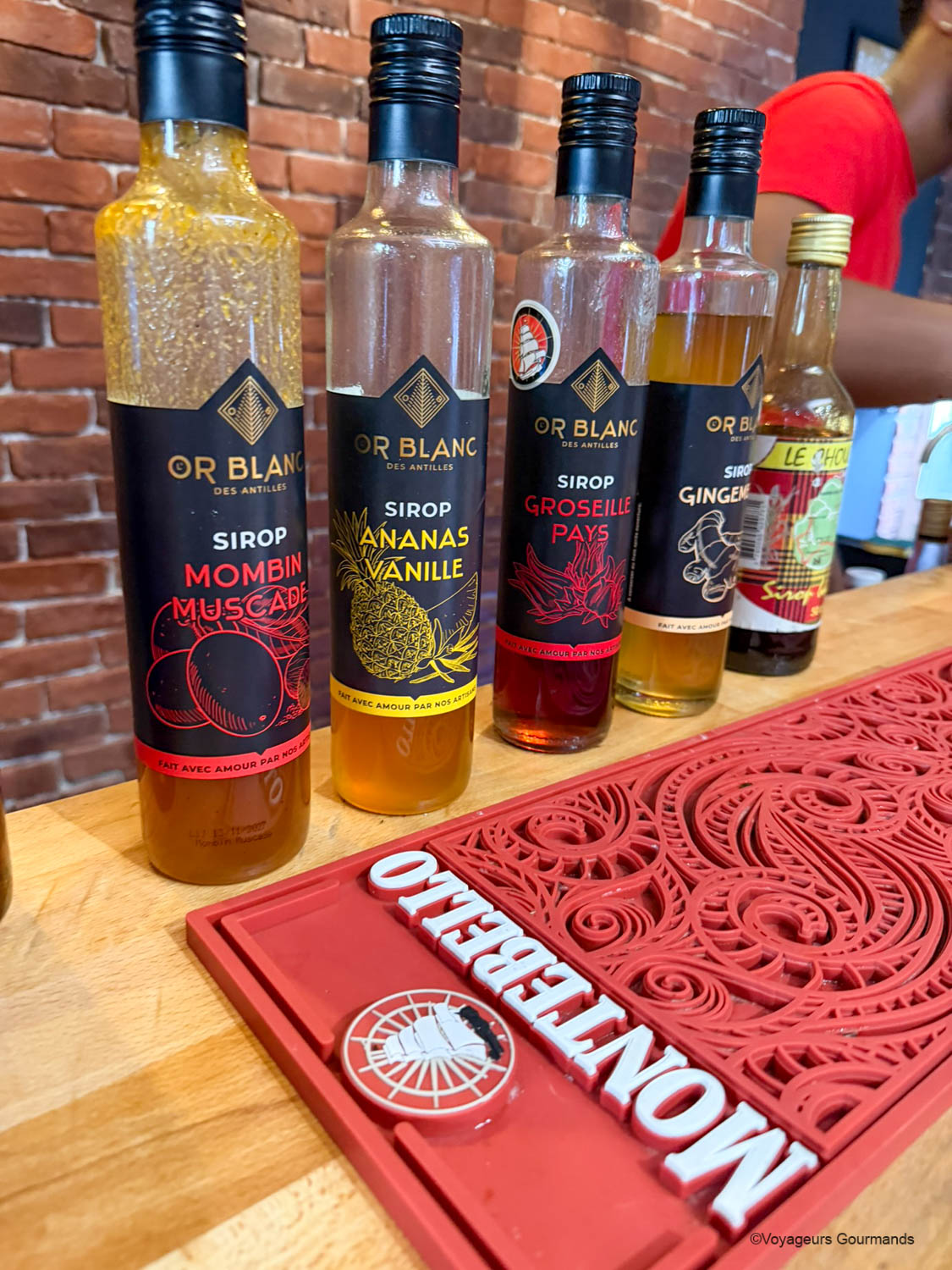
You can’t leave Guadeloupe without having a ti-punch: white rhum agricole, cane sugar and lime. Everyone makes and measures their own. Planteur, a cocktail of rum and fruit juice, is gentler.
The island produces rhum agricole, distilled from fresh sugar cane juice. Several distilleries are open to visitors: Damoiseau in Le Moule, Bologne in Basse-Terre, Longueteau in Capesterre-Belle-Eau, Reimonenq in Sainte-Rose… On Marie-Galante, white rum is traditionally bottled at 59%: best to know before you taste it! We chose Bologne, said to be more authentic and still very traditional, to discover every step of rum making.
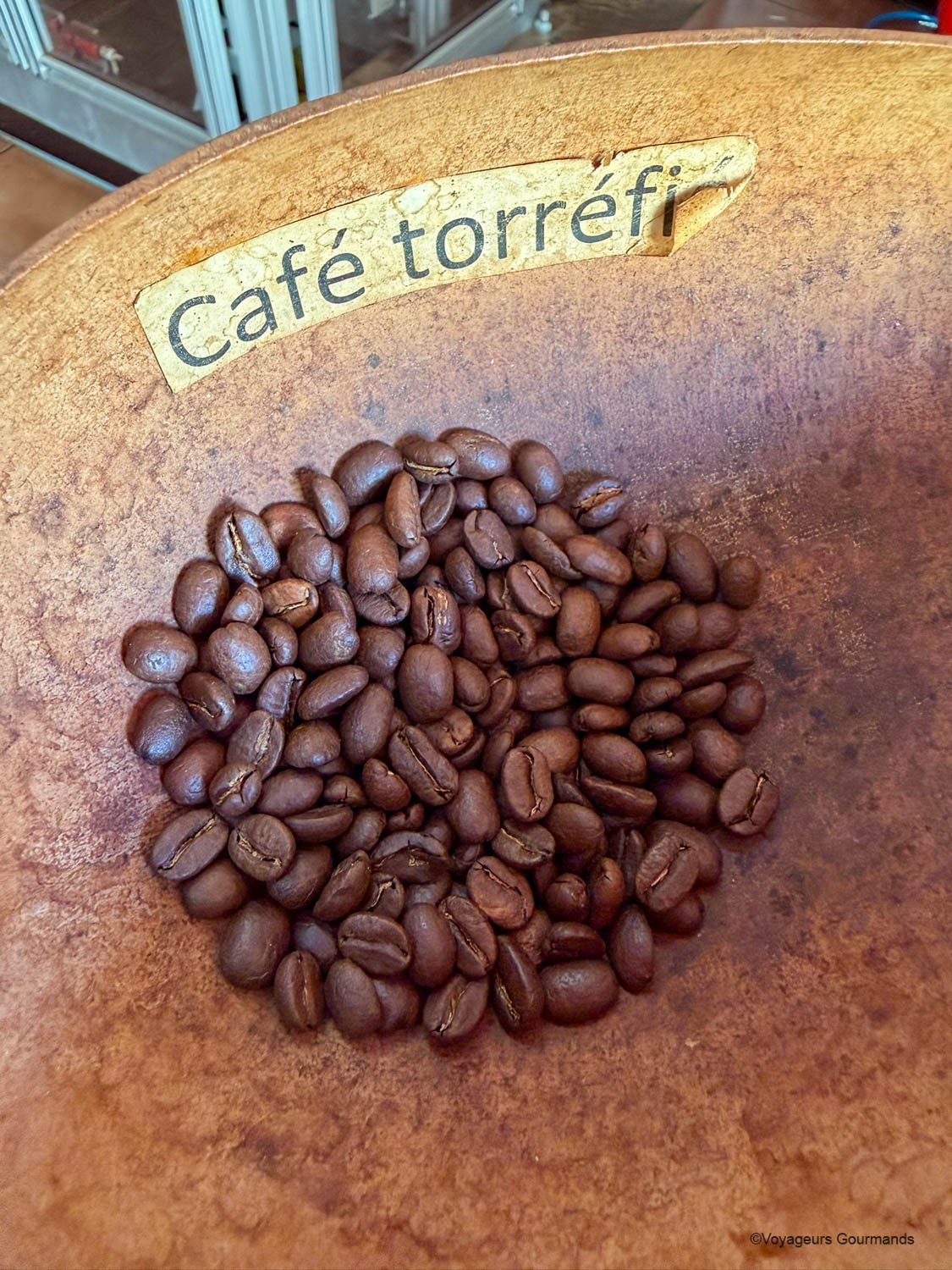
When it comes to edible souvenirs, there’s Bonifieur coffee, a rare variety grown on the leeward coast, and locally processed cocoa, which you can discover at the Maison du Cacao in Pointe-Noire, for example. Around Christmas, people drink schrubb, a liqueur made from orange peel steeped in rum.
For coffee, we visited the Vanibel estate in Vieux-Habitants, where you can learn how coffee and vanilla are grown.
🛍️ What to bring back from Guadeloupe?
Good news: most of these specialities travel very well in a suitcase!
- Jams: I brought back loads, especially guava jam from the Mamour brand.
- Rhum agricole.
- Spices, including colombo powder.
- Beware of vanilla: very little is produced in Guadeloupe, and what you see at the markets usually comes from Madagascar or elsewhere. Don’t get caught out!
Where to eat Guadeloupe food?
No need to book a fancy table to eat well. In Guadeloupe, the best dishes are often found in the simplest places.
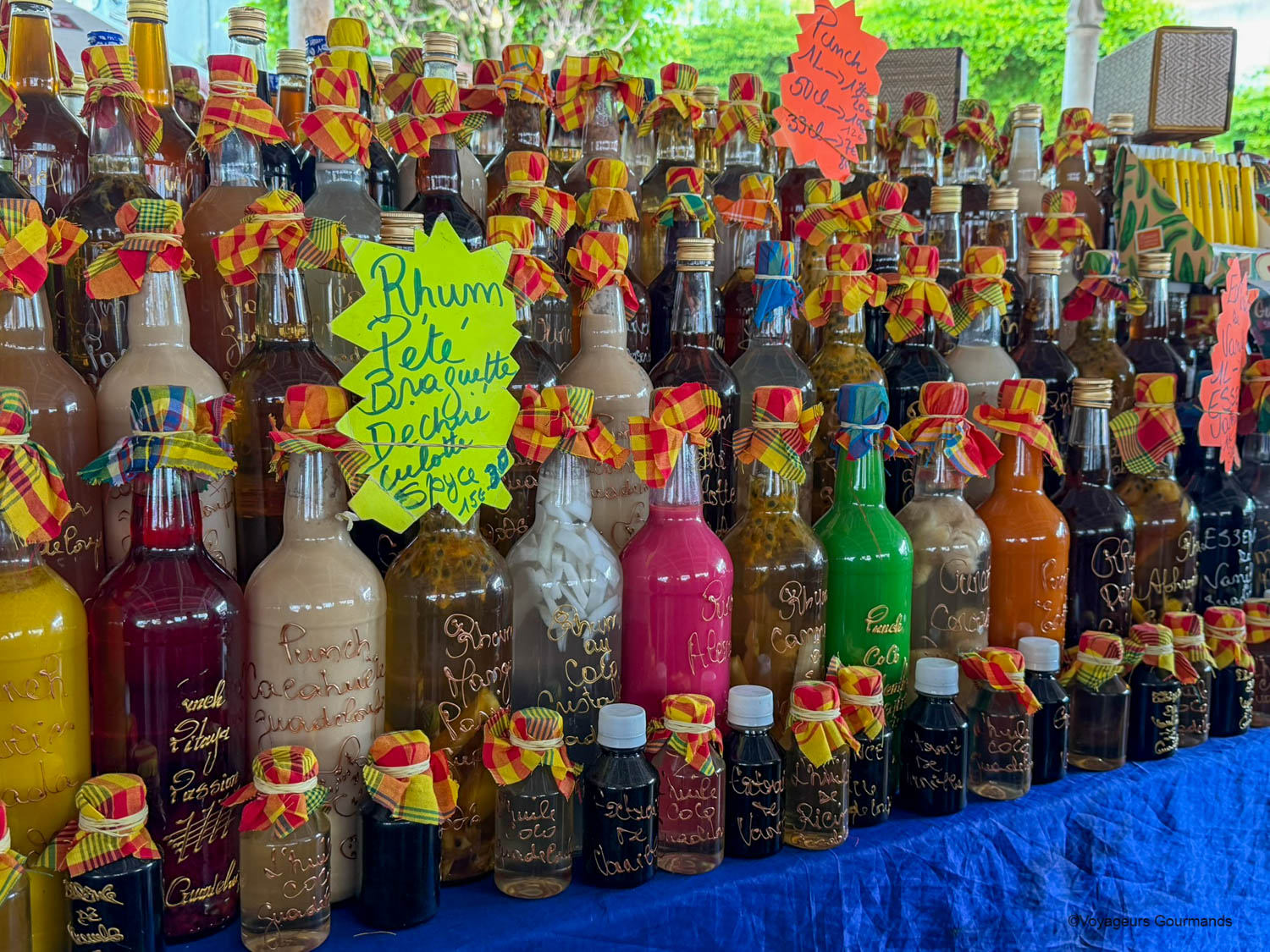
Markets are the best place to start. The Saint-Antoine market in Pointe-à-Pitre brings together spices, flavoured rums, fruit and ready-made dishes: we tell you all about it in our guide to things to do in Pointe-à-Pitre in a day. The Sainte-Anne market is more touristy, but still pleasant for a first taste. Our favourite remains the Saint-Antoine market, colourful and full of life.
Lolos, small neighbourhood grocery and snack shops, and bokit trucks are ideal for eating local food on a budget, especially in the evening.
Seafront restaurants are where you’ll eat grilled fish, ouassous and conch. On Grande-Terre, the Sainte-Anne and Saint-François area is the liveliest. On Basse-Terre, Deshaies and Bouillante are quieter and perfect at sunset.
In Pointe-à-Pitre
So as not to waste time between visits, we had bokits at Bokit +, on Place de la Victoire: simple, quick and effective. For local produce, head to the Saint-Antoine market.
In Sainte-Anne and Saint-François
Our favourite on Grande-Terre is Le Lucullus in Sainte-Anne. We had dinner there twice, and that’s where we treated ourselves to spiny lobster. It’s a slightly more upmarket restaurant, but really, really good.
For a simpler meal, we also ate at a pizzeria a stone’s throw from the Pierre & Vacances, where we were staying (we tell you about it in our guide on where to stay in Guadeloupe). For a sweet break, we gave in to the ice creams at Fabienne Youyoutte in Sainte-Anne more than once: a real treat!
In the north of Grande-Terre
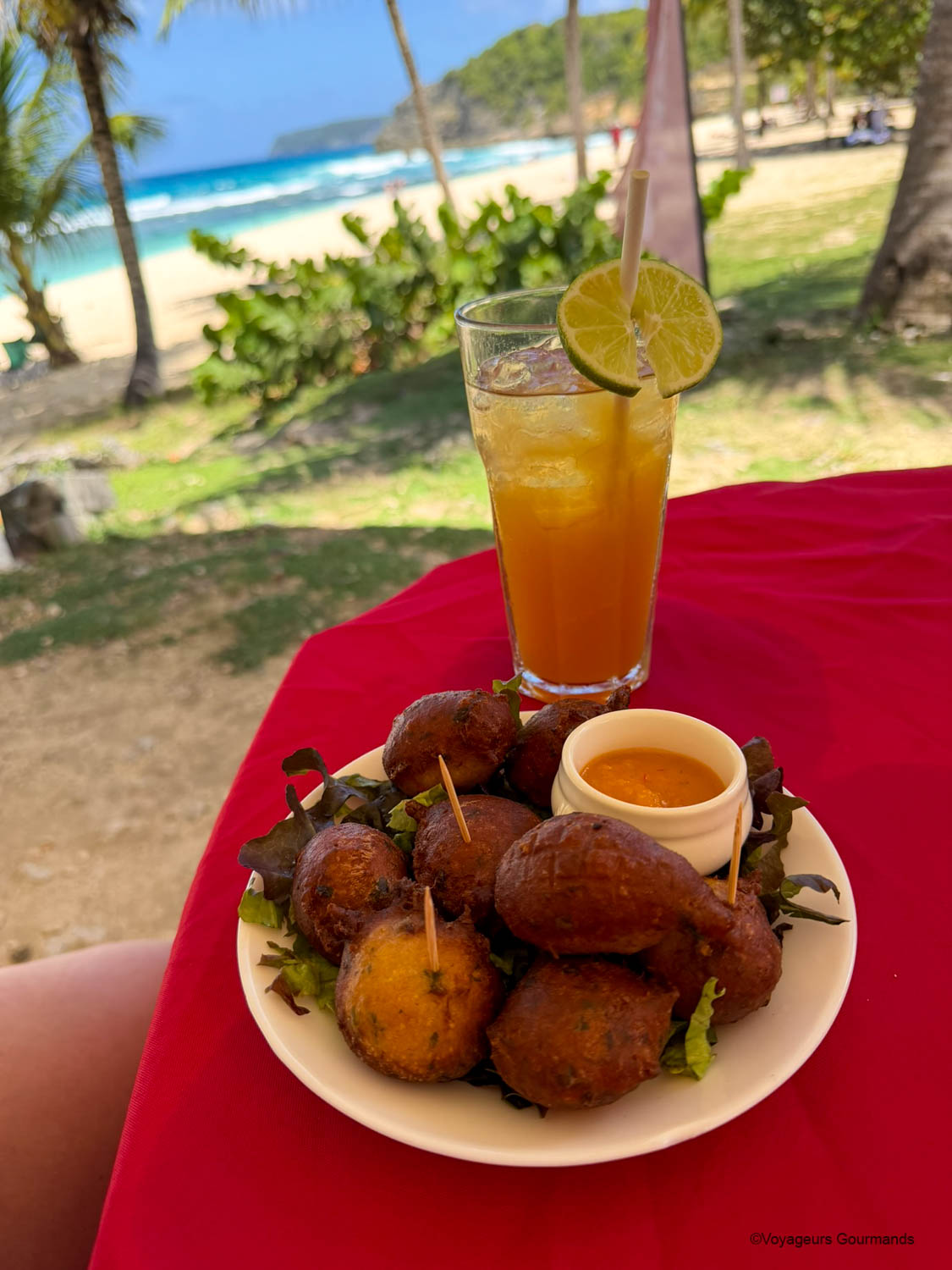
At Anse Laborde, the pink-sand beach we loved during our day in the wild north of Grande-Terre, we had lunch at Labord’ Beach. The accras and cocktails were very good. However, the chicken we ordered for our son was served raw, and when we pointed it out, the waitress told us it was normal, that it was « pink »… Chicken should never be served pink! Our advice: stick to the accras and cocktails, and check how it’s cooked if you order chicken.
In Deshaies and on the leeward coast
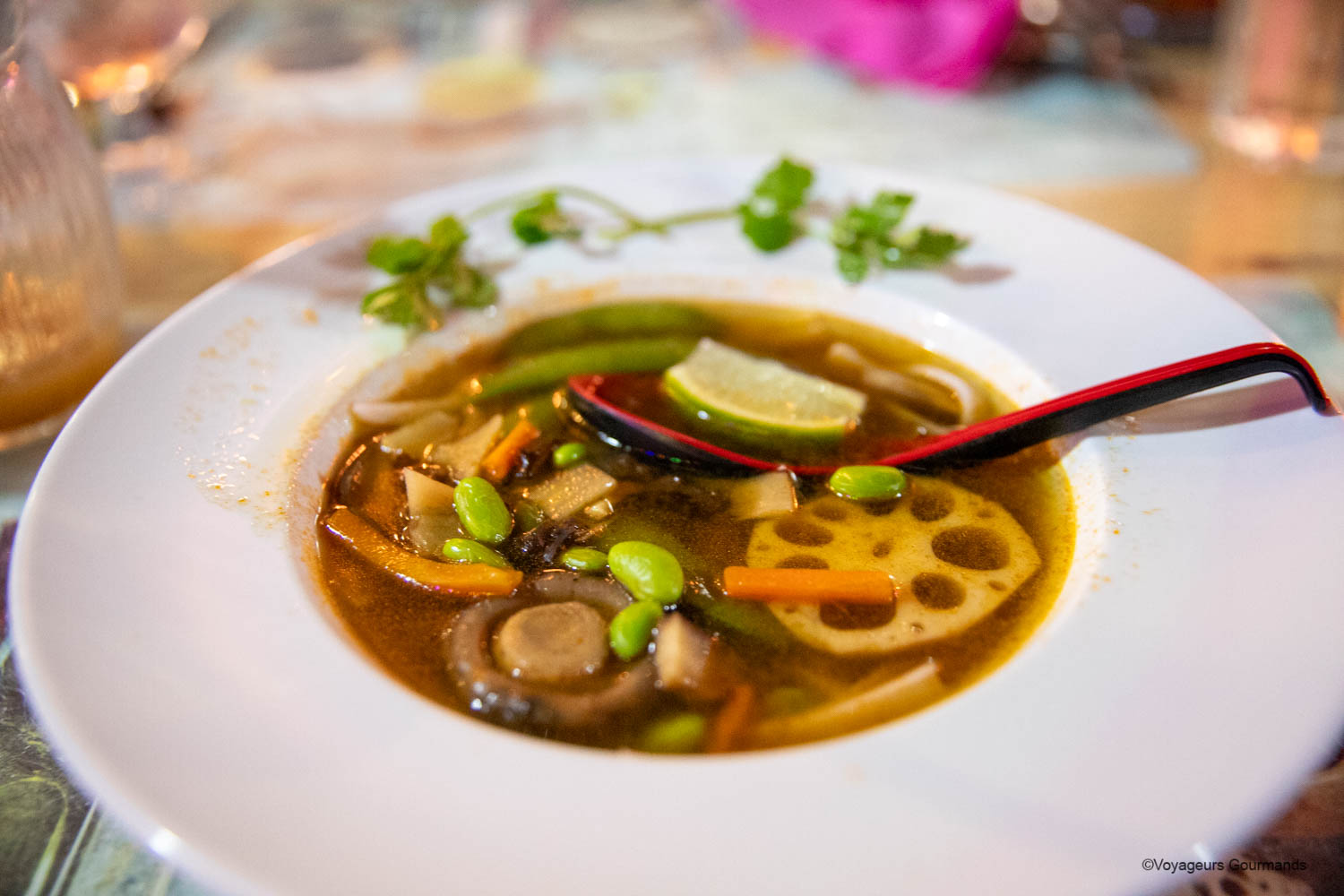
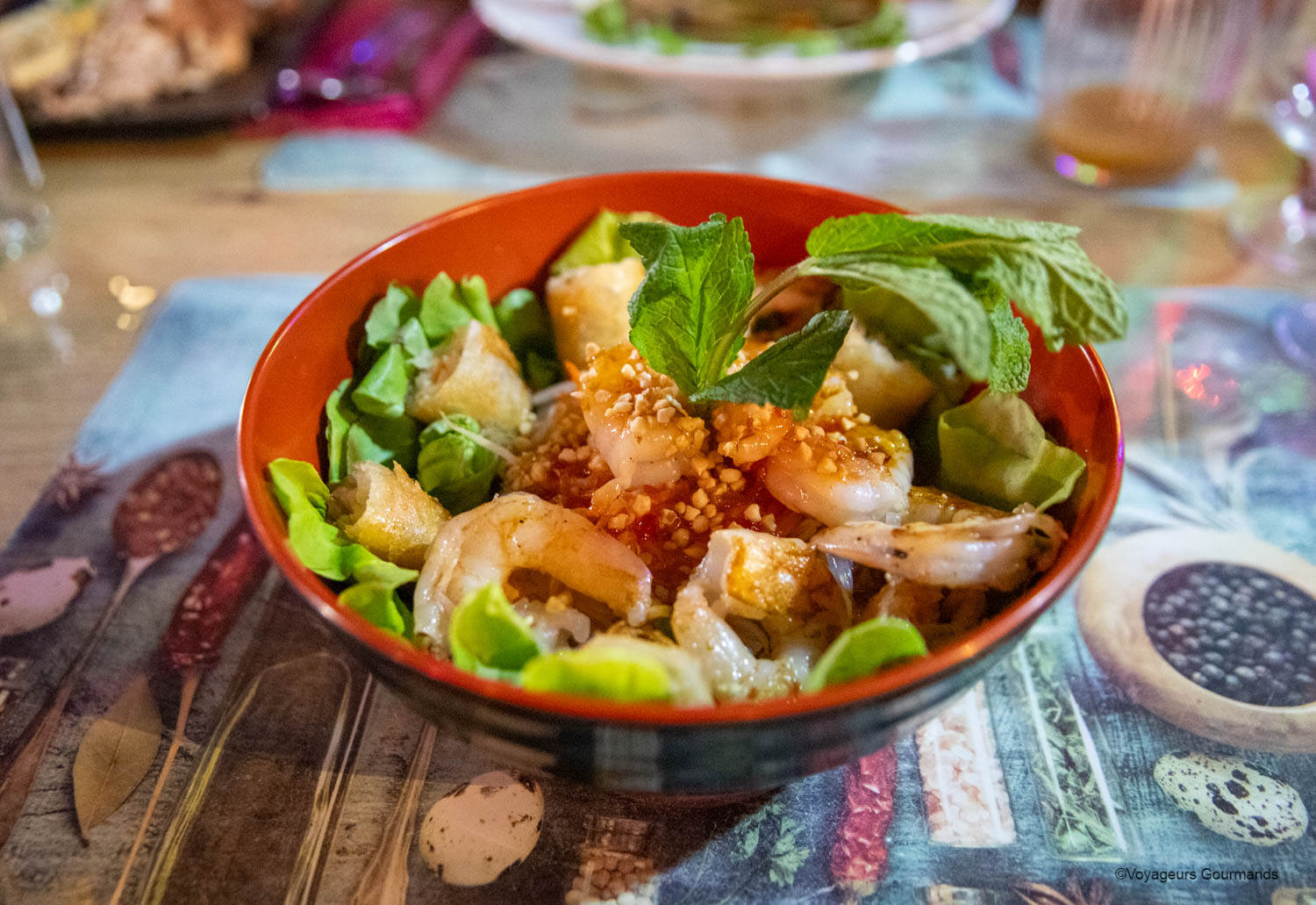
In Deshaies, we fell for Paradise Kafé, a Thai fusion restaurant: it was really, really good! We also tried a lolo, perfect for a quick meal.
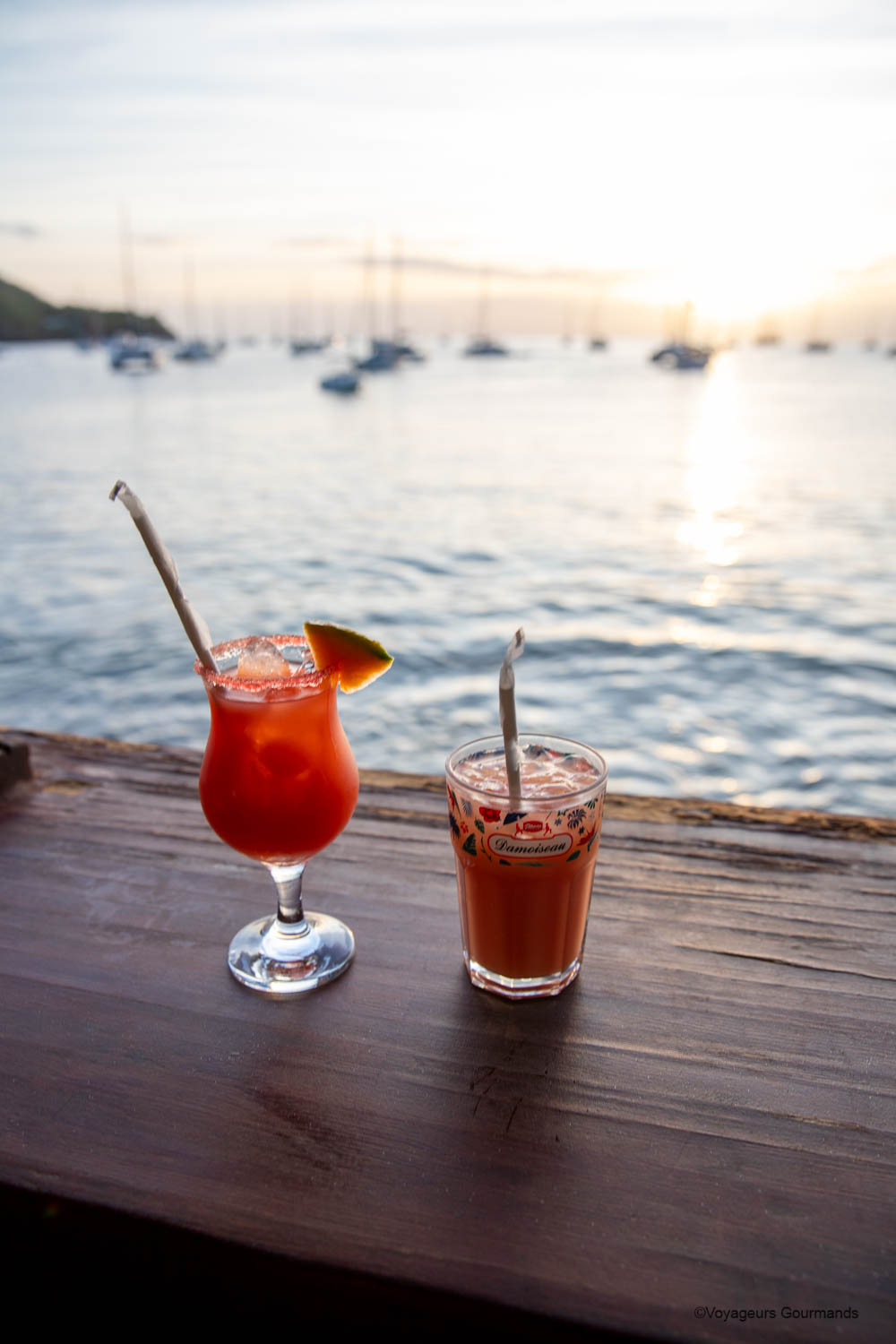
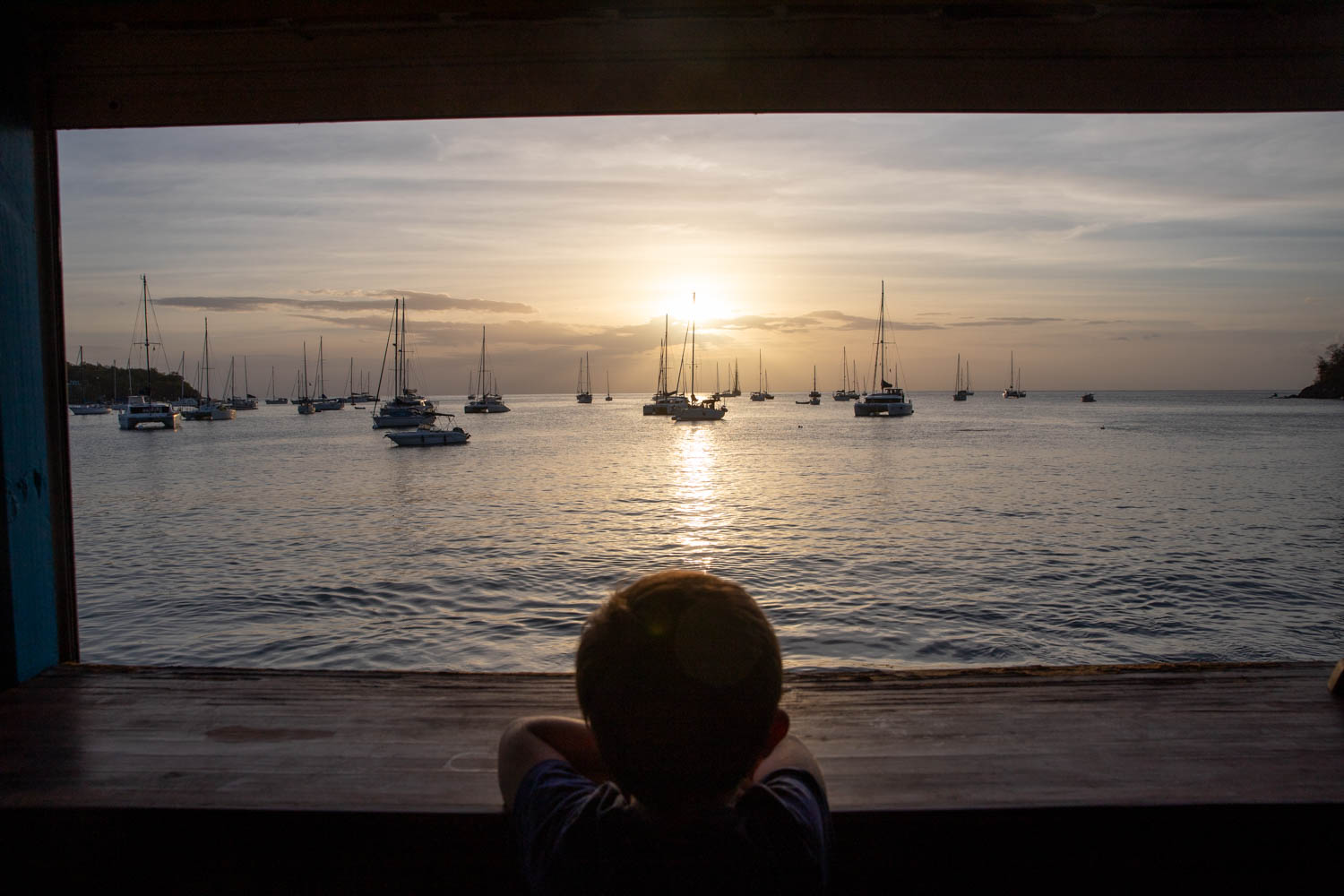
La Croisière, on the other hand, was a bit of a letdown: we were tempted by its « all-you-can-eat » deal, thinking we could try lots of specialities… except it isn’t offered in the evening. It wasn’t bad, but expensive for dishes from the lunchtime buffet, reheated in the evening. We consoled ourselves with the lovely view over Deshaies harbour. Our advice: always ask whether the deal on display is available at the time you’re visiting.
At the Deshaies Botanical Garden, the Le Manguier snack bar serves bokits, salads, sandwiches and ice cream from 10am to 5pm, and the panoramic restaurant is open from 12pm to 2.30pm.
On Malendure beach
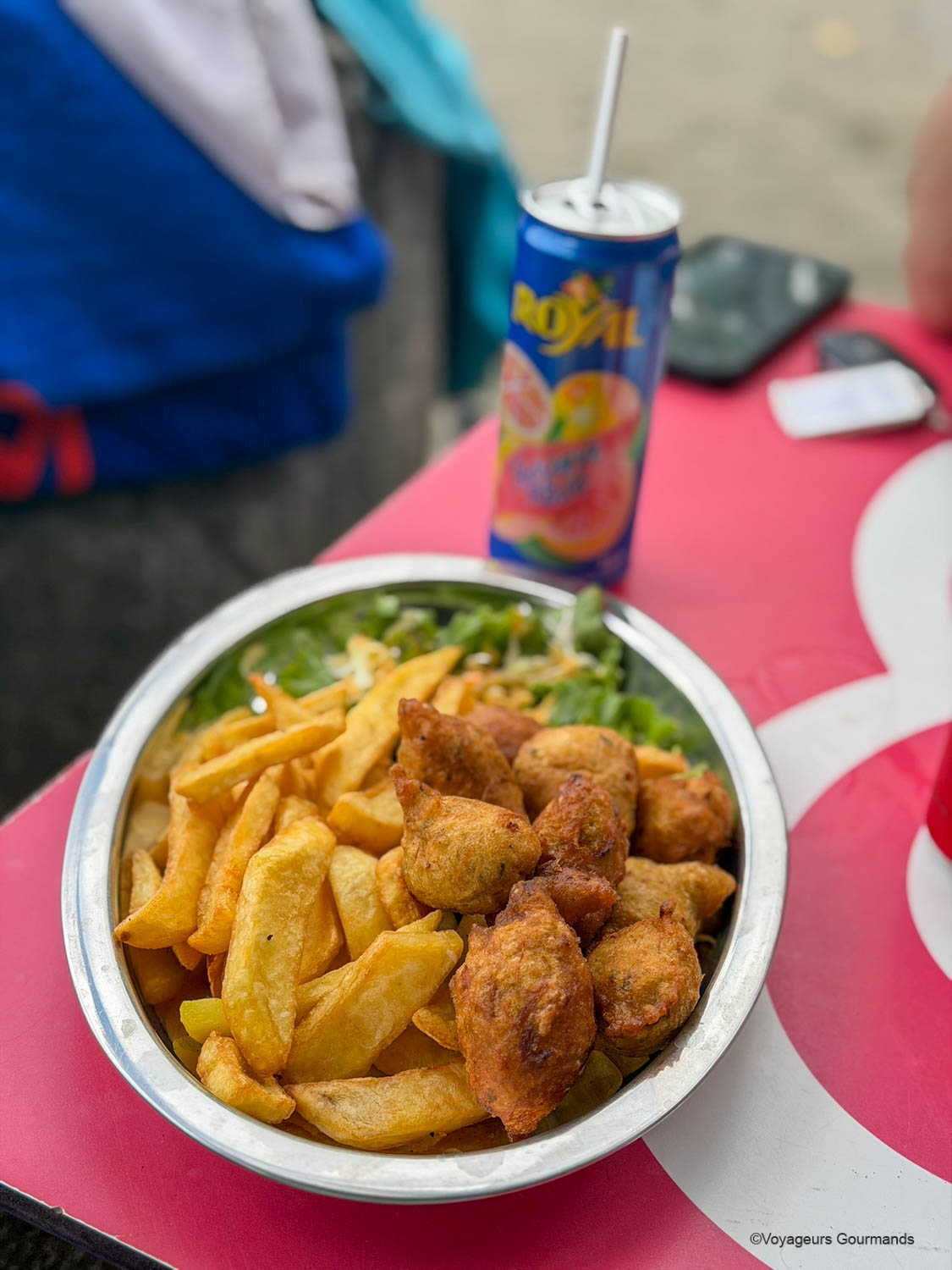
In Bouillante, Malendure beach is lined with restaurants and snack bars: bokits, accras and Creole black pudding. Ideal for lunch with your feet in the sand after a snorkelling session.
In Trois-Rivières and southern Basse-Terre
Let’s be honest: in Trois-Rivières, there’s really not much to eat apart from a few places near the harbour. We were very glad our accommodation, An Eol Caraïbes, served meals on site! On the first evening, we had to drive all the way to Basse-Terre and ended up eating a bokit from a food van by the sea. Not the dinner we’d planned, but a great memory.
On the day we visited the Carbet Falls, we had lunch at the Kassaverie Ti-Kabet: a real discovery, where you can see how kassavs are made before tasting them. For dessert, I had a coconut sorbet with cassava: it was amazing!
In Les Saintes
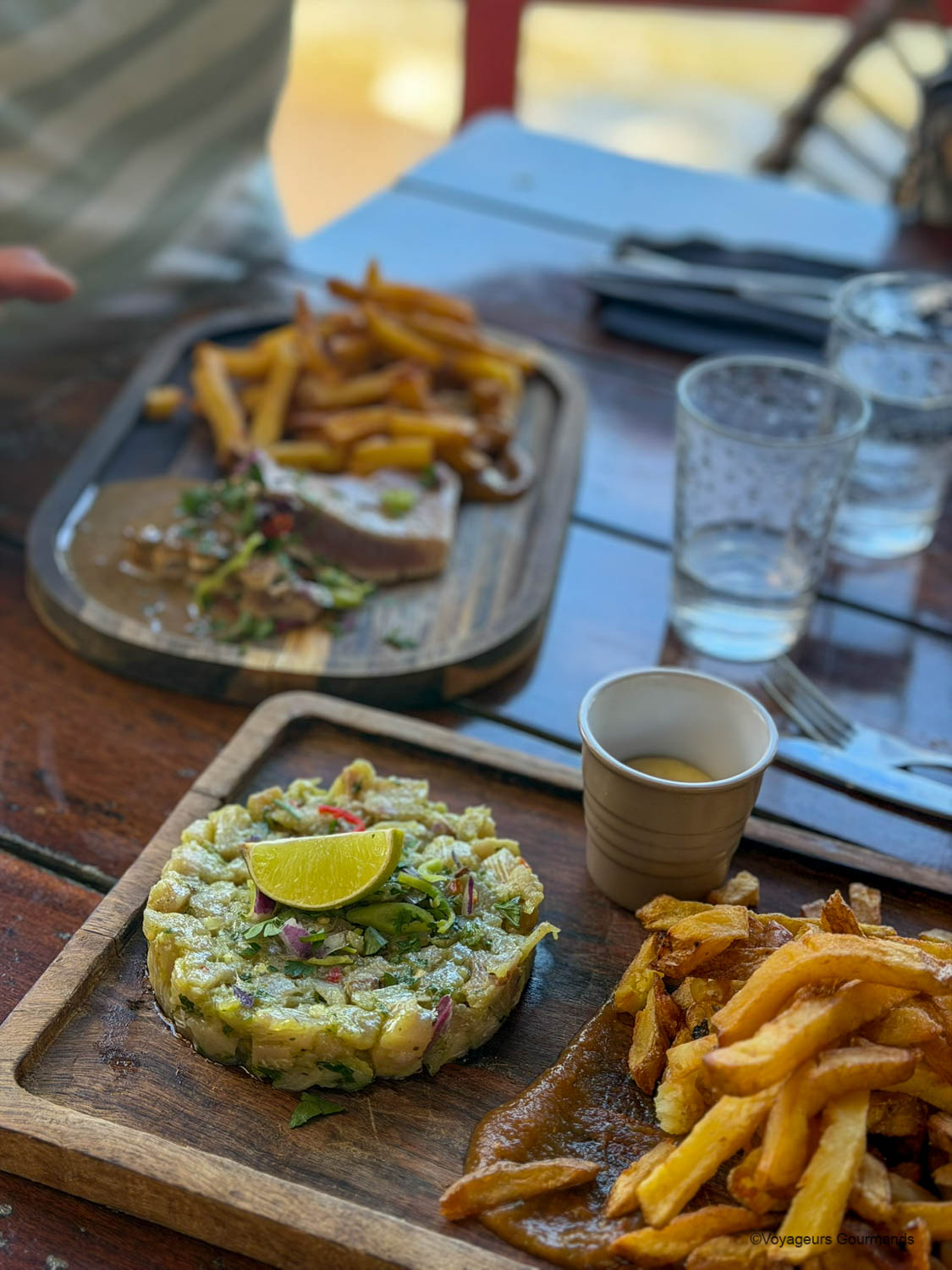
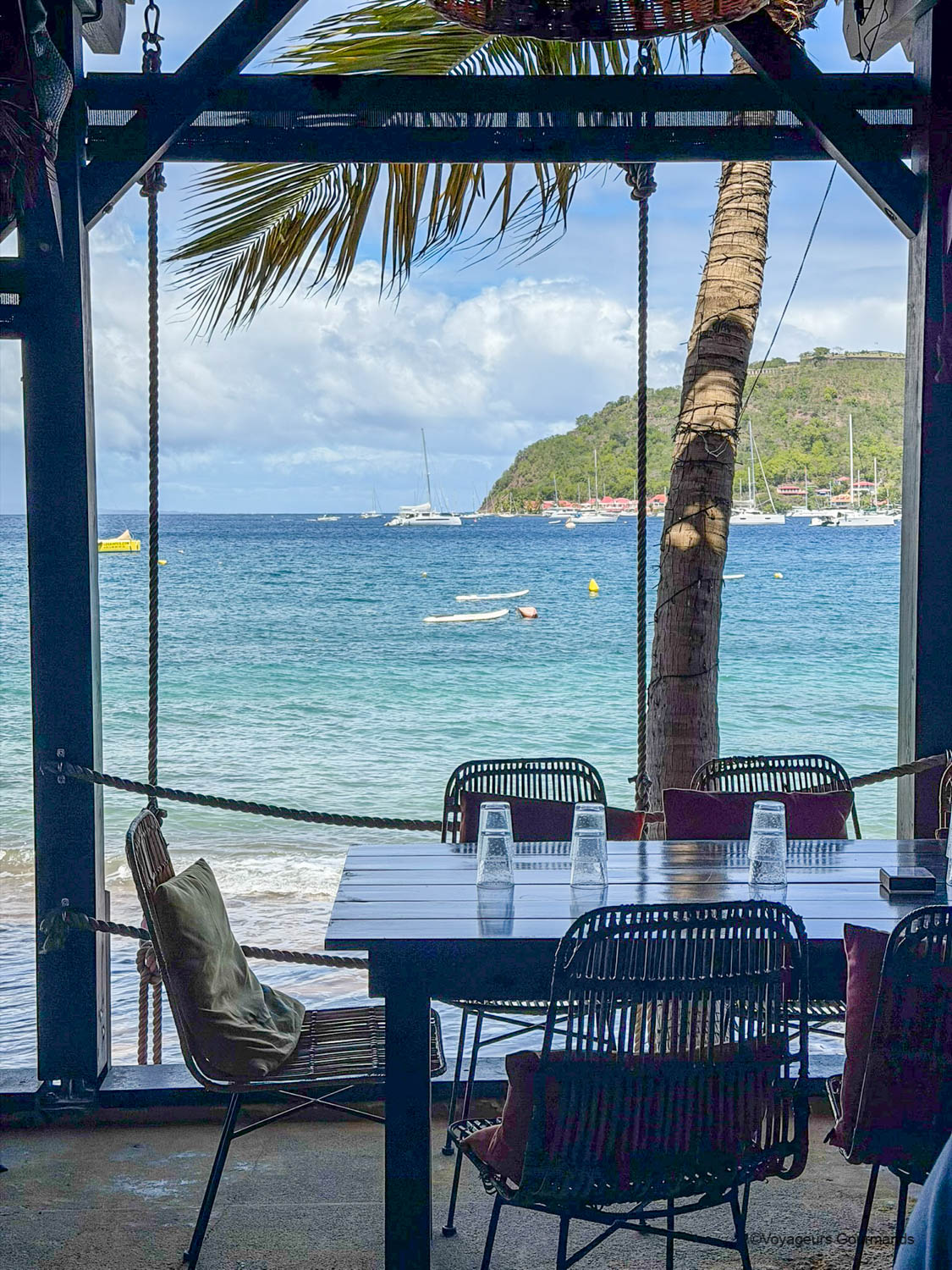
For lunch in Terre-de-Haut, we recommend Les Balançoires, facing the sea: fresh fish, generous portions and carefully prepared food. Sea bream tartare, tuna steak and homemade fish and chips for our son: delicious. Remember to book!
After the Grand Cul-de-Sac Marin trip
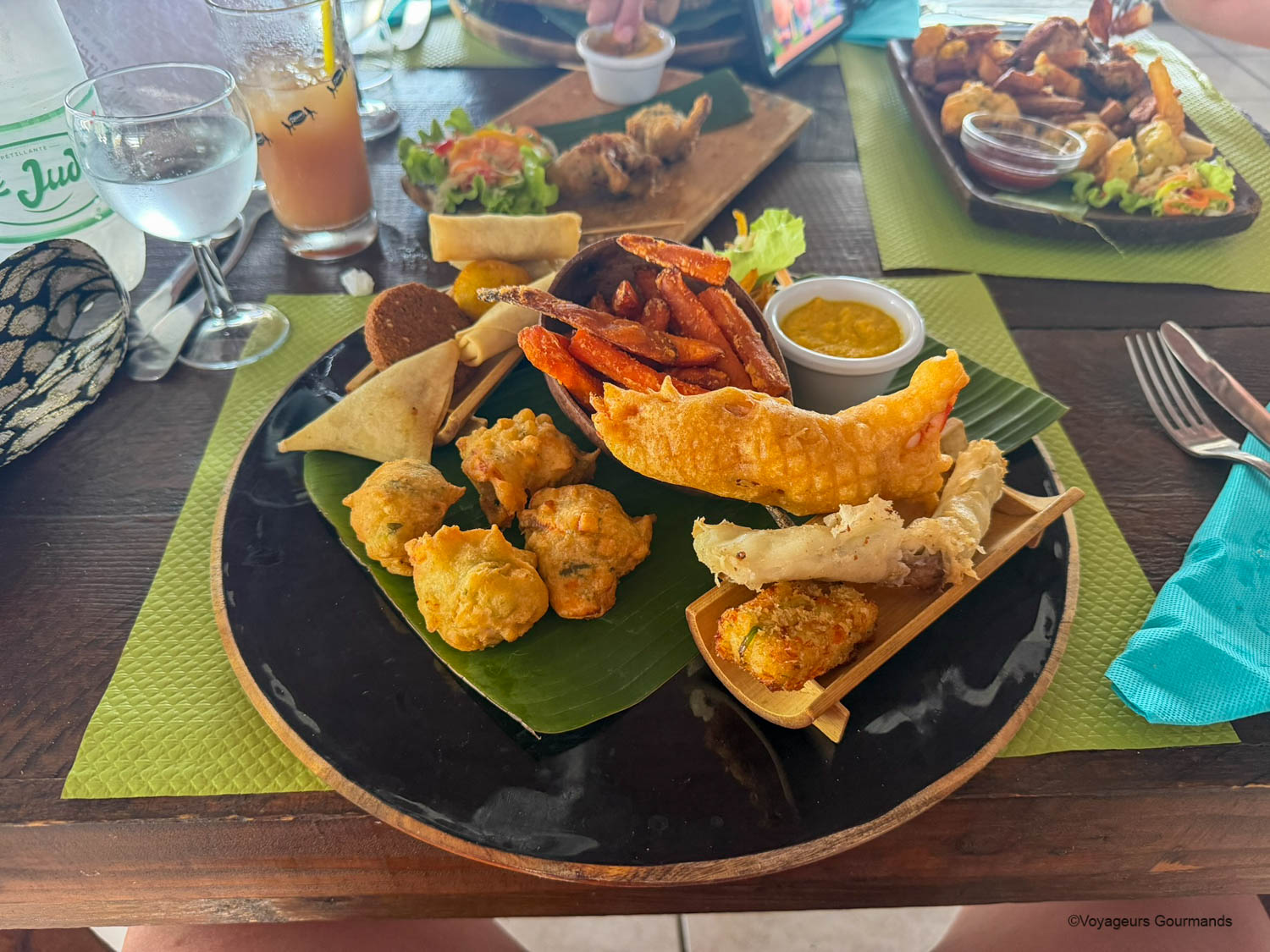
After our excursion in the lagoon, we treated ourselves to a platter of fried fish at D’lo An Bouch in Morne-à-l’Eau. Very good, but filling! We ordered two platters, and in hindsight, we should have shared one and ordered something else on the side.
💡 Good to know
- Chilli is almost always served on the side, so the food is accessible even if you can’t handle heat. Just watch out for small whole chillies hidden in dishes.
- Many lolos and smoked chicken stalls mostly open in the evening and at weekends.
- Budget generously: we rarely paid less than €15 per person per meal, even in simple places.
To plan your trip around these great places to eat, take a look at our 10-day Guadeloupe itinerary.
✤✤✤
I loved the food in Guadeloupe, and it came as no surprise: I really enjoyed tasting all that Creole cooking again. My only small regrets: I expected to eat much more fish than chicken, and I was hoping to find more peanut ice cream, like in Martinique!
Another thing to plan for: restaurants are more expensive than we expected. Factor this into your budget; we share all our figures in our 10-day Guadeloupe itinerary. And to eat local without breaking the bank, mix restaurants, lolos and bokit trucks: that’s often where you’ll make the best discoveries.
Guadeloupe food FAQ
The FAQ is right here!
What is Guadeloupe’s signature dish?
Colombo is the most iconic dish, bokit is the star of street food and ti-punch is the must-try drink. For dessert, tourment d’amour from Les Saintes is the most typical speciality.
Is Guadeloupean food spicy?
It’s above all very fragrant. Chilli is usually served on the side, so everyone can adjust it to their taste.
What to bring back from Guadeloupe?
Rhum agricole, spices (including colombo powder), jams, especially guava jam from the Mamour brand, coffee and local cocoa. Beware of vanilla, though: very little is produced in Guadeloupe, and what’s sold at markets often comes from Madagascar or elsewhere.
Can you eat vegetarian in Guadeloupe?
Yes, more easily than you might think: christophine and pumpkin gratins, vegetable accras, kassav, dombrés with red beans and all the local vegetables. Some food trucks also offer vegetarian bokits.
When can you try matété de crabe?
Mainly at Easter and Pentecost, when it’s the traditional family meal.