


Before we start, we’d like to ask you something: do you know any Limoges specialities? Or at least any from the Limousin? Oh yes you do, there’s at least one you know… good Limousin beef! But you’re starting to know us by now: we didn’t stop at tasting just two or three! Oh no, we’ve tracked down plenty of Haute-Vienne specialities for you, and sometimes Limousin specialities too, since Corrèze, Creuse and Haute-Vienne share a few of them… Ready to tuck in?
You can also read our article (in French) about our whole stay: a weekend in Haute-Vienne.
✤✤✤
Limoges specialities at a glance
| 📌 Info | ✨ Limousin food in a nutshell |
|---|---|
| 🥩 Signature product | Limousin beef |
| 🥞 Savoury specialities | Galetou and potato and meat pie |
| 🍒 Typical dessert | Cherry clafoutis (stones left in!) |
| 🌰 Star ingredient | Chestnuts, in black pudding as well as in cakes |
| 🎁 To bring home | Aréna cake, Saint-Léonard massepain and Bijou madeleines |
| 🛒 Where to taste local food | Limoges central market hall |
| ❤️ Our favourite | Massepain from Saint-Léonard-de-Noblat |
What to eat in Limoges? Savoury specialities
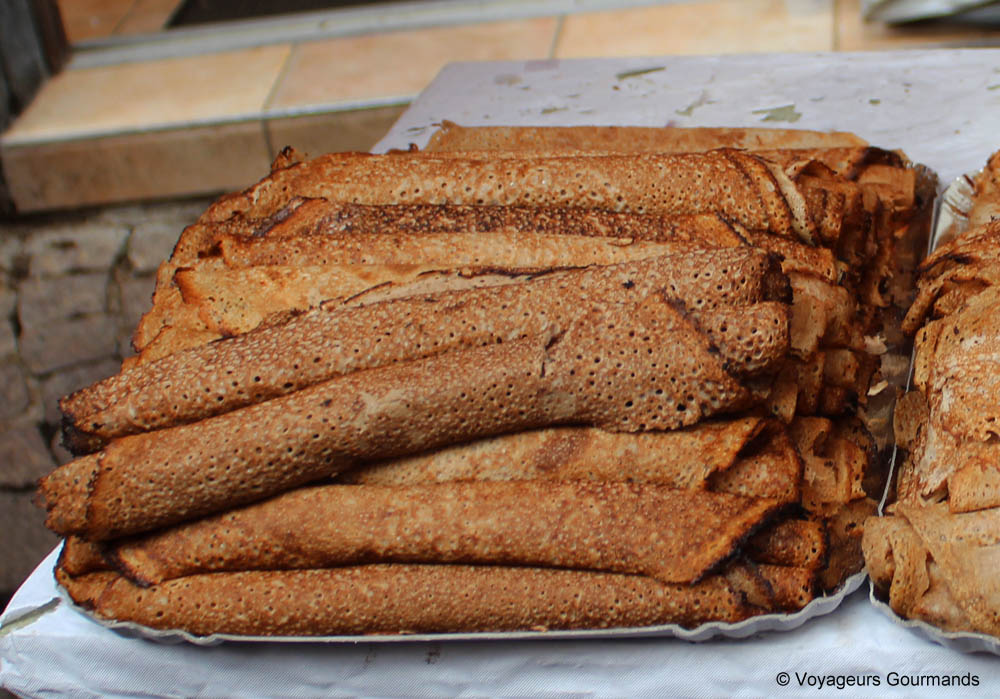
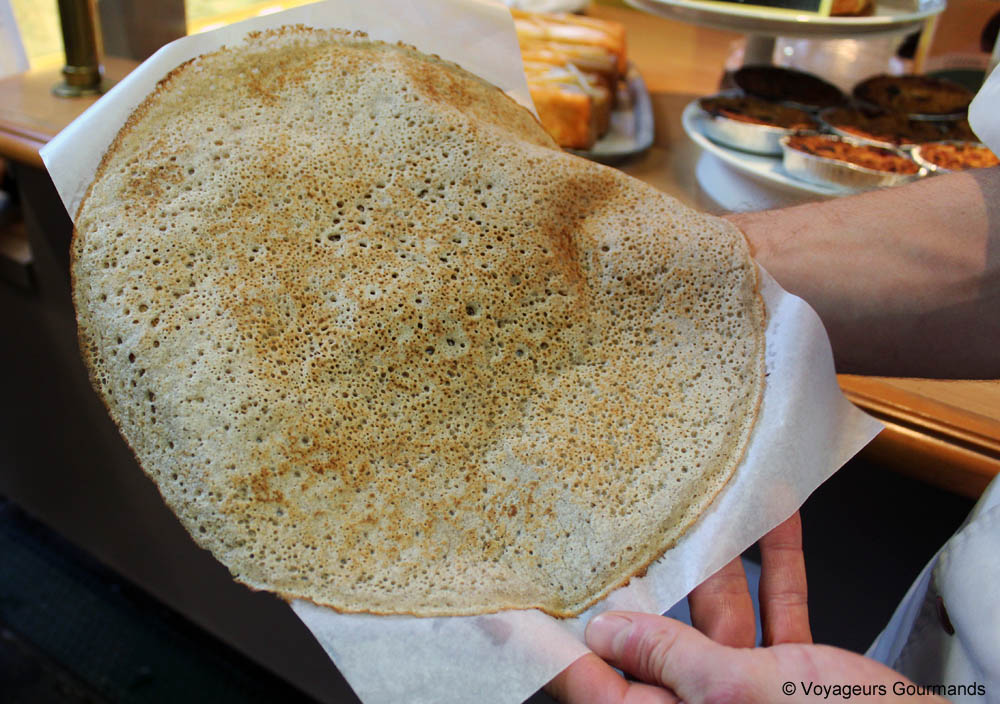
Galetou
It’s a savoury pancake, eaten plain or “filled”. At first glance, we’ll grant you, it looks like its Breton cousin, but it tastes nothing like it! It’s made with flour (a mix of wheat and buckwheat), yeast and water, unlike Breton galettes, which are made with eggs and milk. It’s eaten spread with rillettes, with lardons, or in a sweet version. If you’re passing through Limoges, you’ll easily find some at the central market hall, for example at Paradis Daus Leichadiers. But be warned, Matthieu’s galetous are very popular: come early in the morning or think about booking! (You’ll also find some of the sweet specialities we tell you about further down.)
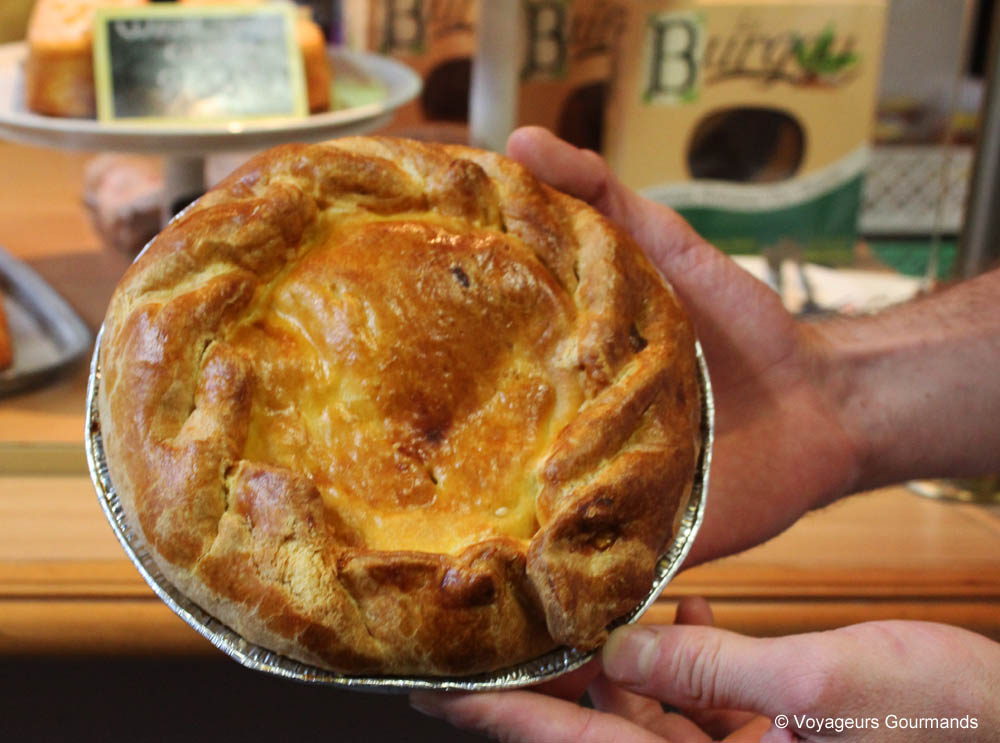
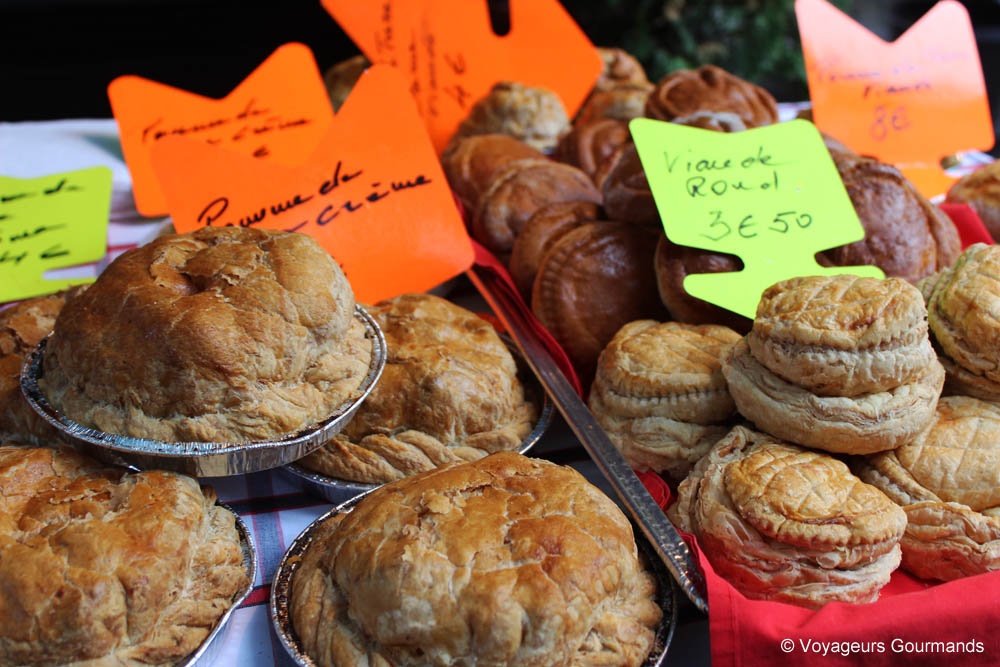
Potato and meat pie (pâté pomme de terre viande)
Puff pastry, potatoes, meat, and there you have a good savoury cake. We’ll admit it’s a bit heavy, but it looks really tempting, doesn’t it? In any case, we thought that with a savoury cake, some galetous and a few of the biscuits we tell you about below, we’d have everything we need for a nice picnic in the region, at Lake Vassivière for example!
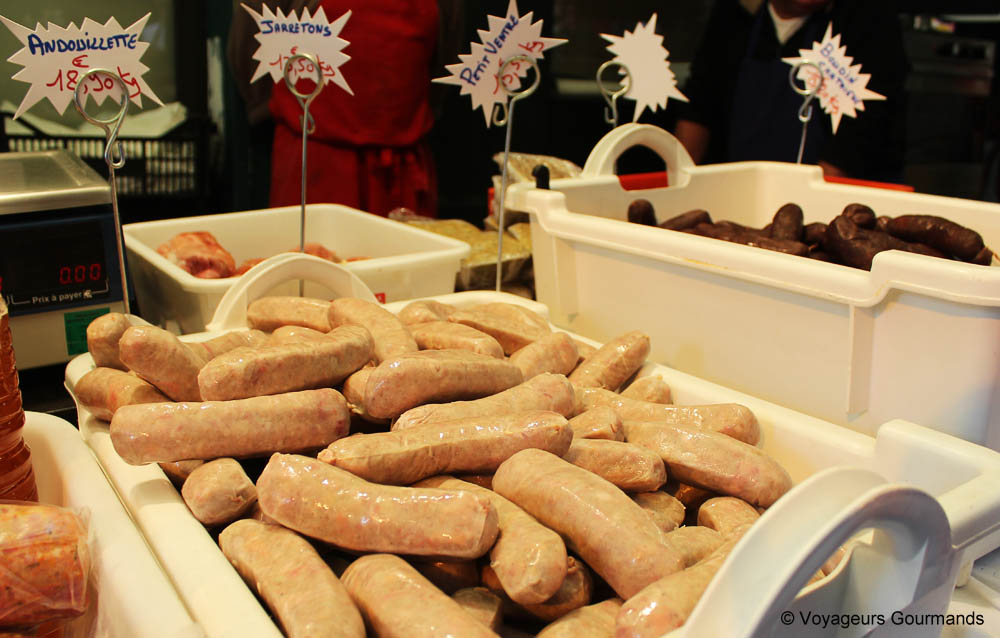
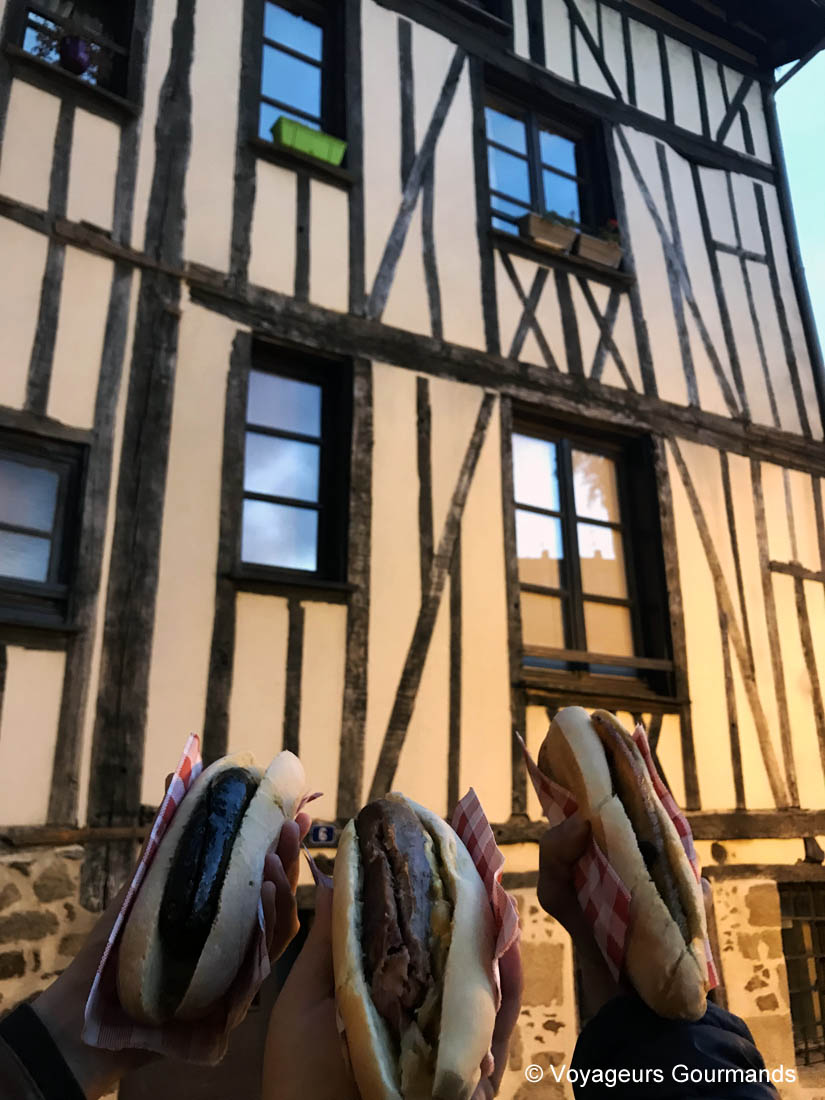
Chestnut black pudding (boudin à la châtaigne)
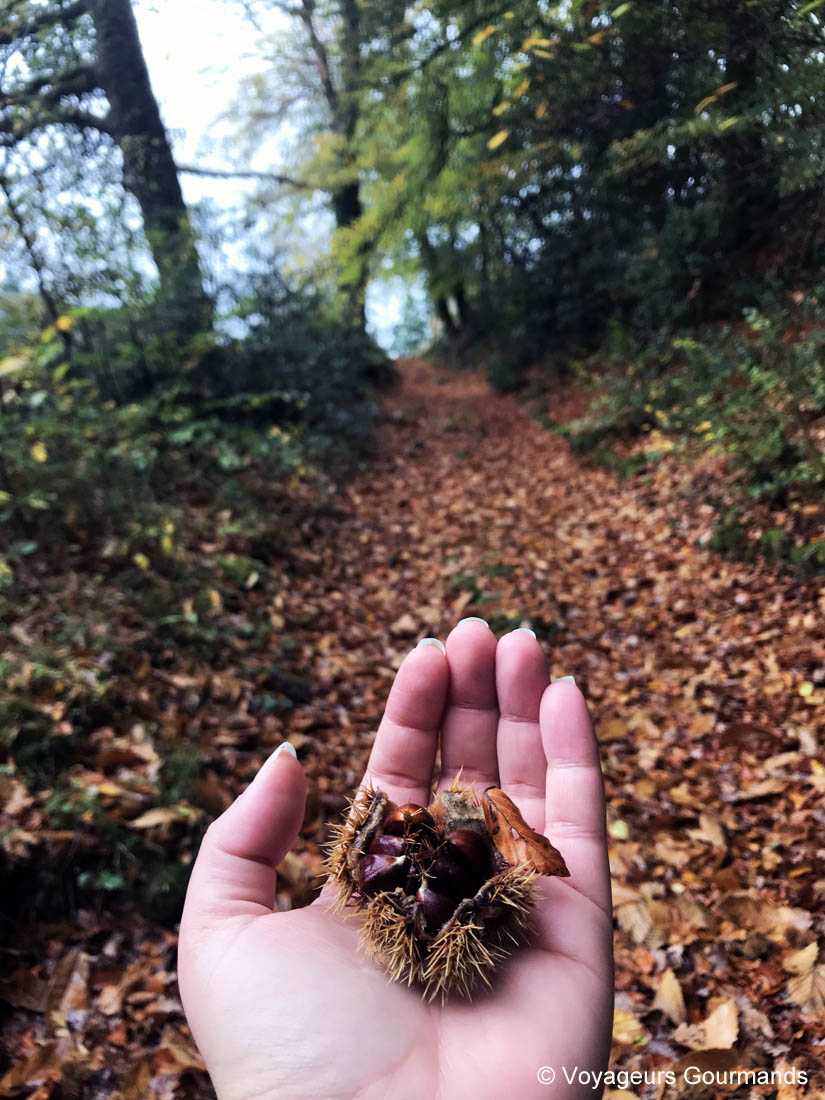
Haute-Vienne is a land of meat and charcuterie, but it’s also full of chestnut trees. So naturally, you’ll find several specialities made with this fruit, such as sweet cakes but also savoury dishes. We didn’t get to try these ones in particular, but they’re very highly regarded. For us, it was black pudding and andouillette sandwiches during the Frairie des Petits Ventres festival (which we tell you about in our article on visiting Limoges in 2 days, in French!).
Amourettes
Not for the faint-hearted…
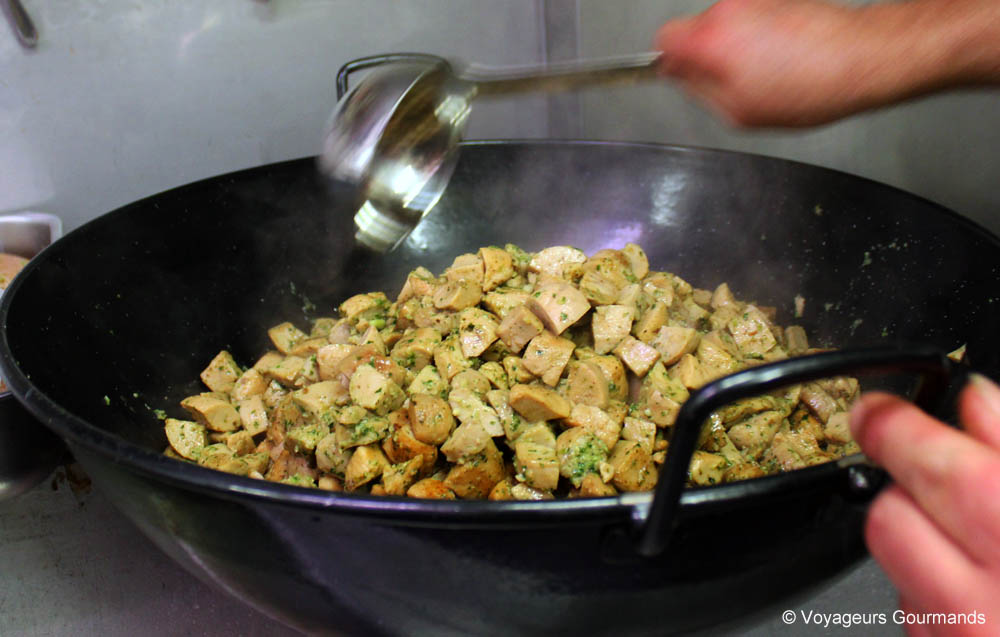
On the afternoon of the frairie, we were lucky enough to join butcher François Brun in his workshop for a few explanations. He’s one of the most renowned butchers in Limoges, if not the most renowned. Here, he mainly cooks his charcuterie (offal, black puddings, sausages and pâtés).
A lovely smell of garlic butter fills our nostrils, and we discover a huge pan of simmering meat. Meet the amourettes… or, less poetically, sheep’s testicles… The smell is so mouth-watering that we simply have to taste them (we’re not Voyageurs Gourmands for nothing!!). The texture is unusual, but the seasoning makes me forget what I’m eating…
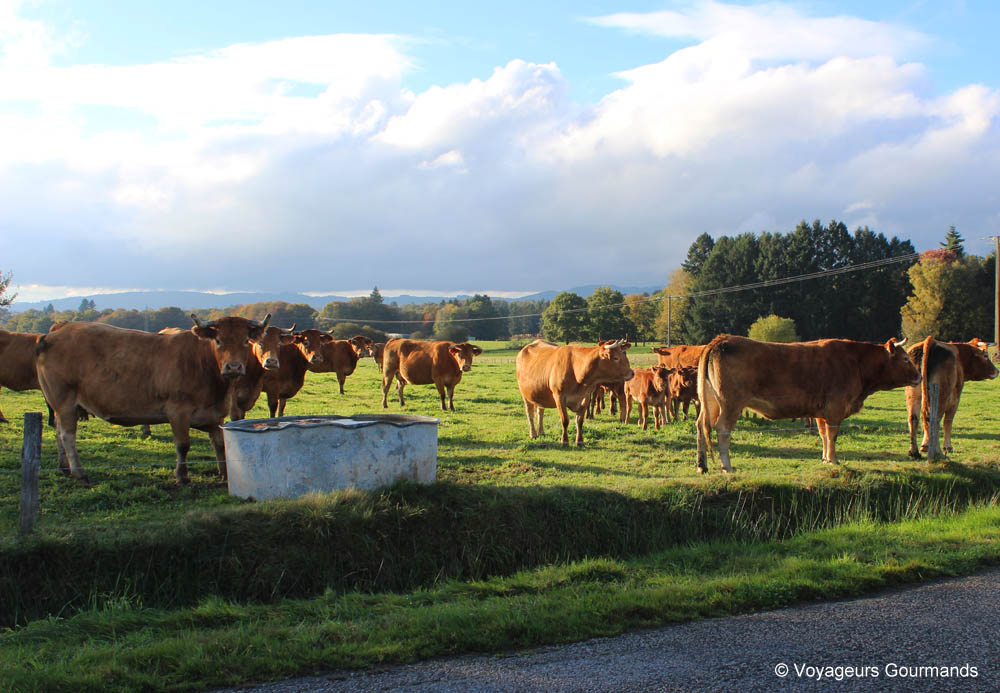
Limousin beef
The Limousin is actually a breed of cattle, originally from the Limousin region, raised mainly for its meat. It can carry three different Label Rouge quality labels. The animals are reared traditionally and, above all, according to a number of rules, particularly regarding their feed. Don’t miss the chance to try it at one of the places we list below.
✤✤✤
Sweet specialities from Limoges and Haute-Vienne
Limousin clafoutis
You can’t talk about Limoges desserts without mentioning clafoutis, the Limousin’s sweet speciality par excellence! The real thing is made with black cherries… with the stones left in. Yes, really, the stones stay: they give the batter a subtle almond flavour and stop the juice from escaping during baking. The batter itself is like a thick pancake batter (eggs, milk, flour, sugar) that bakes in the oven around the fruit. And if you make it with apples, pears or prunes, purists will tell you it’s no longer a clafoutis but a flognarde, its Limousin cousin! You’ll find it mainly in early summer, in the middle of cherry season, in pâtisseries and at markets across the region.
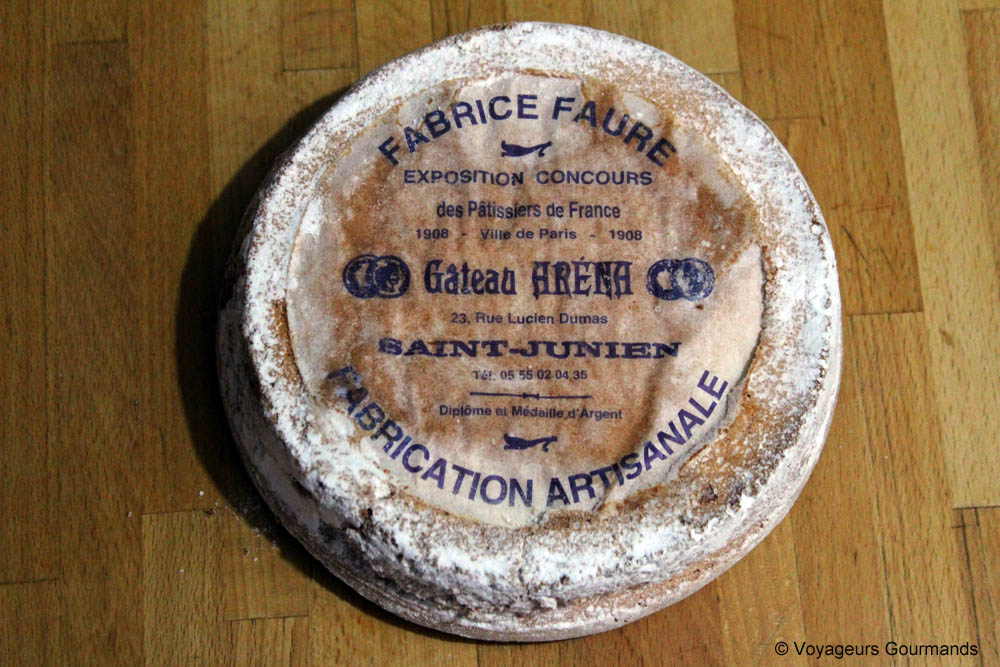
Aréna cake
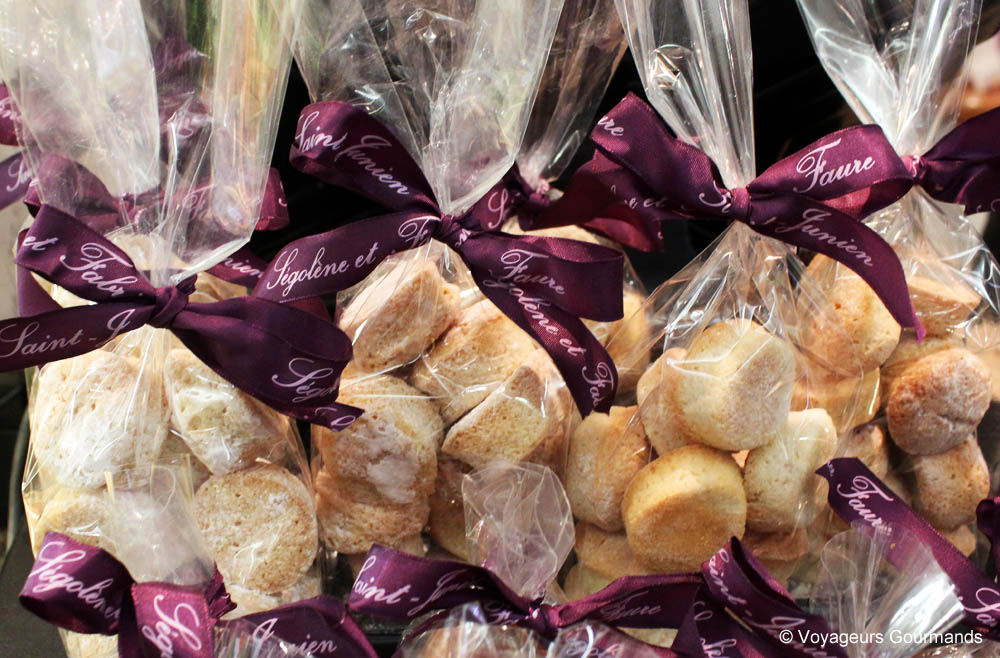
It’s an almond cake, soft inside and crunchy outside. The centre melts in your mouth, while your knife struggles to cut through the edges. This speciality, from the town of Saint-Junien, has a recipe that has been kept secret for many years. In 1908, a pastry chef named Paul Aréna entered an almond cake in a Paris competition, and won. That’s how the Aréna was born. Dusted with icing sugar and deliciously rich in almonds, its special feature is that it’s a “travel” cake: it’s easy to carry and, above all, it keeps for a long time, up to a month. Fabrice Faure, who has since taken over the Aréna family’s pâtisserie, still makes the cake using the same original recipe, the one from over 100 years ago… There are even mini versions, perfect as a little souvenir of the area!
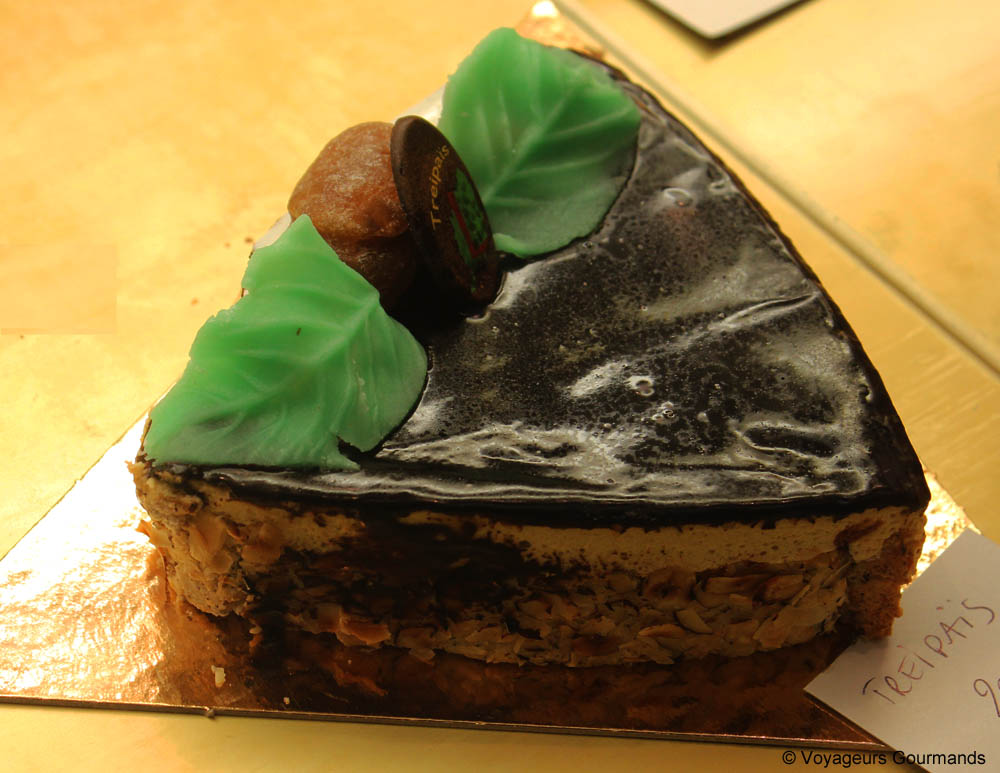
Treipaïs
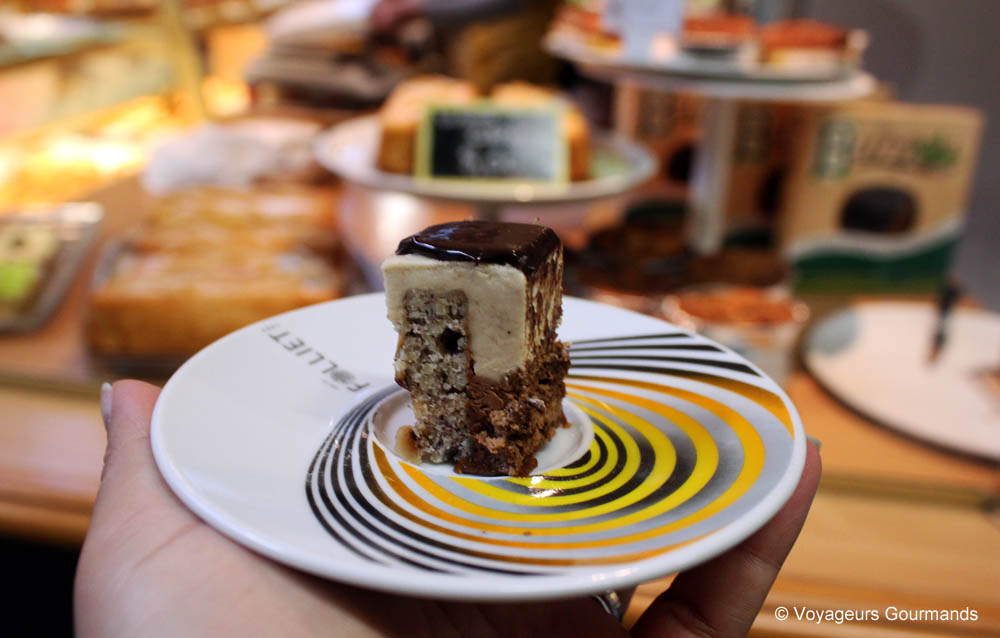
Now the treipaïs, that’s a whole story: delicious, long to make and symbolic! This pastry is a Limousin speciality created by a group of pastry chefs from the region. Its name, Treipaïs, means “3 lands”, referring to the 3 départements of the Limousin: Haute-Vienne, Corrèze and Creuse. Its triangular shape, with its 3 sides, is also a nod to this union. The ingredients used to make it are subject to several rules, as is its original recipe.
If you want to try making it at home, you’ll need plenty of patience, as it involves several separate preparations: a dacquoise, a chocolate mousse, a chestnut mousse, a crunchy hazelnut praline and a dark chocolate glaze… A complex recipe to reproduce, then, but above all one that can’t be sold without permission.
Pelauds from Eymoutiers
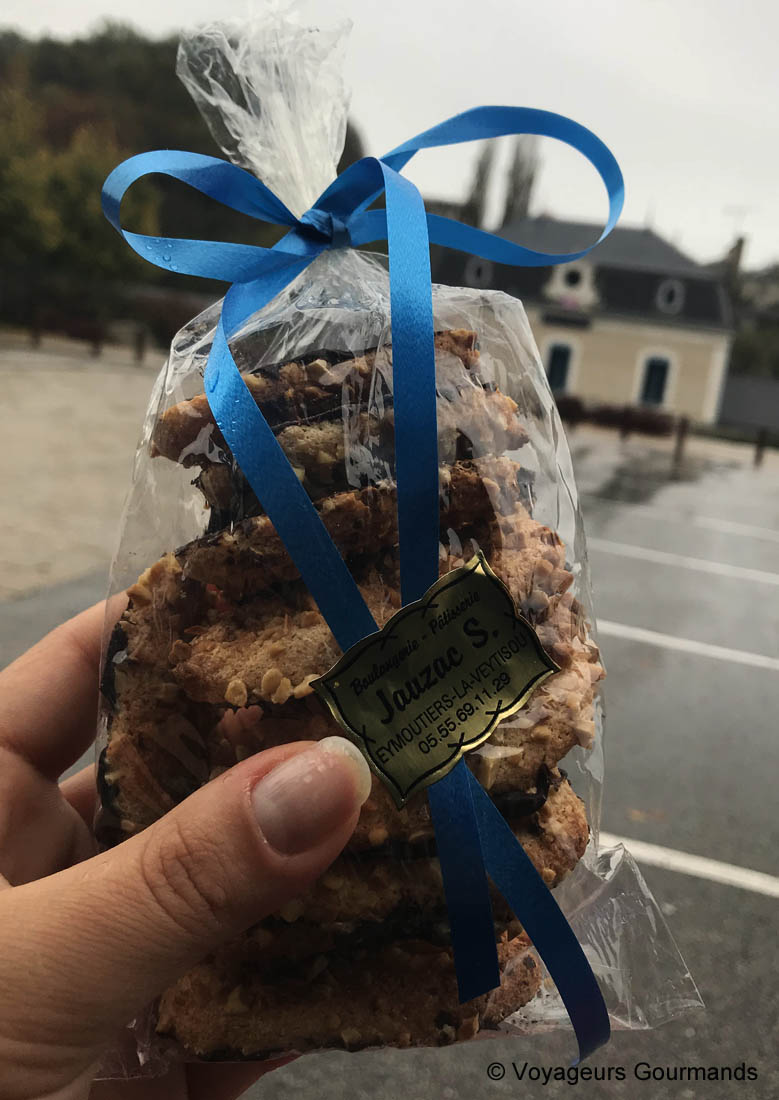
Named after the inhabitants of the town of Eymoutiers, pelauds are almond biscuits coated in dark chocolate and hazelnuts. They’re also perfect with a cup of tea or coffee.
Massepain
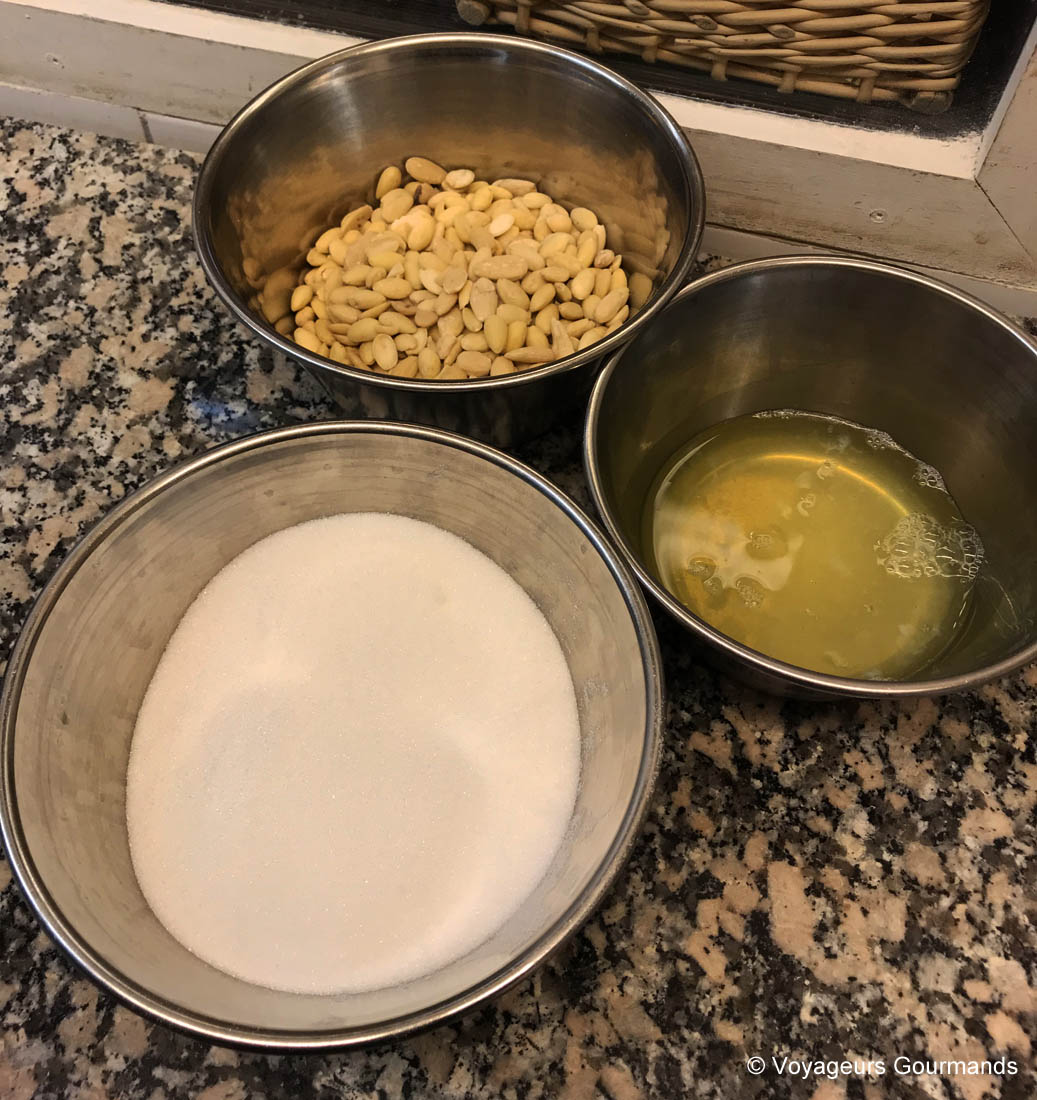
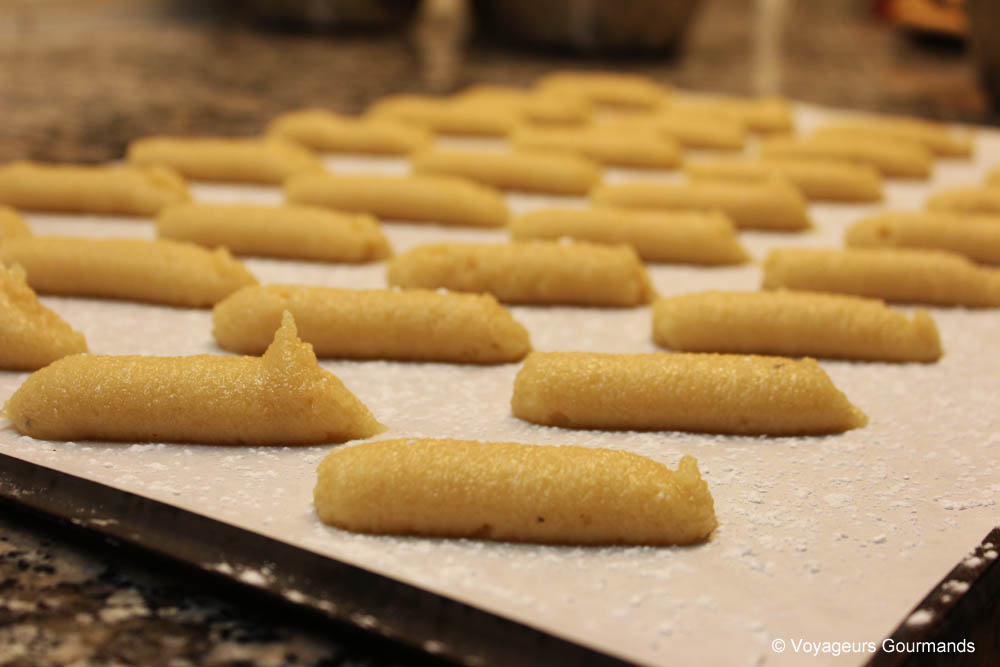
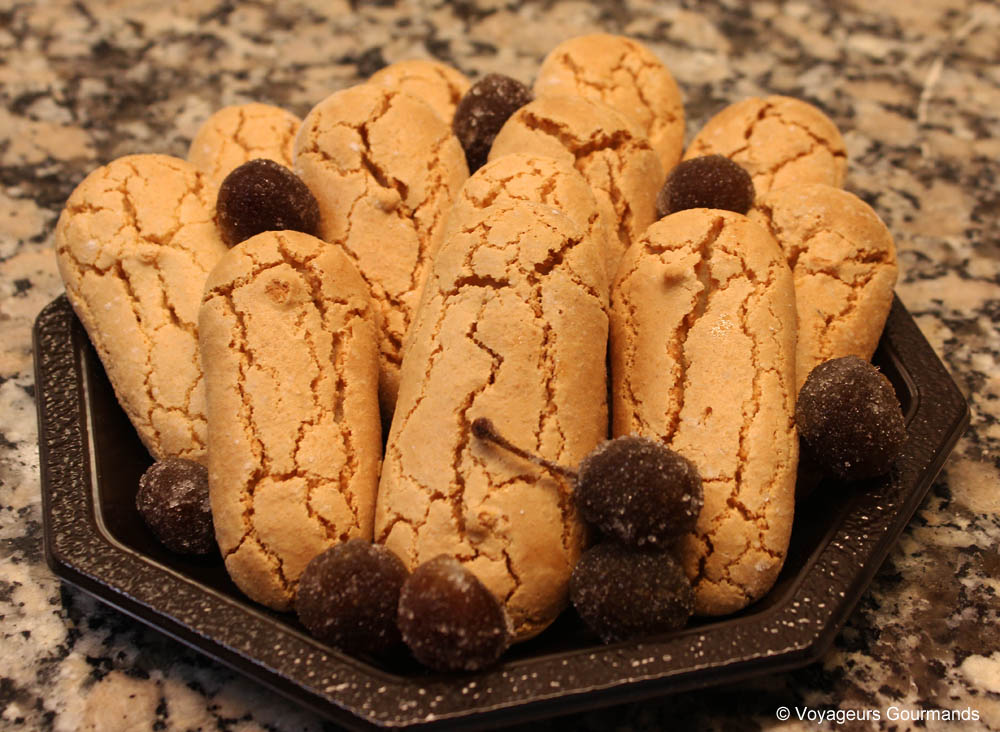
When I first heard about massepain as a Haute-Vienne speciality, it immediately sparked my curiosity, because in Portugal there’s a biscuit that’s also called massepain, massapão. I really wanted to find out more, so imagine my delight when we met pastry chef Vincent Coignac, who makes the famous massepain of Saint-Léonard-de-Noblat. He took the time to explain the making process to us, but above all the history of the recipe. This Mediterranean pastry came with pilgrims from the Iberian Peninsula when the village was an important stop on the Camino de Santiago, because the biscuits are light and keep for a long time… That explains everything! Above all, Vincent told us how long it took him to rediscover this famous historic recipe, from the memories of an 80-year-old man who had learned it during his apprenticeship 65 years earlier; how he ran several tests before finding the perfect balance, how he chose his ingredients… The ingredients are simple: egg whites, sugar and almonds, ideally not too bitter… Little biscuits that are perfect with a coffee or a tea!
Burgou and chestnut cakes
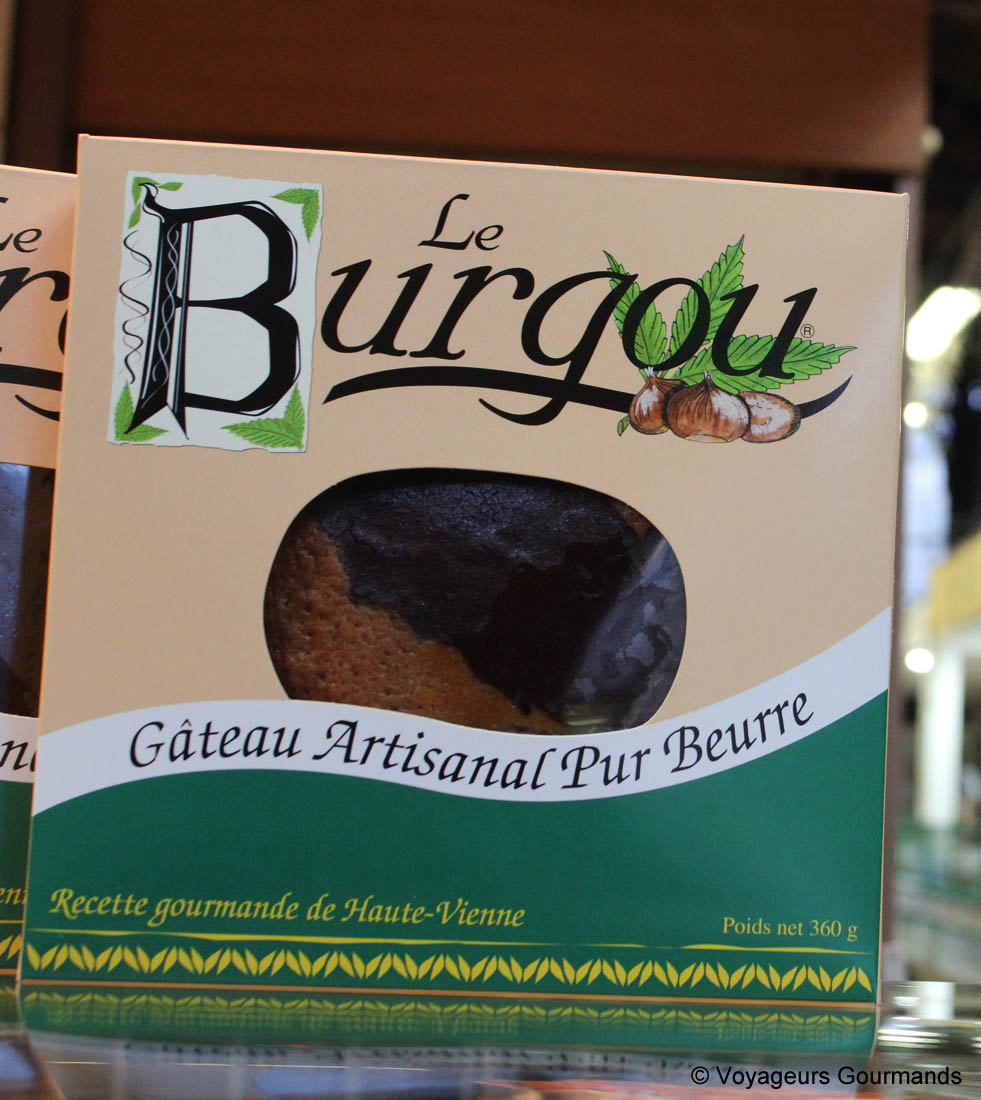
As I mentioned in the savoury Haute-Vienne specialities, the region is very rich in chestnuts, so naturally they’re used in cakes too. Made with chestnut flour, they’re wonderfully moist, a real treat! There’s also a pastry made with chestnuts from the Limousin: the burgou, a chestnut and almond cake. Unfortunately, we left buying it until the last day of our stay, and there were none left at the market hall! We’ll just have to go back to try it!
Bijou madeleines
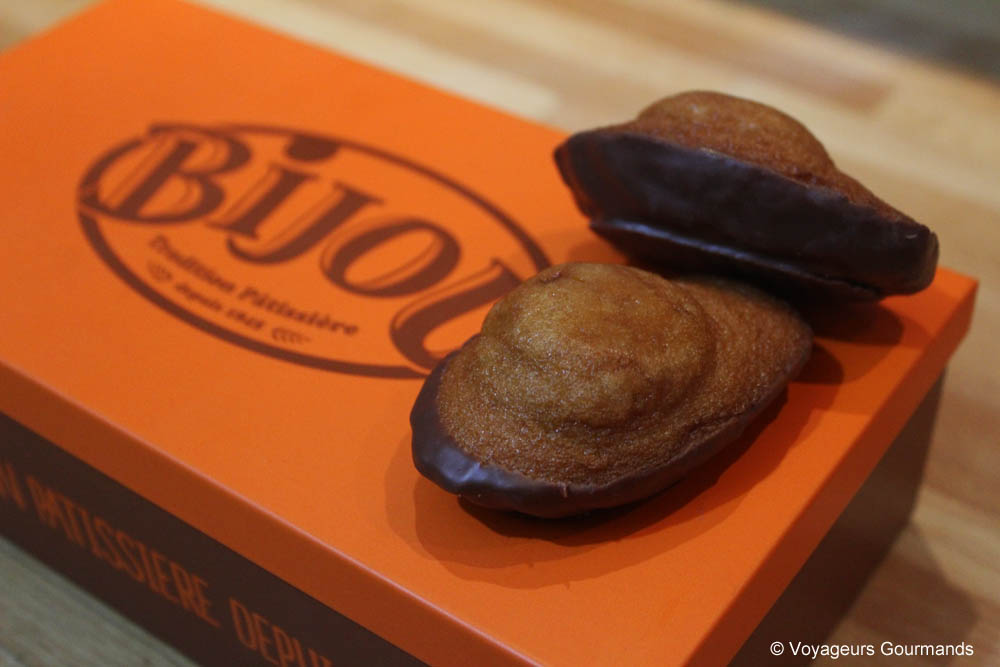
The best is saved for last… with the delicious Bijou madeleines! This family pâtisserie was founded in 1845 in the heart of the town of Saint-Yrieix-la-Perche. “La Maison Bijou” takes its name from its speciality: madeleinettes (small golden madeleines, the “bijou”, or jewel, of Saint-Yrieix). They also make other products, but the madeleine is definitely the star. On their website, we also learned something we didn’t know: the history of madeleines! A young girl called Madeleine is said to have offered pilgrims on the Camino de Santiago a small soft cake baked in scallop shells, giving it the shape we all know! Fun, isn’t it?
What to bring back from Limoges? Our foodie souvenir ideas
Want to make the trip last once you’re back home? Good news: several Limoges and Limousin specialities travel very well. The Aréna cake from Saint-Junien keeps for up to a month (it was designed for that!) and even comes in a mini version. Saint-Léonard-de-Noblat massepains and Eymoutiers pelauds slip easily into a suitcase, as do Bijou madeleines from Saint-Yrieix-la-Perche. Add a chestnut product, spread or flour, and you’ll have a lovely Limousin food hamper. To stock up in one go, head to the Limoges central market hall!
✤✤✤
Where to eat in Haute-Vienne? Our favourite places
Here are the places we tried, but one thing’s for sure: this is a truly foodie region full of well-kept secrets, which we loved discovering. So you’ll no doubt taste plenty of other delicious dishes!
Where to eat in Limoges?
➺ Limoges central market hall (Halles centrales): for pastries, galetous or meat. This is where you’ll find Matthieu’s galetous, which we mentioned at the start of the article. You can also find pastries such as burgou or treipaïs. 11 place de la Motte, 87000 Limoges
➺ Le Chalet in Limoges: delicious food, especially the Limousin beef. Remember to book.
5 rue des Filles-Notre-Dame, 87000 Limoges
➺ Bistrot d’Olivier: for a convivial meal where you share tables with strangers! It gets packed, so it’s best to book here too. Halles Centrales, 87000 Limoges
➺ Le Versailles: the decor is period-style, but the food is very good, and you’ll even find black pudding from our butcher friend François Brun. 20 place d’Aine, 87000 Limoges
➺ L’essentiel: trendy decor and delicious dishes, we loved this place!
3 avenue Garibaldi, 87000 Limoges
Where to eat around Limoges?
➺ Le Bellevue: the meal was good, but we’d recommend this restaurant mainly if you’re stopping in the area. 2 avenue de Limoges, 87250 Bessines-sur-Gartempe
➺ Le Relais Saint-Jacques: a delicious lunch after wandering the streets of this beautiful little town. Remember to book. 6 boulevard Adrien Pressemane, 87400 Saint-Léonard-de-Noblat
➺ Pâtisserie Fabrice Faure: for the Aréna cake and other mouth-watering cakes. It’s also a tearoom.
23 rue Lucien Dumas, 87200 Saint-Junien
➺ Pâtisserie Coignac: for the famous Saint-Léonard massepain, but also to try its newer speciality, candied prunes. There’s also a chocolate shop and tearoom.
22 avenue du Maréchal-Foch, 87400 Saint-Léonard-de-Noblat
✤✤✤
So, did you enjoy all these Limoges specialities? You knew at least one of them, right? Go on, tell us all about it in the comments!
Thanks to Marion from the Haute-Vienne tourist board for inviting us!
Limoges food FAQ
The frequently asked questions are here!
What is the culinary speciality of Limoges?
Limousin beef is the best-known speciality of Limoges and the Limousin. For something savoury, don’t miss the galetou and the potato and meat pie; for something sweet, cherry clafoutis is the region’s signature dessert.
What is the typical dessert of Limoges?
Clafoutis, made with black cherries with the stones left in. You can also try the Aréna cake from Saint-Junien, treipaïs, Saint-Léonard-de-Noblat massepain and chestnut cakes.
What should I bring back from Limoges?
Specialities that keep well: Aréna cake (up to a month), Saint-Léonard massepains, Eymoutiers pelauds or Bijou madeleines. You’ll find them at the Limoges central market hall or directly from the pastry shops.
What is the typical dish of the Limousin?
Typical Limousin dishes showcase Limousin beef and chestnuts: chestnut black pudding, potato and meat pie or a filled galetou. The more adventurous can also try amourettes!
Where can I try Limoges specialities?
The Limoges central market hall is the ideal place to taste galetous, Limousin pastries and meat. For a sit-down meal, Bistrot d’Olivier, inside the market hall, is a safe bet (remember to book).
