


We set off for Norway with two dreams in mind: seeing whales, and seeing the Northern Lights… We’re so happy we managed to do both ❤. The aurora is a natural phenomenon you can’t control at all, let alone predict (too far) in advance…
In this article, we tell you all about our Northern Lights hunt in Tromsø: where and when to see the aurora in Norway, how to read the forecasts (KP index, weather), which tour to choose, what to wear and how to photograph it — all updated for winter 2026-2027.
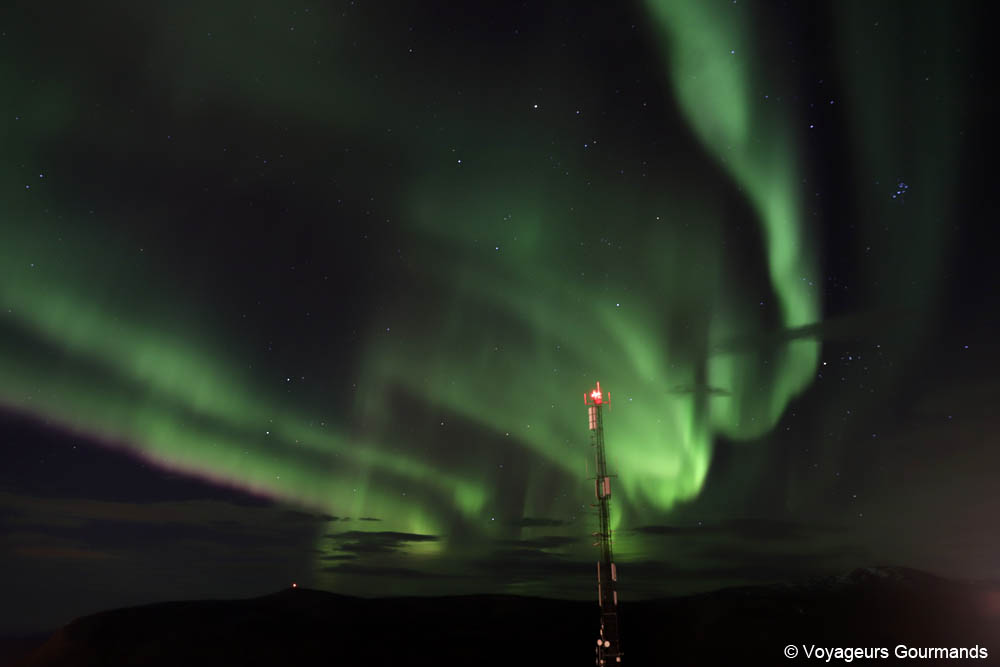
✤✤✤
Northern Lights in Tromsø at a glance
| 📌 Topic | 💡 Key facts |
|---|---|
| Best time | Late September to late March |
| Polar night in Tromsø | Late November to mid-January |
| Where to see them | Fjellheisen, Telegrafbukta or Prestvannet without a car; Kvaløya, Sommarøy or Lyngen further afield |
| KP index | A KP of 2 is often enough in Tromsø, as long as the sky is clear |
| Nights to plan | Ideally 4 to 5 nights |
| Tour budget | Roughly 750 to 2,500 NOK depending on the tour (€65 to €215) |
| Temperatures | Often between -5 and -10 °C in town, much colder inland |
| Our score | Northern Lights on 2 nights out of 5 |
What are the Northern Lights?
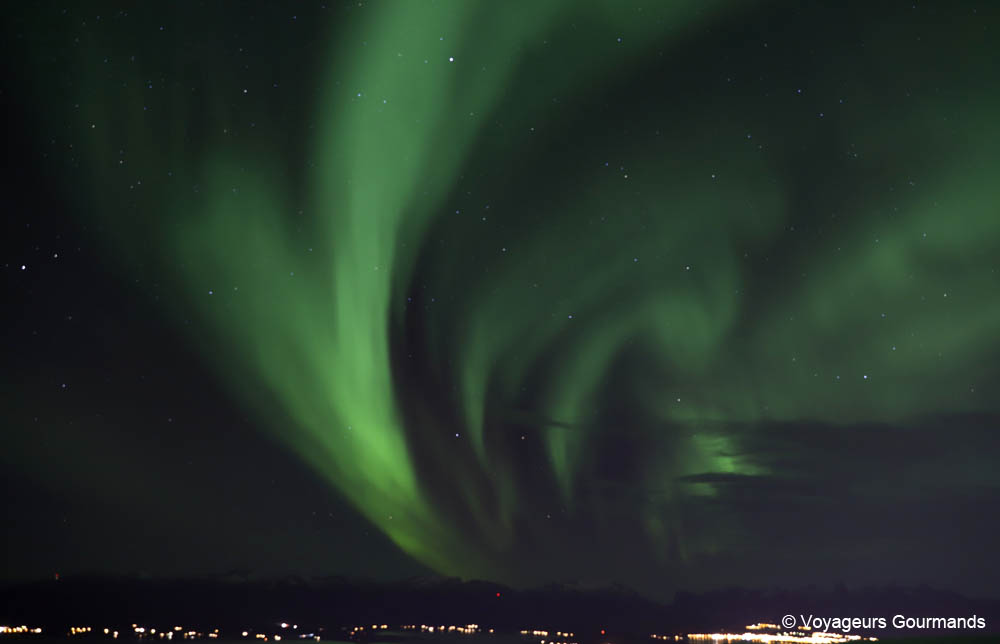
This phenomenon is called a polar aurora. In the northern hemisphere, it’s known as the aurora borealis, or Northern Lights; in the southern hemisphere, the aurora australis. These are lights, usually green, that appear in the night sky. They’re caused by charged particles from the solar wind colliding with the Earth’s upper atmosphere, a phenomenon concentrated mainly around the magnetic poles.
You hear about the Northern Lights far more often than the Southern Lights, simply because they’re easier to see from Europe: the aurora australis is mostly visible from southern Patagonia, the south of New Zealand or Tasmania, whereas the aurora borealis can be seen in Norway, Finland, Sweden, Iceland, Canada, Alaska, Greenland, and sometimes even the Shetland Islands in the north of the UK.
Why winter 2026-2027 is still a great season
It’s a point we couldn’t ignore when updating this article: the solar cycle is still working in your favour.
The Sun follows an activity cycle of around 11 years, alternating between quiet and stormy phases. Solar Cycle 25 peaked in late 2024, with a maximum more intense than the models had predicted. We’re now in the declining phase… but don’t panic: this is often when the strongest geomagnetic storms happen. Activity therefore remains high for winter 2026-2027, before really slowing down in the following years.
In practical terms, if you’re planning a trip: the stronger the solar activity, the more frequent and intense the aurora, and the further south it can be seen. Some of the storms in 2024 even made the Northern Lights visible from parts of France and the UK. And in Tromsø, well above the Arctic Circle, it doesn’t take much to make you look up at the sky…
➺ In short: if you’re hesitating about booking, winter 2026-2027 is still an excellent window to see the Northern Lights. The following winters will be a little less generous.
When to see the Northern Lights in Tromsø? The best time (2026-2027)
To see the Northern Lights in Norway, two conditions are essential: enough magnetic activity, and a clear sky. Broadly speaking, it all happens between September and March.
| 📅 Period | 🌙 Daylight / night | ✨ Aurora chances | 💬 Our take |
|---|---|---|---|
| Late September – October | Nights still fairly short | Good | Milder temperatures, a good compromise |
| November – mid-January | Polar night (almost constant darkness) | Very good | Ideal for the aurora, but very little daylight |
| Mid-January – February | Daylight gradually returns | Very good | A good balance of daylight and dark nights |
| March | Equinox | Excellent | Statistically stronger auroral activity, and less cold |
In Tromsø, the polar night (almost constant darkness) lasts from late November to mid-January — you can check the exact times on this Tromsø sunrise and sunset website. From 15 January, daylight gradually returns, from one hour to around 5 hours by the end of the month.
If you’d like to combine the Northern Lights with whale watching, bear in mind that whales can only be seen during a shorter window, from November to late January. Here’s what we concluded:
➺ Northern Lights + whales = November, early December (or late January, with fewer chances for whales) ➺ Snow activities (dog sledding, snowmobiling, skiing) + Northern Lights = mid-January, February, March.
Understanding the KP index
It’s something few articles explain clearly, yet it makes all the difference once you’re there. The KP index measures geomagnetic activity on a scale of 0 to 9:
- KP 0-2: in Tromsø, this is often enough! With a clear sky, you can already see the aurora above the city
- KP 3-4: intense Northern Lights that move and change colour, visible well beyond Tromsø
- KP 5 and above: a geomagnetic storm, with the aurora visible as far as southern Norway, or even further south in Europe
The good news is that the KP index can be forecast 1 to 3 days ahead, which gives you time to get organised. During our stay we used the Norway Lights app; today, the most popular tools are the My Aurora Forecast app and the SpaceWeatherLive website, which alert you when activity picks up. But in Tromsø, the weather is what really decides: for cloud cover, check yr.no — the lower the percentage of cloud, the better your chances.
Where to see the Northern Lights in Tromsø? Our best spots
If Tromsø is the name you hear most, it’s no coincidence: the city combines excellent viewing chances with plenty of other easily accessible activities (whales, dog sledding, reindeer…). That’s why we chose Tromsø as our base, and we go into more detail in our dedicated article.
The good news: in Tromsø, you don’t need to go far. You just need to get away from the city lights and find a patch of clear sky. Here are the spots we tried, and the ones that come up most often:
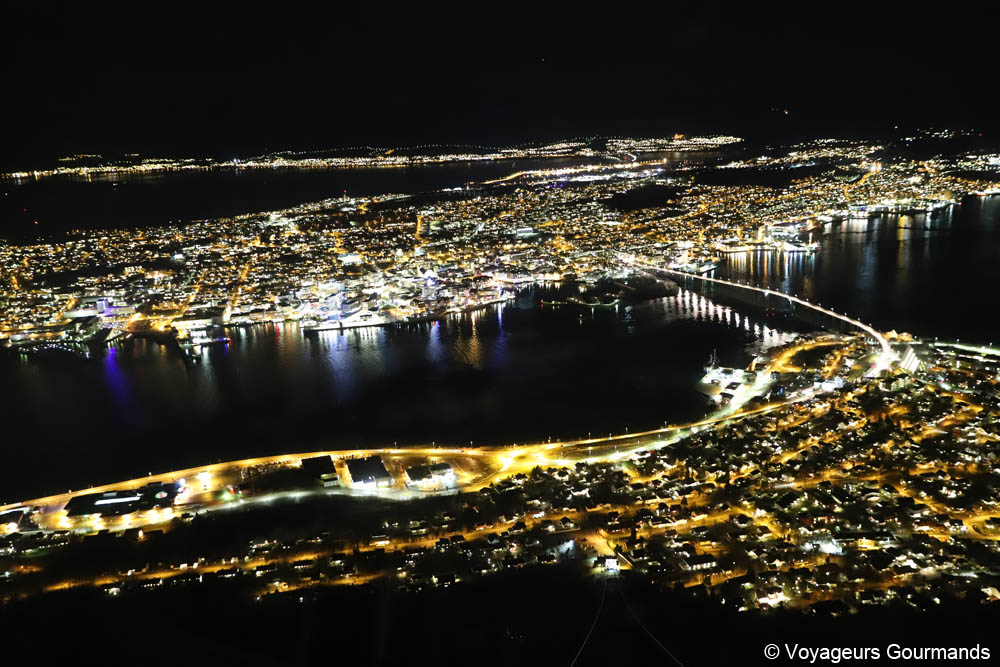
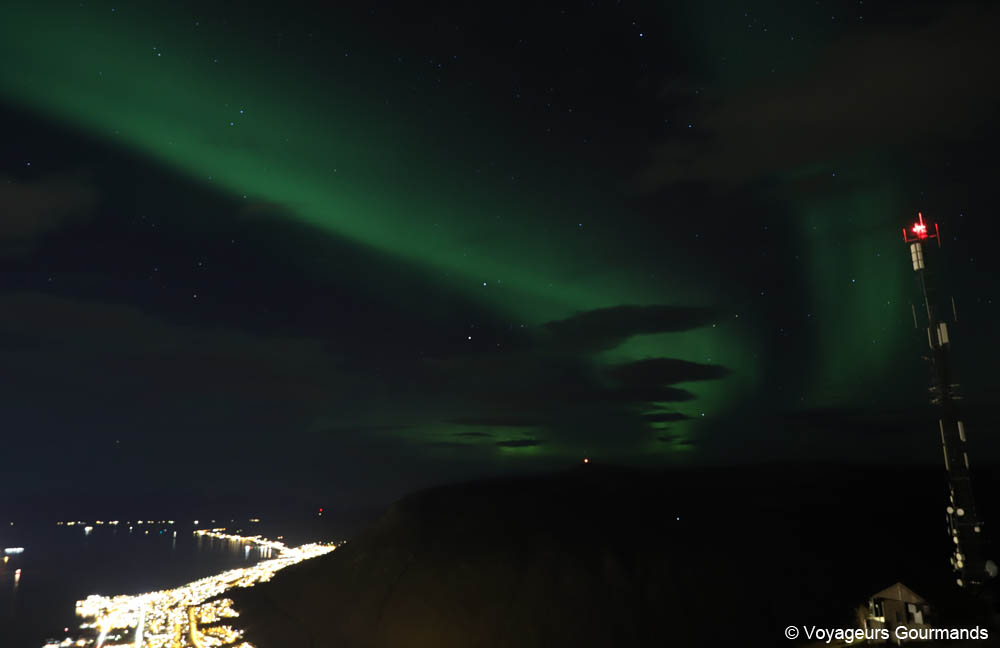
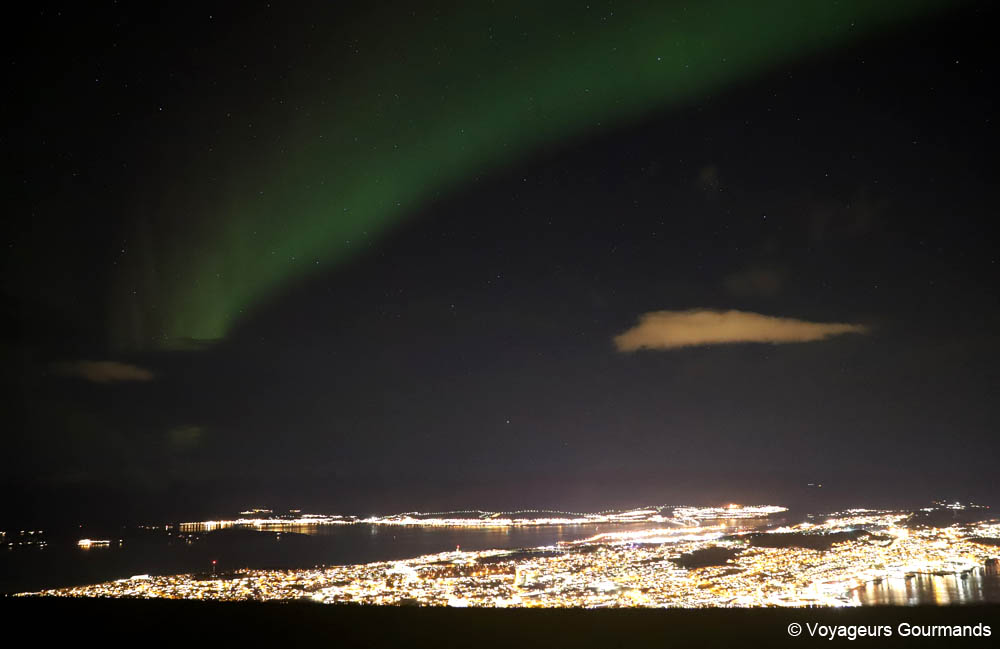
- Fjellheisen: the cable car takes you up to Storsteinen, 421 metres above the city. This is where we saw our very first aurora, with no car and no tour (we tell you all about it just below).
- Telegrafbukta: a small beach at the southern tip of Tromsøya island, reachable on foot or by bus from the centre, with an open view over the sea.
- Prestvannet: a lake perched in the middle of the island, a good twenty-minute walk (uphill!) from the city centre.
- Kvaløya and Ersfjordbotn: on the neighbouring island, around 30 minutes’ drive away, with fjords and mountains as a backdrop.
- Sommarøy: around an hour’s drive west. This is where our guide took us when the sky was overcast everywhere else.
- Lyngen and Skibotn: 1.5 to 2 hours east, an often drier area that guides favour when the coast is cloudy.
- Finland (Kilpisjärvi): around 3 hours’ drive away, the plan B of the most determined guides when the whole of northern Norway is covered.
➺ Without a car, Fjellheisen, Telegrafbukta and Prestvannet are enough on a good night. To go further, you’ll need a vehicle… or a tour.
Hunting on your own or booking a tour?
Both approaches work, and we tried both during our stay in Tromsø.
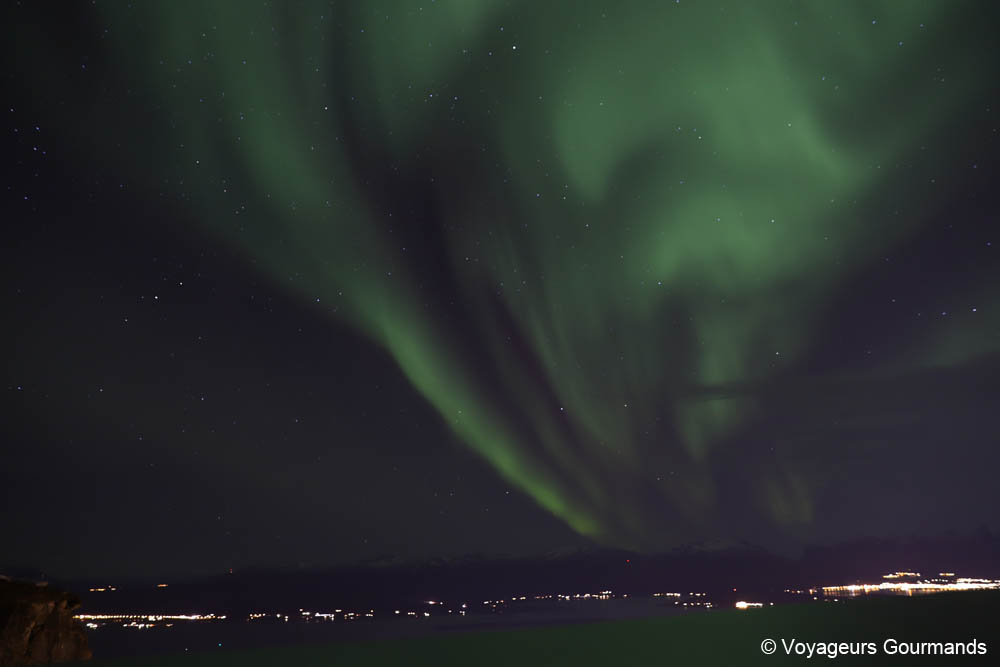
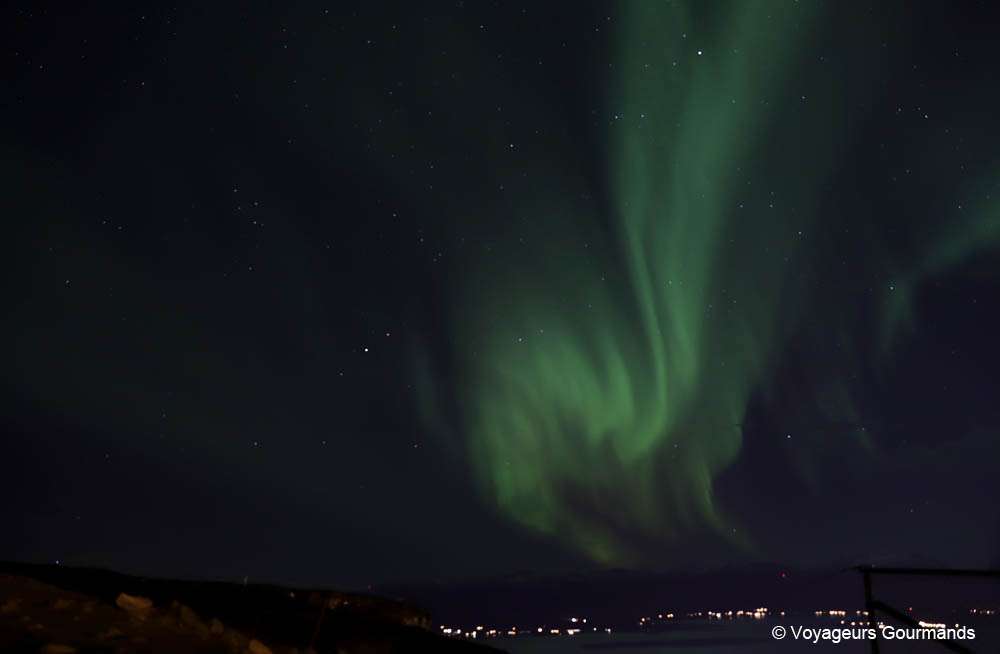
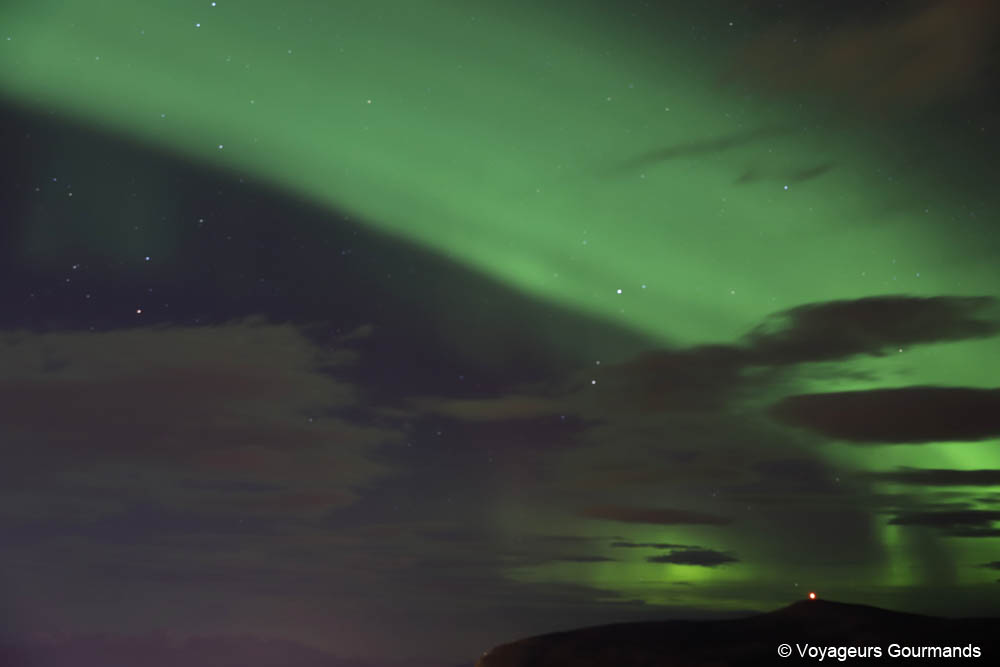
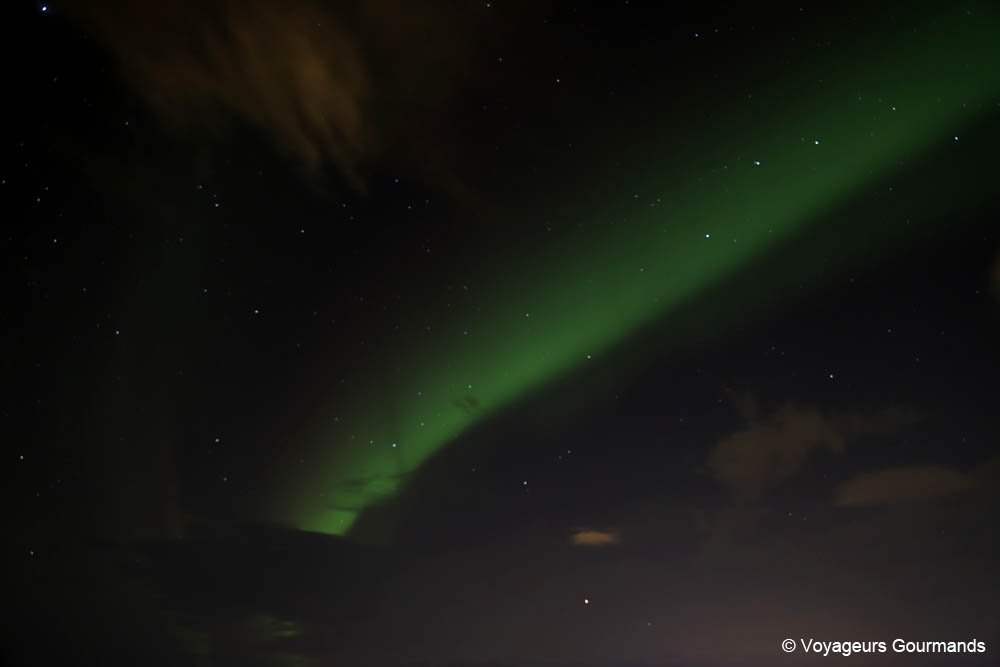
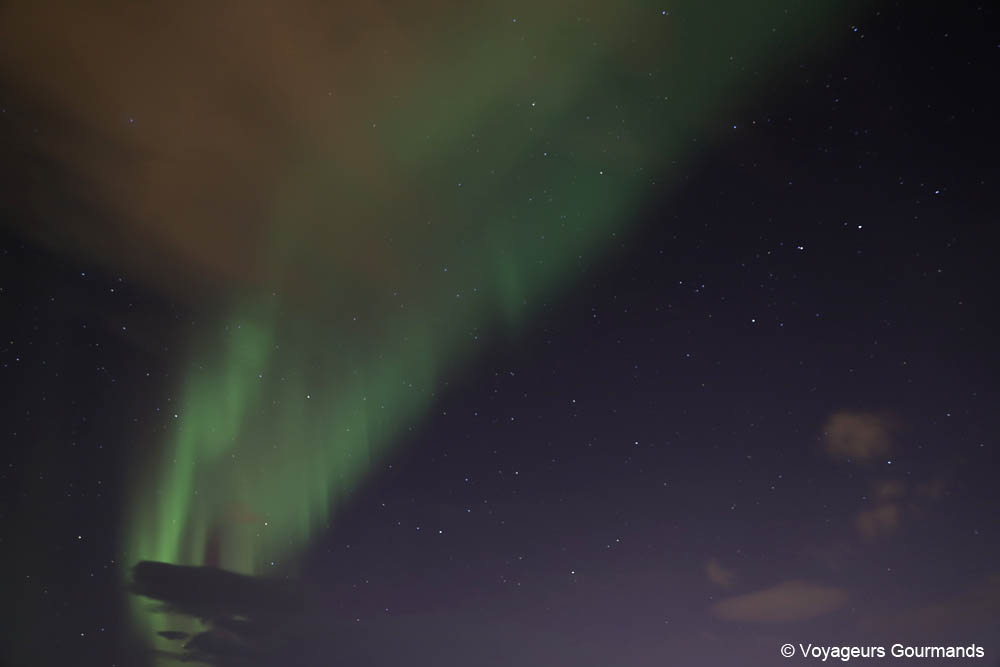
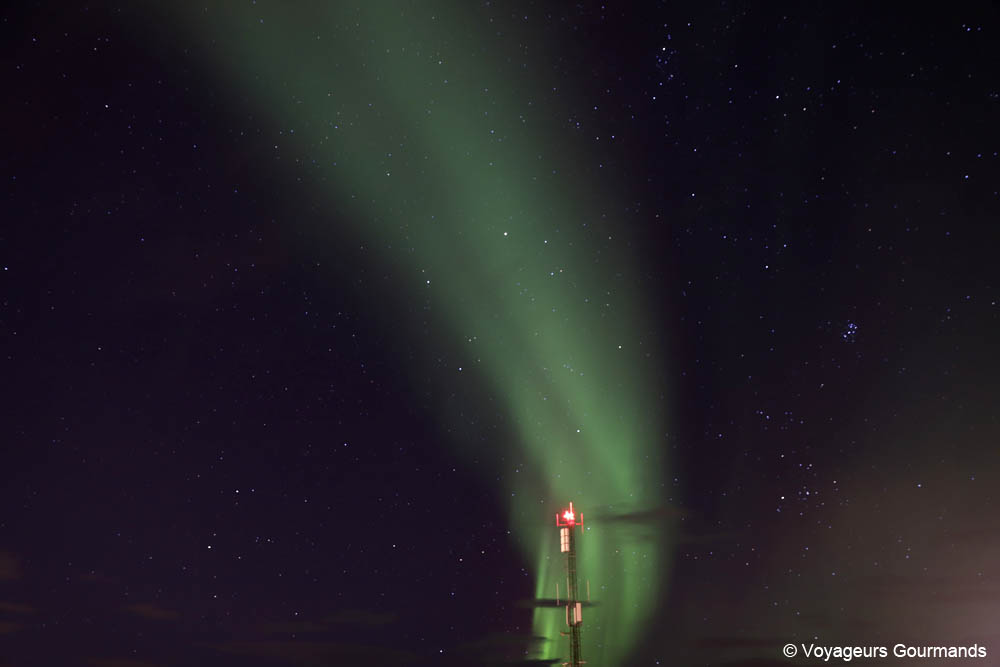
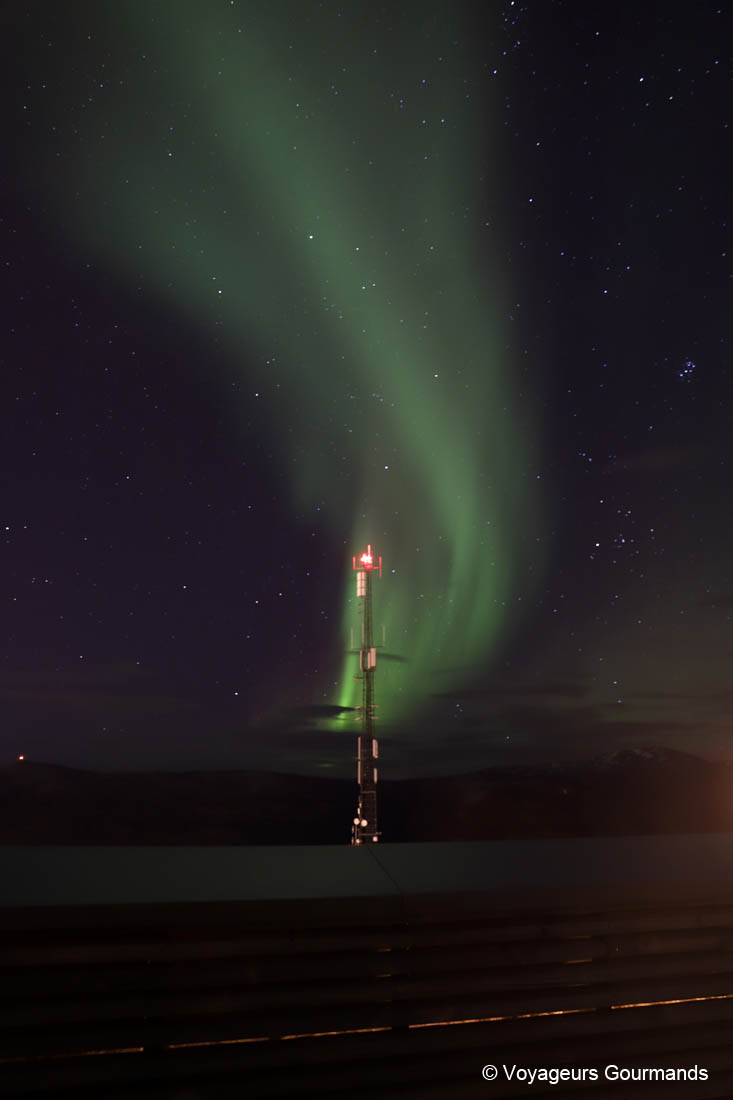
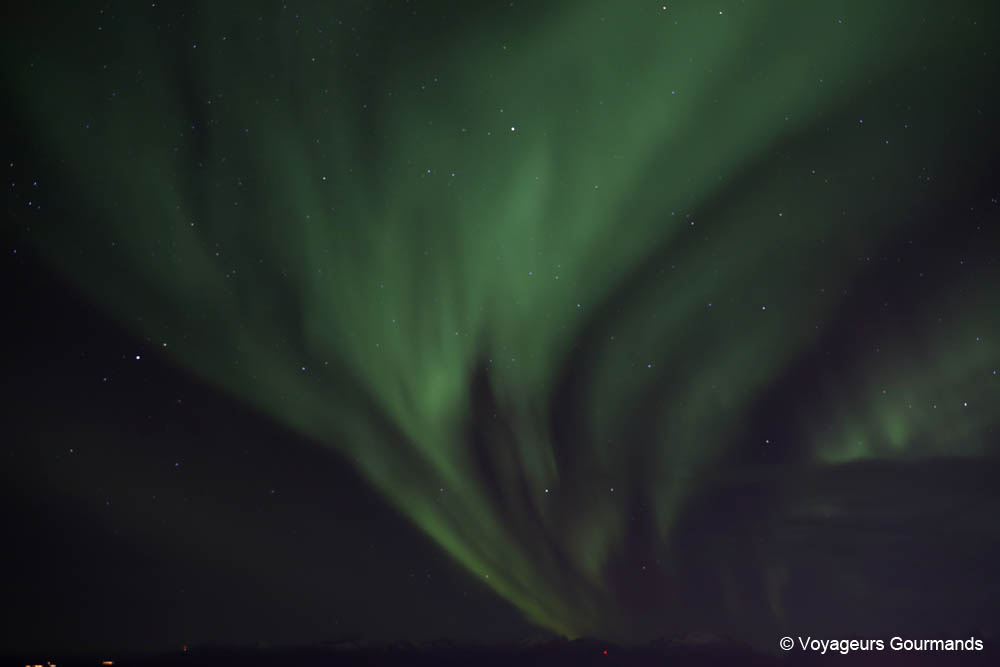
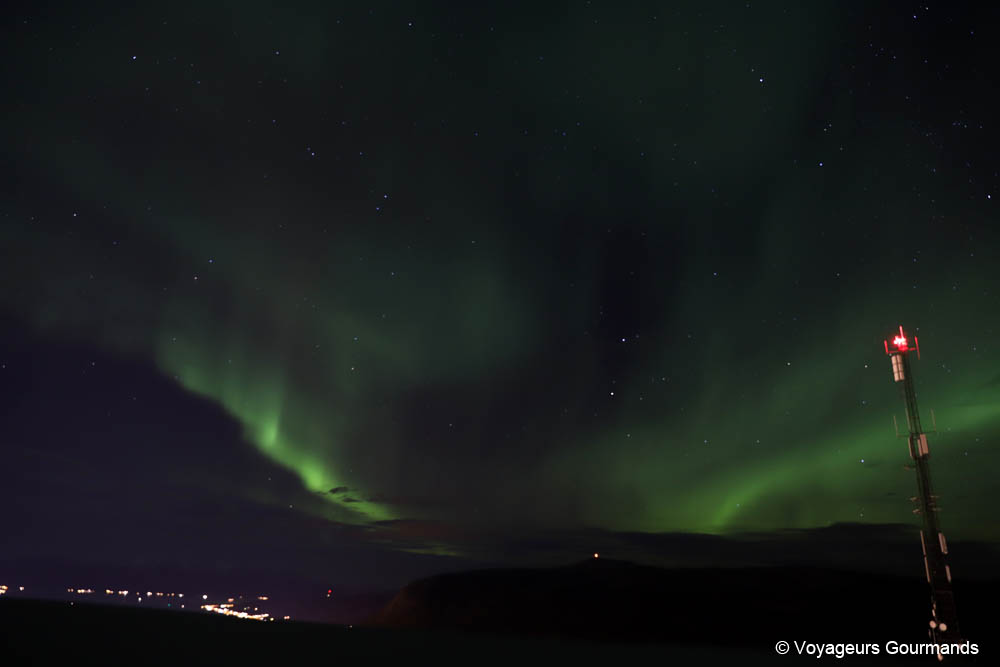
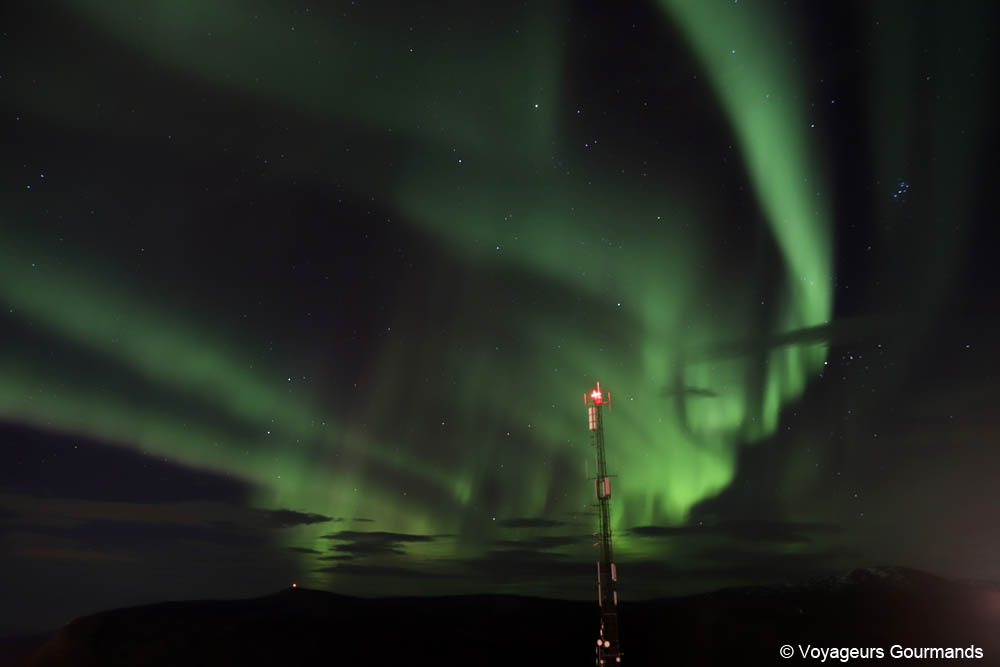
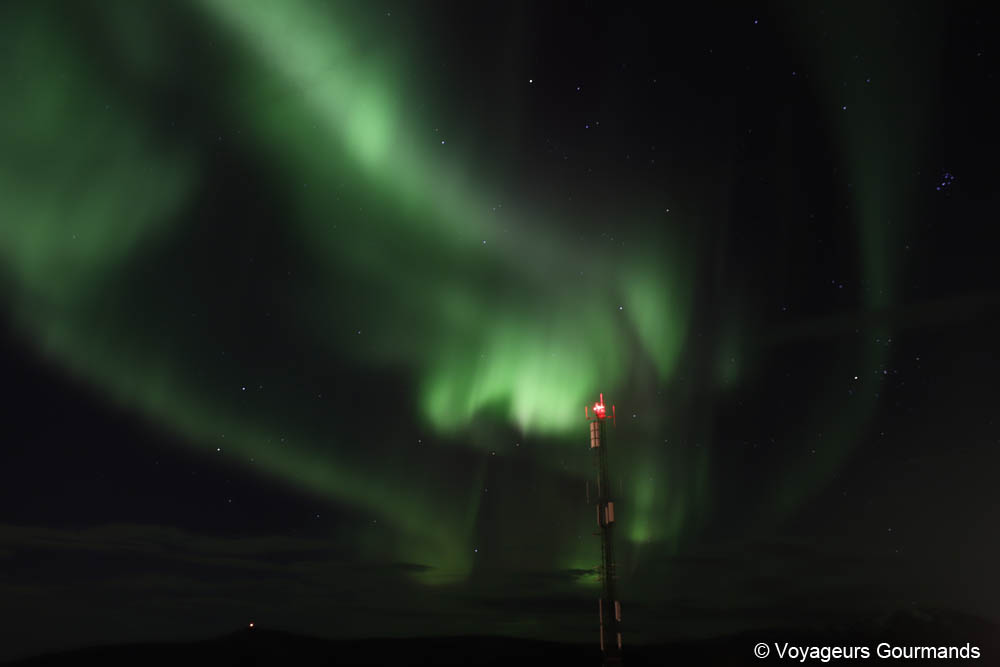
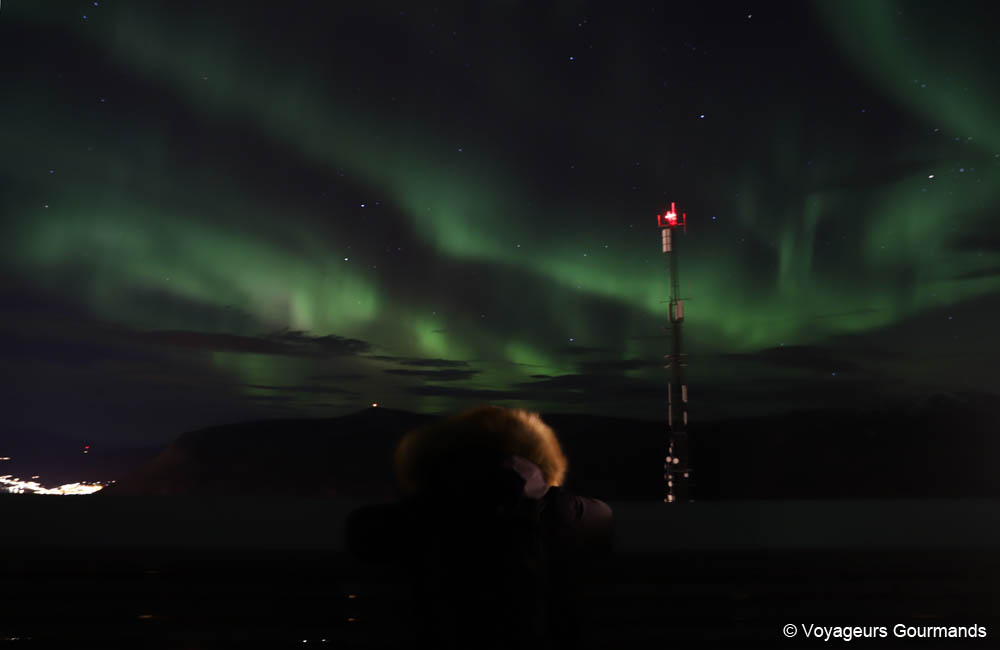
On our own: on the second evening of our stay, the app showed strong activity. We took the Fjellheisen cable car to gain some height and get away from the city lights. When we arrived around 6.30pm, a couple were photographing a whitish cloud… “Is that it?!” We set up the tripod and started shooting. And yes, that was it! After an hour, the intensity went wild, and two hours later we saw our first aurora that really moved. What a show.
With a tour: we had also booked an excursion with Enjoy The Arctic, not knowing we’d end up seeing the aurora from the city. A tour operator follows the forecasts in real time and knows where to find clear skies — a real plus for a first attempt. We paid around €148 per person back then; today, expect around 1,600 NOK (roughly €140) for a minibus chase (we go through the different tours and prices below).
What about elsewhere in Norway?
You can see them in many places across the north of the country: Alta, Andøya, Bodø, Senja, Harstad, Kirkenes, Narvik, Lakselv, the Lofoten Islands, and of course Tromsø. One of our guides strongly recommended Alta, known for particularly intense displays — unfortunately, we didn’t get the chance to try it.
By going on a road trip in Norway, you increase your chances: with a car, you can head to wherever the sky is clear. We were based in Tromsø without a vehicle, which is why we booked a tour for part of our hunt (we tell you about it above).
Which Northern Lights tour to choose in Tromsø?
In Tromsø, there’s a huge choice… and prices are as varied as the tours themselves. Here are the main types of excursion, with prices noted for the current season (they vary depending on the dates, so check when you book):
| 🚌 Tour | 👥 Group | ⏱️ Duration | 💶 Indicative price |
|---|---|---|---|
| Budget bus | Up to 40 people | Around 6.5 hours | From 750 NOK (≈ €65) |
| Large bus with photos | Up to 50 people | 6 to 7 hours | From 1,295 NOK (≈ €110) |
| Small-group minibus | 9 to 16 people | 4 to 8 hours | Around 1,600 NOK (≈ €140) |
| Catamaran cruise | Up to 22 people | 3 hours | Around 2,500 NOK (≈ €215) |
| Camp with dog sledding and snowmobiling | Up to 24 people | Around 10 hours | Around 5,500 NOK (≈ €470) |
💡 Our tip
For a first time, go for a small group with a guide who’s happy to drive a long way to find clear skies. The bus is cheaper, but it can’t go everywhere. And if you’d like to experience it differently, we even slept in a crystal lavvo near Tromsø: the perfect way to watch for the aurora from your bed…
Our experience: hunting the Northern Lights in Tromsø
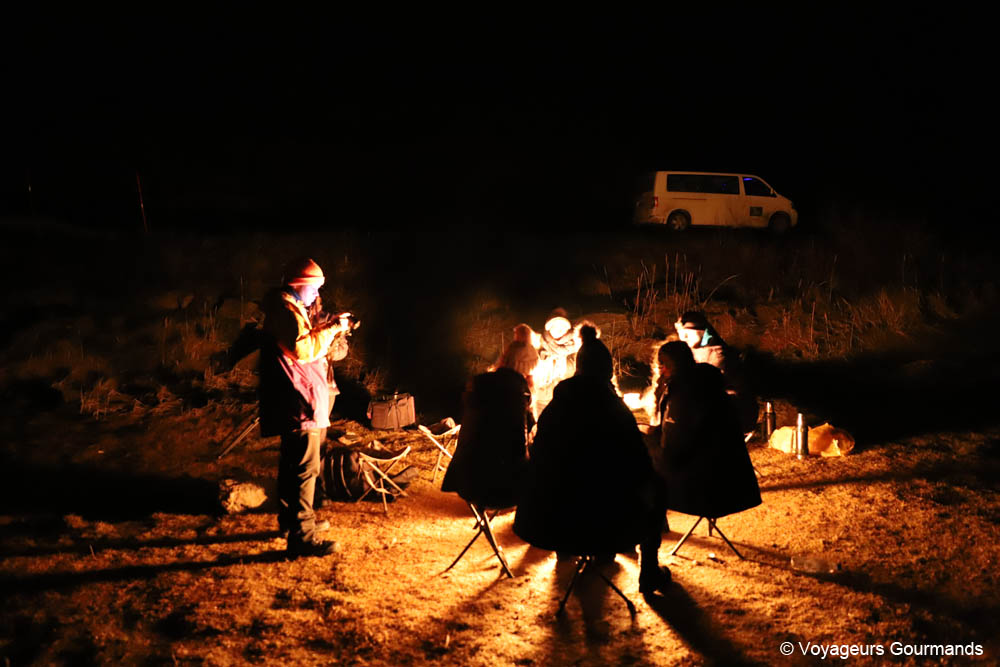
Andrei, our guide, was really great. We had booked for a particular evening, but as activity was zero that day, he suggested moving it to the next day. We met at 6pm in Tromsø city centre and set off at 7pm to chase the aurora.
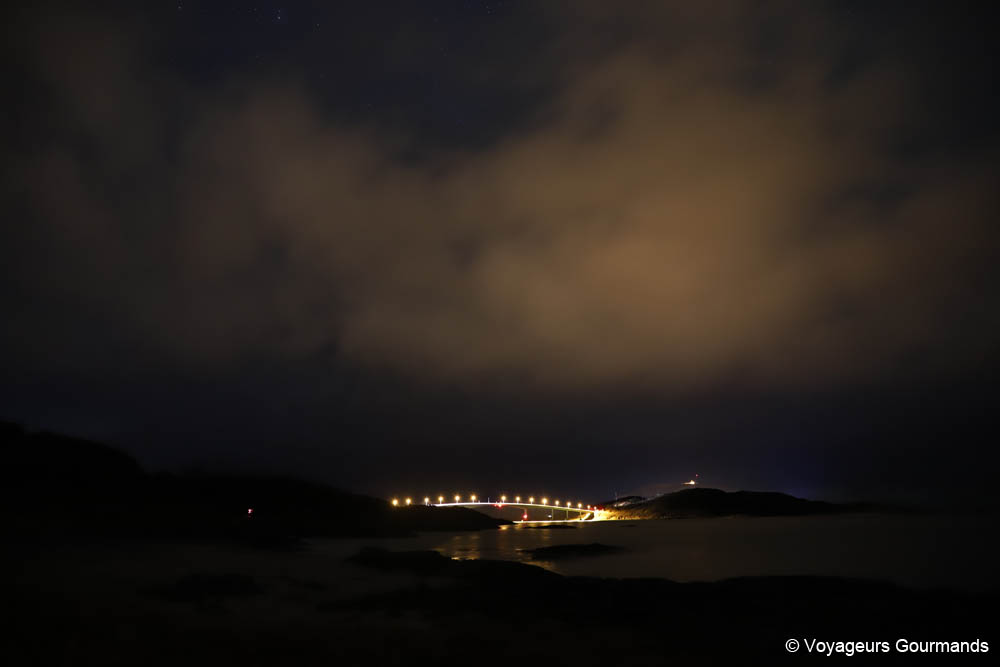
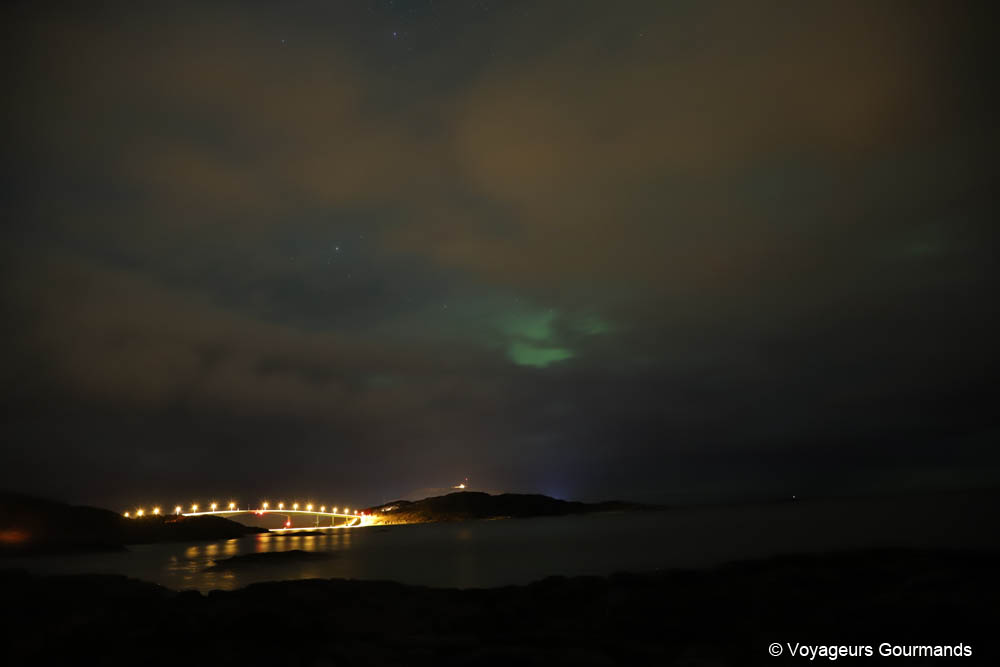
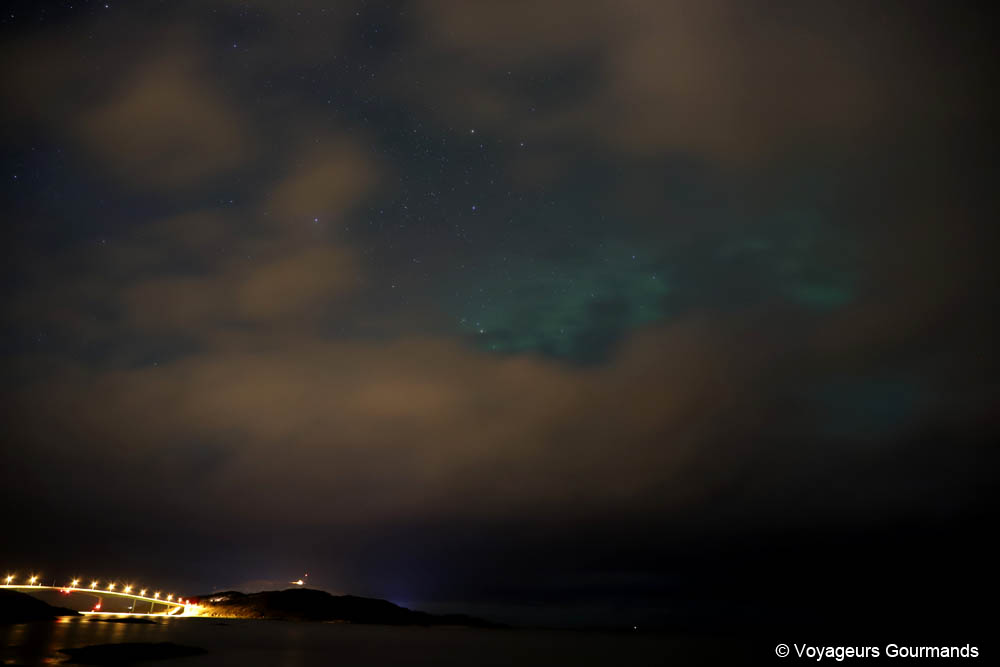
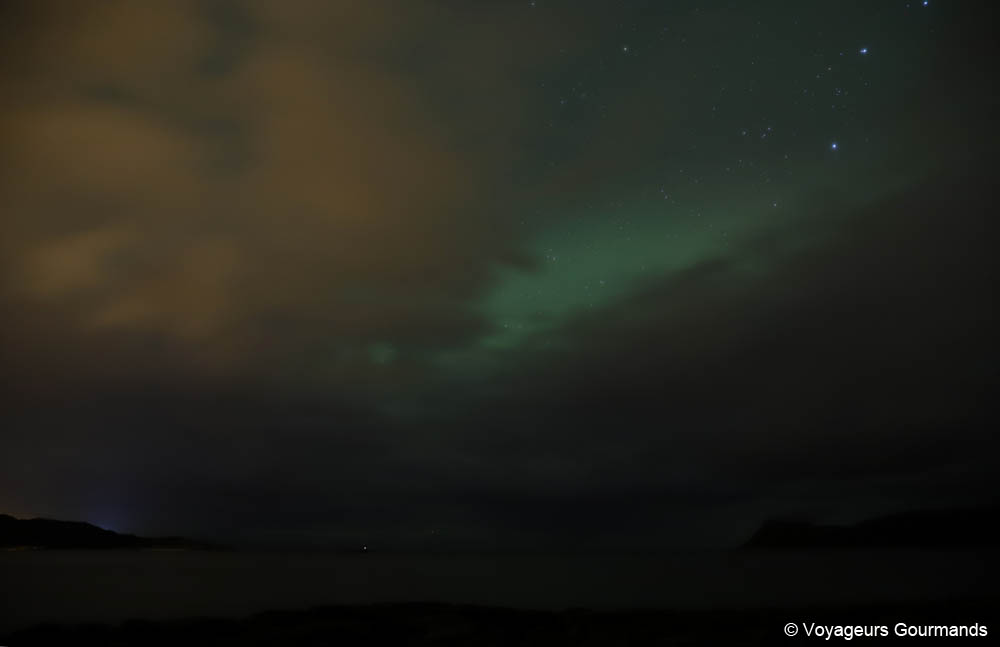
He warned us straight away: lots of cloud, we’d have to drive before seeing anything. Sure enough, we drove for a good hour north of Tromsø… in vain. Clouds everywhere. Andrei stopped regularly to scan the sky. Nothing. “Colleagues” from other companies called him: to the west, the sky was clearing at times. We drove all the way to Sommarøy, our final stop. It was 9pm.
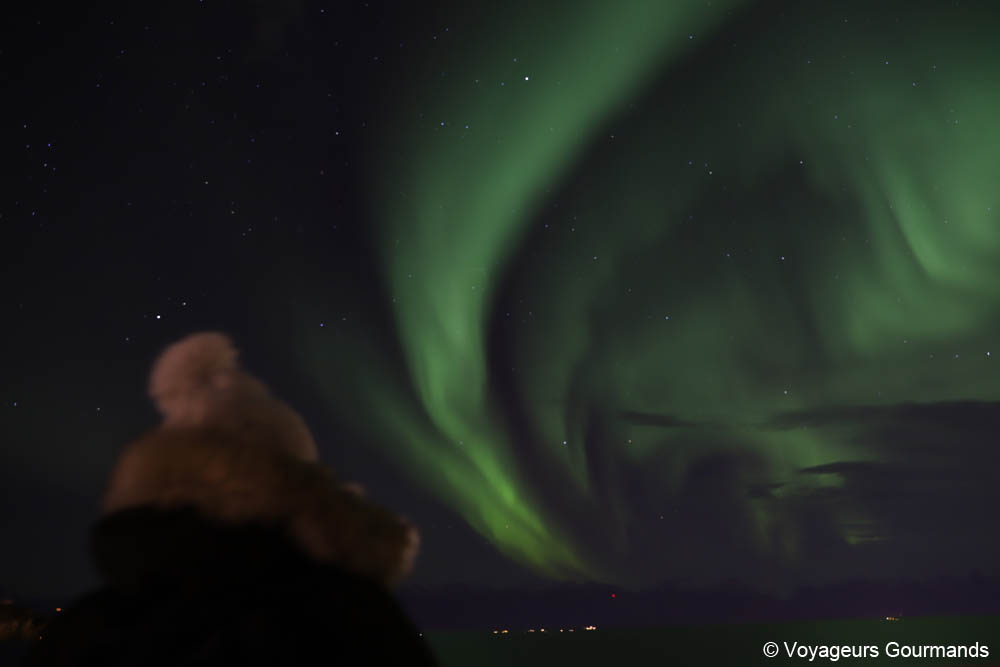
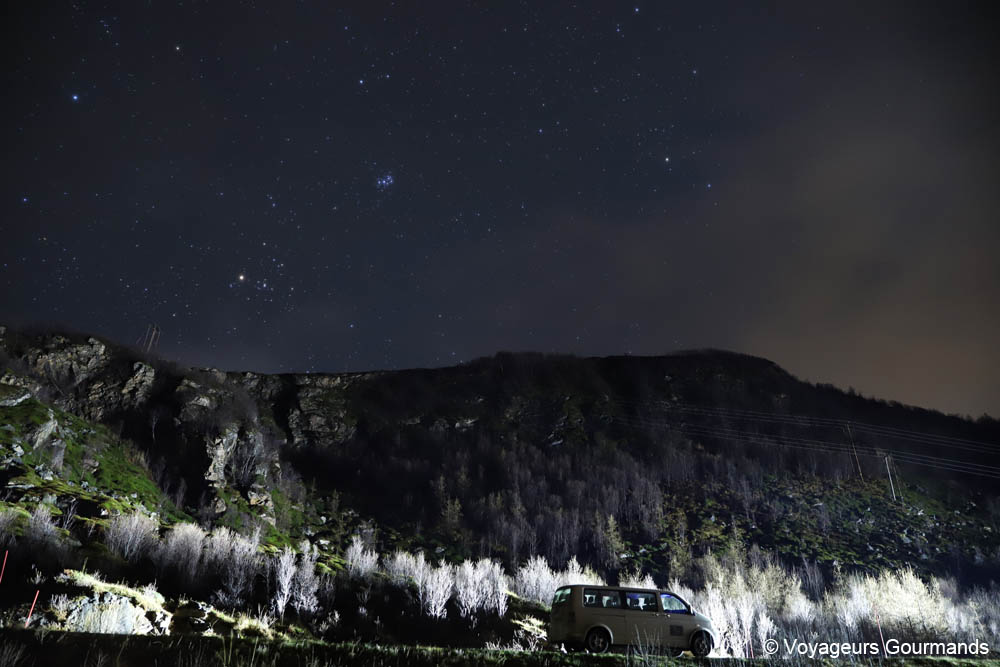
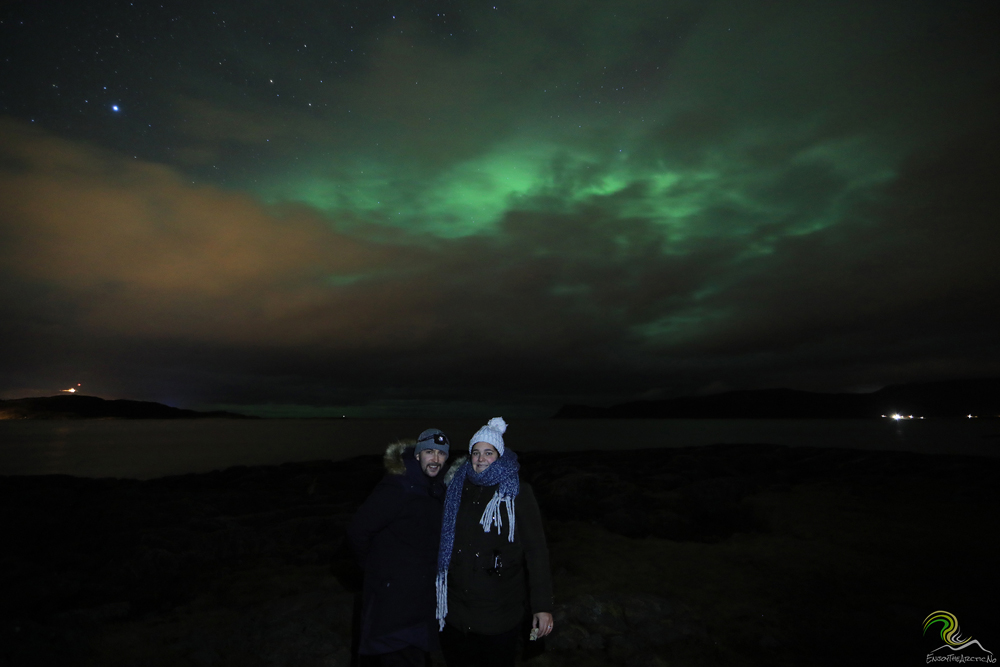
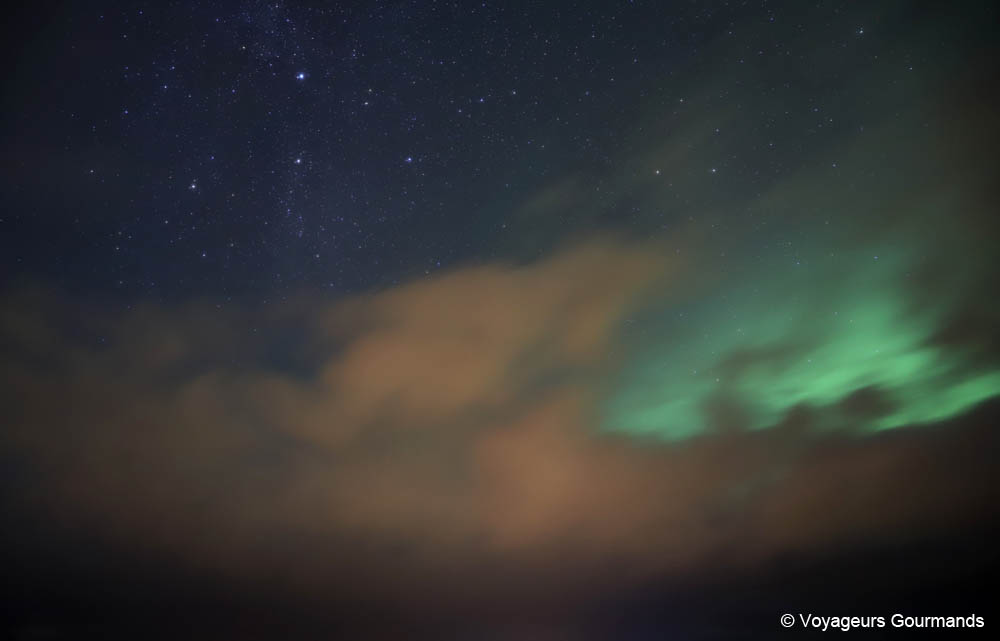
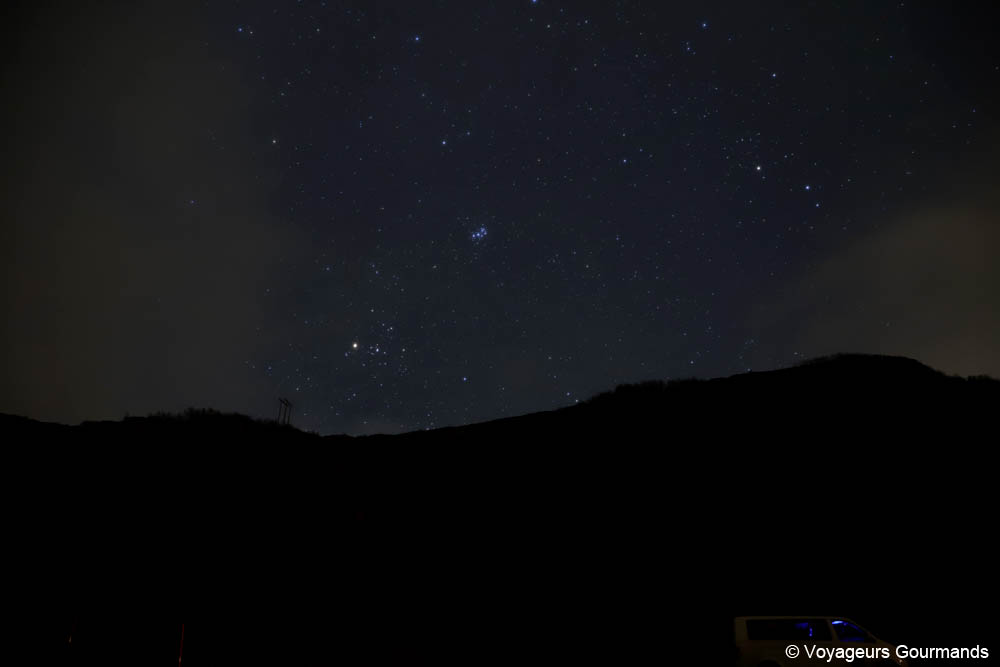
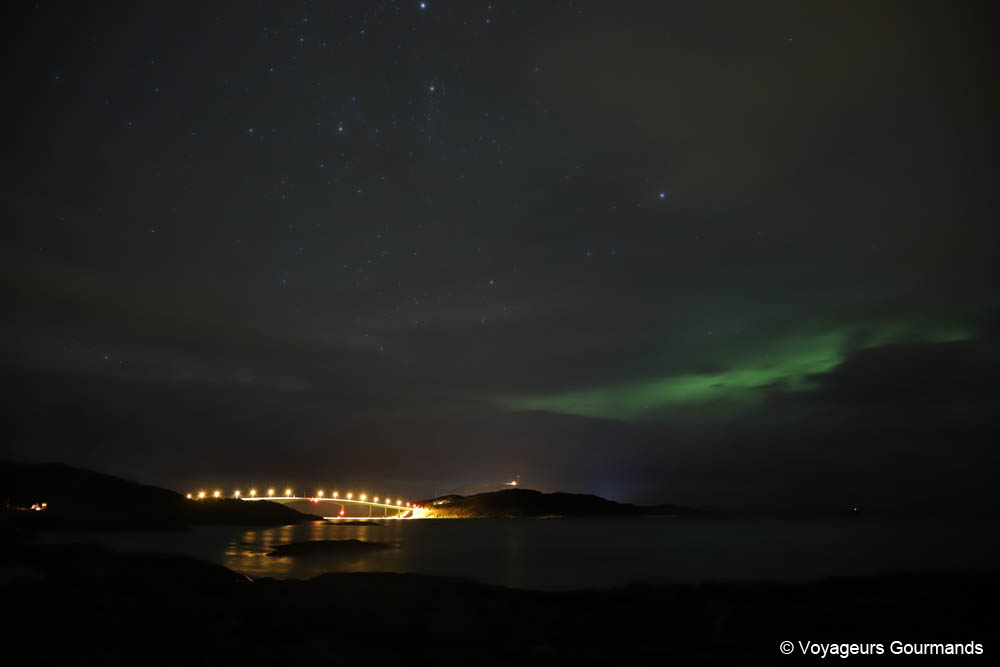
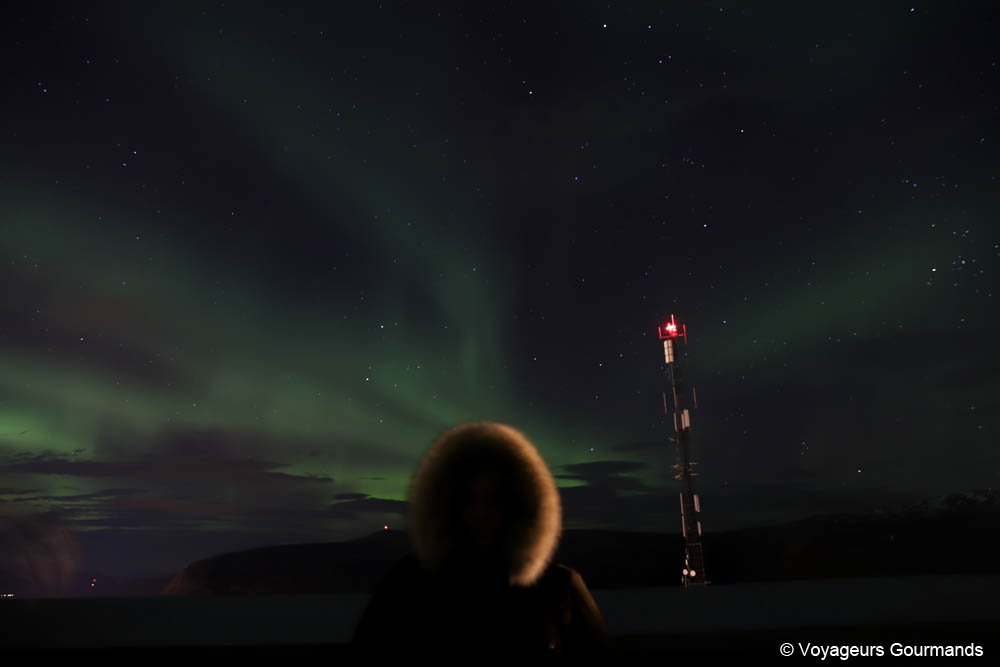
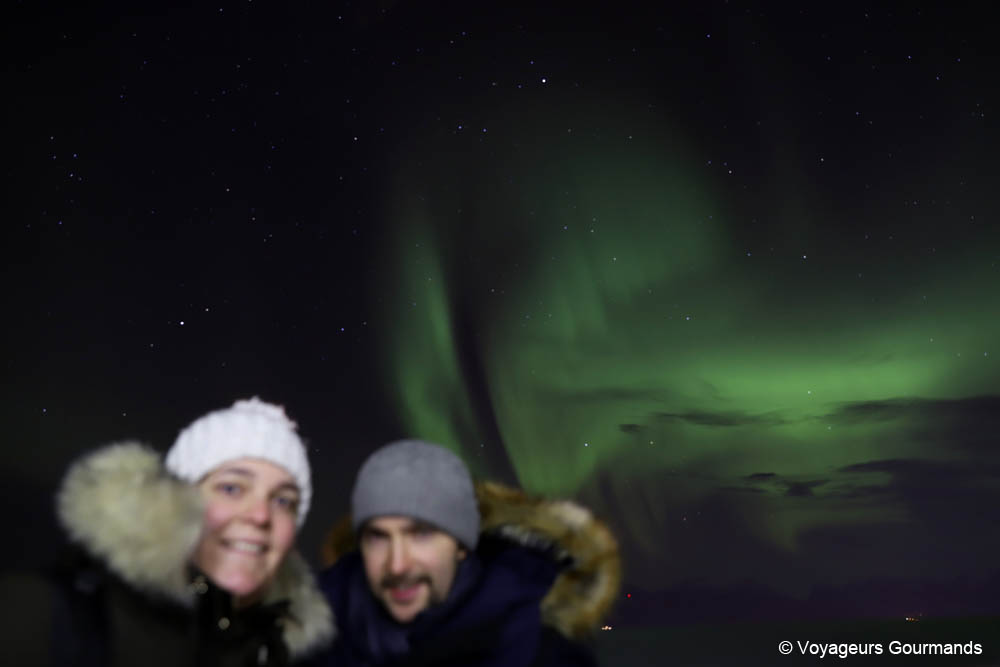
We settled in, Andrei helped us set up our cameras, then got a barbecue going — hot dogs and Norwegian bread, a little taste of the local cuisine along the way. And then we waited. For a long time. The sky stayed cloudy, with a few “baby auroras” barely visible. Then, at last, a few minutes of beautiful Northern Lights, just long enough for Andrei to take our portrait. We also had time to admire a magnificent Milky Way. We headed back around midnight, when nothing more was happening.
What an adventure to see them that night! It had been so easy on the second evening of our stay that we thought it would always be that simple. Well, no: the Northern Lights really are unpredictable. In the end, we were very lucky to see them on 2 nights out of 5.
How to photograph the Northern Lights
If you want to photograph them, here are our tips. We mention this because on our tour, three Australian women had no equipment whatsoever — a shame, because photography really changes the experience.
➺ You don’t necessarily need a DSLR, but your camera must allow manual settings.
➺ A tripod is essential, otherwise your photos will be blurry — a basic rule of night photography, and even more true for the aurora.
➺ Set your camera to manual. If you’re not comfortable with manual settings, practise before you leave: find where the ISO, shutter speed, etc. are. Once there, set the focus to infinity, the ISO to around 2500 and the shutter speed to 10 seconds. Then adjust according to the ambient light and the intensity of the aurora.
➺ Be patient. Our second hunt taught us that: sometimes, the Northern Lights don’t appear all at once.
➺ A little trick to photograph yourself with the aurora: quickly shine a light in front of you during the exposure (for example with your phone torch, drawing an arc). Another tourist showed us this technique when he saw us struggling — thank you!
➺ What about a smartphone? Recent models do very well thanks to night mode. Put your phone on a mini tripod (or wedge it against a rock), turn off the flash, and if you have a pro mode, go for a 3 to 10 second exposure and ISO between 800 and 3200. Avoid zooming, and set the focus to infinity.
What to wear for a Northern Lights hunt in Tromsø?
It’s easy to forget, but a Northern Lights hunt mostly means… a lot of waiting outside, without moving much, in the middle of the night. In midwinter, it’s often between -5 and -10 °C in Tromsø, and inland, where guides go looking for clear skies, temperatures can drop much lower. Here’s what we recommend taking:
- The 3-layer system: a thermal base layer (ideally merino wool), a warm mid layer (fleece or down jacket), then a windproof, waterproof outer jacket.
- A hat, a neck warmer or balaclava, and mittens rather than gloves (keep a pair of thin gloves to handle your camera).
- Warm snow boots and wool socks.
- Ice grips to slip over your shoes: Tromsø’s pavements are often icy.
- Hand and foot warmers, and a spare battery: the cold drains batteries in no time.
💡 Good to know
Most tours lend you a thermal suit, and sometimes boots. Check this when you book.
Northern Lights in Norway: practical tips
➺ Choose your tour operator carefully if you go for an excursion: some companies don’t really make the effort to “chase”. We chose Enjoy The Arctic because we’d read that Andrei sometimes drove all the way to Finland so his clients could see at least one aurora.
➺ A good camera is still very useful — see our settings tips above.
➺ The Northern Lights are unpredictable: it’s best to plan several nights there to give yourself every chance.
➺ All the information about our stay in Tromsø (where to stay, where to eat, full budget) is in our dedicated article. And to plan the rest of your trip, check out all our articles on Norway.
✤✤✤
We saw one of the things we most wanted to see in the world: the Northern Lights in Norway. What a moment, what an experience! We were so moved… And now that we’ve seen them, there’s only one thing on our minds: seeing them again, and again. It’s a phenomenon you never tire of. So, which of you is dreaming of the Northern Lights?

FAQ: your questions about the Northern Lights in Tromsø
Frequently asked questions are here!
When can you see the Northern Lights in Norway?
The season broadly runs from late September to late March, with the polar night from late November to mid-January and good chances around the March equinox. Winter 2026-2027 is also still favourable: the solar cycle is in its declining phase, a period prone to strong geomagnetic storms.
How many days should you plan to see the Northern Lights in Tromsø?
Ideally 4 to 5 nights. The aurora depends on both the weather and solar activity — the more nights you have, the better your chances. With fewer than 3 nights, the risk of leaving without seeing them increases significantly.
Do you need to book a tour to see the Northern Lights?
No, you can perfectly well hunt them on your own, especially by taking the Fjellheisen cable car to gain height and get away from the city lights. That said, an experienced tour operator follows the forecasts in real time and knows where to find clear skies, which is a real advantage when the weather is uncertain.
Can you see the Northern Lights with the naked eye?
Yes, but not always as you’d imagine. A faint aurora often appears to the naked eye as a simple whitish veil, whereas a camera, more sensitive to light, immediately reveals its green colour. Intense displays (KP 4 and above), on the other hand, are spectacular to the naked eye, with vivid colours and clearly visible movement.
How much does a Northern Lights tour in Tromsø cost?
Expect anything from 750 NOK (around €65) for a budget bus to 2,500 NOK (around €215) for a cruise, with a minibus chase costing around 1,600 NOK (around €140). We paid around €148 per person. Find the full breakdown of our budget for visiting Tromsø in our dedicated article.
Where can you see the Northern Lights in Tromsø without a tour?
Without a car, take the Fjellheisen cable car to the top (that’s where we saw our first aurora), or head to Telegrafbukta beach or Prestvannet lake, away from the city lights. With a car, Kvaløya, Ersfjordbotn or Sommarøy offer even darker skies.