


Spending one day in Guimarães means stepping into the birthplace of Portugal. This UNESCO World Heritage city in the north of the country packs a medieval castle, the Palace of the Dukes of Braganza and a beautifully preserved historic center into a compact area, making it an ideal day trip from Porto, just about an hour away.
That said, I have to admit my memories of Guimarães were rather mixed after a first visit more than 10 years ago. So, is Guimarães really worth visiting? We decided to give it a second chance… and we were right to! Despite the scorching heat, we loved rediscovering this charming city.
What are the best things to do in Guimarães in one day, and which must-sees shouldn’t you miss? In this guide, we share our one-day Guimarães itinerary, our tips for planning your visit and our favorite spots to make the most of the city.
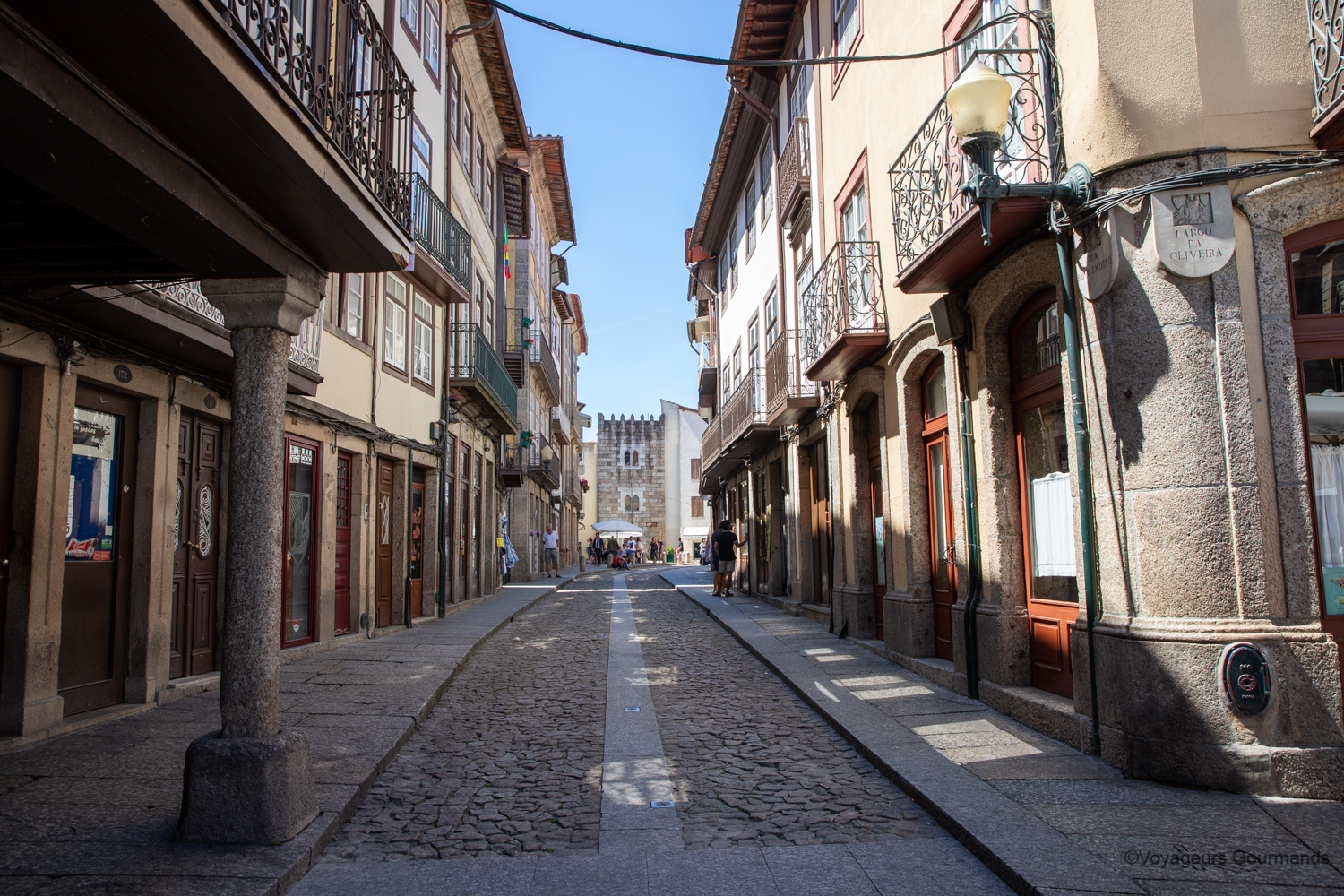
✤✤✤
Guimarães, the birthplace of Portugal
Guimarães is a Portuguese city located in the northern region of the country, about 55 km from Porto and close to Braga. It is a stop that easily fits into a road trip in Portugal or a loop through the north. It played a very important role in the creation of the country and is now considered the “birthplace of Portugal”.
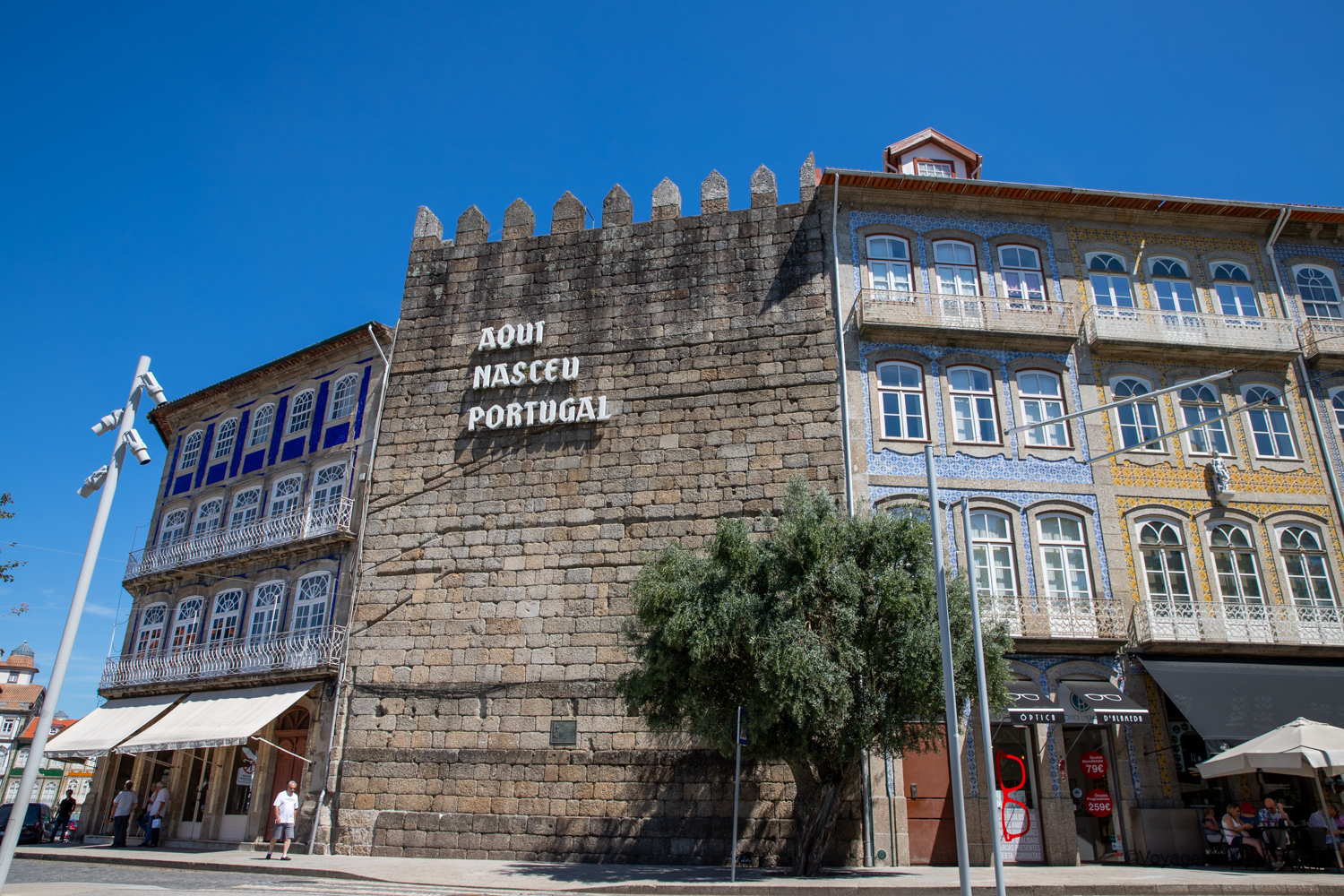
Indeed, in 1128, it was here that some of the main military and political events took place that led to the nation’s independence and the birth of the country as a nation in its own right. In fact, on one of the city’s old towers, you can find the inscription Aqui Nasceu Portugal: Portugal was born here. The historic center of Guimarães has been listed as a UNESCO World Heritage Site since 2001.
Visiting Guimarães in one day: our itinerary
Most of Guimarães’ must-see sights are concentrated in the historic center and are easy to explore on foot. For a first visit, here is the itinerary we recommend:
- Morning: start with Guimarães Castle, the São Miguel do Castelo Chapel, and the Palace of the Dukes of Braganza, all located in the same area.
- Noon: head to the historic center for lunch and enjoy the atmosphere of Largo da Oliveira and Praça de Santiago.
- Afternoon: wander through the medieval streets, discover the churches, and end at the Nossa Senhora da Penha Sanctuary to enjoy the view over the city.
So one day is enough to discover Guimarães’ main sights, although spending a night there allows you to enjoy its evening atmosphere even more.
What to do in Guimarães?
The city mainly has many religious and historical sites to visit. We also loved getting lost in its streets and its lively squares with plenty of café terraces. The city also has a few museums and regularly hosts cultural events.
Aqui Nasceu Portugal
After parking our car, we quickly arrived in front of one of the symbols of Guimarães that I mentioned in the introduction. The tower of the old city wall where you can read the famous inscription “Aqui Nasceu Portugal“. This inscription is a tribute to the events of 1128. Just to the right, don’t miss the café Sabor Cremoso; you’ll find the best pastéis in town there!
Guimarães Castle
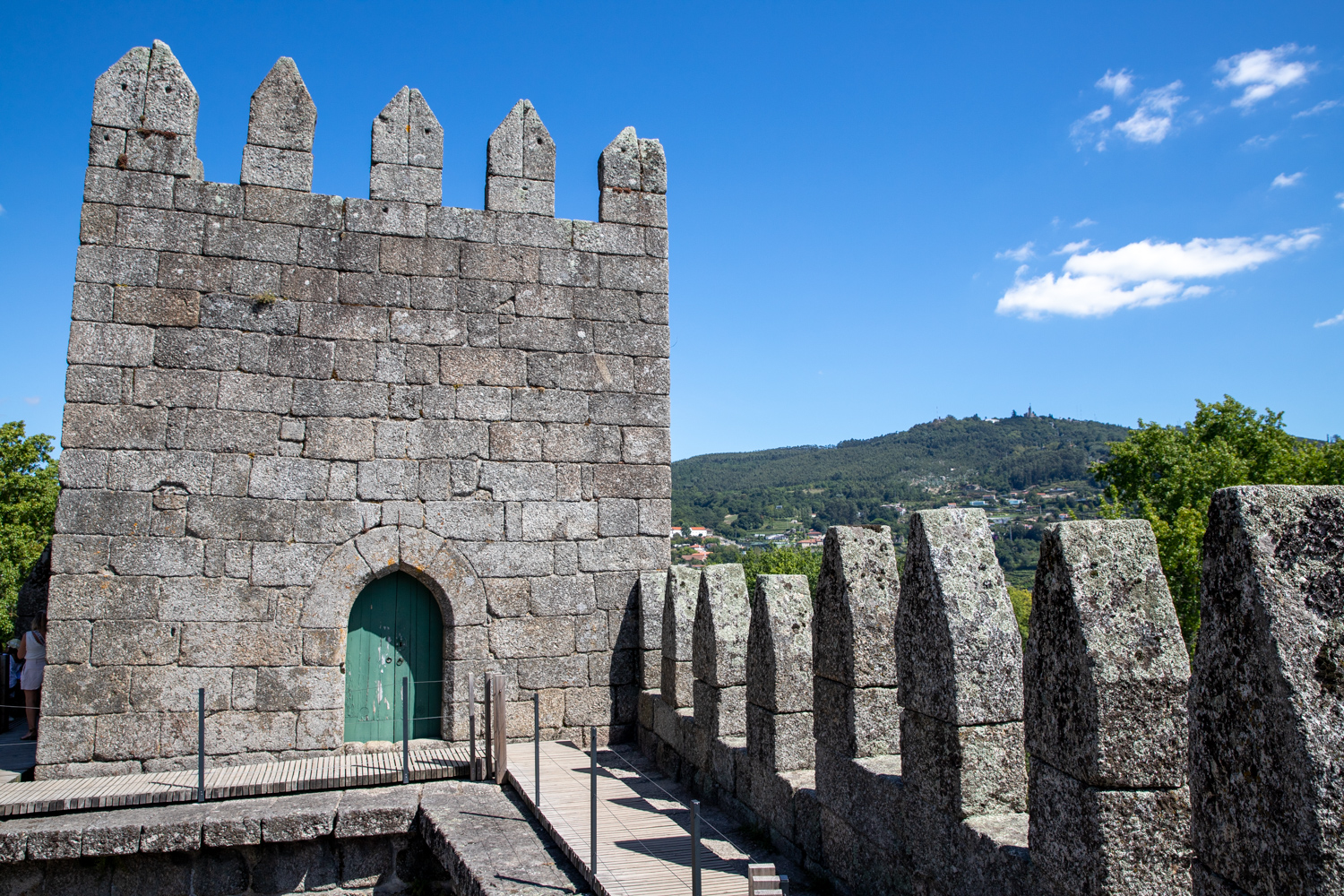
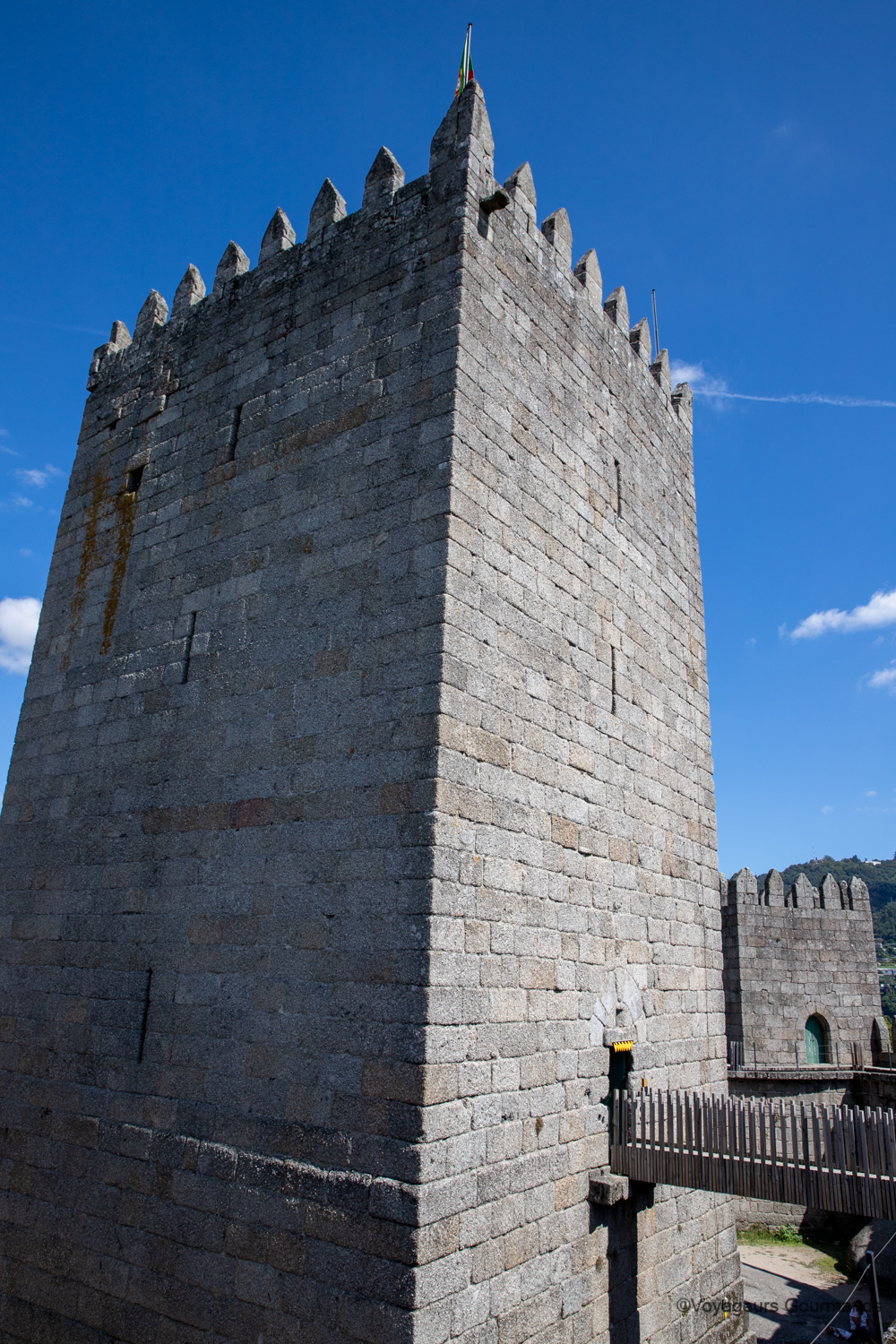
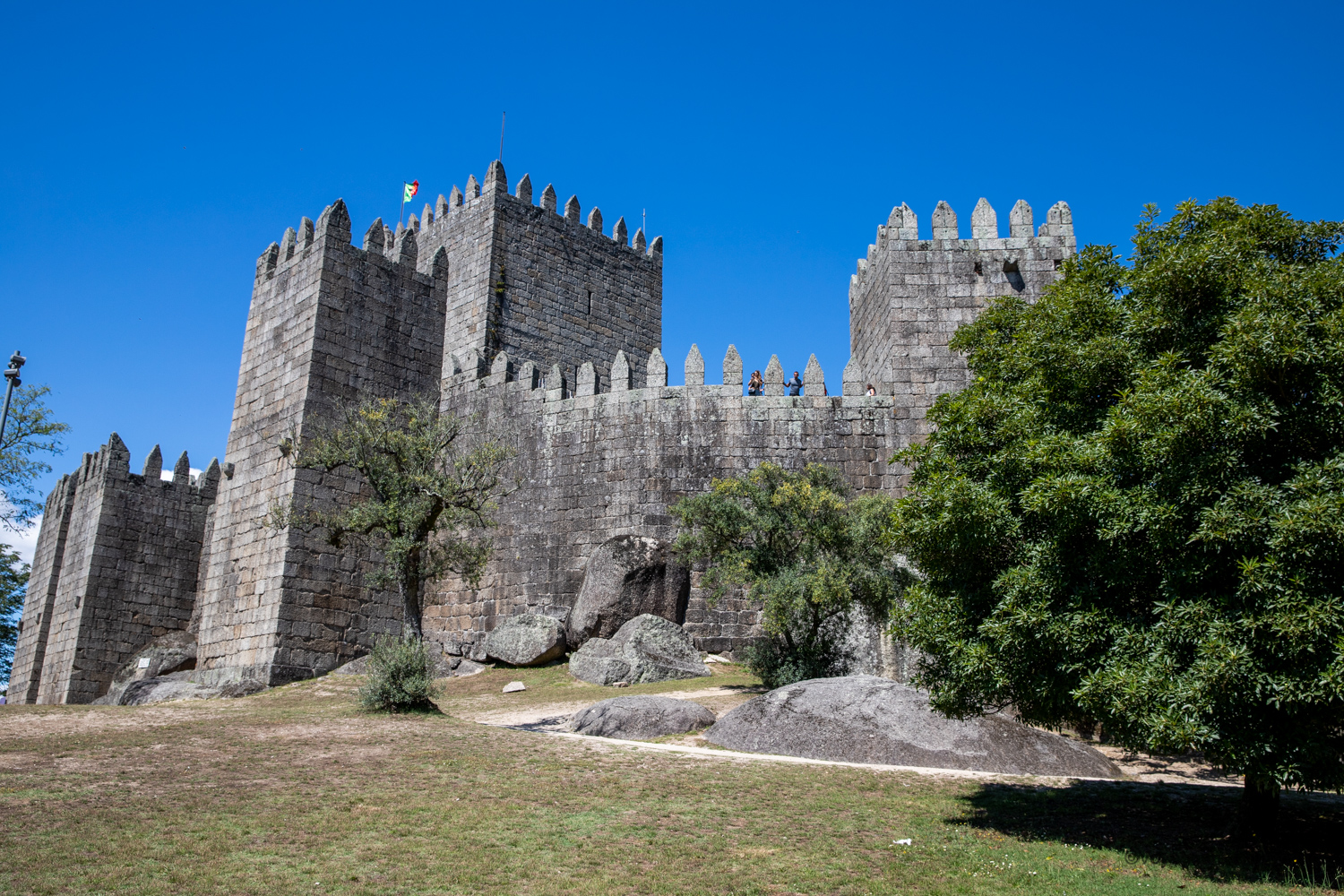
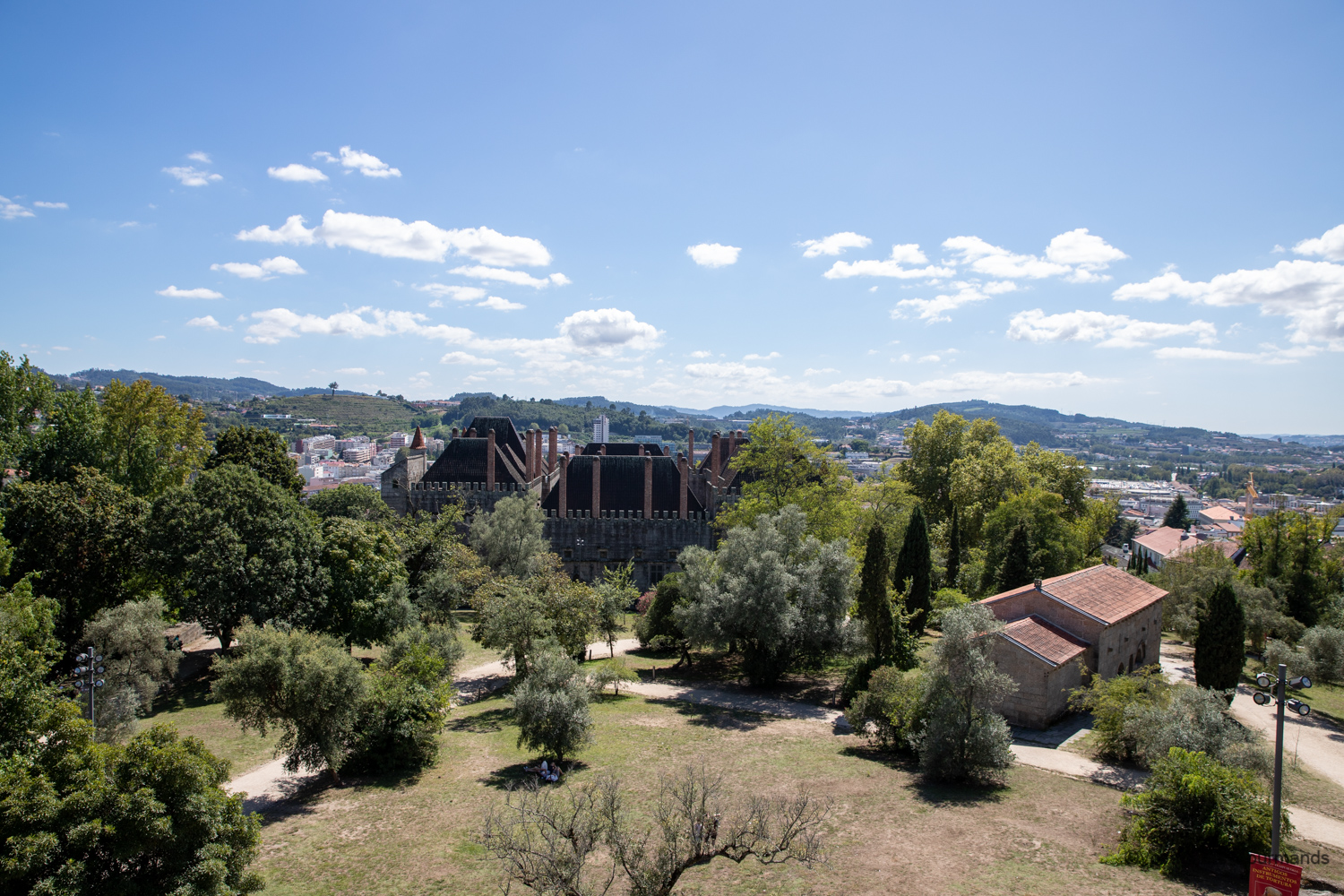
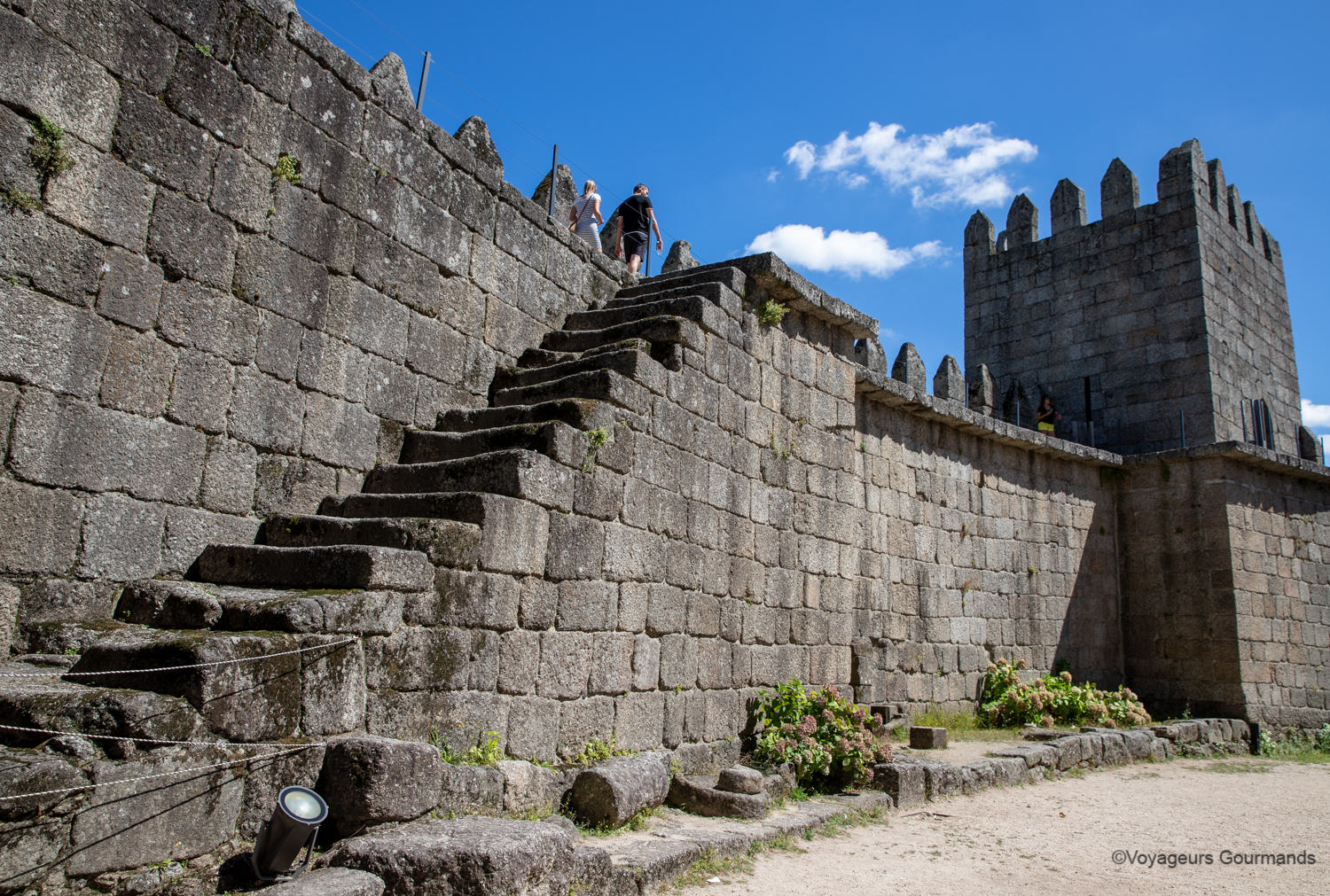
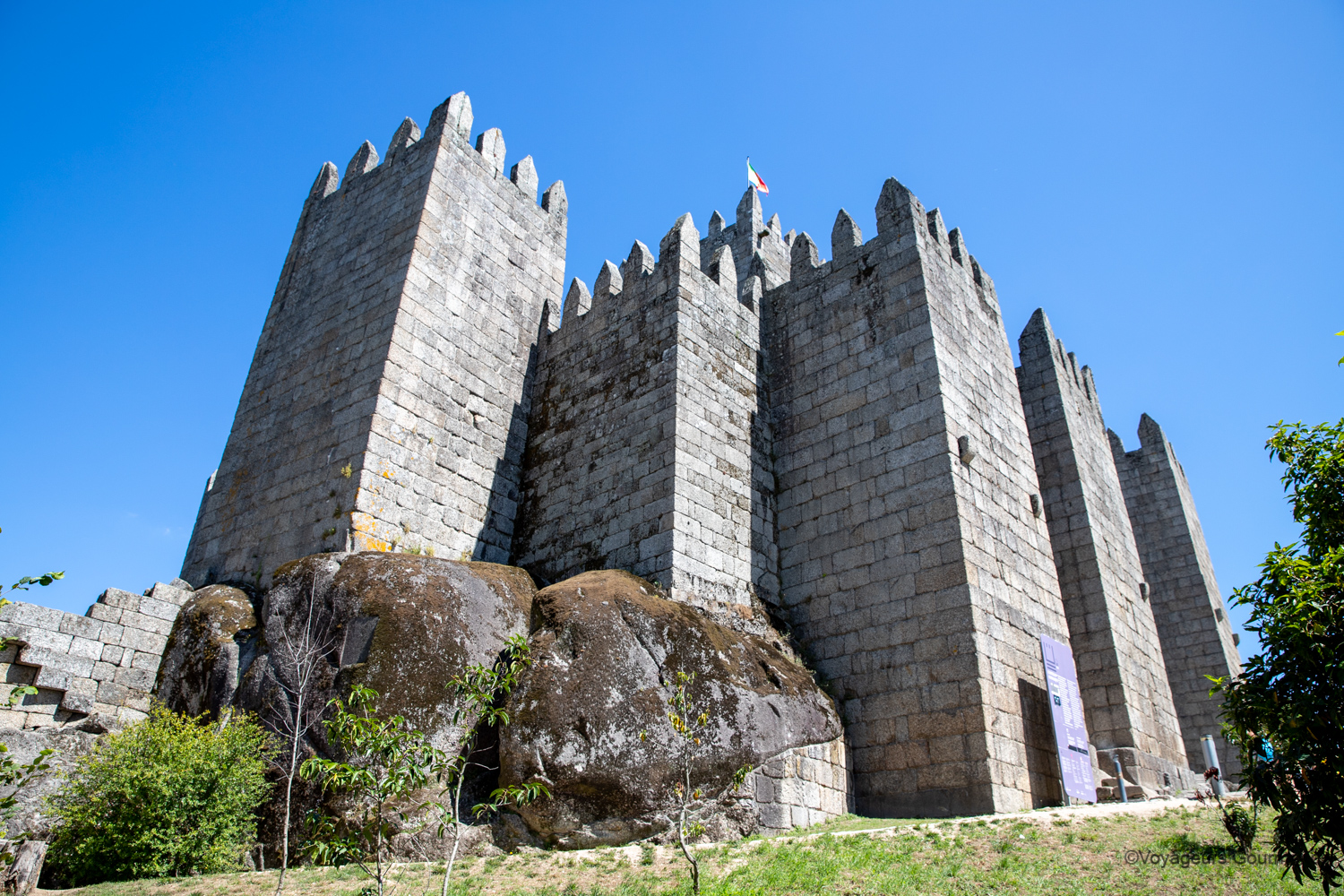
Guimarães Castle is a medieval fortified castle that is also very important in the country’s history. Indeed, it was inhabited by the first Portuguese king, Afonso I. It also served to protect the Christian community from Moorish invasions. Listed as a national monument, it can be visited, which is what we did! The building is really well preserved, and the 360° views are truly lovely (over the Palace of the Dukes of Braganza, the city, Penha…).
São Miguel do Castelo Chapel
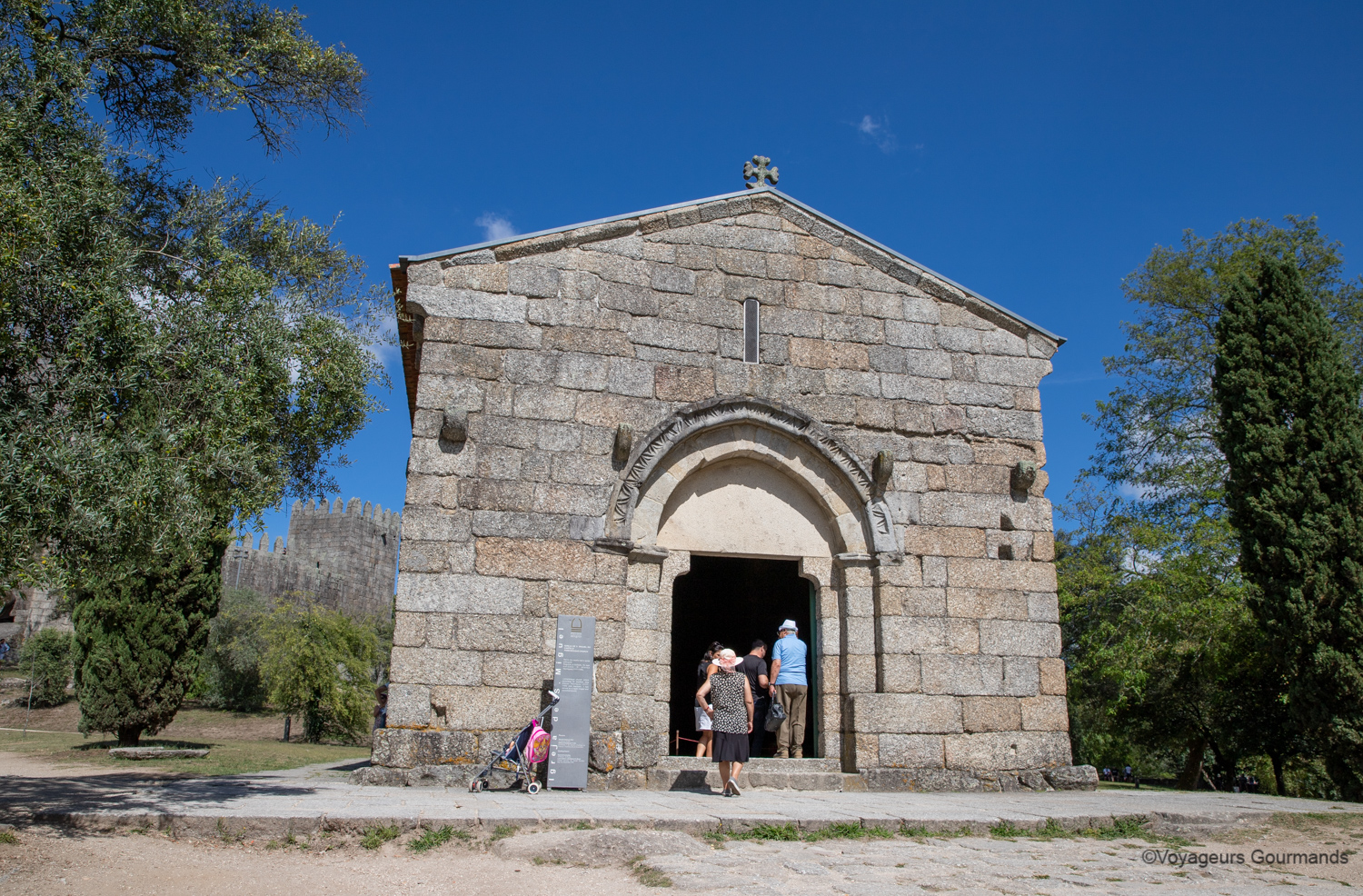
As you leave Guimarães Castle, you’ll come face to face with this small chapel, where the first Portuguese king is said to have been baptized! The interior is really very simple.
Palace of the Dukes of Braganza
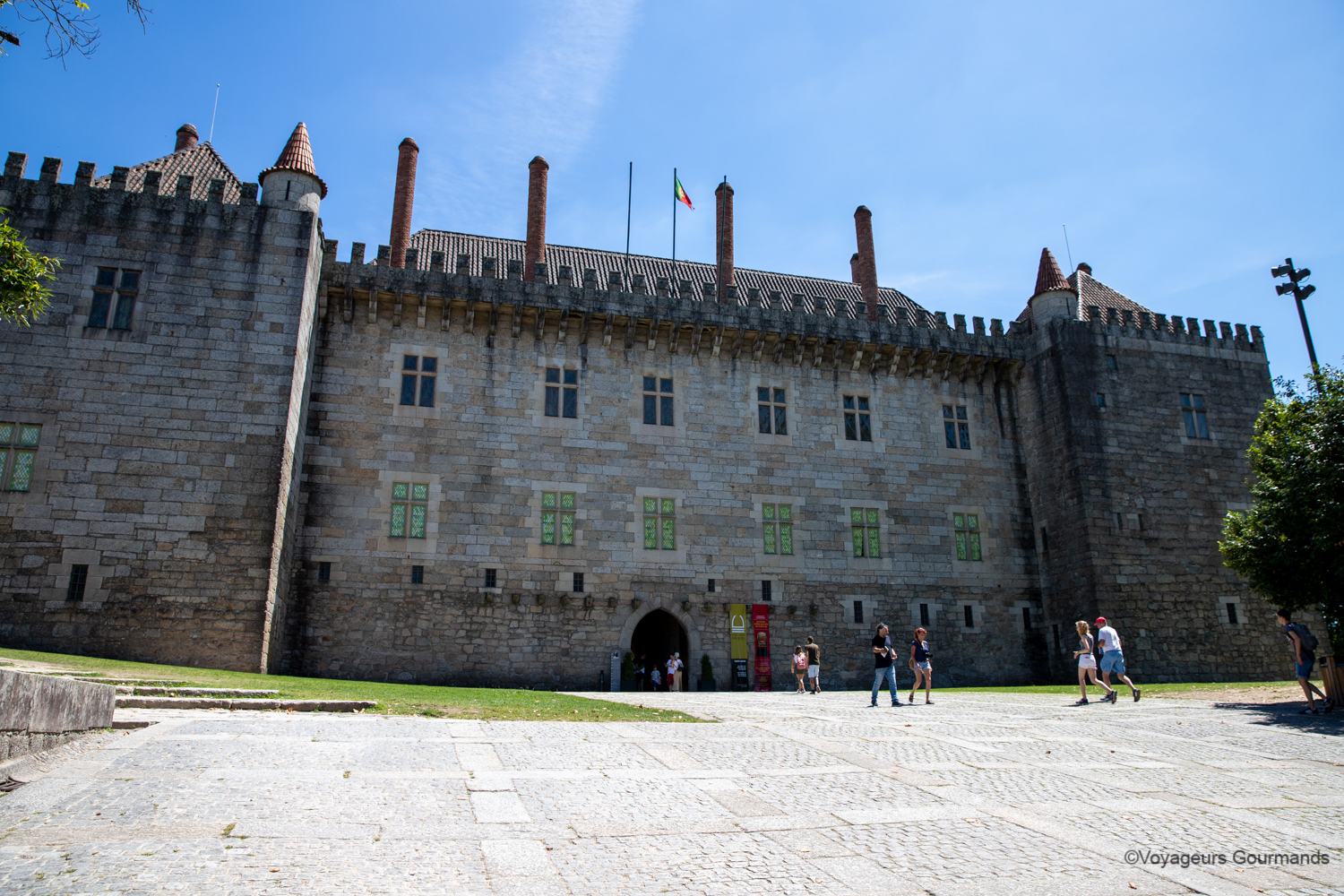
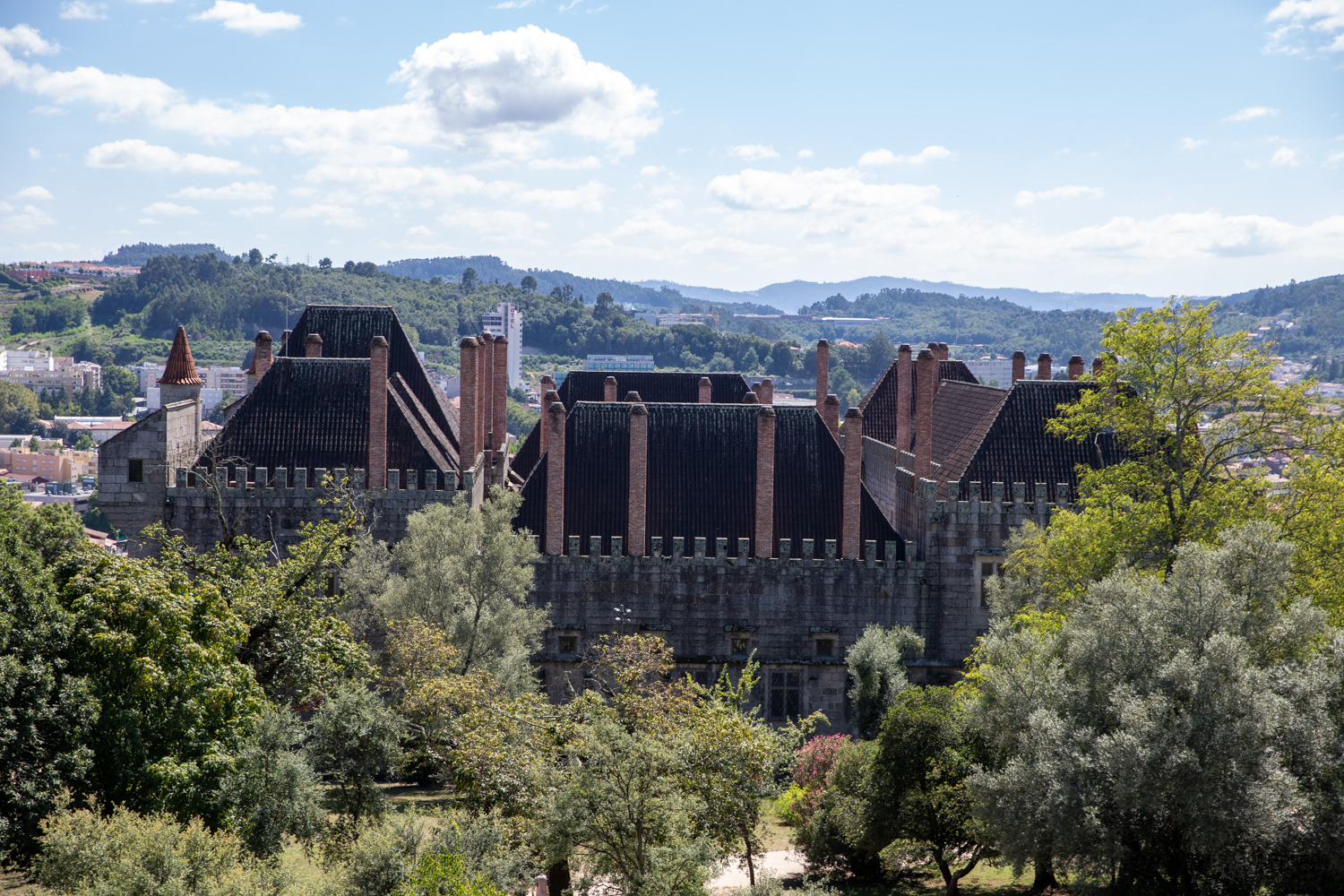
Not far from Guimarães Castle is the Palace of the Dukes of Braganza (Paço dos Duques de Bragança). Located in a wooded park, it is one of the city’s must-sees! Built in the early 15th century, the palace, its gardens, and its museum can be visited. I admit that with the heat that day, we eventually gave up on the idea of visiting it, but it’s only postponed!
Today, in addition to being a tourist attraction, the palace serves as the official residence when the Portuguese president is in the area!
Nossa Senhora do Carmo Church
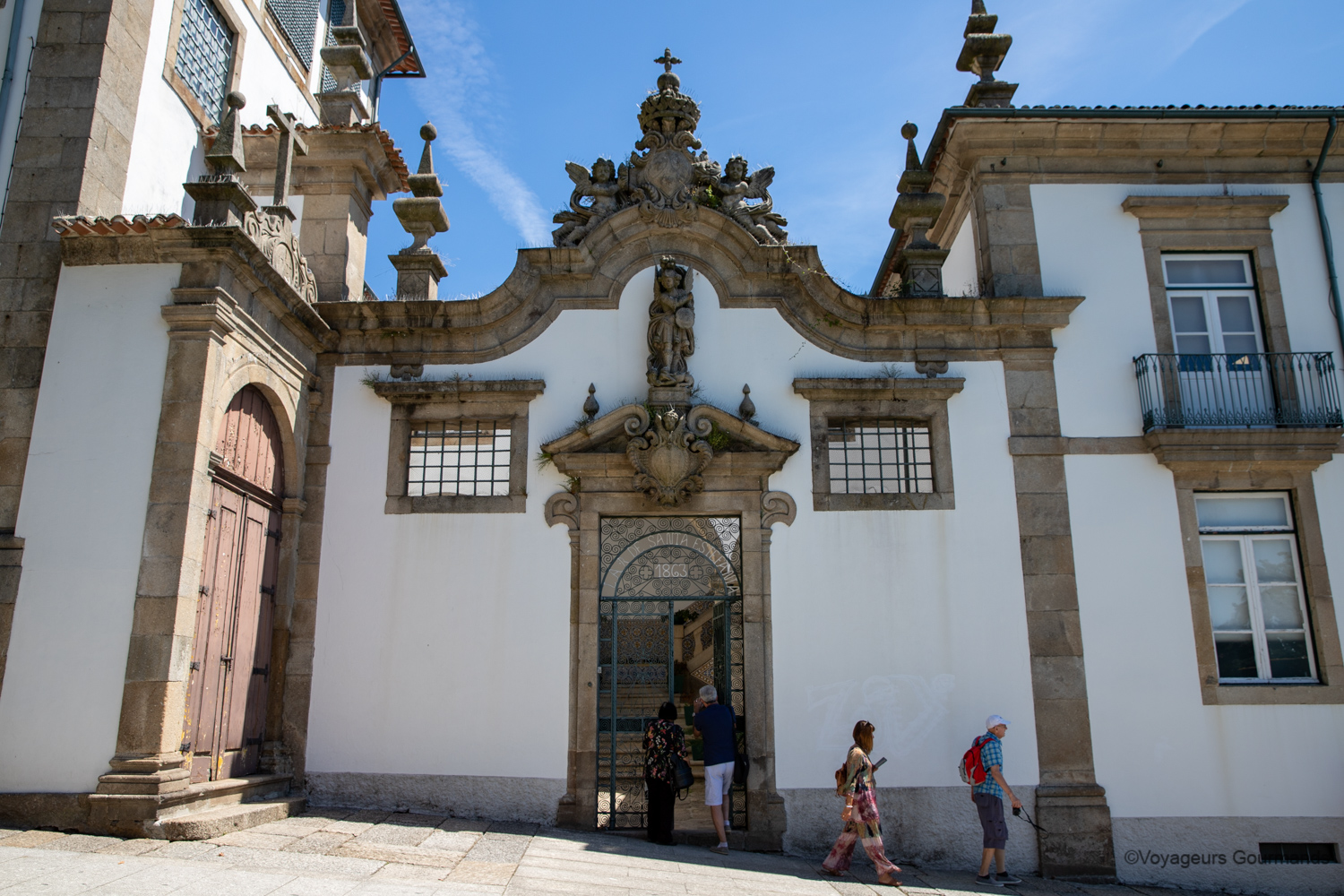
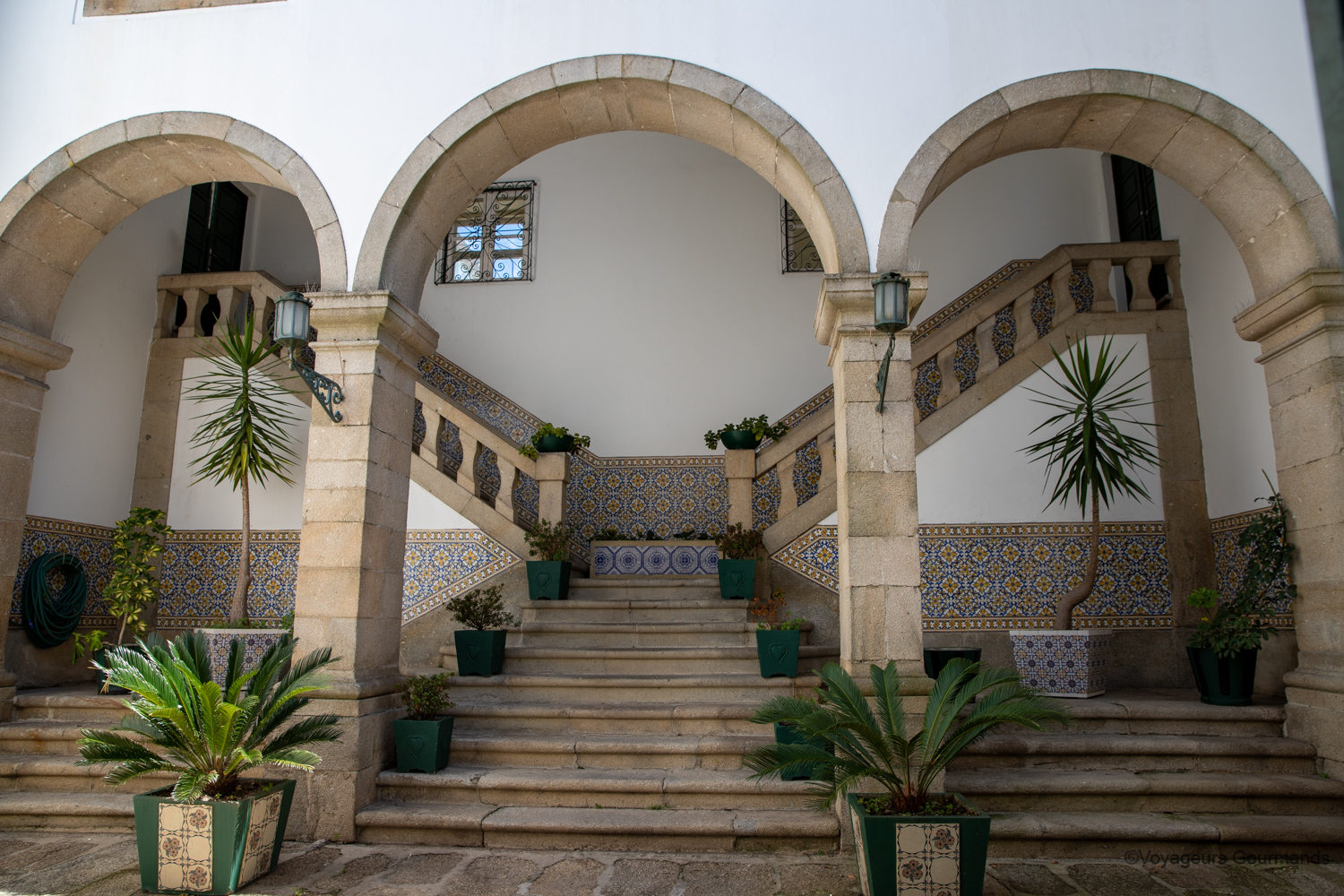
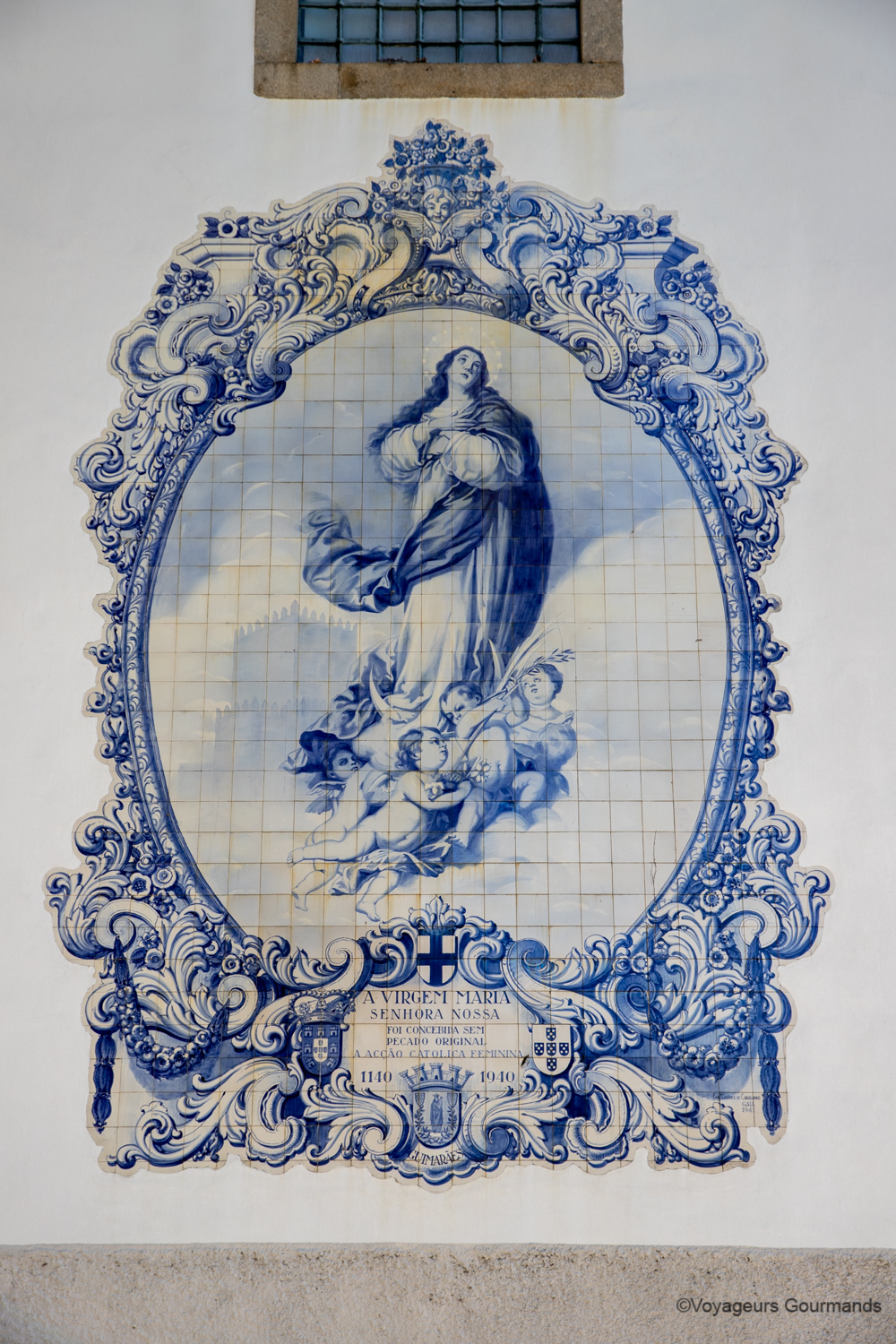
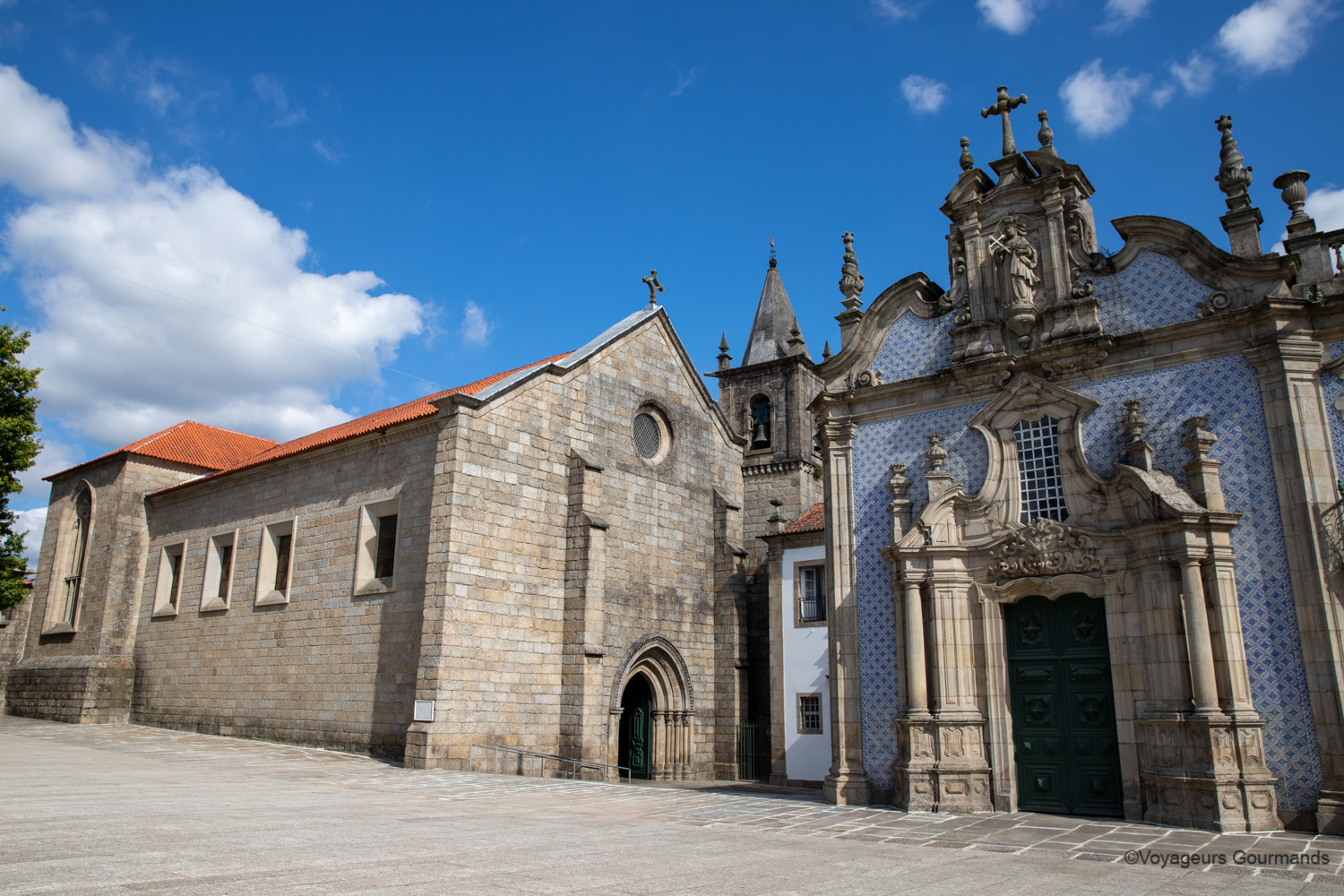
I told you in the introduction: visiting Guimarães alternates between old monuments and religious monuments! This was the first church we came across after visiting the castle. Its huge azulejo frescoes on the outside naturally caught our eye, but it was closed…
Largo da Oliveira
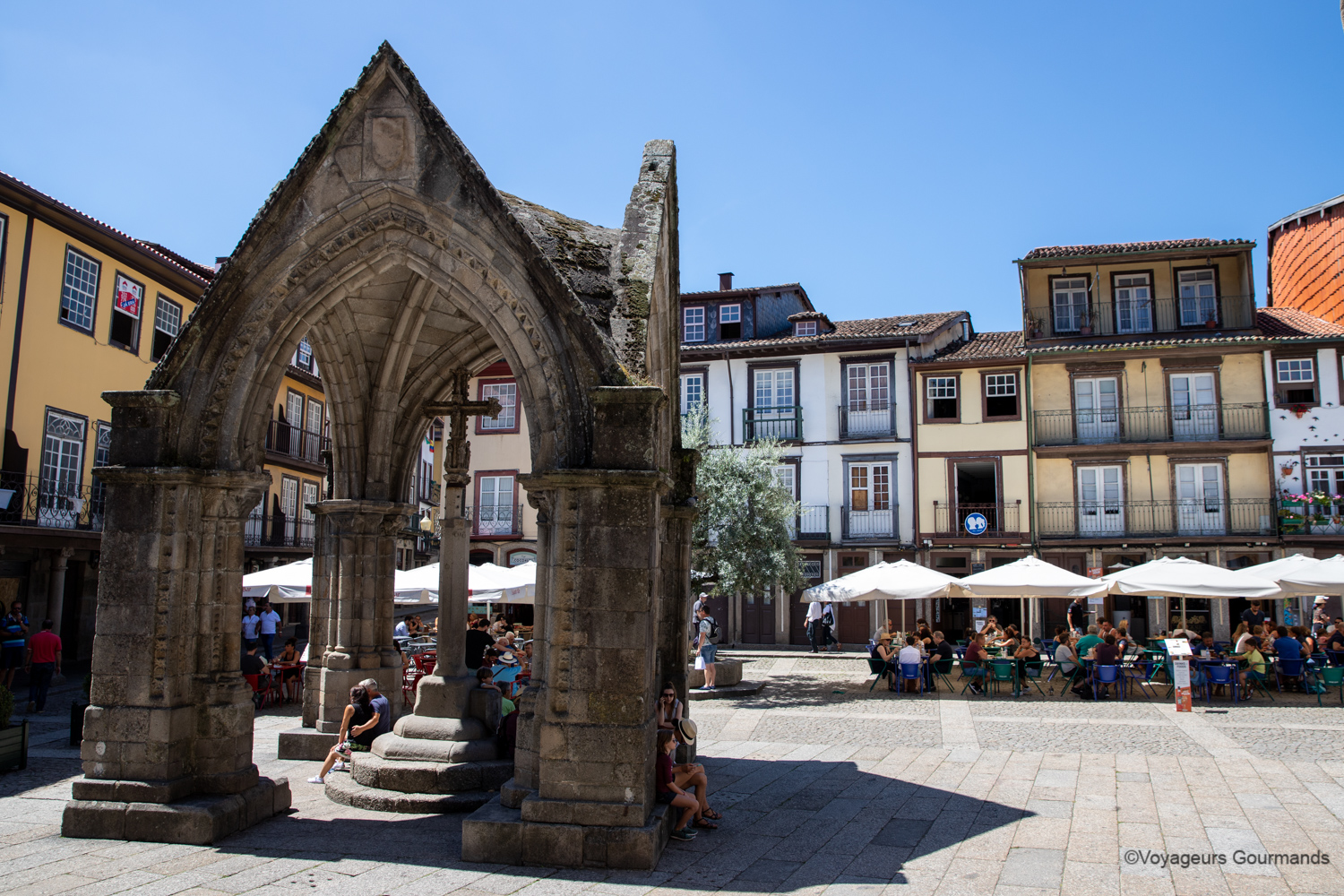
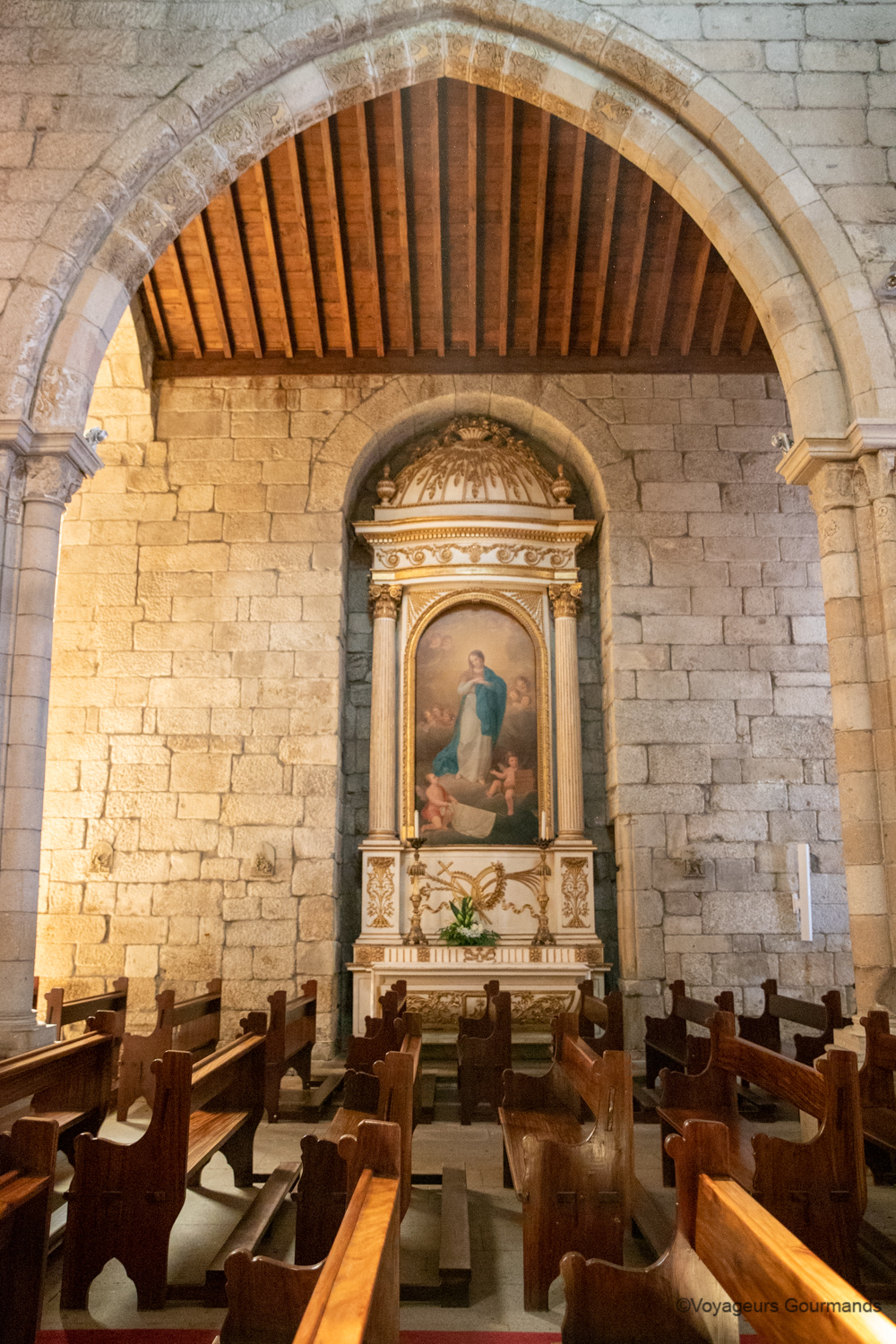
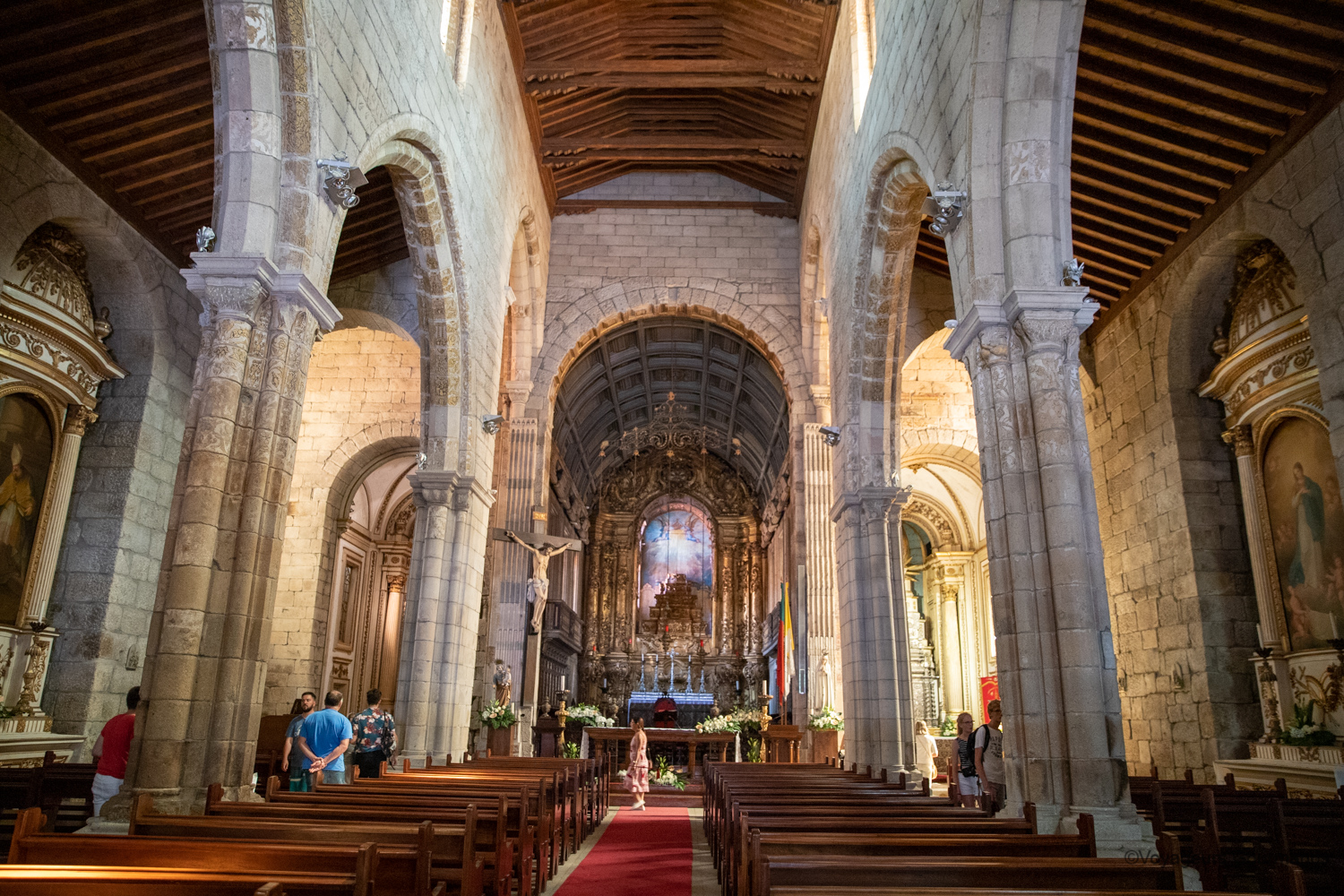
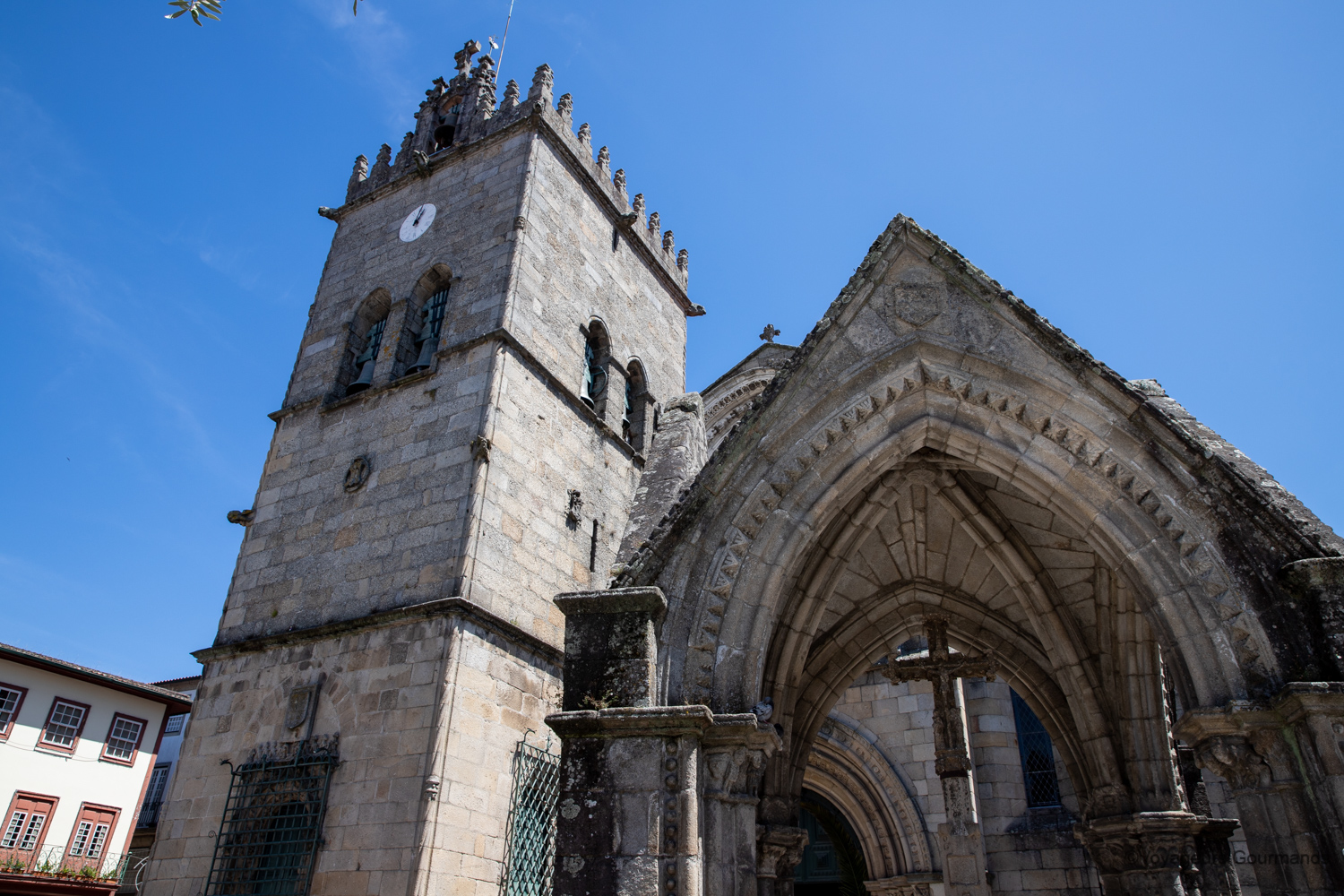
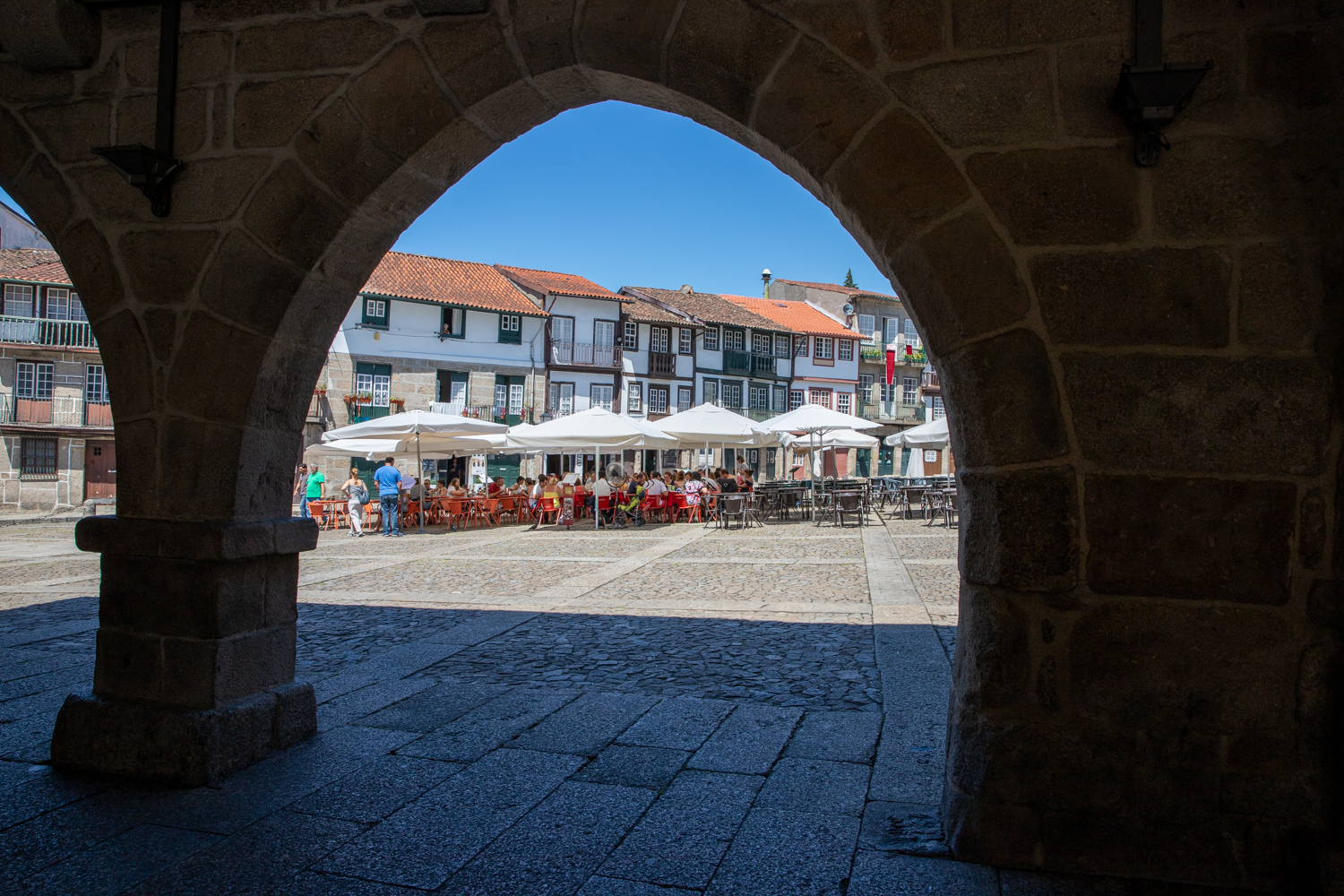
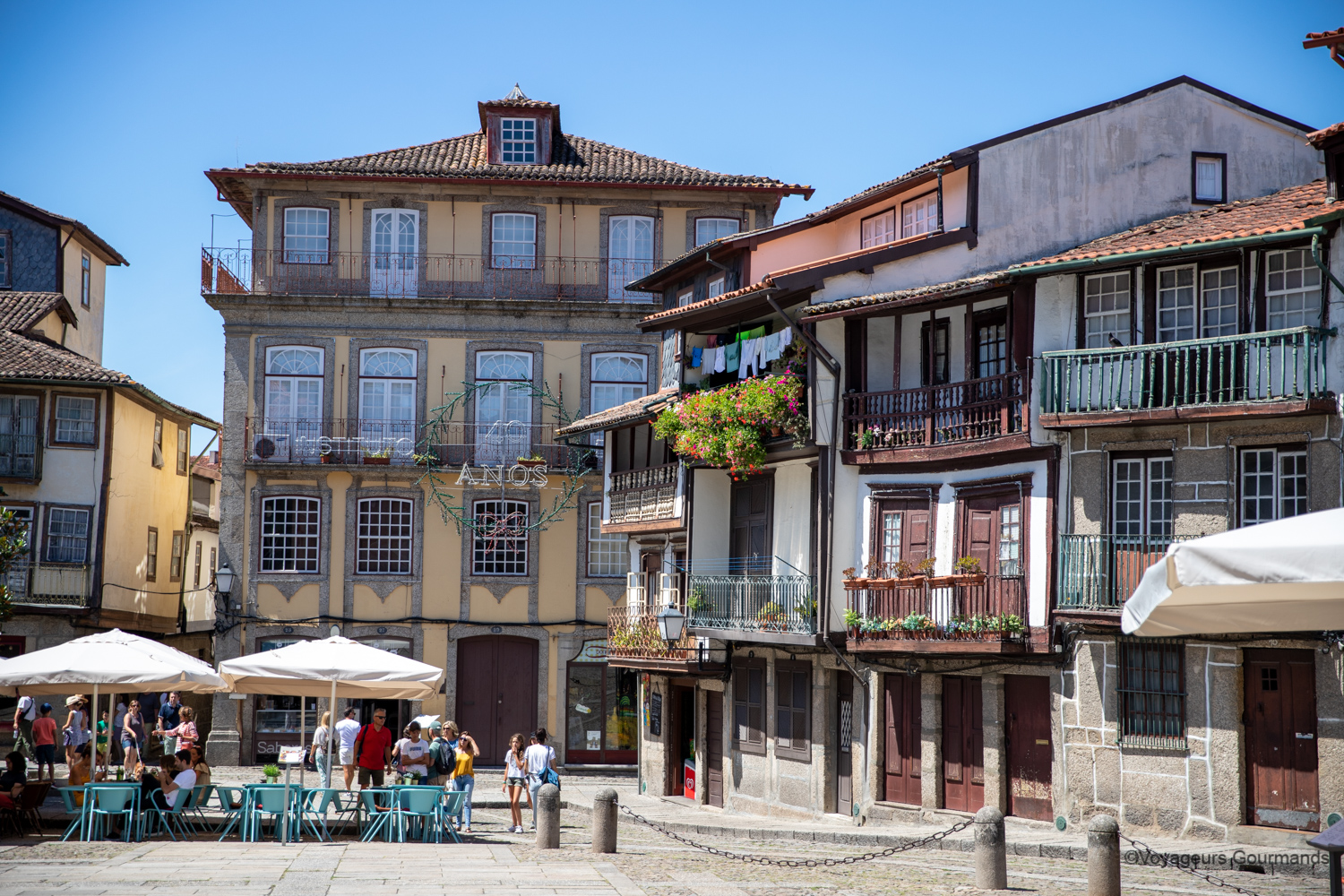
Probably the heart of the city center! The olive tree square, named after the tree that stands in its center, is unmissable! Its church, Nossa Senhora da Oliveira, its cloister, its charming stone facades, its terraces… It’s impossible not to want to sit down there and watch life go by.
Praça de Santiago
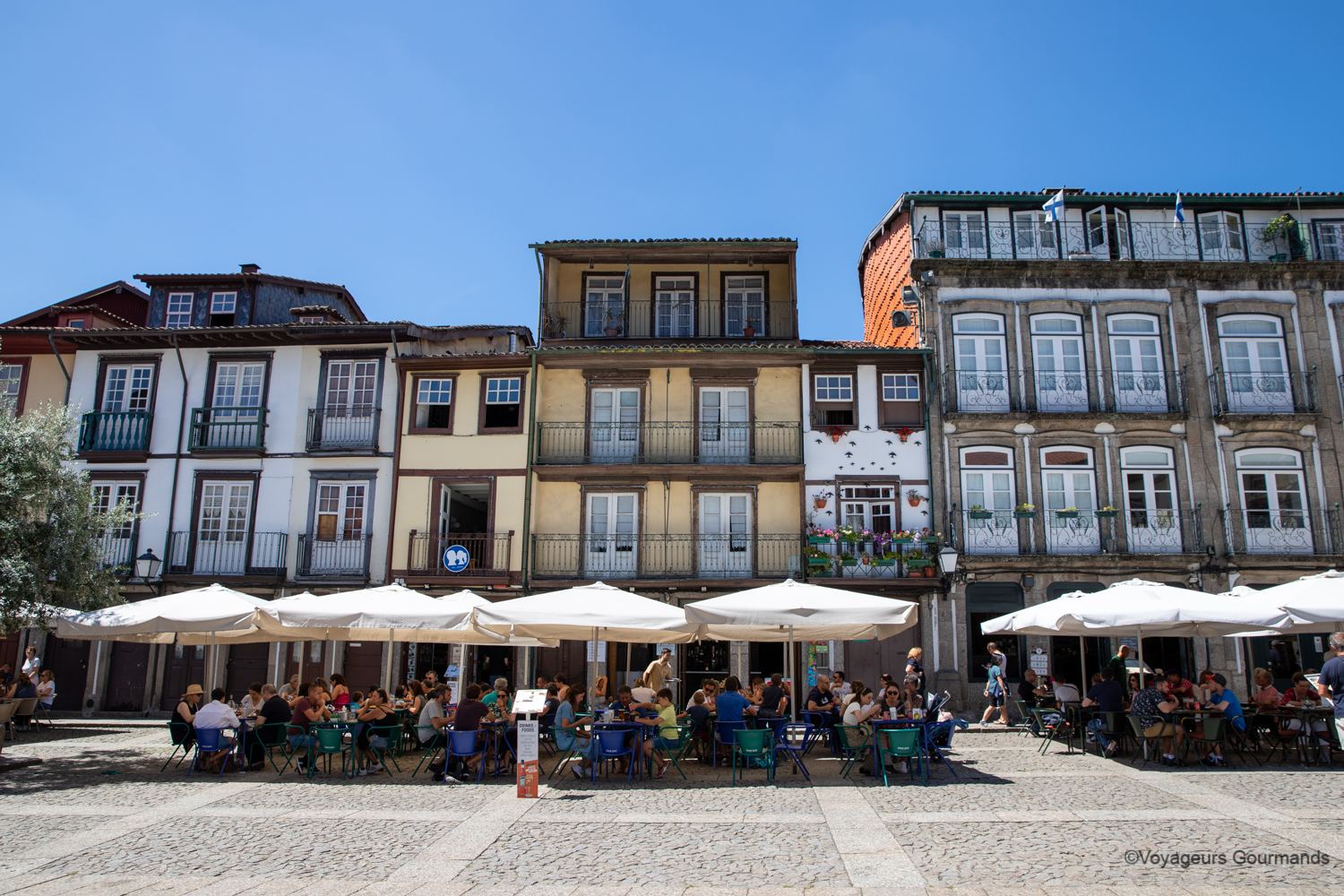
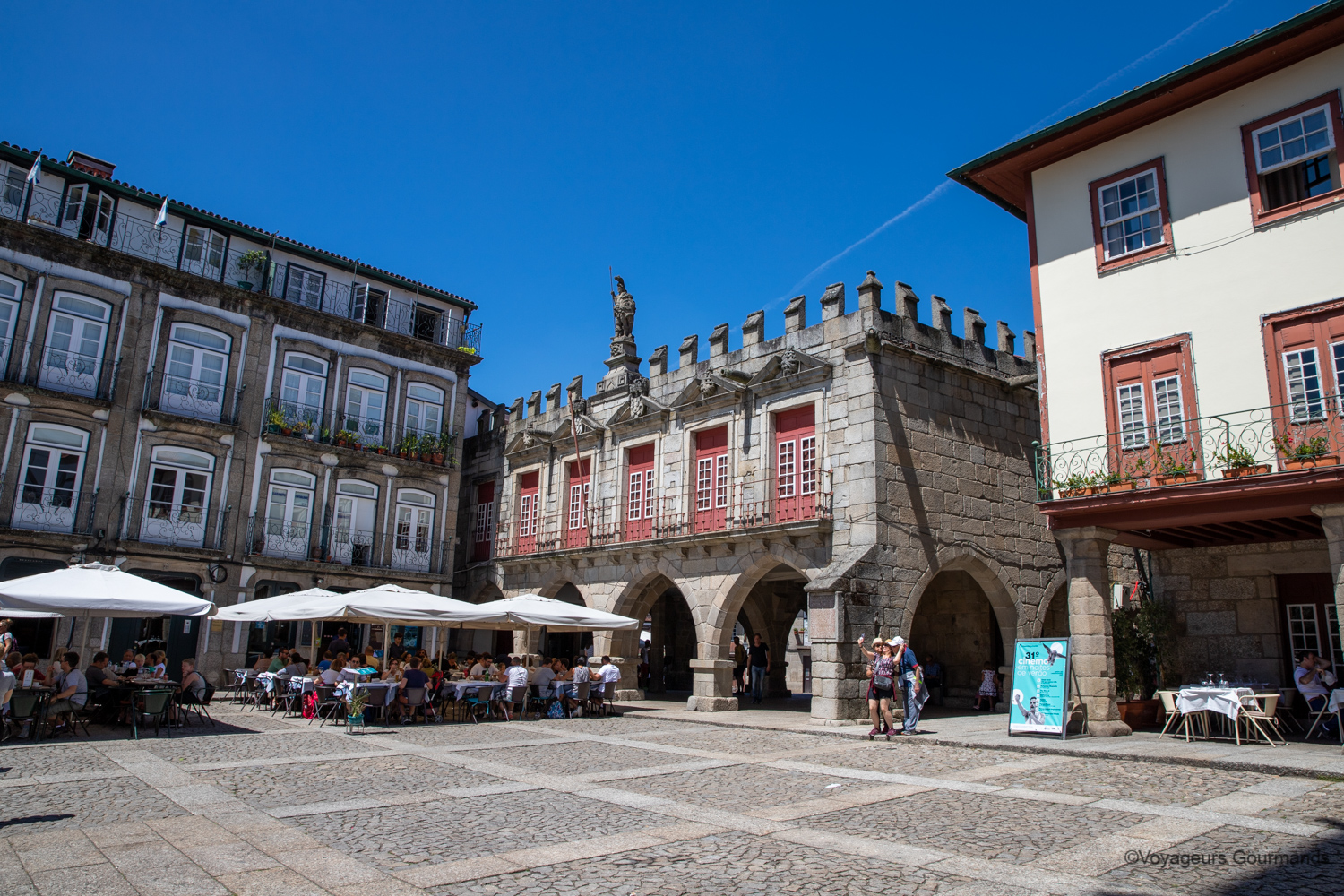
Right next to it, you’ll find Santiago Square, also with terraces and beautiful stone facades. The two squares are “connected” by the old 14th-century town hall, whose facade is extremely well preserved.
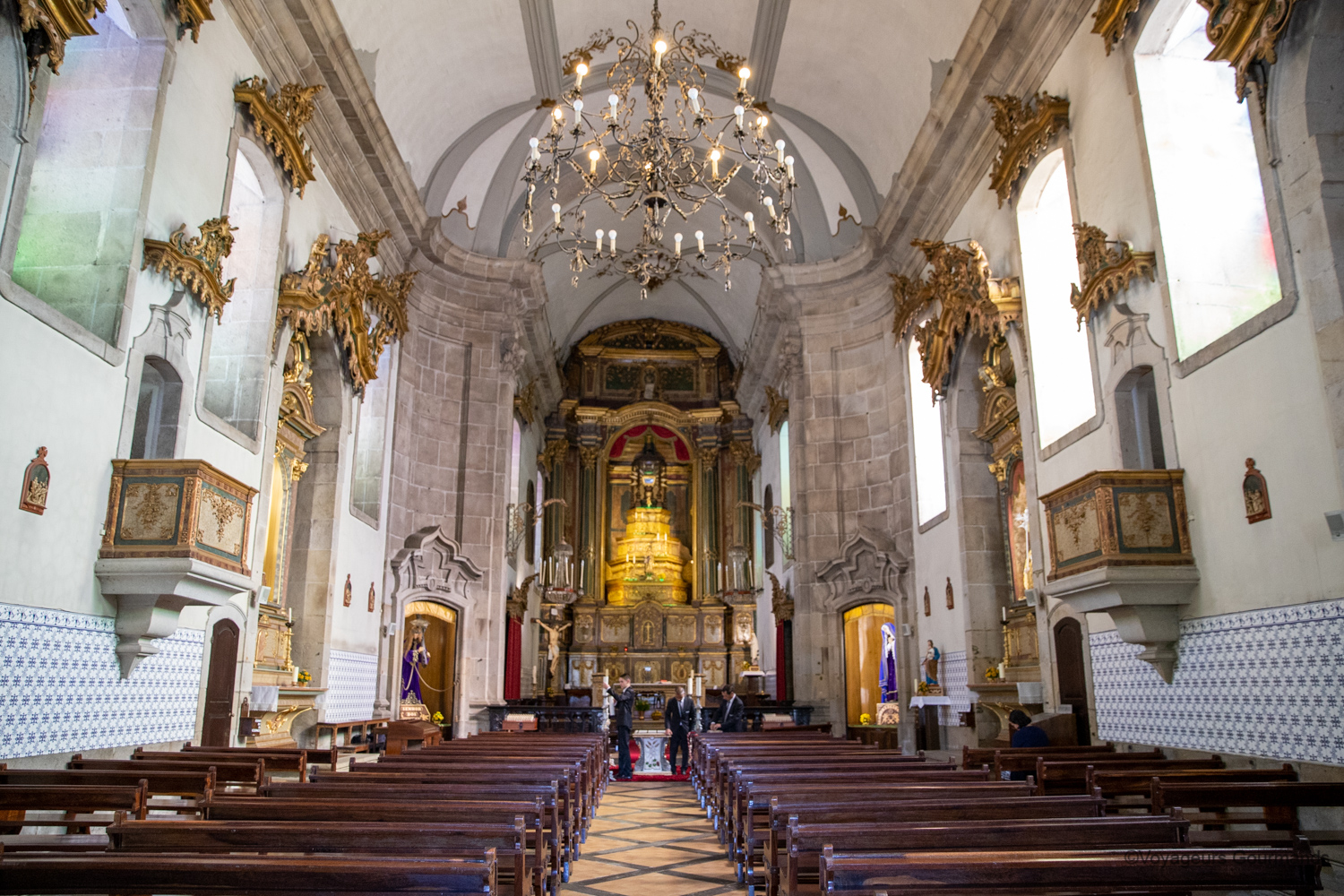
Igreja de Nossa Senhora da Consolação e Santos Passos
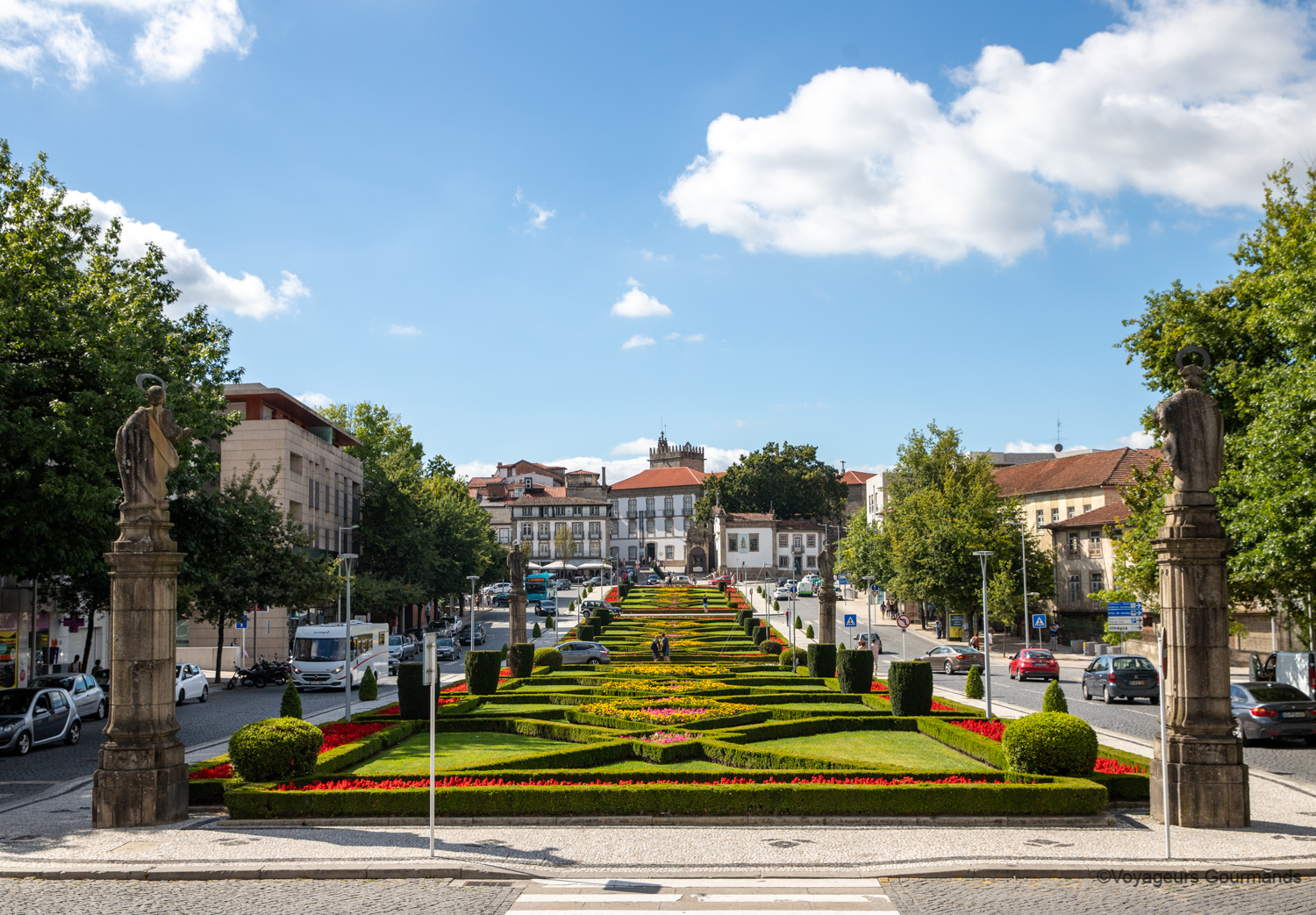
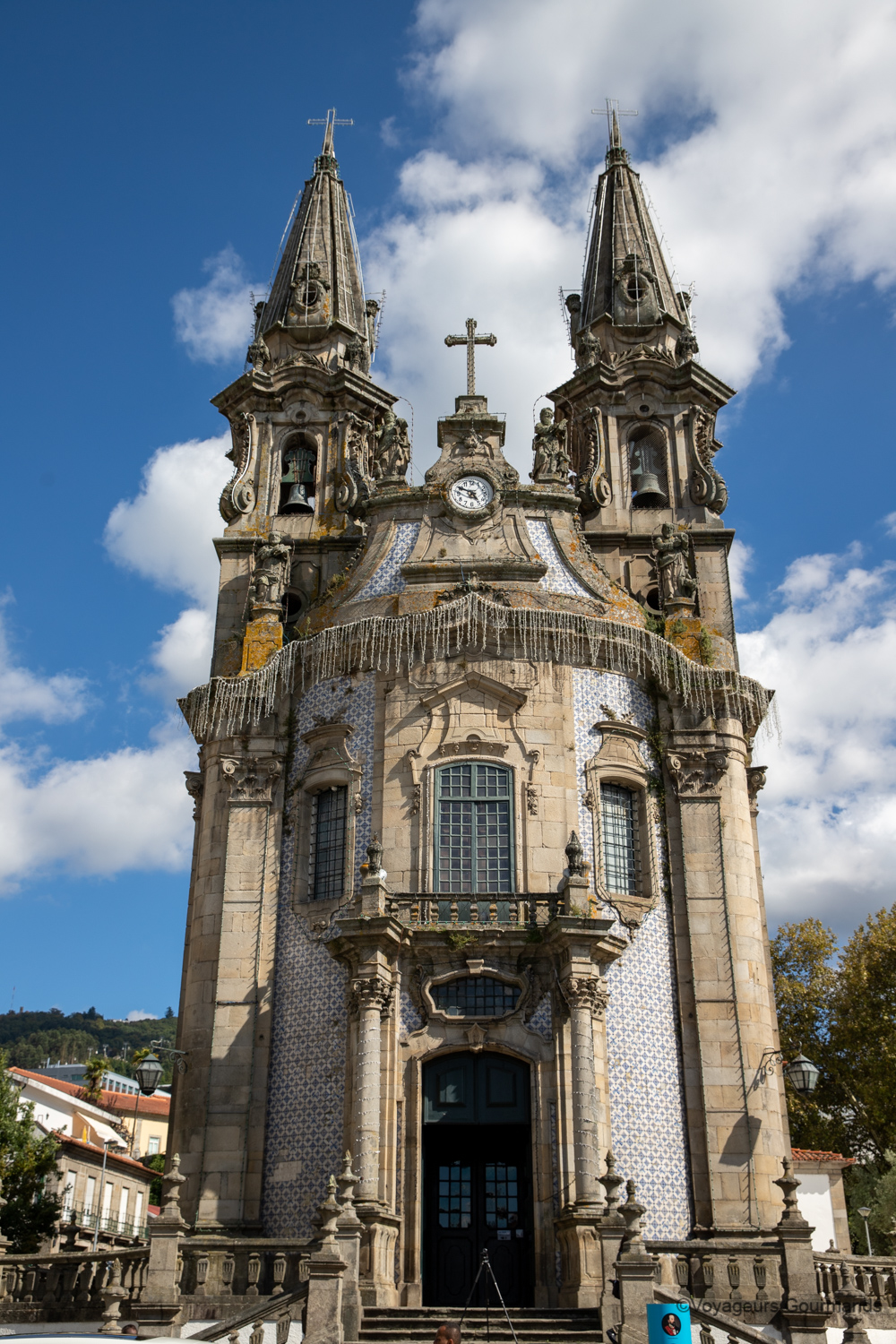
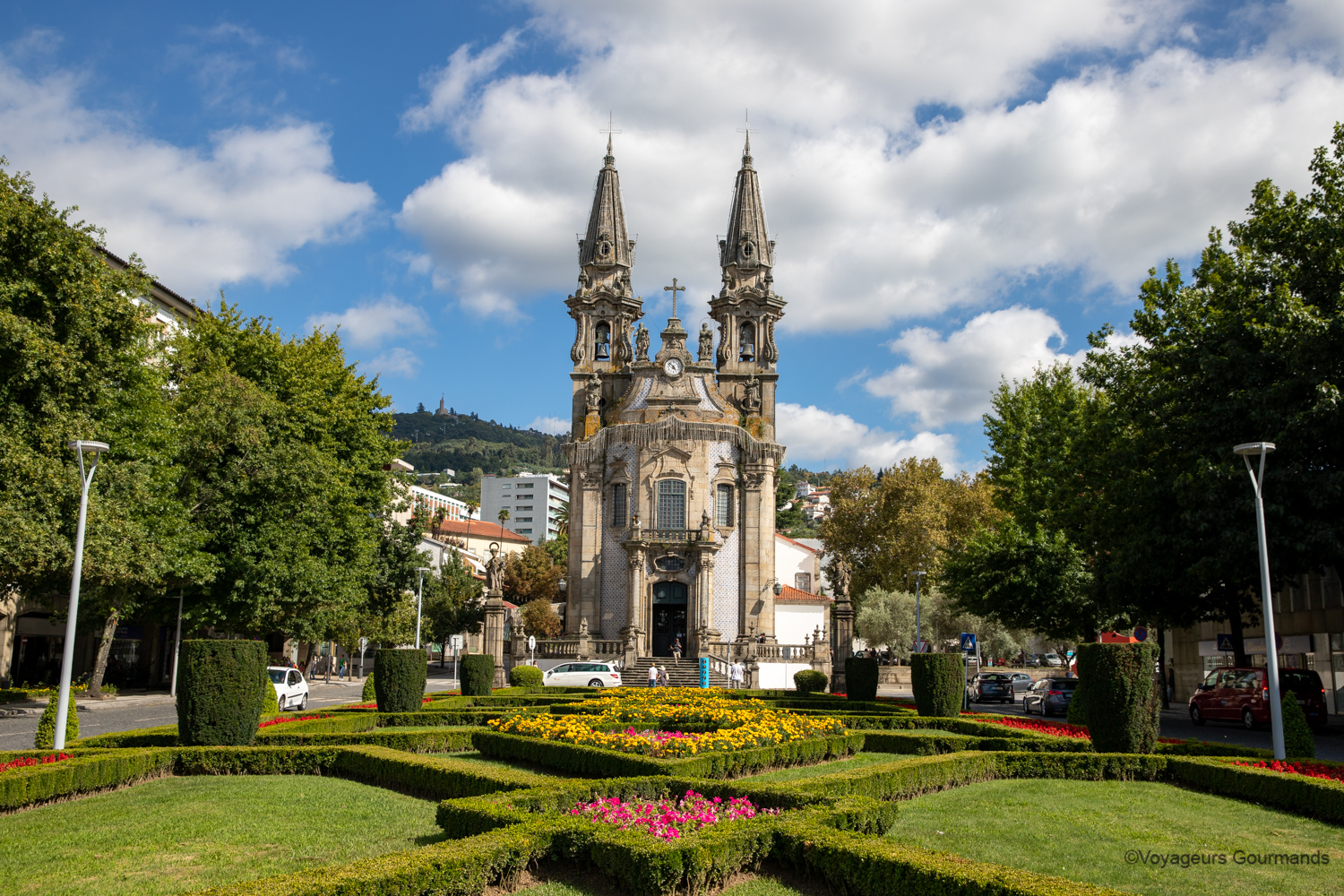
We spotted it in the distance, majestic at the end of this avenue, and we had to stop there. The Church of Our Lady of Consolation was built in 1576 but only completed in 1785. A century later, the two towers, the balustrade, and its staircase were added.
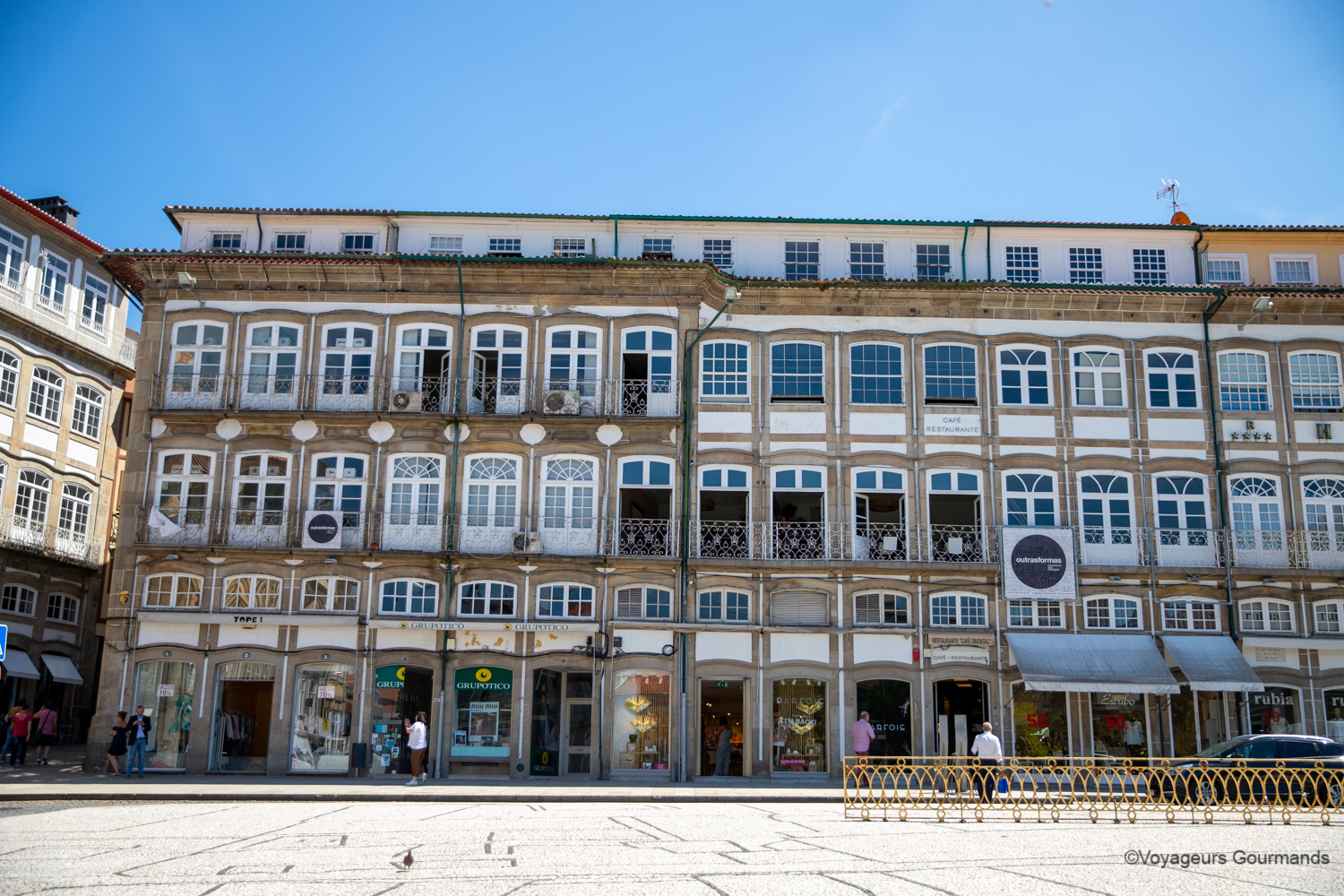
Toural Square
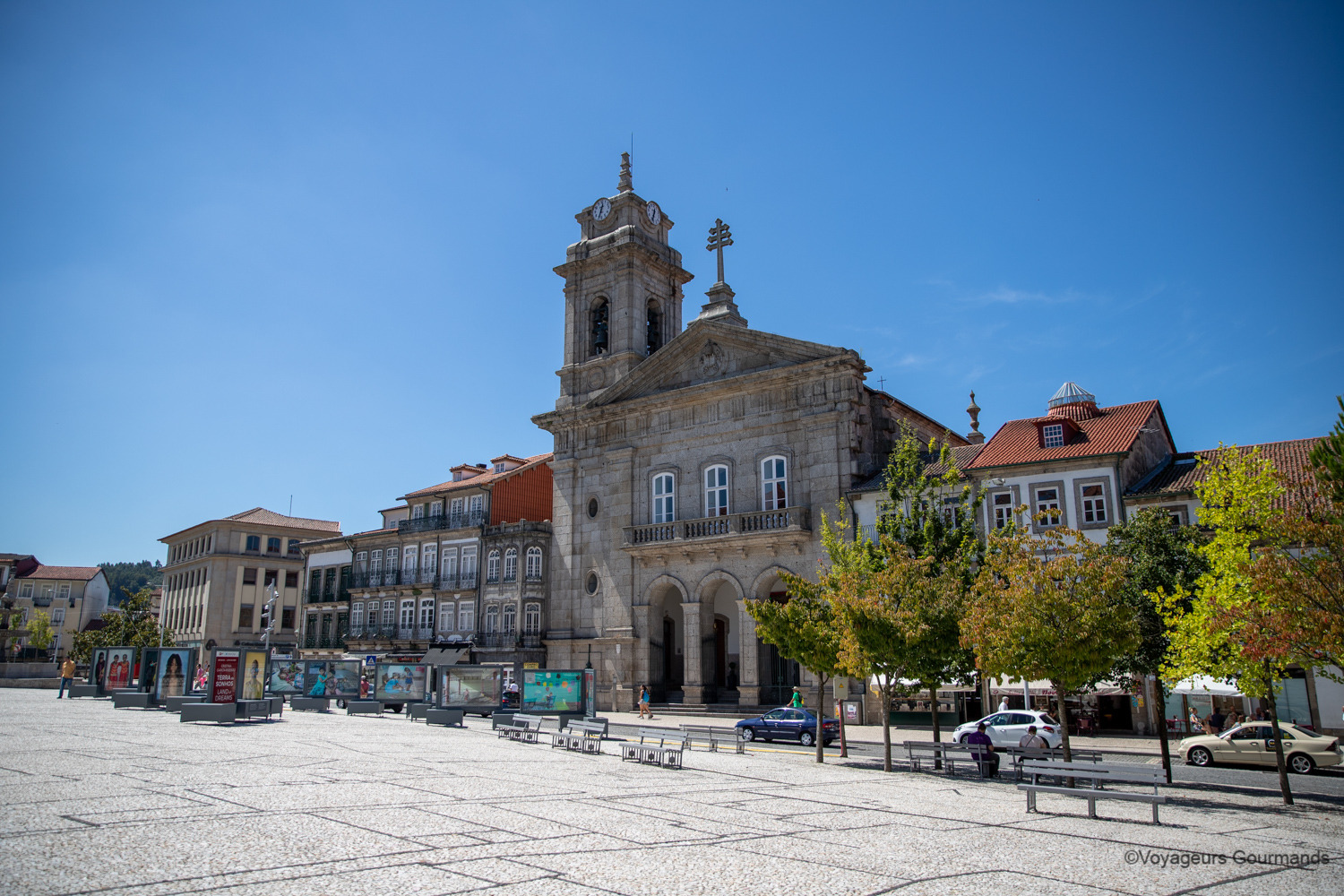
This square was once located outside the city walls. Cattle sales used to be held here, which gave the “Toural” square its name. On the ground, you’ll probably notice these lines that seem completely random… In reality, they represent the historic center of Guimarães. But you can only see that from above!
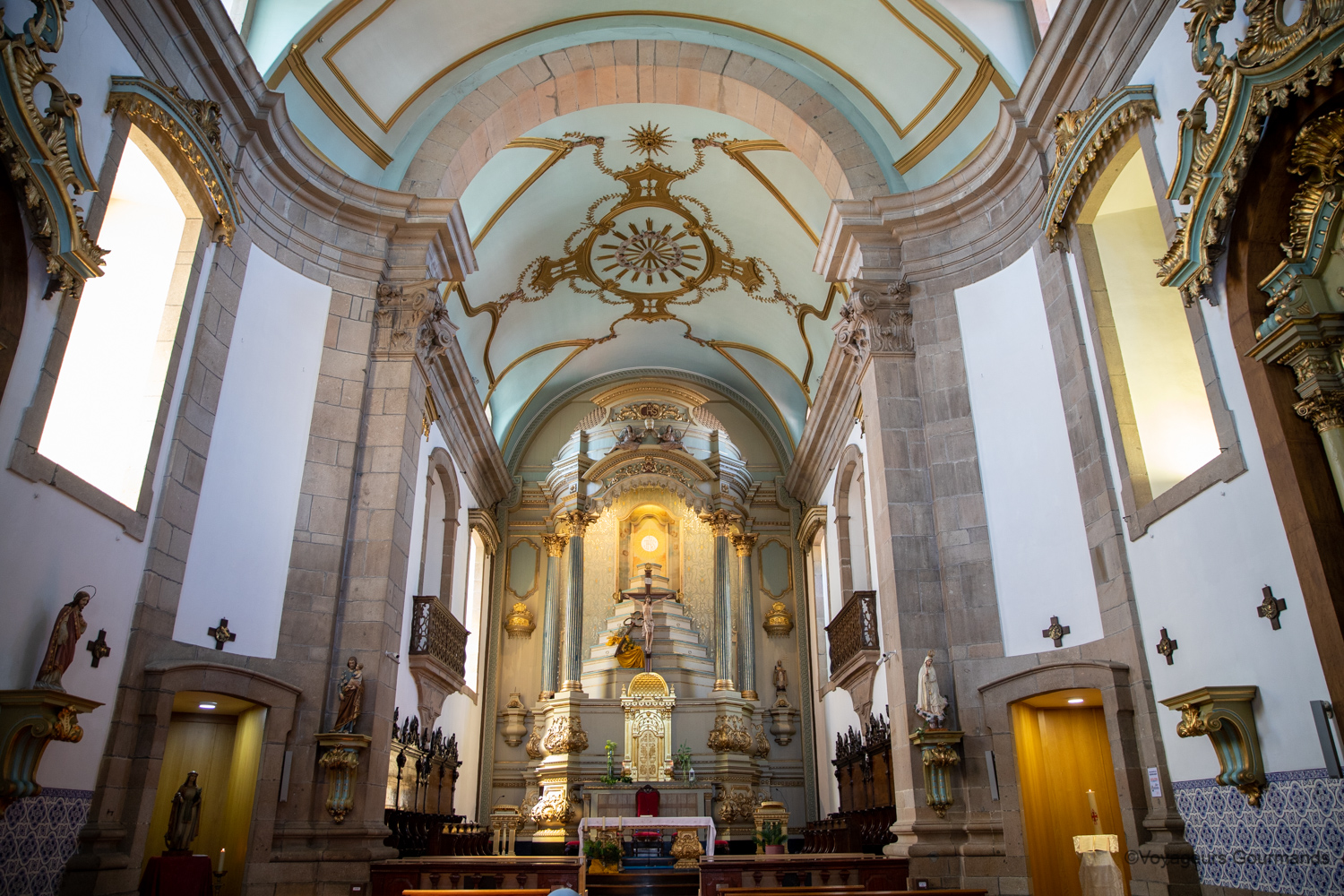
If you’ve made it this far without getting tired of churches and other religious monuments, don’t miss the huge Basilica of Saint Peter. It is southeast of this square that you’ll find the famous tower I mentioned at the beginning.
Nossa Senhora da Penha Sanctuary
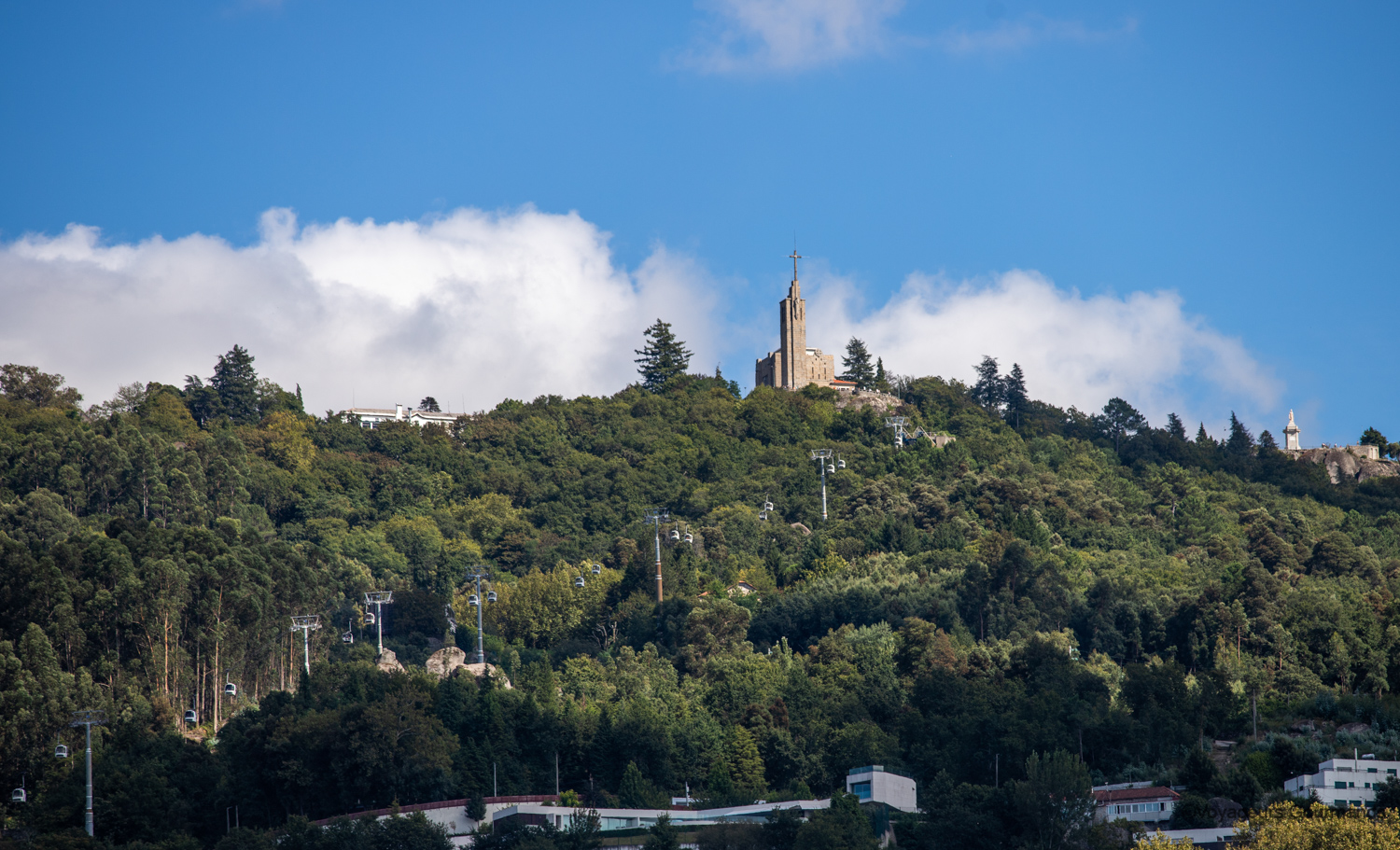
A little outside the center, located on Penha Mountain, the sanctuary of the same name is the highest point in the city. Inaugurated in 1947, the sanctuary is surrounded by 60 hectares of forest and giant moss-covered rocks… Picnic tables are set up there. If you want to eat somewhere cool, it’s the perfect place!
You can reach the sanctuary by car, but also by cable car.
In the streets of Guimarães
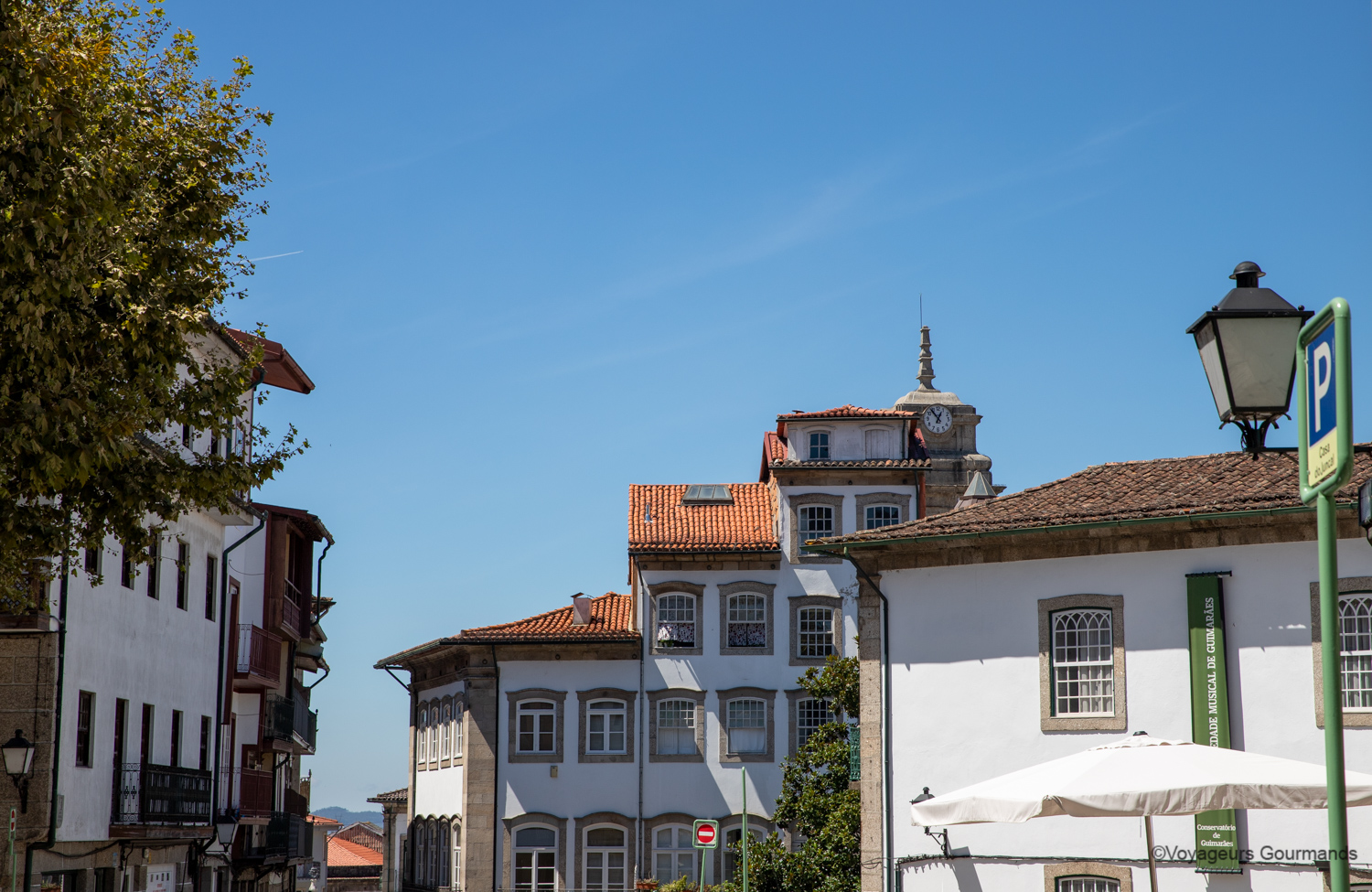
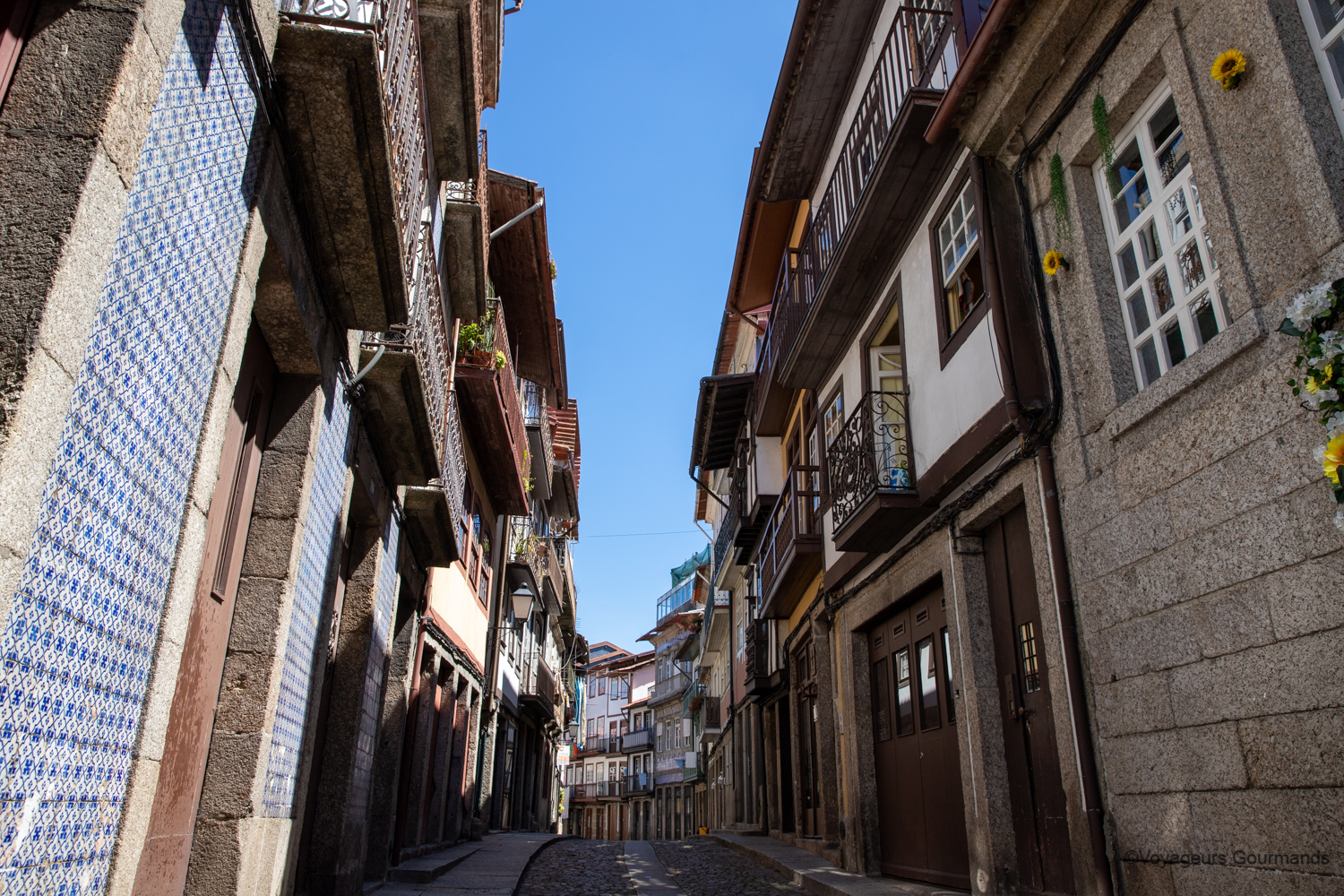
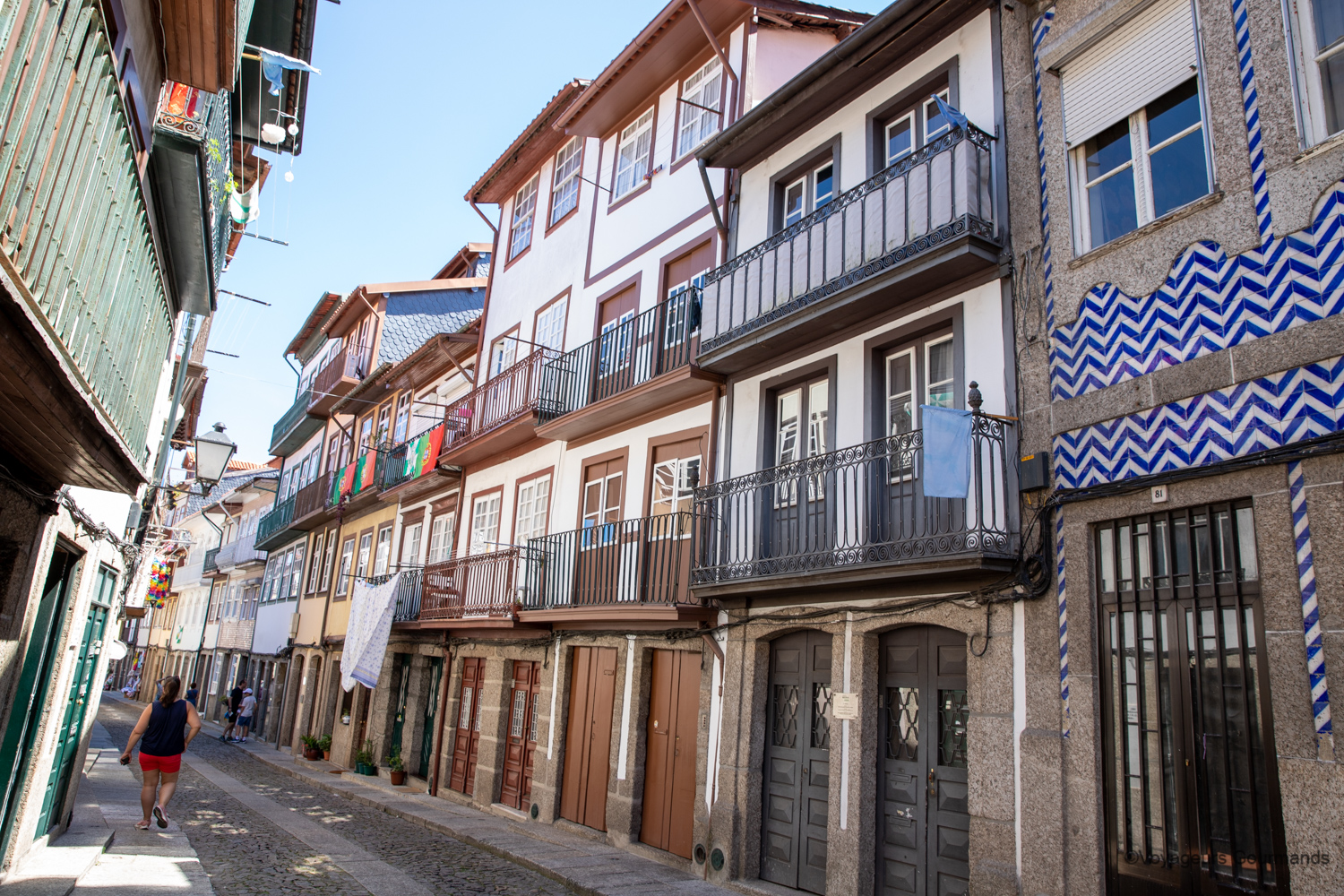
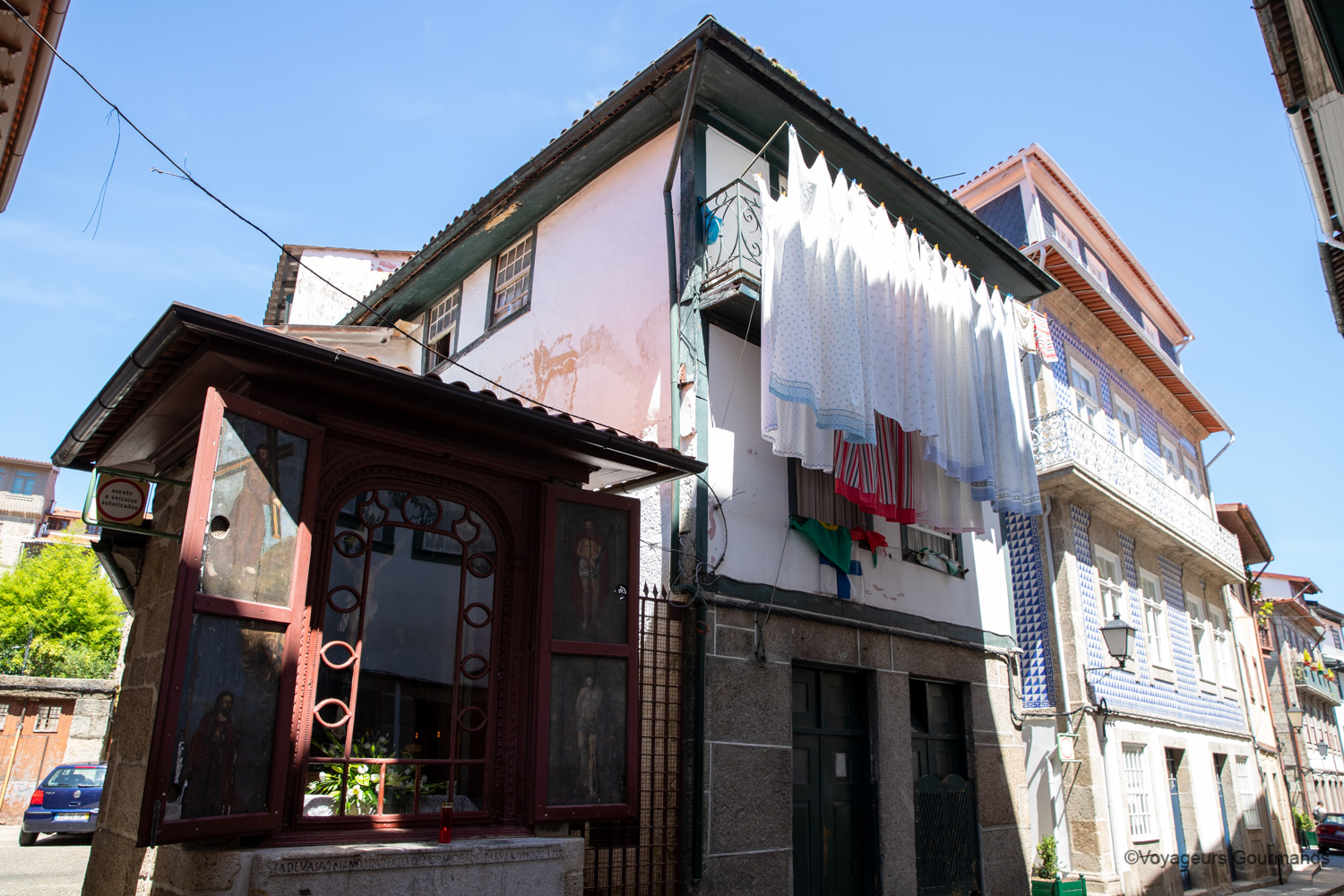
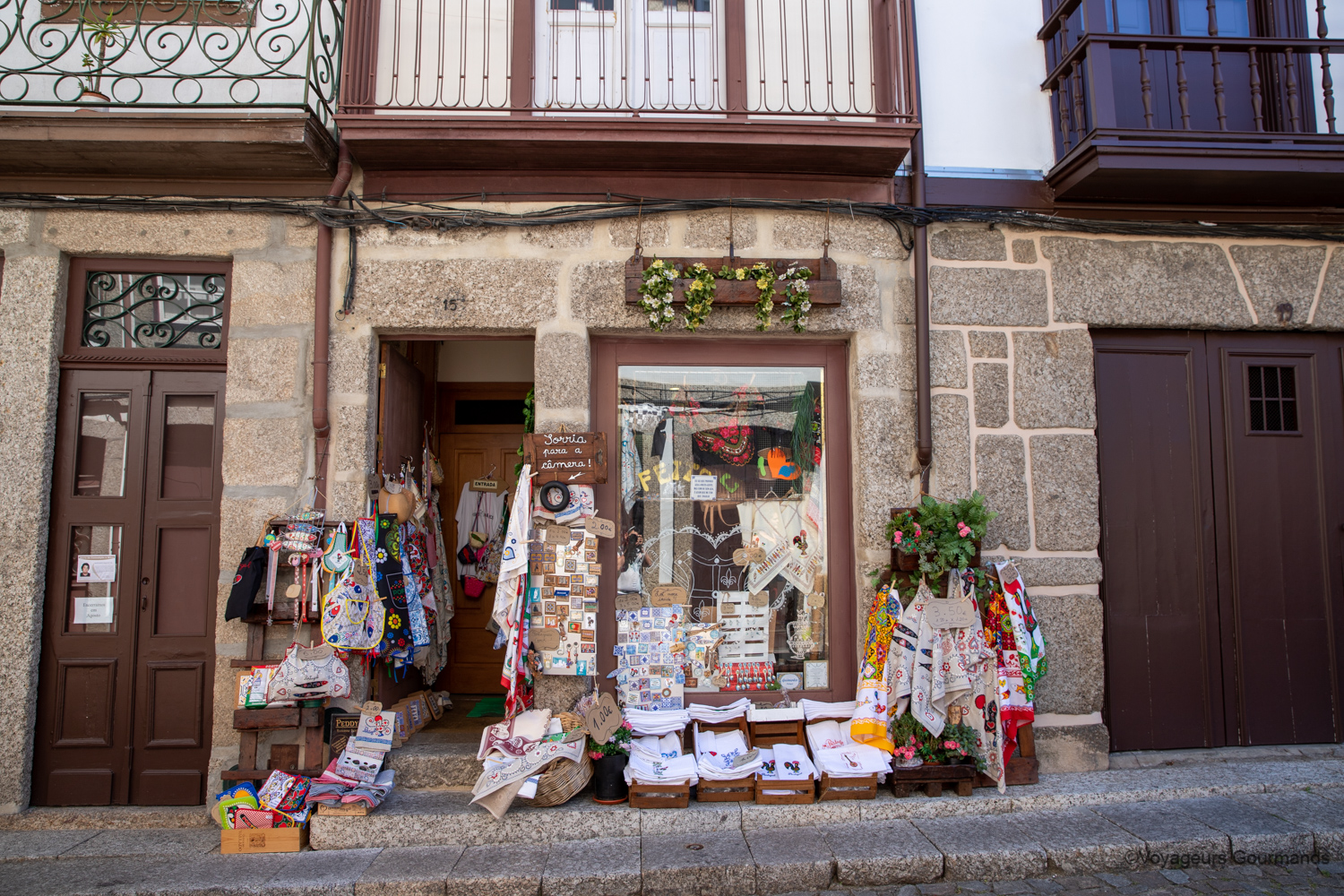
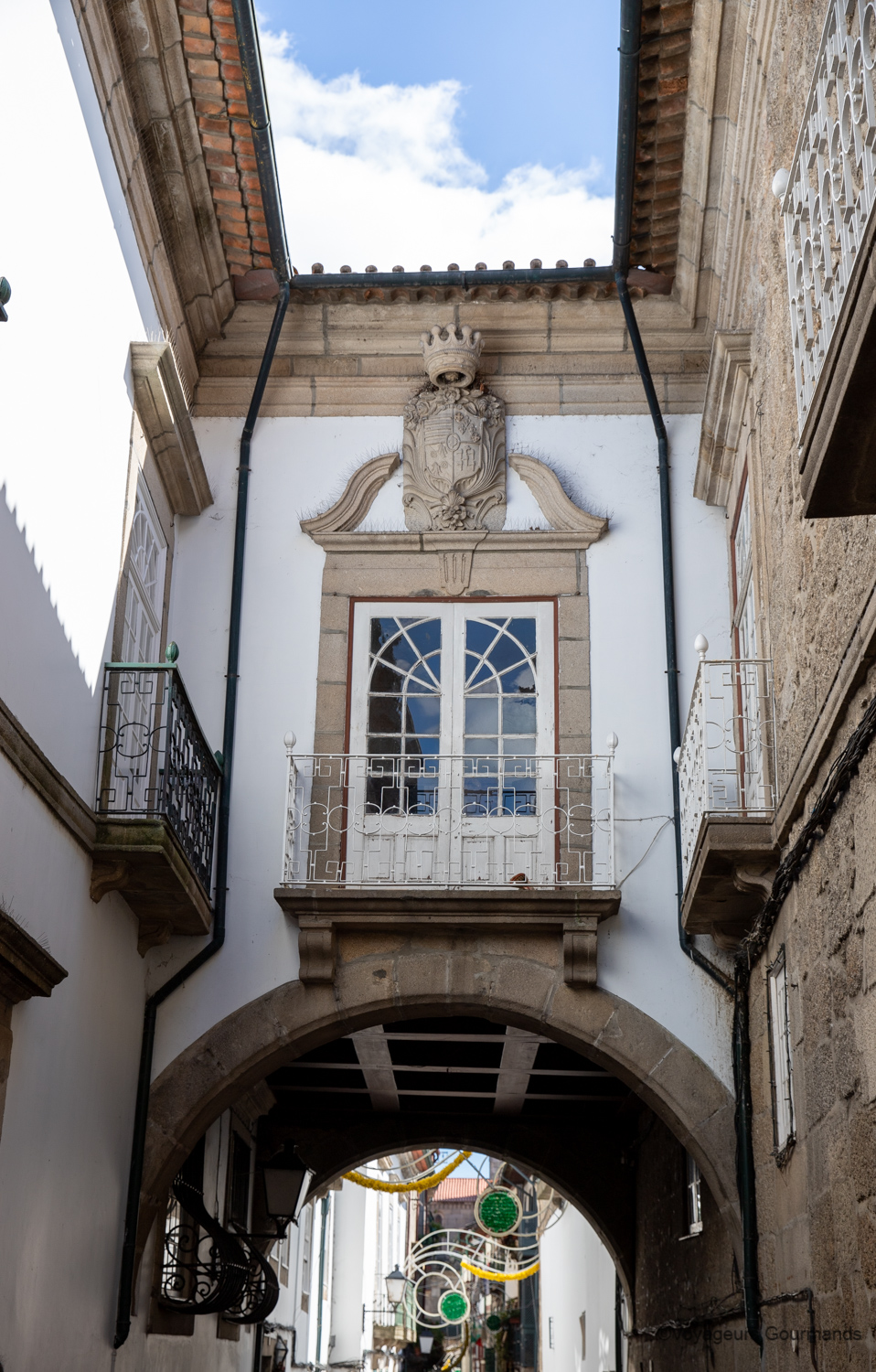
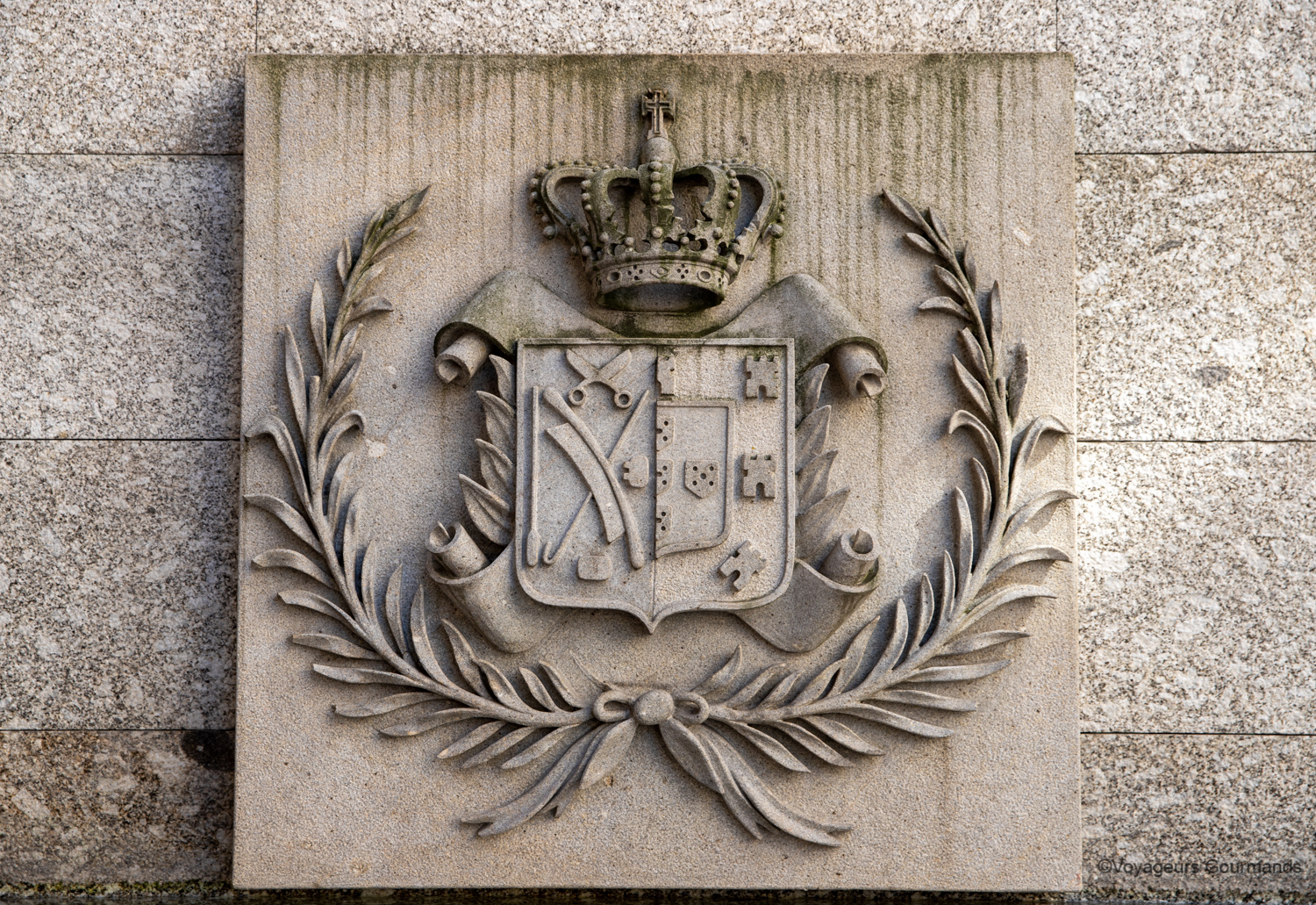
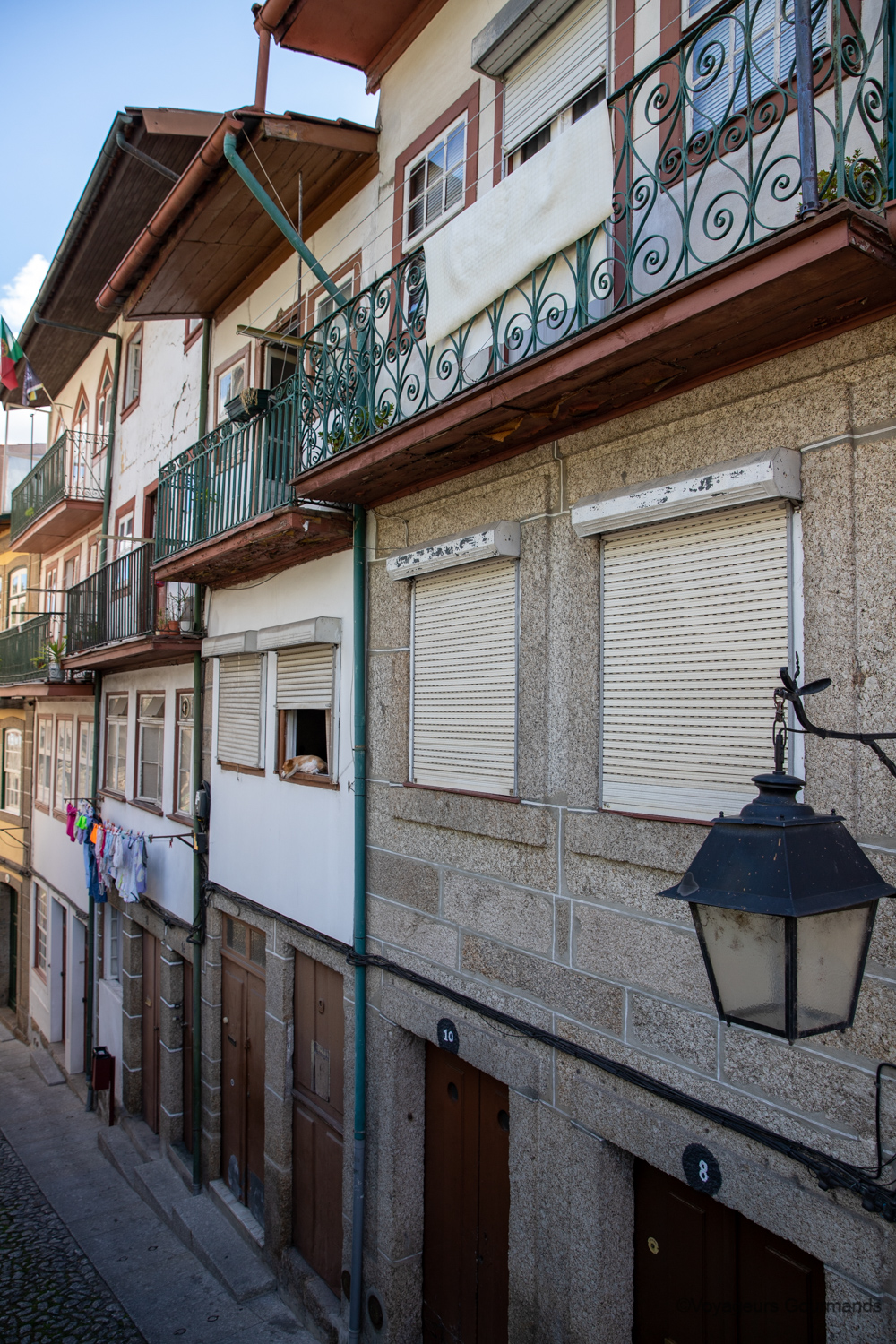
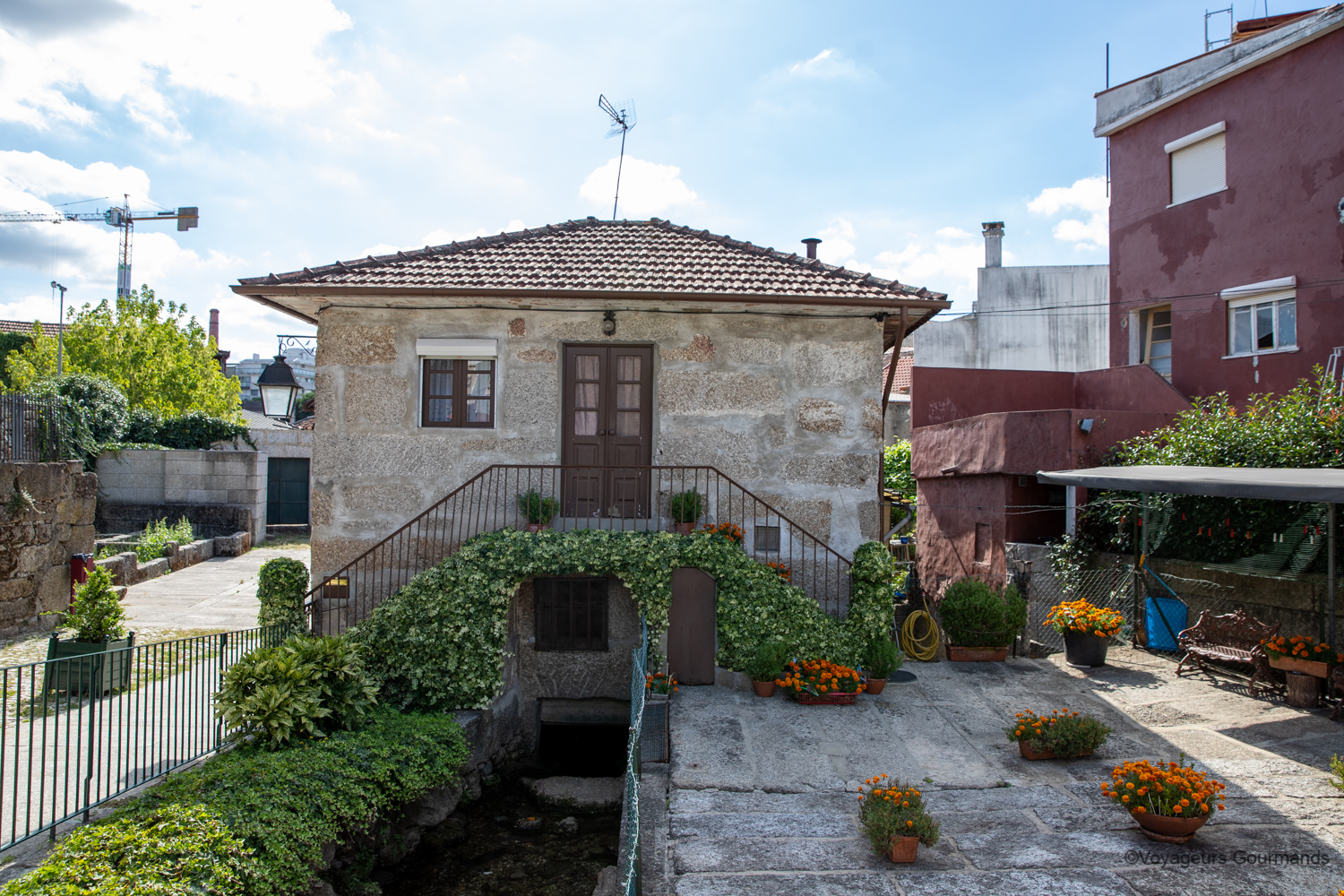
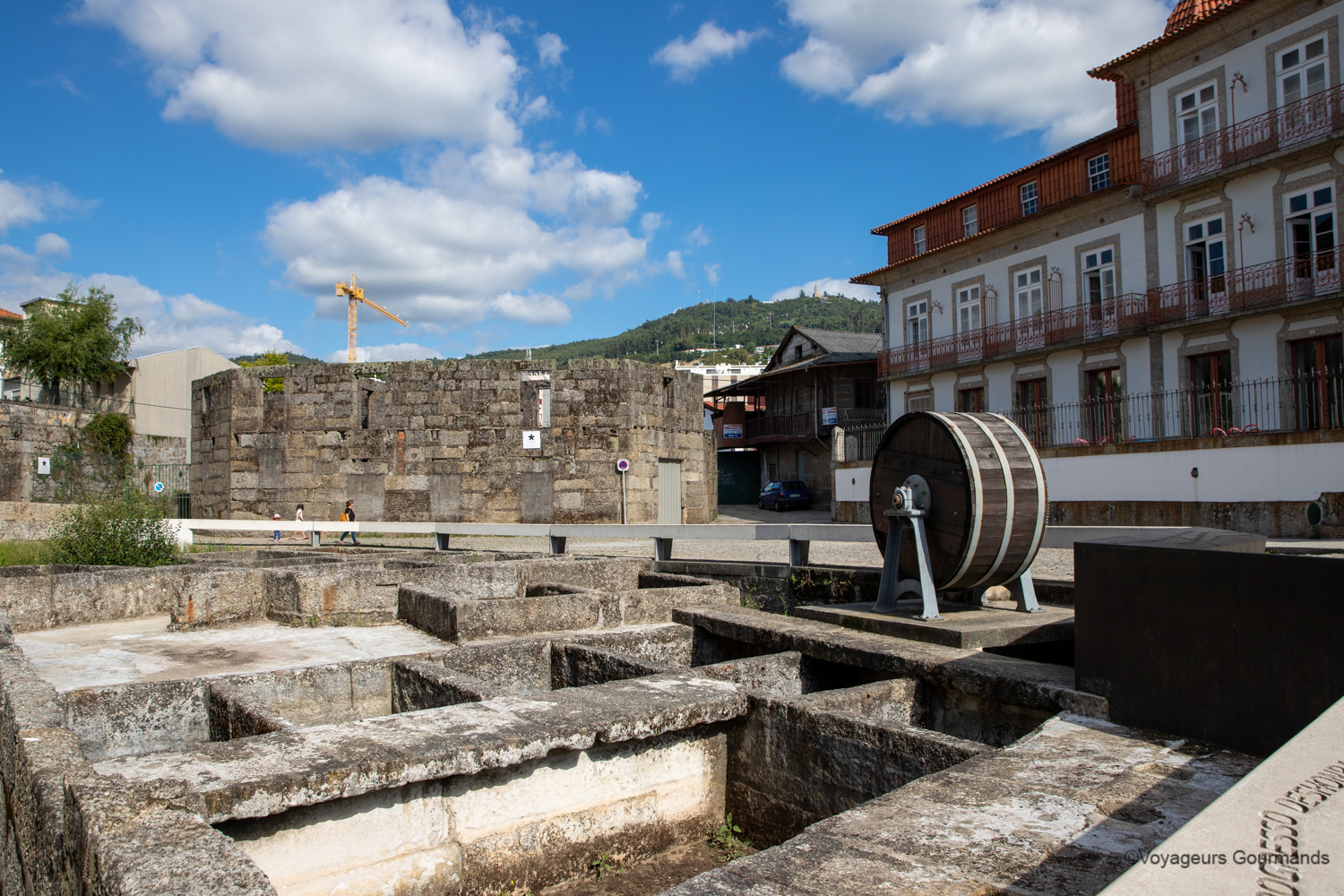
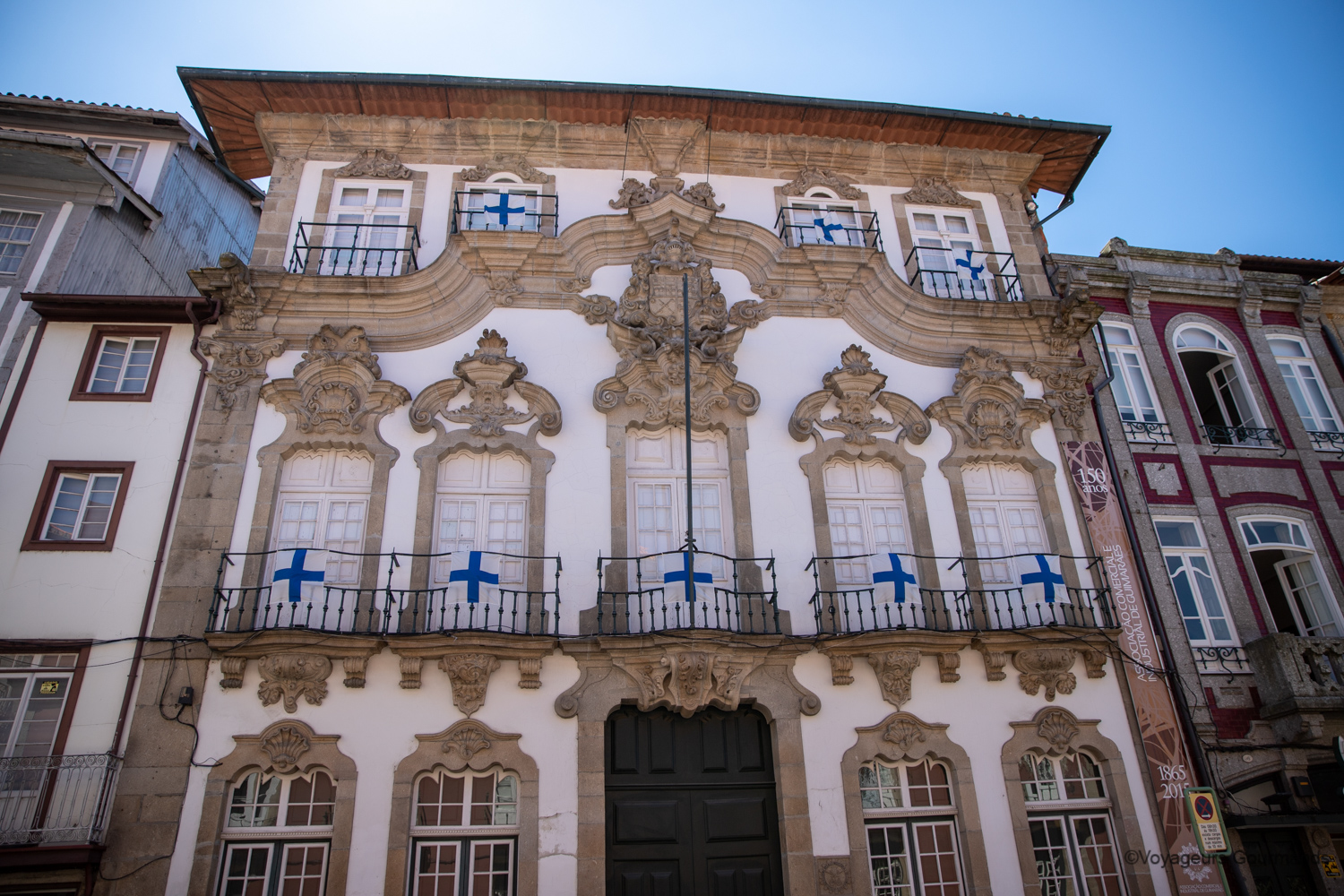
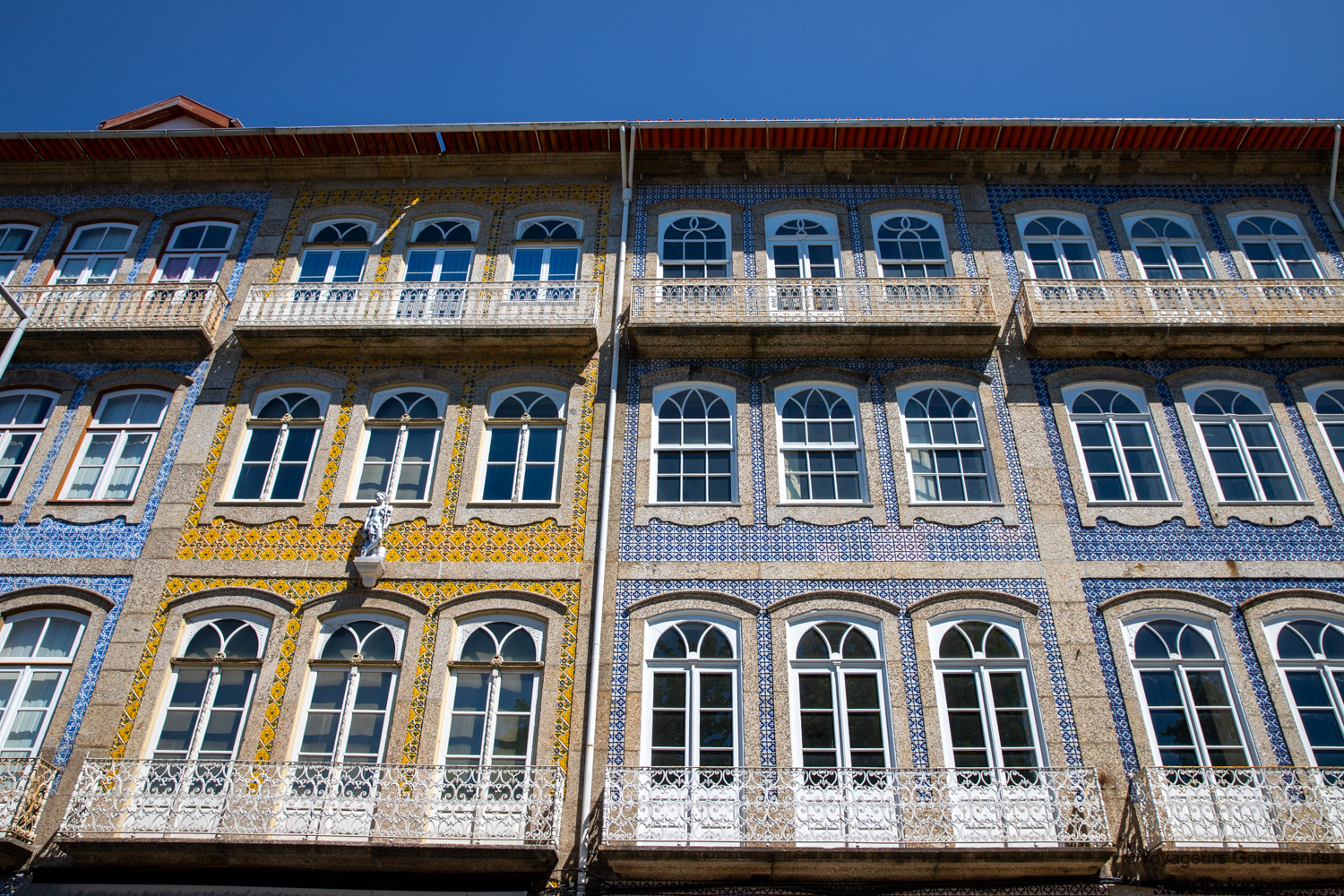
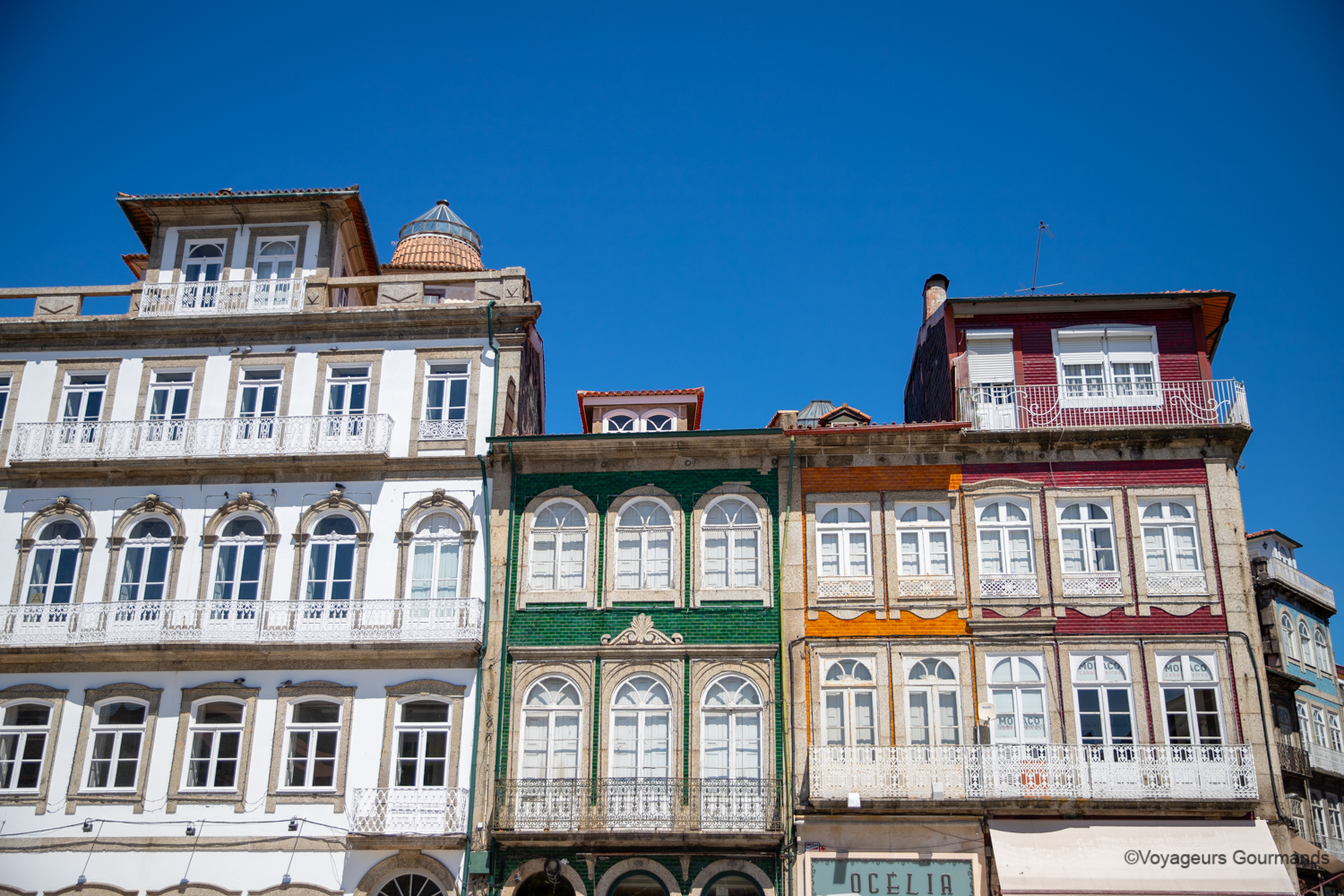
I’ve gotten into the habit of sharing a few photos from our visit that don’t fit into the previous categories. So here they are 🙂 As you wander around, don’t miss Santa Maria Street and its many examples of old architecture (Peixoto House, Gothic House, House of Aries, and the arch house.
✧ Other visits: the Alberto Sampaio Museum, the Santa Clara Convent, the Monastery of Guimarães.
Around Guimarães
➺ Fafe
➺ Braga, the country’s third-largest city
➺ Citânia de Briteiros (archaeological site)
➺ And all our ideas in northern Portugal or even around Porto.
Guimarães Portugal: practical information
Everything you need to know to get to Guimarães, which transportation to take, which accommodation to choose, and of course our favorite places to eat. :p
Where to stay?
Since it’s really not far away (we stay either near Barcelos or near Viana), we don’t have any specific addresses to recommend. But feel free to check Booking to find your hotel in Guimarães Portugal. We had spotted the magnificent Pousada Mosteiro de Guimaraes, the building looks stunning, in typical Portuguese stone with a pool, as well as the Oliveira hotel on the square we told you about a little earlier in the article.
How much time do you need to visit Guimarães?
One day is enough to discover the main monuments of Guimarães. The city is easy to visit on foot, but planning to spend a night allows you to enjoy its restaurants and evening atmosphere.
Where to eat?
My friend Violaine,( from the blog Viovadrouille) lived in Guimarães for a year (by the way, I invite you to read her article about the city). She recommended a few places to me, but unfortunately they were all packed! Her favorite is Cor de Tangerina, and we ended up having lunch at Mumadona.
➺ Cor de Tangerina: a vegetarian place that seemed really nice, but with a long wait.
Largo Martins Sarmento 89, 4800-432 Guimarães.
➺ Restaurant Mumadona: a laid-back Portuguese family restaurant, noisy and with tables rather close together. In any case, here you’ll find Portuguese specialties without any problem.
Getting to Guimarães
🚗 The car will of course be the most practical option, especially if you’re doing a road trip in the north.
🚂 However, Guimarães is easily accessible from Braga or Porto by train (all information on schedules and prices is on cp.pt). For example, from Porto, it will take you 1 hour for €3.25 (2022 price).
🚍 Regular but longer trips are possible by bus (all information on rede-expressos.pt).
✤✤✤
We loved this visit to Guimarães, and it just goes to show that sometimes you need to give a second chance to places you didn’t enjoy ^^ eh eh! We would have stayed longer to visit the Palace of the Dukes of Braganza, especially if it hadn’t been 40°C that day. The city has many historical and religious tourist sites, but you’ll love it just for the atmosphere of its streets. Did you know Guimarães? Had you already heard of it? And for those who know it, what is your favorite spot?

FAQ One day in Guimarães
Expand to view the FAQ.
Is Guimarães worth visiting?
Yes, Guimarães is absolutely worth a visit! Known as the birthplace of Portugal, the city boasts an exceptional historical heritage, with its castle, the Palace of the Dukes of Braganza and its stunning UNESCO-listed historic center. It makes an ideal day trip from Porto or a great stop on a trip through northern Portugal.
What are the best things to do in Guimarães?
When visiting Guimarães, don’t miss the city’s must-sees: Guimarães Castle, the Palace of the Dukes of Braganza, Largo da Oliveira, Praça de Santiago and the charming narrow streets of the historic center. You can also head up to Monte da Penha for a beautiful view over the city and its surroundings.
What day is the market in Guimarães, Portugal?
The weekly market in Guimarães takes place every Friday morning. It’s a great opportunity to soak up the local atmosphere and find regional products, including fruit, vegetables, flowers, clothing and Portuguese specialties. If your visit falls on a Friday, it’s a lovely way to discover another side of the city.
Braga or Guimarães: which one should you visit?
It mostly depends on what you’re looking for. Braga is best known for its religious heritage, especially the Bom Jesus do Monte sanctuary, while Guimarães wins visitors over with its medieval atmosphere, its historic center and its key role in Portuguese history. If you love old stone buildings, charming little streets and walkable cities, we completely fell in love with Guimarães. Since both cities are close to Porto, the best option is to visit both if you have the time.