


In my first article on Portuguese specialities, I told you about savoury dishes and, above all, how varied this cuisine is. With Christmas around the corner, it’s time for something sweet: here are the Portuguese Christmas desserts you’ll find on tables all over the country at the end of the year.
In Portugal, the big Christmas meal is the consoada, on the evening of 24 December. After the salt cod, the table fills up with sweets that often stay there until the next day, and everyone helps themselves whenever they like. Many are fried, flavoured with cinnamon and lemon, or made with egg yolks, a legacy of convent recipes.
Enjoy!
Portuguese Christmas desserts at a glance
| 🍰 Dessert | 📝 What it is | 📍 When / where |
|---|---|---|
| Arroz doce | Rice pudding with egg yolks, lemon and cinnamon | All over the country, at Christmas and Easter |
| Aletria | Sweet vermicelli with eggs and cinnamon | Especially in the north |
| Bolo rei | Crown-shaped sweet bread with nuts and candied fruit | From early December to 6 January |
| Bolo rainha | Bolo rei without candied fruit, with nuts only | In pastry shops, in December |
| Pão de ló | Very soft, light sponge cake | At Christmas and Easter |
| Rabanadas | Fried bread rolled in sugar and cinnamon | Christmas Eve, 24 December |
| Sonhos | Small, round, light doughnuts | Christmas Eve, 24 December |
| Filhós | Stretched, fried yeast dough, sometimes with pumpkin | Christmas Eve, 24 December |
| Coscorões | Thin, crispy fried pastry flavoured with orange | Christmas Eve, 24 December |
| Azevias | Fried pastries filled with chickpeas or sweet potato | Alentejo and the Lisbon region |
| Broas castelares | Small sweet potato and almond cakes | Lisbon region |
| Lampreia de ovos | A “lamprey” made of egg yolks and sugar | In pastry shops, at Christmas |
| Sortidos | Assorted biscuits | Throughout the festive season |
Arroz doce, Portuguese rice pudding
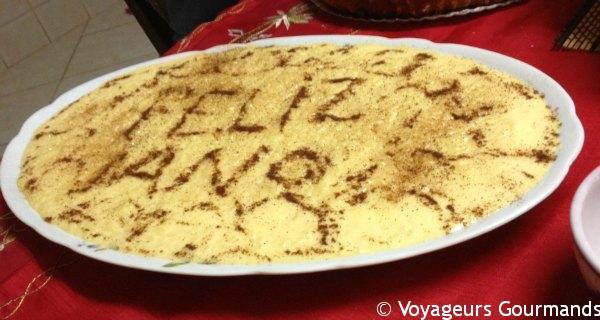
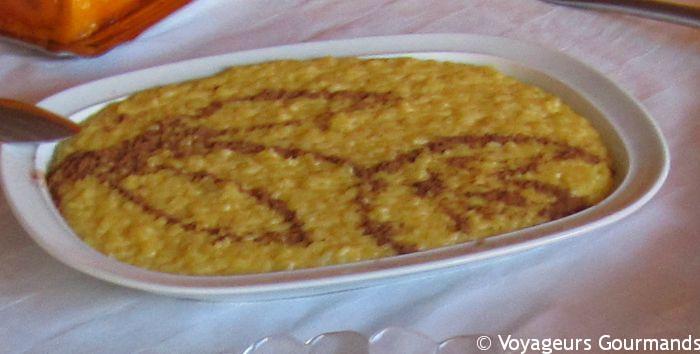
Literally “sweet rice”. It looks like the rice pudding you may know, but it contains egg yolks, which give it its golden colour, and lemon zest for a subtle flavour. You can find it all year round, but especially at Christmas, at Easter and at weddings. It is almost always dusted with cinnamon, often in patterns or words on top.
Aletria, the vermicelli dessert
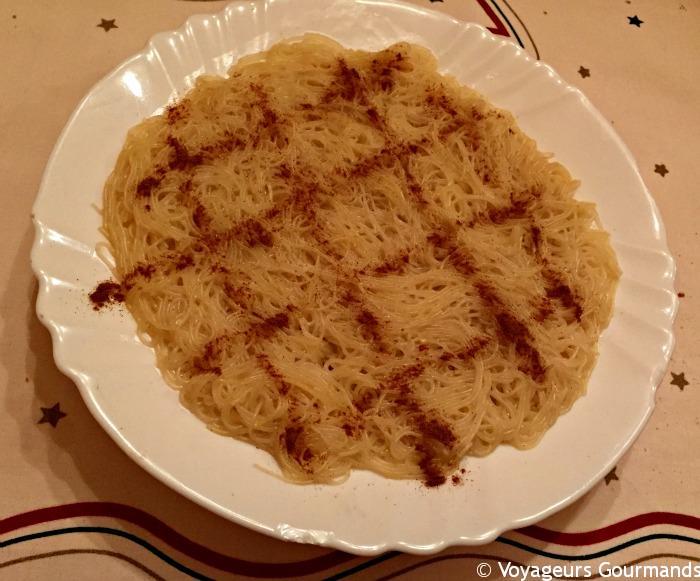
Sorry to those who love it, but in my opinion this dish could be one of the oddities of Portuguese cuisine. It works on the same principle as arroz doce, but it’s made with… very thin noodles, angel hair pasta. Yes, you read that right: sweet pasta! Its name, aletria, actually means “vermicelli” in Portuguese. I’m not a big fan of this dessert, but it’s hugely popular at the end of the year, especially in the north of the country. Like its cousin, it is usually dusted with cinnamon.
Bolo rei, the Portuguese king cake
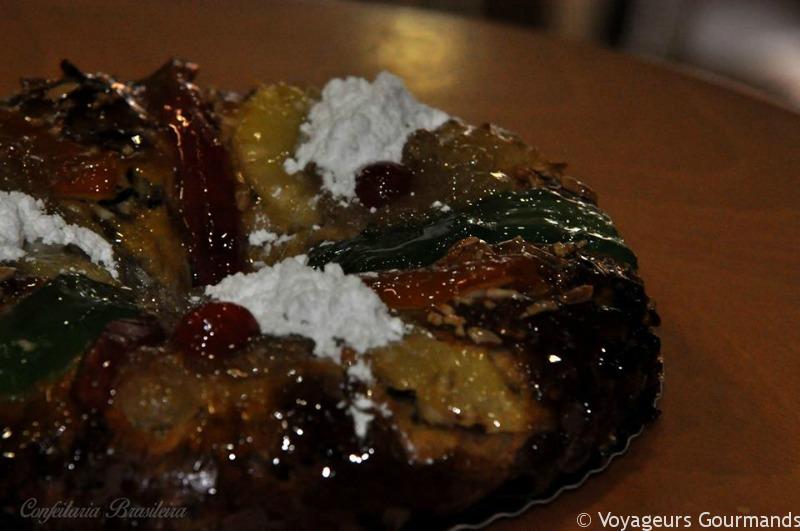
Its literal translation is “king cake”. Nothing like the French galette des rois and its almond filling: it’s a crown-shaped sweet bread topped with nuts and whole candied fruit. It’s eaten throughout the festive season, from early December until 6 January, Epiphany. In the past, it hid a dried broad bean: whoever found it had to buy the bolo rei the following year.
Bolo rainha, the version without candied fruit
Bolo rainha, or “queen cake”, is the version of bolo rei for those who don’t like candied fruit. Same crown-shaped sweet bread, but topped with nuts only: walnuts, almonds, pine nuts and raisins. A simpler cake, sold next to the bolo rei in every pastry shop in December.
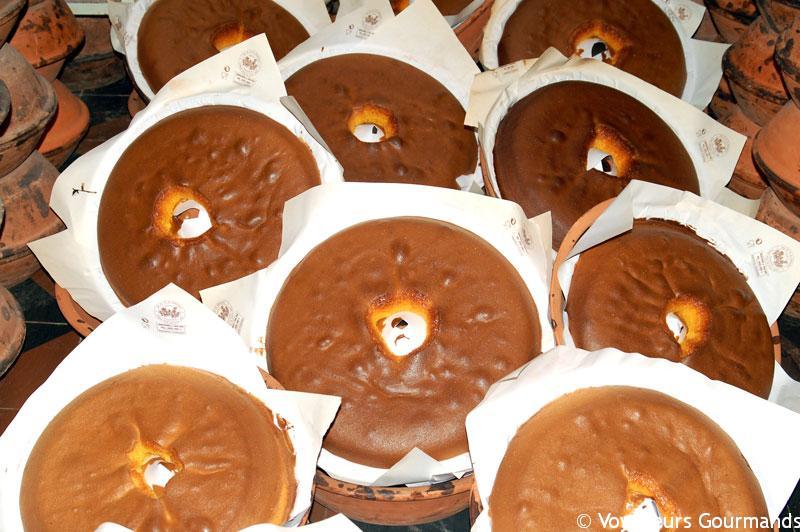
Pão de ló, the festive sponge cake
A very soft and rather tall cake that could be compared to a sponge cake. It’s baked in a tin with a hole in the middle. This cake is simple, sometimes a little dry, but it goes very well with a coffee or an orange juice. It’s a great classic at Christmas and Easter. Some towns have their own version, such as Ovar or Alfeizerão, where it is served still runny in the middle.
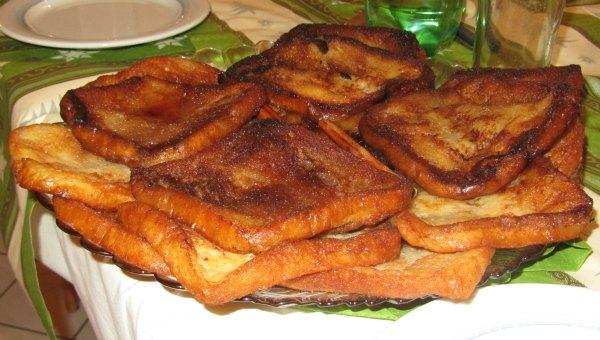
Rabanadas, Portuguese Christmas French toast
You could compare them to French toast. The bread, called cacete, is dipped in a mixture of red wine and sugar, or milk and sugar, then in egg before being fried. The slices are then rolled in sugar and cinnamon, or drizzled with syrup. As I don’t like red wine, I prefer the second version, usually made for children. But yes, it’s a real calorie bomb!
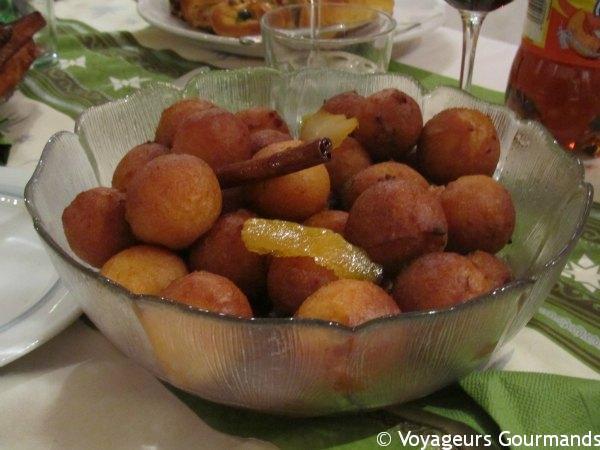
Sonhos de Natal, Christmas doughnuts
“Sonhos” means “dreams”. They are small, round, light doughnuts flavoured with cinnamon and fried, then dusted with icing sugar or rolled in sugar. There is also a pumpkin version, sonhos de abóbora.
Filhós, fried dough with cinnamon
More fried treats! Filhós are made from a yeast dough, stretched thin by hand, then fried and dusted with sugar and cinnamon. Depending on the region and the family, the dough contains pumpkin (filhós de abóbora) or is flavoured with orange or brandy.
Coscorões, crispy orange fritters
Similar to filhós, coscorões are squares of very thin pastry flavoured with orange, fried until nice and crispy, then dusted with sugar and cinnamon. They are a bit like French bugnes.
Azevias, fried chickpea pastries
These are small half-moon-shaped fried pastries, usually filled with chickpeas, sweet potato or egg cream, all sweetened and flavoured with cinnamon and lemon. Chickpeas in a dessert may come as a surprise, yet they are a great Christmas classic, especially in the Alentejo and the Lisbon region.
Broas castelares, sweet potato cakes
These small oval cakes made with sweet potato, almonds and cinnamon are typical of the Lisbon region at Christmas. Not to be confused with Madeira’s broas de mel, made with sugar cane honey and spices.
Lampreia de ovos, the egg yolk centrepiece
The most spectacular dessert on the table: a “lamprey” made entirely of egg yolks and sugar (fios de ovos and doce de ovos), decorated with candied fruit for the eyes and mouth. A recipe inherited from the convents, mostly bought from pastry shops for the festive season.
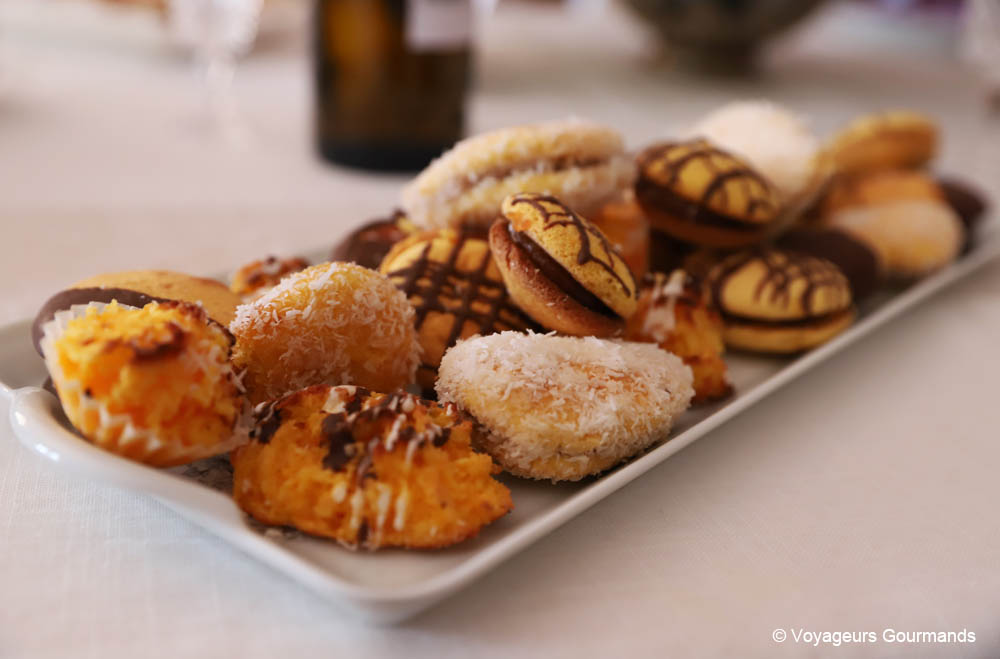
Sortidos, assorted biscuits
Literally “assortment”: a mix of small, assorted biscuits, with chocolate, coconut or marmelada (quince paste), to nibble with coffee over the festive season.
Where to try Portuguese Christmas desserts
From late November, Portuguese pastelarias fill up with bolos rei, sonhos and broas. In Lisbon, Confeitaria Nacional, opened in 1829 on Praça da Figueira, is known for being the first to sell bolo rei in Portugal. For more recommendations, see our article on where to eat in Lisbon. Outside Portugal, Portuguese bakeries and grocery shops also sell them in December, especially bolo rei.
💡 Good to know
The fried desserts (rabanadas, sonhos, filhós, coscorões) are mostly made at home for Christmas Eve and are best eaten fresh. If you travel to Portugal in December, pastry shops, or Portuguese friends, are your best chance to try them. Bolo rei, on the other hand, is everywhere, even in supermarkets.
🍰
So, which Portuguese Christmas desserts tempt you? Have you already tried any of them? Feel free to ask questions, or if you’d like a recipe, let me know in the comments! And to plan your trip, have a look at our article on visiting Portugal.
Portuguese Christmas desserts FAQ
Frequently asked questions are here!
What is the traditional Christmas dessert in Portugal?
The most iconic is bolo rei, a crown-shaped sweet bread topped with nuts and candied fruit. But the Portuguese Christmas table has plenty of others: rabanadas (a kind of French toast), sonhos and filhós (fried doughs), arroz doce (rice pudding), aletria, azevias and lampreia de ovos.
When is bolo rei eaten?
It appears in pastry shops in late November and is eaten throughout the festive season, from Christmas until 6 January, Epiphany (Dia de Reis).
What is the difference between bolo rei and bolo rainha?
Bolo rei is topped with candied fruit and nuts. Bolo rainha (queen cake) is the version without candied fruit: it is topped with nuts only, such as walnuts, almonds and pine nuts.
What is consoada?
It is the Christmas Eve meal, on the evening of 24 December. Traditionally, people eat salt cod with cabbage and potatoes, followed by a big table of desserts that everyone nibbles from until late in the evening.
Are rabanadas the same as French toast?
Yes, it is the same idea: slices of bread soaked in sweetened milk or wine, then in egg, before being fried and rolled in sugar and cinnamon. They are one of the most popular Portuguese Christmas desserts.