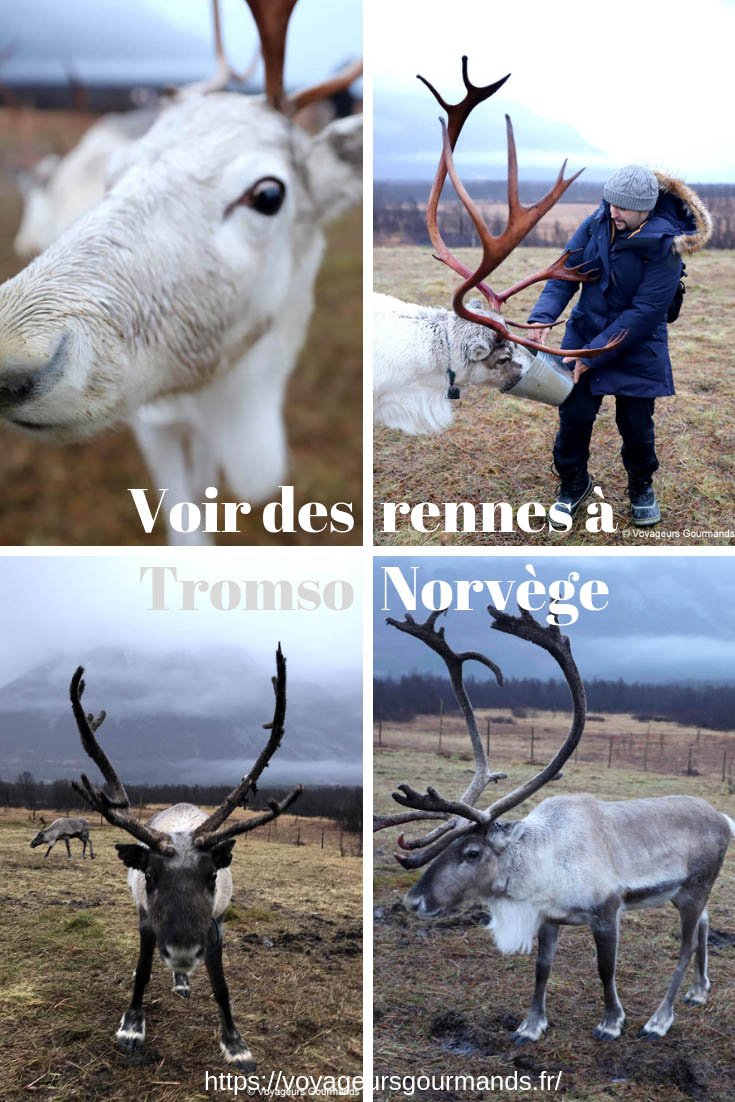
Where can you see reindeer in Tromsø? At one of the farms run by Sami herding families around the city, a 30 to 45 minute drive from the centre, from late November to late March. Set aside half a day and budget £115 to £160 per person, transport included.
Reindeer sledding is one of the things Tromsø is famous for. Sadly there was no snow at all during our stay, so that part was off the table. Never mind: we still wanted to meet the animals. So we spent a good half day with the reindeer in Tromsø, feeding the herd and learning about the Sami, the people who have been herding them for centuries.
✤✤✤
Where to see reindeer in Tromsø
There is no reindeer park or zoo in Tromsø. The animals you will meet belong to Sami herding families who open part of their land to visitors during the winter season. These farms cannot be visited on your own: you need to book a tour, and almost all of them include minibus transport from the city centre.
The camps are scattered all around the city. We went to Ramfjordbotn, 46 kilometres to the south-east, but there are others in the Lavangsdalen valley, on the island of Kvaløya to the west, and towards Breivikeidet to the north-east, on the road to the Lyngen ferry. The drive takes 20 to 45 minutes depending on the camp, and it is part of the pleasure: the road hugs the fjords and the snow-covered mountains.
Which tour should you book?
| 🦌 Tour type | ⏱️ Length | 💰 Typical price | 👍 Best for |
|---|---|---|---|
| Feeding + Sami culture | 3 to 4 hrs | £115 to £140 | Best value overall, ideal with children |
| Feeding + reindeer sledding | 4 hrs | £140 to £175 | Those set on the sleigh ride, knowing it is short |
| Sami dinner + northern lights | 5 to 6 hrs (evening) | £165 to £210 | Couples, if you have several nights in town |
| Short visit, no transfer | 2 to 2.5 hrs | £80 to £105 | Anyone with a hire car |
Reindeer farm or Sami camp: what is the difference?
This is the most common mix-up, and it explains a fair few disappointed reviews. A reindeer farm refers to the herding operation itself: the herd, the enclosures, the feeding. A Sami camp refers to the cultural side: the lavvo, the fire, the meal and the stories the family shares.
Around Tromsø the two almost always come together, since the same families host both. But the balance varies a great deal from one tour to the next: some spend forty minutes with the animals and two hours on the cultural talk, others the reverse. Read the itinerary carefully before booking, especially with young children who will struggle through a long seated session. In our case the balance was spot on: a good two hours with the herd, then lunch inside the lavvo.
Feeding the reindeer in Tromsø: our morning with the herd
We met at 9.30 am outside the Radisson Blu hotel in central Tromsø. Two men in traditional dress were waiting for us alongside two minibuses. Off we went towards Ramfjordbotn, 46 kilometres from the city. Just like the drive to go whale watching, the road is stunning and we were both buzzing with anticipation.
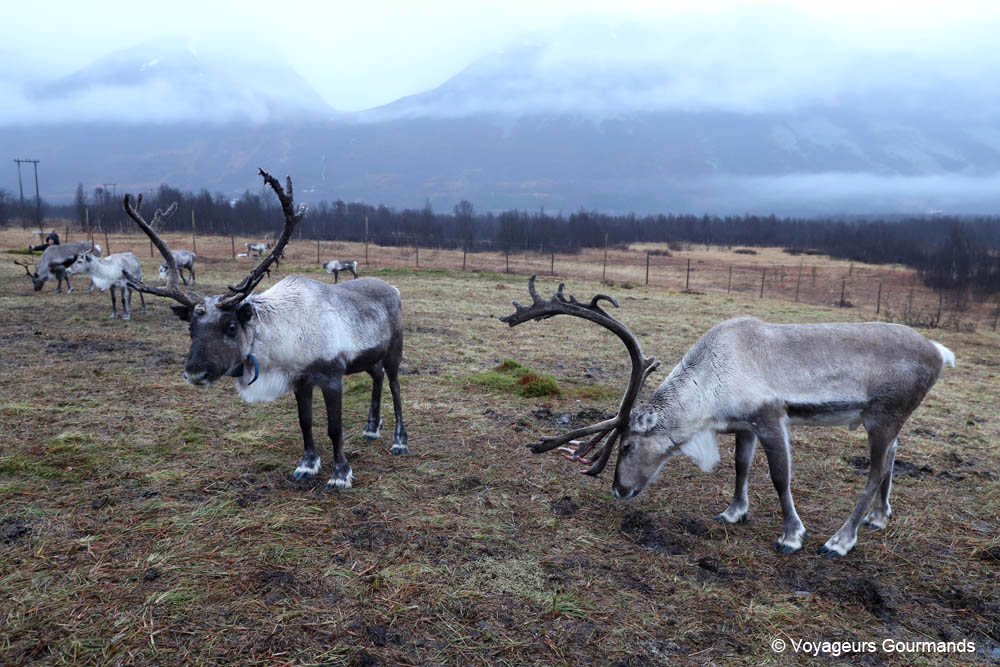
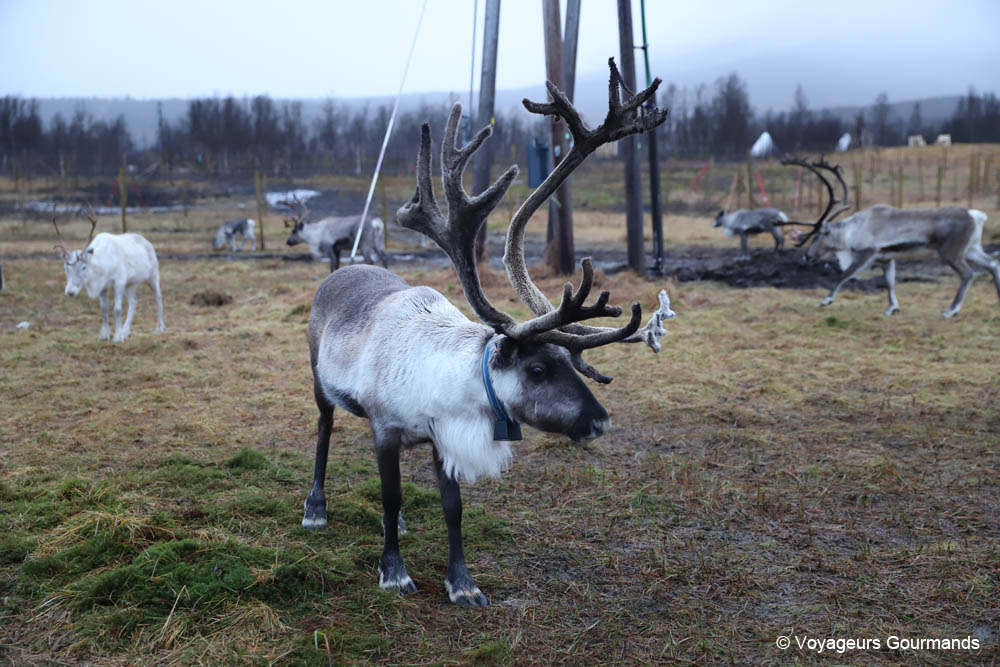
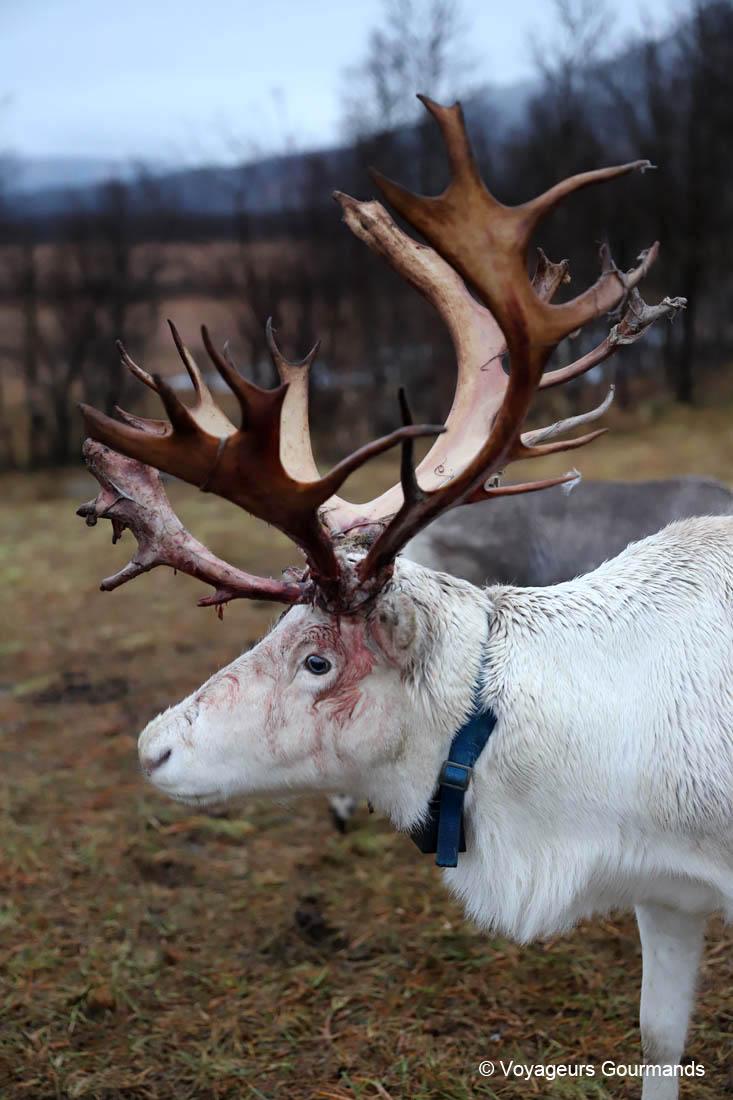
The moment we arrived at the camp we could see the reindeer, just a few metres away. We were offered thermal overalls so as not to get dirty; Alcino and I only took the heavy boots. We regretted it later. The reindeer are not gentle with their antlers, and some of them have blood on their heads. So if you want to keep your coat intact, take the overalls.
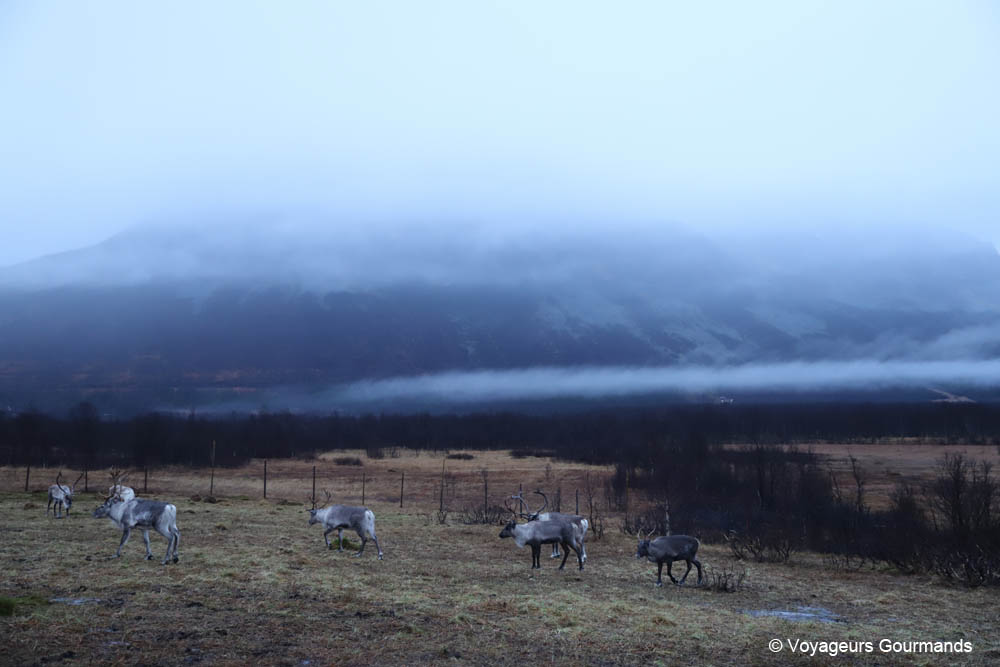
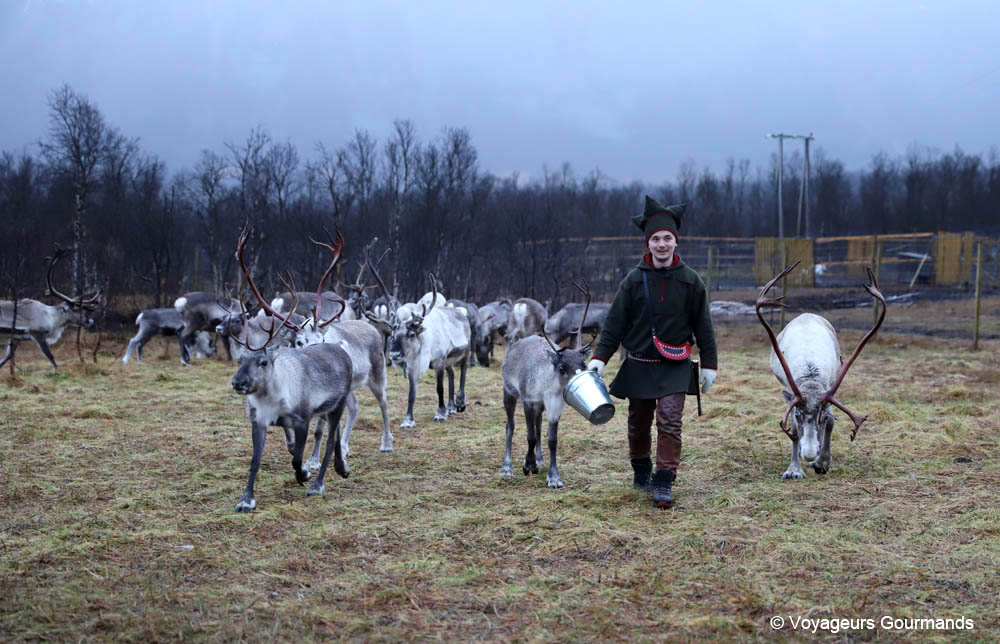
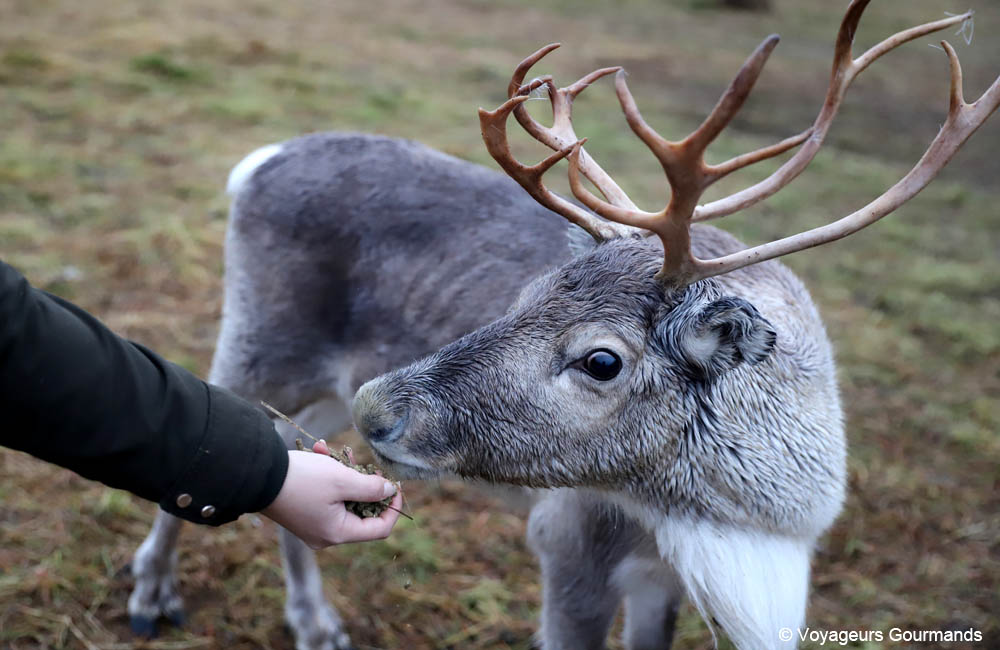
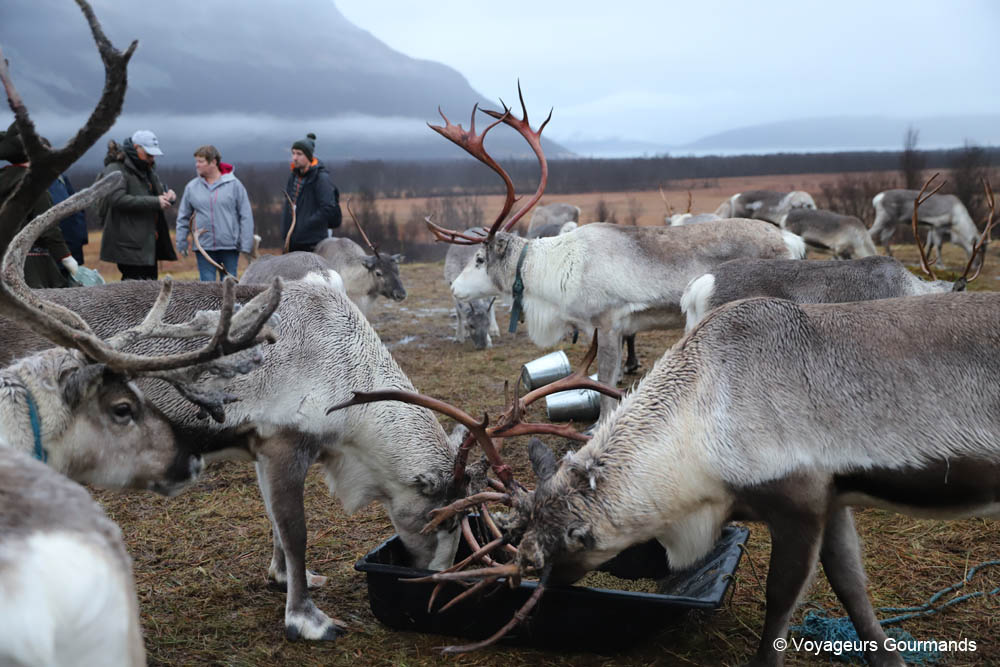
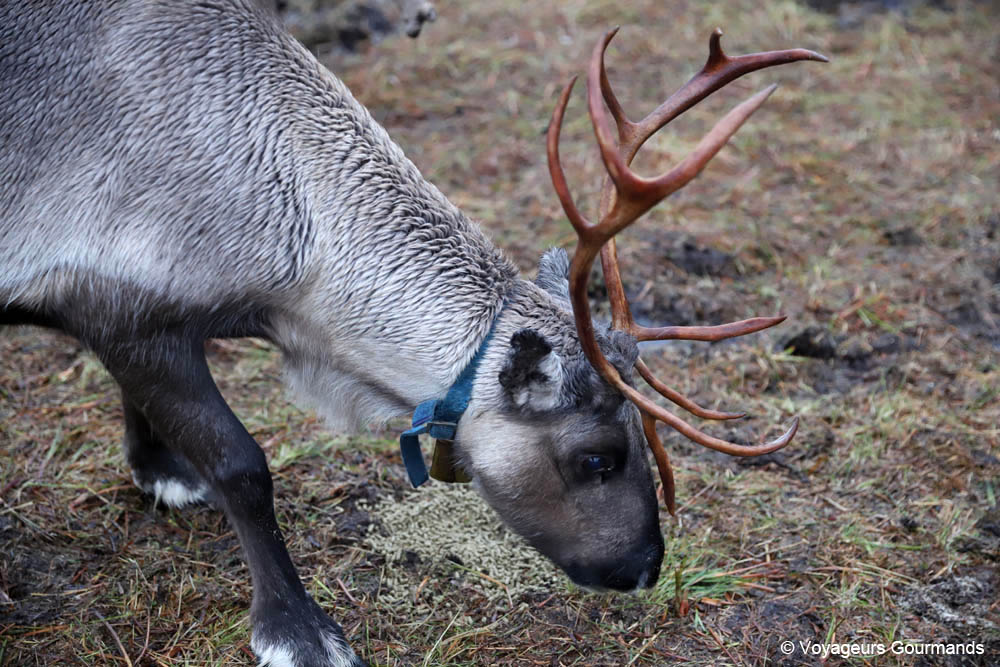
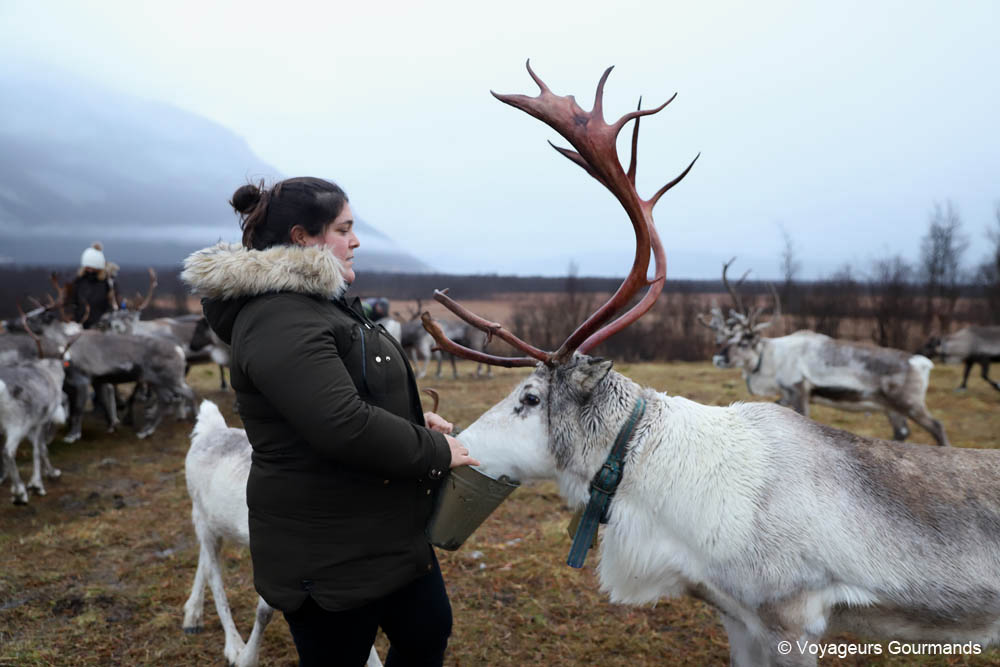
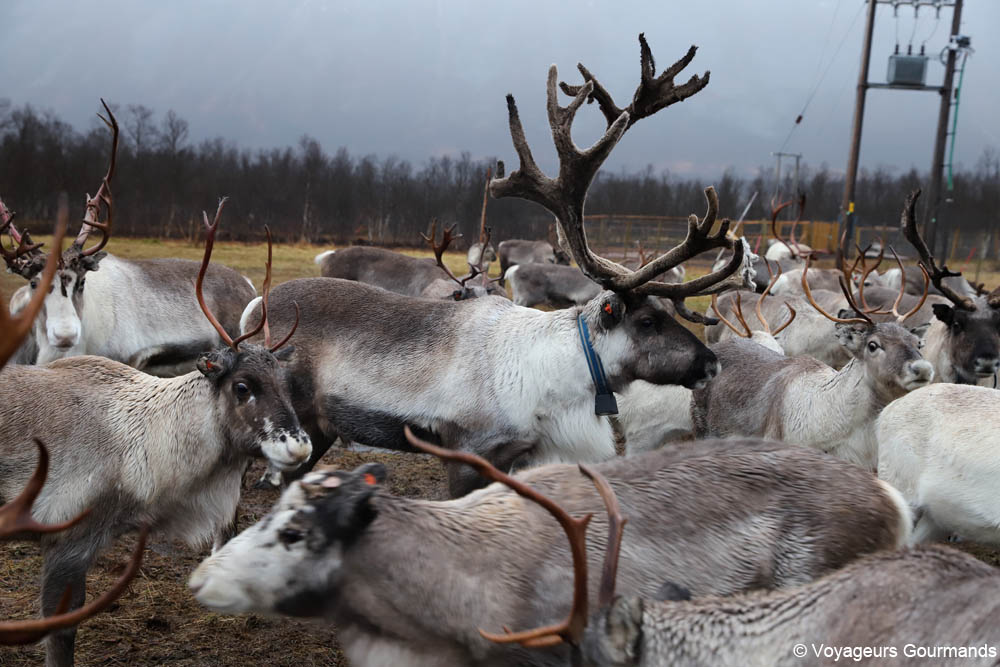
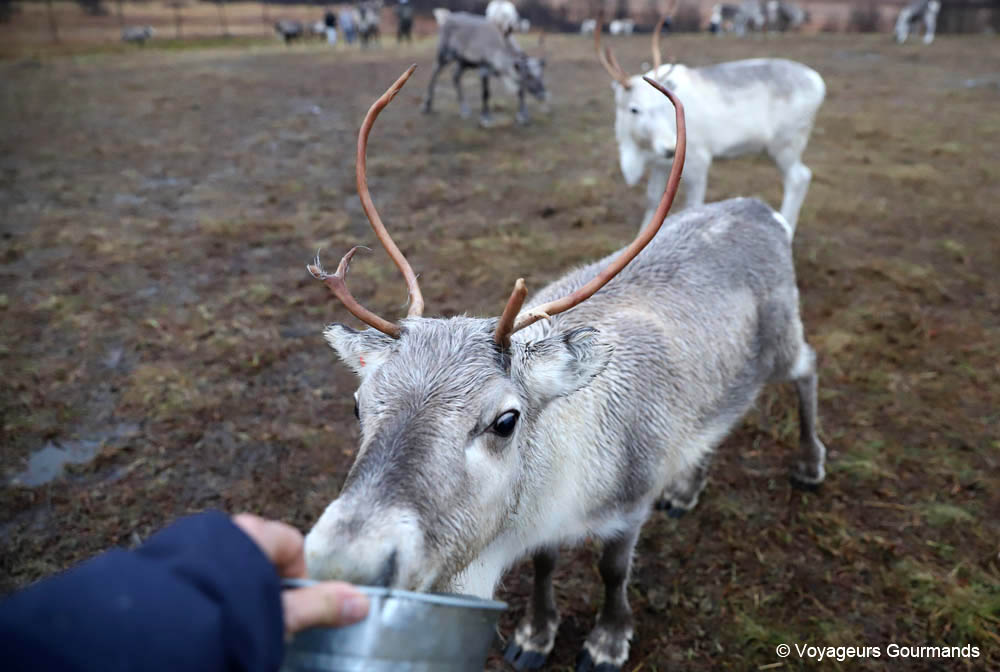
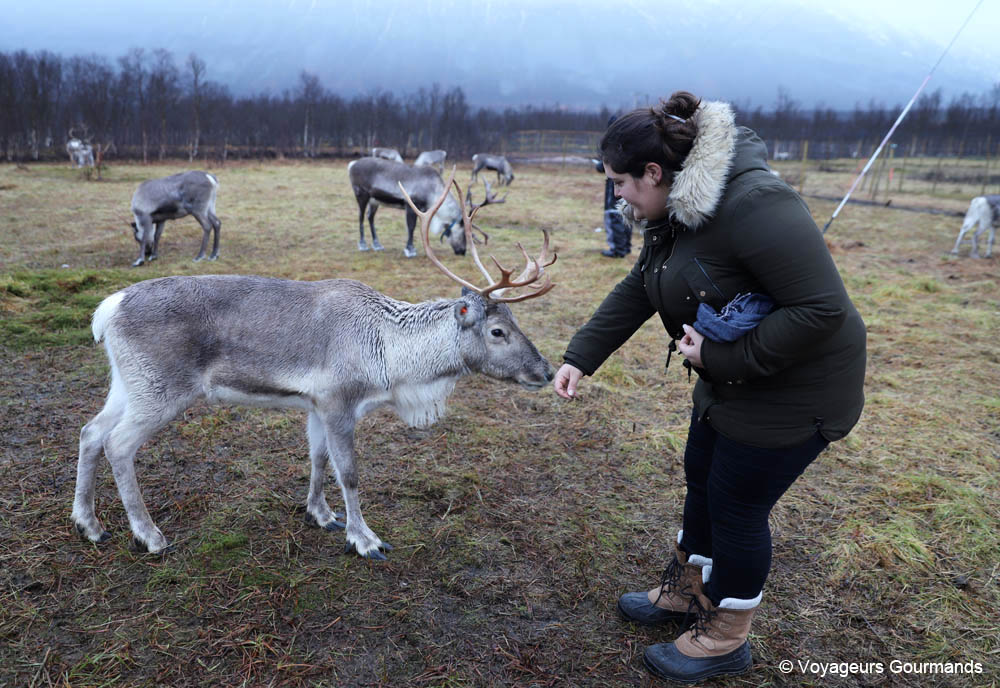
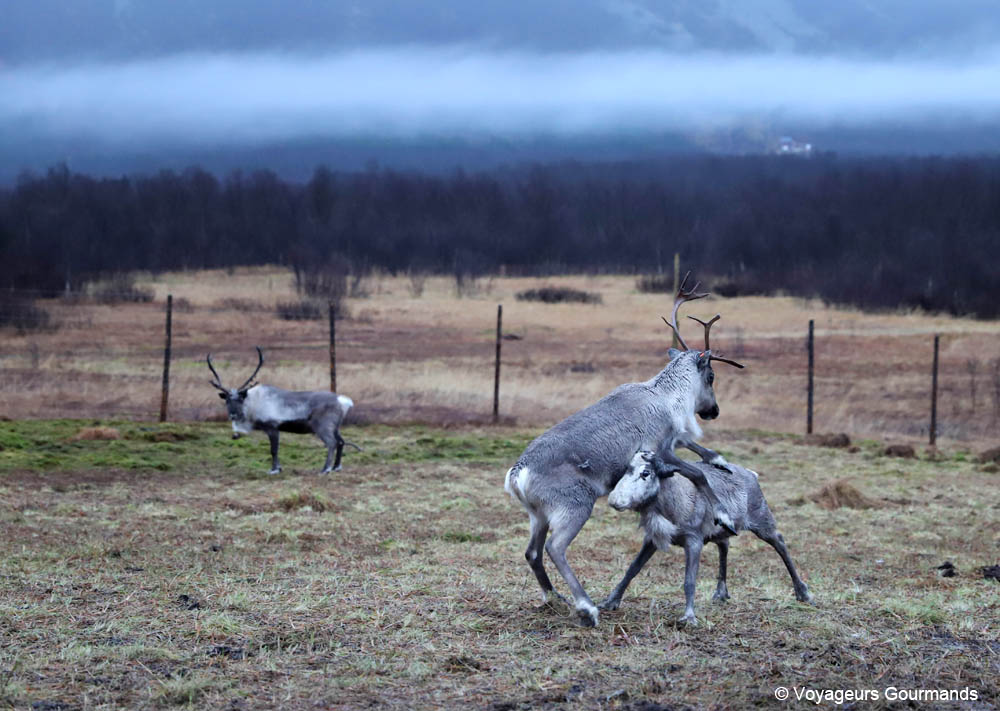
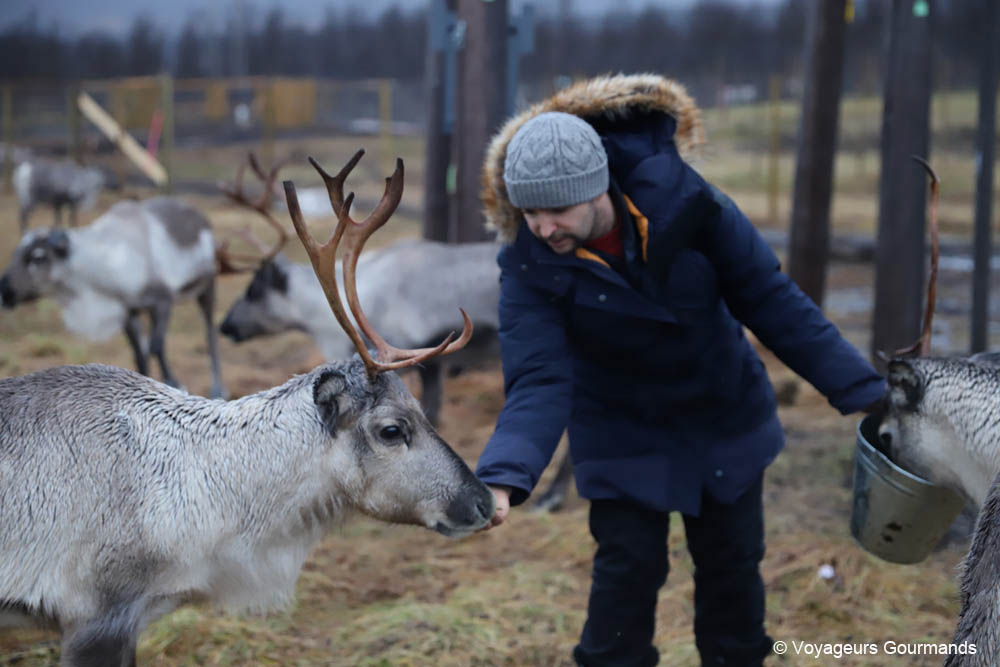
We were each handed a bucket of feed and in we went. You have to hold the bucket up on your shoulder at first, because the reindeer come charging towards you! After that you simply rest it on your thigh so it sits at their height. They all want to eat, they pile in, they squabble with one another, they shove you constantly, and there we were, grinning like two children who had just been handed a puppy. At first you want to photograph everything, then you quickly put the cameras down and simply enjoy the moment.
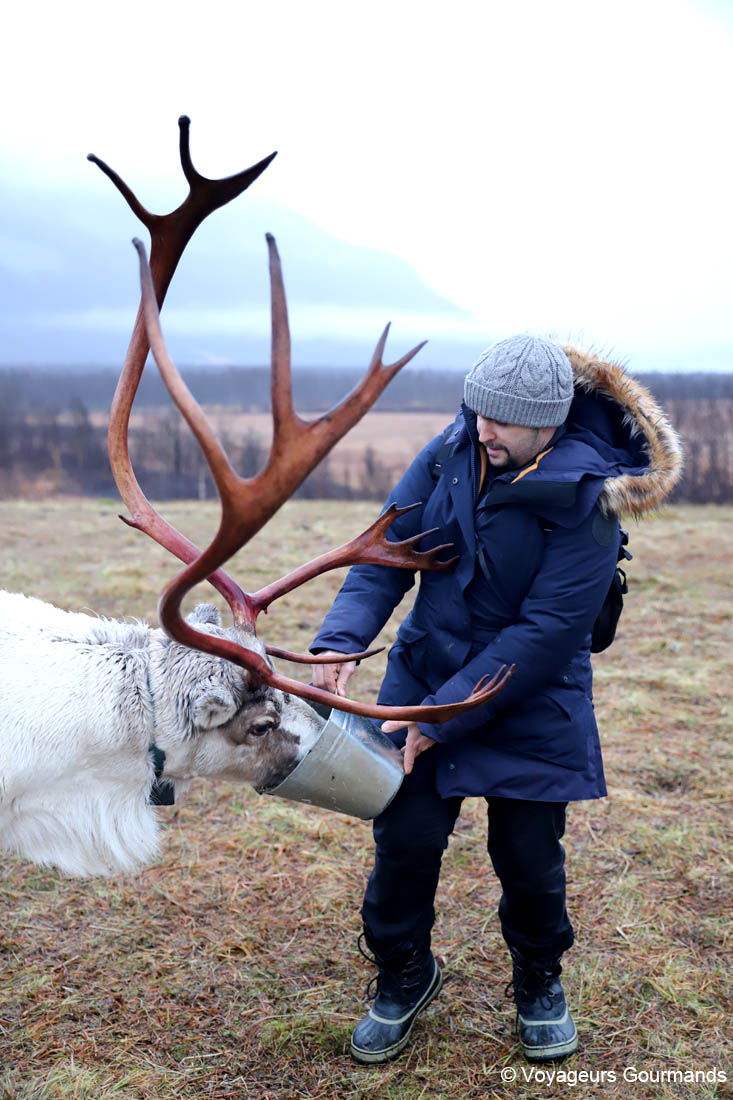
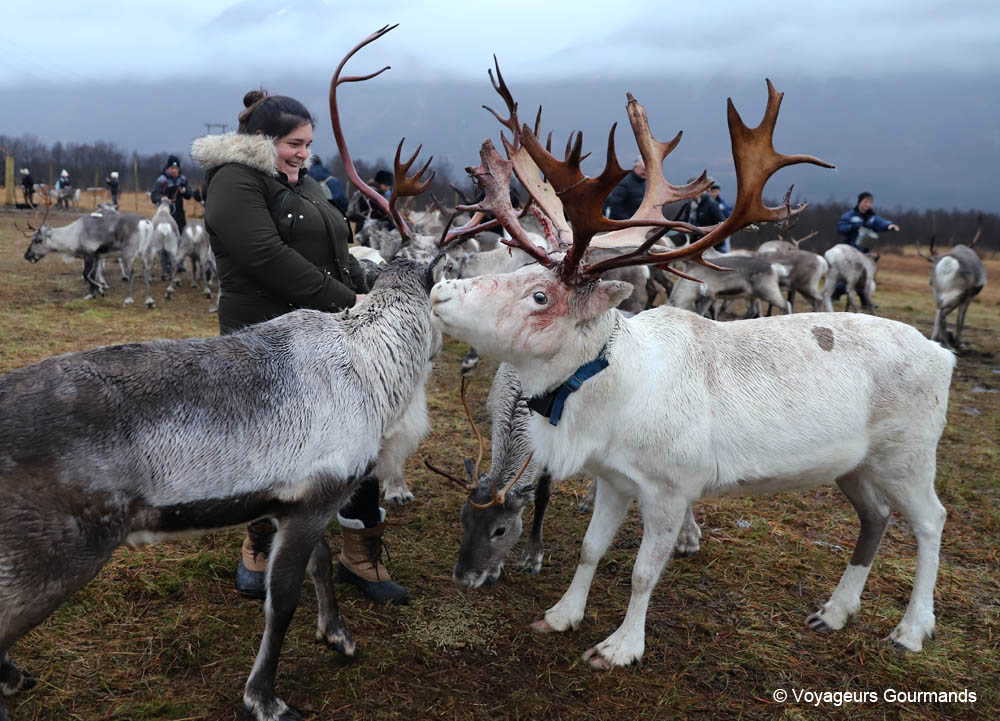
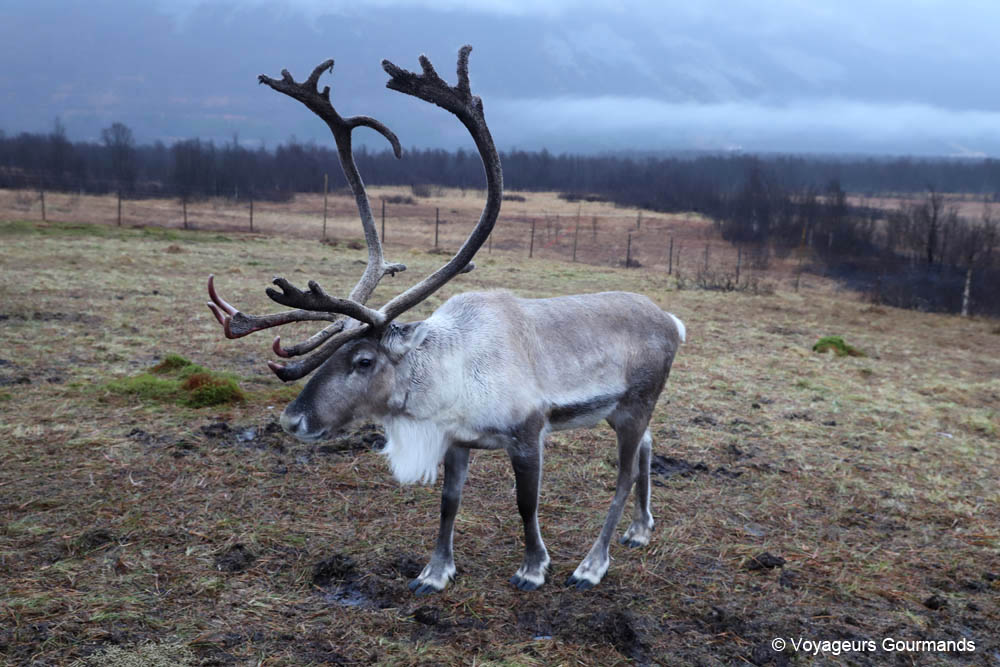
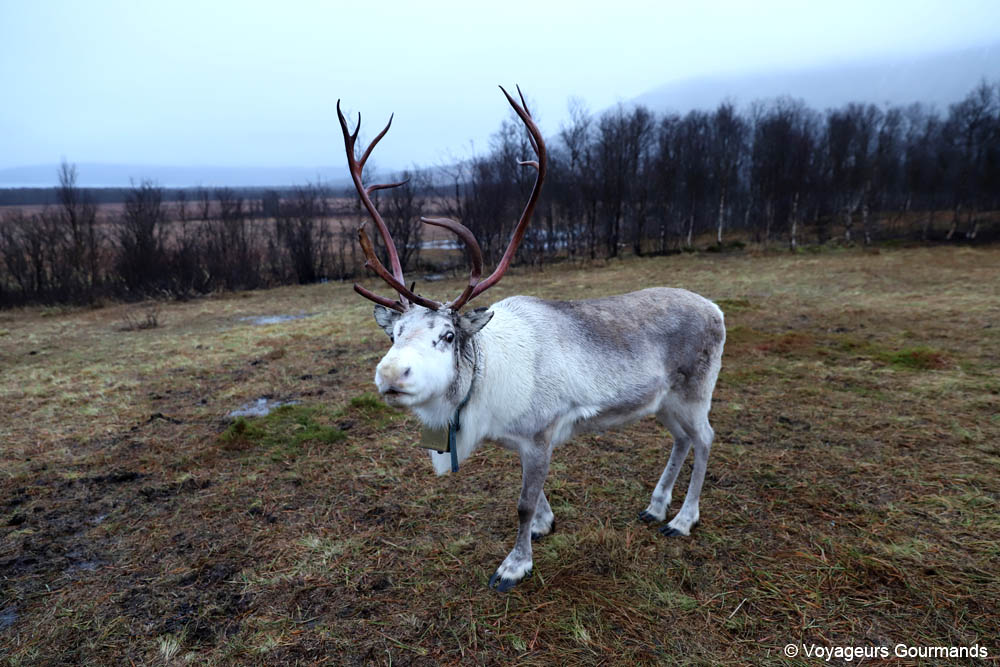
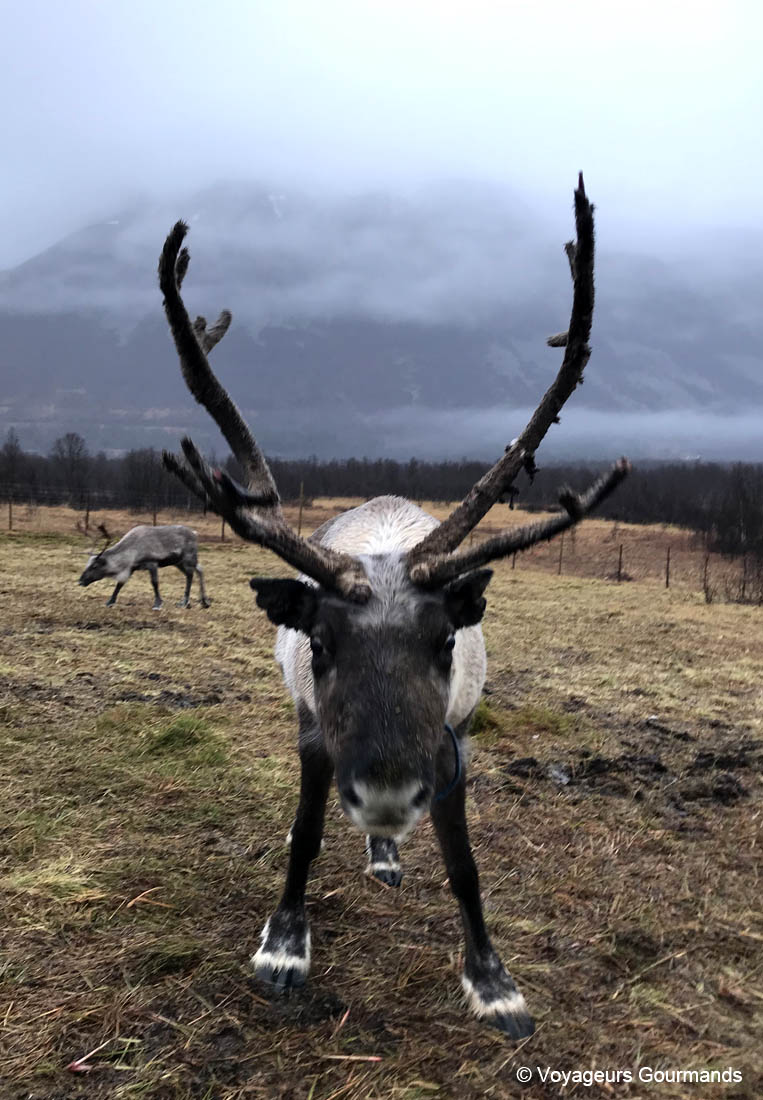
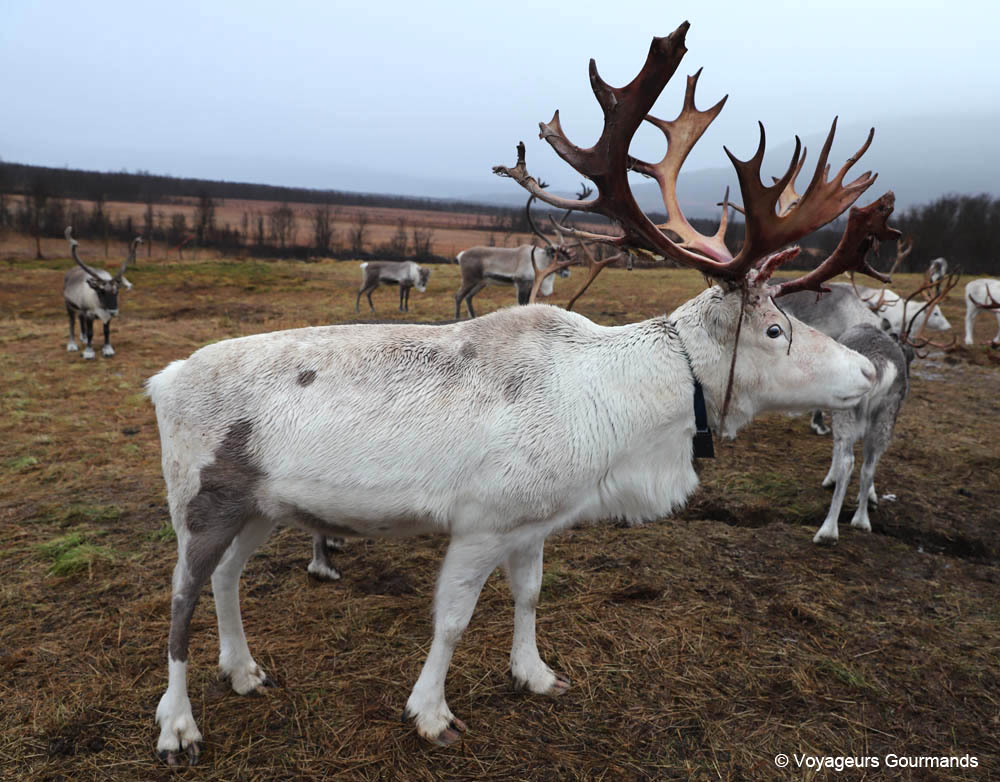
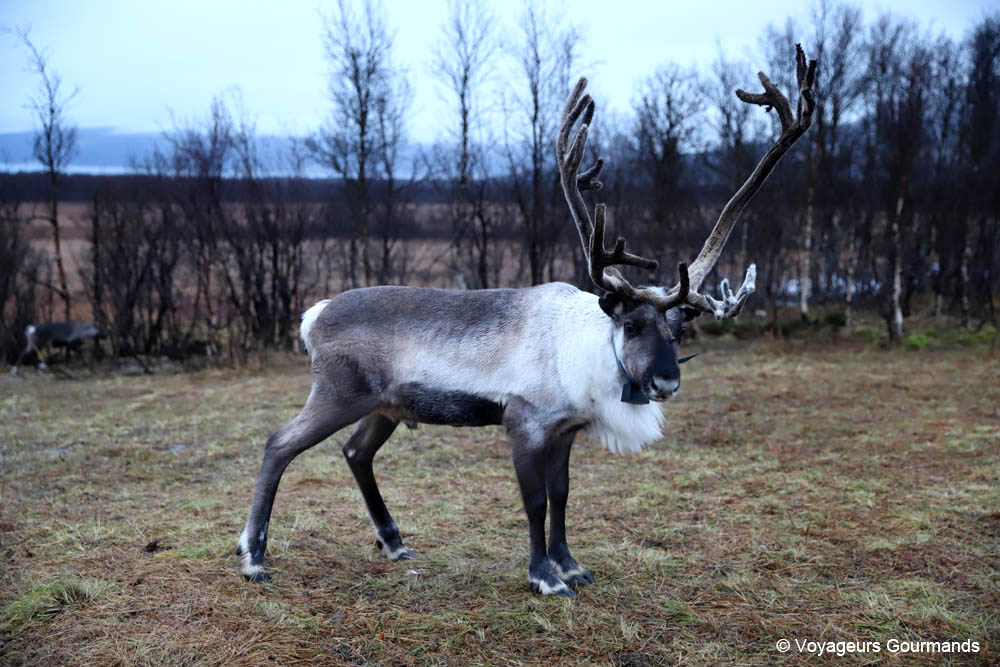
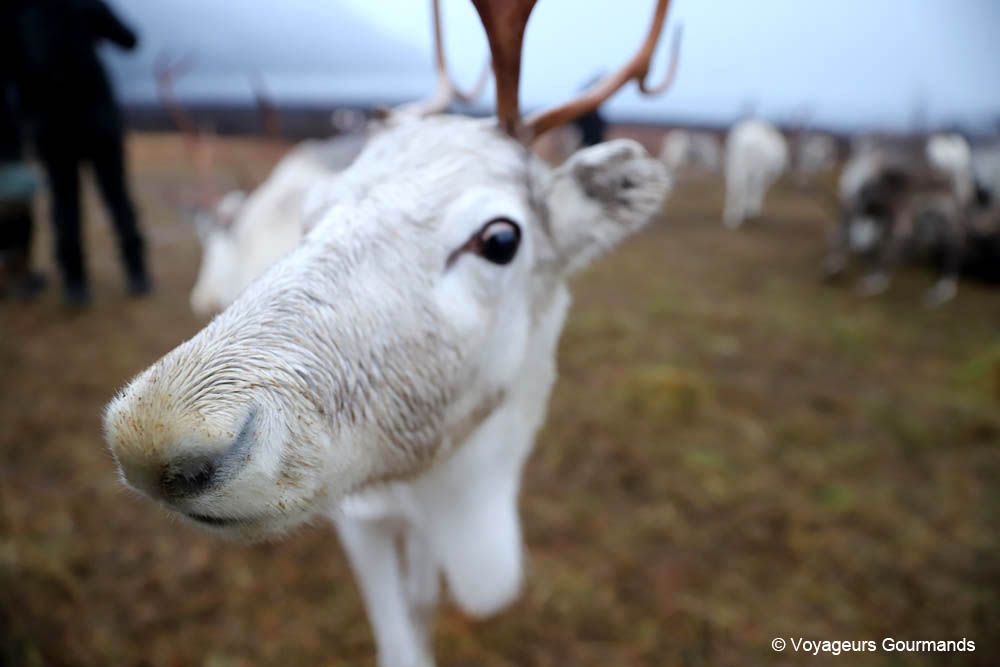
Every reindeer looks different: grey ones, white ones, some with antlers trimmed right back, some with antlers as hard as wood, others still covered in velvet… a few of them honestly look like calves.
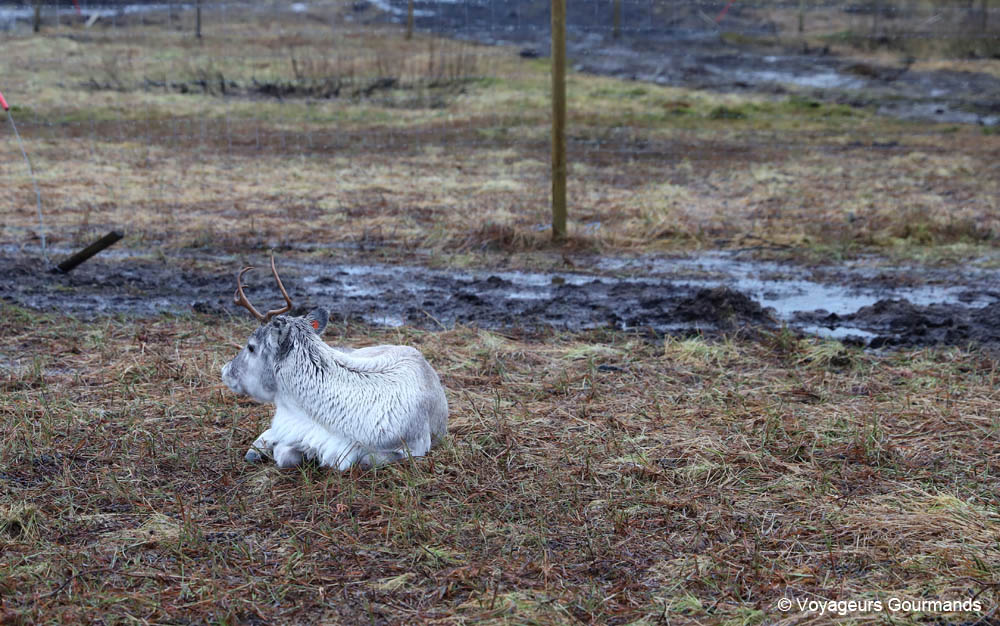
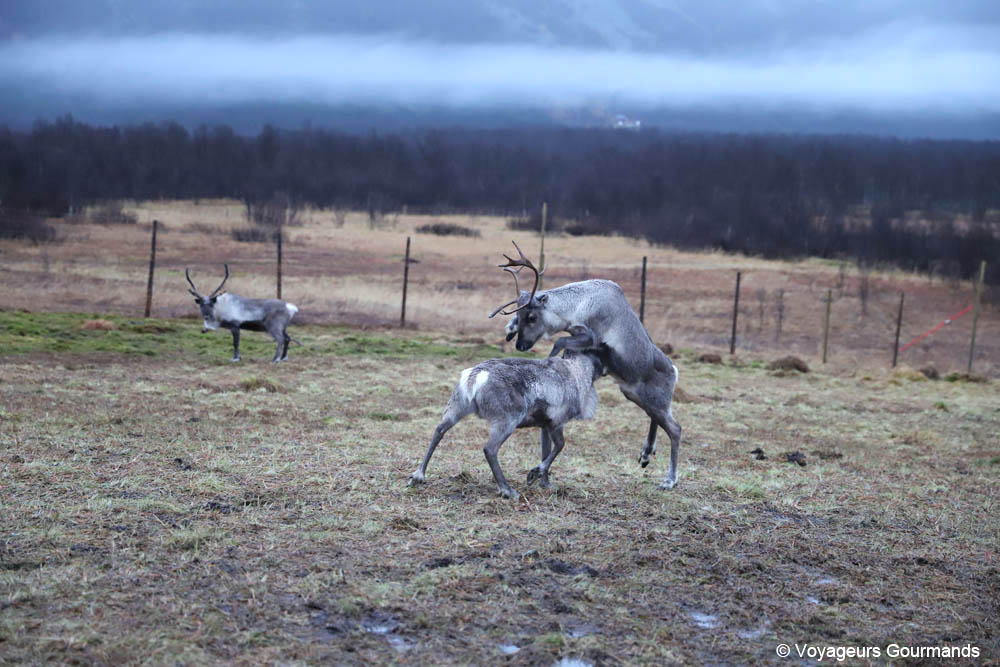
The guides explained that reindeer shed their antlers every single year. Did you know that? The cycle follows the males’ rutting season: the antler grows covered in velvet and threaded with blood vessels. The vessels then detach (which is where the blood comes from), the velvet falls away and what remains is the hard antler we all picture. They normally drop at the end of summer, but some males are castrated and their cycle is thrown off, which is why a single herd shows antlers of every shape. On some younger males the Sami trim them, because the surge of testosterone makes them fight and injure one another. The trimming is painless, much like clipping our nails. Another lovely detail: the antlers always grow back in exactly the same shape. The explanations were fascinating and we came away having learnt a huge amount.
One thing worth knowing before you go: males lose their antlers in early winter, while females keep theirs until spring. So if you are dreaming of the photo with the great sweeping antlers, in January or February it is the females who will give it to you.
After that we took photos with them, carried on feeding them and simply watched them. That part alone lasted a good two hours.
Sami culture
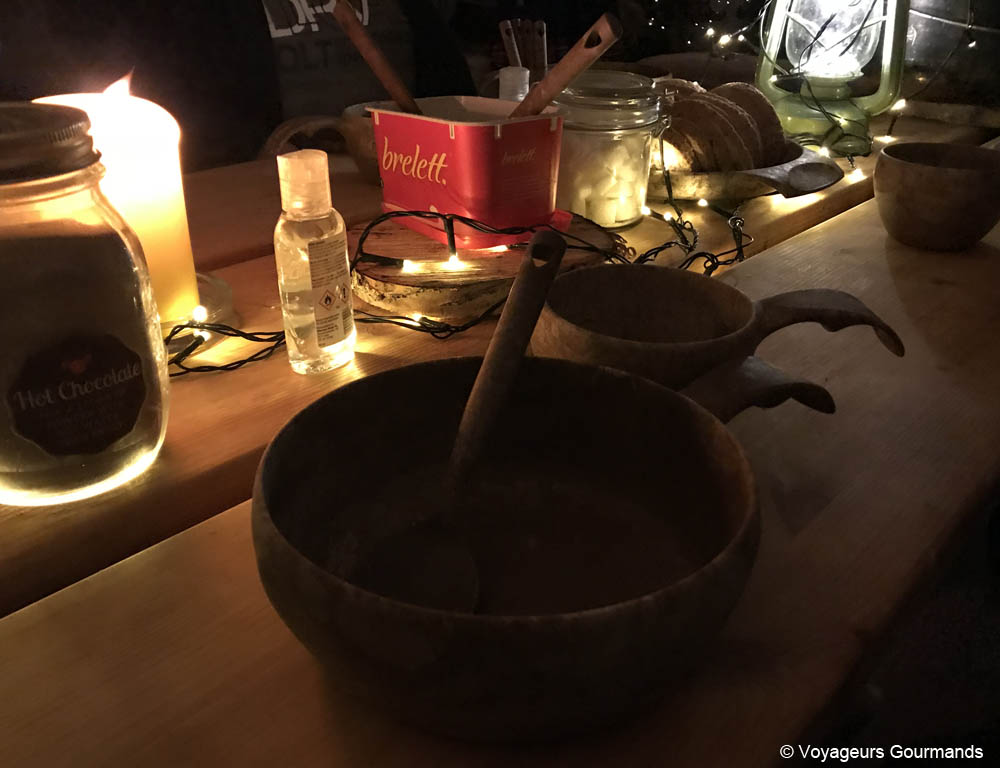
Once the animals had been fed, we settled inside a lavvo, a traditional Norwegian tent. Lunch was a reindeer meat soup served with bread, a Norwegian speciality, along with coffee.
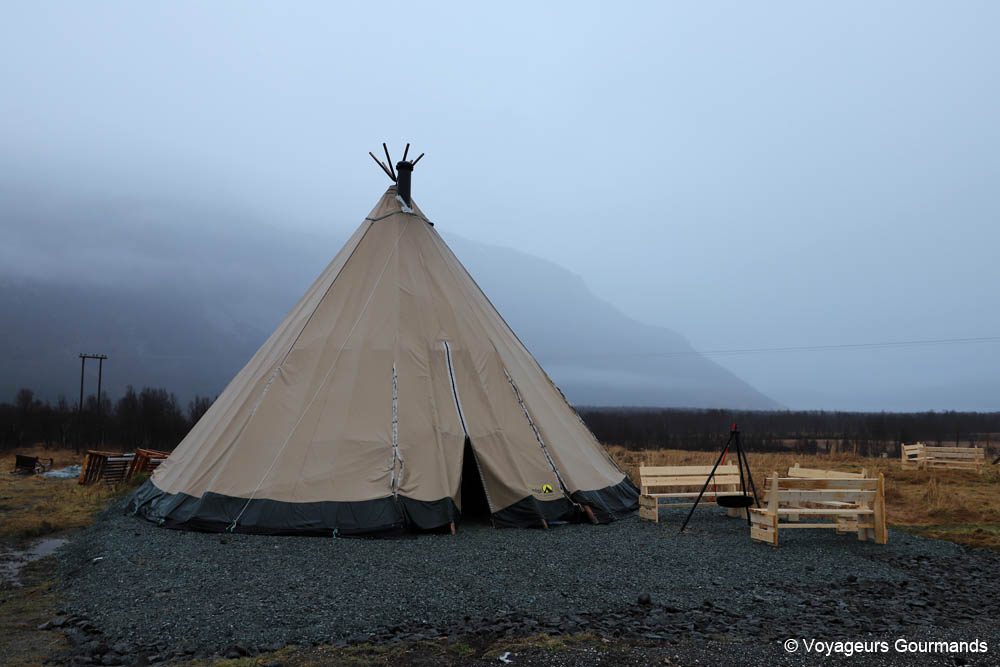
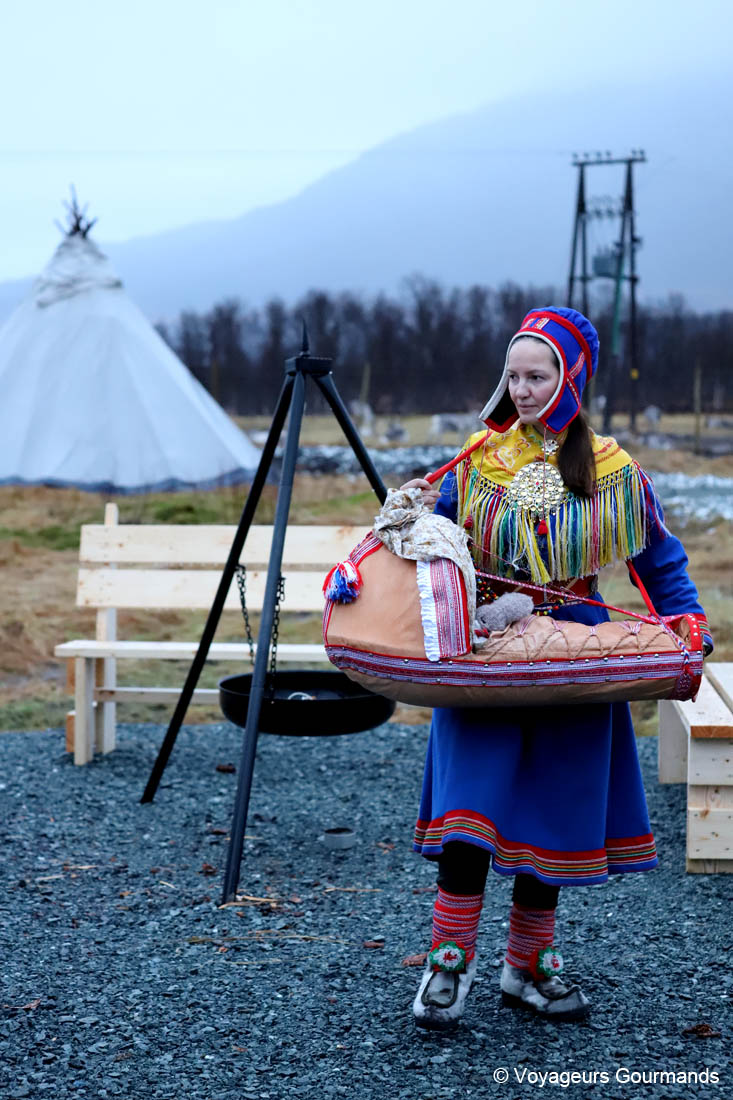
Over the meal, our guide Ken told us more about his culture and traditions. The Sami are an indigenous people of Lapland, found in Norway but also in Sweden, Finland and Russia. He talked about the importance of marriage, of the church, and of course of the herd. Today they live from herding and from fishing. He showed us the clothing they use against the extreme cold, all of it made from the animals: leather and fur.
A word on terminology, because it matters: the Sami have their own language, their own flag and even their own parliament, in Karasjok. The spelling is Sami or Sámi, and the word Lapp, long used in English, is now felt to be derogatory by part of the community.
To round off the meal we were treated to a demonstration of one of their most important traditions, the joik (pronounced yoik). It is an a cappella chant without words, expressing joy or sorrow.
Reindeer sledding in Tromsø: what to expect
We never got to do it, for lack of snow, and looking back we mind far less than we did at the time. Reindeer sledding has nothing in common with dog sledding: the animal walks, it does not run, and the loop usually lasts ten to twenty minutes, inside an enclosure or along a marked track.
If you are after speed and adrenaline, book husky sledding instead. If you are after something slow and quiet, at the animal’s own pace, reindeer sledding has real charm, but book it with the right expectations. Be wary too of overly generous descriptions on booking platforms: plenty of travellers come away disappointed by a ride cut down to a few minutes. Some farms have stopped offering it altogether, out of concern for the animals’ welfare, and focus on the feeding instead.
When is the best time to see reindeer in Tromsø?
The tour season runs from late November to late March, sometimes into mid-April depending on the snow. That is when the herds come back down towards the coast and the Sami families open their camps.
Outside that window the experience changes completely. In summer the reindeer move up to the high pastures and the few visits on offer take place without snow, with a much smaller herd. It is not without interest, and it is calmer and cheaper, but it is not the Arctic postcard you have in mind.
Our favourite window is January and February: the snow has settled, the blue light of the polar winter is gorgeous for photographs, and it is also the best time for the northern lights. December has the Christmas atmosphere going for it, but daylight is all but non-existent.
Reindeer in Tromsø: practical tips
➺ We booked with Tromso Lapland, a family-run company, and we do not regret the choice one bit. The guides are passionate, respectful of the animals and genuinely delighted to explain everything about the herd and their culture.
➺ Book well ahead. In December and over the February half-term, slots sell out weeks in advance.
➺ Thermal overalls and heavy boots are provided so you do not get dirty.
➺ Bring your own gloves and a spare pair of socks anyway. The overalls do their job, your extremities are your own problem.
➺ Lunch is a soup and a coffee, which is on the light side. Pack something to snack on.
➺ We stayed in Tromsø (Smarthotel) and the company collected us by minibus in the city centre.
➺ If you want to taste reindeer as well as meet it, most traditional restaurants in the city centre serve finnbiff, the classic sautéed reindeer stew. We went through the dishes worth ordering in our guide to Norwegian food in Tromsø.
➺ Everything about our trip to Norway is in our guide to visiting Tromsø.
Where else can you see reindeer in Norway?
Tromsø is the easiest starting point, but it is far from the only one. If your Norwegian itinerary takes you elsewhere, here is where to look.
Finnmark, in the far north, is the historic heart of Sami territory. Kautokeino and Karasjok hold the largest herds in the country, and the culture is especially alive during the Easter festival.
On the road to the North Cape, in summer, it is not unusual to come across semi-free herds right at the roadside on the island of Magerøya. No tour required: just a little patience and an easy foot on the accelerator.
In the Lofoten islands and on Senja, a handful of Sami families welcome visitors in a more intimate setting than around Tromsø. And Svalbard has its own endemic subspecies, the Svalbard reindeer, shorter and stockier than its mainland cousin, which you can meet all year round, sometimes in the streets of Longyearbyen.
Herded reindeer or wild reindeer?
The reindeer you meet in Tromsø are not wild. They are semi-domesticated, earmarked animals belonging to Sami families, which is why they will eat straight out of your hands without a trace of fear.
Norway is also home to genuinely wild reindeer, somewhere between 30,000 and 35,000 animals spread across around twenty protected areas in the centre and south of the country. The largest herd lives on the Hardangervidda plateau, the largest mountain plateau in Europe. They can also be seen in Rondane and Dovrefjell-Sunndalsfjella national parks, where the Snøhetta viewpoint, a 1.5 kilometre walk from Hjerkinn, forms part of the wild reindeer visitor centre.
Here, though, nothing is guaranteed. These animals are wary and keep their distance from humans, and spotting them takes walking, binoculars, an early start and a great deal of patience, between late spring and early autumn. One rule is absolute: stay on the paths and keep your distance, because the wild reindeer is a threatened species. In short, in Tromsø you meet reindeer, on the Hardangervidda you look for reindeer. They are not remotely the same holiday.
✤✤✤
Disappointed as we were to miss the sledding, we absolutely loved this excursion! Seeing reindeer in Tromsø was an unforgettable morning and we could hardly take our eyes off them. Watching animals this unusual is not something that happens every day. Our guides were wonderful, and we are grateful for the lovely day we spent in their company!
Frequently asked questions about reindeer in Tromsø
Where can you see reindeer in Tromsø?
At one of the reindeer farms run by Sami herding families around the city, a 20 to 45 minute drive from the centre. We went to Ramfjordbotn, 46 kilometres away, but there are also camps in Lavangsdalen, on the island of Kvaløya and towards Breivikeidet. These farms cannot be visited independently: you need to book a tour, which almost always includes minibus transport from Tromsø.
What is the difference between a reindeer farm and a Sami camp?
A reindeer farm refers to the herding operation itself, with the herd and the feeding. A Sami camp refers to the cultural side: the lavvo, the meal and the family’s stories. Around Tromsø the two are almost always combined in the same tour, but the balance varies considerably from one operator to the next.
How much does a reindeer tour in Tromsø cost?
Expect £115 to £140 for a visit with feeding and Sami culture, £140 to £175 with sledding, and £165 to £210 for the Sami dinner and northern lights option. Return transport from the city centre and the loan of thermal overalls are usually included.
Can you feed the reindeer in Tromsø?
Yes, and it is the highlight of the experience. You are handed a bucket of feed and walk straight into the enclosure. The reindeer are semi-domesticated and come towards visitors without any fear: hold the bucket on your shoulder at first, then rest it on your thigh so it sits at their height.
When is the best time of year to see reindeer in Tromsø?
The season runs from late November to late March. January and February offer the best conditions: settled snow, beautiful winter light for photographs and a strong chance of northern lights. In summer the herds move up to the high pastures and visits are far more limited.
Is reindeer sledding worth it?
It is a slow ten to twenty minute ride, nothing like dog sledding. It has its charm, but if you want speed, book husky sledding instead. Some farms have stopped offering it altogether out of concern for animal welfare.
Do reindeer have antlers all year round?
No. Antlers are shed and regrow every year, always in the same shape. Males lose theirs in early winter, while females keep theirs until spring. In January or February it is mainly the females that carry the large antlers.
Where can you eat reindeer in Tromsø?
Reindeer is on the menu in most traditional restaurants in the city centre, usually as finnbiff, a sautéed reindeer stew served with mashed potatoes and lingonberries. At the Sami camps themselves it is served as bidos, a slow-cooked stew, which is exactly what we were given inside the lavvo. Our guide to Norwegian food in Tromsø covers the dishes and the places worth booking.
Where can you see wild reindeer in Norway?
In the national parks of central and southern Norway: Hardangervidda, home to the largest herd, along with Rondane and Dovrefjell-Sunndalsfjella. Spotting them takes walking, binoculars and a lot of patience, ideally early in the morning between late spring and early autumn.