


If you were hesitating, hesitate no more: go and visit Bruges, this stunning city in Belgium with its picturesque canals! We absolutely LOVED it! (In fact, we’ve been back 3 or 4 times since we first wrote this article…)
Before our trip, people told us: “It’s pretty, but not very big, and there isn’t much to do in the historic centre, 3 days might be too much…” Well, we found quite the opposite: there are loads of things to do, see and visit in the city, and Bruges is made for leisurely strolls along its centuries-old canals. We certainly kept busy, and we already know we’ll be back – there, we’ve said it!
❤ The icing on the cake? Bruges is a fantastic destination for a foodie weekend, where you can feast on waffles, Belgian chocolate… Go for it!
✤✤✤
Things to do in Bruges in 1, 2 or 3 days
With 1 day, focus on the Markt, the Belfry and a boat trip along the canals – the heart of the historic centre is easy to explore on foot.
With 2 days, add the Beguinage, Minnewater Park and a foodie museum (chocolate or fries).
With 3 days, head out to the windmills in the north of the city and treat yourself to a bike ride to Damme.
Visiting Bruges, the Venice of the North
Located in West Flanders, Bruges is one of Belgium’s most iconic destinations, famous for its beautiful canals. Its historic centre, a UNESCO World Heritage Site, bears witness to the city’s medieval grandeur and history. Wandering through its cobbled lanes, past historic houses and picturesque canals, you discover a city where every detail recalls its golden age. Whether you have a day or a weekend, Bruges surprises with the richness of its heritage and the elegance of its setting – a true living painting. However long you stay, Bruges charms visitors with its romantic canals, Gothic mansions, Belgian culinary specialities and lively squares. You can do everything on your own, but we still recommend a short guided tour to learn more about Bruges!
What to see and do in Bruges
The Markt (Grote Markt) and its belfry
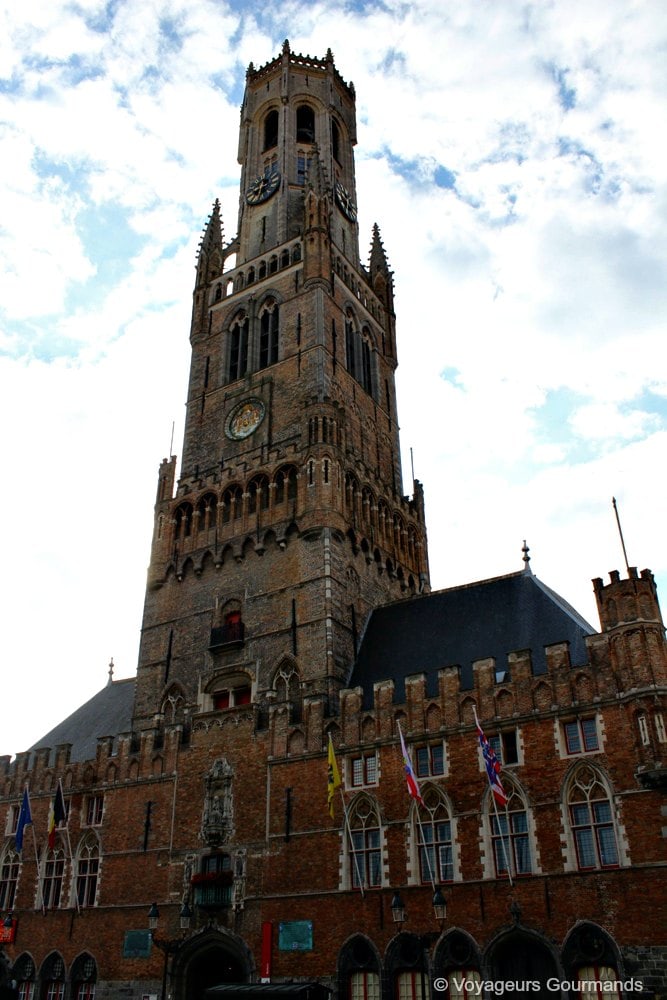
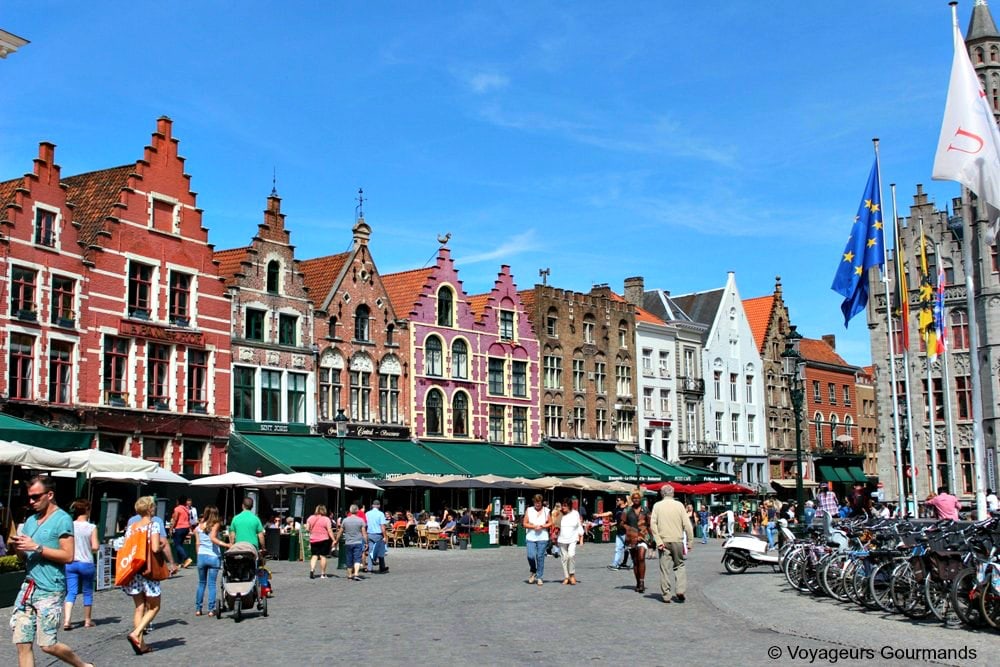
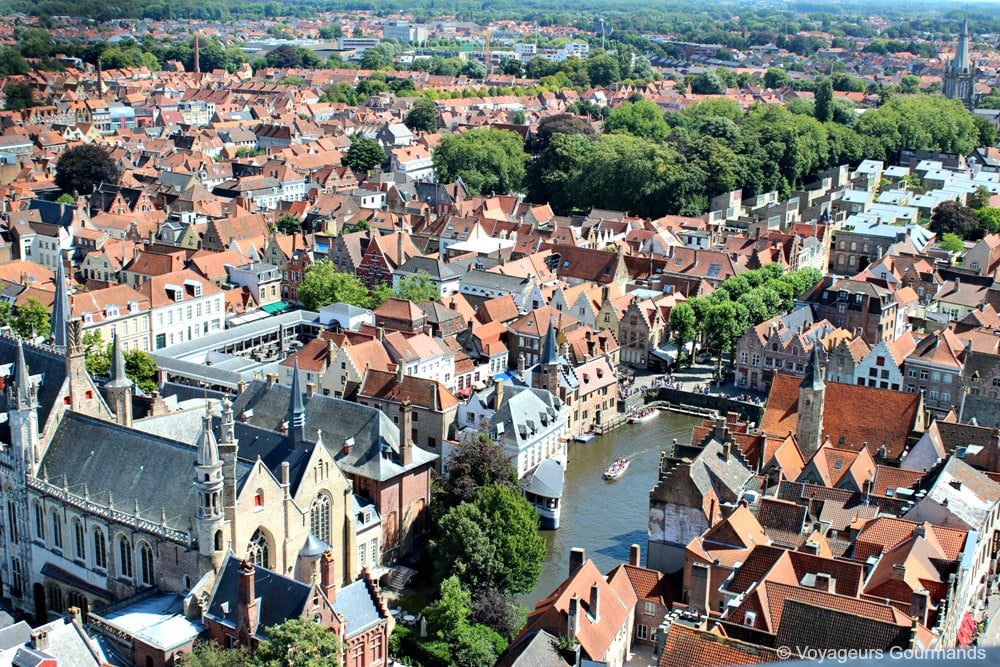
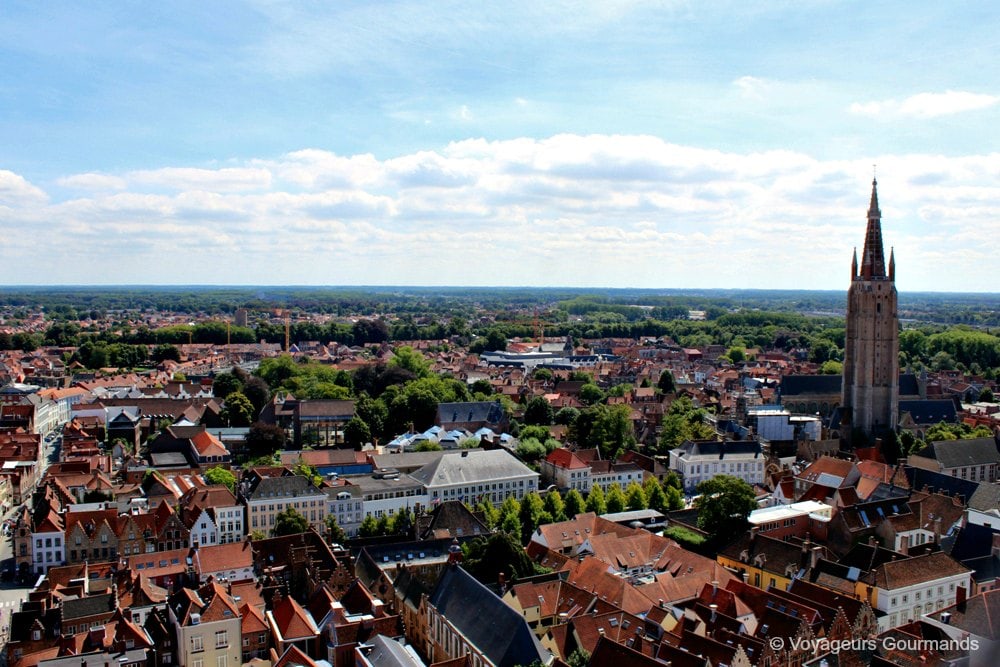
In the heart of the city, the Markt (Grote Markt) of Bruges, a true historic gem, impresses with its harmonious medieval façades and its elegant belfry. This iconic belfry towers over the square, surrounded by other beautiful buildings and colourful little houses reflecting several centuries of architecture. To enjoy the panoramic view from the belfry, you have to climb its 366 rather steep steps. From 83 metres up, you get an incredible view over the historic centre and the canals of Bruges. The wire mesh limiting the view is a bit of a shame… But we found a way around it! 🙂
The Basilica of the Holy Blood and the Burg
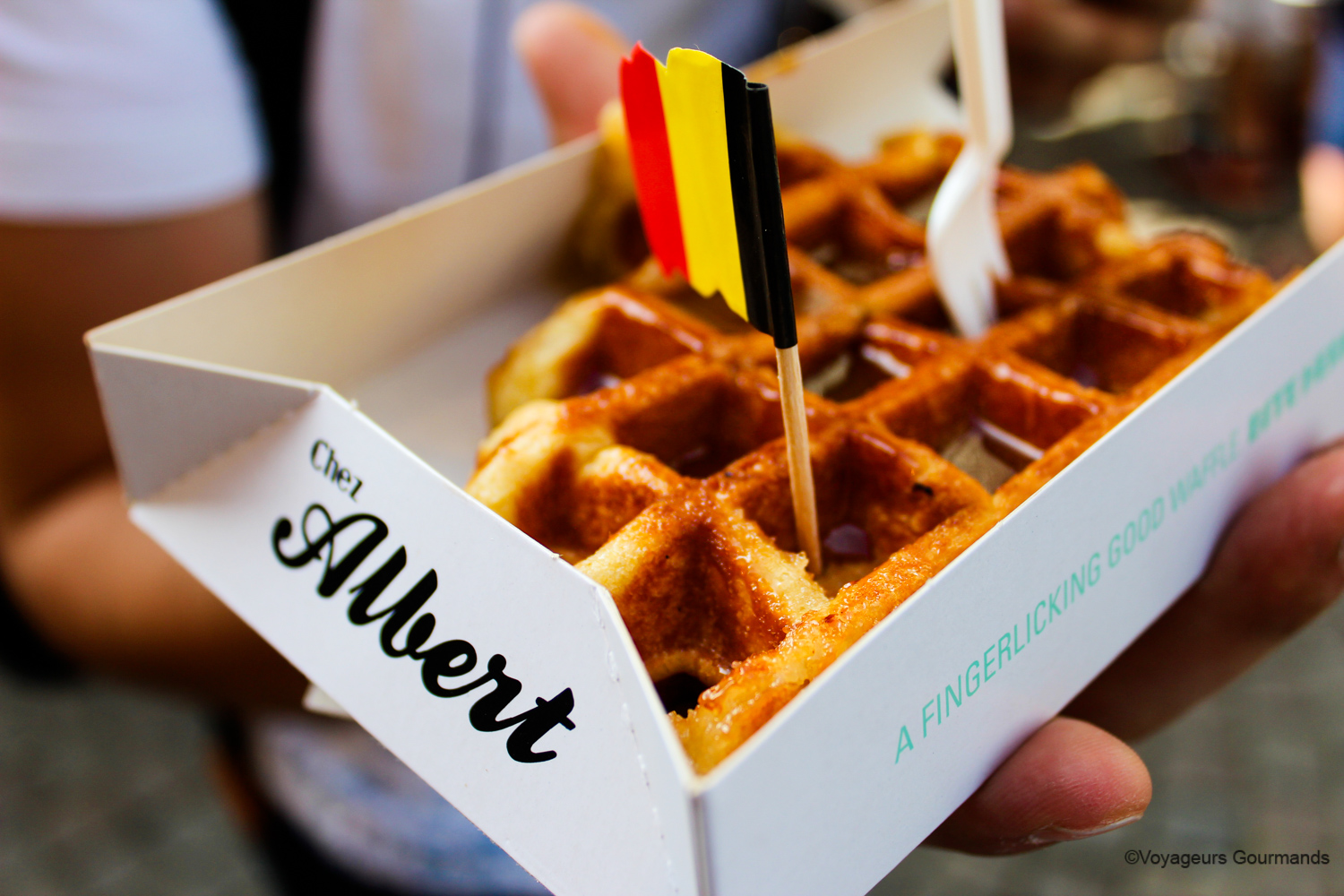
The Burg is right next to the Markt, just 2 minutes away via Breidelstraat… And while you’re passing, grab a waffle at Albert’s, an unmissable Belgian speciality: they’re to die for!
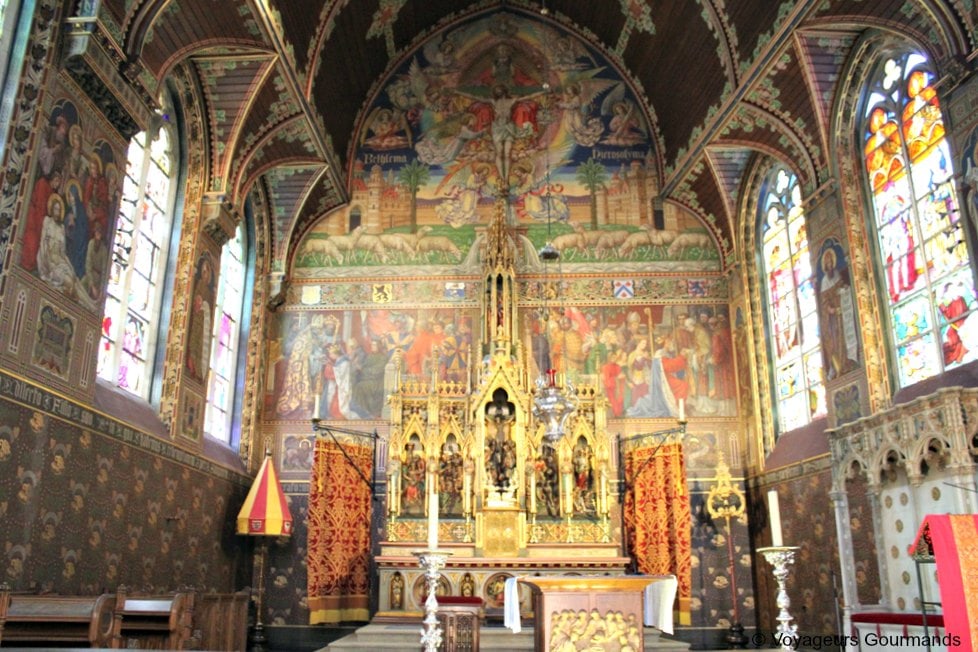
Nestled on Burg Square, the Basilica of the Holy Blood surprises with its mix of Romanesque and Gothic architecture, and with the precious relic it houses… A piece of cloth said to bear the blood of Christ. Around it, the Burg reveals a unique architectural ensemble rich in heritage, where every building tells a chapter of Bruges’ history. From the old Gothic town hall to the richly decorated façades, it’s a real treat for art and history lovers.
The “Rozenhoedkaai”
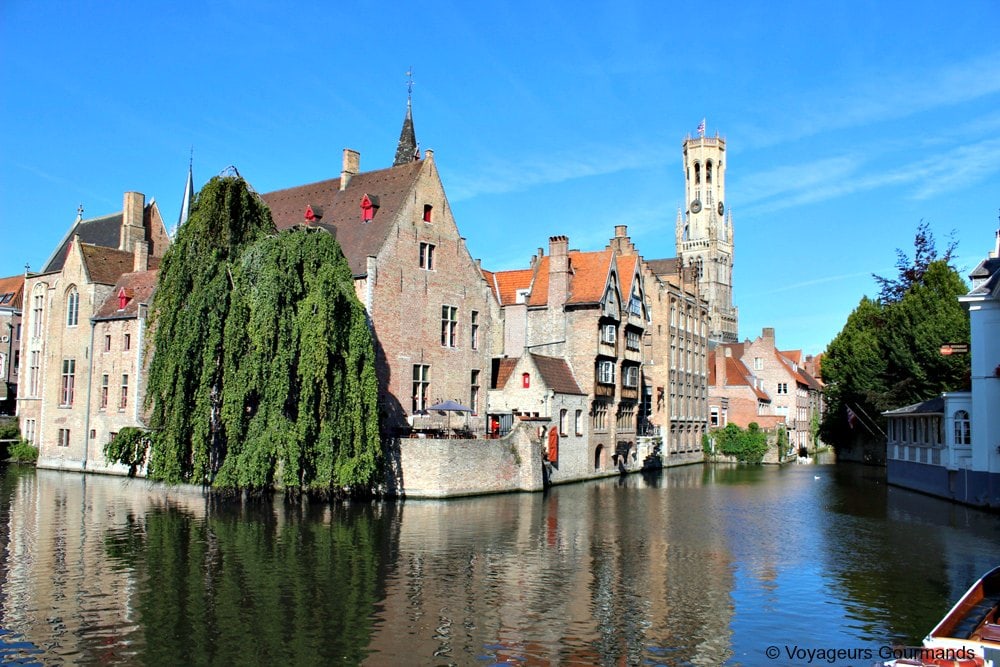
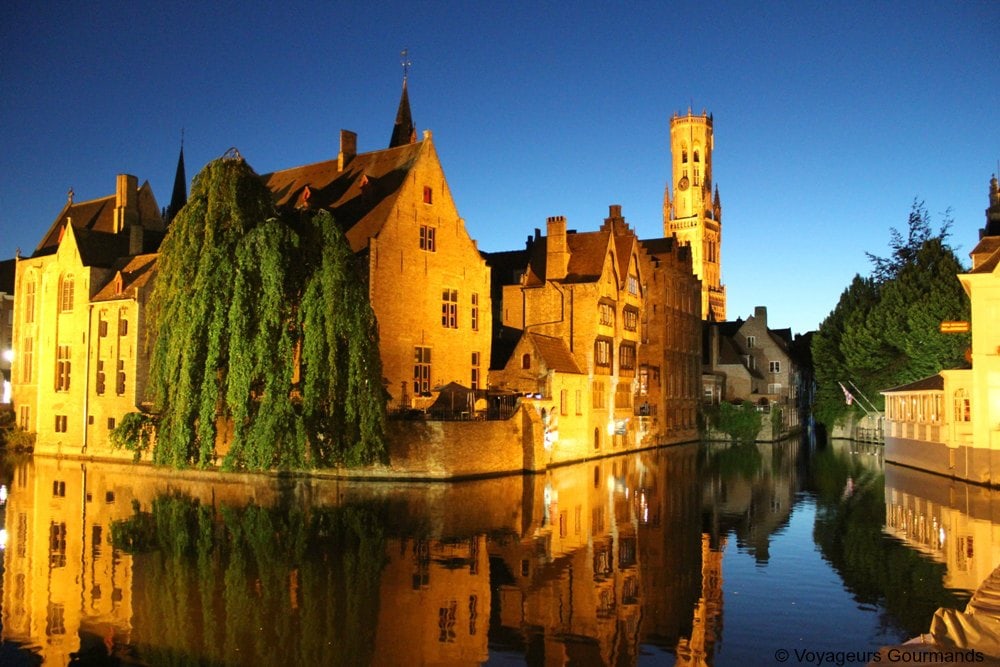
The Rozenhoedkaai (or Quay of the Rosary), Bruges’ most iconic quay, charms visitors with its medieval façades reflected in the calm waters of the canals. A living postcard, it offers one of the most photogenic views in the city, overlooking the canals and historic houses, especially at sunrise or sunset.
Torture Museum
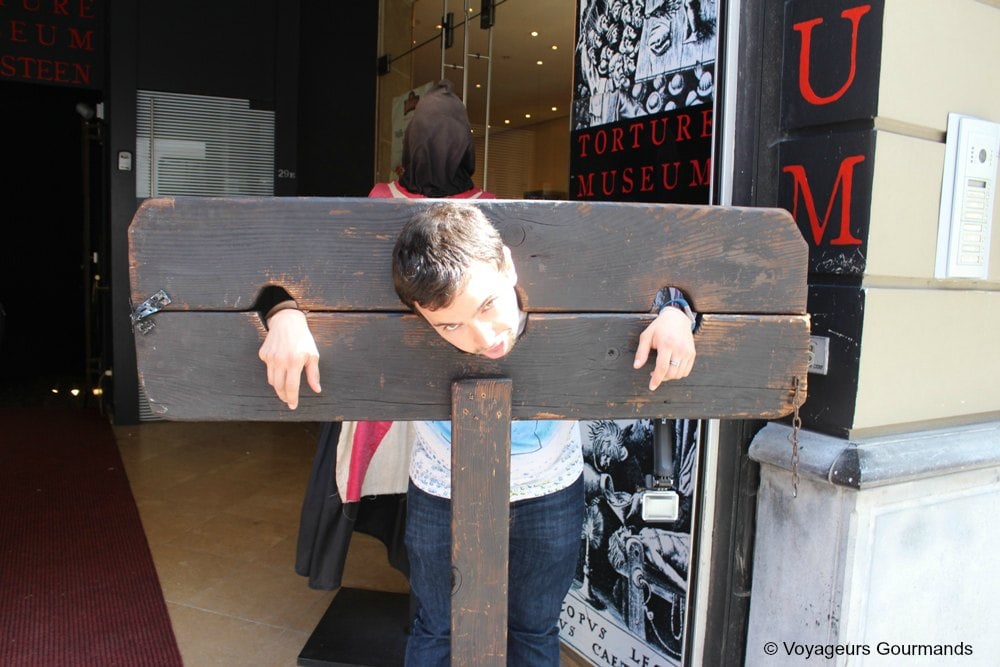
So, this visit to the Bruges Torture Museum… It was included in the City Card I tell you about a bit further down (a must-have in our opinion), and Alcino thought: “Oh, that could be fun, come on, let’s go there by boat along the canals!” Especially after taking a “funny” photo at the entrance by the canal. Well, let’s be honest: after a few minutes, we felt really uncomfortable, and all those descriptions turned our stomachs… It’s undoubtedly interesting, but only go if you have a strong stomach! One thing’s for sure: this museum won’t leave you indifferent!
Fries Museum
Our visit to the Fries Museum was good fun and really informative, especially about how Belgian fries are made and what makes them so special and tasty. They use a particular potato variety, the Bintje, and fry them twice in beef fat. We also learnt that sweet potatoes aren’t part of the Belgian potato family! There you go! We had a very entertaining stop at the gift shop, where you can also buy Belgian chocolate!
Voir cette publication sur Instagram
Chocolate Museum
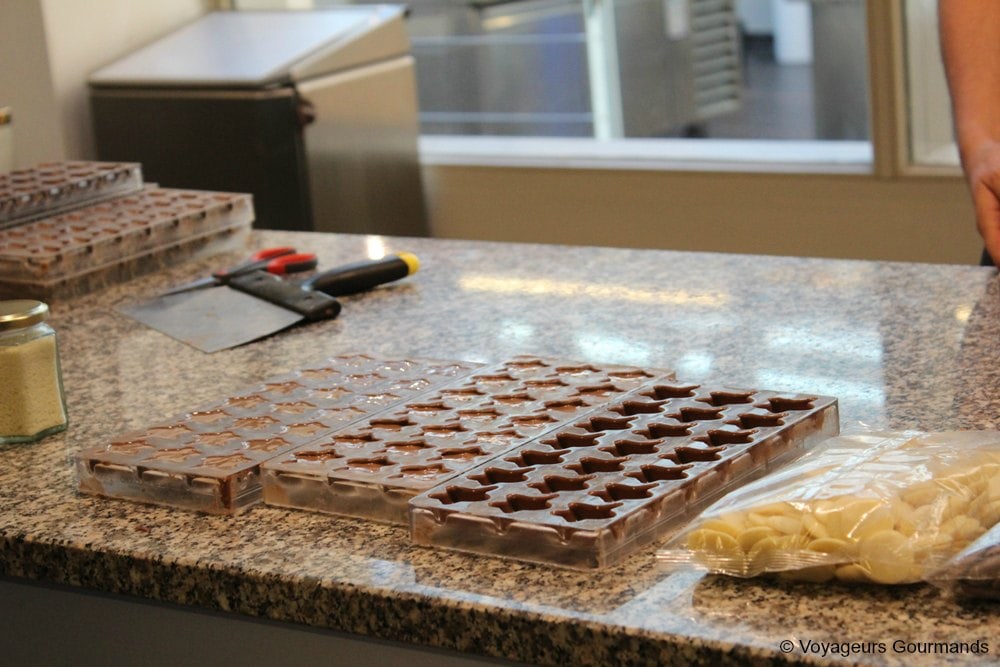
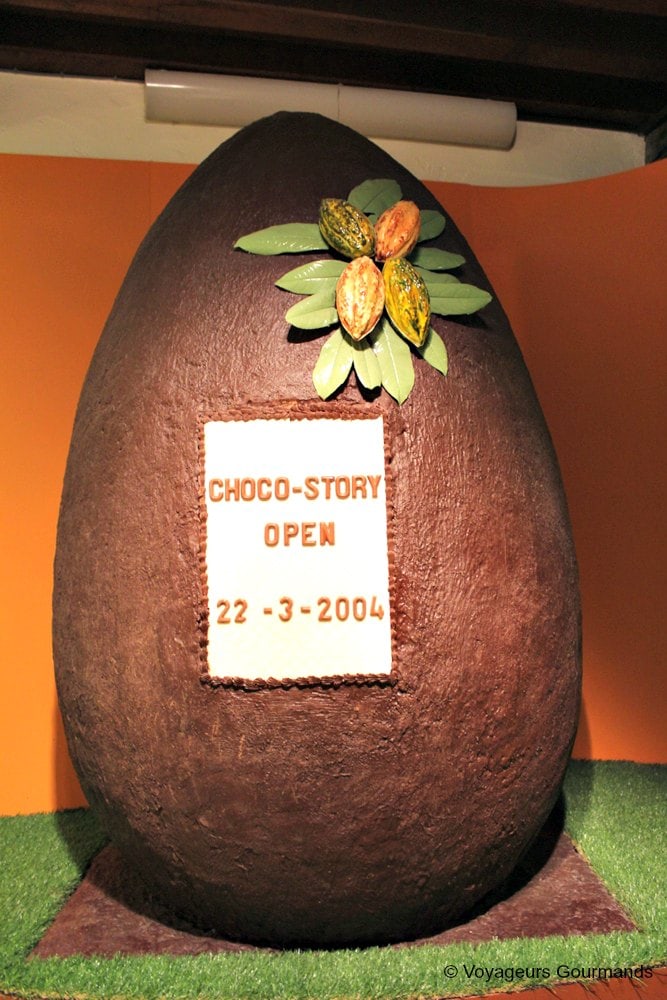
The Bruges Chocolate Museum was our favourite! A real treat for foodies! Among other things, you learn the proportions that make the difference between milk, dark and white chocolate. This museum dedicated to the art of chocolate is interesting and informative, but as true foodies, what we enjoyed most was the demonstration and tasting at the end! Yum! You can buy your tickets in advance by clicking here, or on site!
You can also take part in a praline-making workshop or a waffle-making workshop… We didn’t try it, but we won’t miss it next time!
The windmills of Bruges
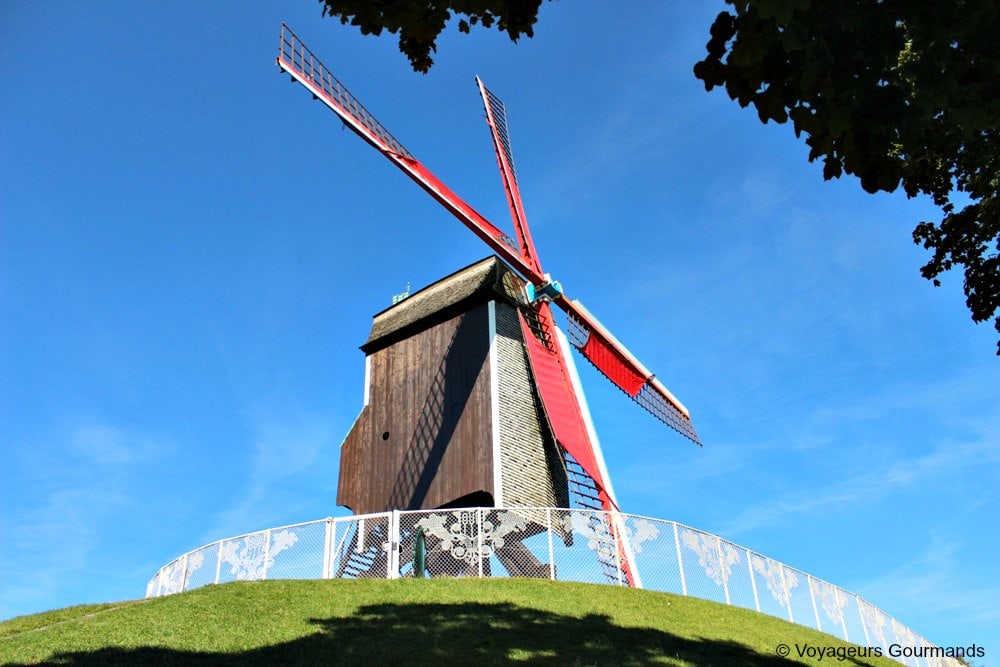
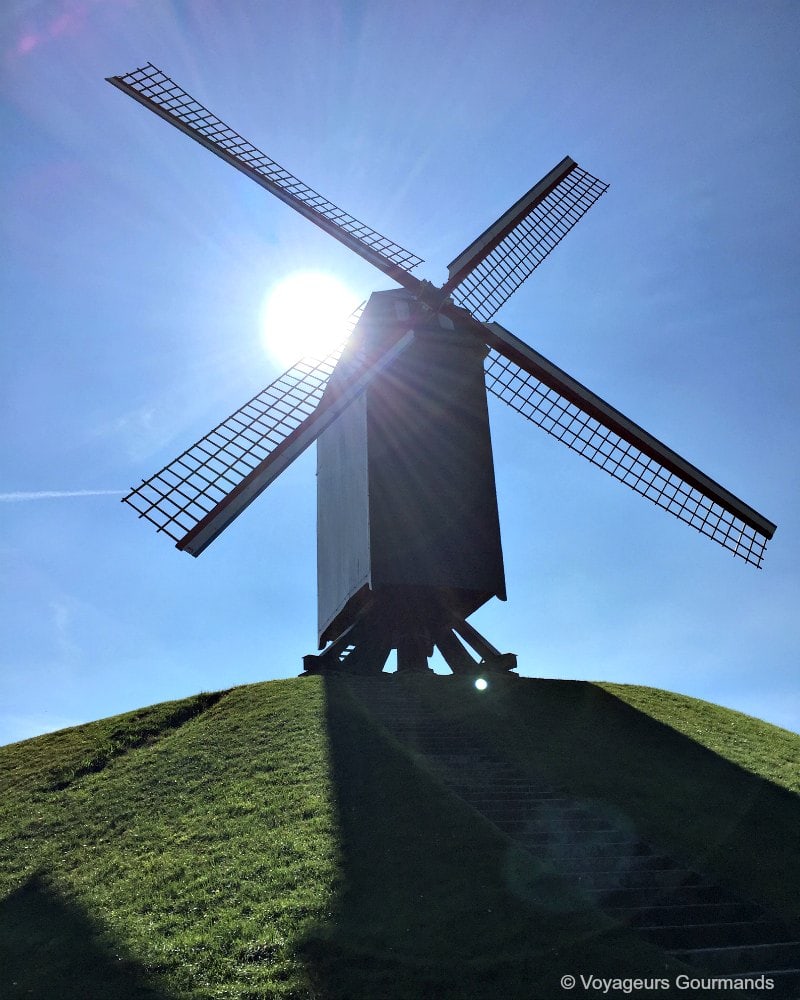
Bruges still has 4 historic windmills, a testament to the city’s rich heritage, two of which can be visited in summer. Unfortunately, they were closed the day we went, so we can’t tell you whether the visit is worth it… Just seeing them, with the canals in the background, was a delight, and so was the ride there. They’re impressive, especially when they suddenly start turning – we were like two kids!
➺ Go by bike: the ride along the canals and windmills is really lovely!
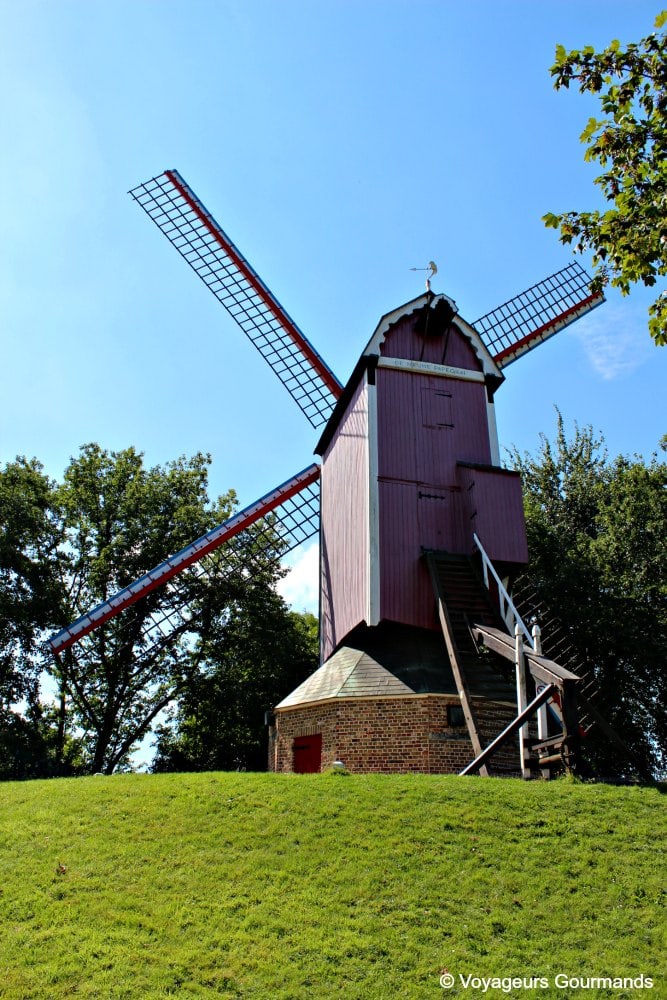
♯ Other must-sees in the “north”: the Jerusalem Church, St Anne’s Church, St Walburga’s Church, the Ghent Gate (Gentpoort), the Our Lady of the Pottery museum, St Giles’ Church and many other heritage sites in Bruges.
St Salvator’s Cathedral and the Church of Our Lady
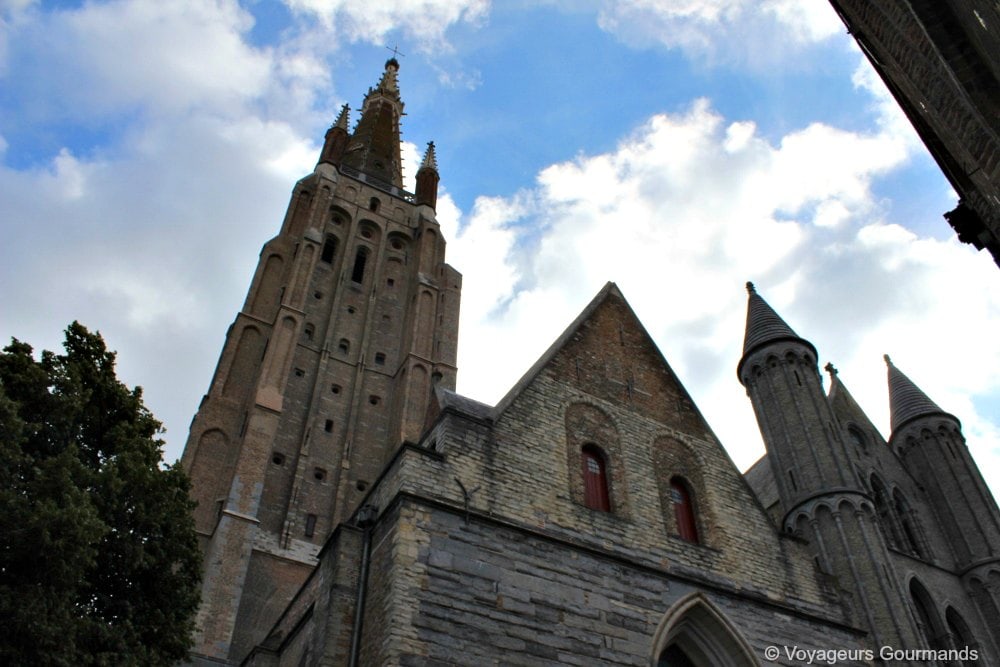
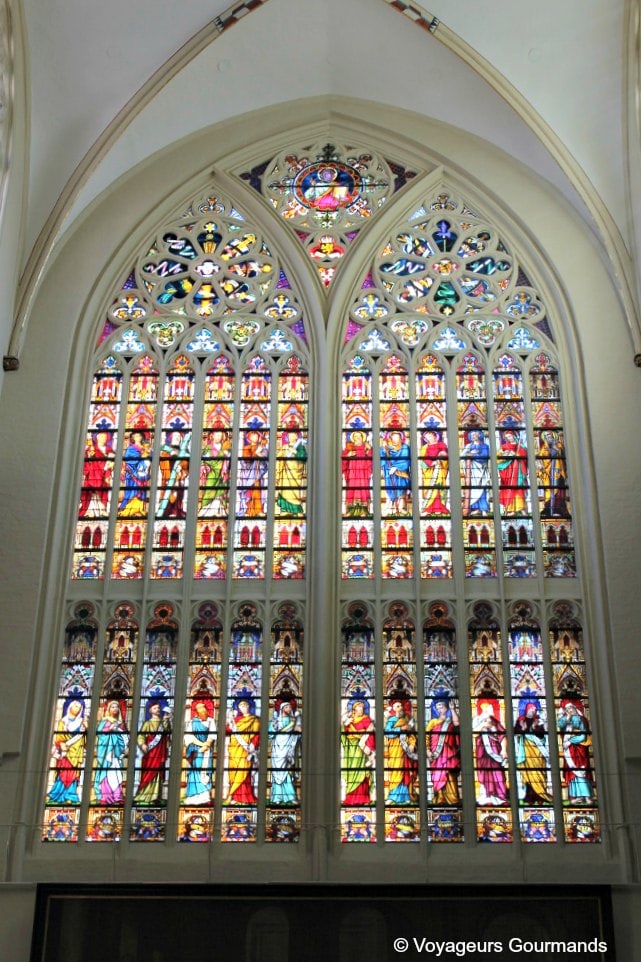
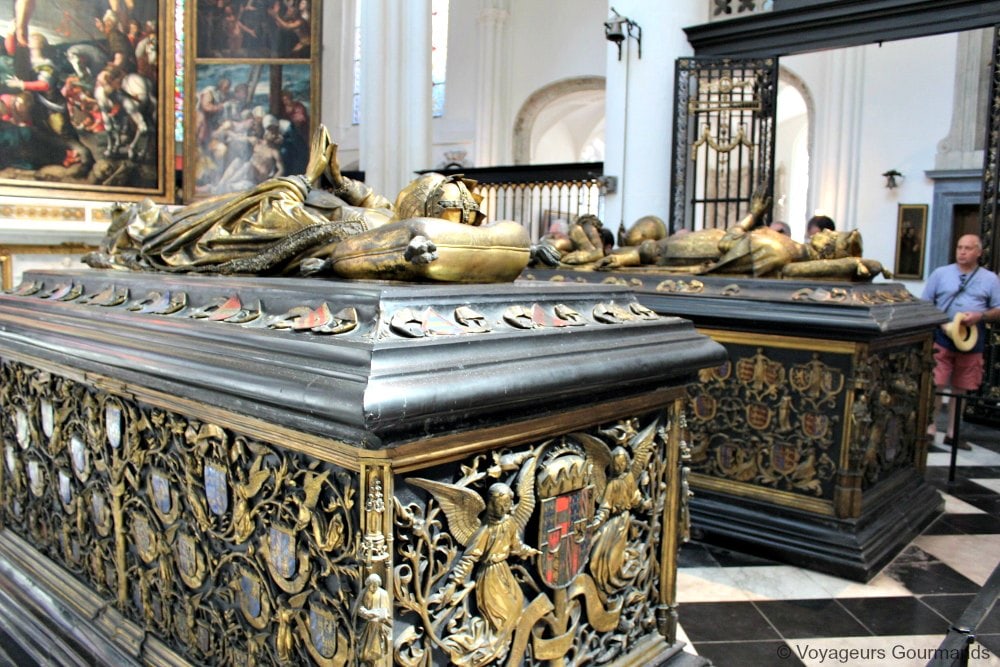
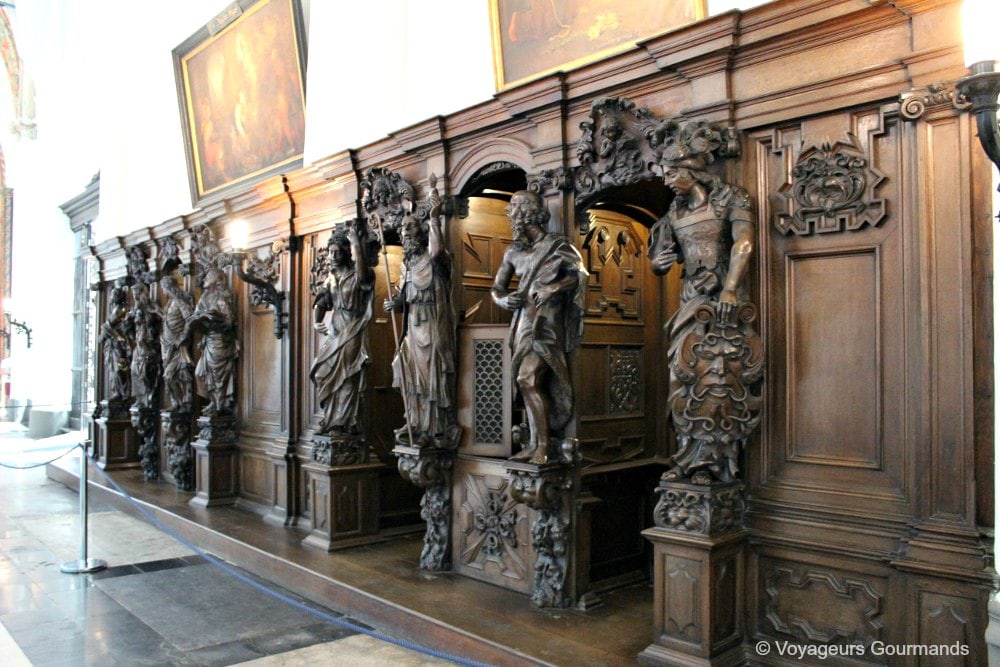
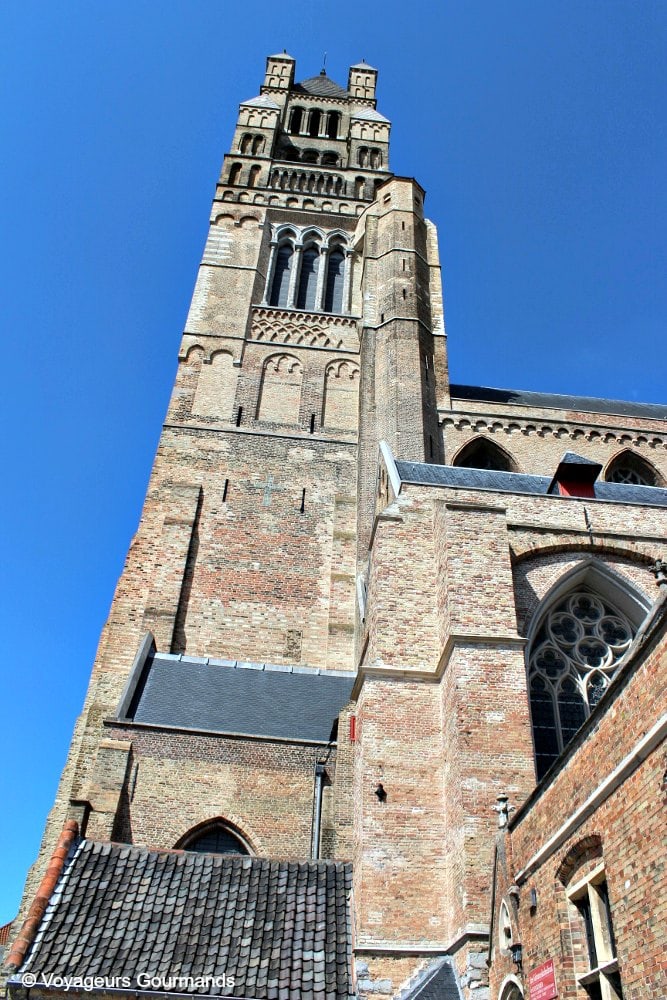
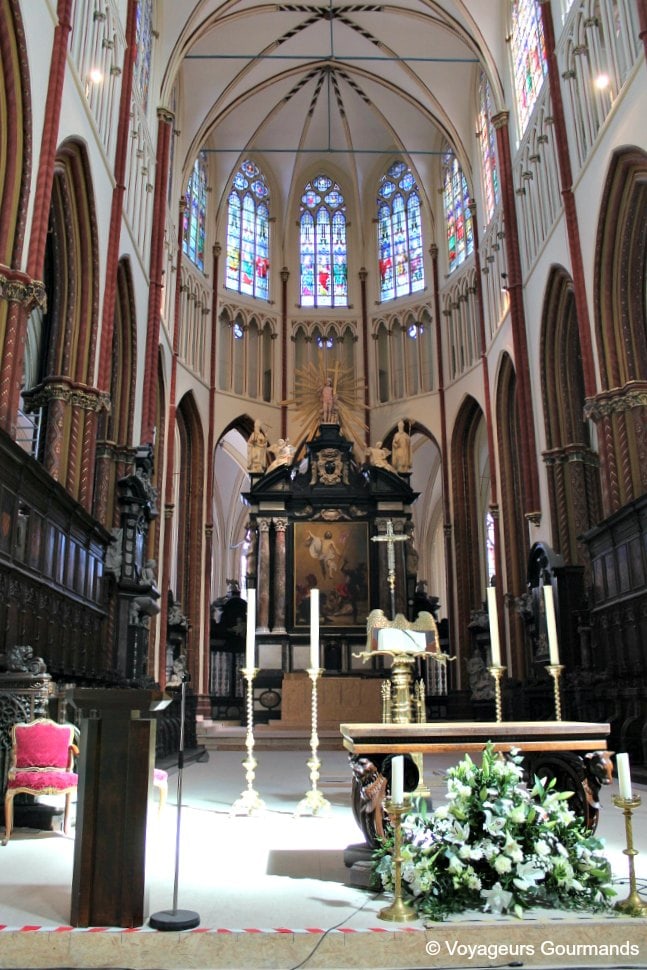
Both are imposing, stunning and steeped in history, full of the kind of artistic detail we love. St Salvator’s Cathedral is the oldest in the city, while the Church of Our Lady houses two magnificent tombs and a sublime Madonna by Michelangelo, a masterpiece of religious art.
De Halve Maan Brewery
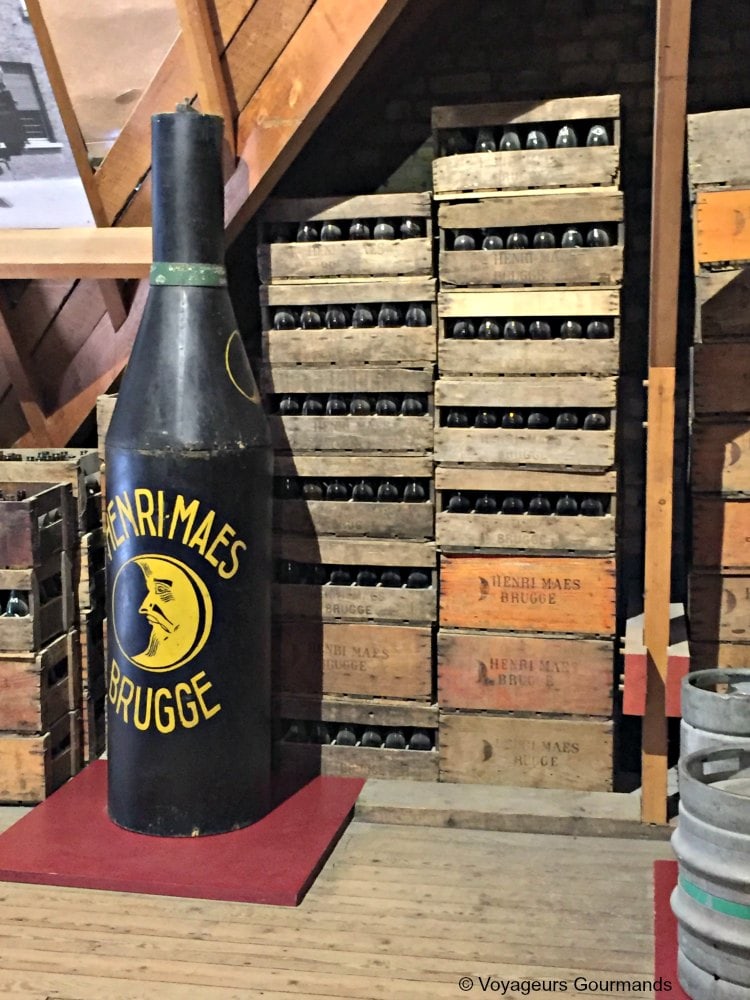
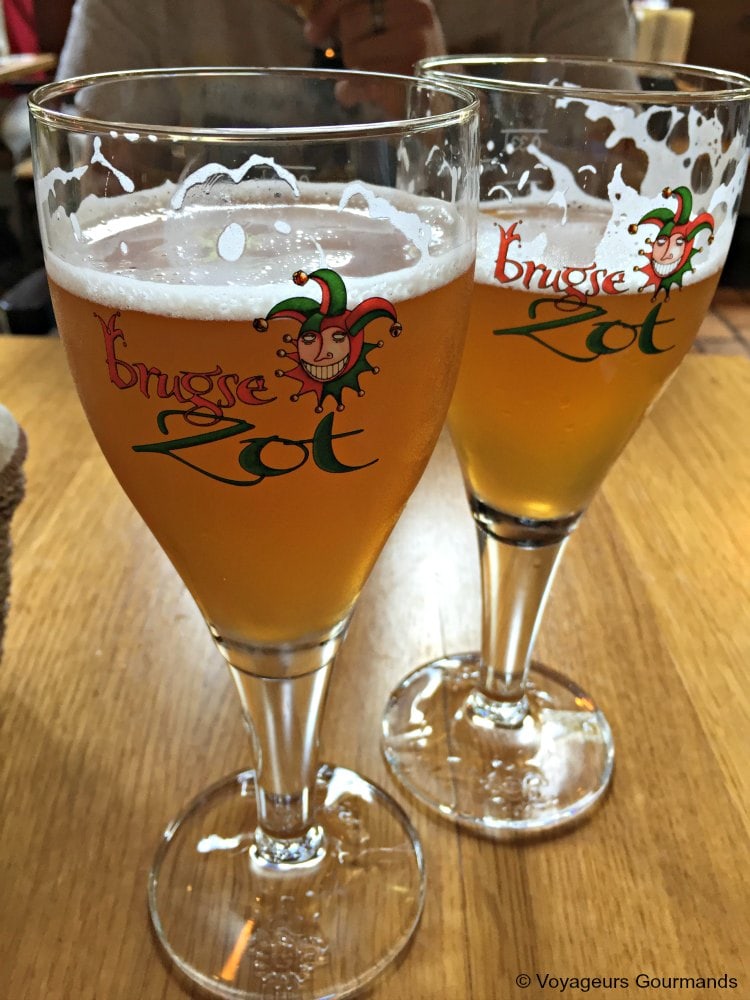
It’s the last brewery in Bruges still brewing its beer within the city itself, a symbol of Belgium’s brewing heritage. The tour of De Halve Maan lasts almost an hour, during which the guide explains the brewing process, highlighting the history and traditions of the brewery. You see various old and modern equipment, and learn how different flavours are created. The tour is really interesting, with a lovely view over the historic centre of Bruges from the rooftop. We also enjoyed tasting the Brugse Zot beer at the end of the visit, and took the opportunity to have lunch there – prices are reasonable.
The Beguinage
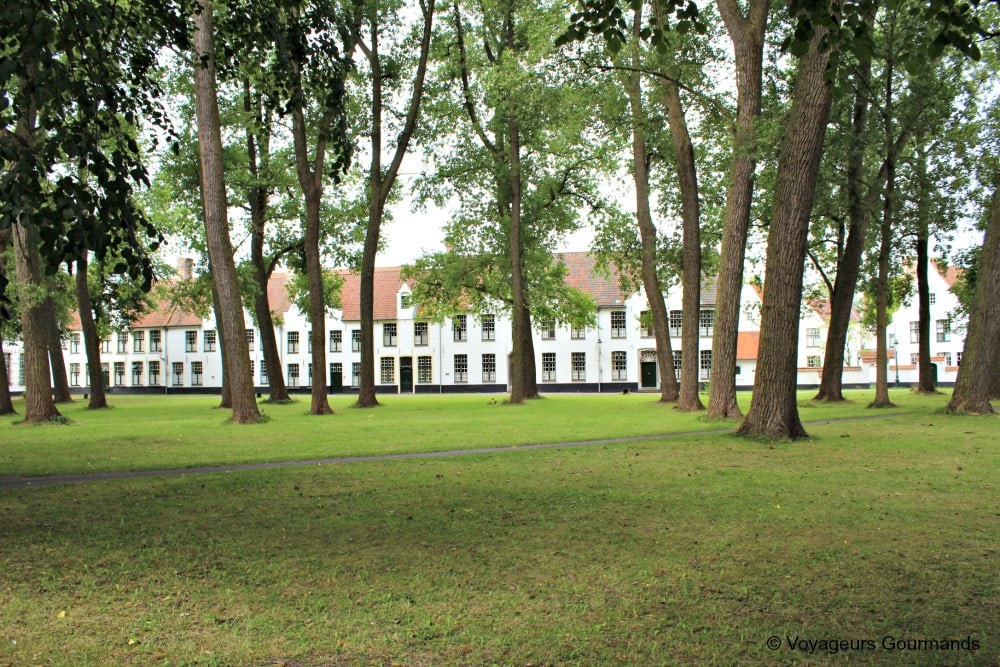
A former home of beguines, an institution that disappeared in the 20th century, it is now inhabited by nuns. The Bruges Beguinage, a jewel of the city’s heritage, is a true haven of peace, calm and green, far from the bustle of the historic centre. A stroll through the beguinage feels truly timeless, offering an immersion in the history of Bruges.
Slightly away from the historic centre of Bruges lies the Beguinage, considered one of the finest in the country in terms of heritage. Once home to beguines – devout women who dedicated their lives to faith without taking permanent vows – the beguinage is a precious testament to Bruges’ religious and social history.
I loved this visit to the Bruges Beguinage! It’s a real haven of peace in the city, calm and green with lush gardens, and the walk along paths lined with century-old trees feels truly timeless.
Minnewater Park
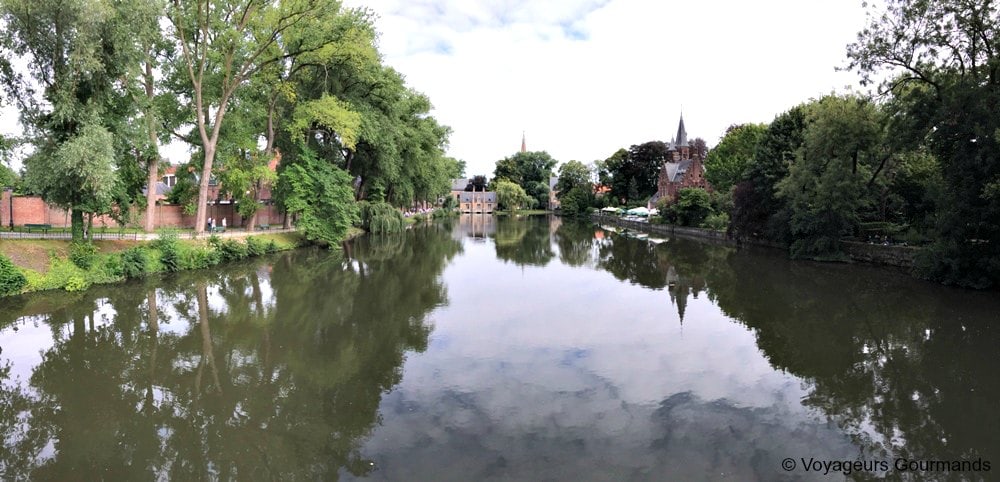
Bruges’ Minnewater Park, nicknamed the “Lake of Love”, charms visitors with its romantic atmosphere and peaceful paths lined with century-old trees. This green haven, dotted with elegant swans and picturesque scenery, reflects Bruges’ natural heritage and offers a peaceful break in the heart of the city, ideal for a stroll on foot or by bike.
♯ Other must-sees: St John’s Hospital (one of the oldest medieval hospitals in Europe, now a museum in a superb historic building); the Diamond Museum, the Archaeological Museum, the Gruuthuse Palace and many other museums and art sites in Bruges.
Exploring Bruges and its canals by boat
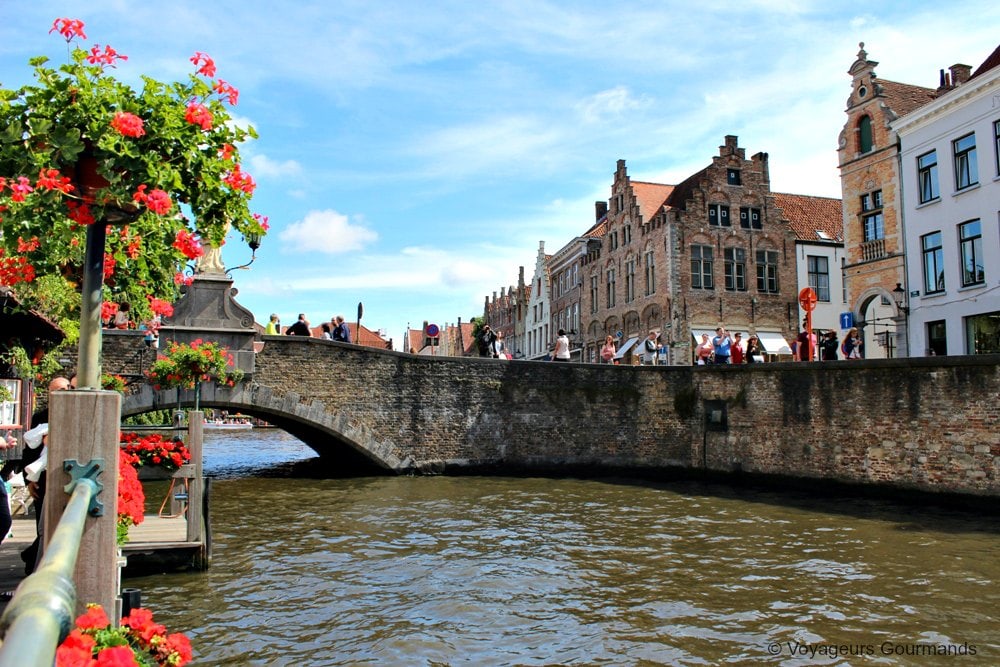
To discover Bruges and its unique heritage from a different angle, there’s nothing like a boat trip on its canals, the liquid arteries that give the city all its charm. When the sun is out, the experience is even more enjoyable, with a peaceful atmosphere and unique views of the historic façades and romantic bridges. We took this boat trip as soon as we arrived, and it was a wonderful introduction to the beauty and heritage of the city! In fact, we did it again straight away during our stay in May 2025.
The boats are used for sightseeing only, not as a means of transport. There are 5 landing stages along the canals across the city, and all the boats follow more or less the same route:
• Michielssens, Huidenvettersplein 13
• Coudenys, Rozenhoedkaai
• De Meulemeester, Wollestraat 32
• Gruuthuse, Nieuwstraat 11
• Stael, Katelijnestraat 4
Alternatively, you can book your tickets in advance by clicking here.
Bike rides
You simply have to rent bikes to visit Bruges and feel like a true local! There are bikes and well-maintained cycle paths everywhere, including a route around the city along the canals. What’s more, the cycle paths are separate from the footpaths, so there’s no risk of collisions! Ha ha! However, in the historic centre, around the Burg and the Markt, the streets are packed with pedestrians, so avoid cycling through there!
Or both!
Unfortunately, we only discovered this ride on our last day, so we were worried we’d be short on time… But if you cycle to the windmills, you can then carry on to the town of Damme, have a look around, and come back by boat with your bike on board! Take it from a local!
We were really tempted, so if anyone has done it, let us know if it’s good! 🙂
✤✤✤
Visiting Bruges: practical information
How to get there?
By train: from Paris, you change in Brussels. Don’t make the same mistake as us and check your train carefully: some go straight to Bruges, others take a 2-hour detour through the Belgian countryside before arriving…
By car: we saw a few car parks north of the centre, but have no idea of the prices. Many streets in the centre of Bruges are pedestrianised, and as the city is small, you don’t need a car at all once you’re there. On the other hand, with a car you can combine your weekend in Bruges with a visit to Ghent, for example, another must-see city in Belgium.
By plane: there’s a small Ostend-Bruges airport, but there are probably more flights landing in Brussels, from where you can reach Bruges by train or boat.
Where to eat?
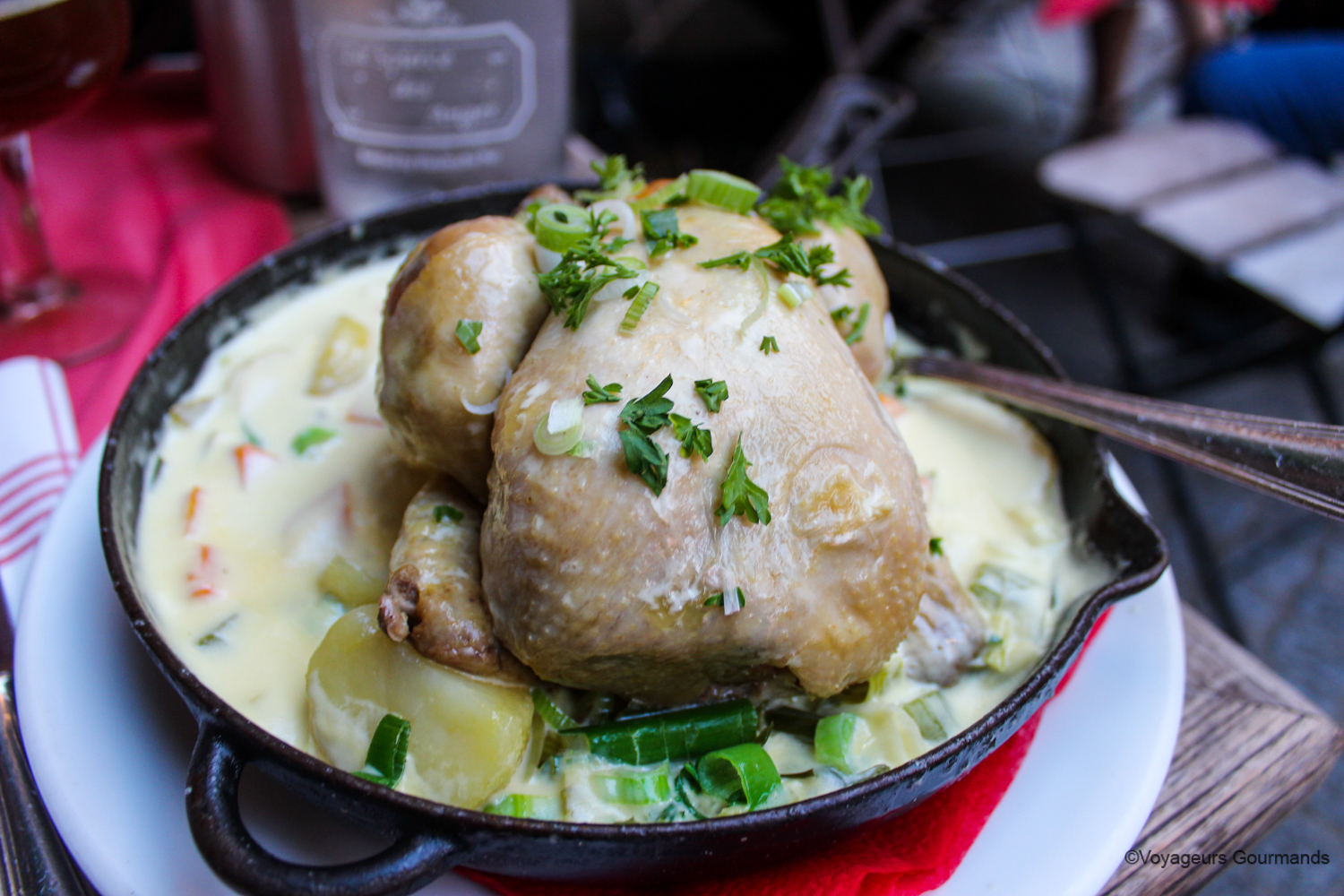
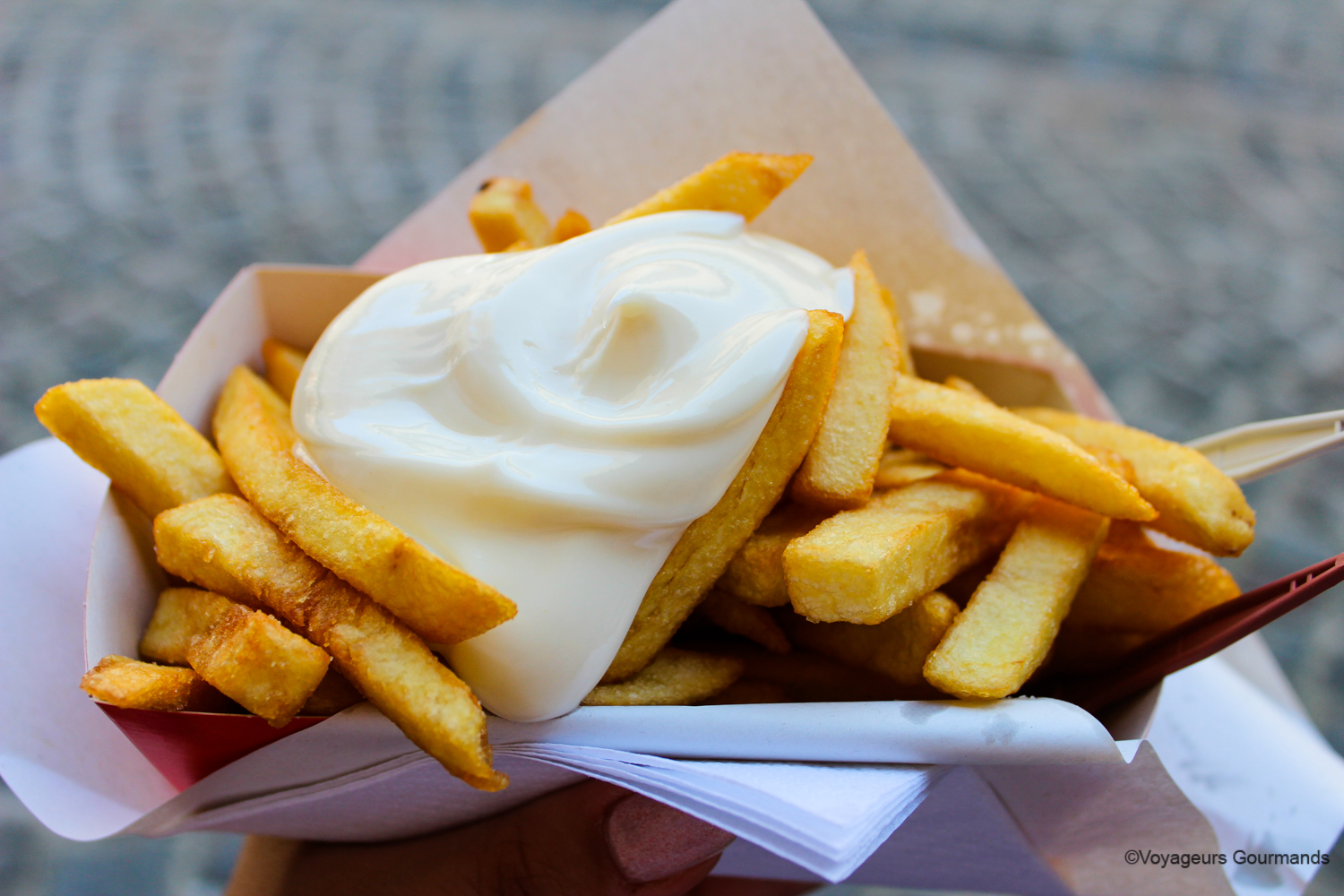
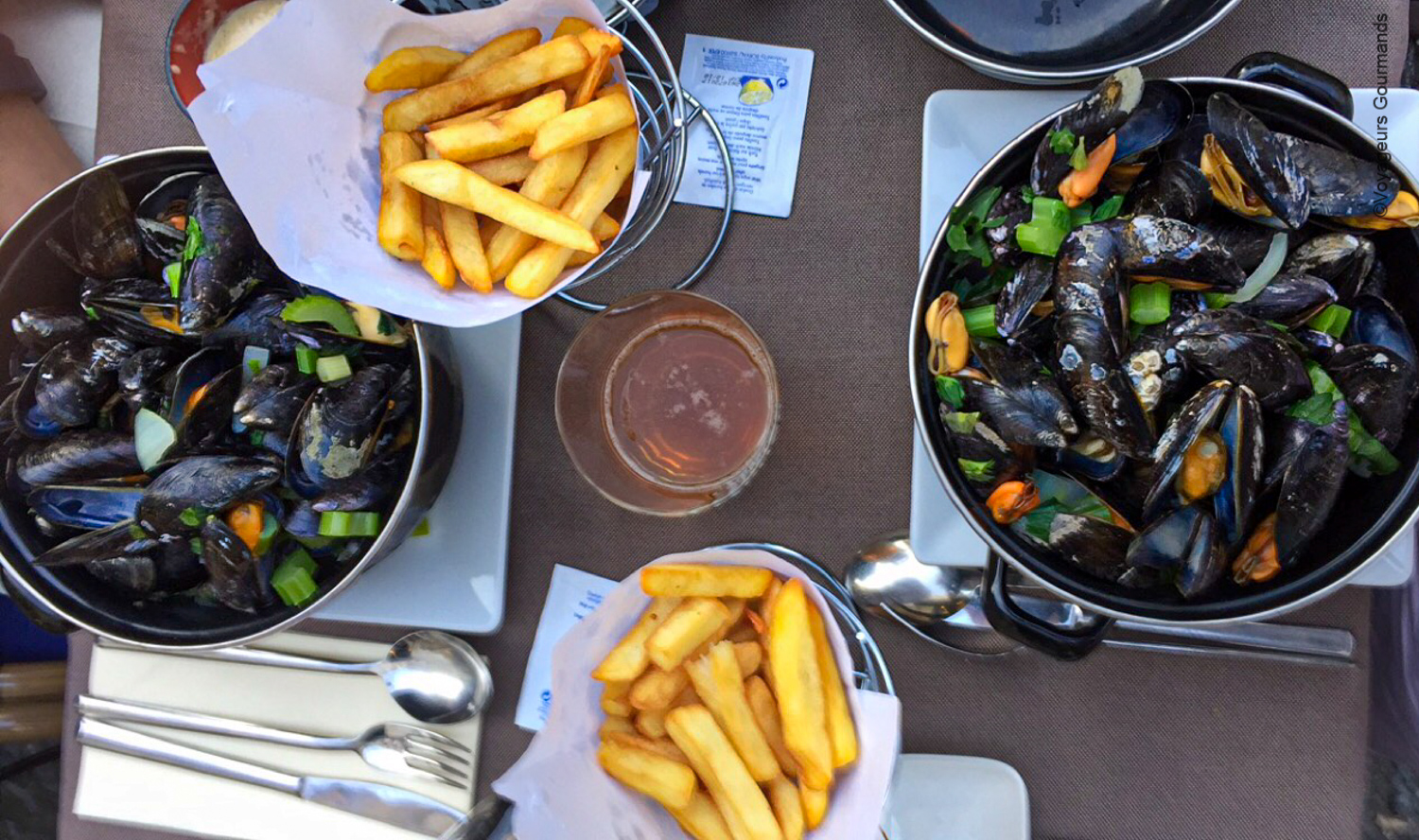
True to our Voyageurs Gourmands spirit, we’ve put together a complete guide with the Belgian specialities we tasted and the places we tried: check out our article on where to eat in Bruges.
To whet your appetite: fresh mussels, crispy Belgian fries, craft beers, delicious waffles, Belgian chocolate, Flemish carbonnade and waterzooi – we can’t get enough! We’ve also updated our article with new places tried in April 2025 😉
Where to stay?
We chose the Grand Hotel Normandy in Bruges for its swimming pool and ideal location in the city centre. To be honest, we were a little disappointed with the room. The reception is beautiful and cosy with colourful sofas, and breakfast was good and varied… But we were sent off to an annexe outside the hotel, reached via the car park. Luckily it wasn’t raining! Another significant downside was cleanliness: dead insects in our room, dirty stairs covered in cobwebs, and the same in the pool… Fortunately, the hotel staff were very welcoming and we were able to leave our luggage for free… So if you choose this hotel, ask for a room in the main building for a nicer interior and a view over the historic heart of Bruges.
The Bruges City Card
We found it really handy, a real must-have for visiting Bruges. For 48 hours, it cost €47 per person and included 27 historic sites and attractions, plus other activities such as the boat trip on the canals. We got our money’s worth on the very first day by visiting the museum and the belfry, and took the opportunity to try a few quirky activities we might not otherwise have done. There were 3 different places to pick it up, and the City Card was activated on first use, with the 48 hours counting down from that moment.
Update 20/01/2026: the City Card has been discontinued and replaced by other types of pass, such as the Musea Brugge card, valid for 3 days for 11 museums.
✤✤✤
We really loved visiting Bruges – this little city truly surprised us! We can’t wait to go back, maybe to enjoy its Christmas markets! Either way, it’s a fantastic destination for a weekend in Europe!
So, do you know Bruges? We hope we’ve made you want to discover it!

FAQ: things to do in Bruges
Click to see the FAQ.
Is Bruges worth visiting?
It’s a question we’re often asked, and the answer is of course yes! Bruges has stunning architecture, a rich historic heritage, lots of great places to eat, delicious food (waffles, Belgian chocolate and much more!) and pleasant green spaces to explore.
How long should you spend in Bruges?
You can quickly see the main sights in a day, but personally I’d recommend staying at least one night to soak up its atmosphere, wander through the museums, climb the belfry and explore the historic heart of the city.
What to do in Bruges in 1 or 2 days?
With 1 day, focus on the Markt, the Belfry, the Burg and a boat trip on the canals – the heart of the historic centre is easy to explore on foot. With 2 days, add the Beguinage, Minnewater Park and one or two foodie museums (chocolate, fries). With 3 days, you’ll also have time to explore the windmills north of the city and cycle to Damme.