


After our day exploring Zadar, we arrived at our next stop: Sibenik, where we spent an afternoon and a morning. It isn’t the best-known town in Croatia, so you may well be wondering: what are the best things to do in Sibenik?
In truth, there aren’t dozens of major monuments to tick off, but we absolutely fell for the town. Its charming medieval centre, cobbled lanes, stone houses with their typical green shutters and panoramic sea views make it a wonderfully authentic stop on the Dalmatian coast.

✤✤✤
Sibenik, Croatia: a town between Zadar and Split
Sibenik – or should I say Šibenik – is a very pretty seaside town in Croatia. Set on the Adriatic coast, it’s the gateway to the Kornati islands. It lies around 80 kilometres from Split and is naturally sheltered by a vast bay. It boasts plenty of historic sites, from fortresses to several old churches. It’s also fairly central, making it a handy place to stay while exploring the surrounding area: Zadar, Split, the islands, Trogir…
Why visit Sibenik?
Sibenik is often overshadowed by Split and Dubrovnik, yet it thoroughly deserves a stop on any trip to Croatia. Halfway between Zadar and Split, it makes an ideal break on the Dalmatian coast, combining historic heritage with an unspoilt local atmosphere.
What makes Sibenik so charming is above all its authenticity. There’s no overwhelming mass tourism here, just a lively, lived-in town with a hilltop medieval centre and lanes full of character.
Visiting Sibenik means discovering a compact, human-scale town that’s a pleasure to explore on foot, with magnificent views over the sea and the surrounding islands.
Things to do in Sibenik: the top sights
Sibenik doesn’t have dozens of monuments, but what it does have is well worth the detour: one of the best-preserved medieval old towns on the Dalmatian coast, a UNESCO-listed cathedral and no fewer than four fortresses. Here’s what we saw, and what we’ll do next time…
Get lost in the medieval old town
This is what really won us over. The old town clings to the hillside, so you spend your time climbing up and down stone steps. Houses with green shutters, vaulted passageways, little squares and, round the corner of a lane, a church you weren’t expecting… The best approach is to put the map away and wander aimlessly, keeping an eye on the sea as it peeps out between the façades.


Remember to look up at the façades, too: the old town has many palaces with carved doorways, reminders of the wealthy families of the Venetian era. We particularly noticed those of the Foscolo and Rossini palaces, with their Gothic tympanums decorated with coats of arms and sculpted figures.
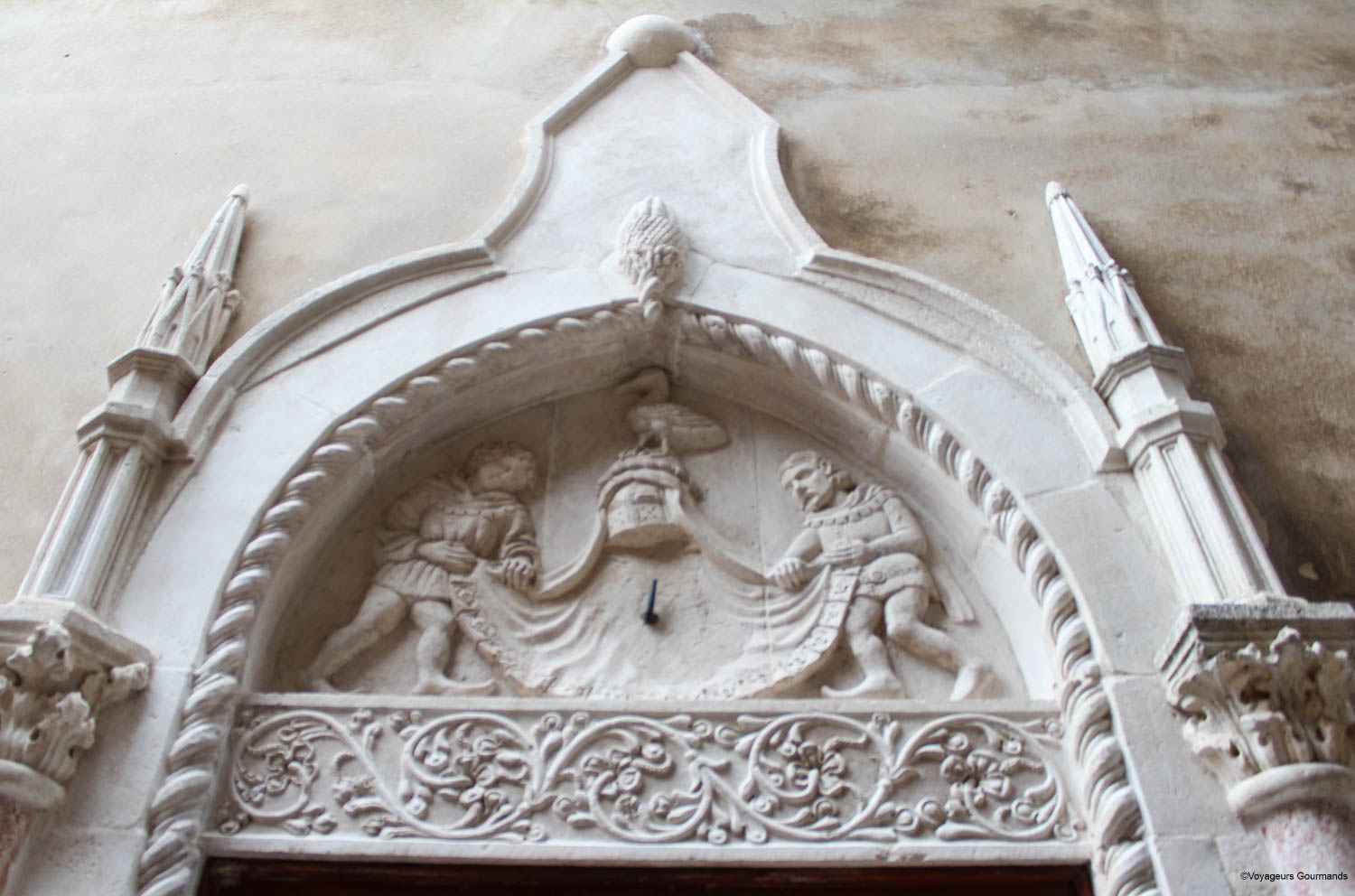
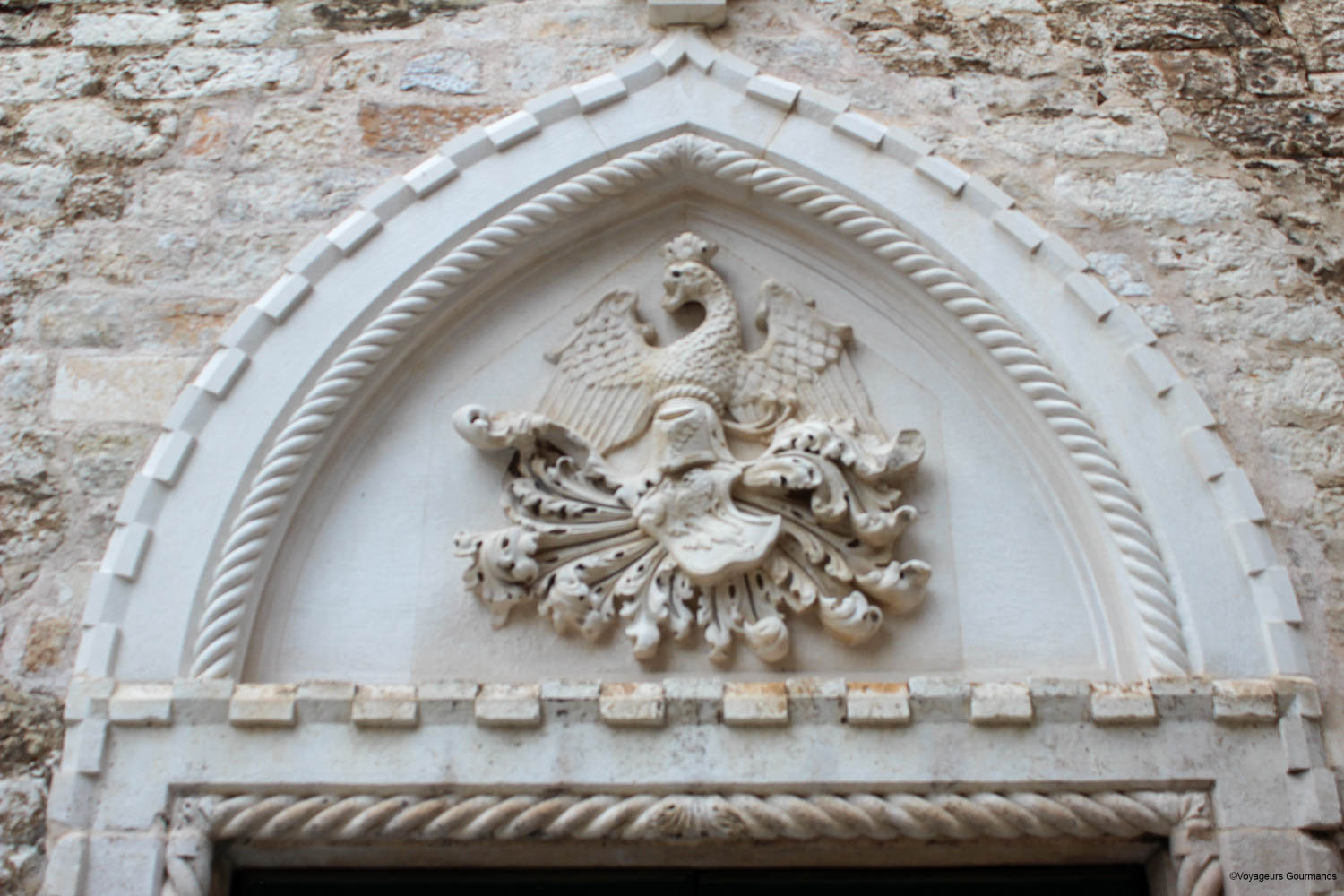
St James’s Cathedral
It’s a magnificent Gothic-Renaissance church! Construction began in 1431 and was completed in 1536. Work started under various Venetian masters for about a decade, before being entrusted to Juraj Dalmatinac (George the Dalmatian), a native of Zadar. He changed the original plans and adopted a transitional style between Gothic and Renaissance. The cathedral has been a UNESCO World Heritage Site since 2000.
Walk around the building before going in: on the apse, a frieze of 71 carved heads depicts townspeople of the time, each with a different expression. Some of the faces are downright funny… Inside, don’t miss the baptistery and, of course, the stained-glass window we loved so much.


The old town hall and Republic Square
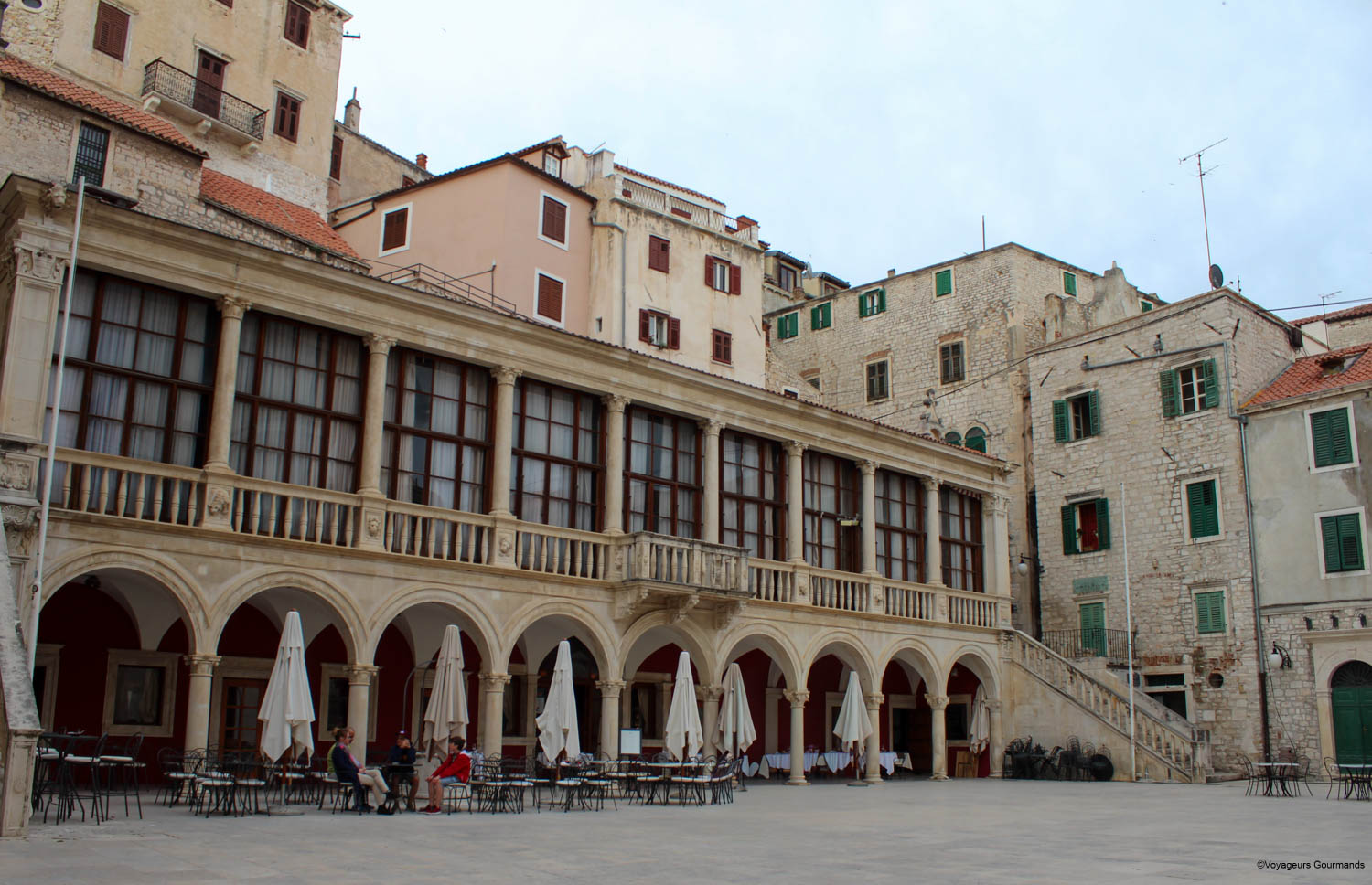
Right opposite the cathedral, the Square of the Croatian Republic (Trg Republike Hrvatske) is the heart of the old town. It is lined by the old town hall, an elegant 16th-century Renaissance building with an arcaded loggia. Almost completely destroyed during the Second World War, it was faithfully rebuilt afterwards. Today its arcades shelter café terraces: the perfect spot for a break with a view of the cathedral’s façade.
The churches of the old town
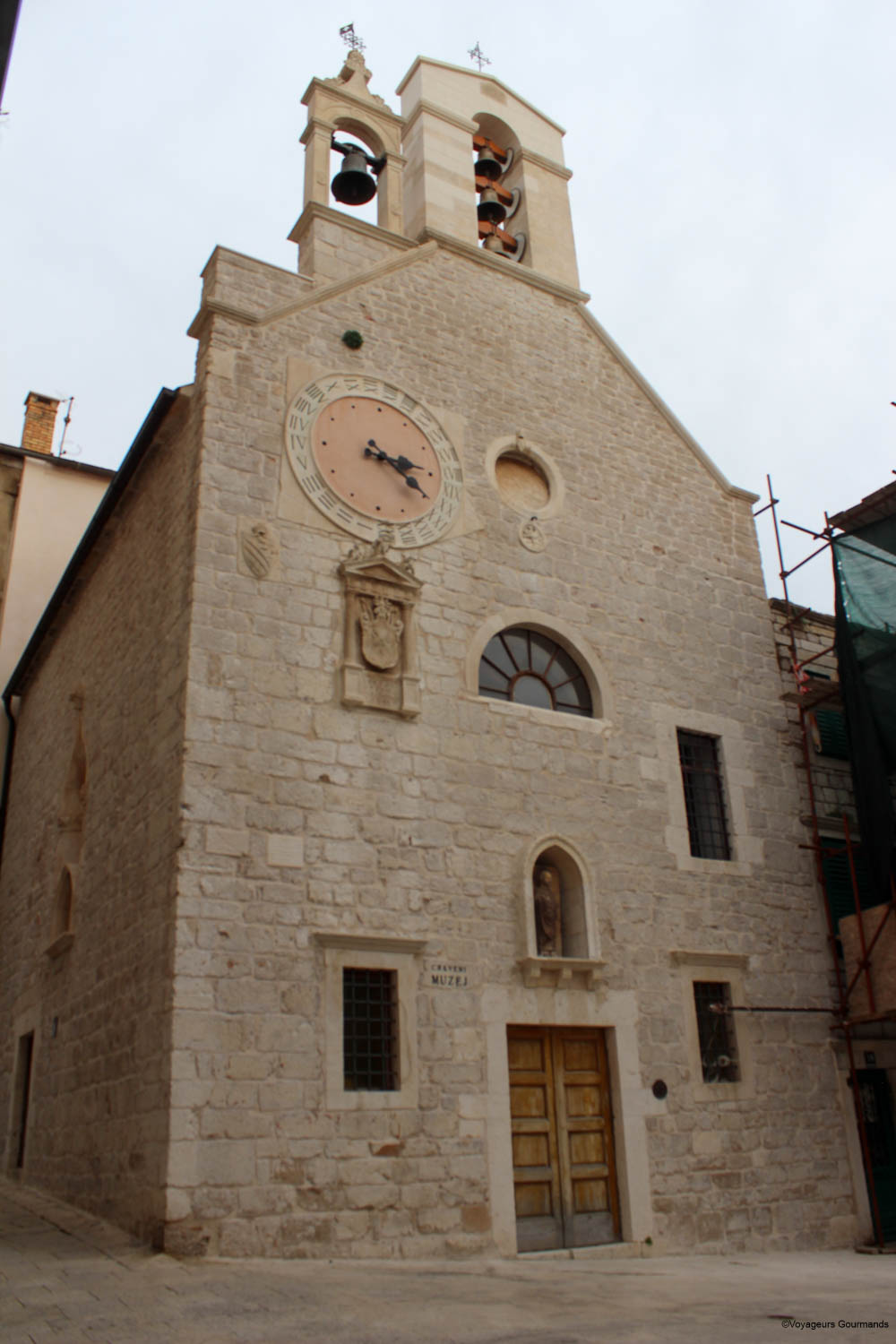
As you wander, you’ll come across a church on almost every corner. Among those we passed: St Barbara’s Church, a Gothic building (around 1400) that now houses a small museum of sacred art; the Church of the Holy Spirit, on Dinko Zavorović Square, recognisable by its stone façade and Baroque rose window; the New Church (Nova crkva), whose Renaissance doorway is well worth looking up for; and the Orthodox Church of the Dormition of the Mother of God, formerly the Catholic Church of the Holy Saviour, handed over to the Orthodox community in 1810 by decree of Napoleon, with its lovely carved tympanum.
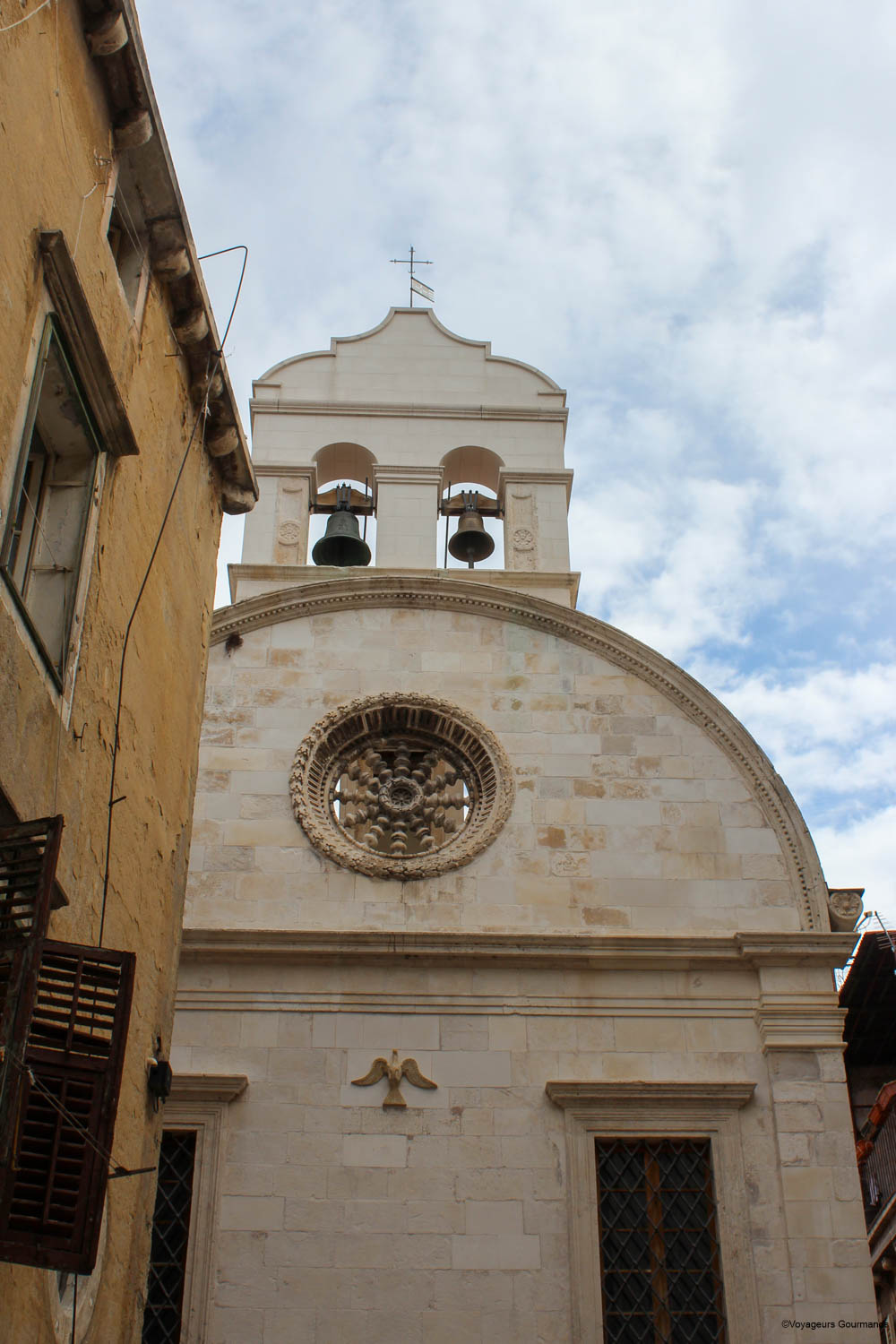
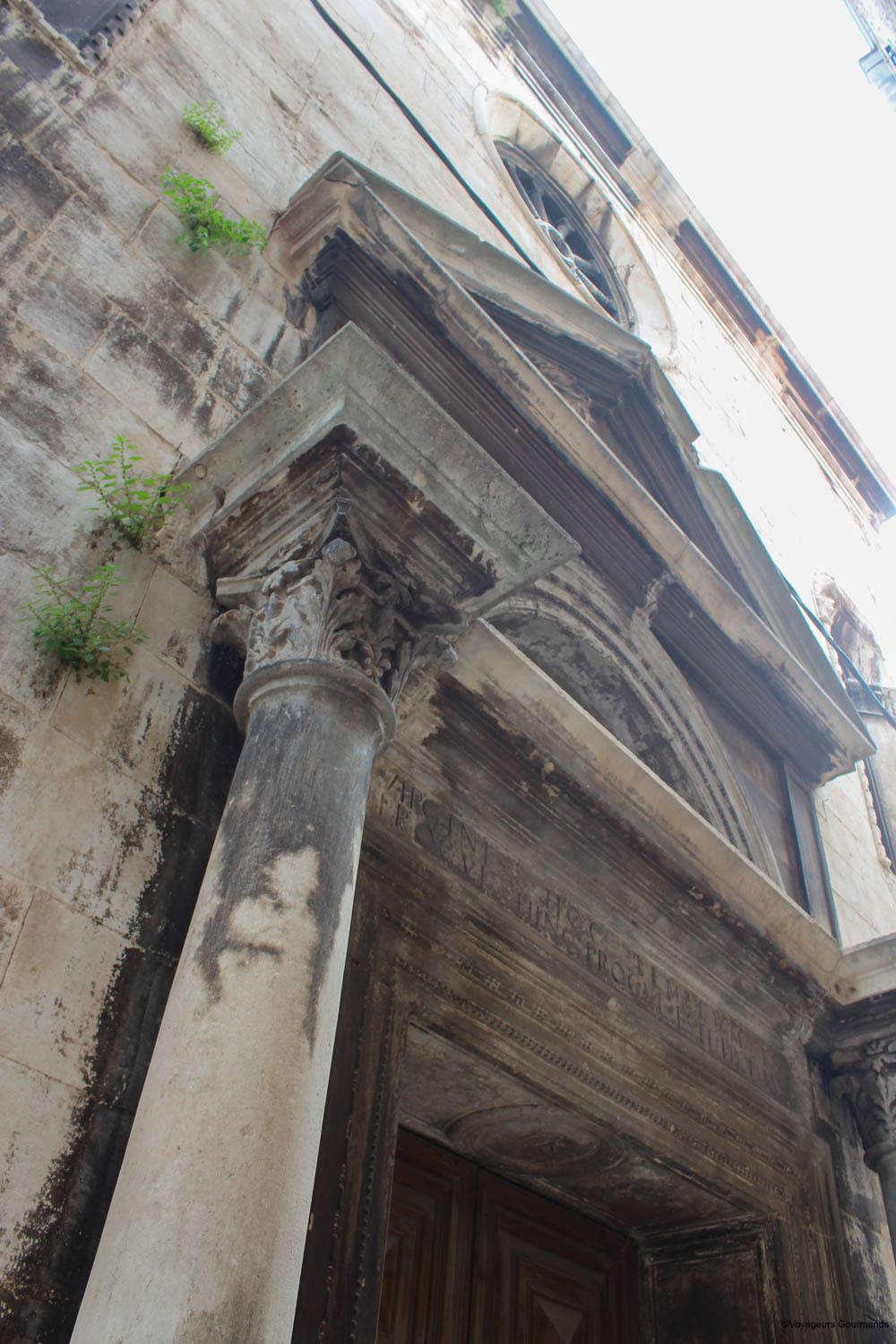
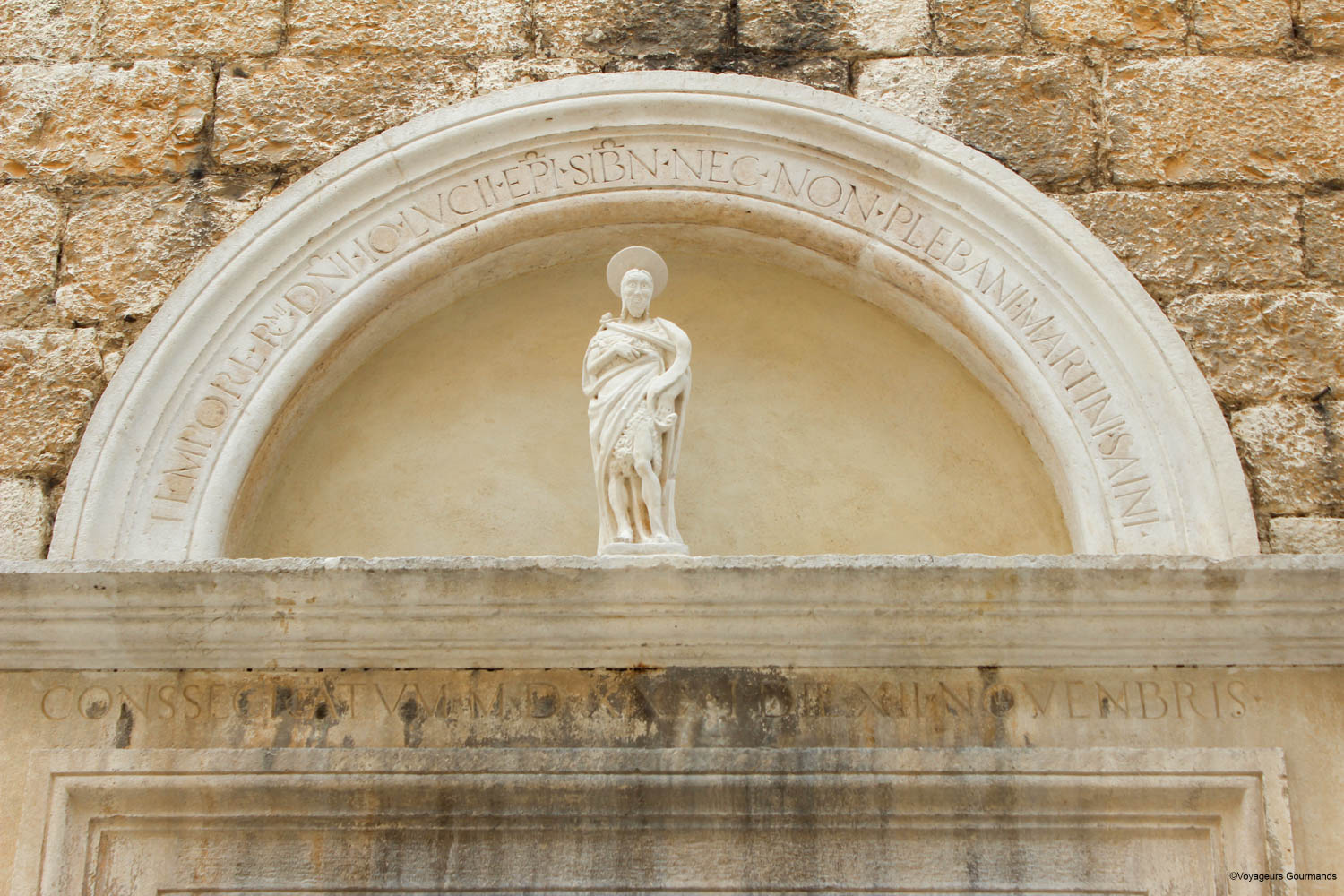
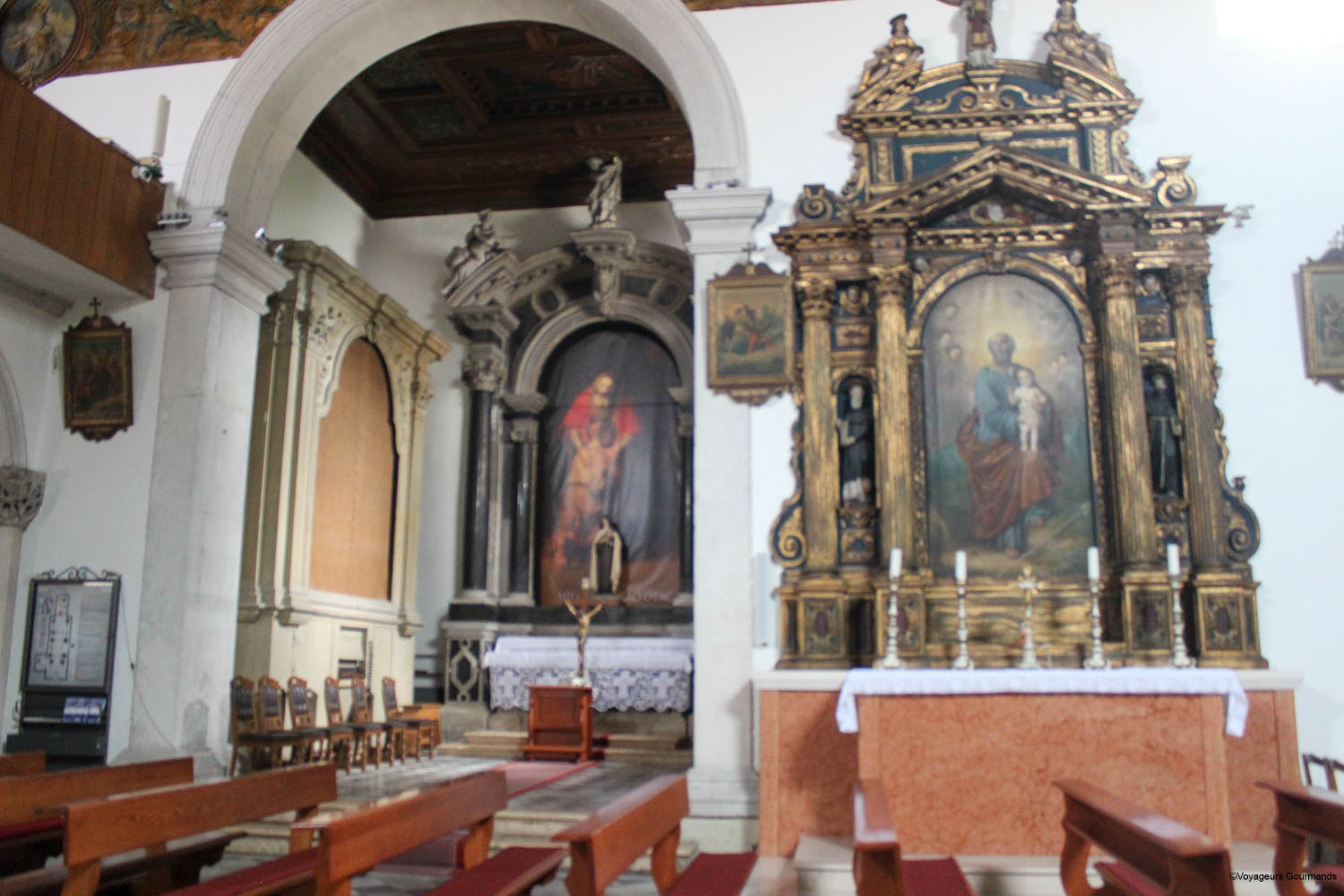
A little off the beaten track, at the far end of the old town, St Francis’s Church and Monastery are also worth a visit. Behind a fairly plain Gothic façade, the interior is richly decorated with Baroque altars. The Chapel of the Holy Cross houses an organ built in 1762 by Petar Nakić, and the monastery library holds the ‘Šibenik Prayer’, one of the oldest texts in the Croatian language, written around 1375.
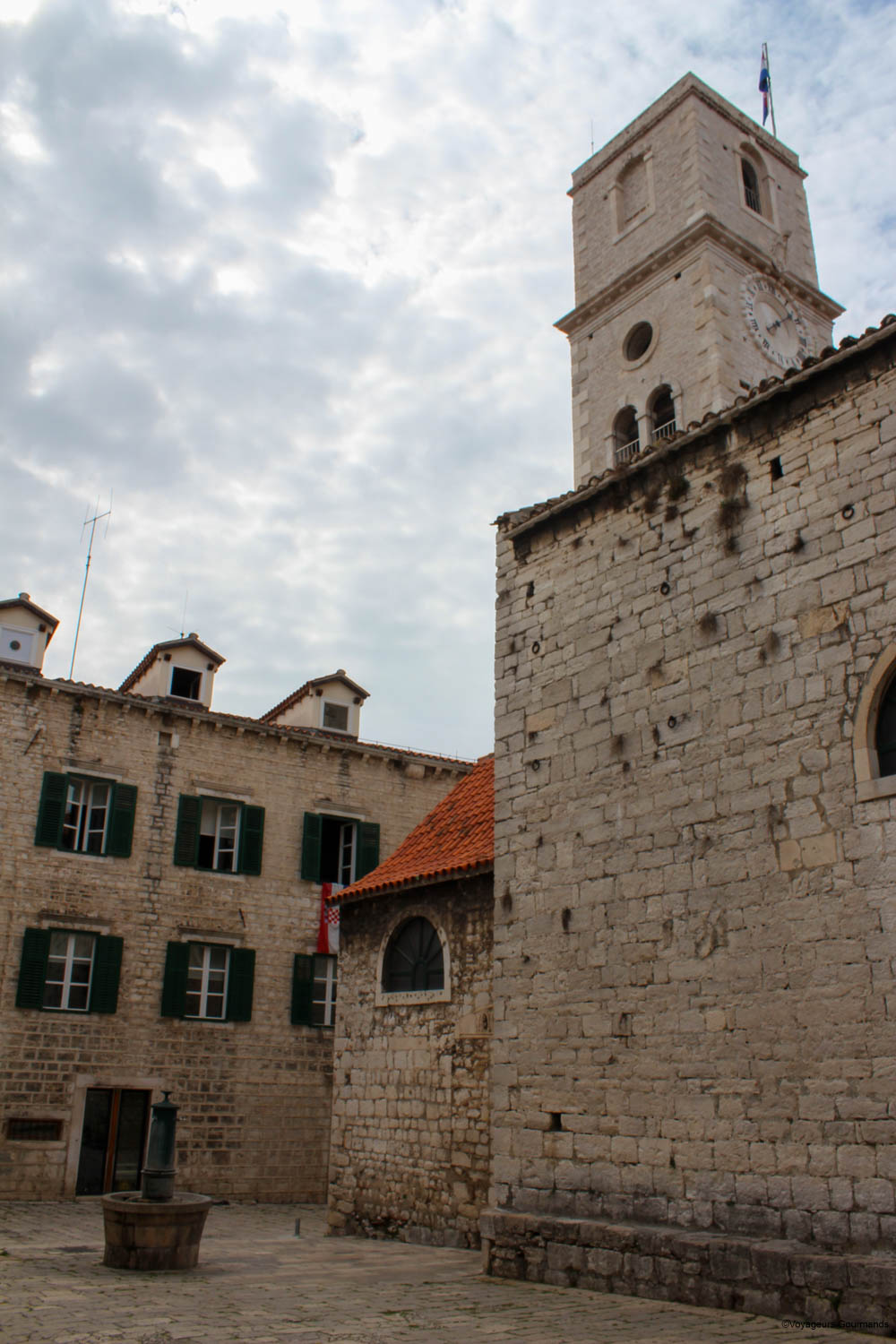
St Michael’s Fortress
Sibenik actually has four fortresses, three of which can be visited from the town. The closest to the centre, St Michael’s Fortress, is about a ten-minute walk away: it’s uphill, but the route is well signposted. According to our host, the view is fairly similar from the other fortresses, so we only did this one. And the panorama over the old town, the cathedral, the bay and the islands is truly stunning. In summer, the fortress also hosts open-air concerts.


💡 Good to know
When we visited, the ticket automatically covered two fortresses. That’s no longer the case: from March to October, you can buy a ticket for St Michael’s alone (€11.50 per adult in 2026), a Barone and St John’s ticket (€11.50) or a combined ticket for all three fortresses (€15). From November to February, Barone and St John’s are free and St Michael’s costs €10. Entry is free for children under 7.
The garden of St Lawrence’s Monastery
Hidden behind the walls of St Lawrence’s Monastery, right in the heart of the old town, this little medieval garden was recreated in the style of monastery gardens of old: aromatic plants, medicinal herbs, cross-shaped paths and a fountain in the middle. You’d never suspect it from the street, and that’s exactly what makes it so charming: a little haven of calm and greenery amid the stone, ideal for catching your breath between two climbs.
Barone and St John’s fortresses
We didn’t have time to climb up there, but they’re often cited among the best viewpoints in town. Barone Fortress, built in the 17th century to defend the town against the Ottomans, has been restored and offers an augmented-reality tour that brings its history to life. Just above it, St John’s Fortress is the highest in Sibenik. The joint ticket for both is valid for 7 days, which is handy if you’re staying overnight.
➺ To get the full story, you can also book a guided tour of the three fortresses.
St Nicholas Fortress
Perched on an islet at the mouth of the St Anthony Channel, it guarded the sea approach to the bay. It has been a UNESCO World Heritage Site since 2017, making Sibenik one of the few towns with two UNESCO sites. In season, boats leave from Sibenik to visit it; the rest of the year, you can admire it from the footpath that runs along the channel.
Banj Beach
Around fifteen minutes’ walk from the old town, this is the closest beach to the centre, with a lovely view of Sibenik, its cathedral and St Michael’s Fortress. Ideal for a swim at the end of the day, once the steep lanes have given your calves a good workout.
Our itinerary for visiting Sibenik in one day
We arrive near our accommodation – from the outside, it looks rather dodgy… but once inside… everything has been tastefully renovated. Little patios on every floor, plus a small roof terrace for relaxing on top of the building…

Once settled in, we stroll around town for a good hour, until our stomachs start calling. Off we go in search of our restaurant, Nostalgija, where we’ll enjoy one of the best meals of our whole Croatia road trip! We finish just in time for the sunset and its sublime colours…


The next morning at breakfast, a surprise: we’re served a typically Croatian spread. We have a lovely time with our host who, being a French speaker, tells us all sorts of things about his country and its customs. After this gargantuan breakfast, we leave our bags in the car and head back out to lose ourselves in the lanes: churches, parks, seafront, with the obligatory stop at St James’s Cathedral, then the climb up to St Michael’s Fortress before hitting the road again. We feel so good here… It’s really very pretty.
Around Sibenik
➺ Several islands can be reached from the town, such as Zlarin or the Kornati islands. The easiest way to see several in one day: this boat trip to 4 islands and the Blue Lagoon.
➺ The famous Krka National Park and its waterfalls.
➺ Visovac Island.
➺ 90 km away, the town of Zadar.
➺ The town of Trogir.
➺ The city of Split and the area around Split.
Where to eat in Sibenik
Don’t hesitate: go and eat at Konoba Nostalgija, right in the heart of the old town. We had the best squid-ink risotto we’ve ever eaten there! A beautifully plated seafood starter and a generous plate of spaghetti rounded off the dinner, one of the best of our road trip. Refined Dalmatian cooking in a cosy little dining room. Ul. Biskupa Fosca 11, 22000 Šibenik.
We’ve also written a post about all the Croatian specialities we tried: Croatian food.


Where to stay in Sibenik
As I mentioned above, we fell head over heels for the town, but also for our accommodation: Apartments and Rooms Ill. The tastefully renovated room and communal areas, the enormous breakfast, the location, but above all the kindness of our host, who taught us so much about Croatia and its customs.


How long do you need in Sibenik?
You can see Sibenik in half a day, but ideally you should spend a full day there to make the most of it.
👉 In 1 day:
You’ll have time to explore the historic centre, visit St James’s Cathedral, climb one of the fortresses for the view and enjoy a stroll along the seafront.
👉 In 2 days:
Perfect if you’d like to take your time, explore the fortresses at a leisurely pace and enjoy the beaches or excursions around the town.
Sibenik also fits perfectly into a Croatia road trip between Zadar and Split.
Practical tips for visiting Sibenik
Visiting Sibenik is fairly easy, but a few tips can make your trip even better.
Getting there: the town is easy to reach by car or by bus from Zadar or Split. Without a car, you can also opt for a Krka National Park and Sibenik day trip from Zadar.
Parking: as the historic centre is pedestrianised, you’ll need to park on the outskirts. There are several car parks around the old town.
Best time to visit: spring and early autumn are ideal for avoiding the summer heat and crowds.
Good to know: the town is built on a hillside, so bring comfortable shoes for the cobbled lanes and climbs.
✤✤✤
We recommend spending a day in Sibenik; even if you don’t stay overnight, an afternoon wandering its streets is well worth it. The town has bags of charm, especially its old town. We felt really at home there. Next, we hit the road to Krka National Park, but that’s another story…
Share me on Pinterest:

FAQ about things to do in Sibenik
The frequently asked questions are here!
What can you do in Sibenik in one day?
In one day, you can wander the medieval old town, visit UNESCO-listed St James’s Cathedral, climb St Michael’s Fortress for the view over the bay and finish with a swim at Banj Beach.
Is Sibenik worth visiting?
Yes, Sibenik is a great stop in Croatia, especially if you’re after an authentic town that’s less touristy than Split or Dubrovnik. It is home to two UNESCO sites: St James’s Cathedral and St Nicholas Fortress.
Where to eat in Sibenik?
Our favourite is Konoba Nostalgija, in the old town (Ul. Biskupa Fosca 11): we had the best squid-ink risotto of our entire Croatia road trip there.
Where to stay in Sibenik?
Staying in the old town means you can do everything on foot. We loved Apartments and Rooms Ill: tastefully renovated rooms, a roof terrace, a hearty Croatian breakfast and a French-speaking host who couldn’t do enough for us.
How much does it cost to visit Sibenik’s fortresses?
In 2026, from March to October, expect to pay €11.50 for St Michael’s Fortress alone, €11.50 for Barone and St John’s, or €15 for the combined ticket covering all three. From November to February, Barone and St John’s are free and St Michael’s costs €10.
How long do you need to visit Sibenik?
One day is enough to see the highlights, but two days let you enjoy the town, its fortresses and the surrounding area at a more relaxed pace.
What is there to see around Sibenik?
The most popular excursions around Sibenik are Krka National Park, the Kornati islands and Zlarin, as well as the towns of Split, Trogir and Zadar.