


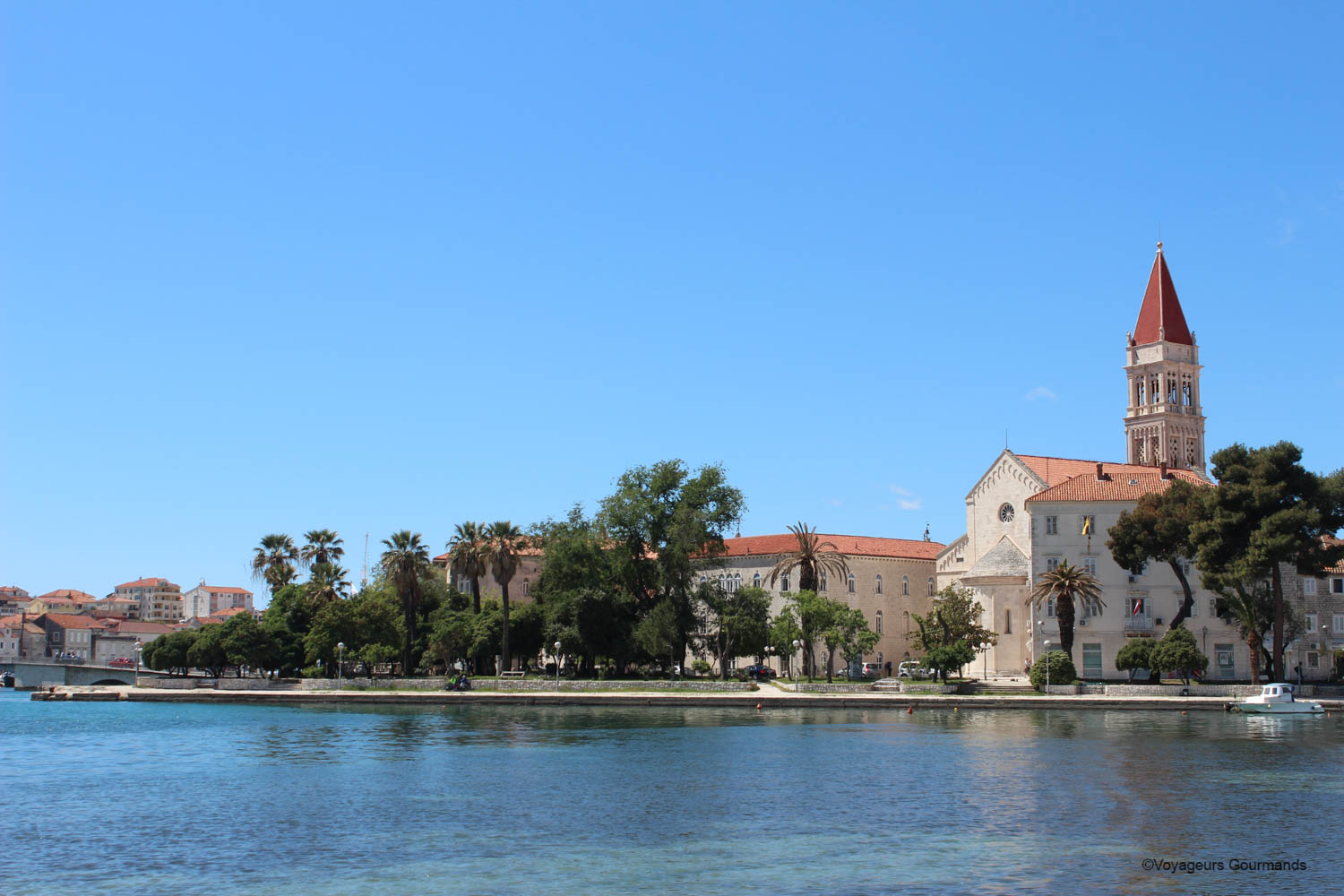
We set off from Split, barely 30 km away, to visit Trogir on day 6 of our Croatia road trip. Under glorious sunshine, we fell for its old town, a UNESCO World Heritage Site since 1997. The whole historic centre fits on a tiny islet of barely 1 km², linked by bridges to the mainland on one side and to the island of Čiovo on the other: everything here is done on foot, between white-stone lanes, Venetian-era palaces and the seafront.
In this article, we share the best things to do in Trogir and what to see, the itinerary we followed to visit it in half a day (or a full day if you take your time), the excursions nearby, and our tips on where to stay, in the old town or by the beaches on Čiovo.
✤✤✤
Visiting Trogir at a glance
| 📋 Key facts | ✨ Our tips |
|---|---|
| 📍 Where? | On the Dalmatian coast, 30 km west of Split, on an islet between the mainland and the island of Čiovo |
| ✈️ Getting there | By car (about 30 min from Split), by bus from Split or by boat from May to October; Split Airport is just a few kilometres away |
| ⏱️ How long? | Half a day is enough for the old town, a full day if you’d like to take your time |
| 🏛️ Must-sees | St Lawrence Cathedral and its bell tower, Kamerlengo Fortress, the Riva and the market |
| 🎟️ Entrance fees | Around €10 for the cathedral (bell tower included) and around €6 for Kamerlengo Fortress |
| 🛏️ Where to stay? | In the old town for charm, on Čiovo for beaches and parking, or in Split to explore the region |
| ☀️ When to go? | May–June or September, to avoid the July–August crowds |
| 🚗 Good to know | The old town is pedestrianised: park on the mainland side or on Čiovo, then continue on foot |
Trogir: a brief history
Founded in the 3rd century BC by Greek settlers, Tragurion grew up on an islet between the mainland and Čiovo. Under Roman rule, it prospered thanks to its port and its strategic position on the sea routes. In the Middle Ages, Trogir became a free town under Croatian and Hungarian influence, building ramparts, palaces and St Lawrence Cathedral. In 1420 it came under Venetian control, a period marked by superb Gothic, Renaissance and Baroque architecture. Largely spared by modern wars, its old centre was listed by UNESCO in 1997, offering a snapshot of more than 2,000 years of Mediterranean history.
And so, as I mentioned in the introduction, what makes Trogir unique is that its old town sits on a small island of barely one square kilometre between the mainland and the island of Čiovo. It is linked to both by bridges!
What to see and do in Trogir
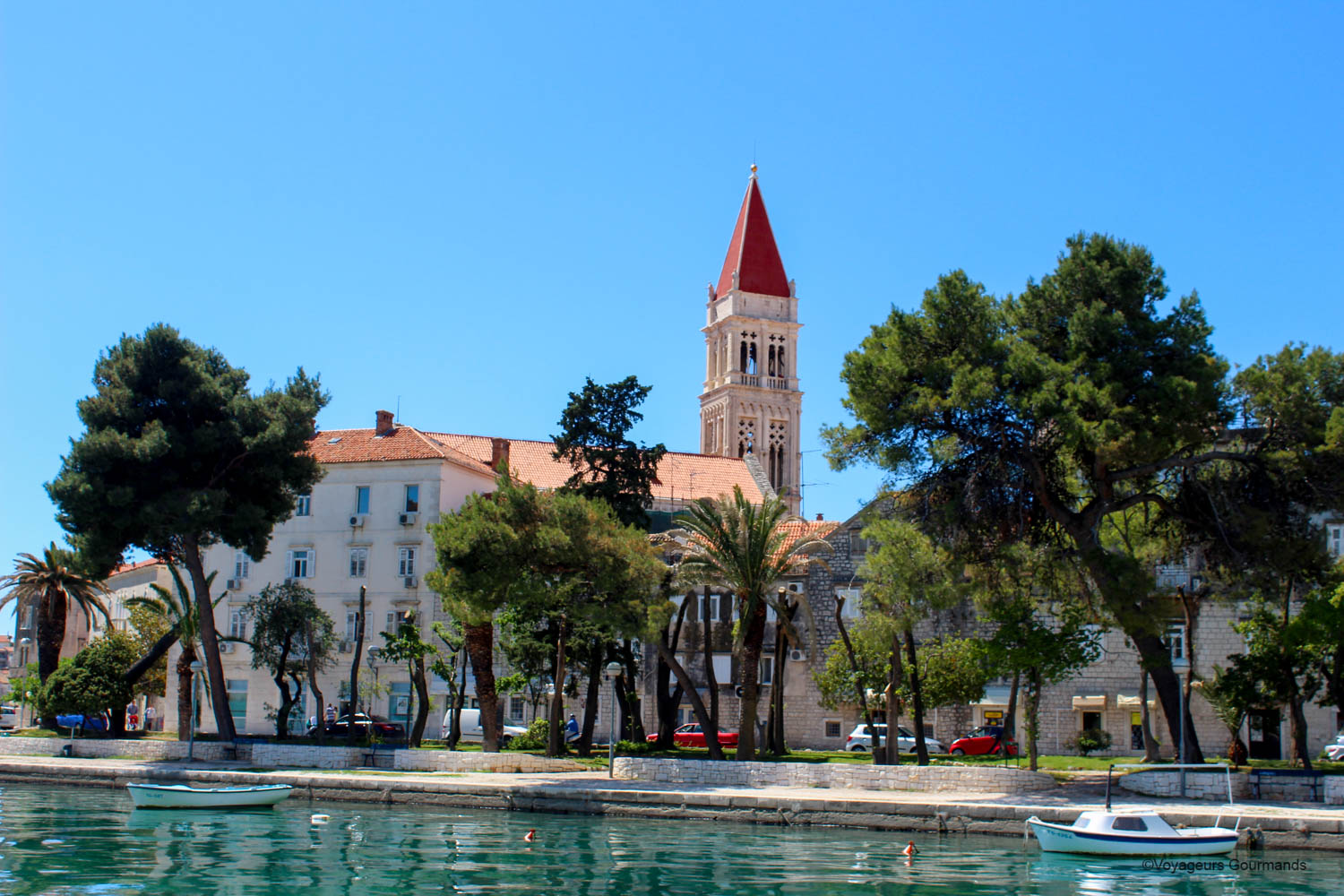
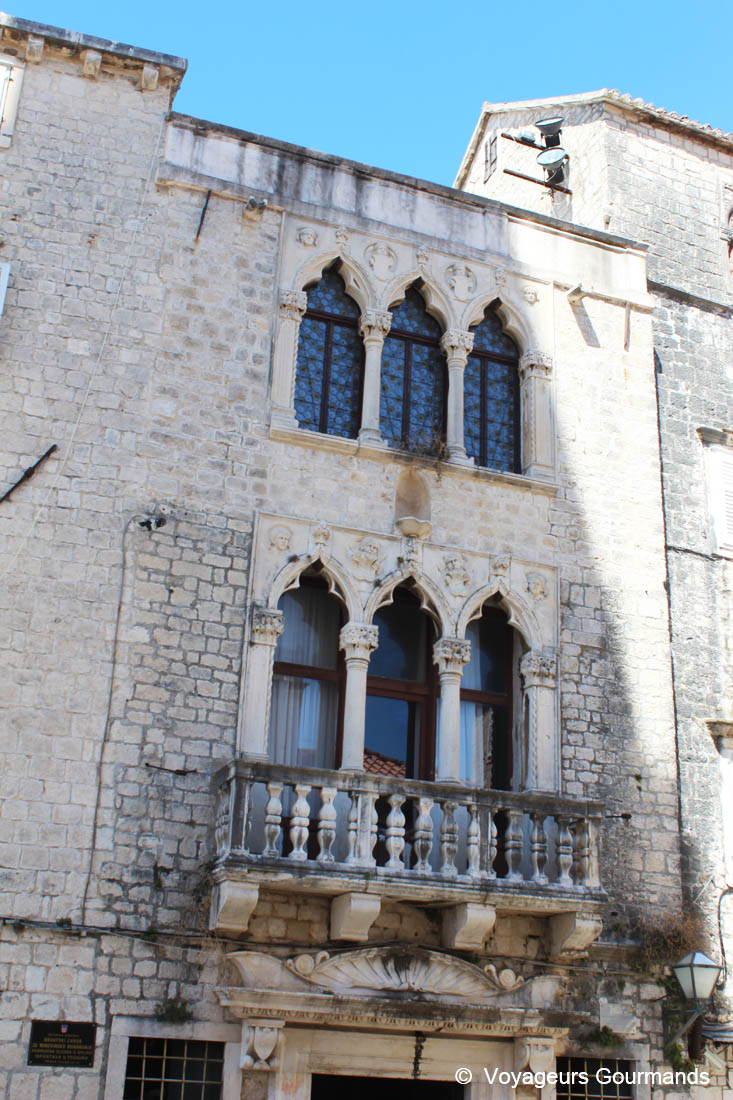
We mostly explored the historic town on foot, and it’s full of charm. Its medieval architecture reminded us a lot of Venice. Thanks to its strategic location, the town has been Roman, Venetian, Greek and even French in turn, a mix you can still see in the façades of its buildings.
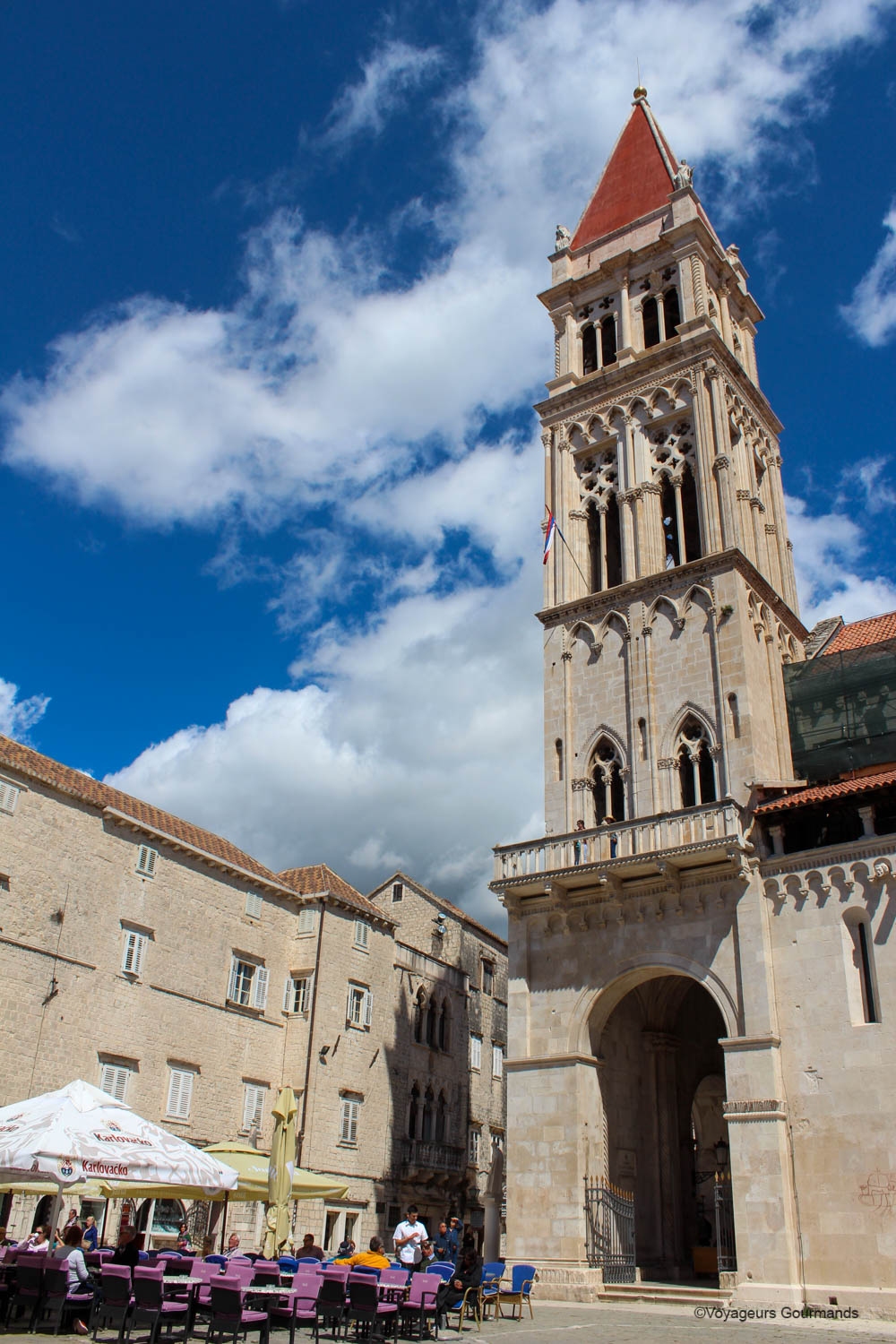
St Lawrence Cathedral (Katedrala Sv. Lovre)
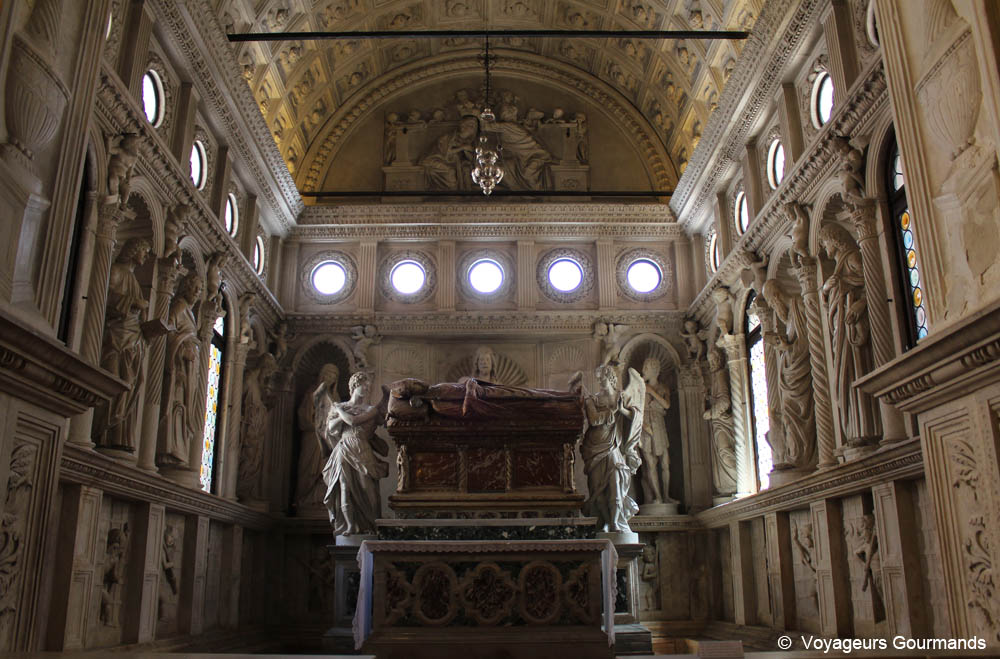
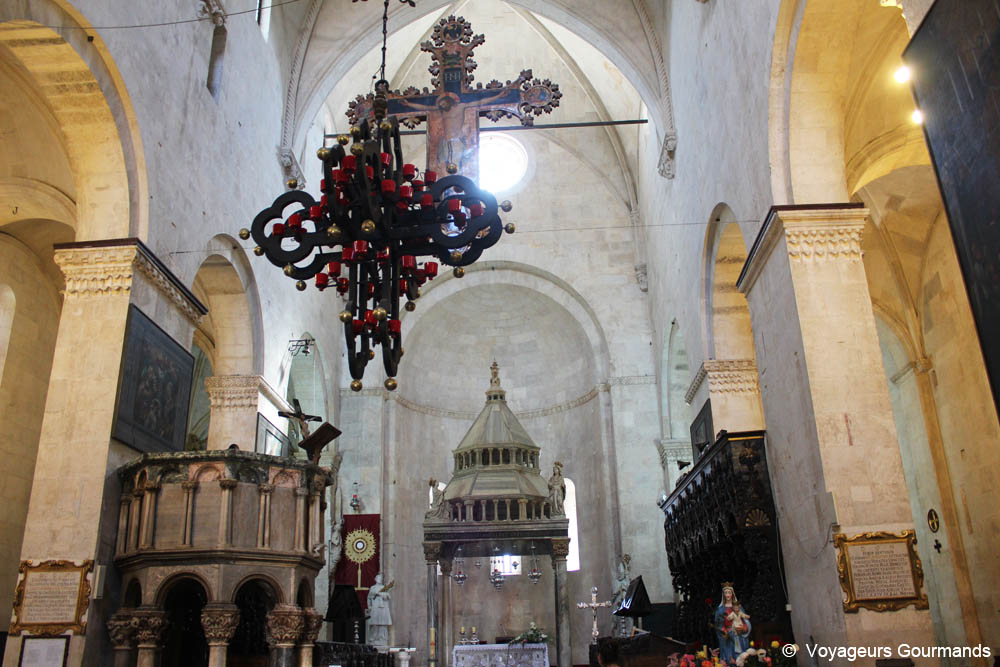
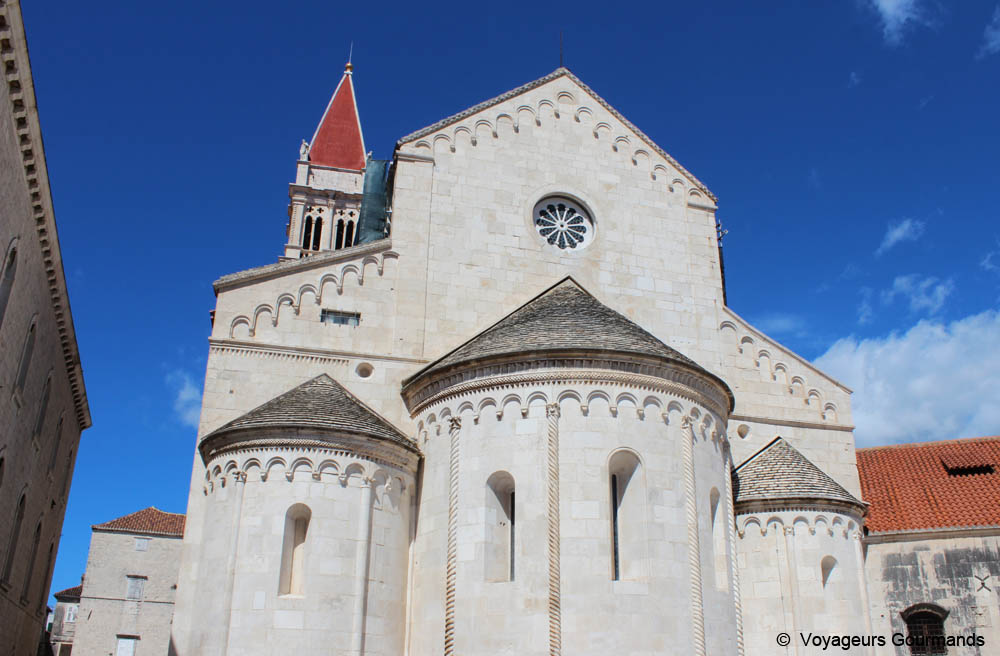
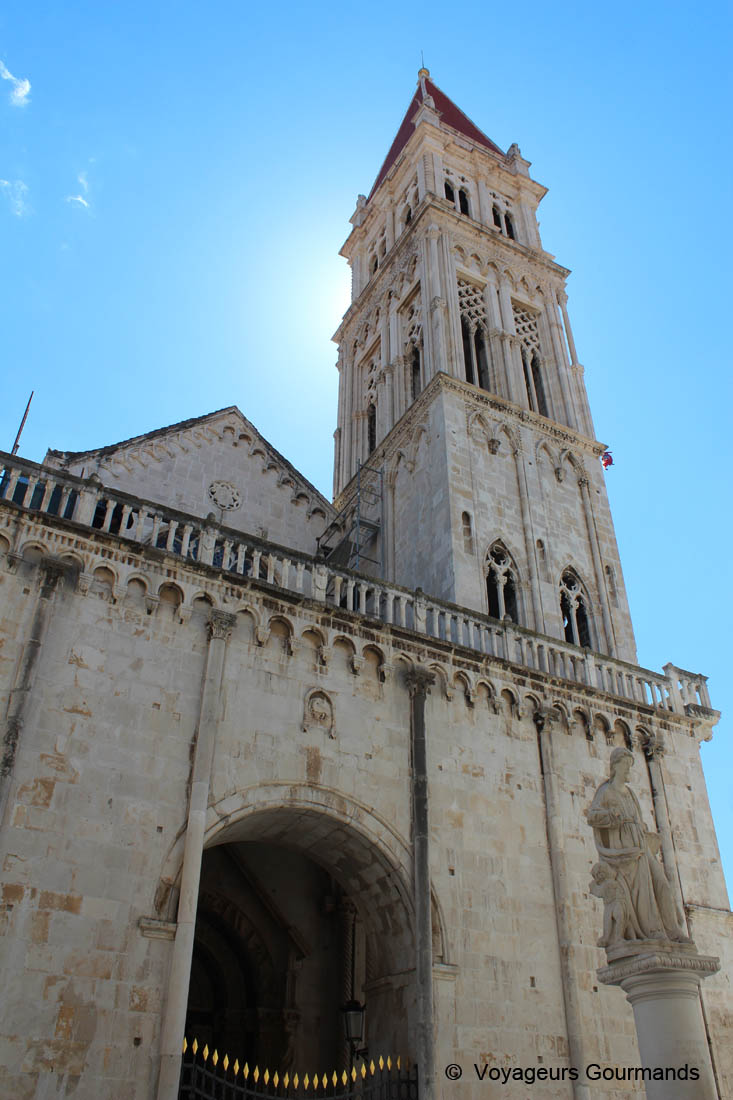
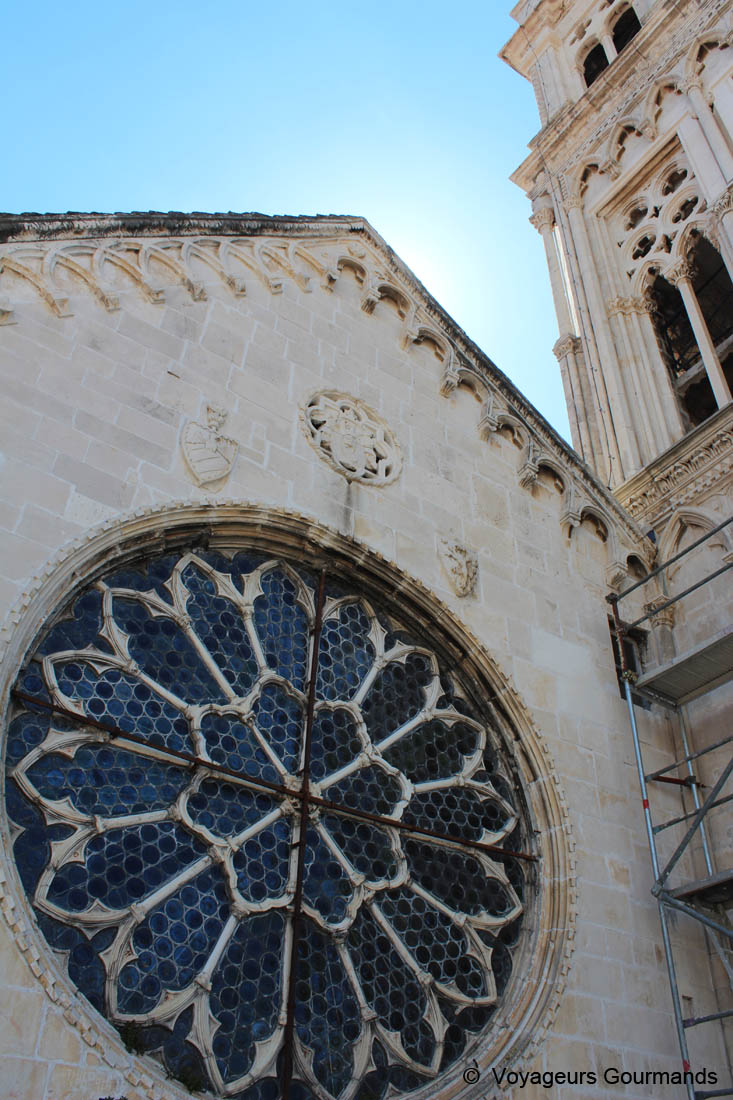
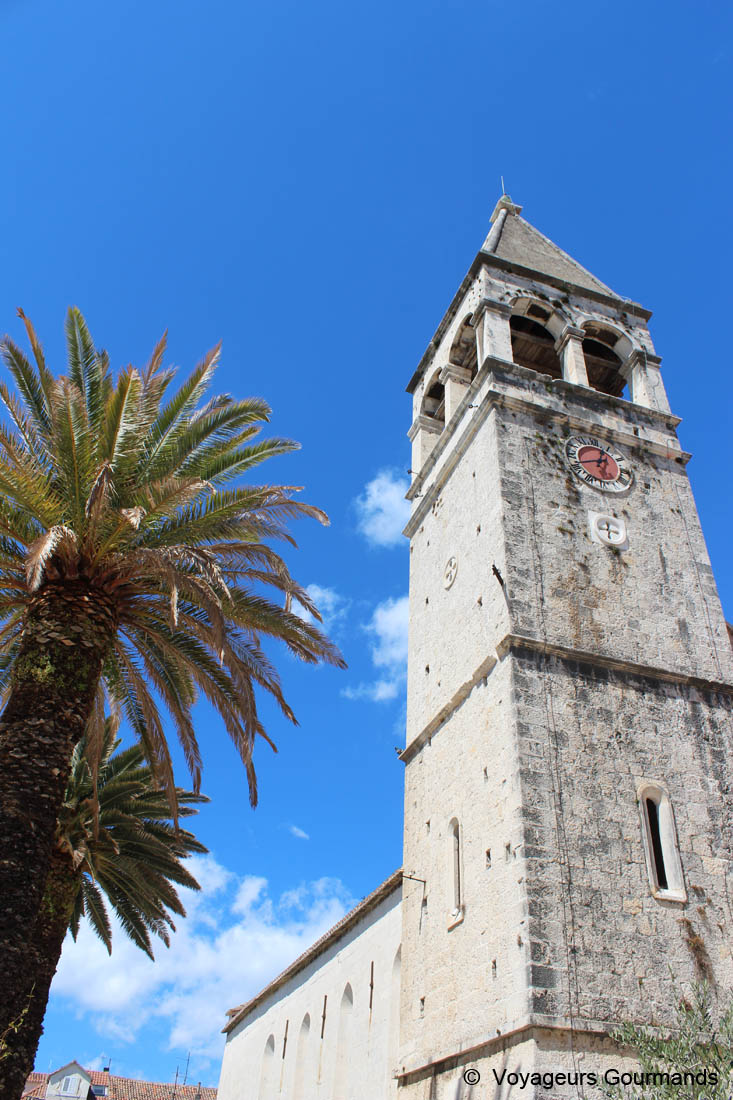
Set on a pretty square near the town hall and the clock tower, the cathedral stands out as one of the finest buildings in town. Its construction has a fascinating history and, like the rest of the town, it bears the marks of its various rulers. You can climb the bell tower for a lovely view, especially over the square below. As we mentioned on our Instagram, some monuments in Croatia had rather unsafe access, with sometimes dodgy staircases… It was fine here, so we went up, but we did turn down the climb in a few other places…
The clock tower, Torre dell’Orologio
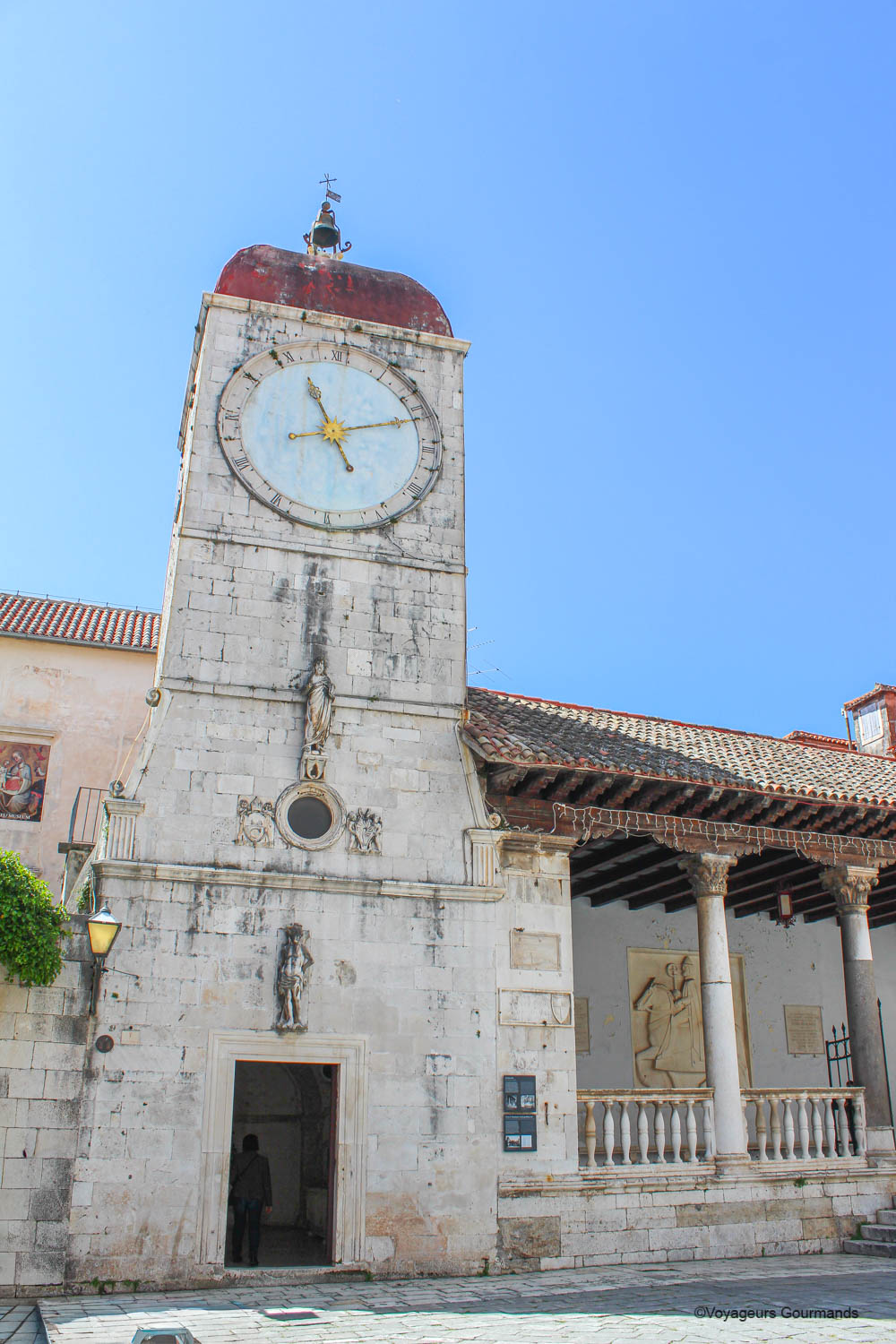
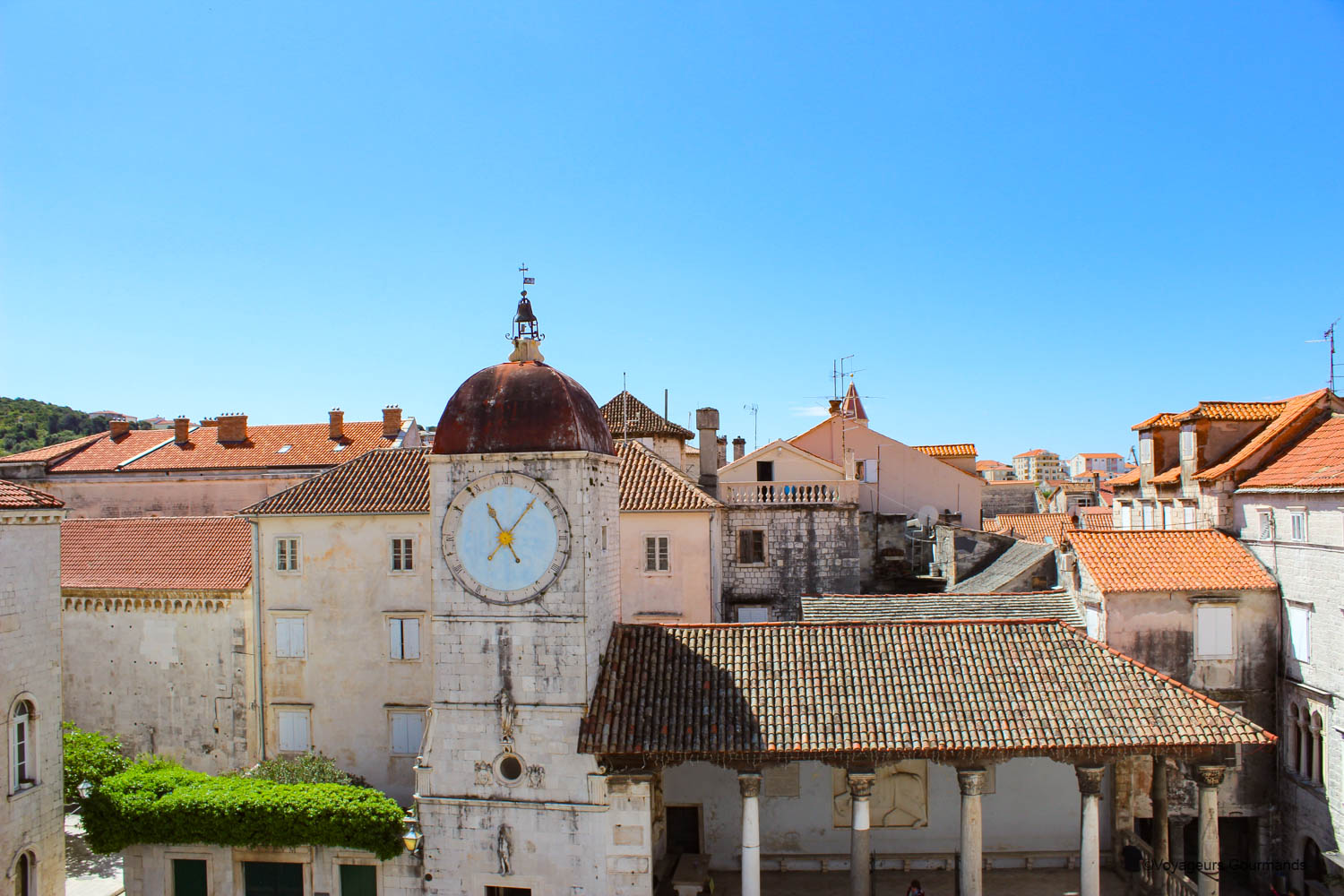
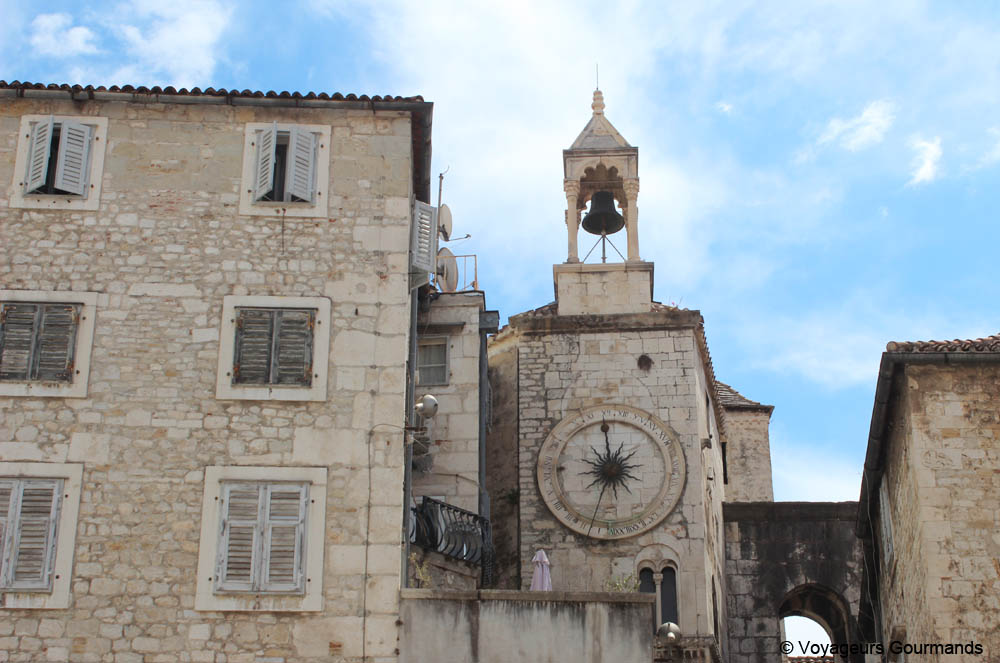
On Trogir’s main square, opposite the cathedral, stand two beautiful buildings that we enjoyed admiring from every angle. The first is Trogir’s clock tower, or Torre dell’Orologio. This elegant 15th-century tower is adorned with a large blue clock. It’s one of the symbols of the old town and a reminder of the rich Venetian past of this Dalmatian city.
The town hall
Trogir’s town hall, also built in the 15th century, stands out for its Venetian architecture too. It has a beautiful inner courtyard decorated with Gothic and Renaissance details – it’s just on the left in the photo! If we were to visit Trogir again, we’d love to see the inside! I was left wanting more!
Kamerlengo Fortress
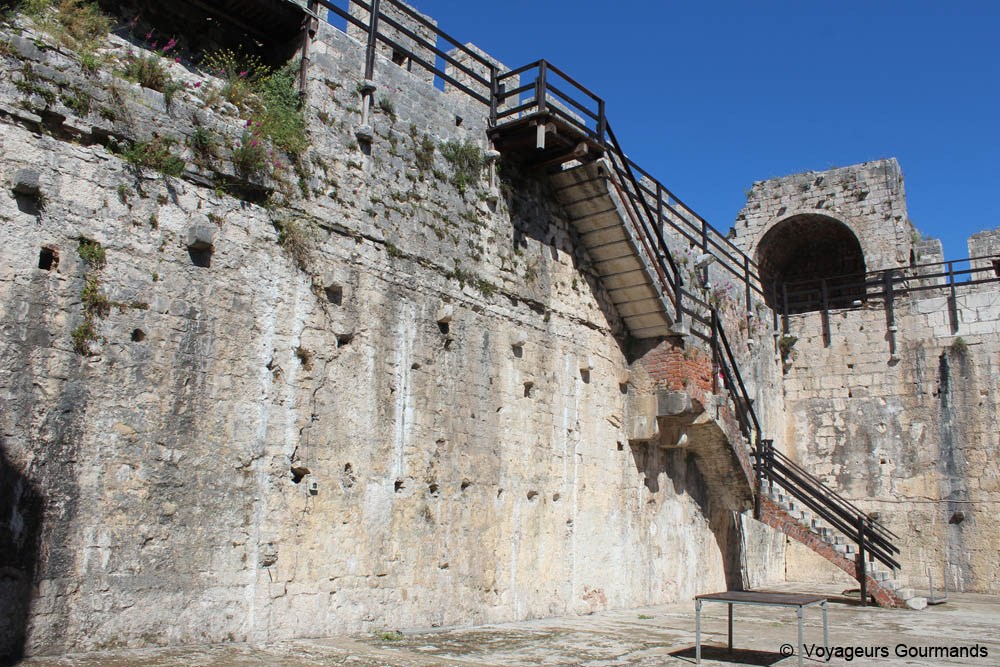
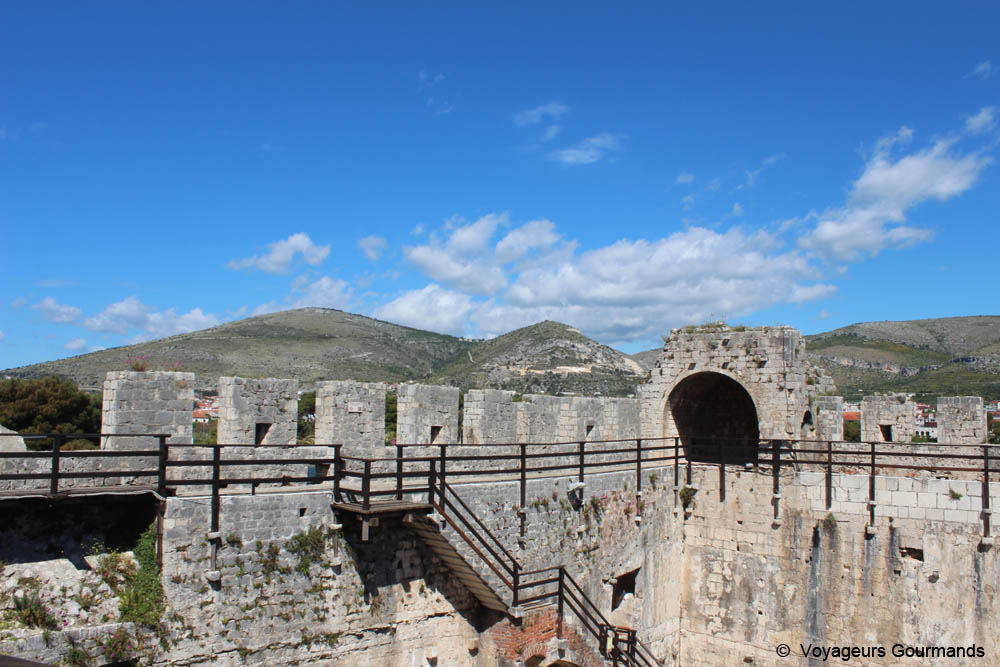
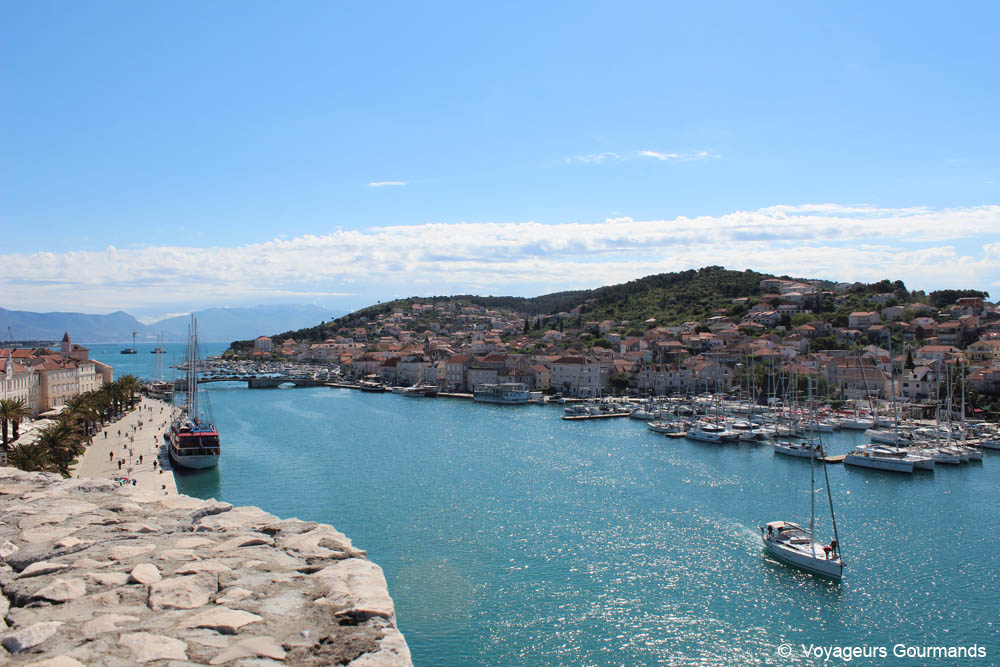
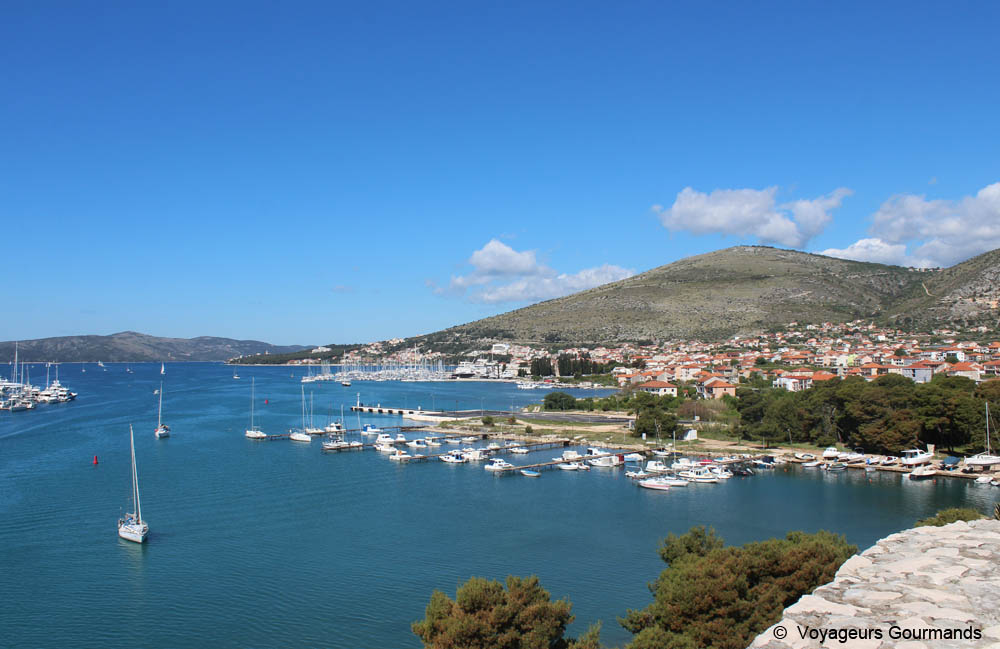
A bit like in Šibenik, we found that the main appeal of this castle was the view it offers over the town and the surrounding landscape. Only the walls and towers remain, with very little information. Built in the 15th century by the Venetians, it served as a military stronghold and protected the town.
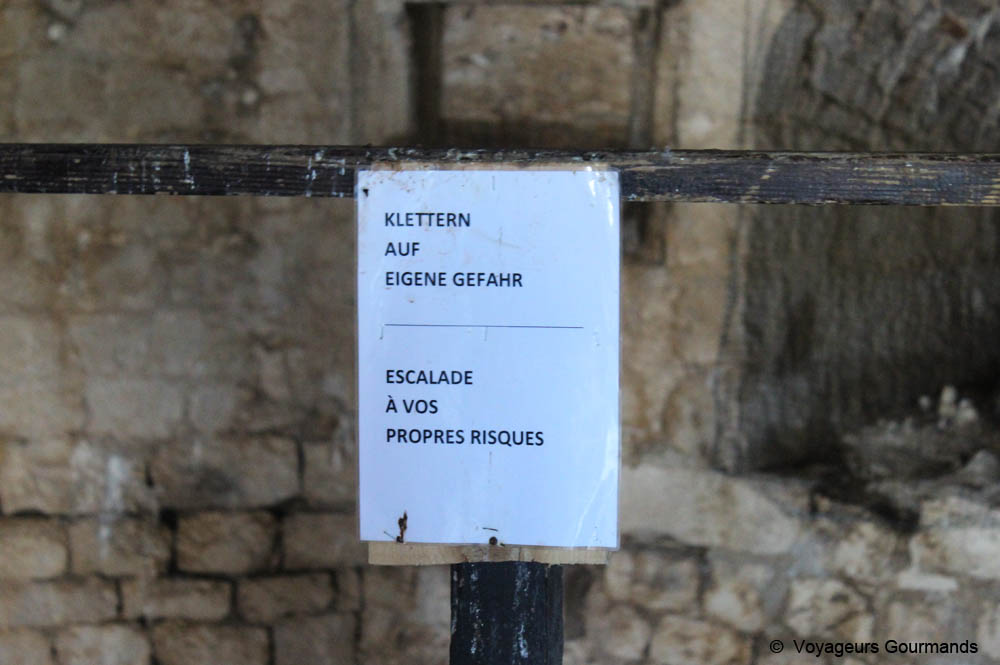
Also, as we said above, safety at this kind of site in Croatia really surprised us (well, to be fair, it freaked us out!!). In this castle, as at several other sites we visited, we were greeted by signs saying ‘climb at your own risk’… erm, OK, how reassuring…
The seafront
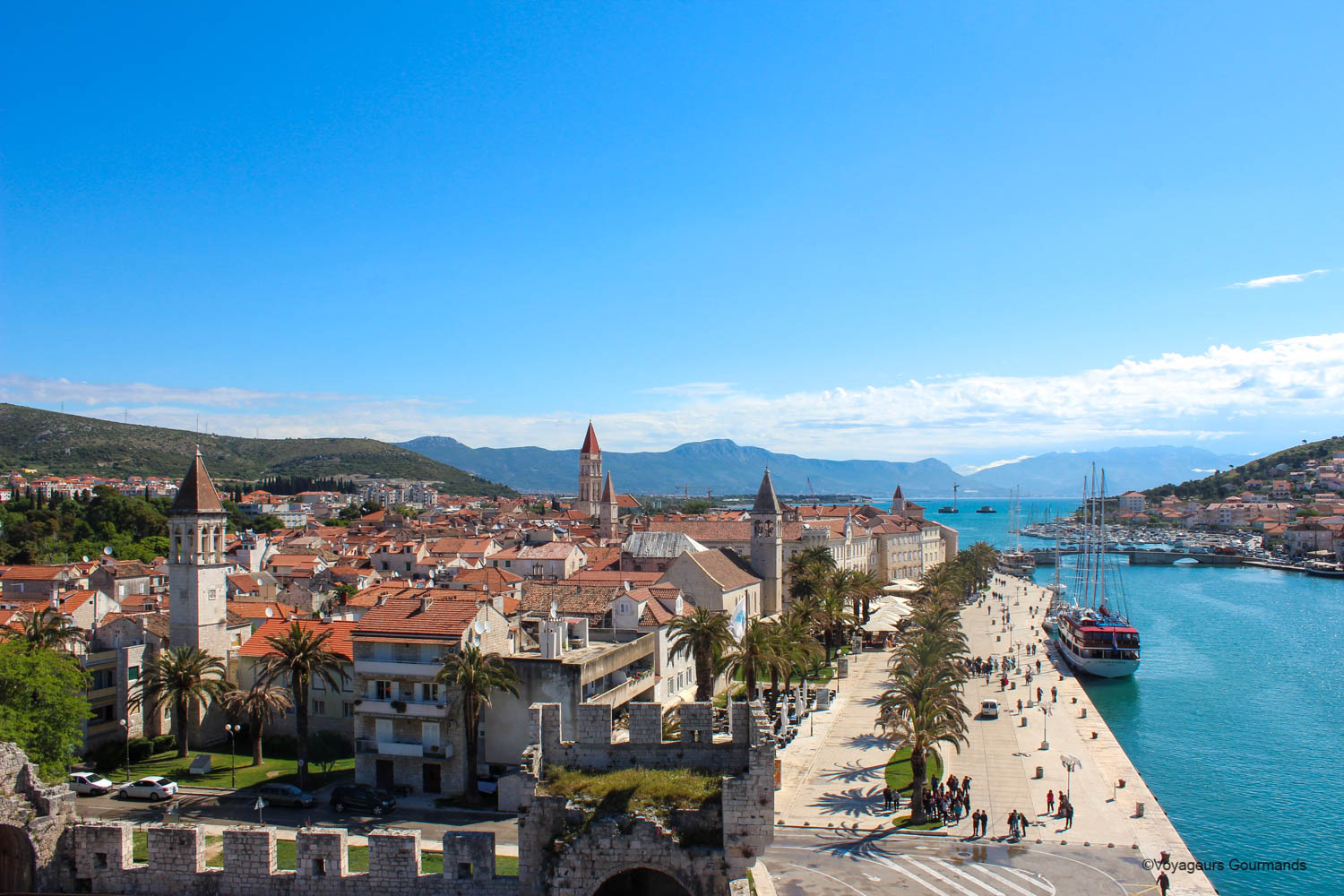
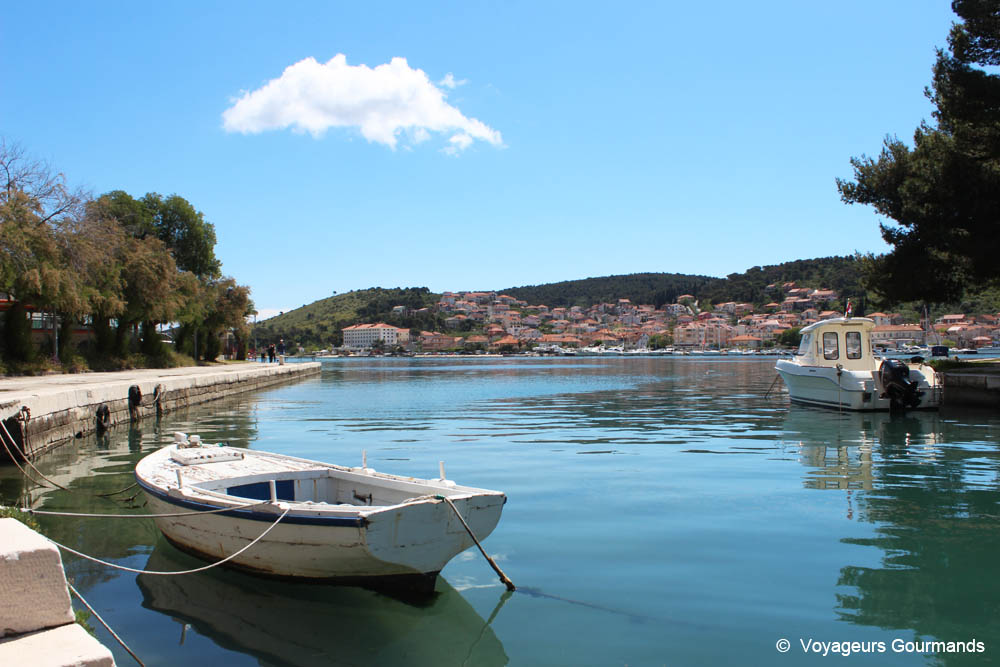
There’s a lovely walk all along the Riva, with yachts, cafés and breathtaking views in every direction!
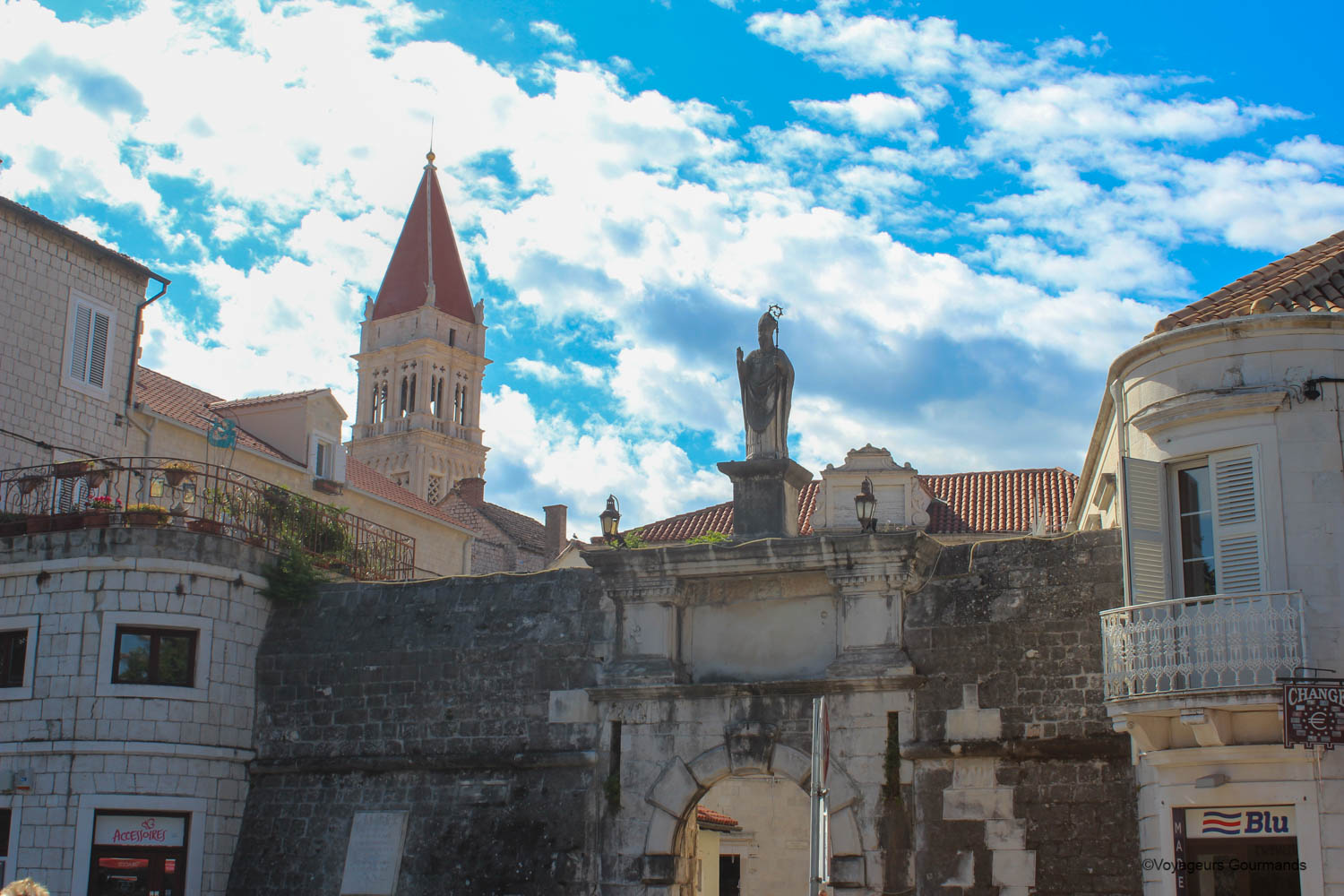
Trogir’s town gate
If you visit Trogir, you’ll most likely pass through the island’s north gate, the main pedestrian entrance to the old town (unless you choose to park on the harbour side, on Čiovo). This elegant Romanesque gate is decorated with a statue of St John, the town’s patron saint, and offers a glimpse of St Lawrence Cathedral’s bell tower in the distance. Since most people come this way… it’s hard to get a photo without the crowds!
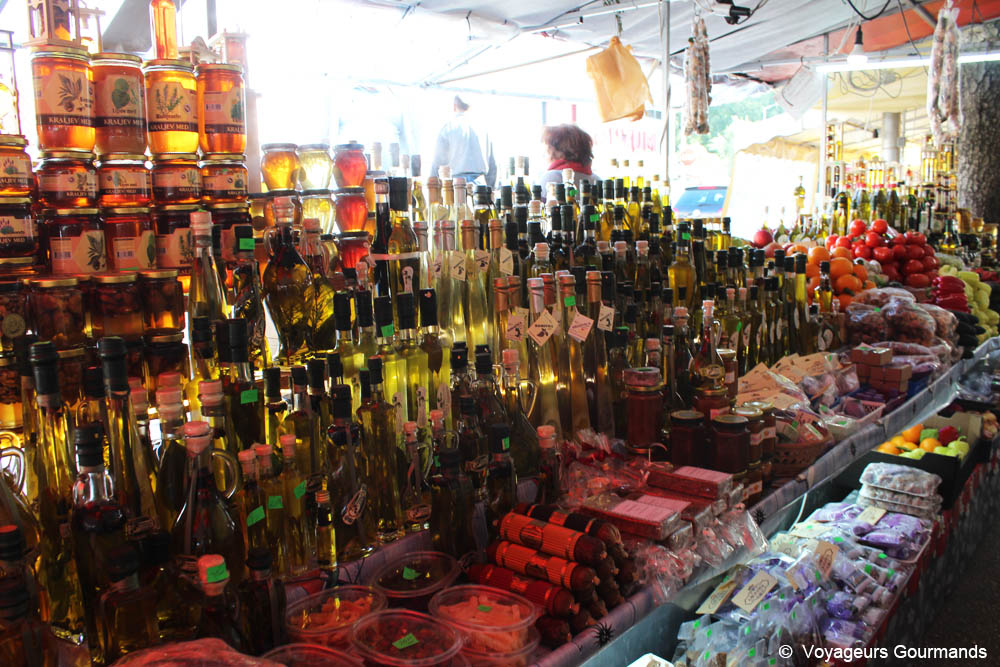
Trogir market
After parking and crossing the bridge, we came straight across Trogir’s charming market. It’s the perfect place to grab a snack among the many fruit and vegetable stalls, but also to pick up some olive oil or try the local brandy, rakija.
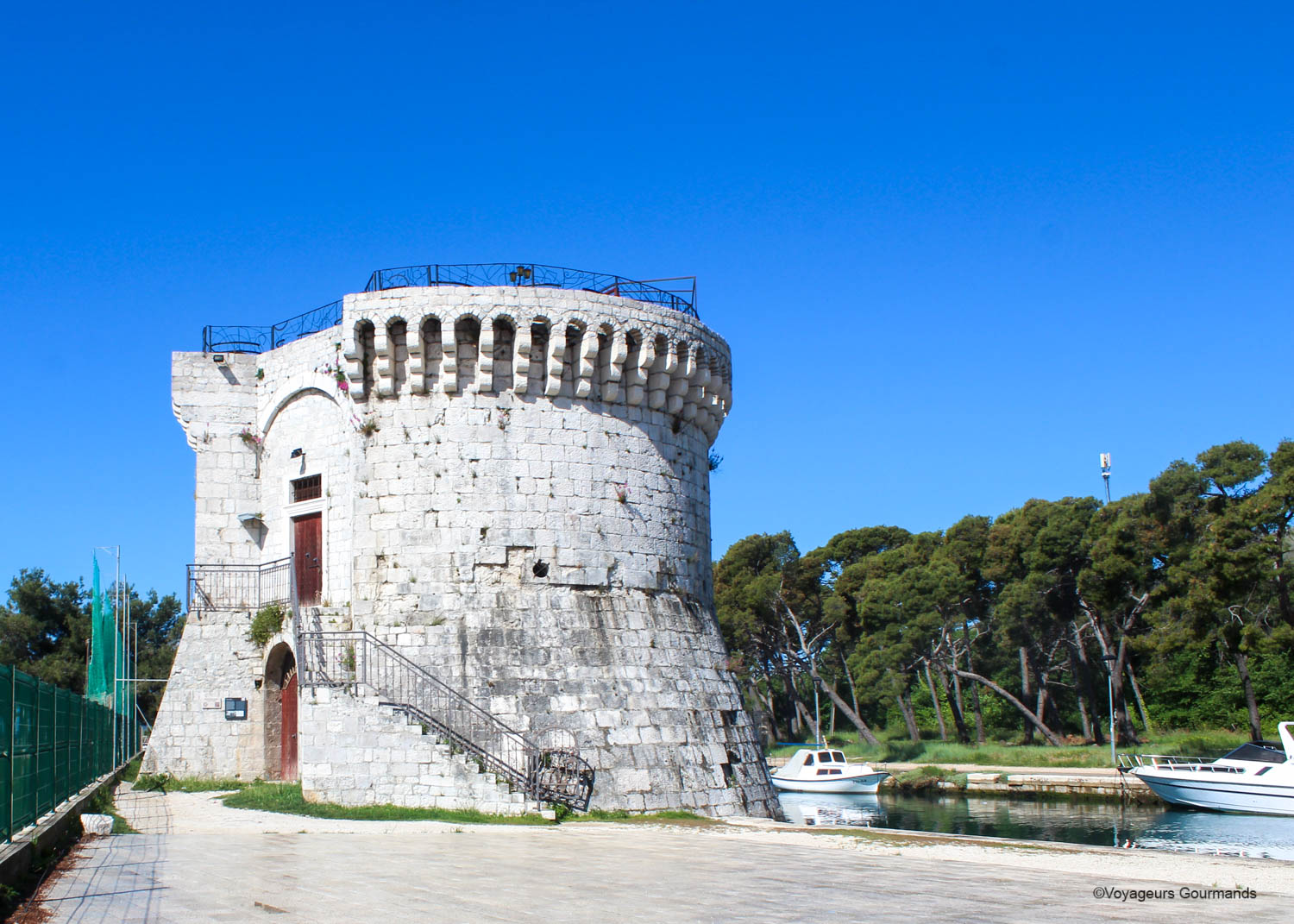
St Mark’s Tower
Like Kamerlengo Fortress, St Mark’s Tower was part of Trogir’s defences. It was built in the 15th century by the Republic of Venice to protect the town from Turkish raids. You can climb it to enjoy the panoramic view, but since we’d already been up the fortress, we didn’t do it here!
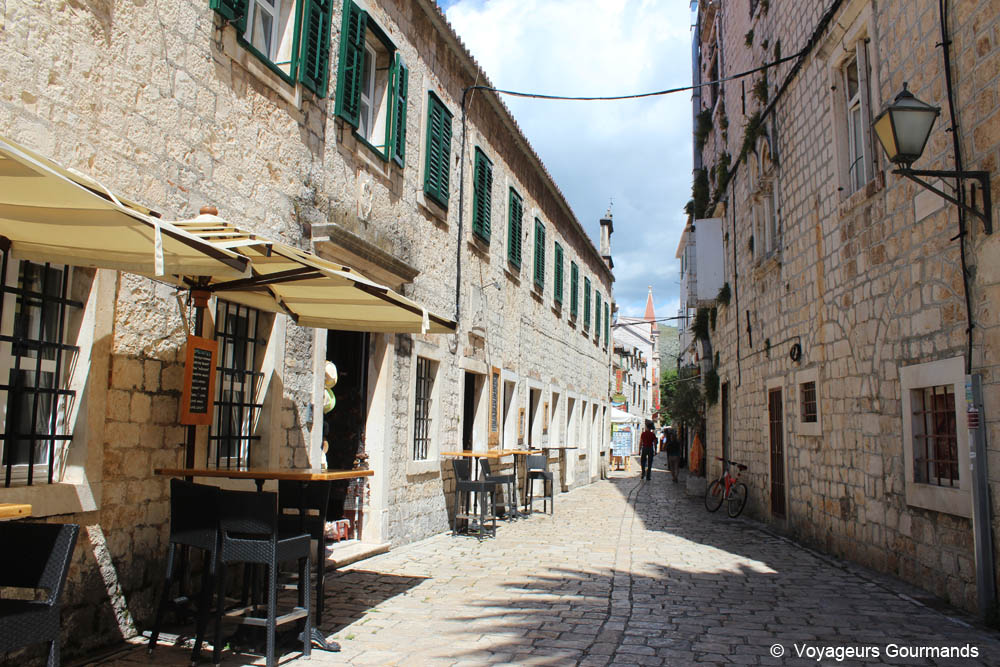
The lanes of the old town
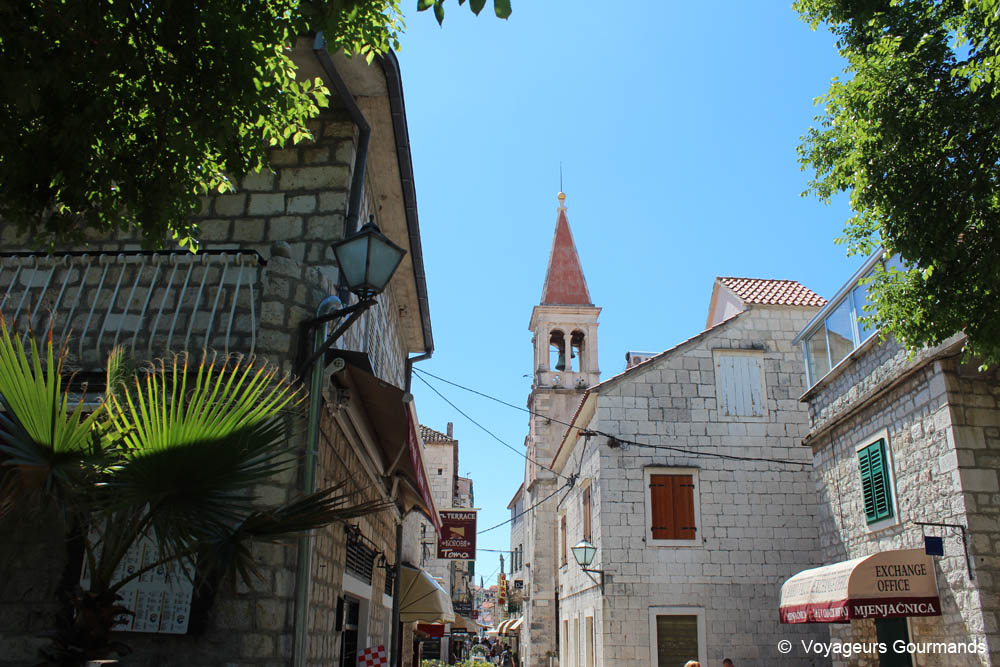
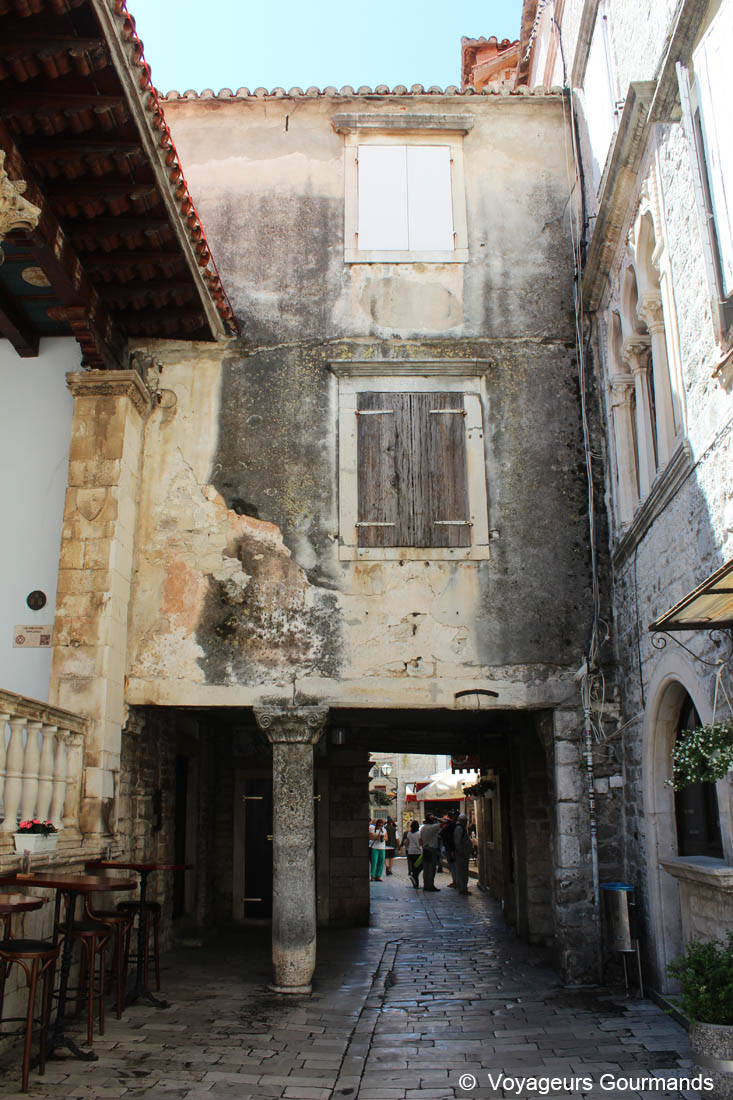
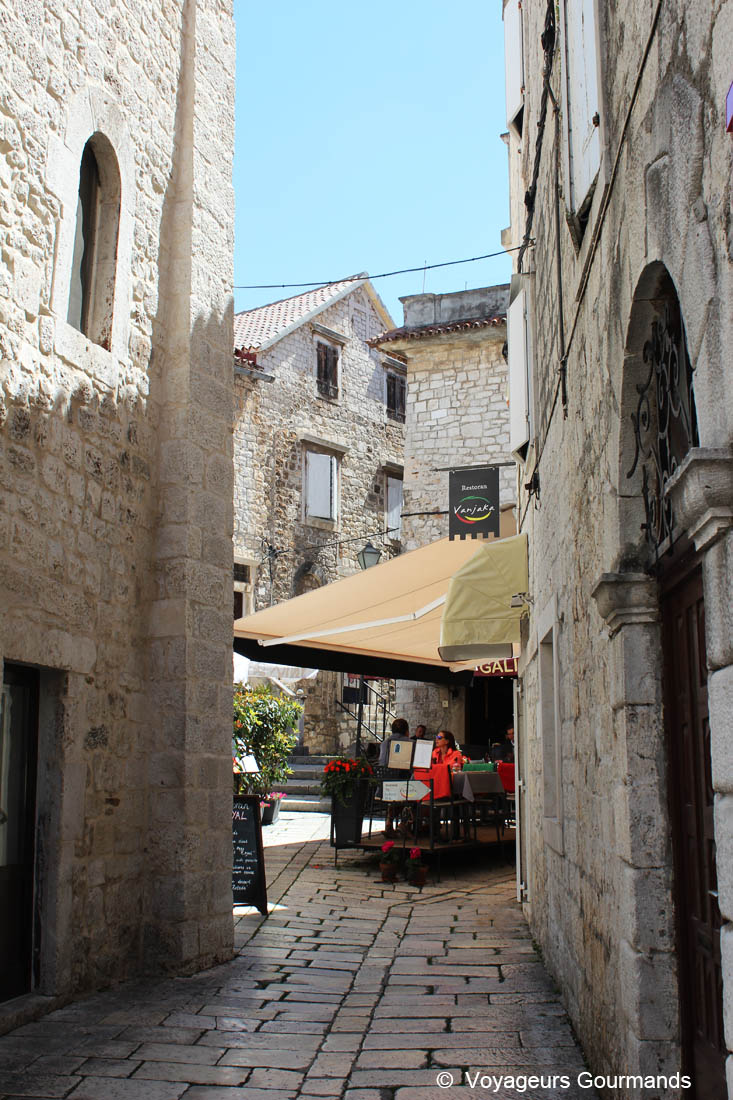
Wandering through the lanes of the old town, you can admire superb medieval façades with Gothic and Renaissance details. You’ll come across small craft shops, art galleries and hidden cafés that give Trogir all its charm. It’s the perfect place to soak up the authentic atmosphere of this Dalmatian city.
Other things to see in Trogir
➺ The Cipiko Palace, which can’t be visited but is stunning from the outside too!
➺ The Monastery of St Nicholas
➺ The town has several beaches, one of the best known being Okrug on the island of Čiovo.
➺ If you like, you can stay in Trogir and explore the surroundings: Split, Krka or Šibenik… The distances are reasonable. (By the way, you can read our article on things to do around Split here!)
➺ You can also hop on a boat trip to discover the nearby islands (Čiovo, Drvenik, Šolta).
Trogir in a day or half a day: our itinerary
If you only have a few hours – which was our case – here’s the order we recommend, following the natural flow of our walk:
Start at the north gate, the main pedestrian entrance to the old town, before the crowds build up (as we said, they’re hard to avoid in photos after 10am). Then wander through the medieval lanes to soak up the atmosphere, before reaching the main square, home to the clock tower, the town hall and St Lawrence Cathedral – allow a good while here, especially if you climb the bell tower for the view. Next, head to the seafront (the Riva) for a break overlooking the yachts, then on to Kamerlengo Fortress at the other end of the island for a panoramic view of the town and Čiovo. On the way back, stop by the market for a snack or to pick up some local olive oil. If you still have a little time, cross the bridge to Čiovo to see Trogir from the other side, or simply treat yourself to a drink on a terrace on the Riva to round off your visit in style.
That’s exactly the pace we followed, and it easily fits into half a day without rushing.
Around Trogir
We chose to stay in Split and explore from there, but you could just as easily do the same from Trogir!
Split
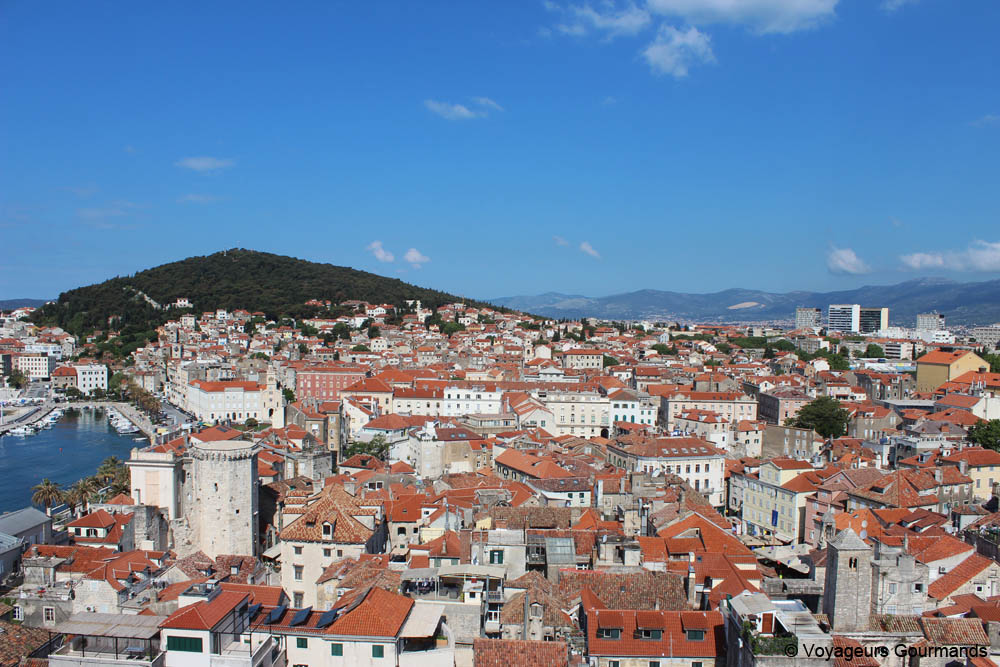
About thirty kilometres from Trogir, there’s plenty to discover in Split! Visit Diocletian’s Palace, a UNESCO World Heritage Site, with its bustling courtyards and lanes, explore the fruit and vegetable market or enjoy the seafront cafés on the Riva. Nature lovers can climb Marjan, the wooded hill overlooking the city, for spectacular views over the bay and the nearby islands. Split is also an excellent starting point for trips to the Dalmatian islands. That’s why we chose it as our home for this part of the trip!
Šibenik
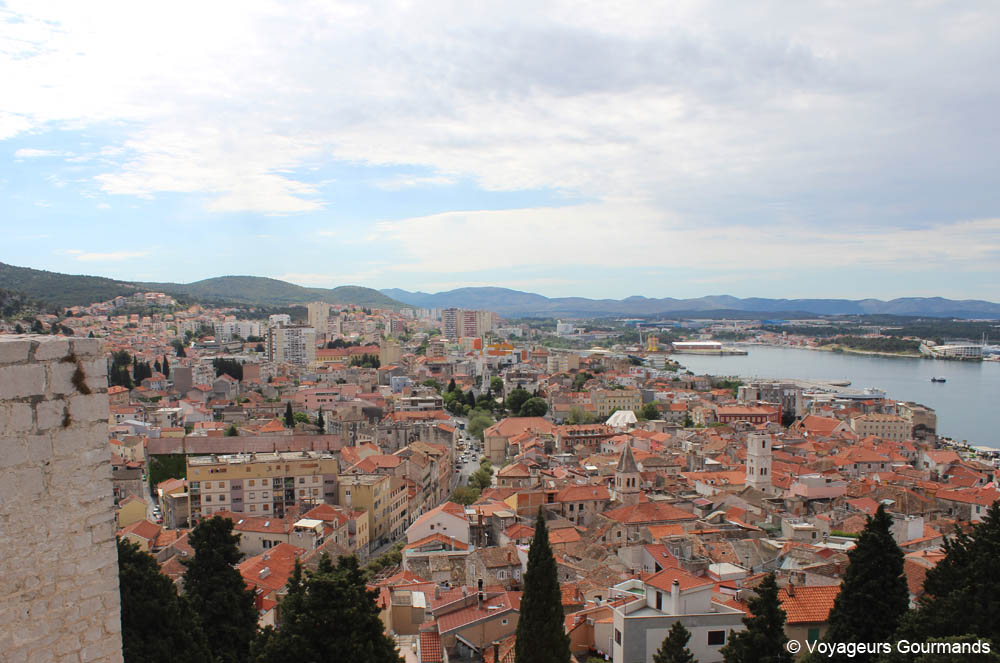
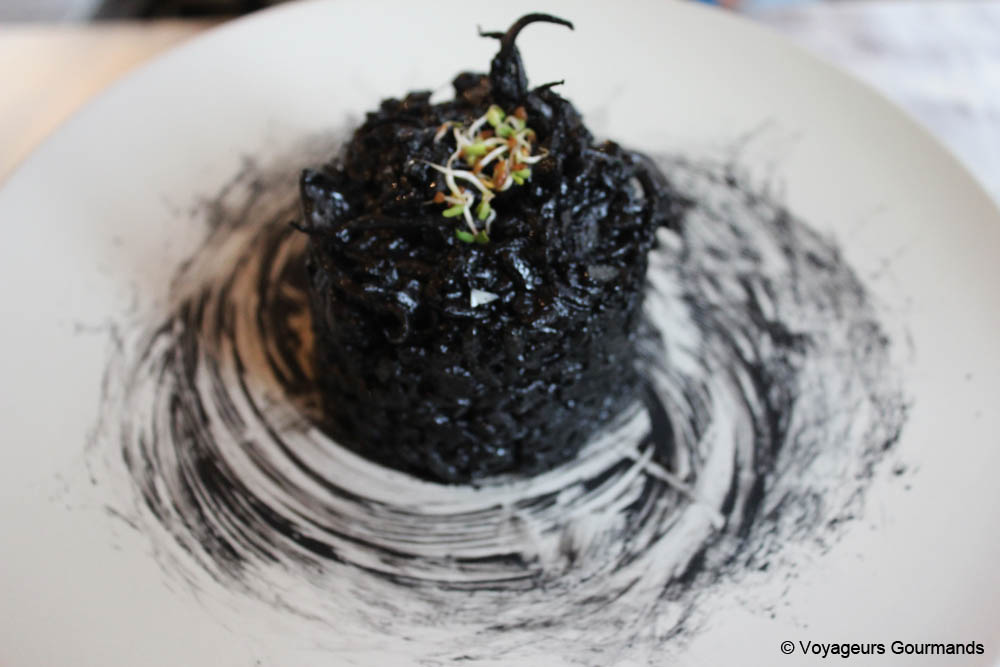
In Šibenik, you can admire the spectacular Cathedral of St James, a UNESCO site whose architecture blends Gothic and Renaissance styles. The town also has charming medieval lanes to explore, fortresses overlooking the sea with breathtaking views, and nearby beaches and coves to relax. Personally, we LOVED Šibenik: we found it super cute, we had a great place to stay and we ate incredibly well there!
Krka National Park
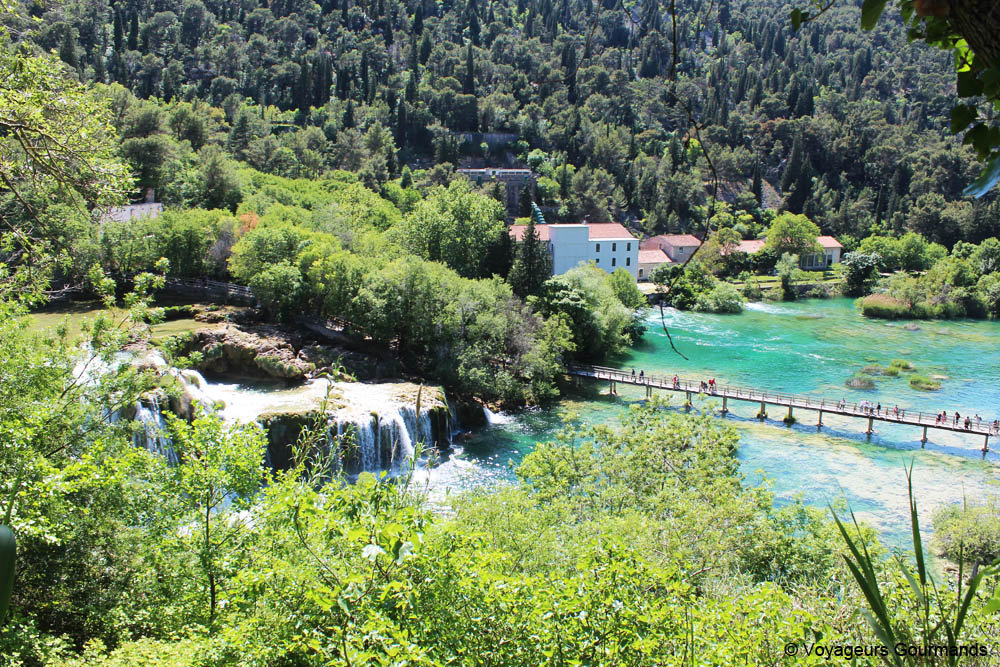
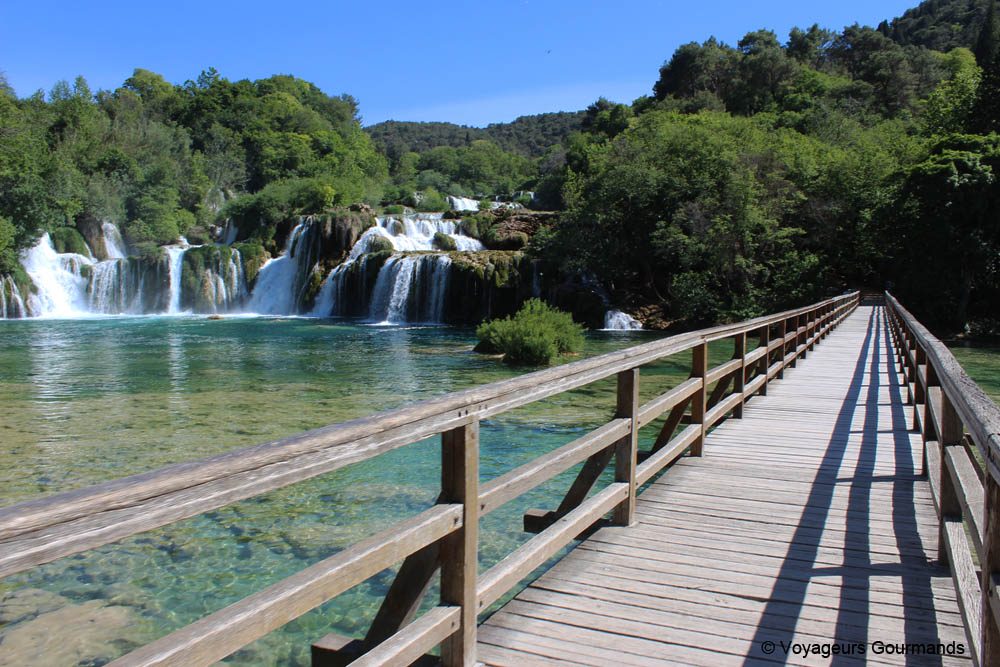
Krka National Park is one of Croatia’s gems. It was the second park we visited after the Plitvice Lakes. The park is famous for its magnificent waterfalls and crystal-clear waters, perfect for a walk. It’s a must-do excursion in the area!
Where to stay in Trogir
As we said above, we personally chose to stay in Split and explore the area from there. But we still wandered around Trogir quite a bit to get a feel for what’s on offer, so here’s what you need to make up your mind.
Staying in Trogir’s old town
This is where the charm is: small renovated Venetian houses, flats in the cobbled lanes and a few guesthouses with views over the rooftops. The advantage is that you can do everything on foot and, above all, enjoy the town in peace in the evening once the coaches from Split have left (and it makes all the difference: the town empties out and becomes almost intimate). One thing to bear in mind: the lanes aren’t accessible by car, so you’ll need to park on the harbour side or on Čiovo and finish on foot with your luggage. In high season, book early, as accommodation in the historic centre is limited.
Staying on Čiovo, by the beaches
Just opposite, on the other side of the bridge, Čiovo is more residential: more parking, newer accommodation and direct access to beaches such as Okrug. It’s a good option if you’re travelling by car or want to combine sightseeing in the old town with some beach time, even if it means losing a little of the historic centre’s medieval character.
Trogir or Split: where to stay?
As we said, we chose Split and don’t regret it, for the neighbourhood life, the choice of restaurants and its central location for exploring Krka, Šibenik or the islands. But if you’re mainly looking for peace and quiet and a more intimate setting, Trogir clearly has a charm that the bigger, busier Split doesn’t. Either way, the distances are very reasonable (around thirty kilometres), so you can’t really go wrong. You can compare availability on Booking.com.
Visiting Trogir: practical info
Where to eat?
We bought a few treats at the market, then grabbed a quick lunch at a sandwich shop. We wanted to make the most of our day, so we preferred a quick bite at lunchtime and a proper sit-down dinner. We’ve still written an article on Croatian cuisine and the specialities we discovered during our trip!
How to get to and around Trogir
As we were on a road trip, we had a car. We stayed in Split and used it as a base to explore the area: Trogir is only about thirty minutes’ drive away. Be aware that the old town is entirely pedestrianised, so you’ll need to park in one of the paid car parks on the mainland side, near the bridge and the market, or on Čiovo, then continue on foot. And if you’re flying in, Split Airport is just a few kilometres from Trogir, much closer than to Split itself.
I prefer the freedom of having a car, but you can easily visit Trogir without one. Buses run between Split and Trogir all year round from the main bus station (around 30 minutes for direct services, about €3), and line 37 leaves from Sukoišan bus station – it’s slower, as it stops in all the little towns of Kaštela. From May to October, the Bura Line boat also links the two in about an hour, a lovely way to arrive by sea.
➺ If you’re staying in Split, some boat trips also combine a stop in Trogir with a swim in the Blue Lagoon and a visit to the island of Šolta, like this half-day speedboat trip from Split.
Entrance fees and opening hours
So you’re not caught off guard: St Lawrence Cathedral (visit + bell tower climb) costs around €10 and is open during the day from Monday to Saturday and in the afternoon on Sundays. Kamerlengo Fortress is a little cheaper, around €6, with opening hours that extend in high season (until 8–10pm in summer) and shorten in low season. Prices change from one season to the next, so we recommend checking on site or on the Trogir tourist office website just before your visit.
✤✤✤
We really loved the charm of this town. Authentic, steeped in history, human-sized… There aren’t any major tourist sights or loads of things to visit, but we really enjoyed it. Half a day is enough to see the highlights, but if you have time, a night there, in the old town or on Čiovo, is well worth it to enjoy Trogir once the tour coaches have gone. If you get the chance, don’t hesitate to visit Trogir!
And for the rest of your Croatia road trip, take a look at our articles on Split, Šibenik and Krka National Park, which pair perfectly with a stop in Trogir!

FAQ about things to do in Trogir
Click to see the full FAQ
How long does it take to visit Trogir?
Allow a good half-day to see the highlights: the cathedral, clock tower, Kamerlengo Fortress, market and old-town lanes. If you’d like to take your time, browse the craft shops, relax on a terrace on the Riva or head to the beaches on Čiovo, allow a full day instead.
Can you visit Trogir in one day?
Yes, absolutely! As you’ll have seen in our account, we spent a good half-day there and got a great overview. To see a few more sights, though, I’d recommend staying a full 24 hours, even if that means spending the night!
Should you visit Trogir or Šibenik?
It’s a question we’ve been asked a lot. Trogir is really pretty and authentic, but it’s very small. You can easily visit it in half a day from Split.
What are the best things to do in Trogir?
Wander the lanes of the UNESCO-listed old town, visit St Lawrence Cathedral and climb its bell tower, explore Kamerlengo Fortress, stroll along the Riva and stop by the market. Nearby, you can also enjoy the beaches on Čiovo or take a trip to Split, Šibenik or Krka National Park.
How do you get from Split to Trogir?
By car, allow around 30 minutes. Without a car, buses leave from Split’s main bus station (around 30 minutes for direct services, about €3), and from May to October the Bura Line boat links the two towns in about an hour.
Where to stay in Trogir?
In the old town if you’re after charm and quiet evenings once the day-trippers have gone, or on Čiovo, just opposite, for beaches, parking and newer accommodation. You can also stay in Split, like we did, and visit Trogir as a day trip.