


On day 4 of our Croatia road trip, we decided to spend the day visiting Zadar. It’s the second “big” city we’ve visited after Zagreb, and we don’t really know what to expect. Plus, we’ve just left the Plitvice Lakes and the island of Pag, so the bar is already set very high!
Zadar is fairly spread out, but most of the sights are concentrated in its historic centre, surrounded by city walls. It’s best known for its Sea Organ, its historic monuments and its architecture. Parking is a bit of a struggle, as every space is paid… We end up finding a spot a little way from the walls.
Zadar at a glance
| 📍 In brief | ✨ What you need to know |
|---|---|
| Time needed | One day is enough for the historic centre; allow 2 days to add the museums or a trip to the islands |
| Must-sees | Roman Forum, St Donatus’ Church, St Anastasia’s Cathedral and its bell tower, Kalelarga, city walls, Sea Organ, Greeting to the Sun |
| Entry prices | St Donatus’ Church: €5; cathedral bell tower: €3; forum, Sea Organ and Greeting to the Sun: free |
| Parking | Paid parking everywhere; the most convenient is Ravnice car park, near the Land Gate |
| Best time to go | May–June or September, to avoid the summer crowds and heat |
| Getting there | Around 1 hr 45 from Split, 3 hrs from Zagreb and 1 hr from Šibenik; the airport is about ten kilometres away |
✤✤✤
What to see in Zadar in one day
The market is winding down just as we arrive, so that’s where we start. We buy more strawberries – they’re really good! The stalls are quite amusing, nothing like the ones we’re used to.
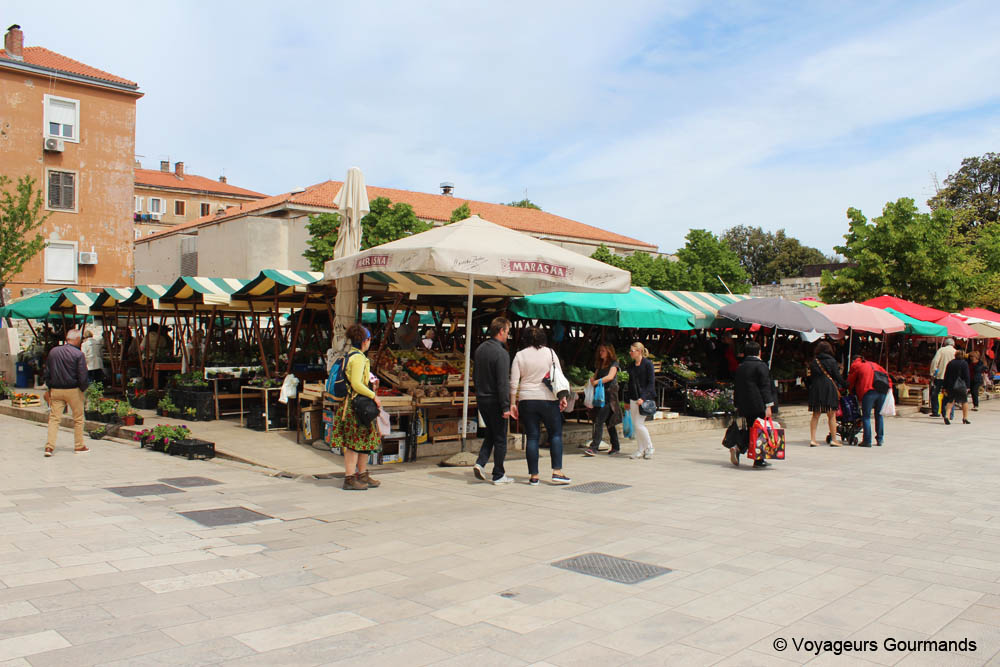
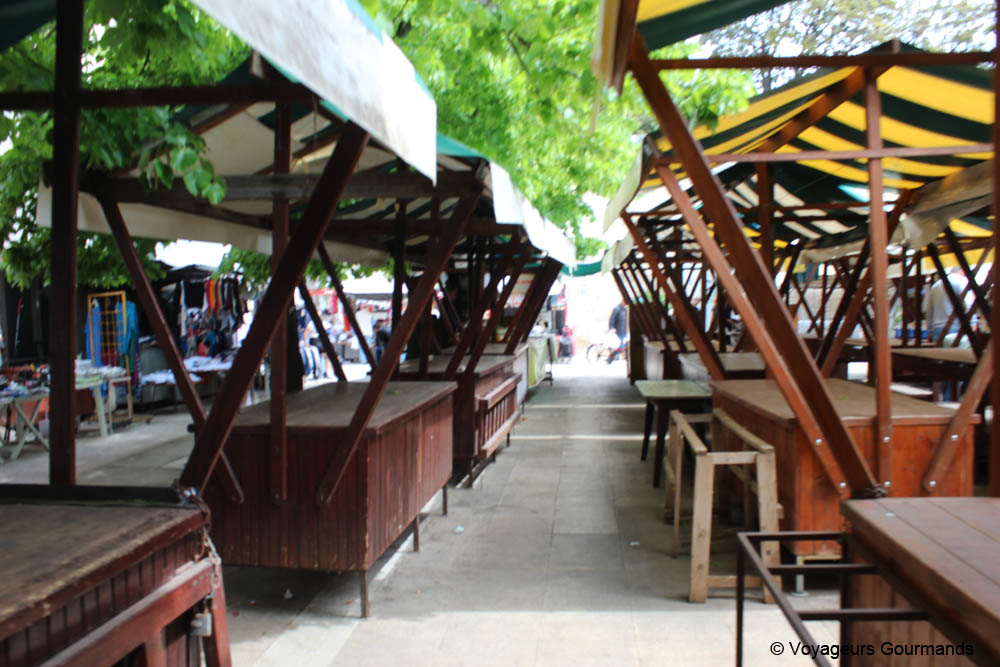
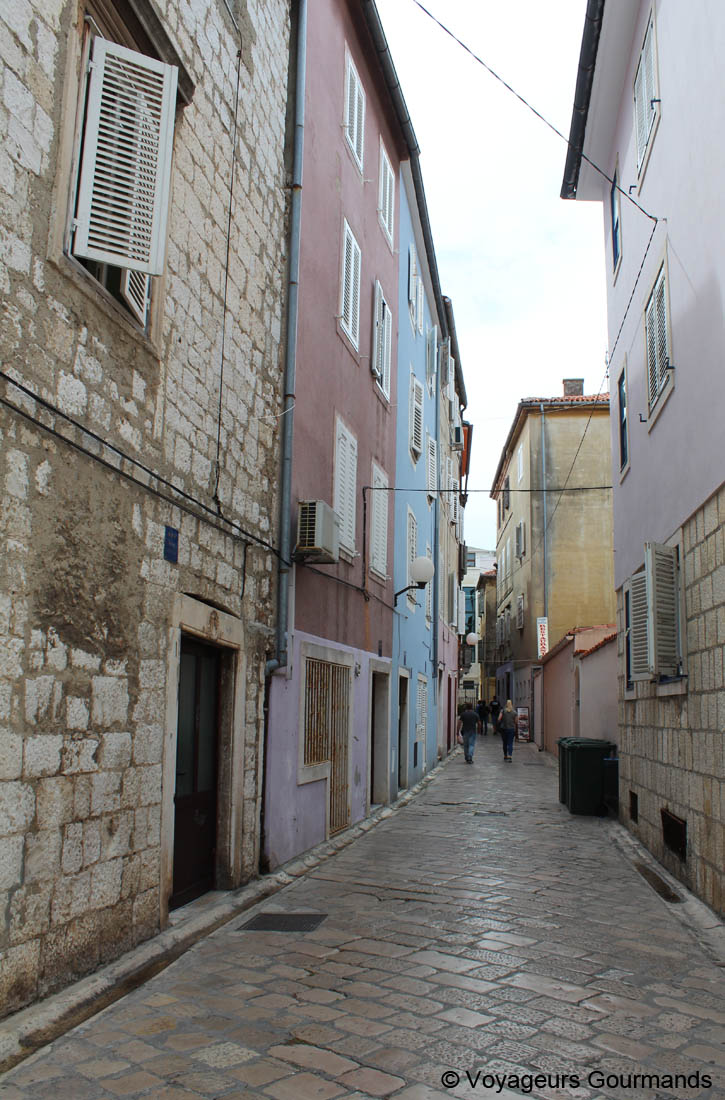
We then wander around the historic centre, spotting the various gates in the walls. Next, we let ourselves be guided by the narrow streets, the bell tower and the church towers. The town is charming and full of architectural curiosities around every corner.
The Roman Forum and St Donatus’ Church
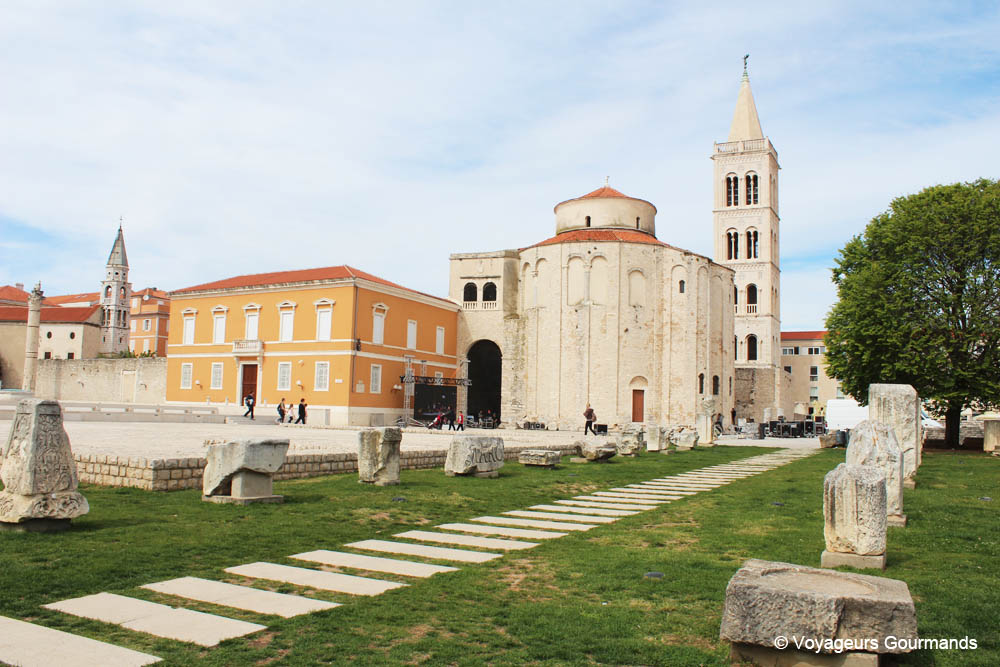
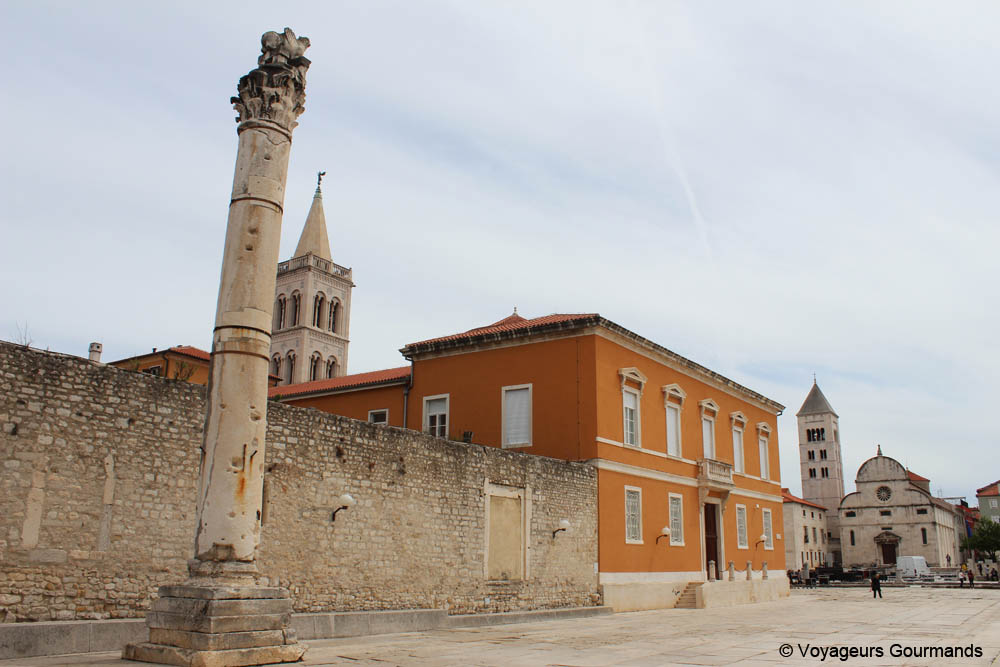
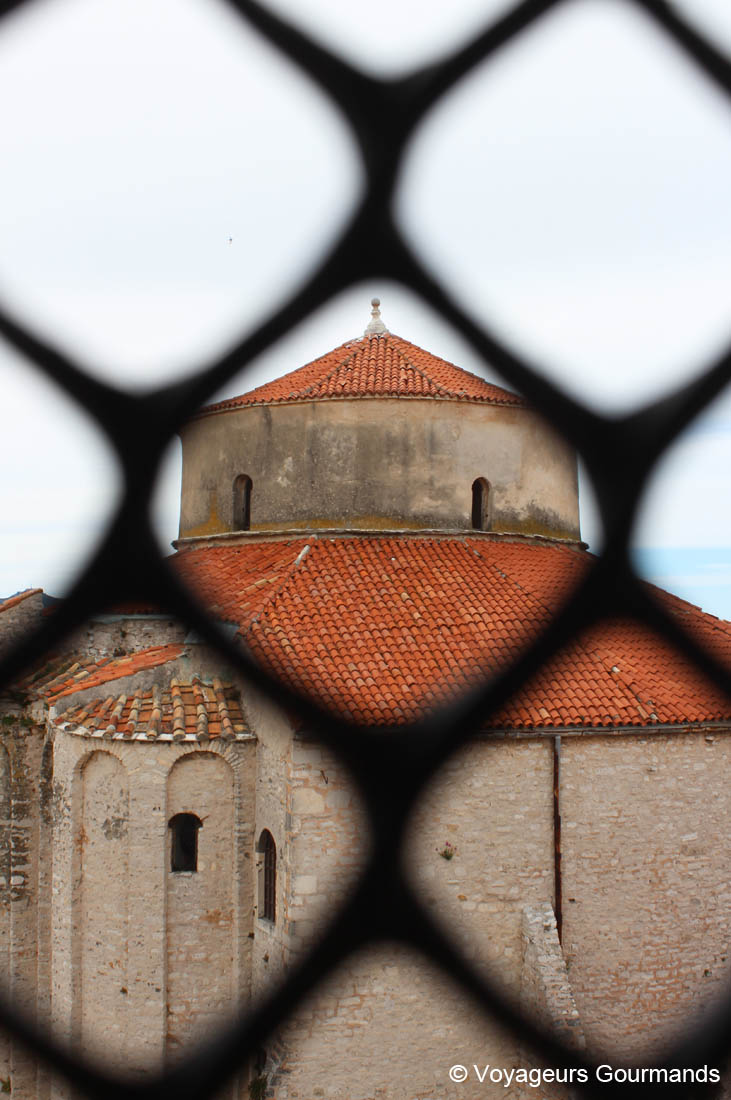
This is one of Zadar’s must-sees: Roman stones and ruins dotted around the streets, which were once the heart of the town’s civic and religious life. Everything here revolves around St Donatus’ Church, with its very distinctive shape, an intact Roman column and carved altars. The church itself has two Roman columns but nothing else inside, and no services have been held there for 200 years. Entry to the church costs €5, but the outside and the forum ruins can be explored for free, at any time.
St Anastasia’s Cathedral
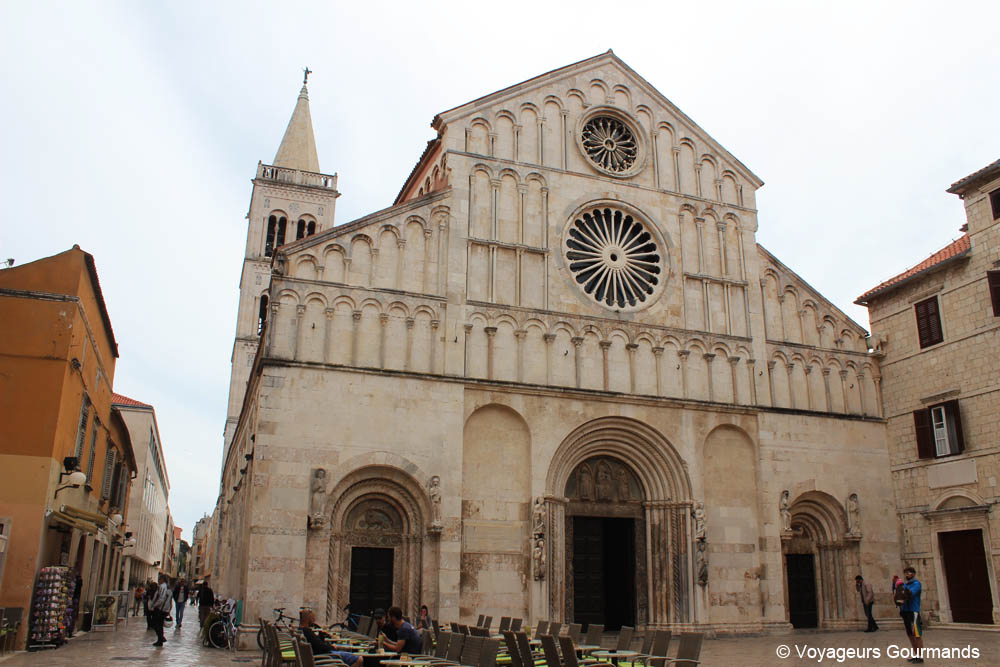
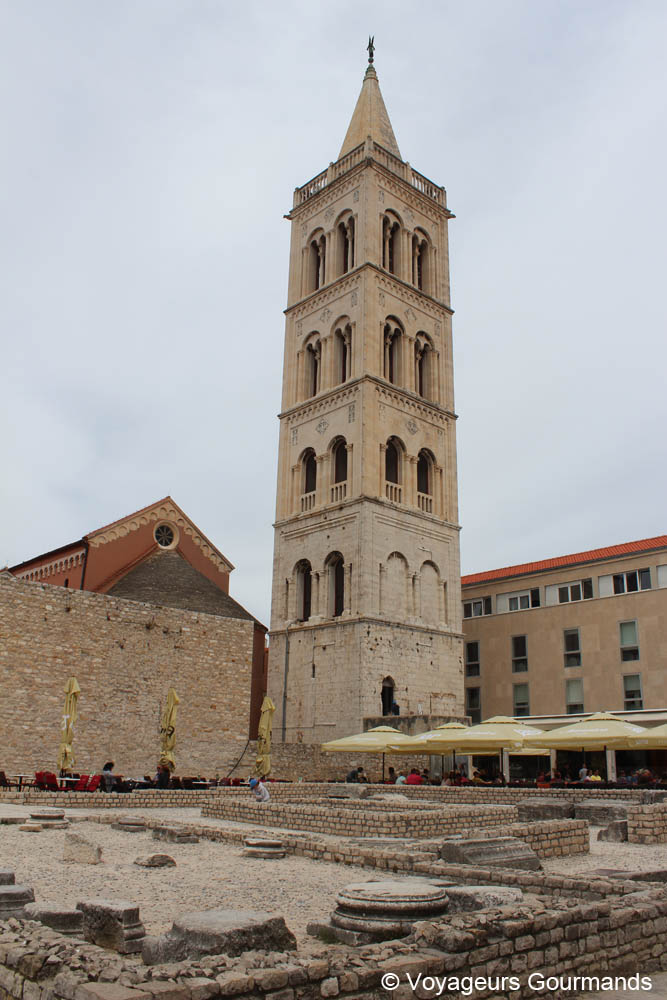
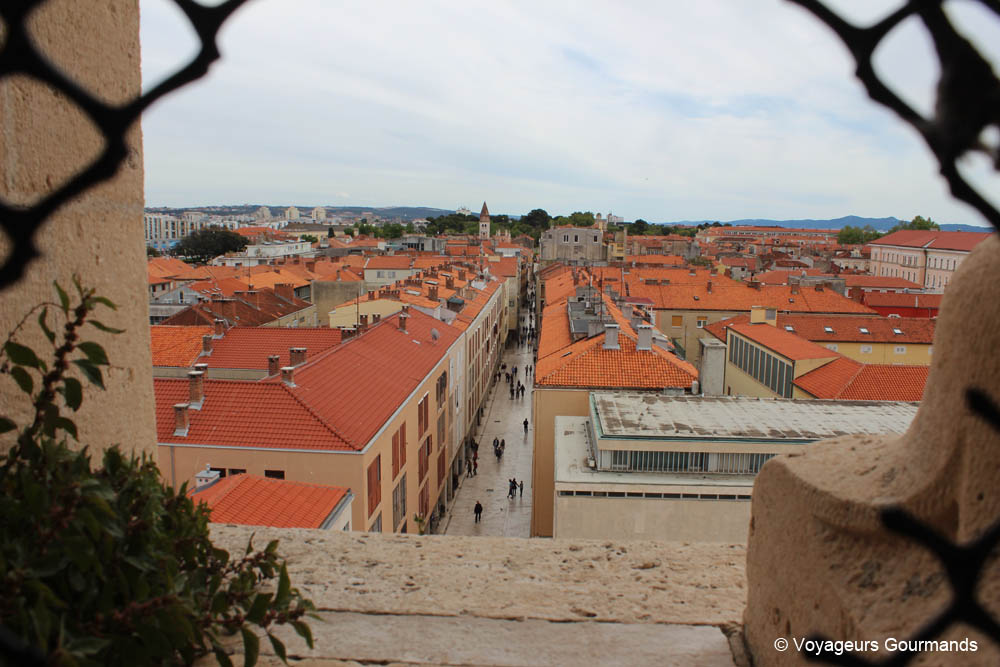
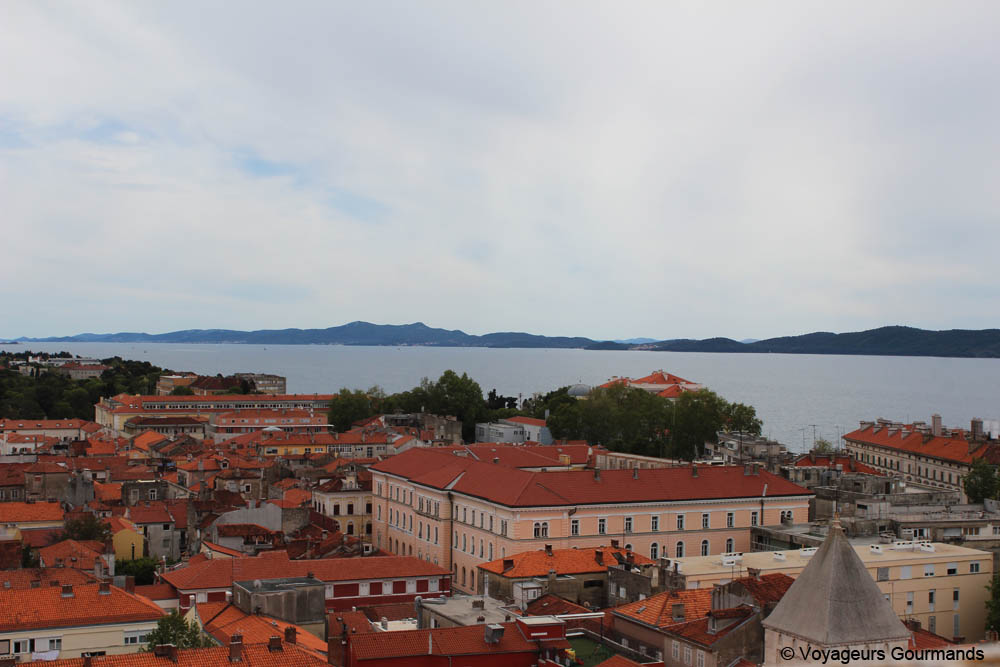
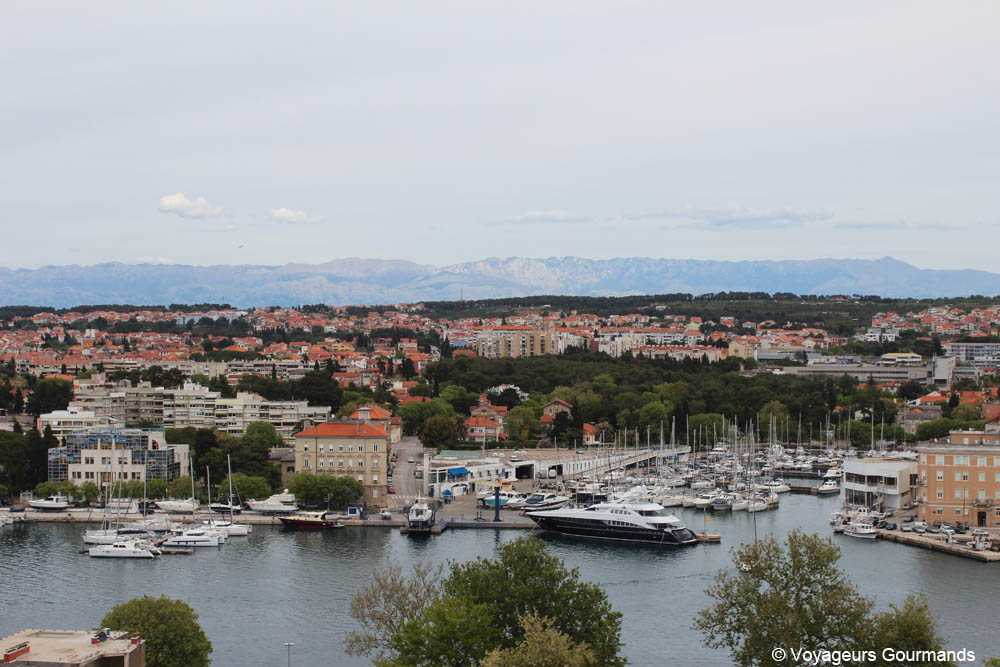
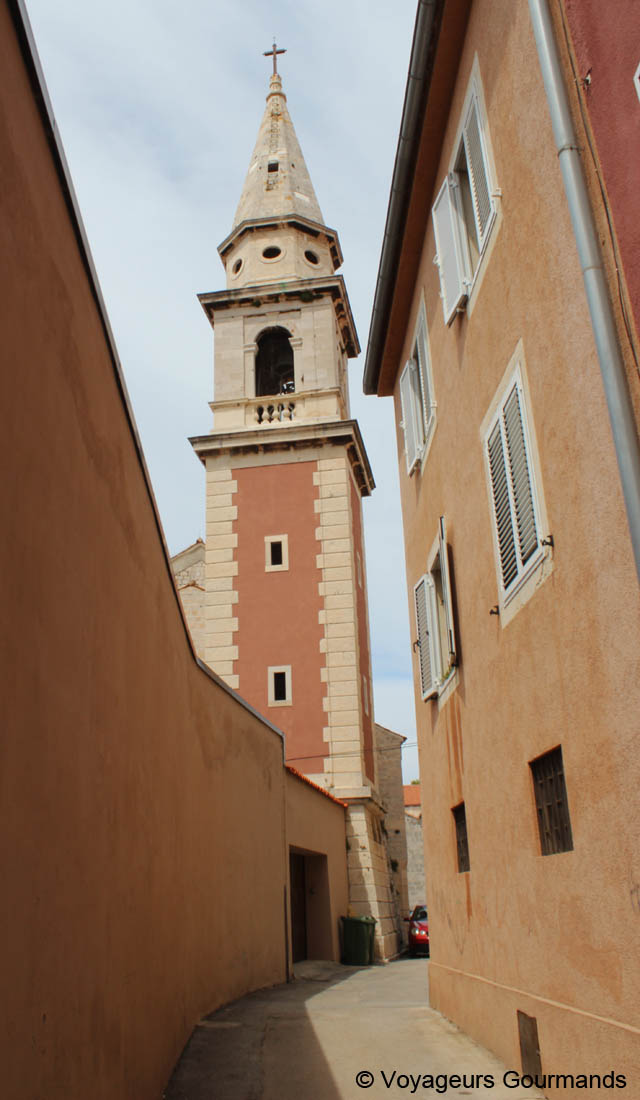
Right next to the forum stands St Anastasia’s Cathedral, with its beautiful façade. We weren’t able to visit the inside, but we did climb its bell tower, which offers a lovely view over the town. The climb costs €3: the steps get narrower and narrower towards the top, but the panorama over the old town’s rooftops and the sea is well worth the effort. Note that the bell tower is closed on Sundays.
The Sea Organ and the waterfront
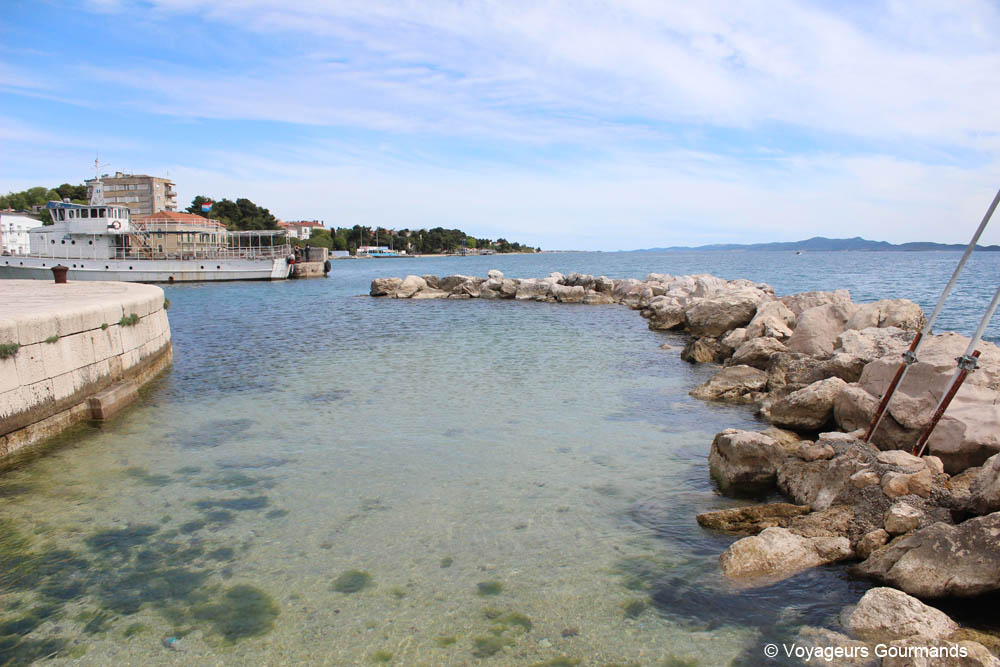
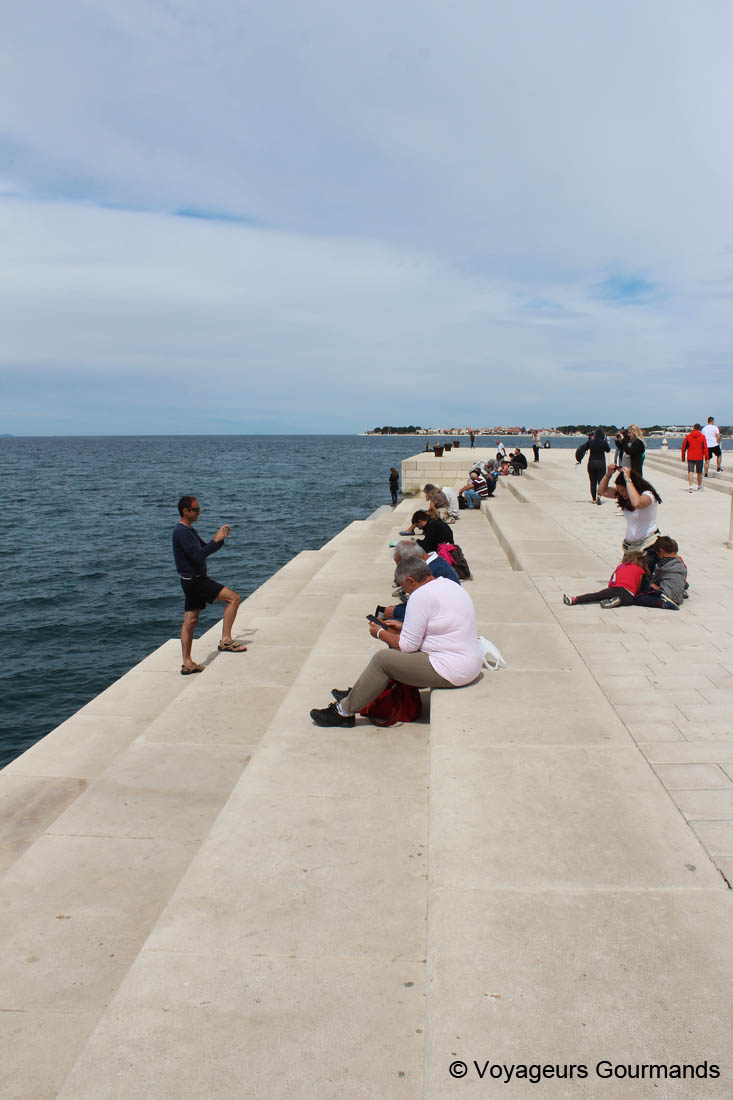
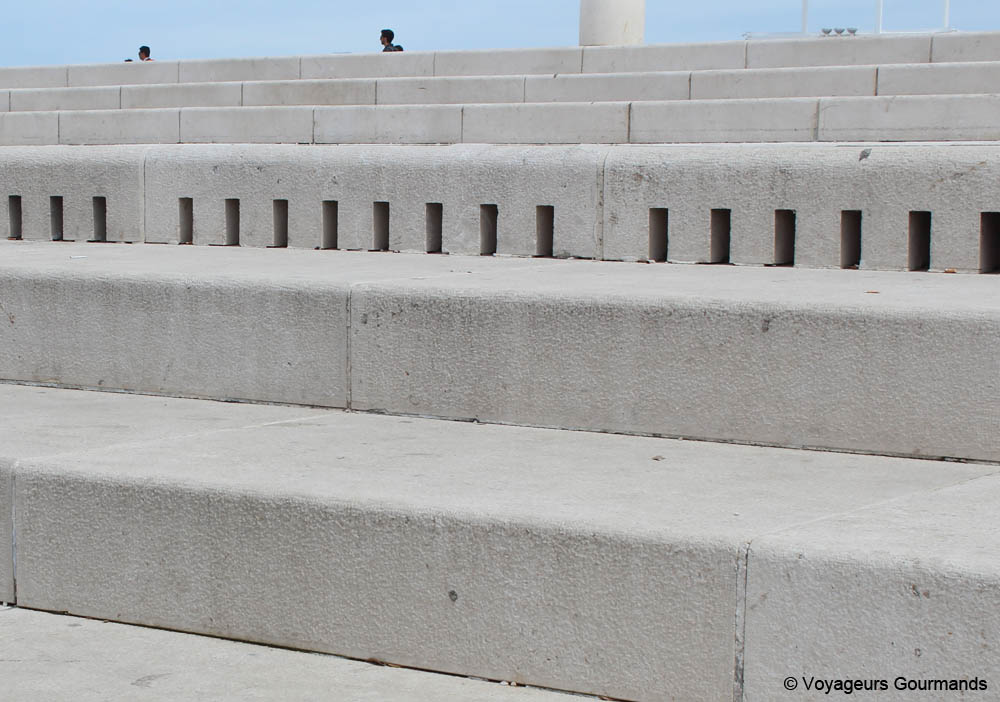
We then follow the coast to reach the famous Sea Organ. It’s quite an extraordinary musical instrument: 70 metres long and “played” by the waves hitting the seafront steps. We’ll admit it was one of the reasons we came to Zadar… And we were a little disappointed… We were expecting something much louder… Perhaps the sea was too calm when we visited. Designed by architect Nikola Bašić and opened in 2005, it plays day and night: on windy days, the concert is apparently far more impressive.
The Greeting to the Sun
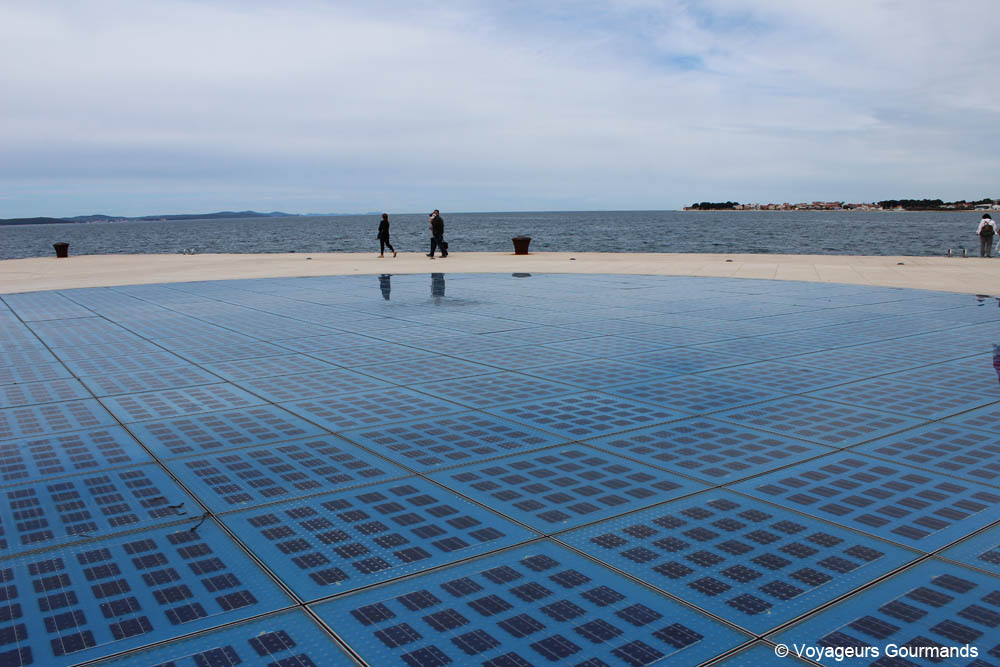
Right next to it is the Greeting to the Sun, a huge 22-metre disc that stores solar energy and produces light displays. Installed in 2008 by the same architect, it is made up of 300 glass panels that light up at nightfall. We came by in broad daylight, so we missed the show: if you can, stay until sunset, as that’s when it really comes into its own. We then carry on along the waterfront promenade, which is really lovely.
The churches and the Franciscan monastery
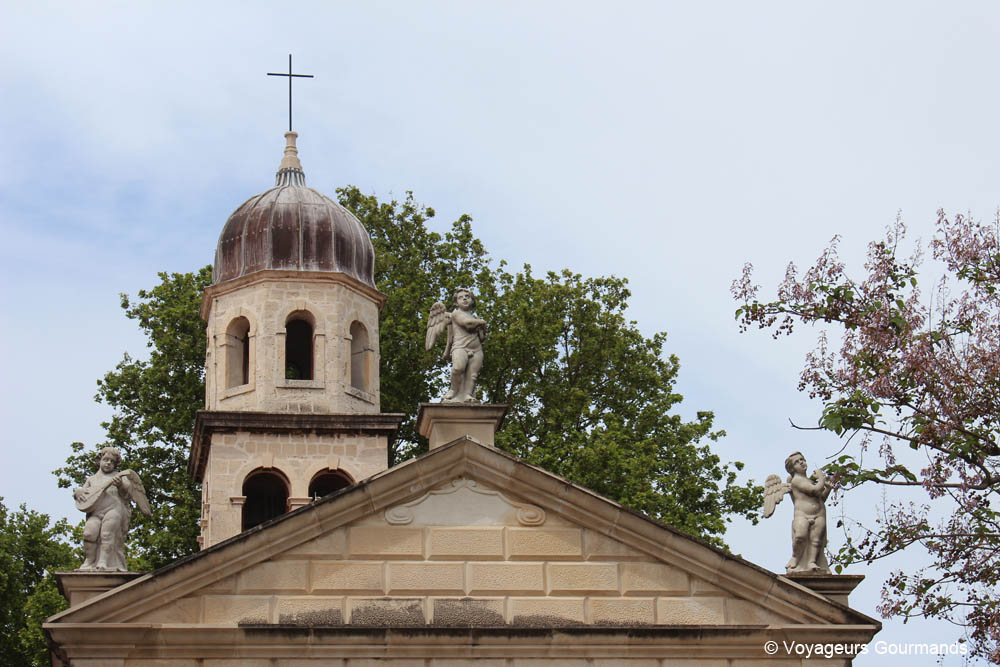
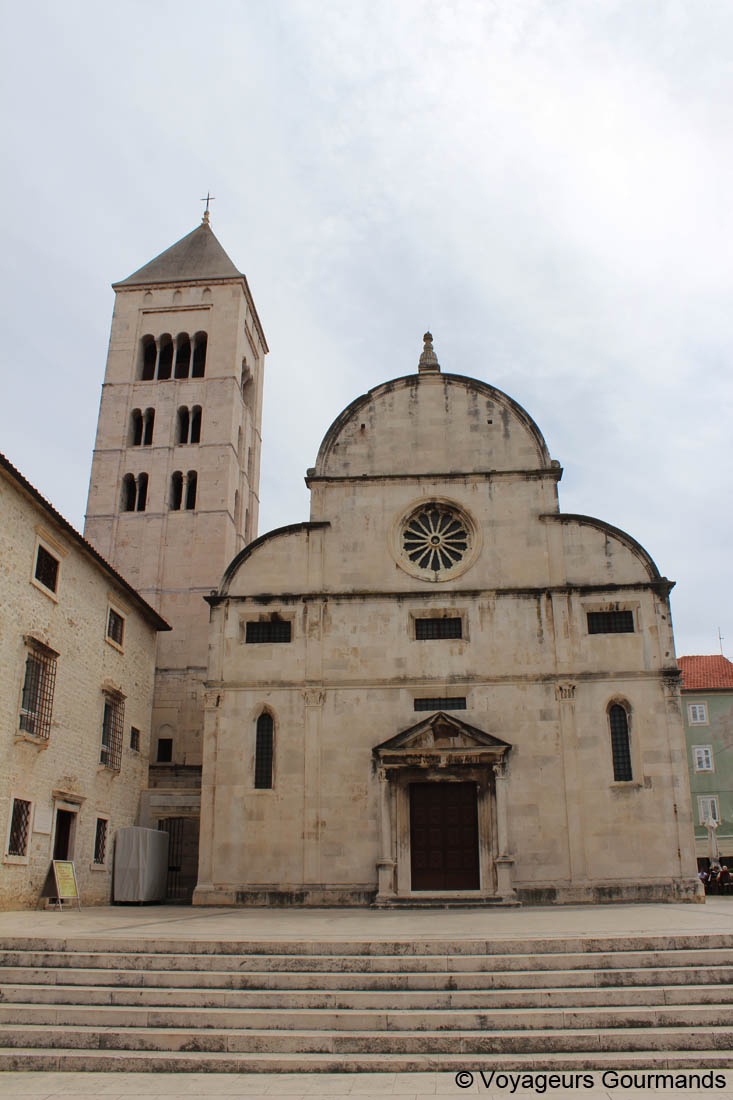
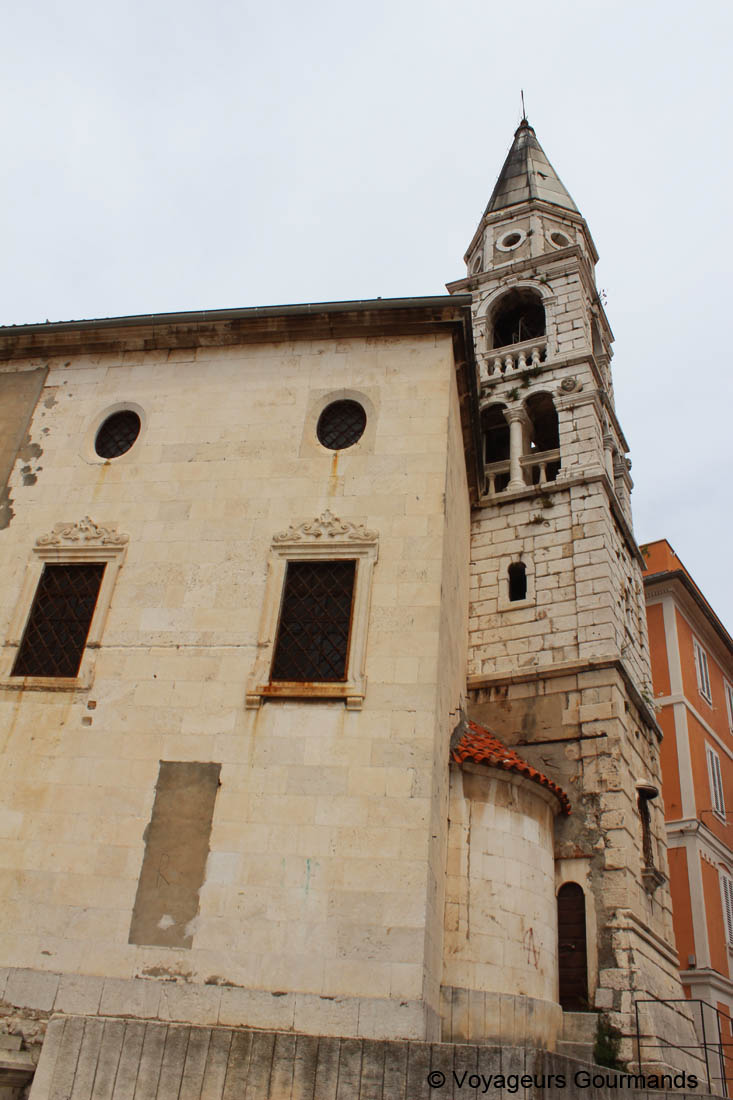
We also admired some stunning stone churches, which we found really beautiful. Sadly, many of them are badly damaged (the town suffered heavy damage during the Second World War).
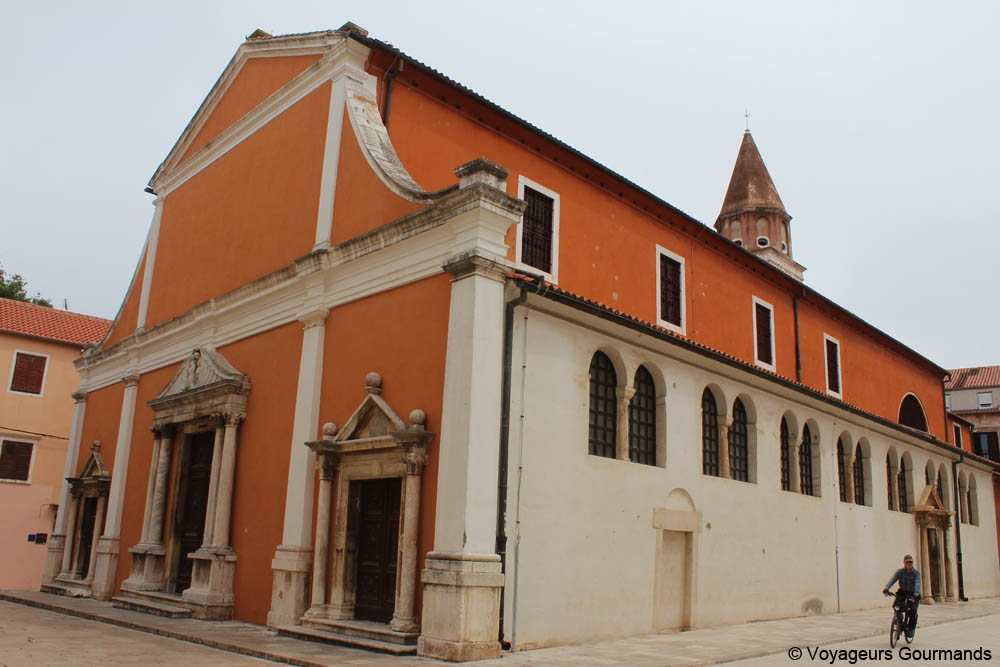
St Simeon’s Church, with its rather unusual golden-ochre colour, holds a real treasure: a medieval sarcophagus covered inside and out with fine gilded silver reliefs.
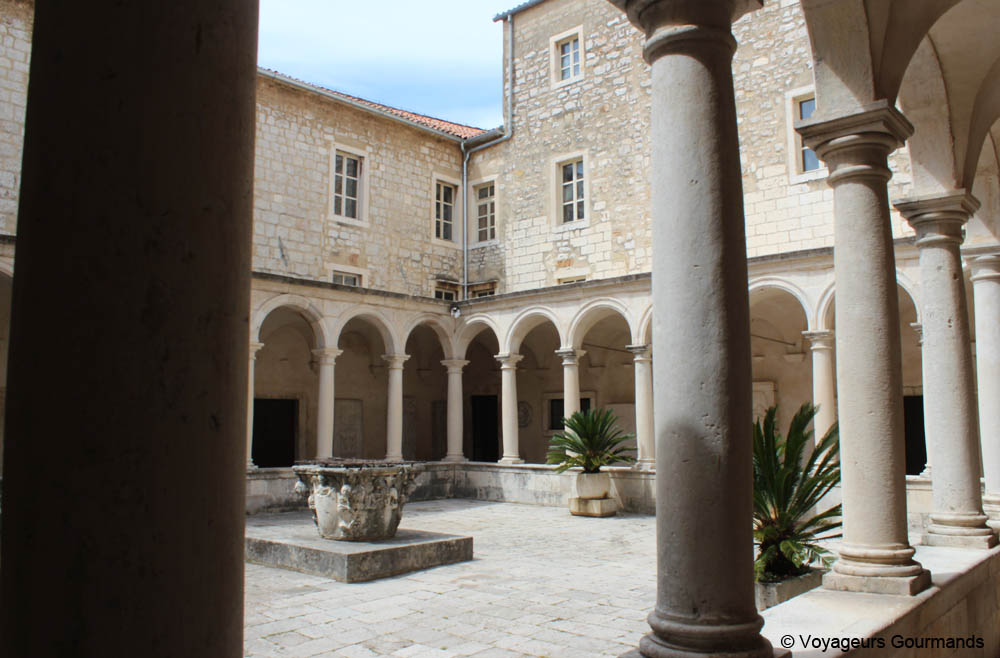
The Franciscan monastery houses many works of art, and we also loved its magnificent cloister. Its Gothic church is the oldest in Dalmatia.
People’s Square
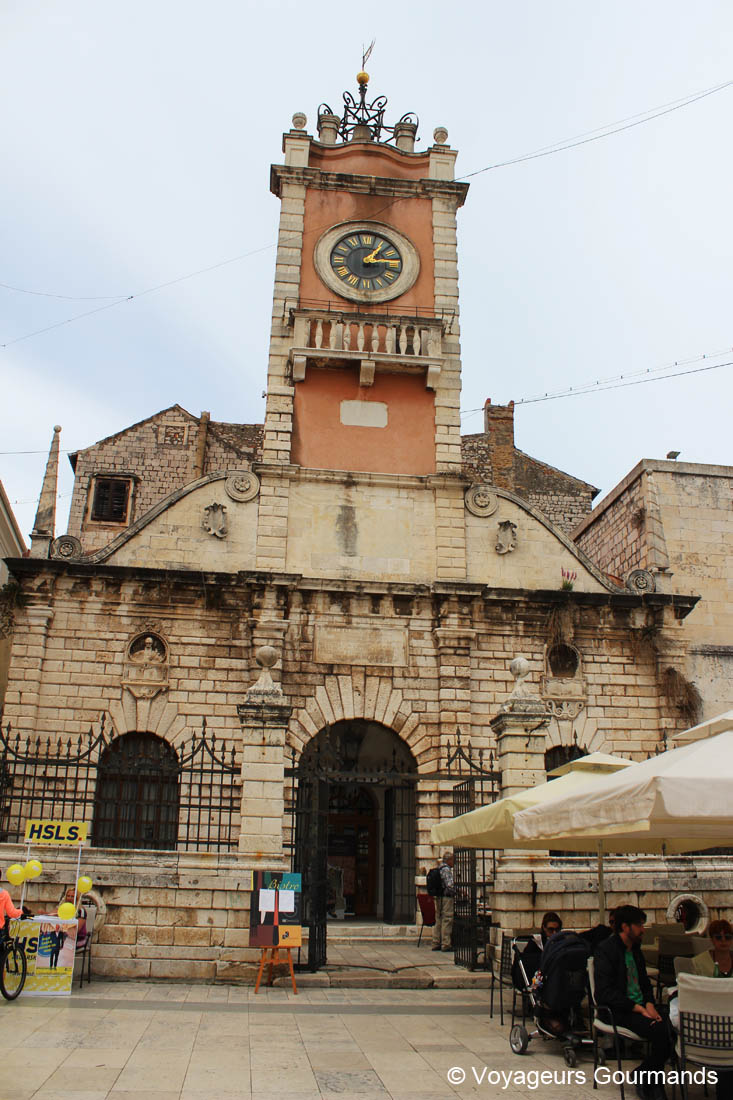
Above all, it’s home to the City Guard building, a charming building now used for exhibitions. The tower and its clock are well worth a look! As for the square itself, it has plenty of little cafés and is very lively.
Kalelarga, the main street
You can’t visit Zadar without strolling down Kalelarga, officially called Široka ulica, the “wide street”. It’s the former Roman decumanus, the street that runs right across the peninsula, past People’s Square and the edge of the forum. We walk up and down it several times during the day: with its stone paving polished by passers-by, its cafés, ice cream parlours and shops, it’s the liveliest street in the old town, especially in the late afternoon.
Gates and wells
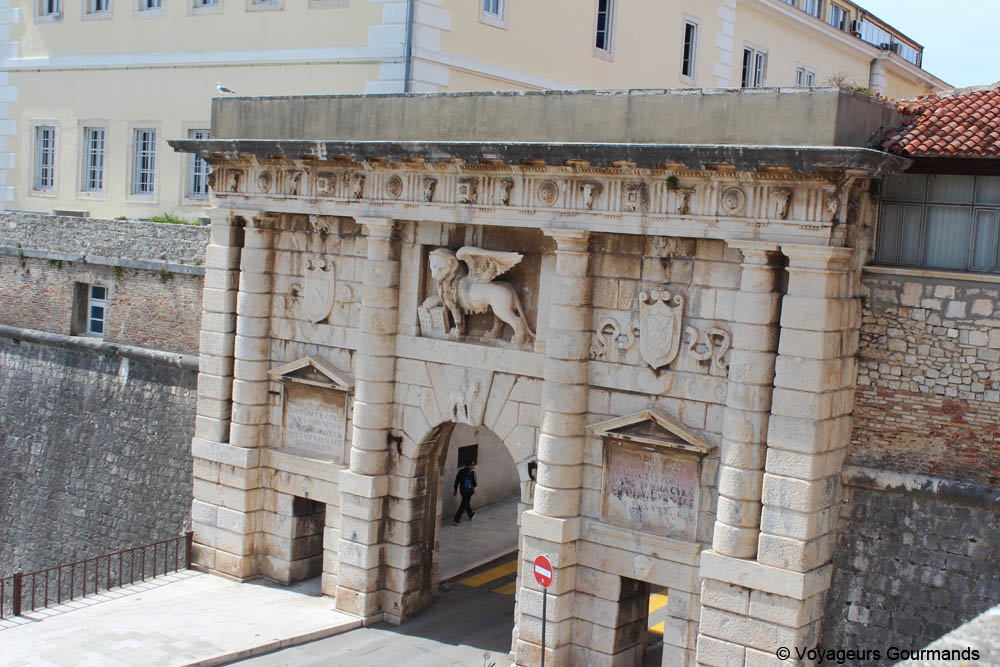
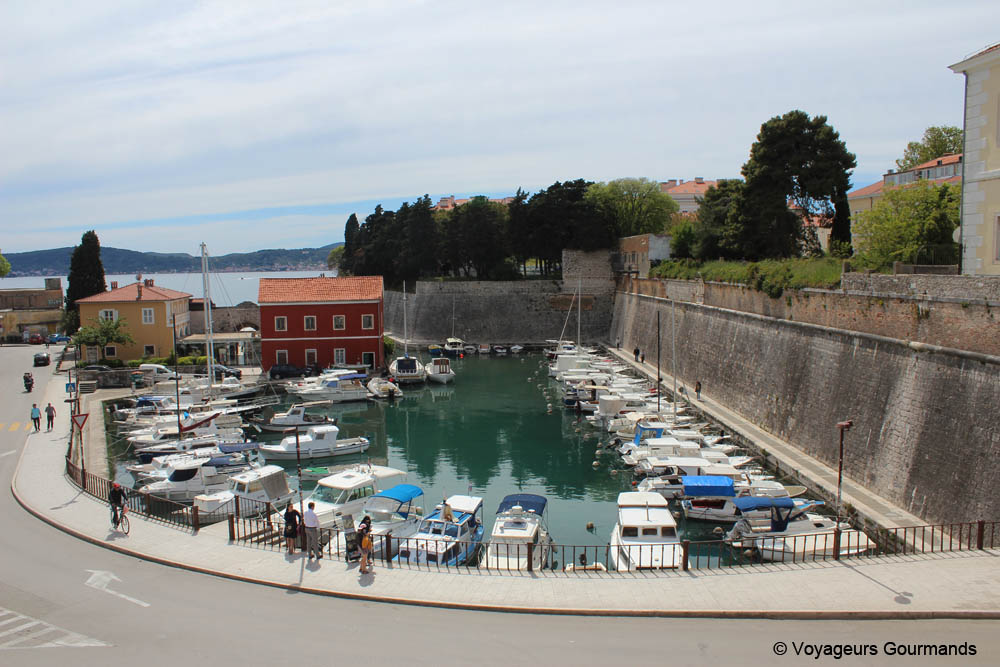
The town has several gates leading inside the walls, but the Land Gate is the most impressive and the prettiest. Dating from 1543, it stands right next to a lovely little marina. A park just above it also offers a great viewpoint over the whole scene. The Sea Gate, on the other hand, is far less impressive.
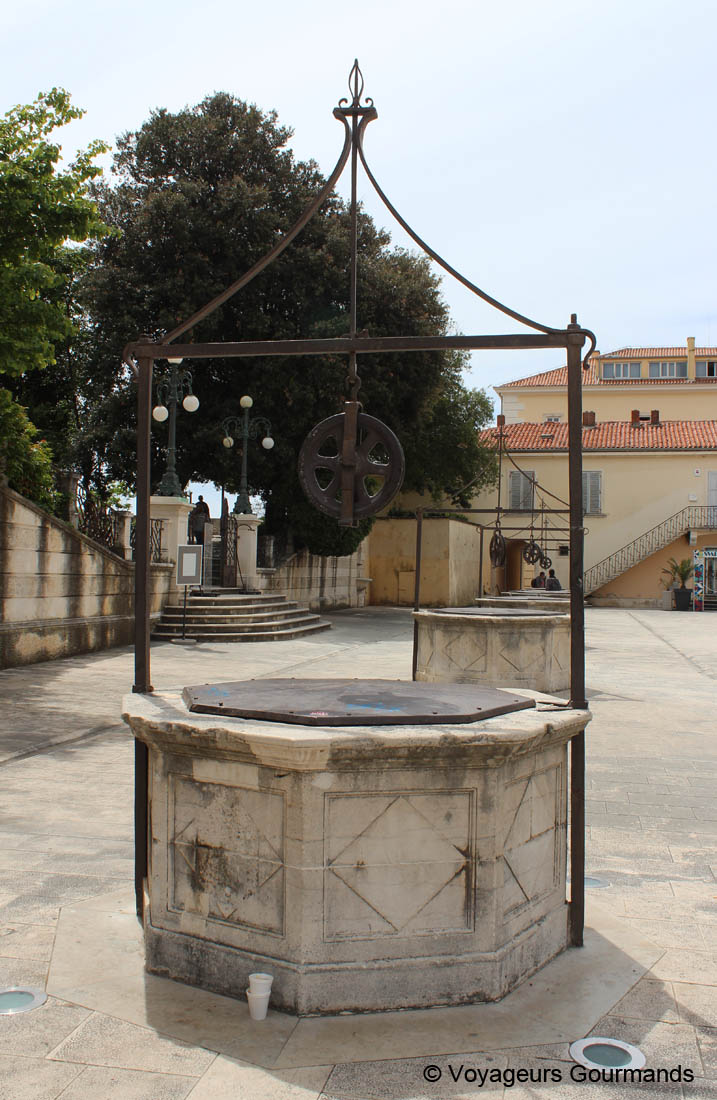
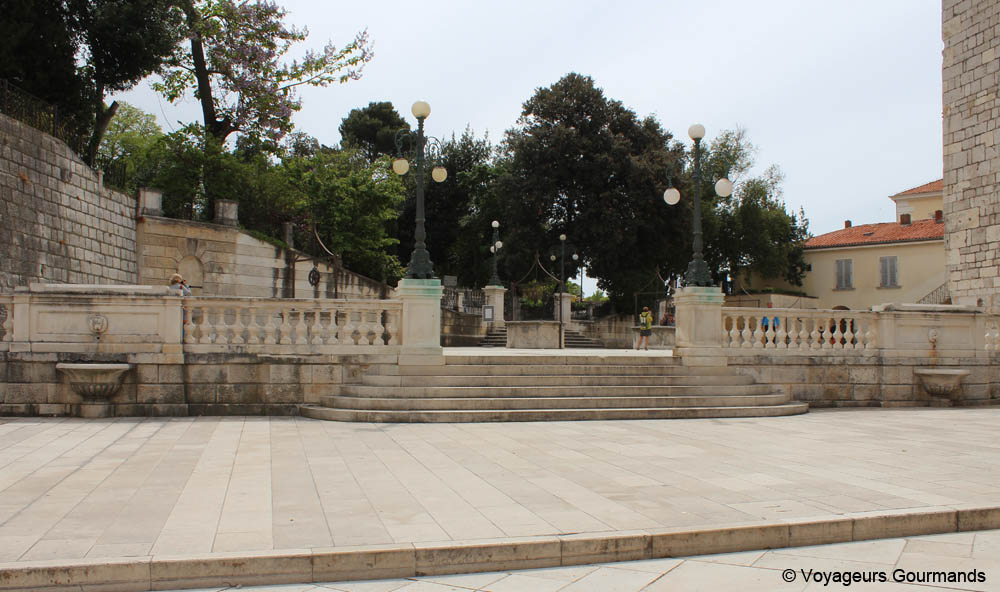
After lunch, we realise that the famous Five Wells Square is right next to our restaurant. The square takes its name from the wells that supplied the town with water until 1838, and it opens onto a pretty garden that also offers a lovely view of the walls.
The city walls
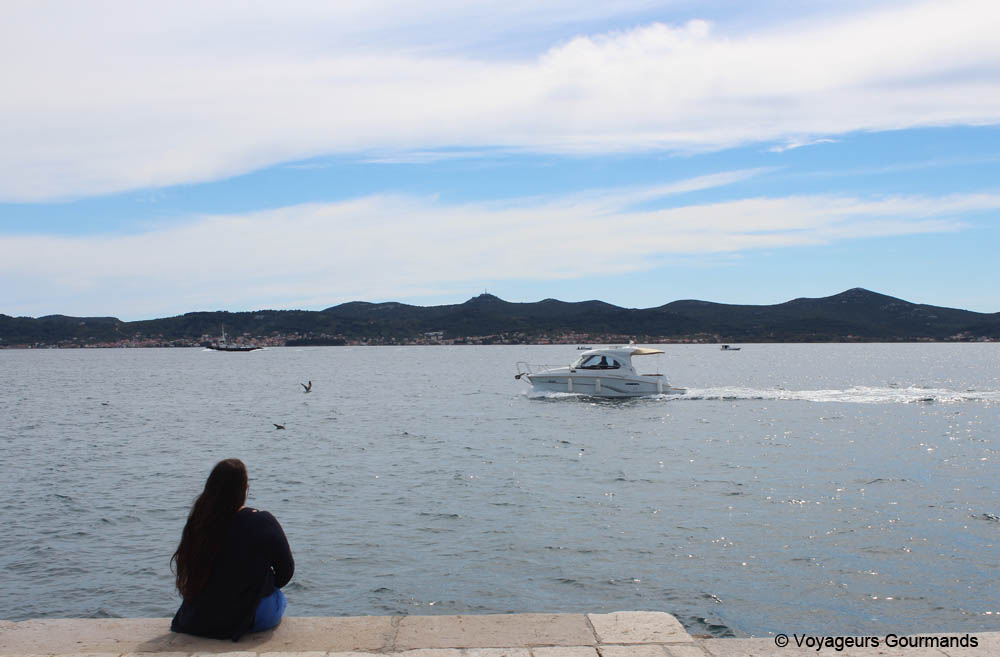
To finish, we walk along the Venetian walls, a UNESCO World Heritage Site since 2017 alongside the other Venetian fortifications of the Adriatic. On the land side, they overlook the little Foša marina, and on the sea side, they line the promenade all the way to the Sea Organ. A good stretch can be explored on foot, for free, with the old town on one side and the water on the other: a lovely way to round off the visit.
Then, in the late afternoon, we head off to Šibenik, our next stop in Croatia.
Visiting Zadar: practical info
How long do you need in Zadar?
One day is plenty to discover the historic centre: everything can be done on foot, as the peninsula is only about a kilometre long. That’s exactly what we did, arriving in the morning and leaving for Šibenik in the late afternoon. If you’d like to visit the museums, enjoy the beaches or take a ferry to the islands, allow two days instead, with a night in town to watch the sunset from the promenade.
How to get to Zadar and where to park
Zadar is easy to reach by car via the A1 motorway: allow around 1 hr 45 from Split, 3 hrs from Zagreb and 1 hr from Šibenik. The airport is about ten kilometres from the centre. As for parking, as we found out, every space is paid and the historic centre is pedestrianised, so it’s best to head straight for a car park near the walls.
💡 Good to know
In summer (June to August), expect to pay around €1.60 an hour in zone 1, closest to the centre, and €1.30 in zone 2, around the walls. Prices drop considerably the rest of the year. Ravnice car park, near the Land Gate, is the most convenient for walking into the old town. You can pay at the machines (coins only) or with the PayDo app.
When to visit Zadar
The best months to visit Zadar are May, June and September: the weather is good, the sea is already pleasant and the streets are far less crowded than in July and August, when holidaymakers and cruise ships pour in. In high summer, go sightseeing early in the morning and save the seafront promenade for the end of the day, when it’s cooler.
Where to eat
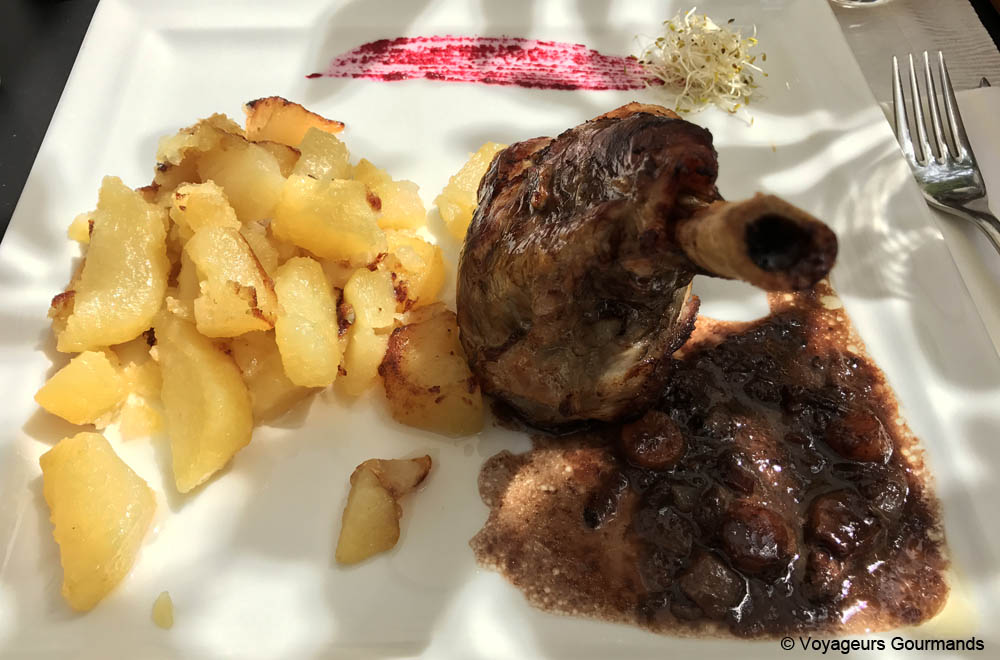
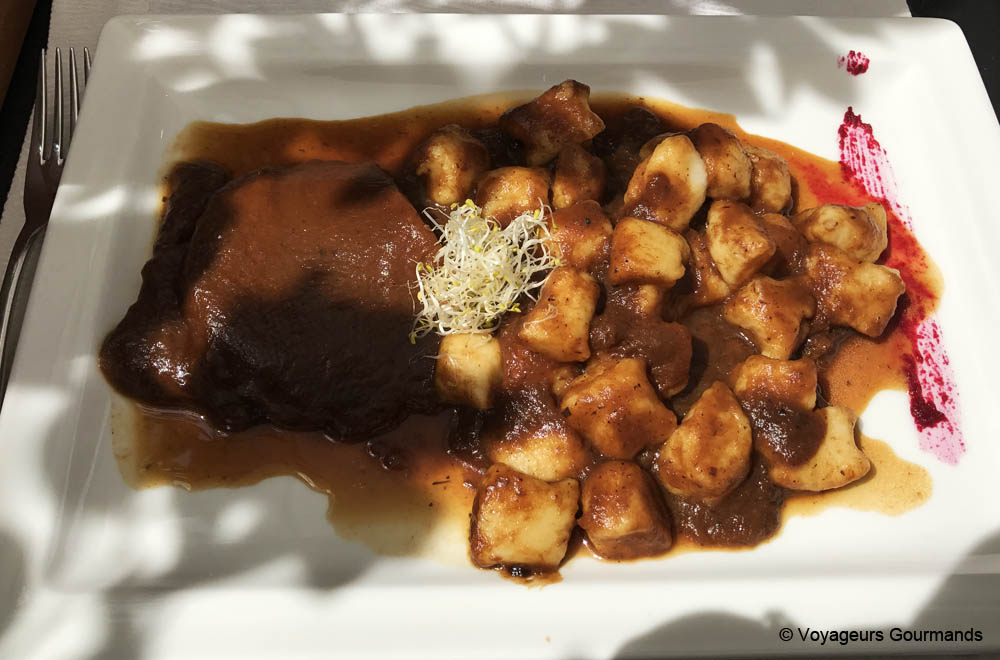
We had lunch at a great spot: Pet Bunara. We recommend it for its traditional dishes made with fresh produce – absolutely delicious!
➺ Pet Bunara: Ulica Stratico 1 | Next to Pet Bunara Square, Zadar
We also share the Croatian specialities we discovered in a dedicated article on Croatian food.
Where to stay
The night before, we stayed on the island of Pag, and we moved on to Šibenik for the following night (we absolutely loved our hotel in Šibenik, by the way). That said, the town has plenty of attractions, so finding somewhere to stay shouldn’t be difficult. For our whole trip around Croatia, we only used Booking, reserving from one day to the next.
If you’re staying the night, the nicest option is to stay on the peninsula, in the heart of the old town: you can do everything on foot and enjoy the sunset on the promenade without getting back in the car. The Borik district, about 4 km to the north, is a good alternative if you want to be near the beaches, with bigger and often more affordable hotels.
Around Zadar and other things to do
➺ From Zadar, plenty of ferries sail to the Croatian islands (Mali Lošinj, Dugi Otok or Ugljan), and even to Ancona in Italy.
➺ Around 90 kilometres away, you can also take a day trip to Šibenik.
➺ Several museums in town come highly recommended, but we weren’t really tempted. The Museum of Ancient Glass, the Archaeological Museum and the Permanent Exhibition of Religious Art are the best known.
✤✤✤
We found Zadar rather charming, with a rich heritage to discover. We really liked its beautiful churches, but we weren’t blown away by the Sea Organ the town is famous for. We could have added a museum to our day, but they didn’t really appeal to us. However, if you’d like to visit several, we’d suggest staying a night to make the most of all the things to do in Zadar.
FAQ about things to do in Zadar
The frequently asked questions are here!
How long do you need to visit Zadar?
One day is enough to discover the historic centre, which can be explored entirely on foot. Allow two days if you’d like to add the museums, the beaches or a ferry trip to the islands.
What to see in Zadar in one day?
The Roman Forum and St Donatus’ Church, St Anastasia’s Cathedral and its bell tower, Kalelarga, People’s Square, Five Wells Square and the city walls, then the Sea Organ and the Greeting to the Sun at the end of the day.
Is Zadar’s Sea Organ free?
Yes, the Sea Organ and the Greeting to the Sun are free to visit, day and night. The sound depends on the waves: it’s far more impressive when the sea is rough.
What time can you see the Greeting to the Sun?
Its 300 glass panels light up at nightfall. Arrive a little before sunset to enjoy both shows on the promenade.
Where to park when visiting Zadar?
Parking is paid all around the historic centre, which is pedestrianised. Ravnice car park, near the Land Gate, is the most convenient; you can pay at the machines or with the PayDo app.
Share me on Pinterest:
