


Photography is an integral part of my travels. Since I started Voyageurs Gourmands, I no longer take photos just to keep memories: they illustrate my articles, let me share my discoveries on social media and, hopefully, make you want to pack your bags.
So my gear has changed quite a bit over the years. Some pieces never leave my bag, others spend half the year in a cupboard. Here is what I actually take with me, what I leave at home and, above all, why.
✤✤✤
Some links in this article are affiliate links. If you buy through one of them, I earn a small commission at no extra cost to you. I only recommend gear I actually use when travelling, and as you will see, I don’t hold back when it comes to pointing out its flaws.
My photo and video gear at a glance
| 🎒 Gear | 📸 What I use it for | ✅ Always in my bag? |
|---|---|---|
| Canon EOS 6D Mark II | Landscapes, cities, hotels, restaurants | Yes |
| Canon EF 24-70 mm f/2.8L | My all-round lens, 80% of my photos | Yes |
| Canon EF 70-200 mm f/2.8L | Whales, wildlife, distant subjects | No, depends on the trip |
| Peak Design 20 L backpack | Carrying everything | Yes |
| Spare batteries and memory cards | Getting through a full day stress-free | Yes |
| Comfortable strap | Saving my neck after 6 hours of walking | Yes |
| Tripod | Long exposures, photos of myself | Depends on the plans |
| iPhone 17 Pro | Everyday photos and videos, social media | Yes |
| Waterproof pouch | Beach, pool, snorkelling | Beach holidays |
| Insta360 X4 Air | 360° videos, immersive content | Yes (new addition) |
| Old GoPro | Water and sports activities | Rarely |
| Laptop + WD hard drives | Sorting, editing, backing up | Depends on the length of the trip |
My camera: the Canon EOS 6D Mark II

My main camera body is a Canon EOS 6D Mark II, a full-frame DSLR that has been with me for several years.
It is what I use for landscapes, cities, monuments, hotels and restaurants. I particularly like how it performs when the light gets tricky: church interiors, late afternoons, dimly lit restaurants. That is exactly where a full-frame sensor makes the difference compared with a smartphone.
I have to be honest about the downside: a DSLR is heavy. Between the body and a lens, you really feel it after a full day of sightseeing. In Bruges or Porto, where I walk from morning to night, weight becomes a real issue.
But for the way I work, I still prefer to have it with me. And over time, you find little tricks to make it more comfortable (more on that below with the strap).
If you are buying today: the 6D Mark II is starting to show its age and is no longer easy to find new. If I had to buy a body now, I would go for a mirrorless camera, lighter and more versatile for video.
And to be honest, I would probably stay with Canon. After years with the brand, I know my way around the menus, I have my settings reflexes and, above all, two EF lenses I have invested in — switching to a completely different system would mean buying everything again. So I would look at the Canon EOS R range first.
That said, I would be lying if I said I had never looked elsewhere: the Fujifilm X-T50 and the Sony Alpha 7C II have caught my eye more than once. The first for its compact size and film simulations, the second for how unusually light it is for a full-frame camera. But between wanting one and starting again from scratch, there is a step I haven’t taken yet.
My two camera lenses
Two lenses cover almost all of my needs when travelling.
My Canon EF 24-70 mm f/2.8L: the one that never leaves the camera

The Canon EF 24-70 mm f/2.8L is my all-round lens, and by far the one I use the most. Its focal range lets me go from a wide shot to a tight frame without changing lenses every five minutes, which is invaluable out on the street.
Its constant f/2.8 aperture is also what lets me keep shooting when the light fades: interiors, late afternoons, restaurants. It really is the combination of a full-frame body and f/2.8 that makes the difference in these situations.
I use it for landscapes, narrow streets, architecture, monuments, hotels and food shots. If I could only take one lens, it would be this one, no question.
My Canon EF 70-200 mm f/2.8L: for subjects you can’t get close to

The Canon EF 70-200 mm f/2.8L comes out when I need to reach a distant subject or play with perspective compression: wildlife, architectural details high up, certain landscapes, or simply places you can’t get close to.
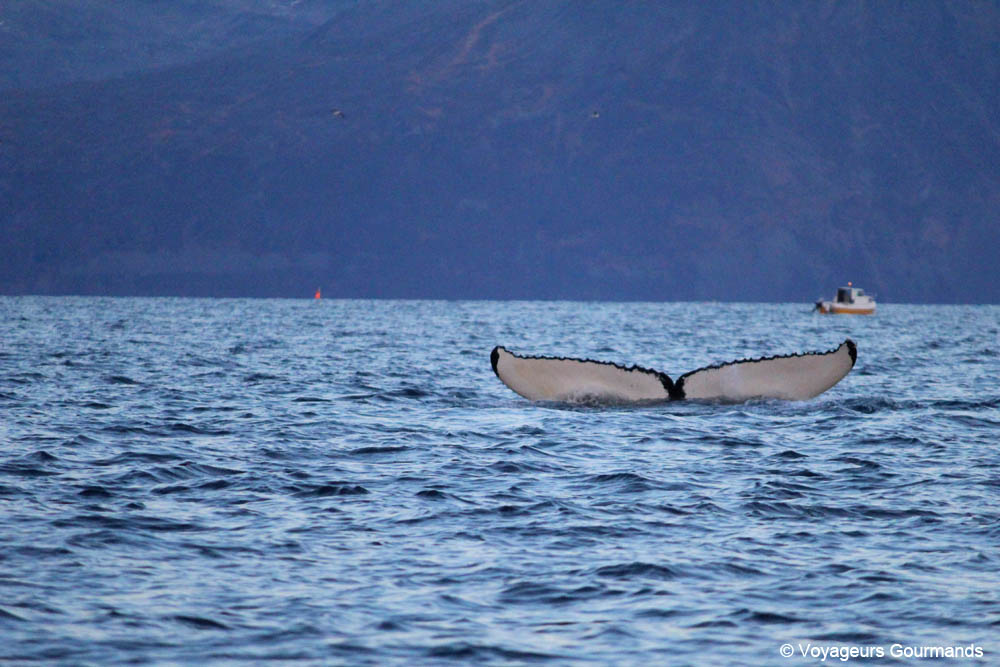
In fact, I bought it for a very specific reason: whale watching in Norway. I was staying in Tromsø and went to see them in Skjervøy, further north, where orcas and humpback whales follow the herring shoals in winter. From a moving boat, with animals that surface for a few seconds at a good distance and very low light in the middle of the Arctic winter, my 24-70 mm didn’t stand a chance.
That is exactly the kind of trip that justifies an investment like this — and I didn’t regret carrying the extra weight all the way up there for a single second.
On the other hand, it is much heavier and bulkier: that is the price you pay for a constant f/2.8 aperture over this focal range. So I don’t take it every time: on a city break it often stays at home; on a nature or wildlife trip, it becomes essential.
My camera backpack: the Peak Design 20 L

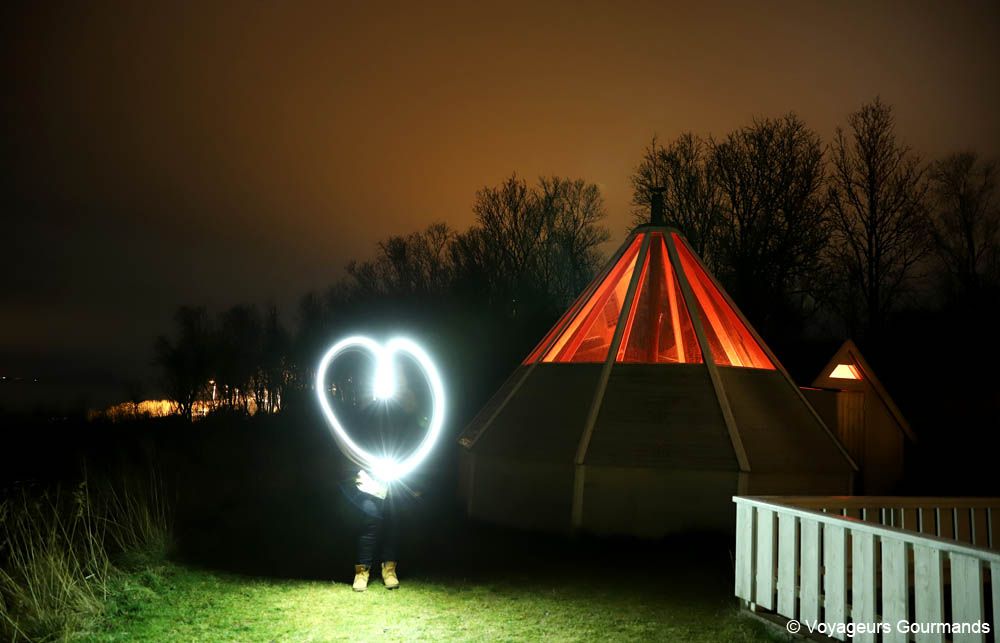
To carry all of this, I use a 20 L Peak Design backpack.
It is very well designed for camera gear: adjustable dividers, quick side access to the camera, good build quality. And the 20 L size is compact enough that you don’t feel like you are wandering around with a hiking pack on your back.
But I’d rather be upfront: it isn’t perfect. As soon as the gear piles up (body, two lenses, batteries, cards, chargers, not to mention a jacket and a water bottle), 20 litres quickly becomes tight. You have to make choices and organise your bag carefully.
If you often travel with lots of gear or with cabin luggage only, you are probably better off going for a bigger size.
The accessories I always take
Several spare batteries

If there is one tip to remember, it’s this one. I never leave with just the camera’s own battery.
A full day of sightseeing, between photos, a few videos and the cold that drains batteries faster than you think (hello, Tromsø in winter), and it’s soon over. With two or three spare batteries, I head out in the morning without giving it a second thought.
It’s the small accessory you don’t think of when buying your first camera, and that quickly becomes non-negotiable.
A comfortable strap

With a DSLR and a lens around your neck for six hours, the weight eventually takes its toll. So I replaced the original strap with a wider, better-padded one.
On paper, the difference seems tiny. At the end of a day of sightseeing, it is huge: the weight is better distributed and no longer pulls directly on your neck.
Several memory cards

I deliberately carry several medium-capacity cards rather than one very large one. Two reasons: if a card fails or gets lost, I don’t lose the whole trip, and I always have a spare when the first one is full. And when shooting RAW, they fill up fast.
My tripod

I use a Manfrotto tripod I bought a few years ago. I don’t take it out every day, but it is irreplaceable in three situations: long exposures at sunset, interior or night shots, and photos I want to appear in myself — which saves asking a stranger every ten minutes.
One thing I learnt the hard way: with a full-frame DSLR, stability is non-negotiable. A tripod that is too light shakes at the slightest gust of wind and ruins precisely the shots you took it out for. With the 70-200 mounted on it, the whole set-up becomes seriously front-heavy, and an entry-level model just can’t cope. That is what led me to Manfrotto: the brand is a benchmark in this area, and a tripod is an accessory you keep for years.
Then there is the usual travel compromise: I go for a model compact enough to fit in my bag without becoming a burden, while remaining stable enough for my gear. It’s a balancing act, and there is no such thing as a tripod that is both ultra-light and perfectly stable.
My smartphone: the iPhone 17 Pro
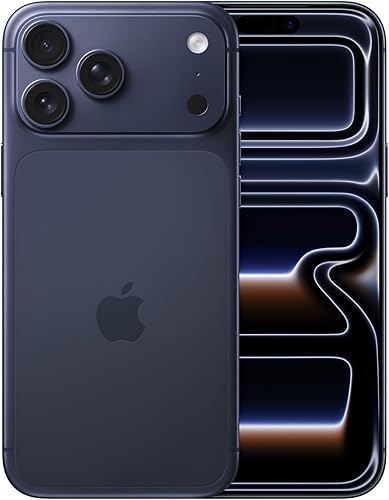
My iPhone 17 Pro has become a proper travel camera, and of course it goes everywhere with me.
Its main advantage is immediacy: it’s already in my pocket. A dish arriving at the table, a street scene, light that changes for thirty seconds — I don’t have time to get the DSLR out, change lenses and adjust the settings. With the phone, I do.
I also use it a lot for video and vertical formats for social media, where the DSLR is of no use to me at all.
Let’s be honest: in many situations, the quality gap with a DSLR has become small, or even invisible on a phone screen.
A waterproof pouch for water activities
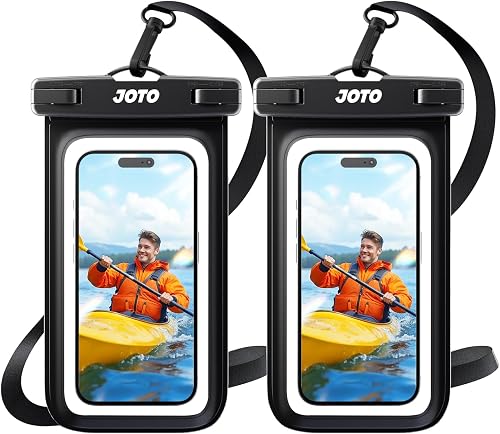
I don’t want to carry dedicated gear for every activity. For the water, my solution is very simple: a waterproof smartphone pouch.
Beach, pool, snorkelling: it lets me take a few photos and videos without any extra gear. Obviously, you need to double-check the seal before putting your phone in the water, but for my needs it is more than enough.
My video gear
The Insta360 X4 Air: my 360° camera

I recently added an Insta360 X4 Air to my kit.
What won me over was its size: at 165 g, it slips into a pocket. It’s a camera you actually take with you, instead of leaving it at the hotel because your bag is already full. It shoots 360° video in 8K, and its lenses are replaceable — a real plus when you know how quickly a lens gets scratched on the road.
I’ll share my thoughts after a few weeks of use!
My old GoPro
I keep an old GoPro for certain situations: water activities and moments when getting the DSLR out would be awkward or risky.
But between the iPhone and the Insta360, I have to admit it gets used less and less.
No drone yet… but I dream of one!
You may have noticed that the star piece of kit for travel content creators is missing: the drone.
I still don’t have one, even though I’m dying to get one! On every trip, there is at least one place where I think the view from above would have changed everything.
What has held me back so far is mainly the constraints: one more piece of gear to carry and charge, and regulations that change from one country to the next, when they don’t simply ban flying in many of the places I visit.
But let’s be honest: it’s only a matter of time.
Flying with camera gear: what you need to know
This is the point nobody talks about, and yet it causes the most practical problems.
- All lithium batteries travel in the cabin, never in the hold. That applies to camera batteries, spare batteries and power banks.
- Protect the terminals of spare batteries: original case, individual pouch or tape over the contacts. Airlines require it, and it’s what gets checked if your bag is inspected.
- The rules change regularly, especially for power banks and their use on board. Check your airline’s rules before every departure, particularly in Asia.
- Cabin weight is the real enemy, even more than space. On low-cost airlines, a well-filled camera bag quickly exceeds the allowance. I’ve got into the habit of wearing the camera around my neck when boarding rather than leaving it in the bag.
- Never put camera gear in the hold. Between theft and knocks, it simply isn’t worth the risk.
Backing up your photos while travelling
Losing the photos from a trip is annoying on a personal level. For a blogger, it’s a real problem: next months’ articles disappear with them.
My rule is simple: a photo doesn’t exist as long as it’s only in one place.
In practice, on a long trip:
- I never format a memory card during the trip. It becomes my first backup.
- I copy the photos to my external hard drive, usually in the evening or while on the move.
- For the most important photos, a copy goes to the cloud as soon as I have a decent connection.
- The hard drive and the cards never travel in the same bag.
For a weekend, the memory card is enough. On a three-week road trip, this routine has already saved me from some very nasty surprises.
My gear for editing my photos
My computer
I currently use a Dell laptop, which I use as much for editing as for all my blogging work: writing, managing the site, social media. It’s starting to show its age and I’ll be replacing it soon.
Lightroom and Photoshop
For editing, I use the Adobe Lightroom + Photoshop bundle. Let’s be honest: Lightroom covers 99% of my needs.
Sorting, organising, brightness, contrast, colours, cropping: it all goes through Lightroom. Photoshop stays installed for the odd job, but I rarely open it.
My WD My Passport external hard drives

After several years of travelling and thousands of RAW files, storage has become a budget item in its own right.
And it’s an area where I really went through trial and error: I tried several brands before settling on one. Some drives were too fragile to be lugged around in a backpack all day, others far too slow whenever I had to transfer a big photo session, and on several models it was the cable that eventually gave up — which amounts to exactly the same thing when you’re abroad with a full memory card.
So today I use WD My Passport drives, and I’m sticking with them. They’re compact, tough enough for travel and, above all, I haven’t had a single nasty surprise since. I deliberately make multiple copies: I’d rather pay for an extra drive than lose several years of photos to a breakdown.
What camera gear to take, depending on your profile
There is no perfect kit for everyone. Here is how I would advise you to decide.
You just want nice holiday photos. A recent smartphone is more than enough. Add a power bank and a waterproof pouch, and you’re equipped for 90% of situations.
You’re new to photography and want to improve. An entry-level body with a single all-round lens, plus spare batteries and cards. Don’t pile up lenses at the start: you’ll end up leaving them at the hotel.
You create content regularly. That’s my case, and it’s what justifies everything else: body, two lenses, tripod, action camera, not forgetting a proper backup strategy.
My gear in a nutshell
- Canon EOS 6D Mark II — my main camera
- Canon EF 24-70 mm f/2.8L — my all-rounder
- Canon EF 70-200 mm f/2.8L — distant subjects and long focal lengths
- Peak Design 20 L — my camera backpack
- Spare batteries and memory cards — peace of mind
- A comfortable strap — for carrying the DSLR comfortably
- A compact tripod — long exposures and photos of myself
- iPhone 17 Pro — everyday photos and videos
- A waterproof pouch — for the water
- Insta360 X4 Air — 360° videos and immersive content
- An old GoPro — for certain activities
- A Dell laptop — editing and writing
- Lightroom and Photoshop — photo editing
- WD My Passport external hard drives — backups
And still no drone… but it won’t be long!
So, what gear should you take?
My kit may seem substantial, but I never travel with all of it. I adapt it to the destination, the itinerary and the kind of photos I want to take.
The goal remains simple: to have the gear I need without turning every trip into a house move.
Frequently asked questions
The frequently asked questions are here!
Do you need a camera to travel, or is a smartphone enough?
For holiday memories, a recent smartphone is enough in the vast majority of cases. A camera becomes useful when you often shoot in low light, need optical zoom, or use your images professionally.
Which lens should I choose if I only take one?
A versatile zoom such as a 24-70 mm. It covers landscapes, street, architecture and food shots without changing lenses.
Can you put your camera in checked luggage?
It isn’t recommended, and lithium batteries are banned from the hold anyway. Camera gear travels in the cabin.
How do you back up your photos while travelling?
At least two copies on two different devices: the memory card, which you don’t format, plus an external hard drive or a cloud backup. And never pack them in the same bag.