


I haven’t said much about it in my previous posts, but our Yucatán road trip was, of course, also a chance to explore Mayan sites such as the famous Chichén Itzá and the Tulum ruins. But we also wanted to see places that are a little more off the beaten track… With that in mind, we decided to visit Calakmul: an archaeological site that few tourists venture to, hidden deep in thick jungle close to the Guatemalan border. That was all it took to convince us!
So we left Bacalar late in the afternoon and drove to the small village of Conhuás, so we could explore the Calakmul ruins first thing the next morning. And I’ll tell you straight away: it was the visit that made the biggest impression on us during the whole trip.
In this guide, you’ll find everything you need to plan your visit (up-to-date entrance fees, opening hours, how to get there, where to stay), and of course I’ll tell you all about our day there, howler monkeys included!
✤✤✤
Calakmul in 30 seconds
Short on time? Here’s what you need to know before you go:
| 🌿 At a glance | 📌 Key information |
|---|---|
| Where? | Campeche State, in the south of the Yucatán Peninsula, near the Guatemalan border |
| Where to base yourself | Xpujil (all amenities) or Conhuás (closest to the entrance) |
| Distance | Around 110 km from Xpujil, including 60 km of narrow road through the jungle |
| Entrance fee 2026 | About 500 pesos per person (3 separate payments, cash only) |
| Opening hours | Arrive in the morning: the checkpoints close in the early afternoon |
| Time needed | 4 to 5 hours on site, and a long day once you add the drive |
| Best time to go | As soon as it opens, for the wildlife and the cooler temperatures |
| Do you need a guide? | Not compulsory at the ruins, but we’d do it differently next time |
| Our verdict | Our favourite memory of the Yucatán, but you have to earn it! |
Where is Calakmul in Mexico?
Calakmul lies in the state of Campeche, in the south of the Yucatán Peninsula, just a stone’s throw from the Guatemalan border. The archaeological site is tucked away in the heart of the Calakmul Biosphere Reserve, one of the largest protected areas in Mexico.
One thing catches a lot of people out (and I’ll admit it confused me at first): Calakmul refers to three different things. There’s the archaeological site, the biosphere reserve around it, and the municipality of the same name, whose main town is Xpujil. So when someone says they’re “staying in Calakmul”, they usually mean the area, not the ruins!
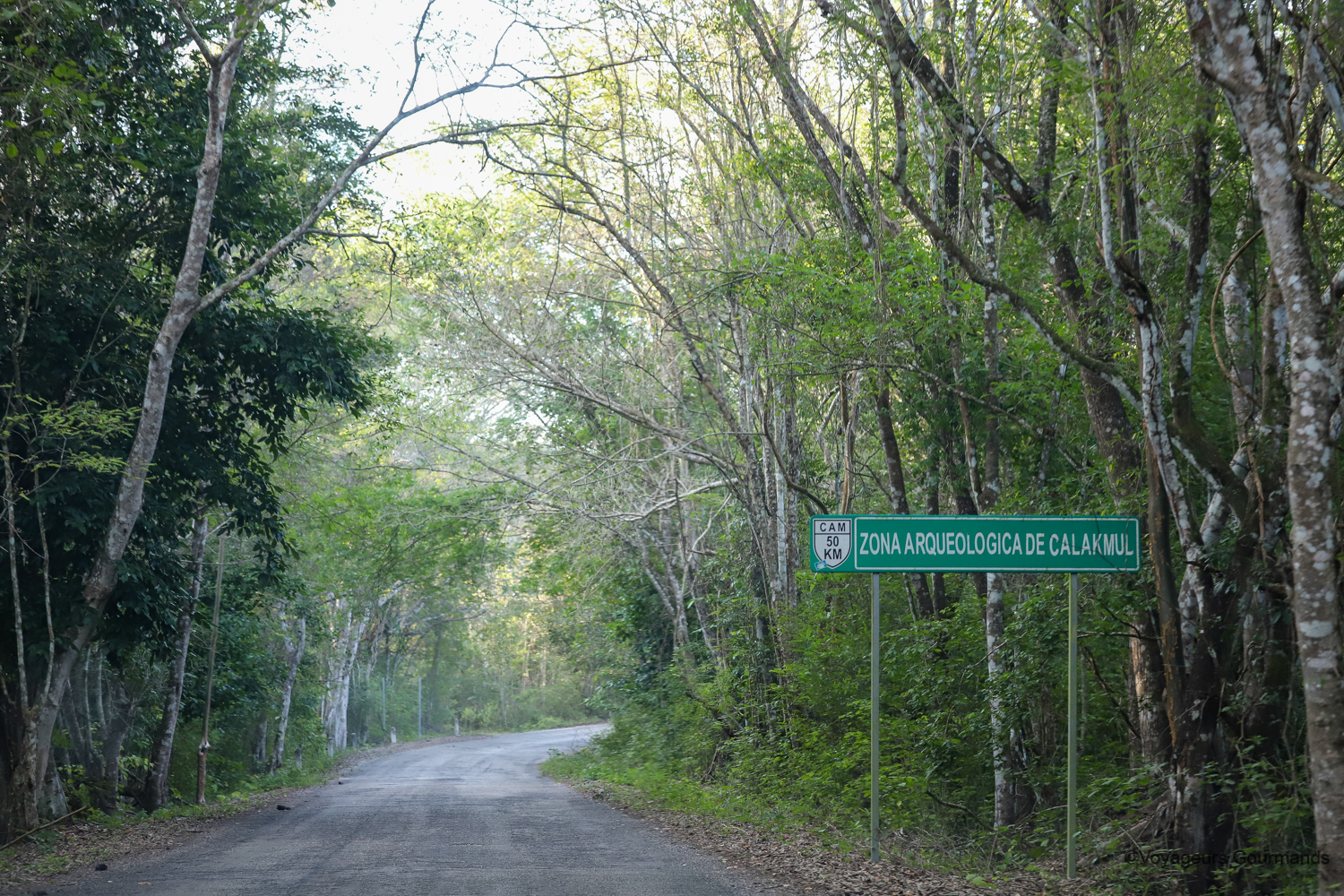
Most travellers use Xpujil as their base, as it’s the last village with petrol stations, cash machines, restaurants and places to stay. From there, it’s still 110 km to the ruins: around 50 km along Federal Highway 186 to the turn-off at km 97, then 60 km of narrow road through the jungle. We chose to stay even closer, in Conhuás, to save precious time in the morning (more on that below).
This long drive through the wilderness is very much part of the experience: you’re a world away from crowded Mayan sites such as Chichén Itzá.
Calakmul map and site layout
➺ Finding it on the map: the turn-off for Calakmul is at km 97 on Federal Highway 186, between Escárcega and Chetumal. It’s the one and only way in. The village of Conhuás is right there, and the archaeological site is 60 km further south, at the end of the road.
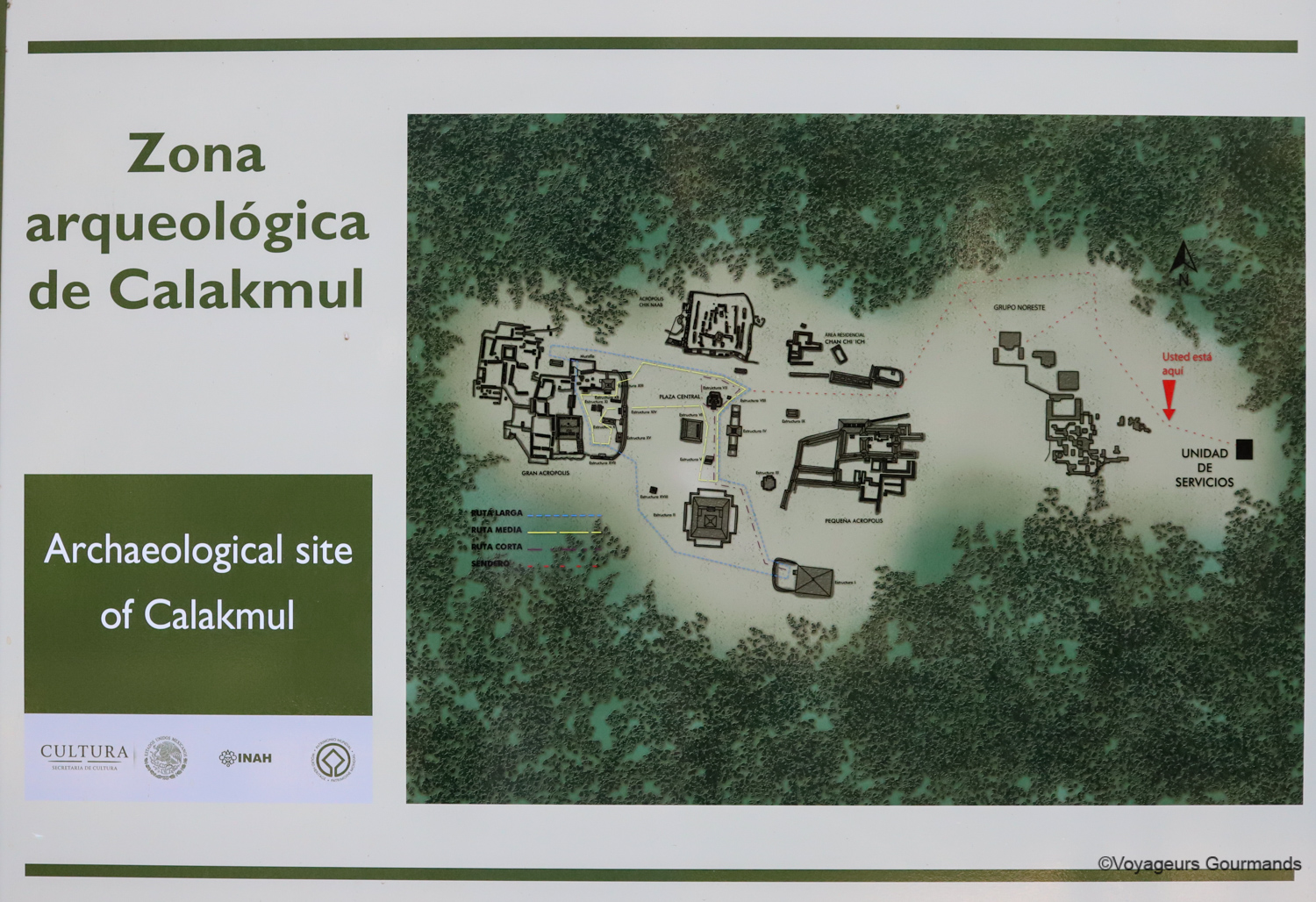
➺ Finding your way around the site: at the park entrance, there’s a large sign showing the different trails and the main structures. We took a photo of it on our phone and used it to navigate all morning. I’d strongly recommend doing the same, as there’s no phone signal and no paper map.
The site is laid out as a loop, with a short trail (around 2 km) and a longer one that takes in more structures. Allow 4 to 5 hours to explore it at a relaxed pace, climbing the pyramids along the way.
History of Calakmul: a Mayan city in a biosphere reserve
Calakmul is one of the largest and most powerful Mayan cities ever discovered. It sits at the heart of the biosphere reserve of the same name, which covers more than 7,200 km² of Campeche State. Located far from the main tourist hubs (around 445 km from Tulum and 300 km from Campeche city), it gets far fewer visitors than other Mayan sites in the Yucatán.
A UNESCO World Heritage Site, Calakmul stands out for its rare dual status: it’s both a major archaeological site and a vast protected tropical forest. This makes it one of the few places in the world recognised for both its cultural and its natural value.
Inhabited for over a thousand years, the city was eventually abandoned and swallowed up by the jungle. Known as the “Kingdom of the Snake”, it’s thought to have been home to around 50,000 people at its peak, and was the great rival of Tikal, just across the border in Guatemala. Wars, alliances and betrayals between two Mayan superpowers… Knowing the backstory makes the visit all the more fascinating!
Only rediscovered in the 1930s, the site is still a huge area of ongoing archaeological research. Around 1,000 structures have been identified in the city centre, and more than 6,000 across the wider area. The reserve is also home to exceptional biodiversity, with many species of mammals and birds and a remarkably rich tropical flora.
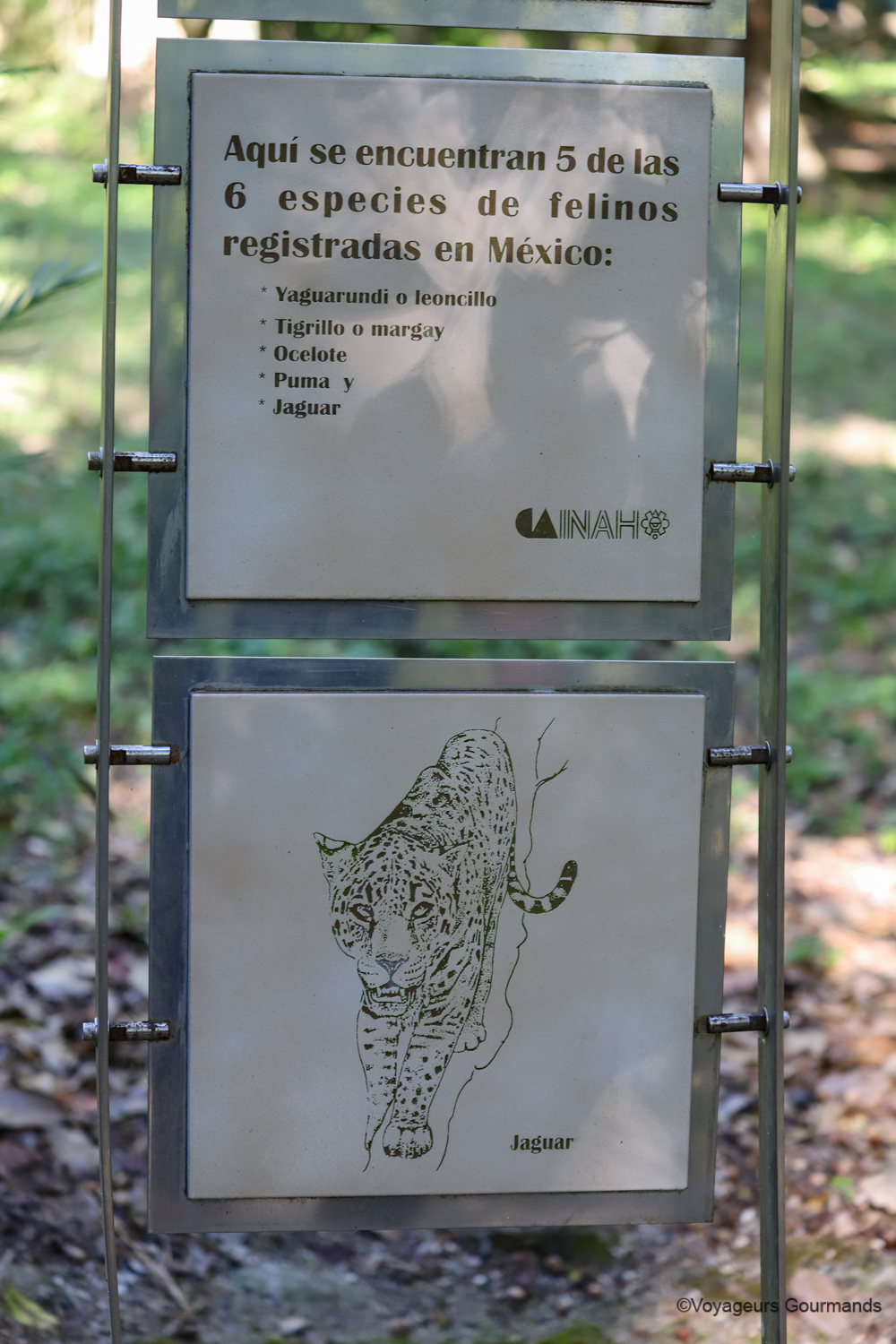
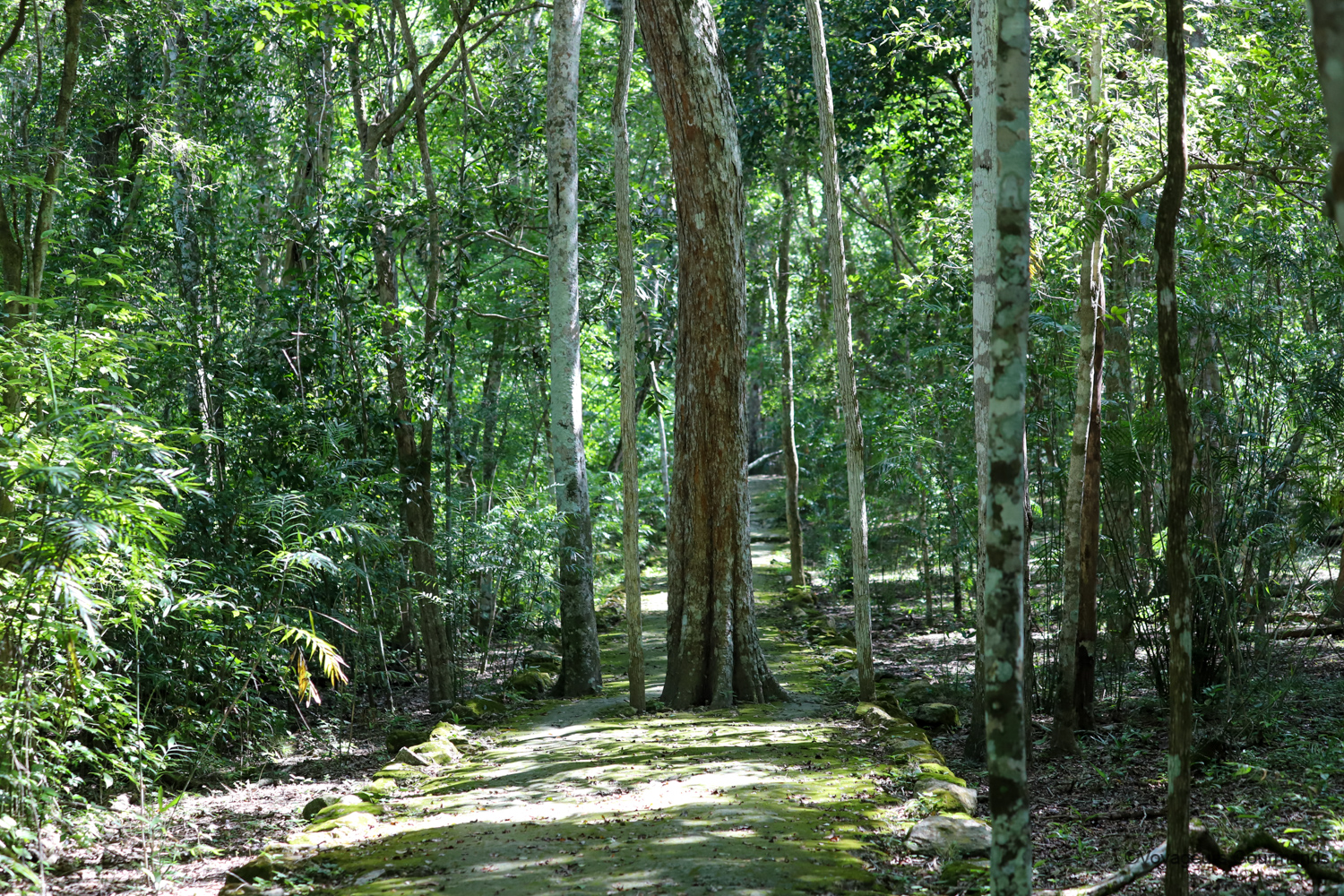
Is Calakmul worth visiting? Our honest review
It’s the question we get asked most often, so I’ll be completely honest with you. Yes, absolutely, but it’s not for everyone.
What we loved
➺ The peace and quiet. We came across about ten people all morning. At Chichén Itzá, you’re elbow to elbow with other visitors. Here, it felt as if we were discovering the site for ourselves.
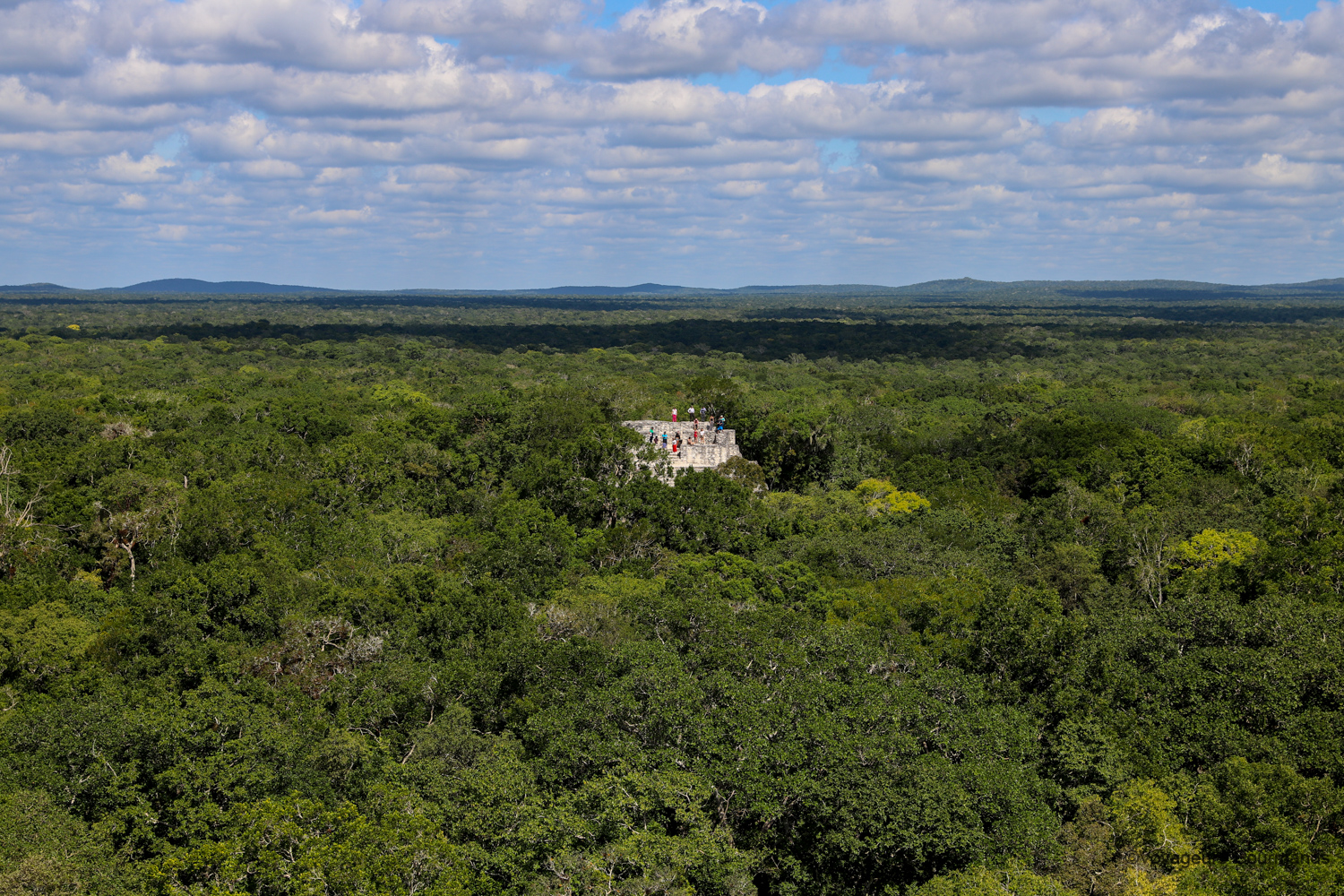
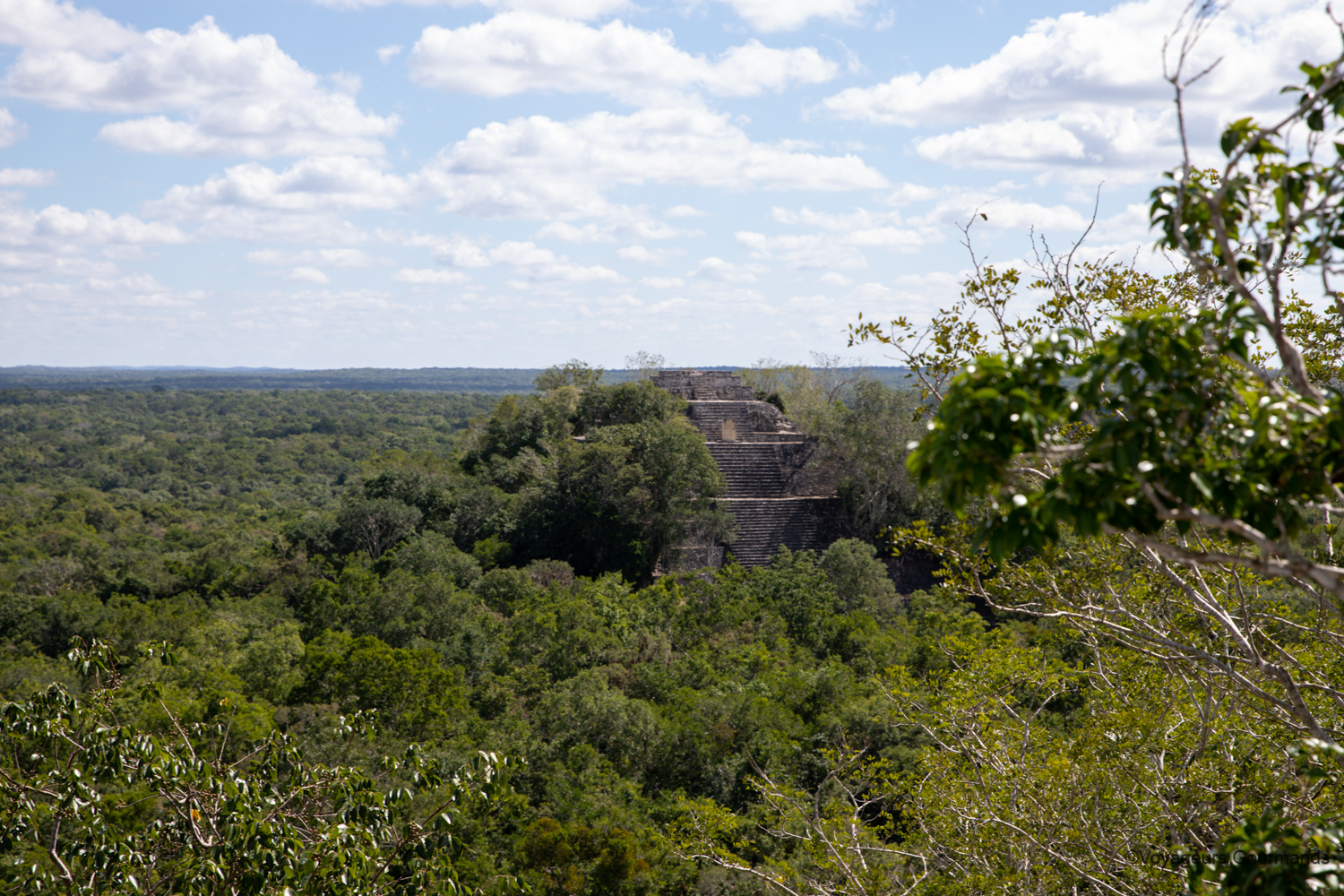
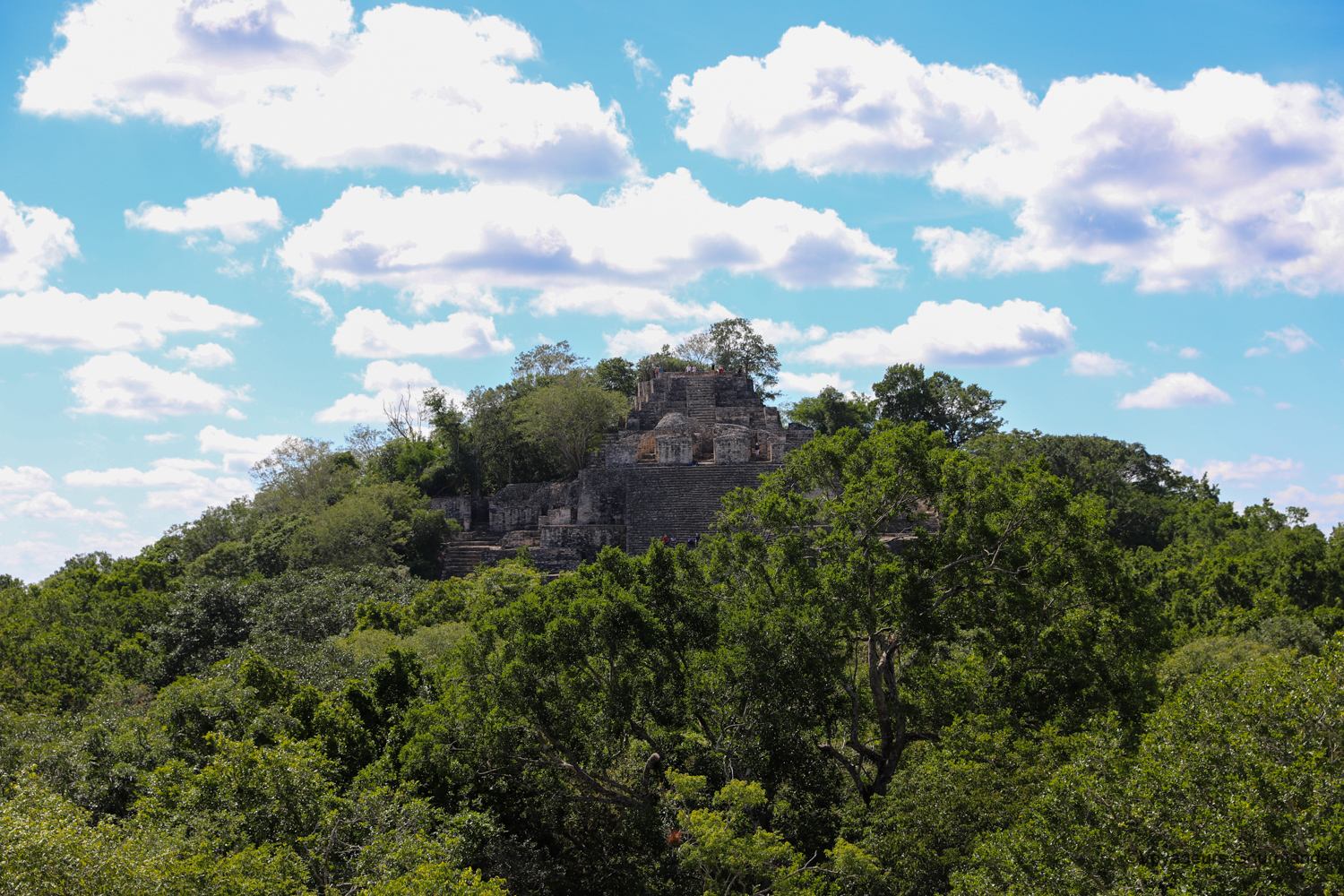
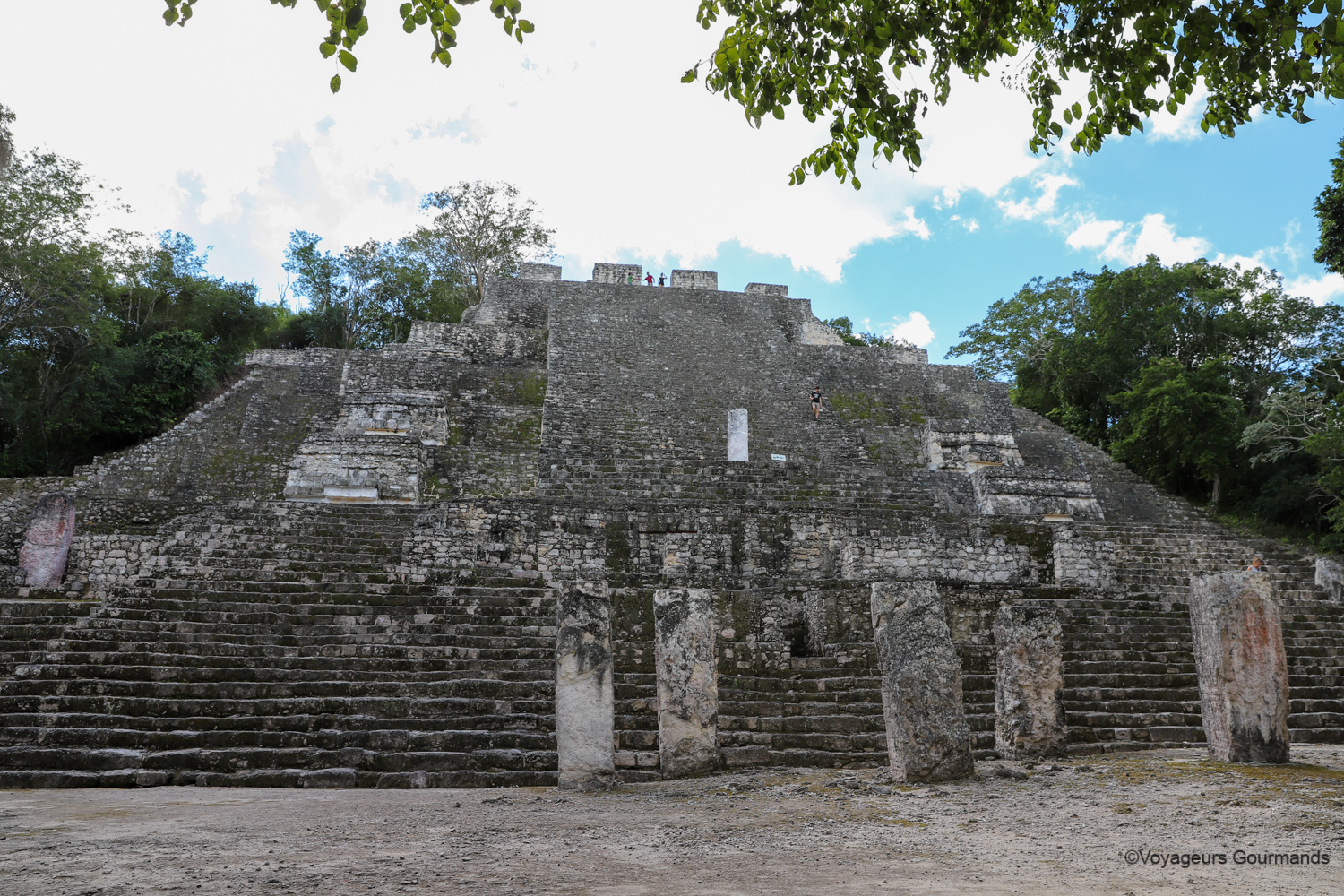
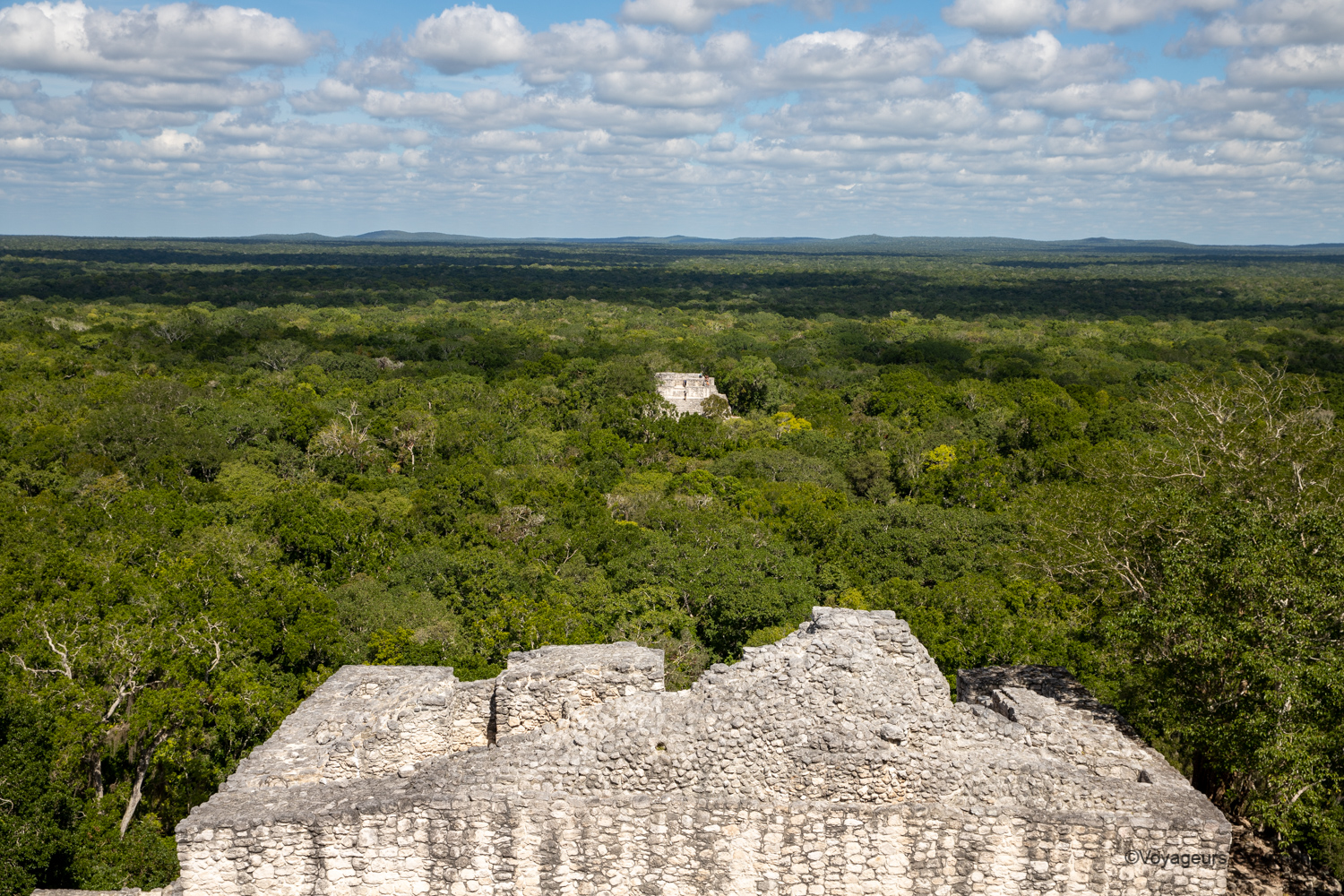
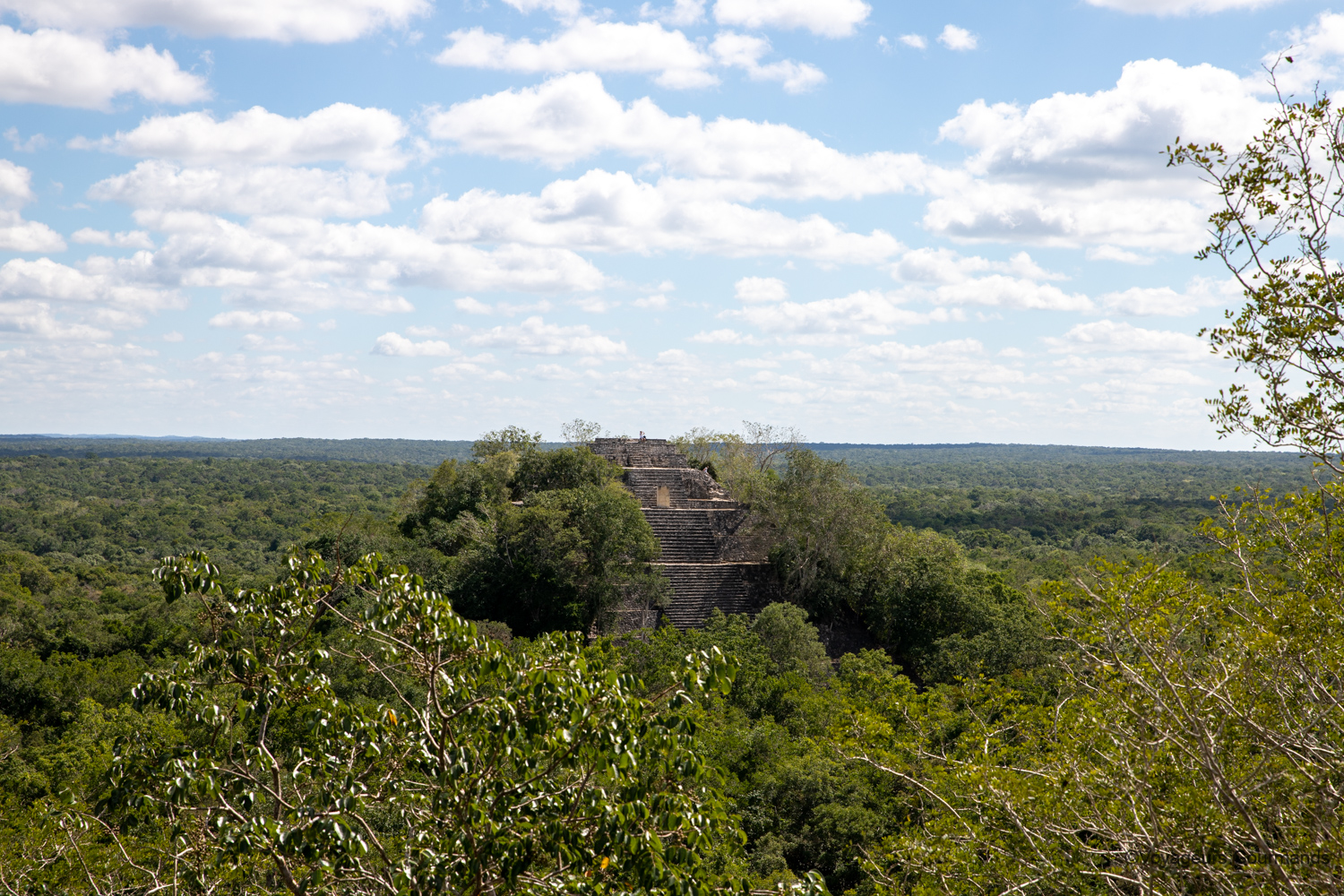
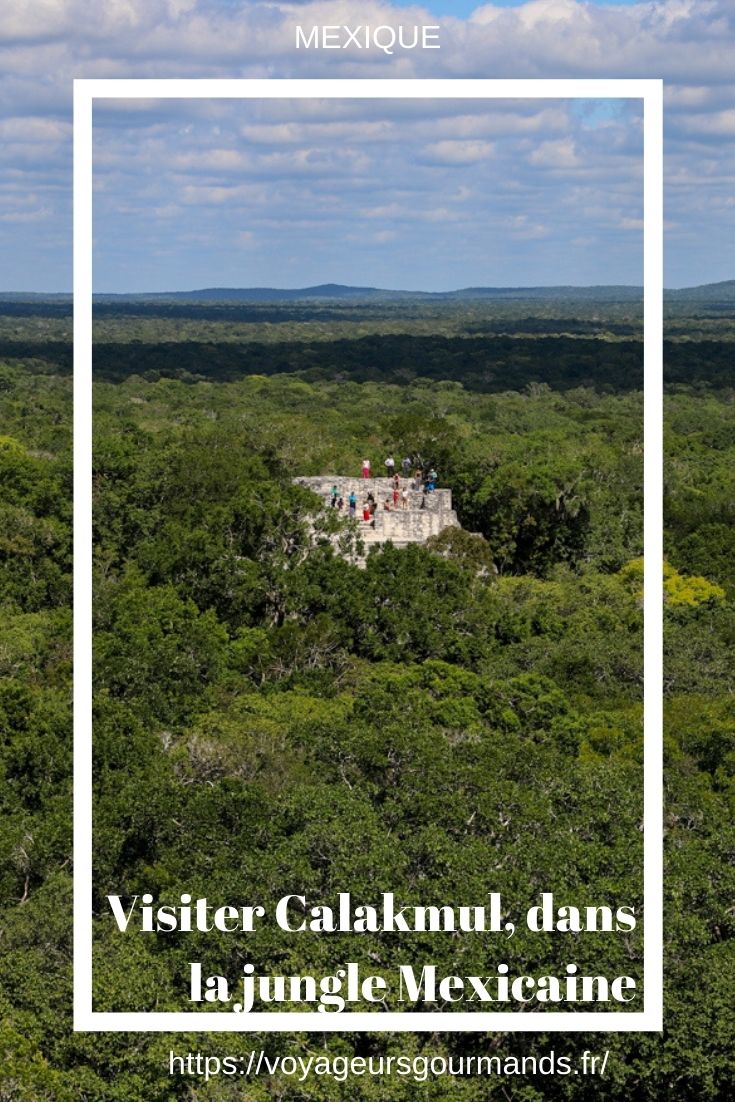
➺ You can still climb the pyramids! That’s become very rare in Mexico. Standing at the top, looking out over dense jungle as far as the eye can see, with the tips of other pyramids poking through the canopy… words don’t do it justice.
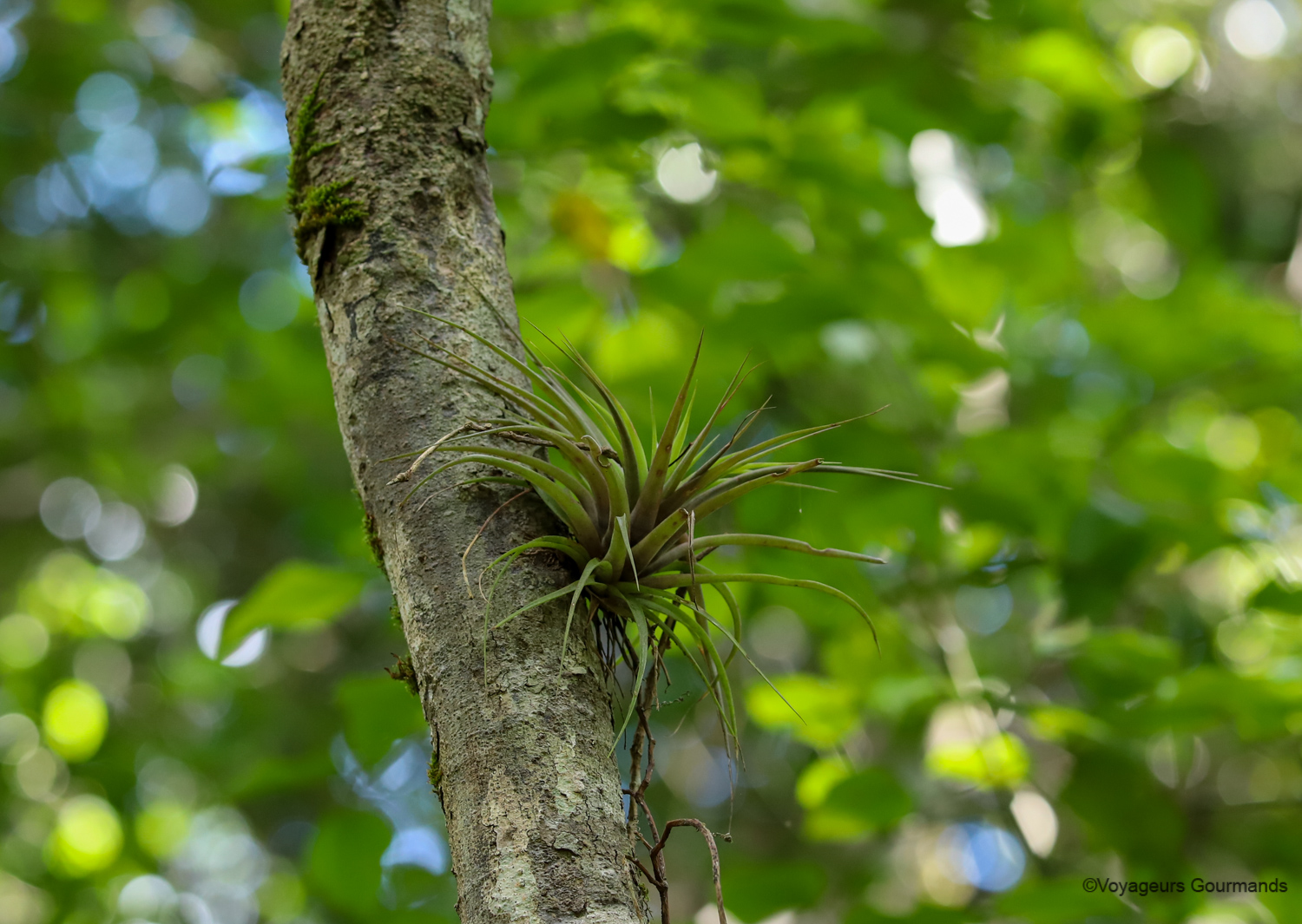
➺ The wildlife. Howler monkeys, spider monkeys, birds, toucans… The reserve is a genuine part of the visit, not just a backdrop.
➺ The feeling of exploration. The road, the jungle, the roots slowly swallowing the stones: you feel a bit like Indiana Jones, and that’s priceless.
What might disappoint you
➺ It’s far. Very far. You’ll need a full day at the very least, and ideally a night nearby beforehand. This is definitely not a quick stop on the way somewhere else.
➺ If you’re after restored, photogenic monuments, the buildings are less spectacular than at Chichén Itzá or Uxmal. Many structures here are still partly covered by vegetation. That’s exactly what gives the place its charm… or what might let you down, depending on what you’re expecting.
➺ It’s hot, very humid, and there are mosquitoes. It’s not exactly a gentle stroll.
➺ The cost has risen sharply in recent years (see the entrance fee section below).
So, who is it for?
If you only have 10 days in the Yucatán and it’s your first trip to Mexico, to be honest, Chichén Itzá, Uxmal and Tulum will do the job without adding six hours of driving. But if you have time, love nature as much as ancient ruins, and can’t stand crowds, go for it. We didn’t regret a single minute, and it’s the first thing that comes to mind whenever we think back on that trip.
How to get to Calakmul
By hire car (what we did)
This is by far the easiest and most flexible option. We had a hire car for our whole Yucatán trip. We arrived from Bacalar the evening before, and left Calakmul for Campeche at around 5.30pm.
A few driving times to help you plan:
➺ From Bacalar: about 2.5 to 3 hours
➺ From Campeche: about 3 hours
➺ From Tulum: about 5 hours
➺ From Mérida: about 5.5 to 6 hours
➺ Once you reach the turn-off on Highway 186, allow another 1.5 hours to the archaeological site car park.
/!\ Two really important things to know:
➺ There are hardly any petrol stations in the area. Fill up in Xpujil (or before) to be on the safe side. There’s nothing after that.
➺ Payments are cash only, and there are no cash machines after Xpujil. Take out money before you set off, otherwise you’ll have to turn back, and trust me, that hurts.
We’d read that the Bacalar–Escárcega road was fairly dangerous and heavily policed because it’s close to the Guatemalan border. Driving at night in Mexico is also generally not recommended, but we wanted to save time and reach Campeche that same evening. So we hit the road despite the late hour, and everything went perfectly well! We did see quite a few checkpoints, but they were mainly soldiers stopping lorries.
At the time, we thought, “Well, everything’s fine then”, but looking back, we must have been lucky! Three days later, we were well and truly scammed by corrupt police officers in Campeche. I tell the whole story in my article about the city, as it seems to happen quite often there!
By Tren Maya (the new option!)
Since our trip, the Tren Maya has opened, and it’s a real game changer for travelling around the region. There’s a station in Xpujil, with connections to Palenque, Campeche, Bacalar and Cancún, among others. It’s now a genuine option for reaching the area without a car.
BUT watch out for this trap: there are two stations linked to the name Calakmul on the train map. Make sure you book Xpujil station, and definitely not the station called “Calakmul”, which is in an isolated area with no services and no taxis. Arriving there without pre-booked transport means being stranded tens of kilometres from anywhere.
And bear in mind that once you’re in Xpujil, there are still 110 km to go to the ruins. Without a car, you’ll need to book a tour or private transfer from the village. Train timetables change regularly, so check the official website before planning your itinerary around them.
On an organised tour
If you don’t have a car, this is the most comfortable option, and frankly the most sensible one given the distances. You could, for example, book an organised day trip to Calakmul from Bacalar, which usually includes transport, entrance fees and a guide. It’s a long day, but everything is taken care of.
Calakmul entrance fee, opening hours and how long to stay
How much does it cost to visit Calakmul?
This is what surprises visitors most: you’ll pay three times, at three different checkpoints, run by three different organisations.
➺ The Conhuás village checkpoint (community fee)
➺ The biosphere reserve checkpoint (CONANP)
➺ The archaeological site entrance (INAH), right at the end of the 60 km road
In 2026, INAH raised its prices significantly, and Calakmul moved into the most expensive category, alongside Teotihuacán, Tulum, Palenque and Monte Albán. Expect to pay around 500 pesos per person in total (about €25), compared with 250 pesos just a few years ago. That’s more than double, so it’s worth knowing before you go.
And I’ll say it again because it’s the one thing that can really ruin your day: everything is paid in cash. No cards, no cash machines, no exceptions.
💡 Prices change regularly (often on 1 January). If you visit, feel free to leave us a comment with the prices on the day, and I’ll update the article!
What are Calakmul’s opening hours?
This is where it gets a bit tricky: the three checkpoints don’t keep the same hours, and it’s them, not the site itself, that dictate your day.
➺ You can only enter the reserve in the morning, and the checkpoints close in the early afternoon. Turning up at 2pm means risking a 100 km drive for nothing.
➺ There’s also a compulsory exit time in the early afternoon, so you can’t linger on the site until sunset.
➺ Our advice hasn’t changed: set off at the crack of dawn. If you leave Xpujil around 6 or 7am, you’ll have plenty of time. That’s what everyone does locally, and for good reason.
Since the exact times have changed several times in recent years, check them the day before with your accommodation: they’ll have the most reliable information, trust me.
How much time do you need at Calakmul?
➺ On site: 4 to 5 hours to see everything and climb the pyramids without rushing.
➺ Overall: a full day, from a 5am alarm to getting back in the late afternoon. Don’t try to squeeze anything else in (apart from the bat cave, see below!).
When is the best time to visit Calakmul?
The dry season, from December to May, is the most comfortable: less rain, less mud on the road and fewer mosquitoes. The rainy season (June to November) makes the jungle greener and more alive, but downpours can make access more difficult. We went in the dry season and didn’t see a drop of rain!
What to see at the Calakmul ruins
Three structures really stand out:
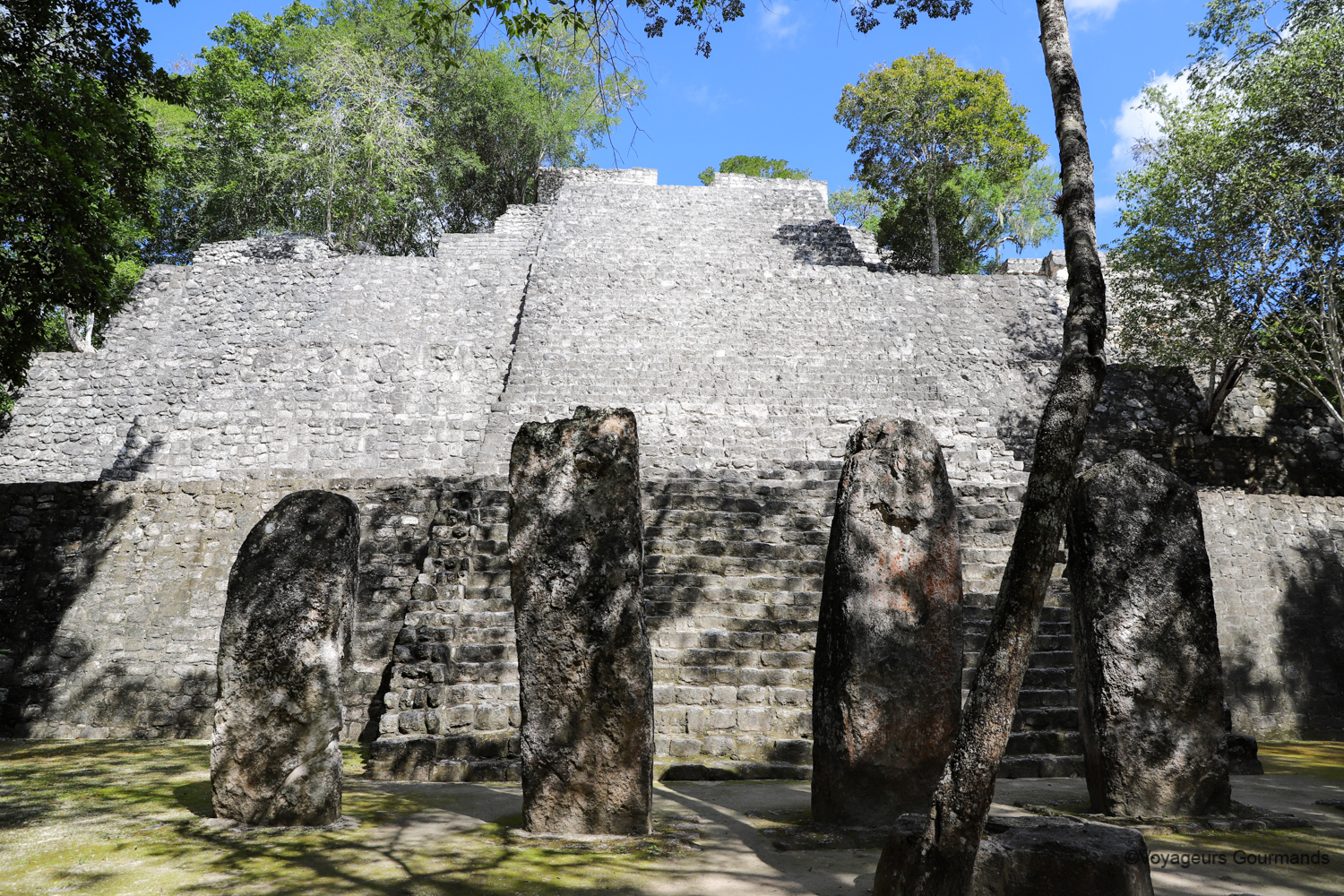
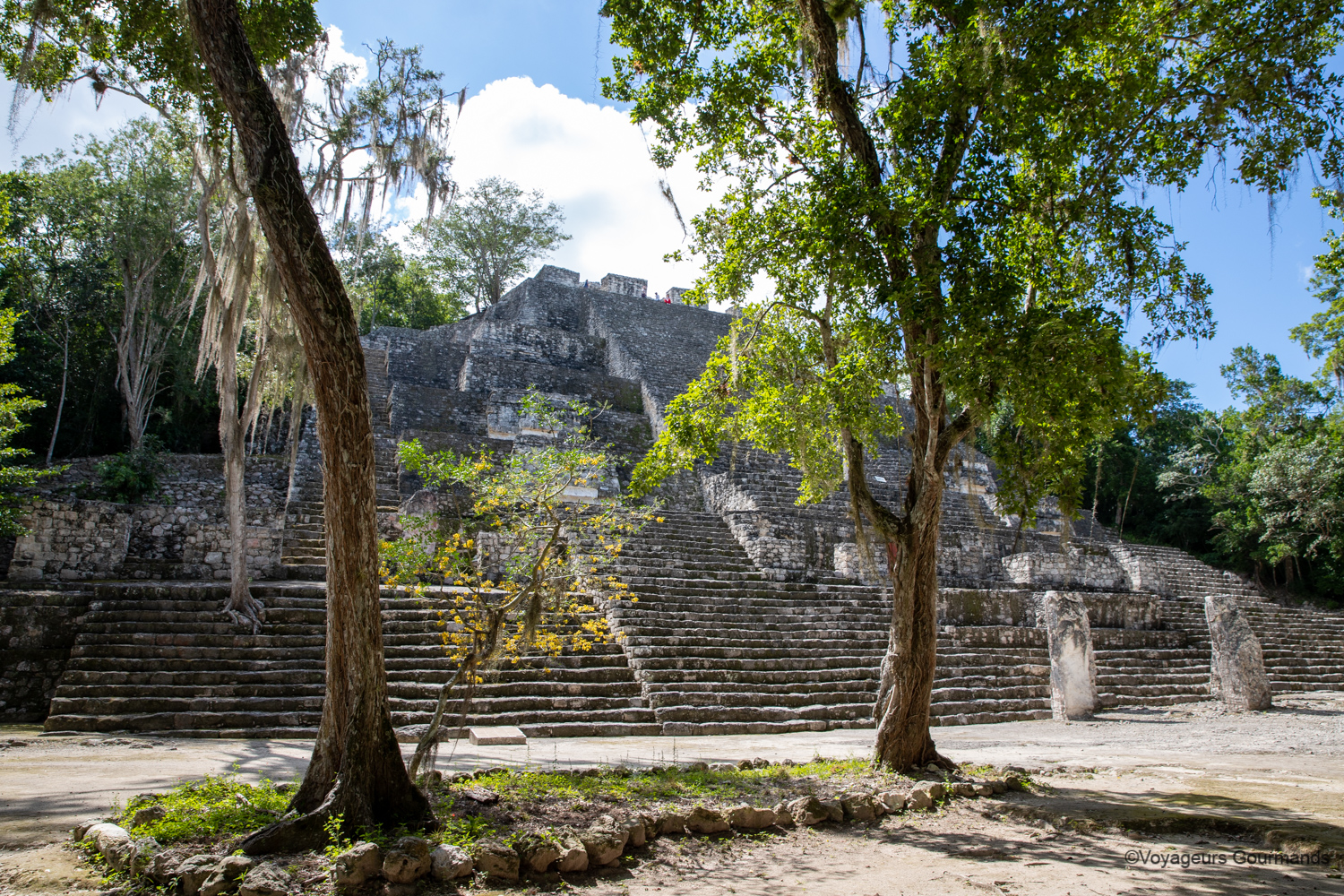
➺ Structure II, the largest on the site, rising to around 45 metres. It’s one of the tallest pyramids in the entire Mayan world, and the viewpoint you really can’t miss.
➺ Structure I, slightly off the main path, with an equally stunning view and often nobody else at the top.
➺ Structure VII, smaller but beautiful in the morning light.
The rest is made up of smaller buildings, plazas, stelae… and plenty still hidden beneath the vegetation. Take the time to read the information boards dotted around the site; they’re very well done.
Do you need a guide to visit Calakmul?
The honest answer: no, it isn’t compulsory at the archaeological site, which is easy to explore independently thanks to the information boards. We went without one and never felt lost.
But if we did it again, we’d hire a guide. And I say that all the more readily because several readers have asked about it in the comments! A guide will tell you about Mayan history, the rivalry with Tikal and the meaning of the structures… and above all, they’ll spot wildlife that we walked straight past without noticing. That’s where we really saw the difference compared with guided groups.
Also worth knowing: a certified guide is compulsory for the reserve’s nature trails (El Tapir, El Ramonal and the “monkey dormitory”, around km 38). If wildlife watching is a priority for you, that’s where you need to go, and there the guide isn’t optional.
➺ What language do guides speak? Almost all the guides at Calakmul work in Spanish and English, so finding an English-speaking guide is usually straightforward. That said, there are only a handful of guides for a huge area, so rather than hoping to find someone on the day, it’s safer to book a guided tour of Calakmul in advance and check the language when you book.
✤✤✤
Our visit to Calakmul: a day like no other
To make the most of the day, we planned ahead so we could be in the park as early as possible. The earlier you arrive, the better your chances of spotting wildlife, and you also avoid the worst of the midday heat. So we booked accommodation right next to the Calakmul reserve so we’d be there when it opened.
A (very) early start and a drive in the dark
The night before, our host asked what time we’d like breakfast: 5.30am! The alarm went off at 5, we got ready quickly, had breakfast and left our room. Our accommodation (more on that at the end of the article) is just a few kilometres from the only road into the reserve, and it’s very well signposted.
At the first checkpoint, we paid, and the road wasn’t too bad to begin with… At the second checkpoint, we paid again, and the road started to deteriorate. We drove at around 30 km/h, partly because of the potholes and partly in case animals suddenly appeared out of nowhere.
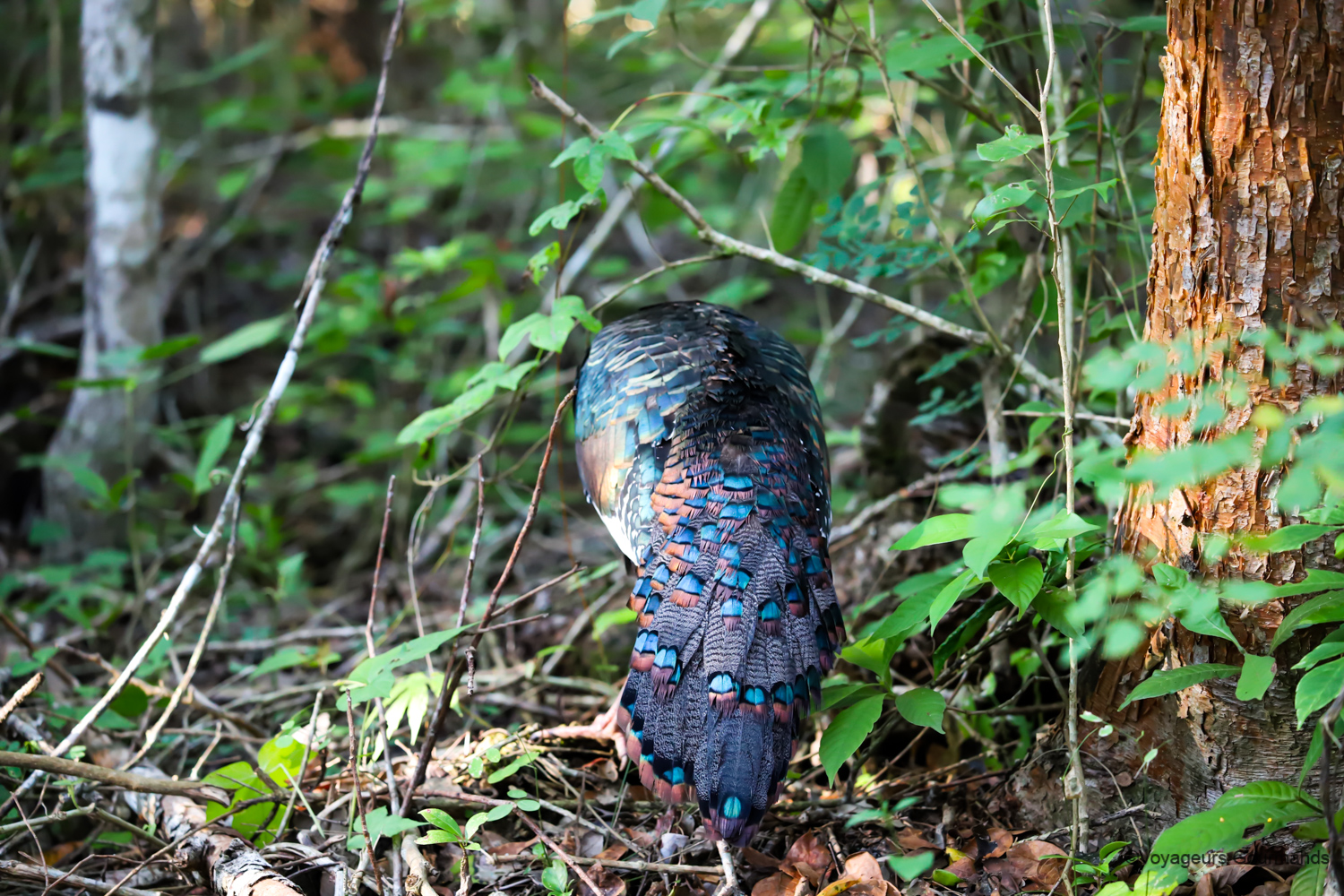
I’ll put an end to the suspense right away: we weren’t lucky enough to see the star of the park, the famous jaguar… But we did come across ocellated turkeys (which look a lot like peacocks) and partridges before reaching the site. Even though we’d set off at dawn, quite a few vehicles overtook us, including scooters… Since traffic scares animals away, I think it must be almost impossible to see larger wildlife from the road.
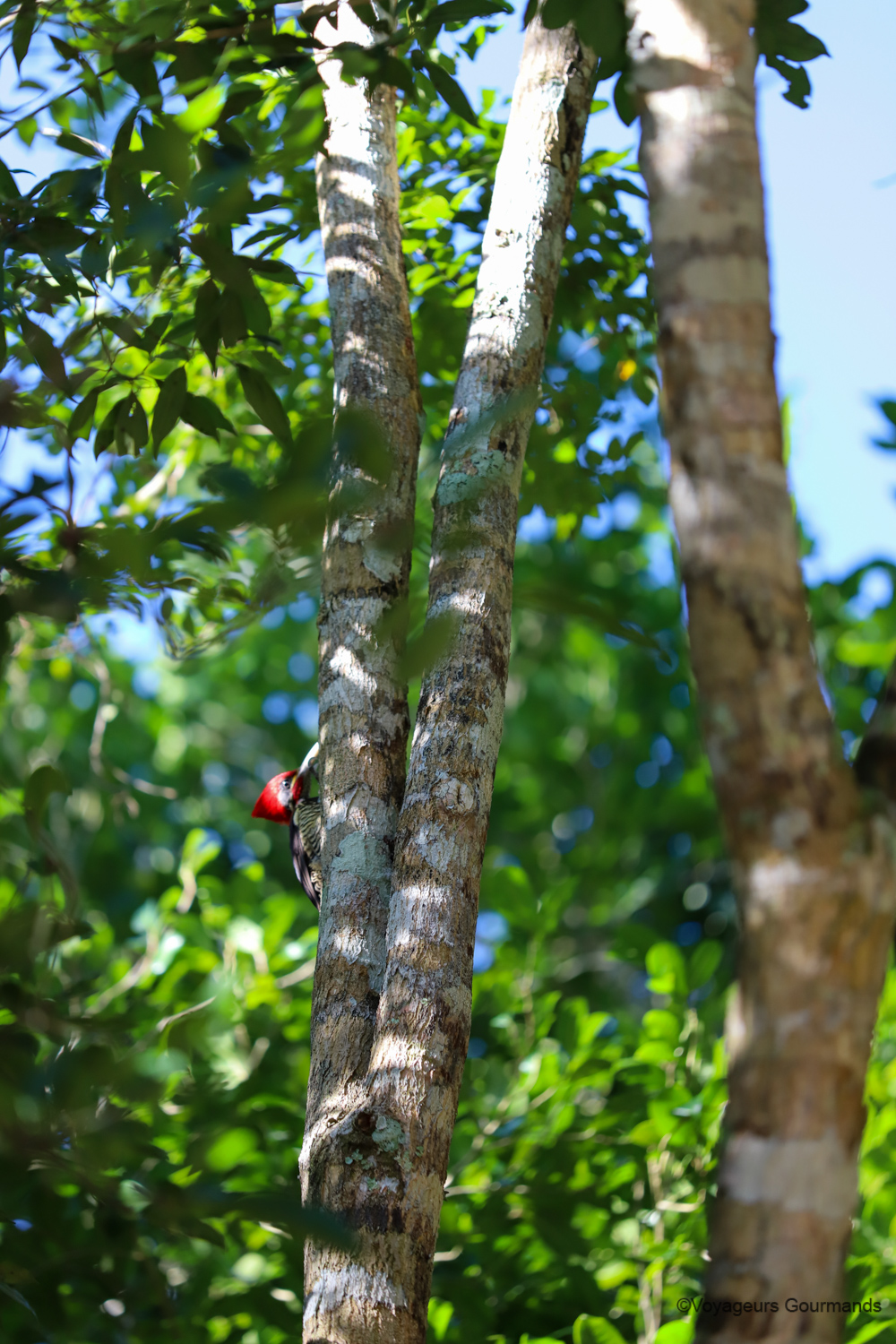
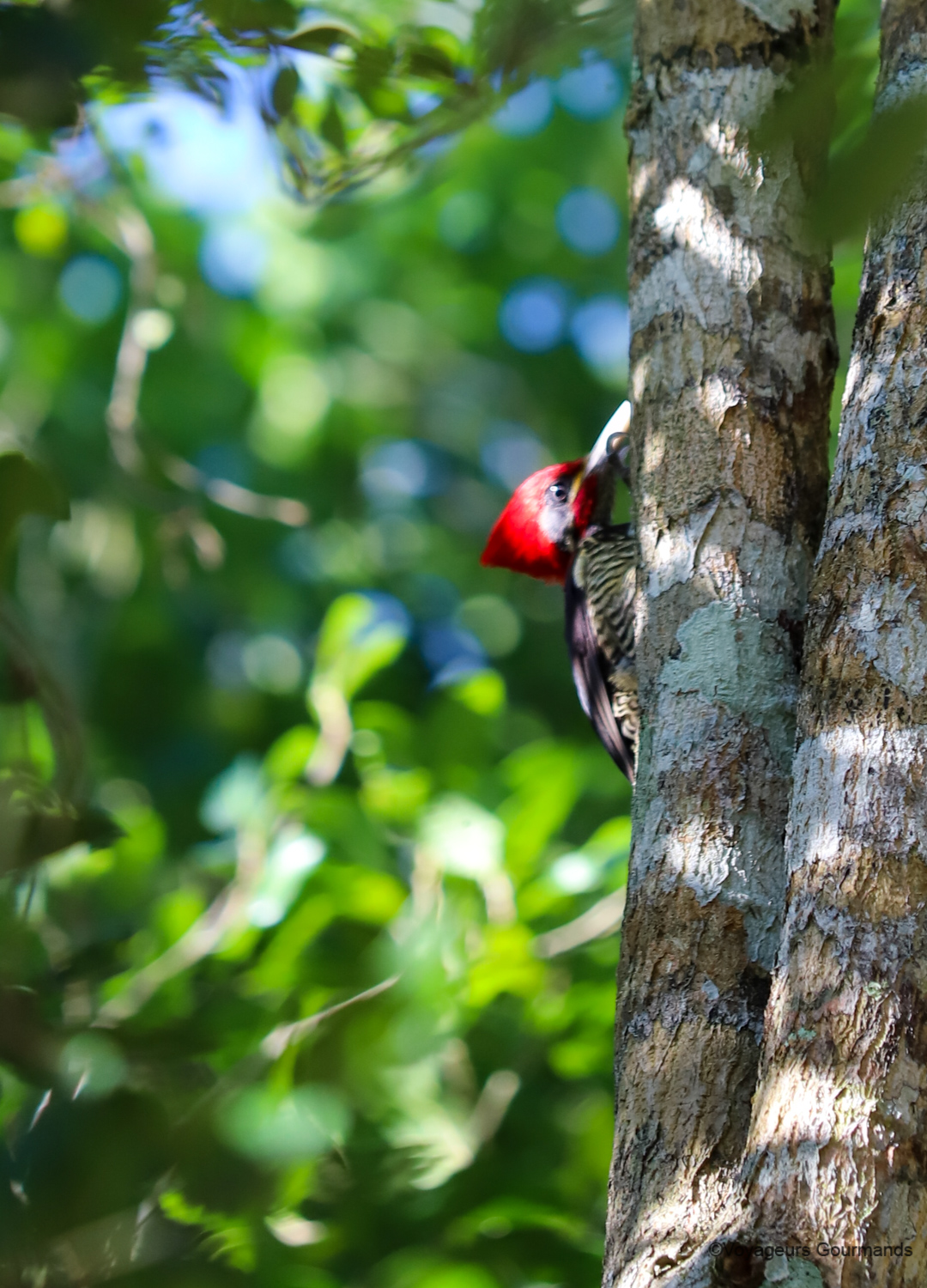
We reached the reserve car park at around 8.30am and paid for our archaeological site ticket. We were greeted by a strange noise, and being a city girl, I first thought it was a pneumatic drill or some other power tool… But it was actually a beautiful woodpecker, right above our heads! We slathered ourselves in mosquito repellent and off we went!
Exploring the ruins and climbing the pyramids
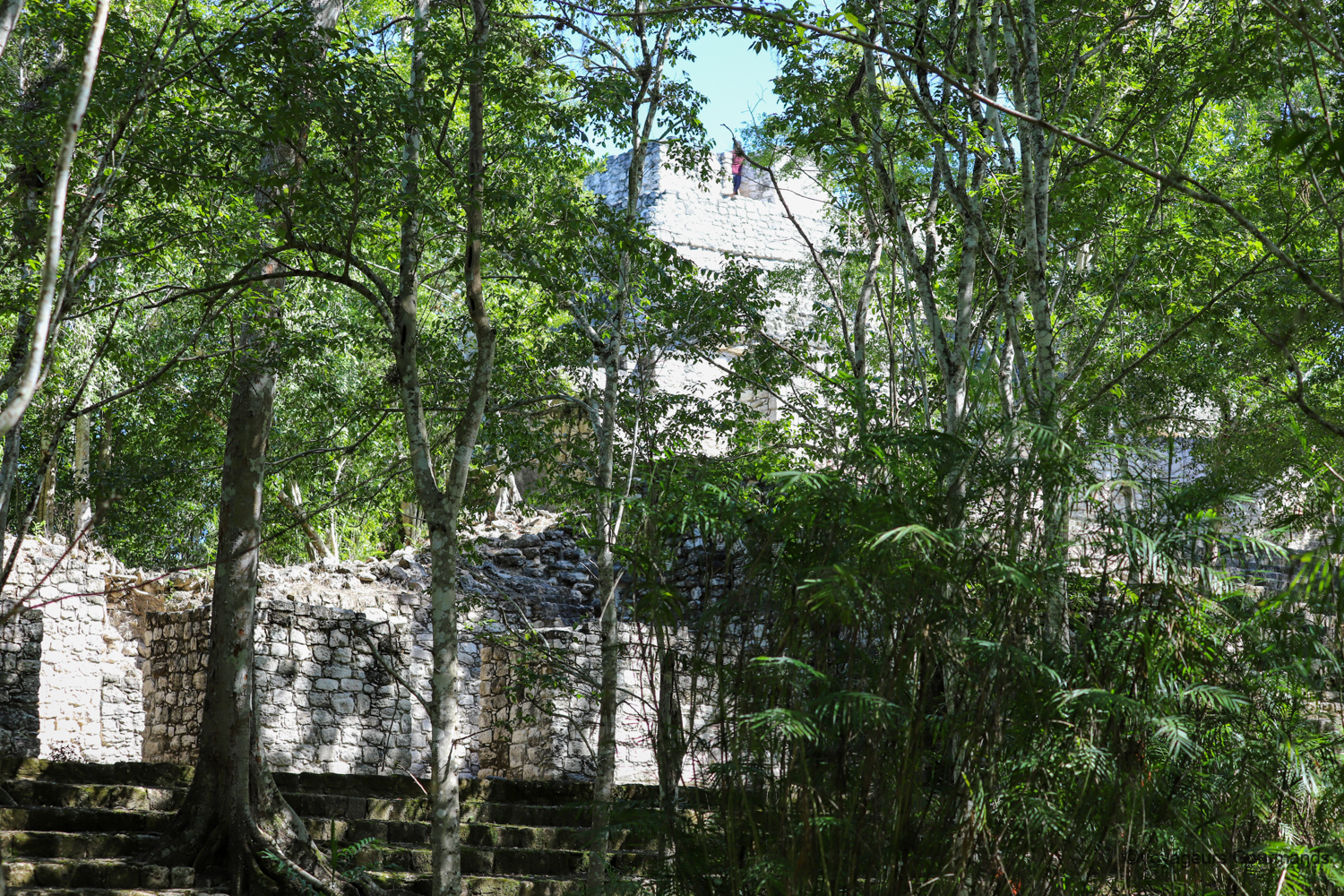
As soon as we entered the site, we decided to follow one of the trails leading straight to the main pyramids. With so few people around, it seemed like a good plan… Then we heard the most incredible roaring coming from the other side of the site… It took us a while to realise it was howler monkeys… We carried on along our route, thinking we’d see them later…
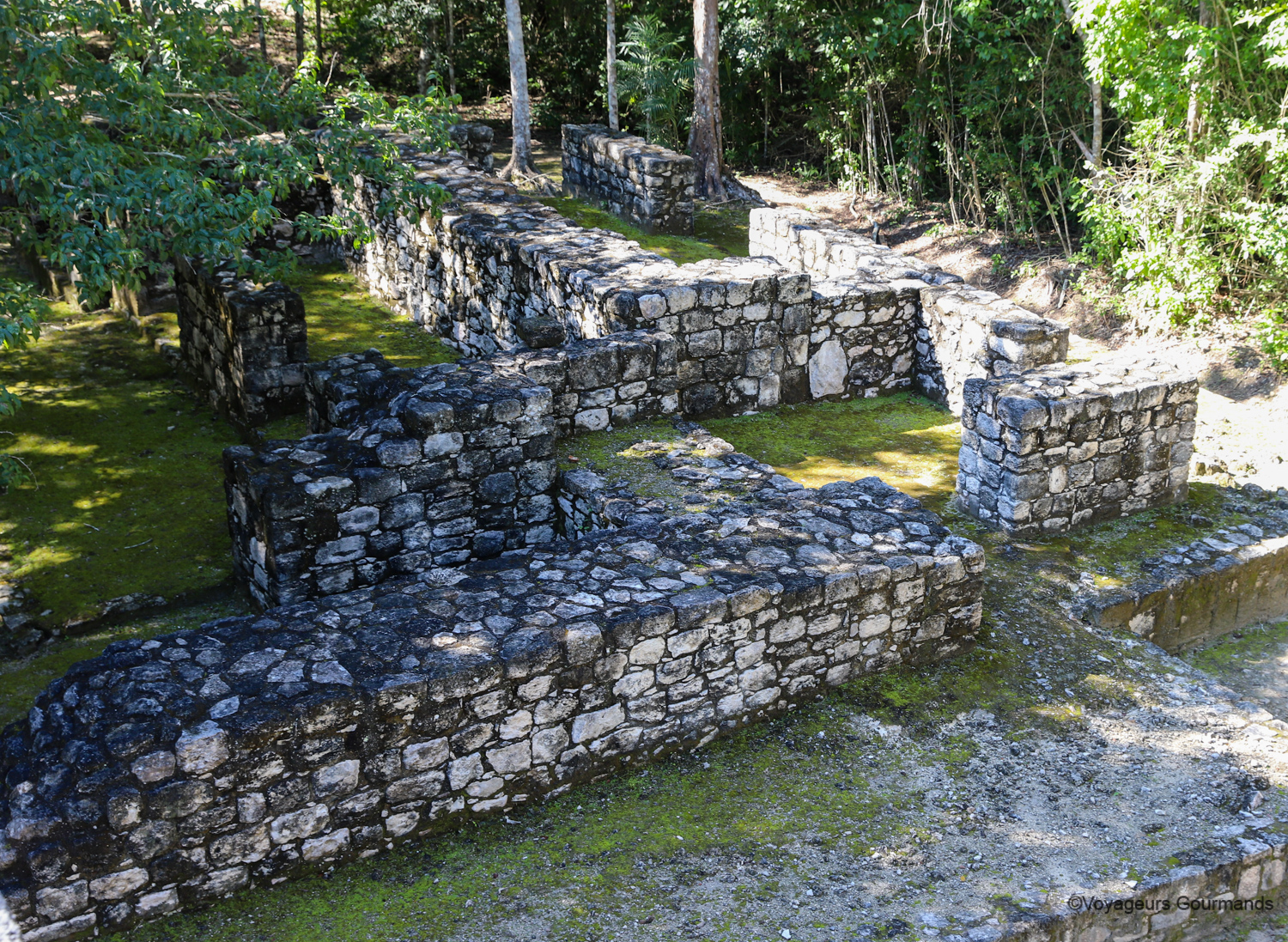
We wandered among the ruins, discovering the various structures and reading the information boards, and we soon stopped following our original route… Then suddenly, there they were: the famous pyramids, which we couldn’t wait to climb! Words can’t describe how it feels up there, looking out over dense jungle as far as the eye can see.
It was around 1pm when we finished exploring the site… We hung around a little longer to give ourselves a chance of seeing the howler monkeys… But nothing happened… On our way out, we spotted a few spider monkeys, which we’d already seen a few days earlier at Punta Laguna…
Howler monkeys, at last!
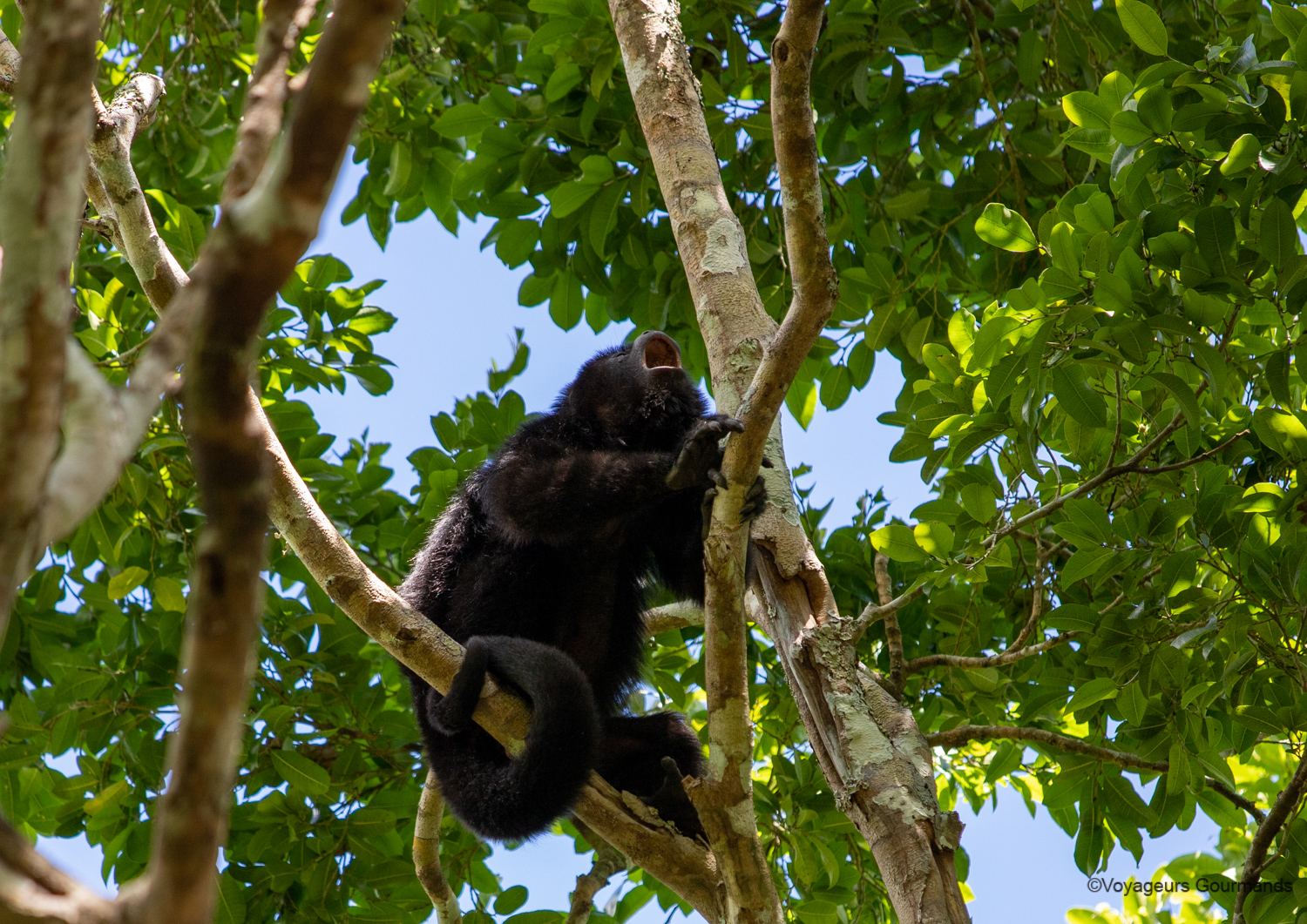
We were so disappointed… And then… Just as we were heading for the exit… Grrrrrrr! We heard them again!!! Ahhhhhhhhh!
I can still picture us racing over to see them… There were dozens and dozens of them… Wow! We were like children! It’s magical to see animals like these, especially in their natural habitat… They swung from branch to branch, “roaring” back and forth… That moment will stay with us forever… No doubt about it!
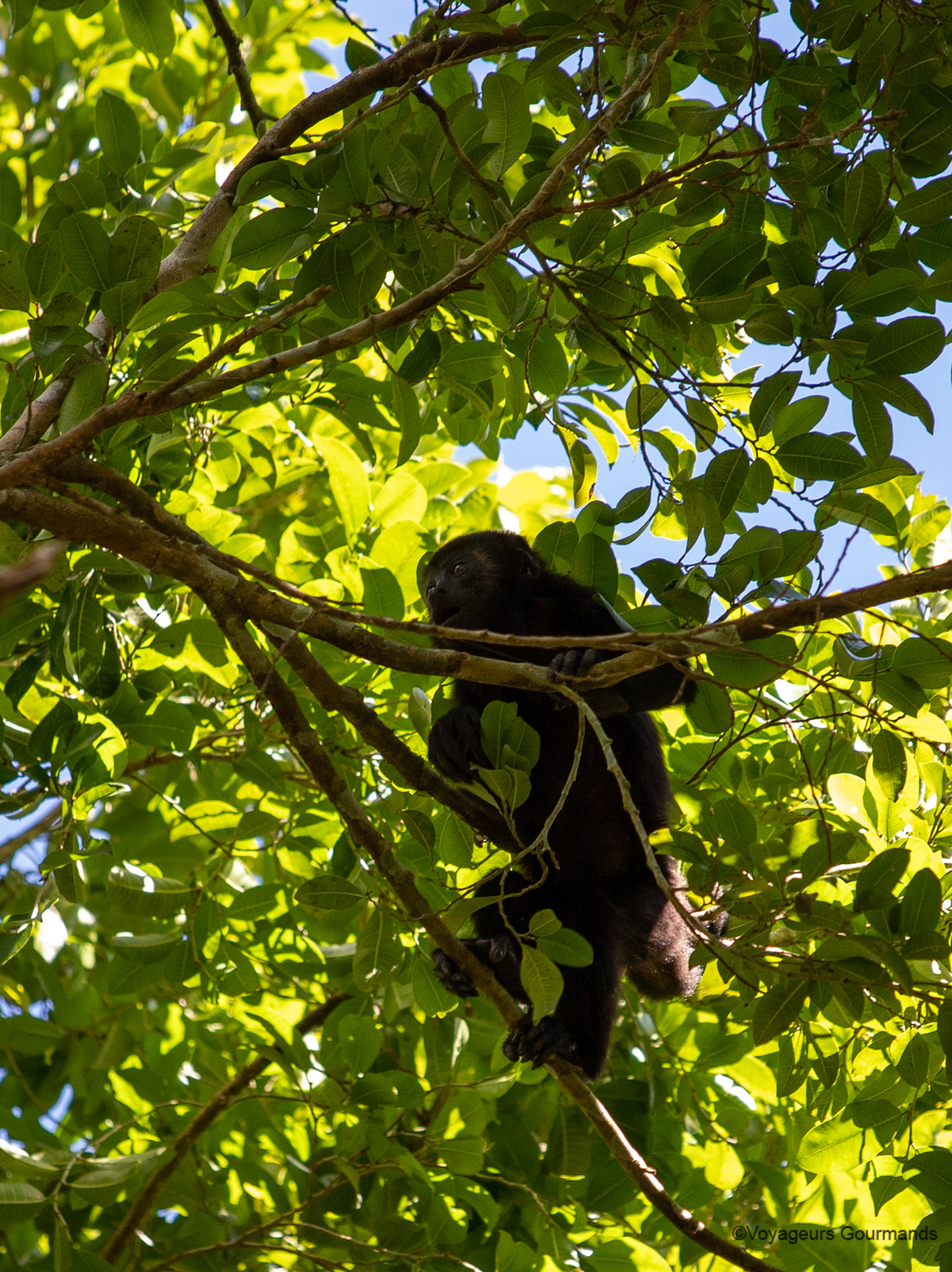
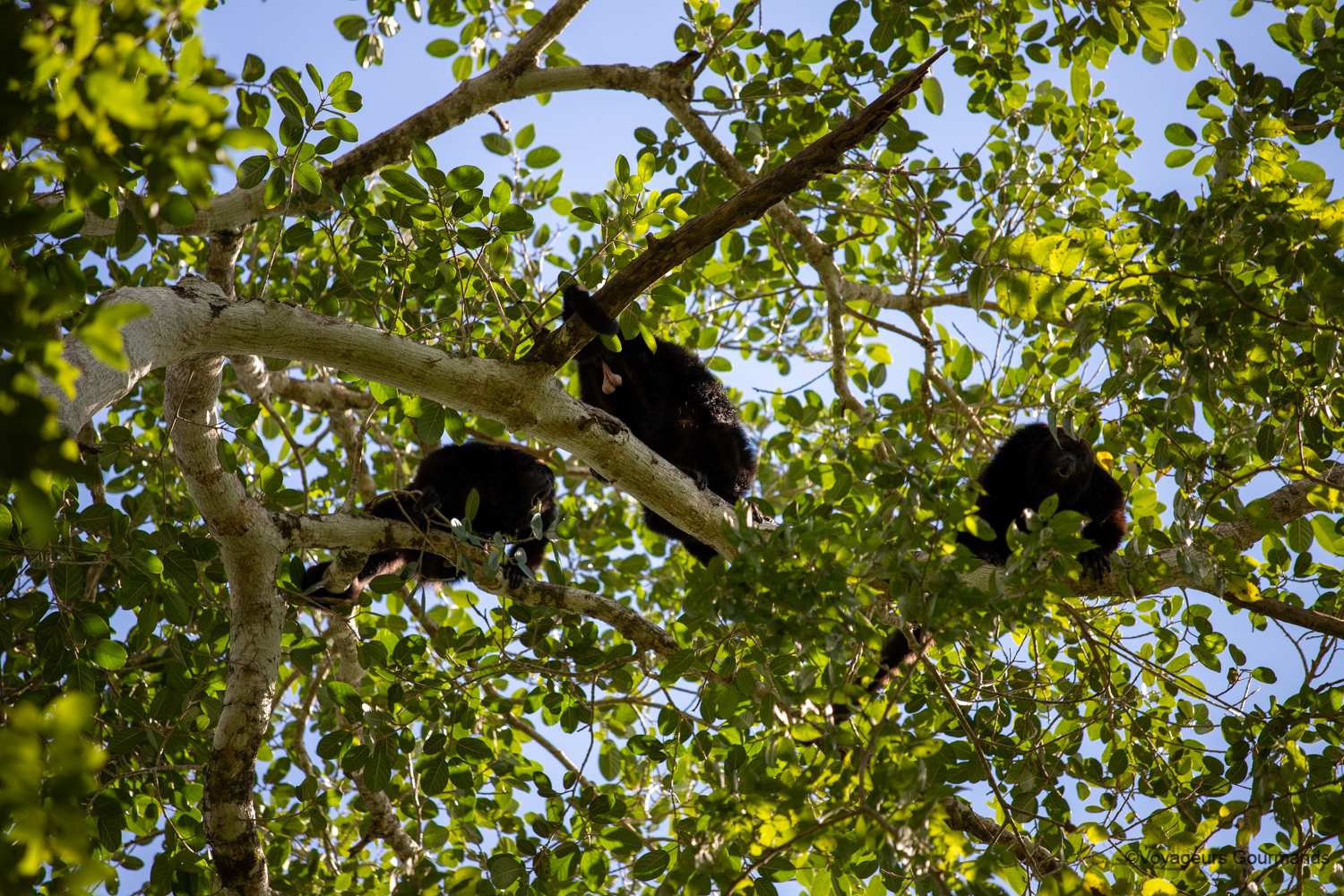
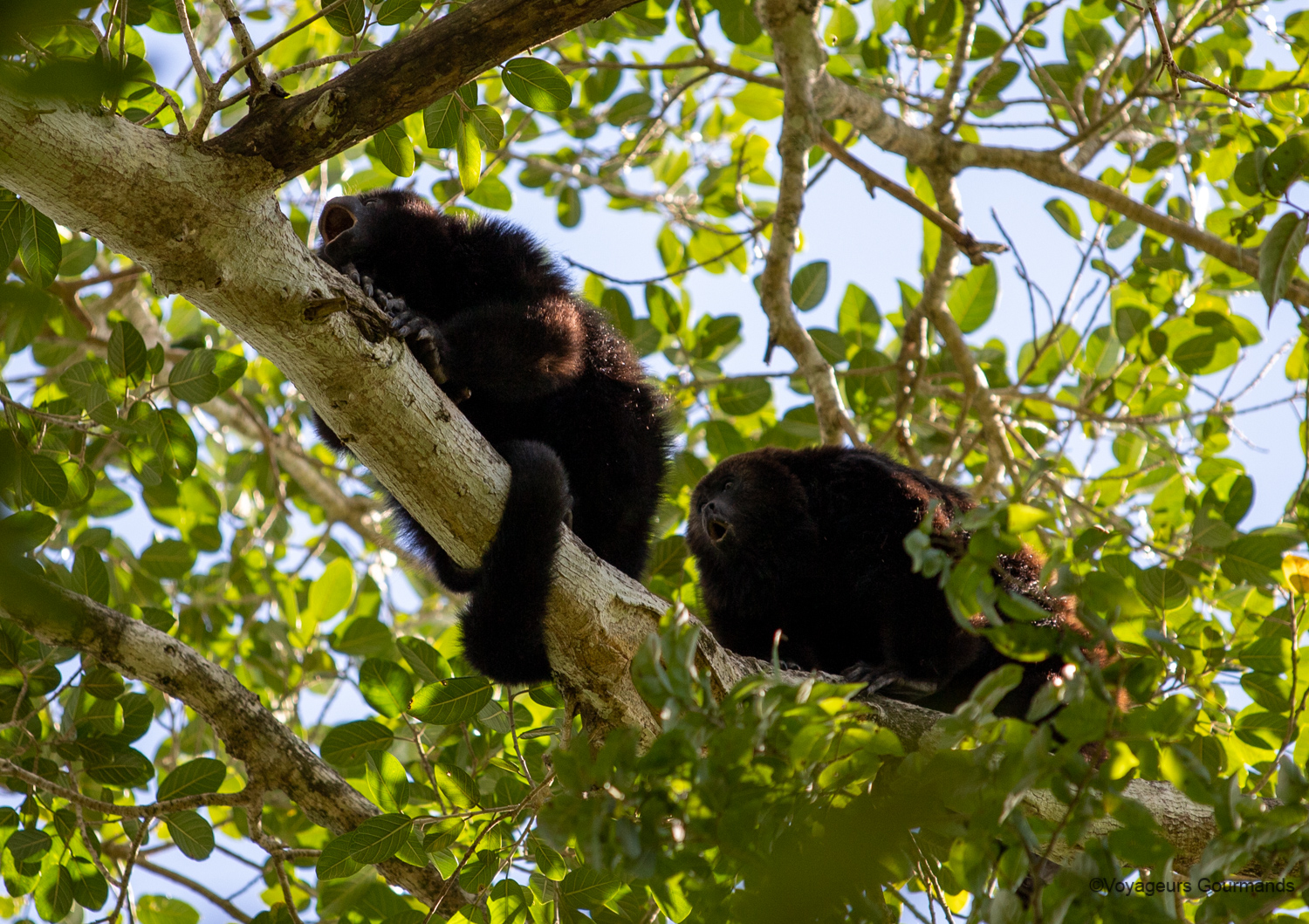
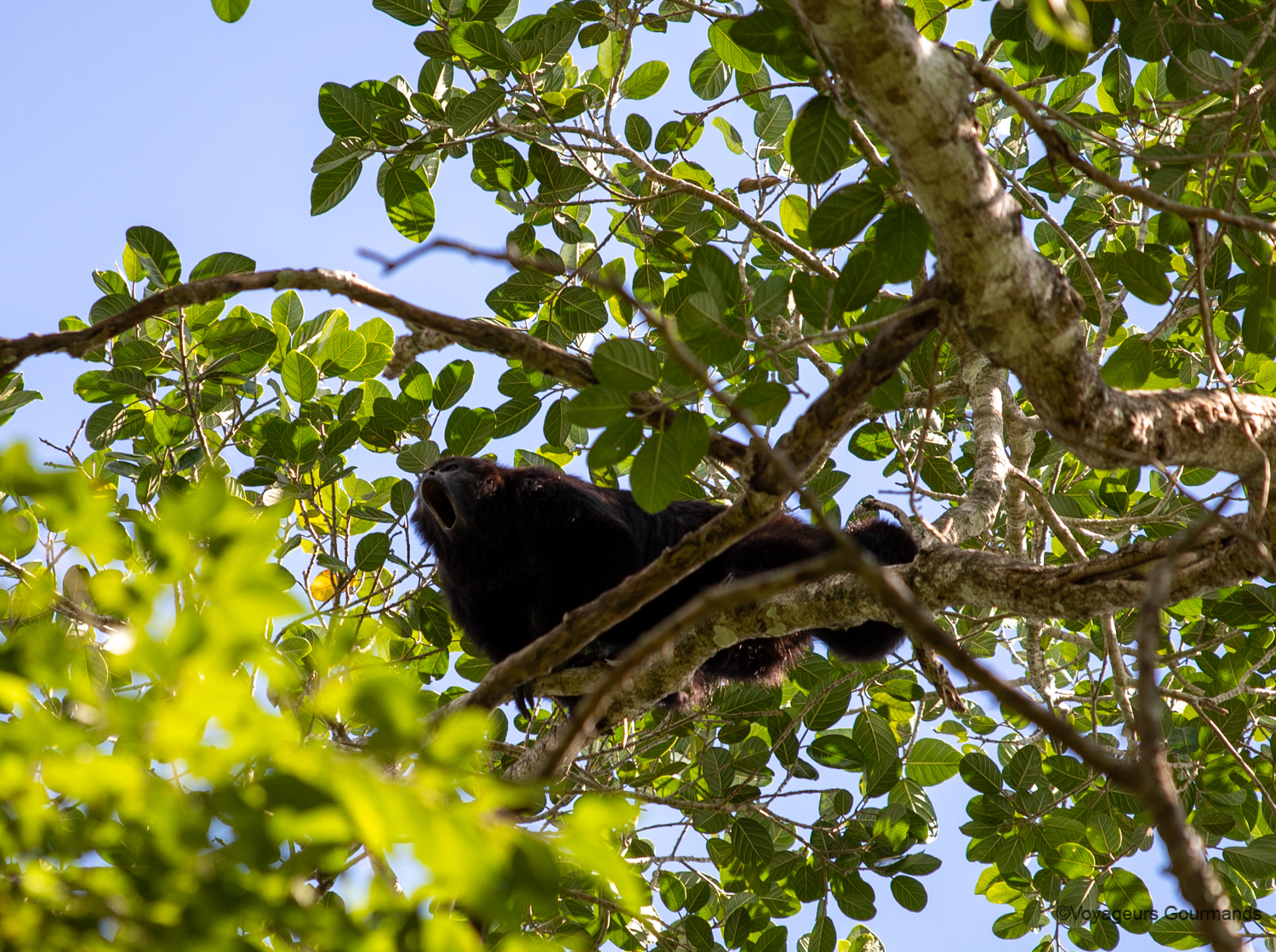
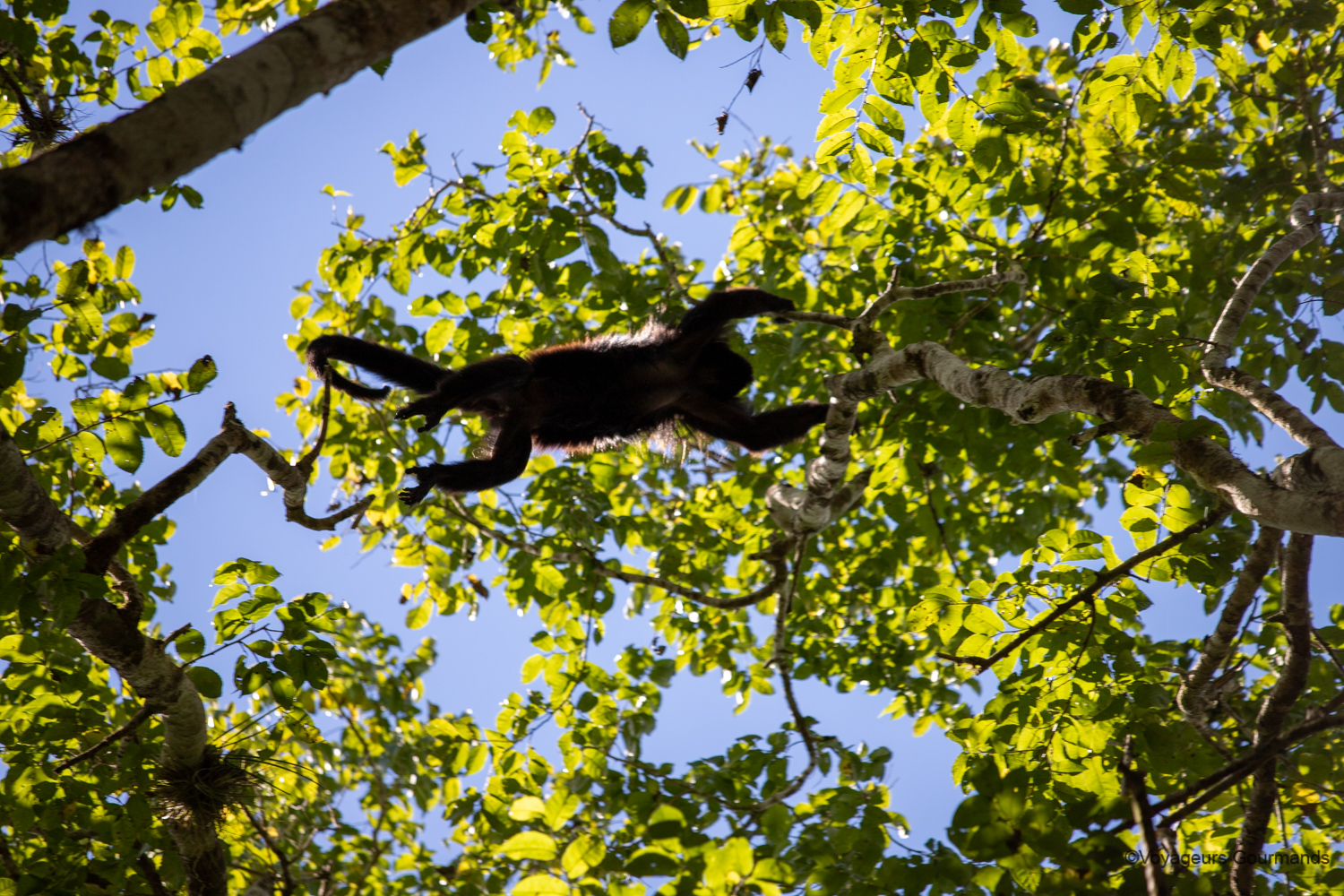
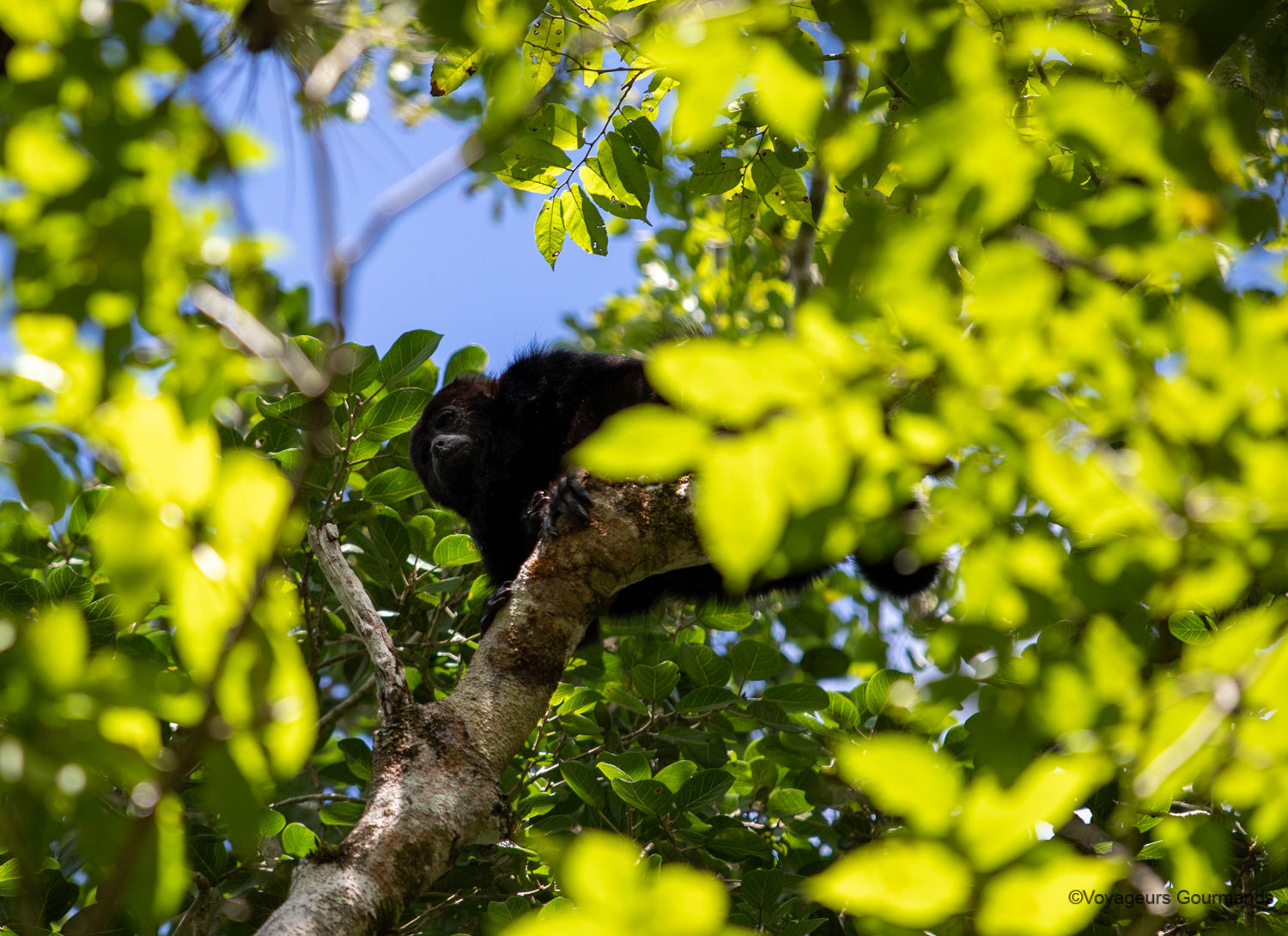
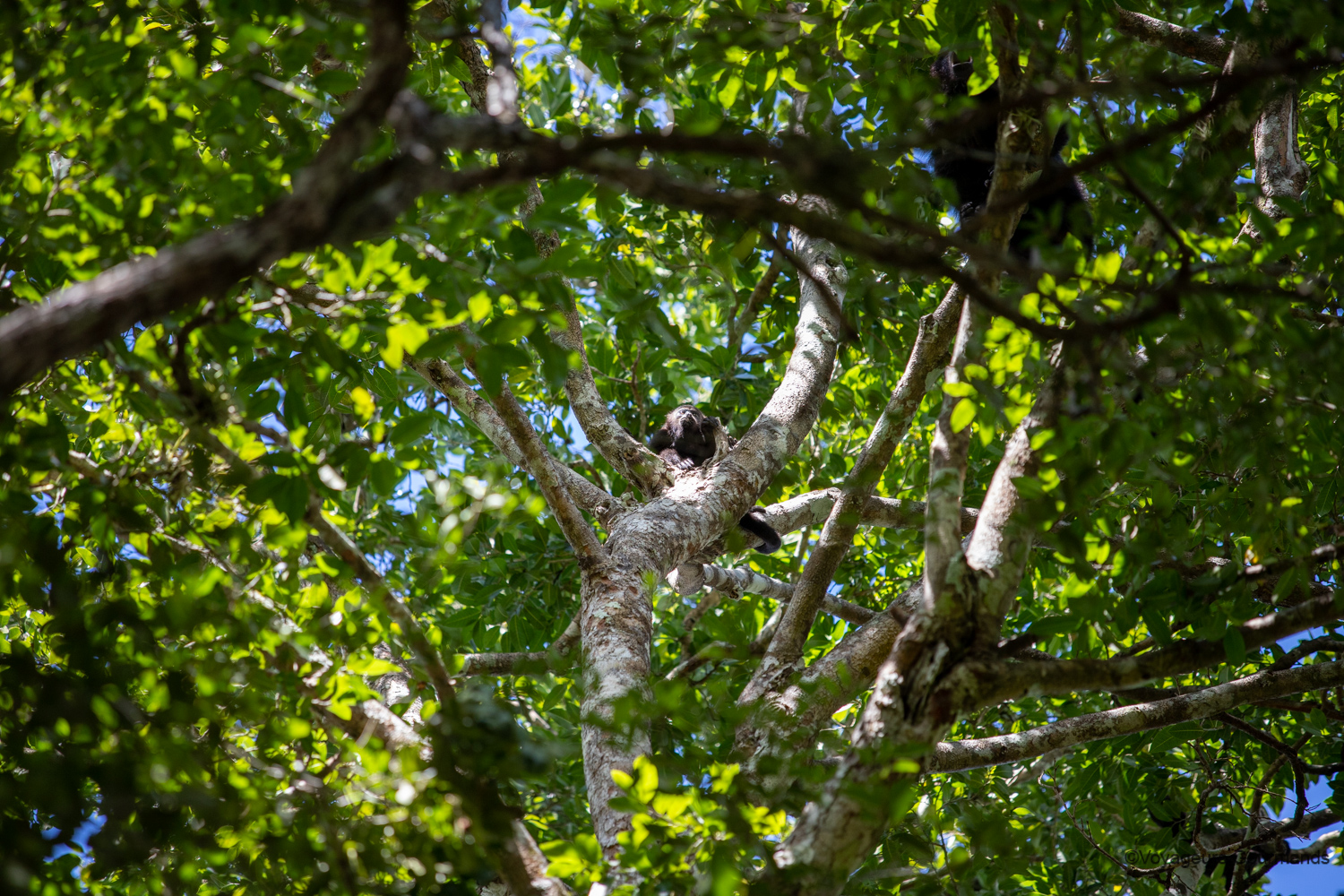
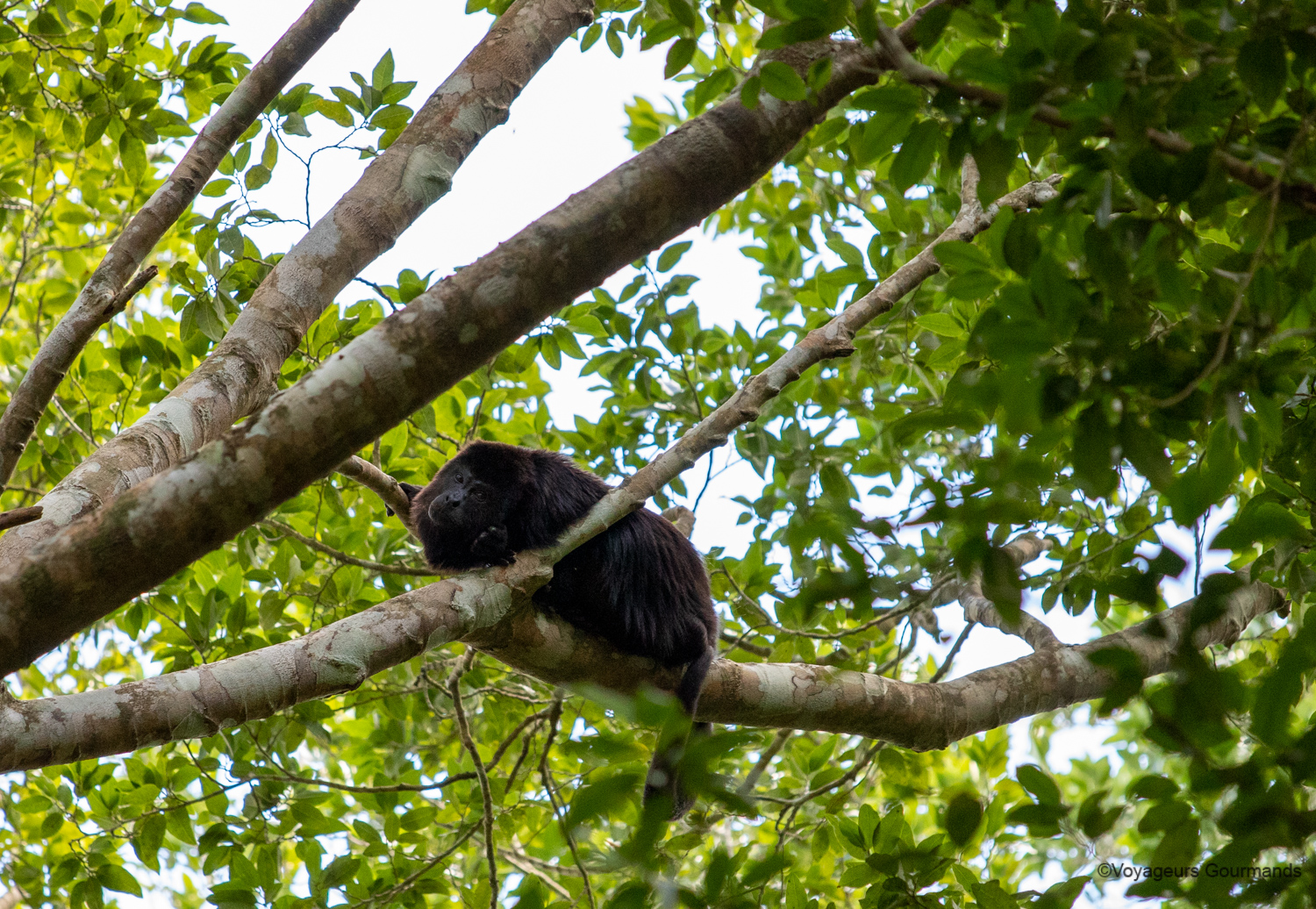
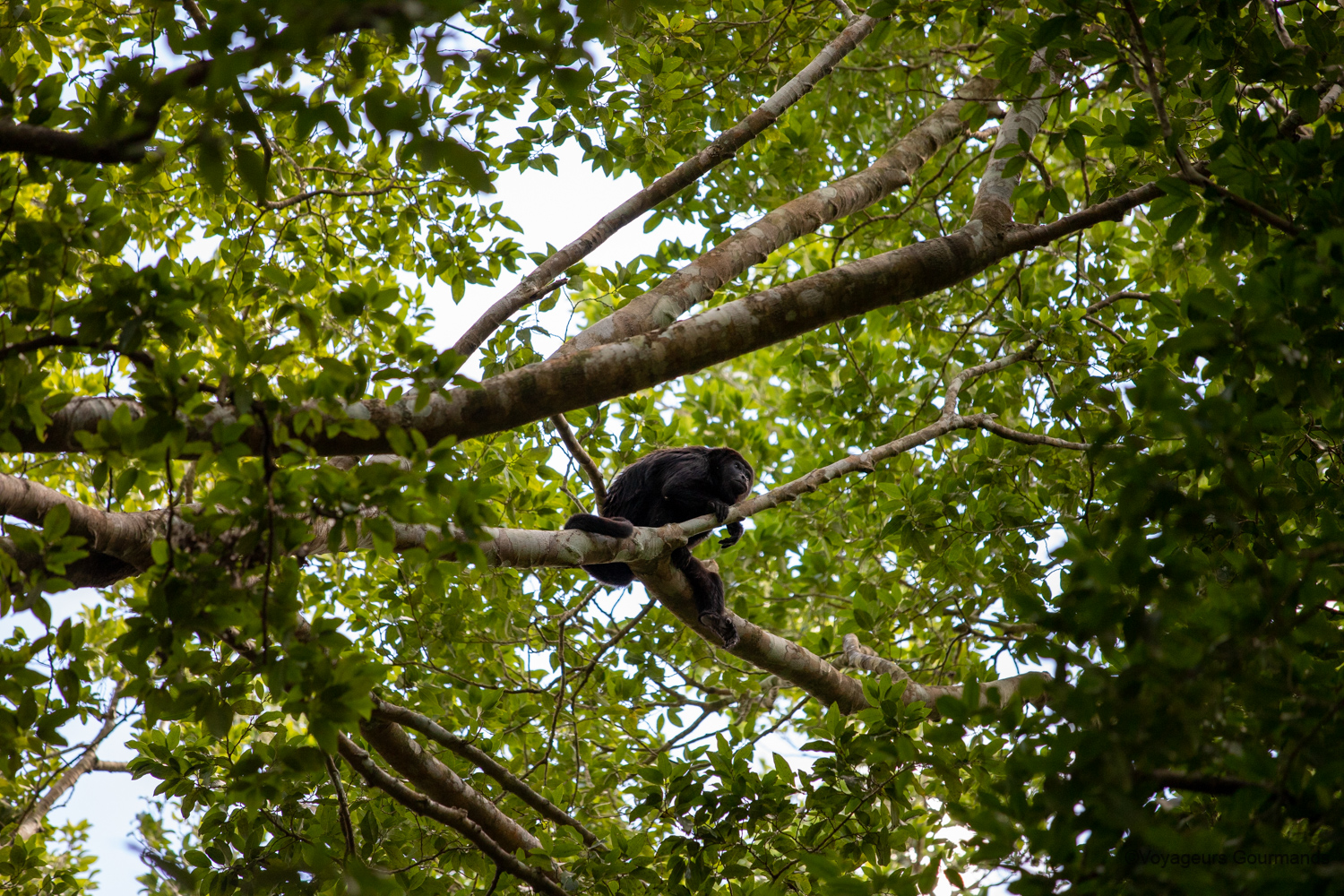
We left the Calakmul reserve starry-eyed… It was hard to tear ourselves away from the howler monkeys, but we had a long drive ahead and another “appointment” before leaving the area! We stumbled upon an unassuming little restaurant on the main road and quickly sat down to eat. It must have been around 3.30pm.
The Calakmul bat cave: an unmissable sight
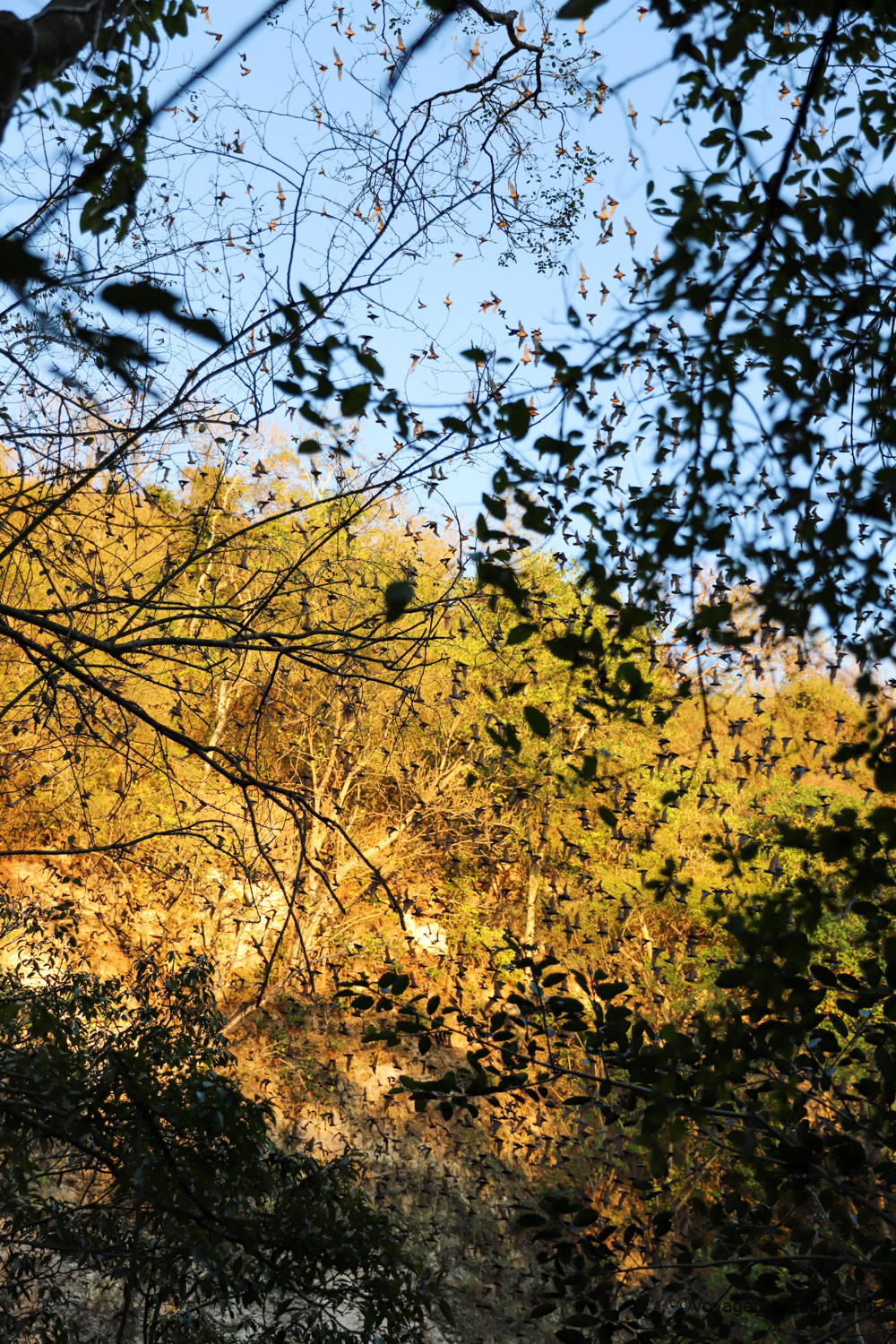
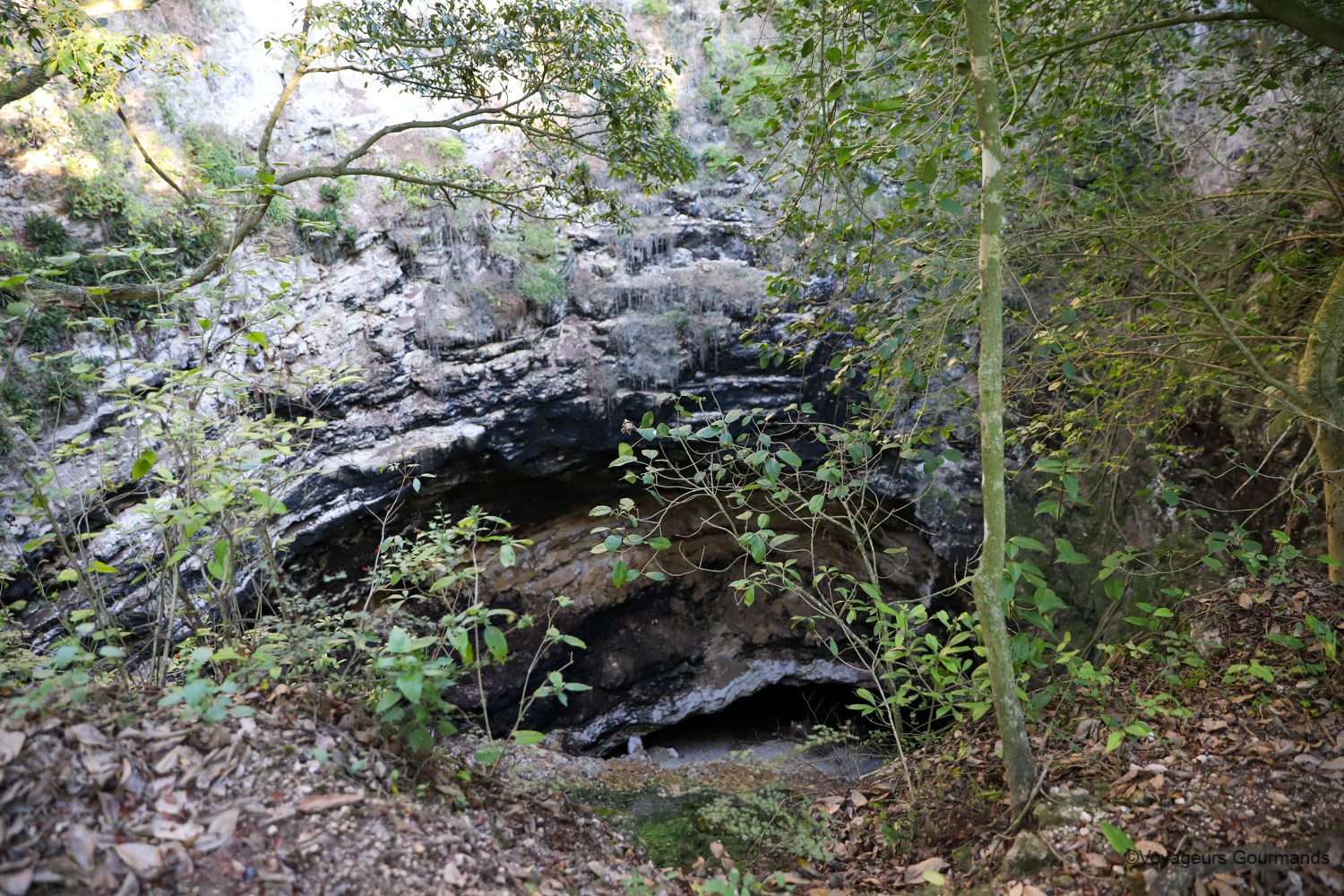
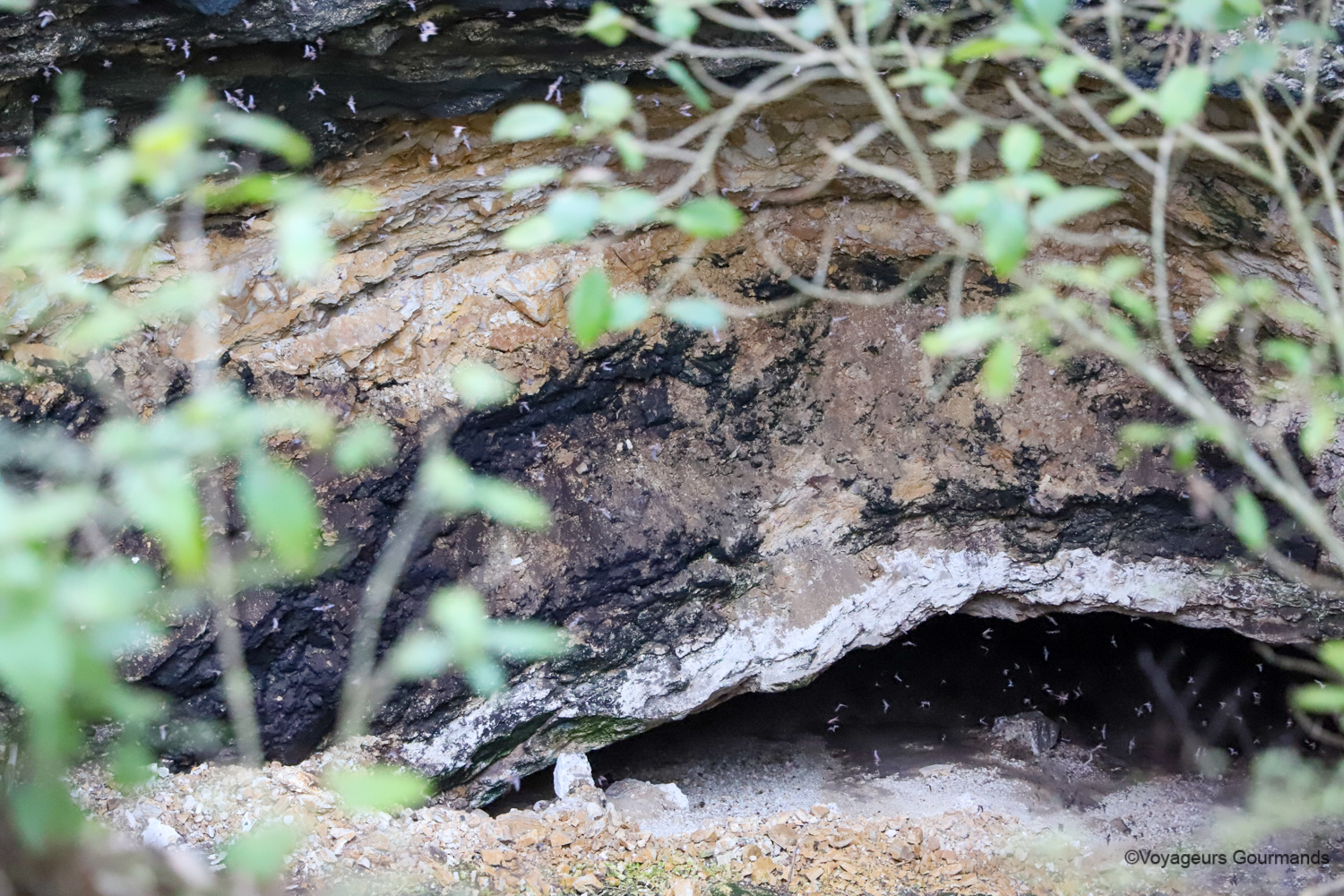
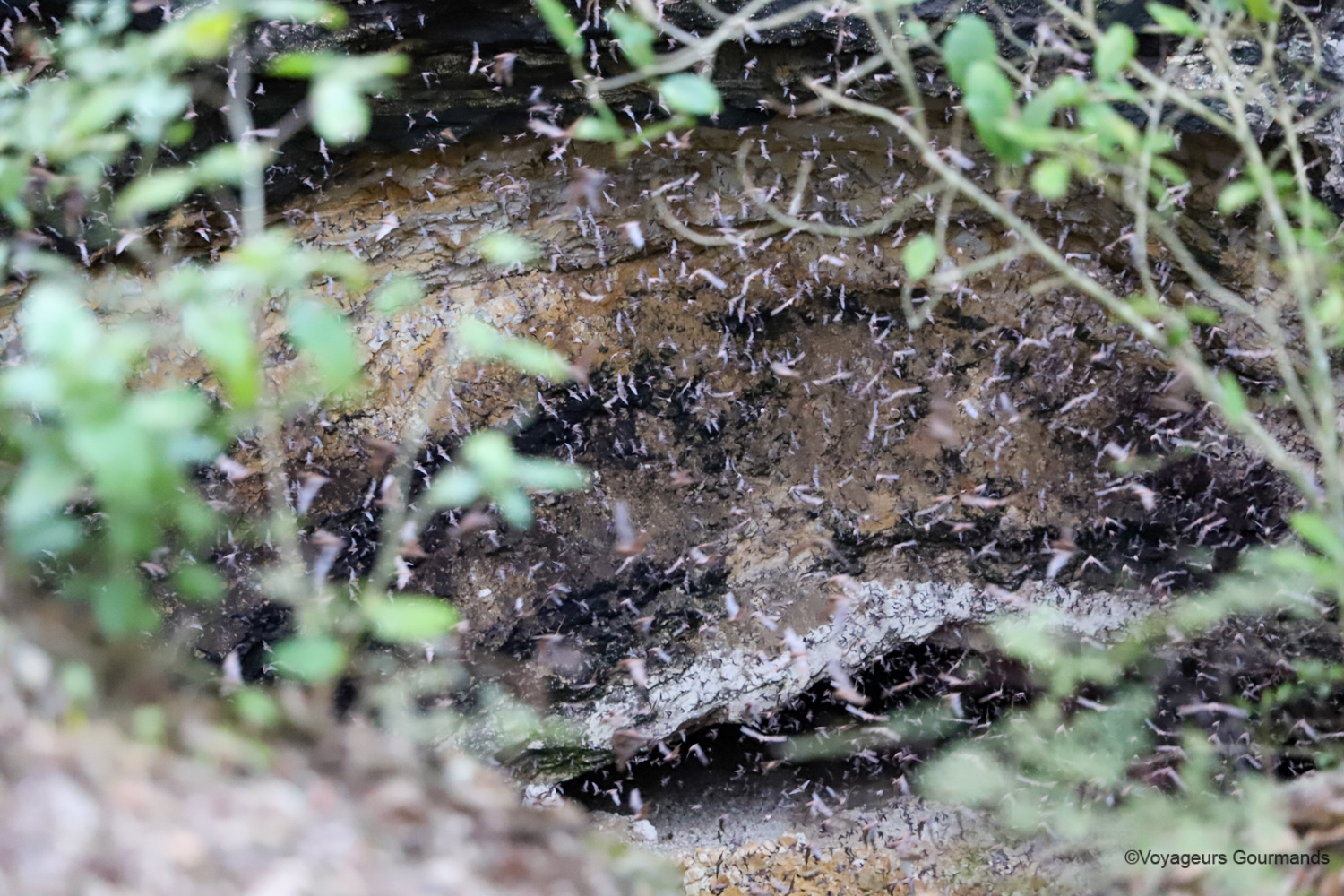
Not far from the reserve, there’s a rather special cave… Every day at around 5pm, thousands of bats pour out of it in a spectacular swarm. Several million bats are said to live inside, and it takes them two to three hours to all come out! This only happens in a handful of places on the planet, so of course we didn’t want to miss it.
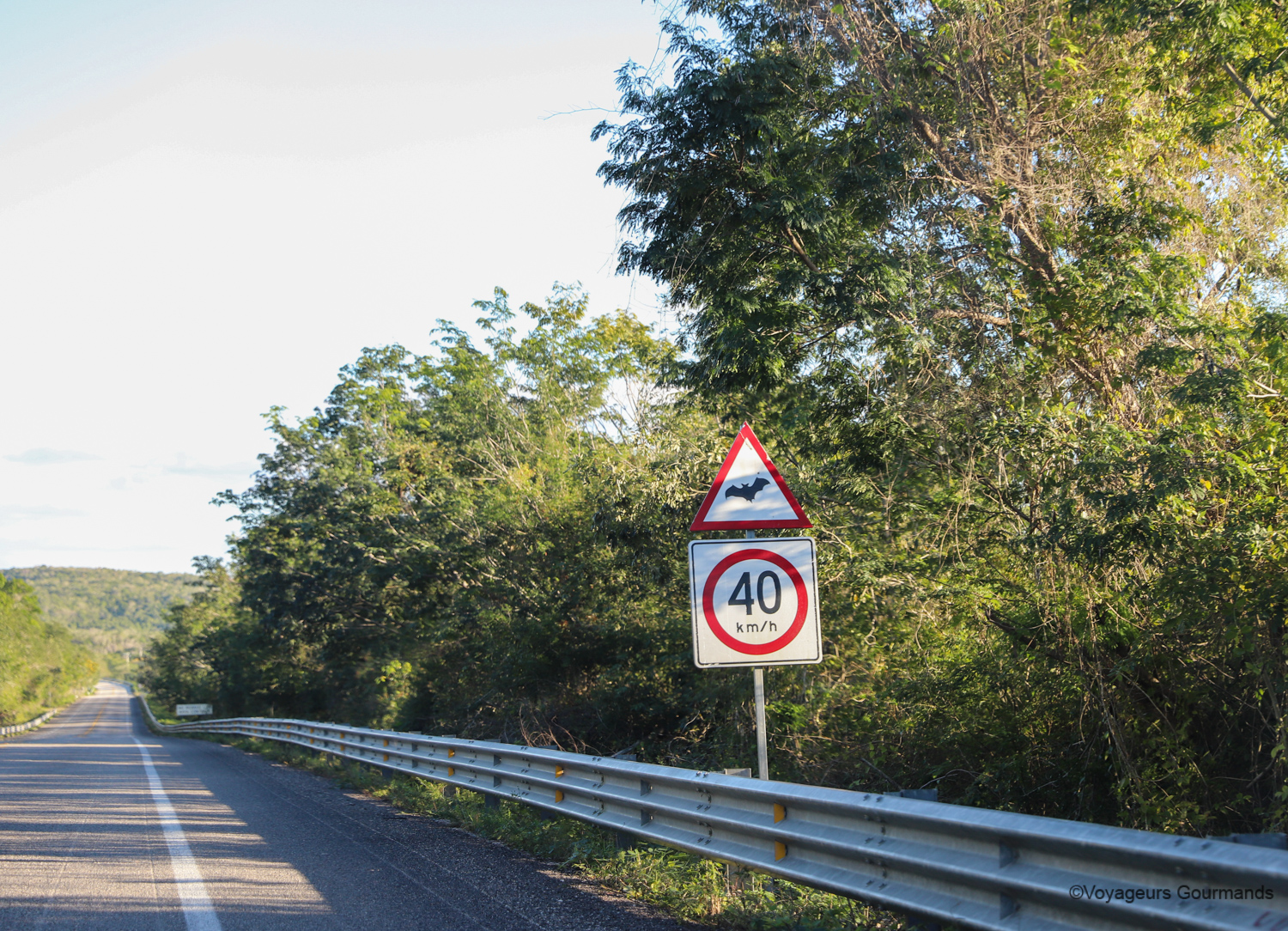
How to find it: when you leave the Calakmul reserve, head towards Bacalar, and at around km 106 there’s a track on the left. We found it straight away, as there were already cars parked along it. There’s also a “bat crossing” warning sign at the bottom of the road that tells you you’re in the right place!
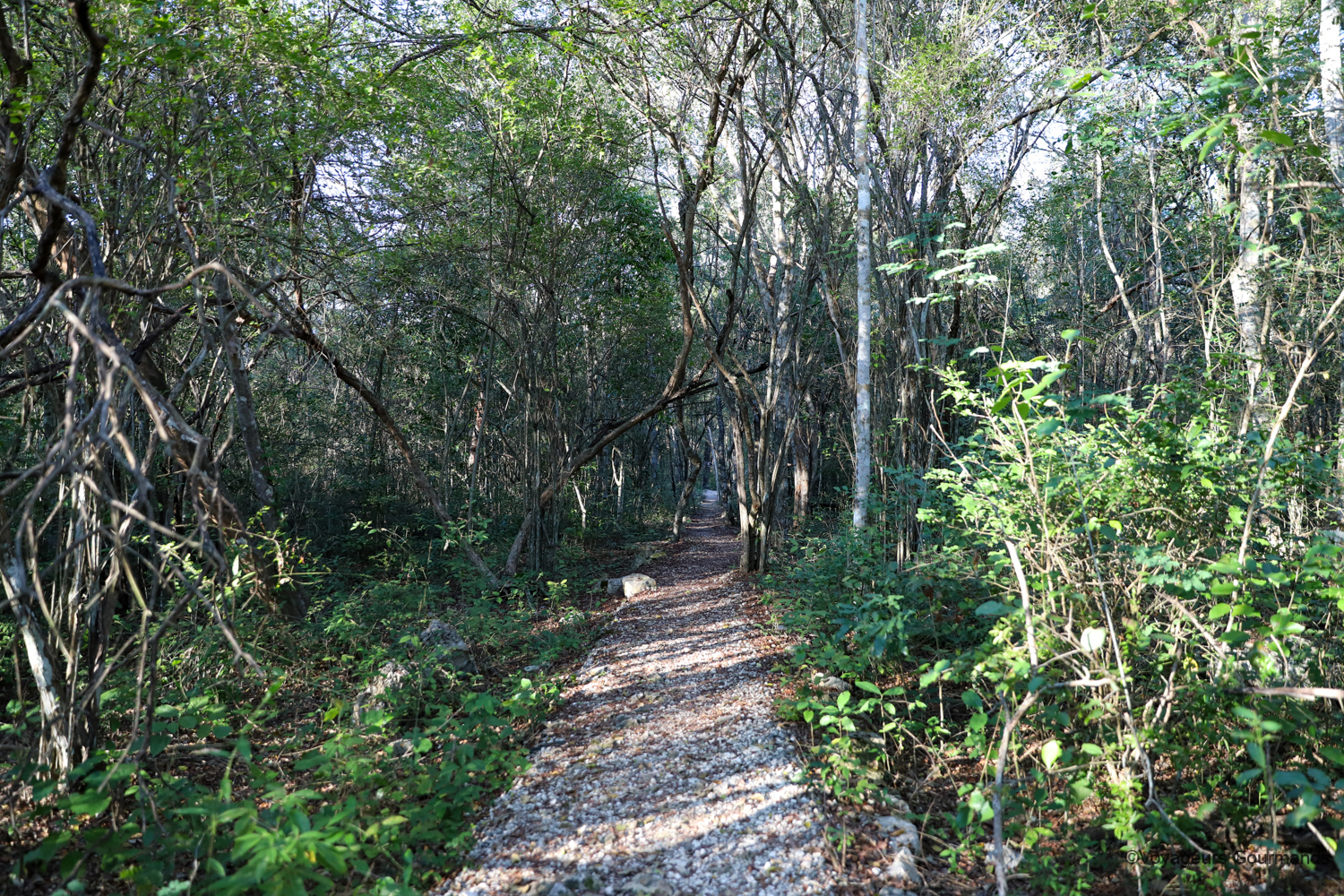
We parked and walked along a small dirt path for 5 to 10 minutes before reaching a sinkhole, with… around twenty people already waiting. We found a spot and waited. As the sun went down, the bats began to emerge one by one, and then thousands of them were swirling in every direction! It was absolutely incredible! The photos really don’t do it justice; these little creatures are very hard to photograph!
➺ Our tip: arrive around 4.30pm to get a good spot, and bring a head torch for the walk back, as night falls very quickly.
After this unforgettable day, we set off for Campeche, but that’s another story…
Where to stay near Calakmul
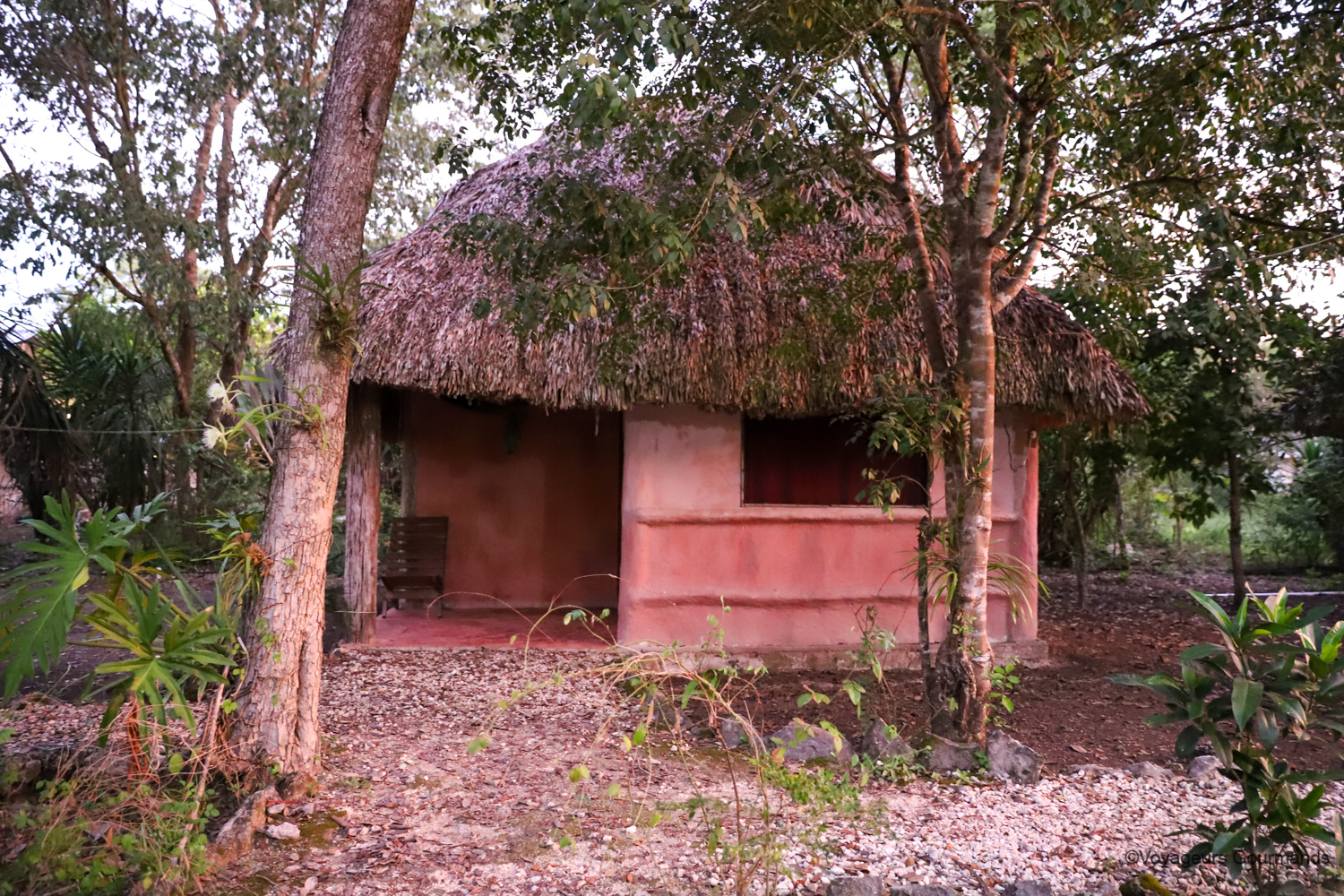
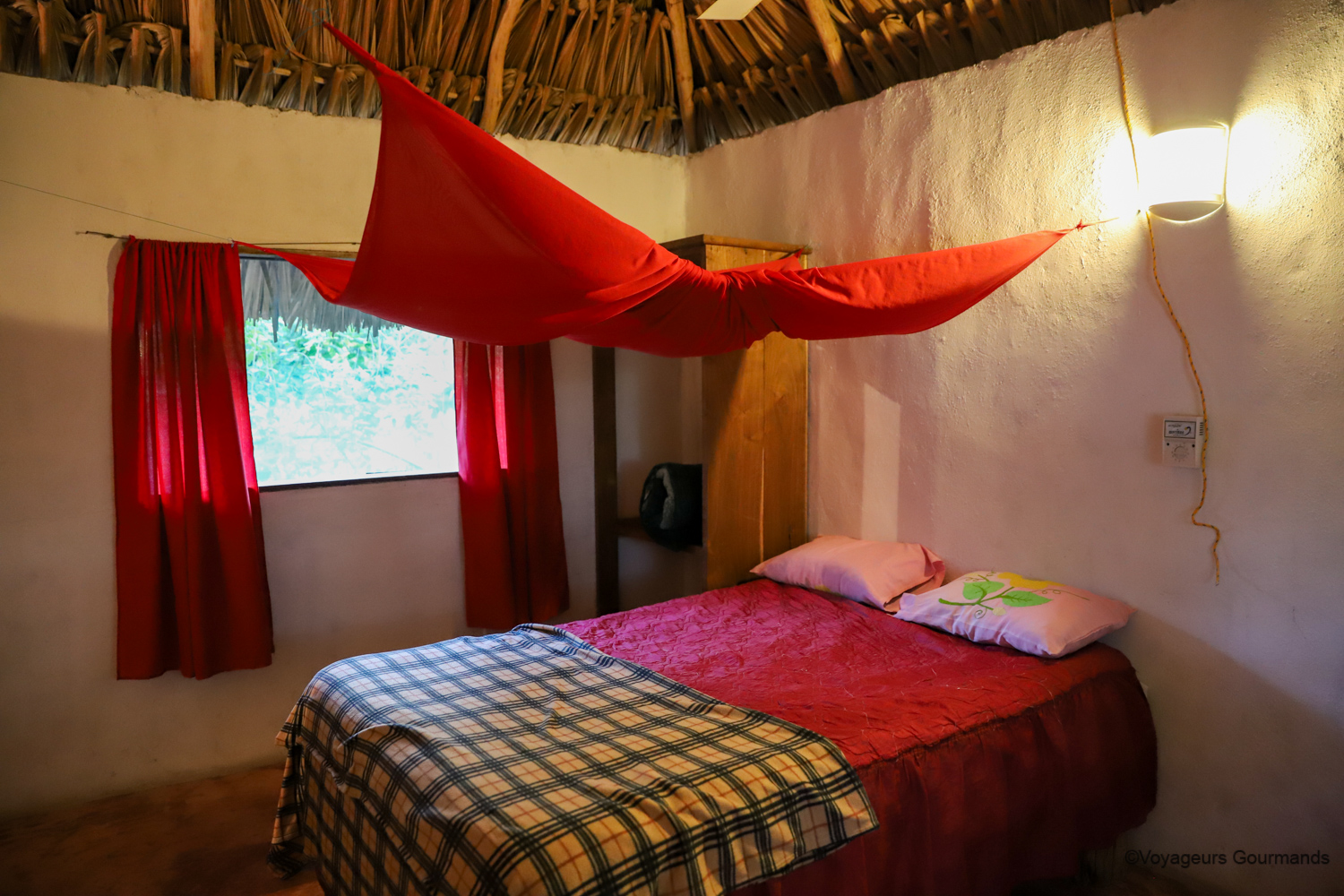
➺ We spent the night in Conhuás, at a place called Cabañas Calakmul: a truly unusual experience! A basic wooden cabin with no windows, but spotlessly clean and with everything you need: a comfy bed, a mosquito net, hot water, and a good restaurant on site as a bonus. Above all, it’s ideally located for visiting the Calakmul reserve, and the owners are lovely. We’d recommend it!
➺ Conhuás or Xpujil? Conhuás is a tiny village right at the turn-off for the ruins: it’s the best choice if you want an early start, saving you 45 minutes of driving in the morning. Xpujil is bigger, with more accommodation and restaurants, plus petrol stations and cash machines. If you’re spending several days in the area to visit a number of sites, Xpujil is more convenient. For a single night before Calakmul, Conhuás wins hands down.
Where to eat near Calakmul
➺ For dinner and breakfast, we ate at our accommodation’s restaurant. Conhuás is a very small place, and although there are other restaurants, we found it much more convenient. Plus, as I mentioned earlier, the owner knows that most guests head off to Calakmul early, so an early breakfast is no problem at all.
➺ For our visit to the reserve, we mainly took water and a few palanquetas, little Yucatecan snacks to nibble on (you can find out more in our article on Mexican food). There’s nothing to buy on site, so bring plenty of water!
➺ We also grabbed a quick meal at a restaurant on the main road after leaving the reserve. By 3.30pm they didn’t have much left; it was fine, nothing more, and I can’t remember the name… Sorry!
Things to do near Calakmul: the Río Bec route
If you’ve come all this way, it would be a shame to leave straight away! The area, known as the Río Bec route, is full of almost deserted Mayan sites, all easy to reach from Highway 186:
➺ Becán: my favourite after Calakmul. A city surrounded by a moat, with towers and vaulted passageways. Really impressive, and often empty.
➺ Chicanná: smaller, but with an extraordinary façade. The entrance to Structure II depicts the open jaws of the god Itzamná. One of the most beautiful sights in the area.
➺ Xpujil: right next to the village, with its three distinctive towers. A short visit (30 minutes), but well worth the stop.
➺ Balamkú: famous for its stucco frieze featuring kings, jaguars and mythical creatures. Access to the frieze is limited, so ask on site.
➺ Hormiguero: harder to reach, but stunning if you really want to get off the beaten track.
➺ And if you’re continuing your journey, Bacalar and its “lagoon of seven colours” are about 3 hours to the east, and Campeche city is 3 hours to the west.
Honestly, the area deserves two nights rather than one: one day for Calakmul, and one day for Becán, Chicanná and Xpujil. We wish we’d known that before we went!
✤✤✤
We didn’t regret a single minute of the long drive to visit Calakmul! The archaeological site is breathtaking, the jungle is dense, and we had some wonderful wildlife encounters. It’s definitely the first memory that comes to mind when we think back on our Yucatán road trip. Had you heard of this site before? Are you unsure whether it’s worth the detour? If you have any questions, leave us a comment – we always reply (well… sometimes a little late, haha!).
Calakmul FAQ: everything you need to know
Click here to see the full FAQ.
How much is the Calakmul entrance fee in 2026?
The fee is split into three separate payments, made at three different checkpoints: access to the biosphere reserve (CONANP), the Conhuás community fee and the archaeological site entrance (INAH). Expect to pay around 500 pesos per person in total (about €25), following INAH’s 2026 price rise. Payment is made on site, in cash only, and there are no cash machines after Xpujil.
Can you visit Calakmul without a tour?
Yes, you can easily visit Calakmul without an organised tour. Most travellers drive there in a hire car from Xpujil or Conhuás. The road is easy but long: after the turn-off at km 97, there are 60 km of narrow road through the jungle. A tour is still the best option if you don’t have a car, as there’s no public transport to the ruins.
What is the best time of day to visit Calakmul?
Early in the morning, as soon as it opens, without a doubt. It’s cooler, the light is beautiful for photos and you’ll have a much better chance of spotting wildlife. Afternoons are very hot and humid, with far less animal activity, and in any case the checkpoints close in the early afternoon.
How long does it take to visit Calakmul?
Allow 4 to 5 hours on site to see everything without rushing, and a full day including the drive. If you add the bat cave at the end of the day, it’s a very full day!
Do you need a guide to visit Calakmul?
A guide isn’t compulsory at the archaeological site, which is easy to explore on your own thanks to the information boards. We went without one. However, if we did it again, we’d probably hire a local guide: it really adds to the visit, as they’ll explain Mayan history and the rivalry with Tikal, and help you spot wildlife in the jungle. Note that a certified guide is compulsory for the reserve’s nature trails.
When is the best time of year to visit Calakmul?
The dry season, from December to May, is the most comfortable: less rain, less mud on the road and fewer mosquitoes. The rainy season, from June to November, makes the jungle greener and more alive, but downpours can make access to the reserve more difficult.
Can you see jaguars at Calakmul?
The reserve is home to jaguars, but sightings are extremely rare: we didn’t see one, and neither do most visitors. On the other hand, howler monkeys, spider monkeys, toucans, ocellated turkeys and coatis are much easier to spot, especially early in the morning.
What should you bring to Calakmul?
Plenty of water, as there’s nothing to buy on site, mosquito repellent, sun cream, a cap, good walking shoes, light clothing that covers your skin to protect against bites, and above all cash to pay at the three checkpoints. Bring a head torch too if you’re heading to the bat cave afterwards.