


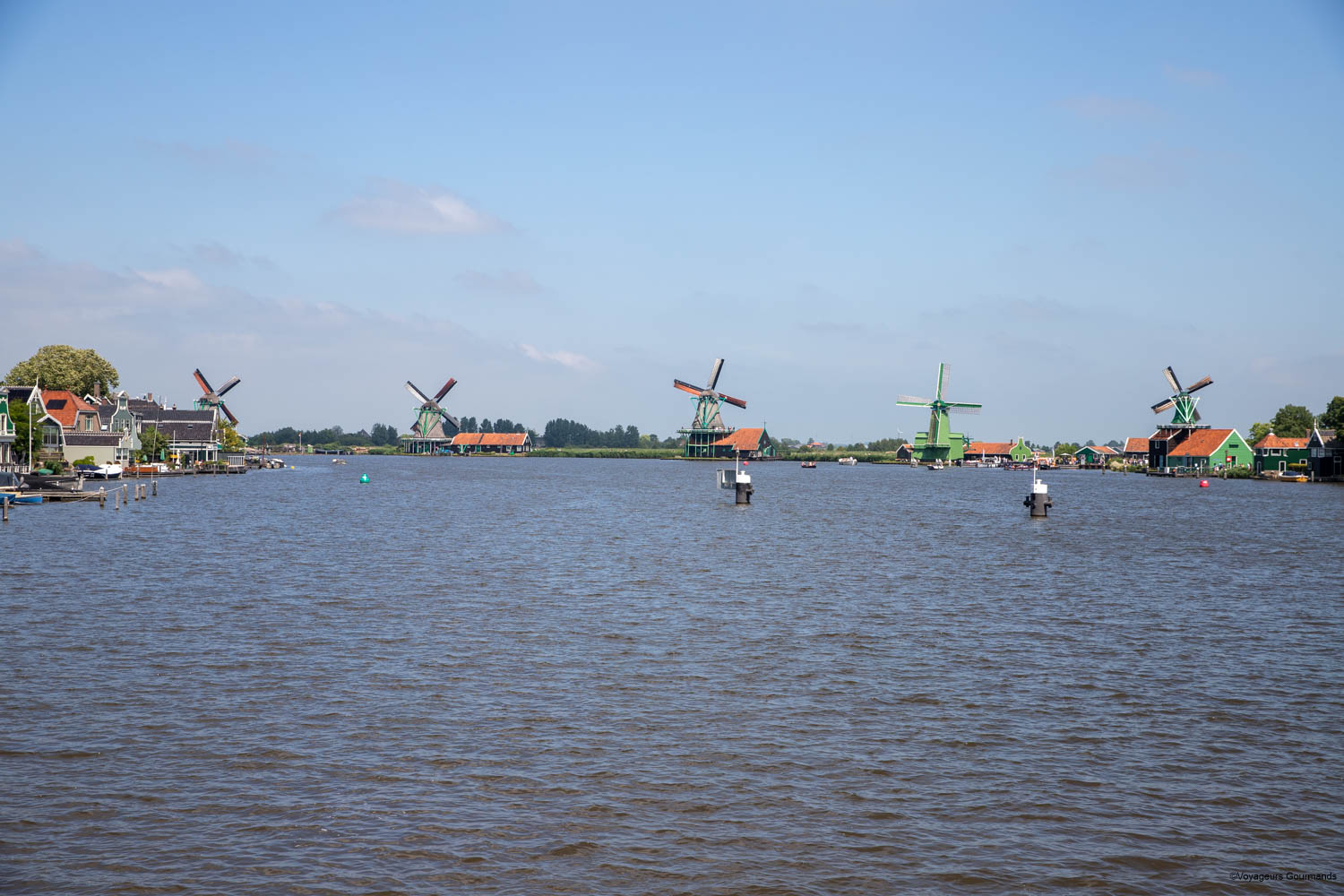
Just about thirty minutes from Amsterdam lies one of the most iconic landscapes in the Netherlands: Zaanse Schans. With its wooden houses, waterfront windmills, and artisan workshops, the site almost looks like a Dutch postcard.
Yet reducing Zaanse Schans to its famous windmills would mean missing the point. Contrary to what you might think, it is neither a village frozen in time nor a classic open-air museum: it is a hybrid place, where some houses are still inhabited by real residents while others are home to museums, workshops, and shops. A truly living heritage site, where the windmills still turn, where artisans work before your eyes, and where the products that come out of them — oil, pigments, cookies, chocolate — are still made today, exactly as they were a century ago. Behind this picture-perfect image lies a genuine testimony to the industrial past of the Zaan region, once one of the most prosperous areas in the Netherlands thanks to its many windmills.
In this guide, you’ll find all our tips for visiting Zaanse Schans: what to see, how much time to allow, which windmills to visit, which experiences not to miss, and all the practical information you need to organize your day trip from Amsterdam.
✤✤✤
Our itinerary
After two days spent in Haarlem (also read our article: Visiting Haarlem), we reached Zaandam in the late afternoon.
First stop: dinner at Verrassing aan de Zaan, before heading to our room at the Inntel Hotel, the city’s iconic hotel.
Zaandam turned out to be an excellent base for visiting Zaanse Schans the next morning, just a few minutes away — a full day devoted to windmills, museums, and all the gourmet experiences that make the region so rich.
Find out everything about Zaandam by clicking here.
Why visit Zaanse Schans?
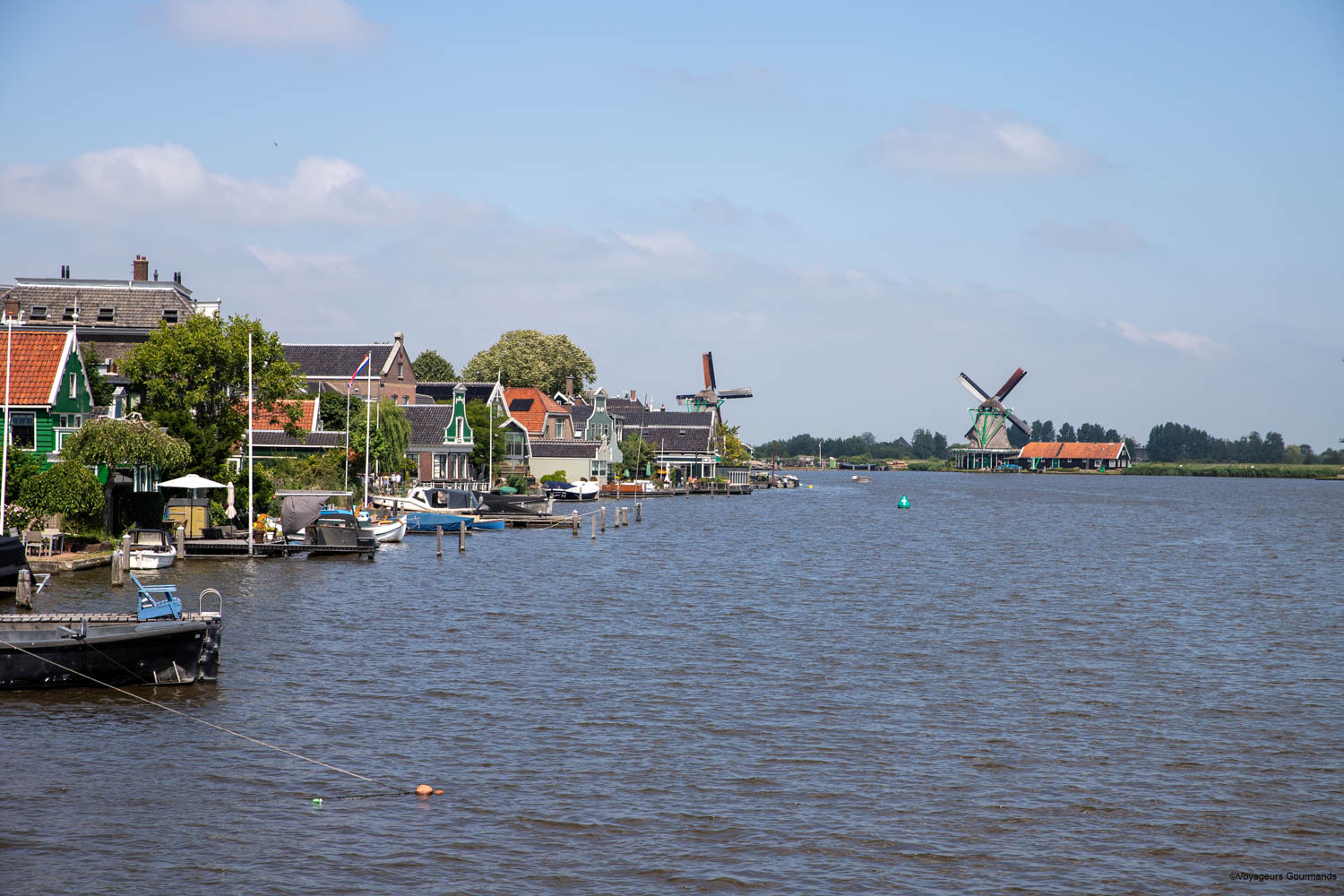
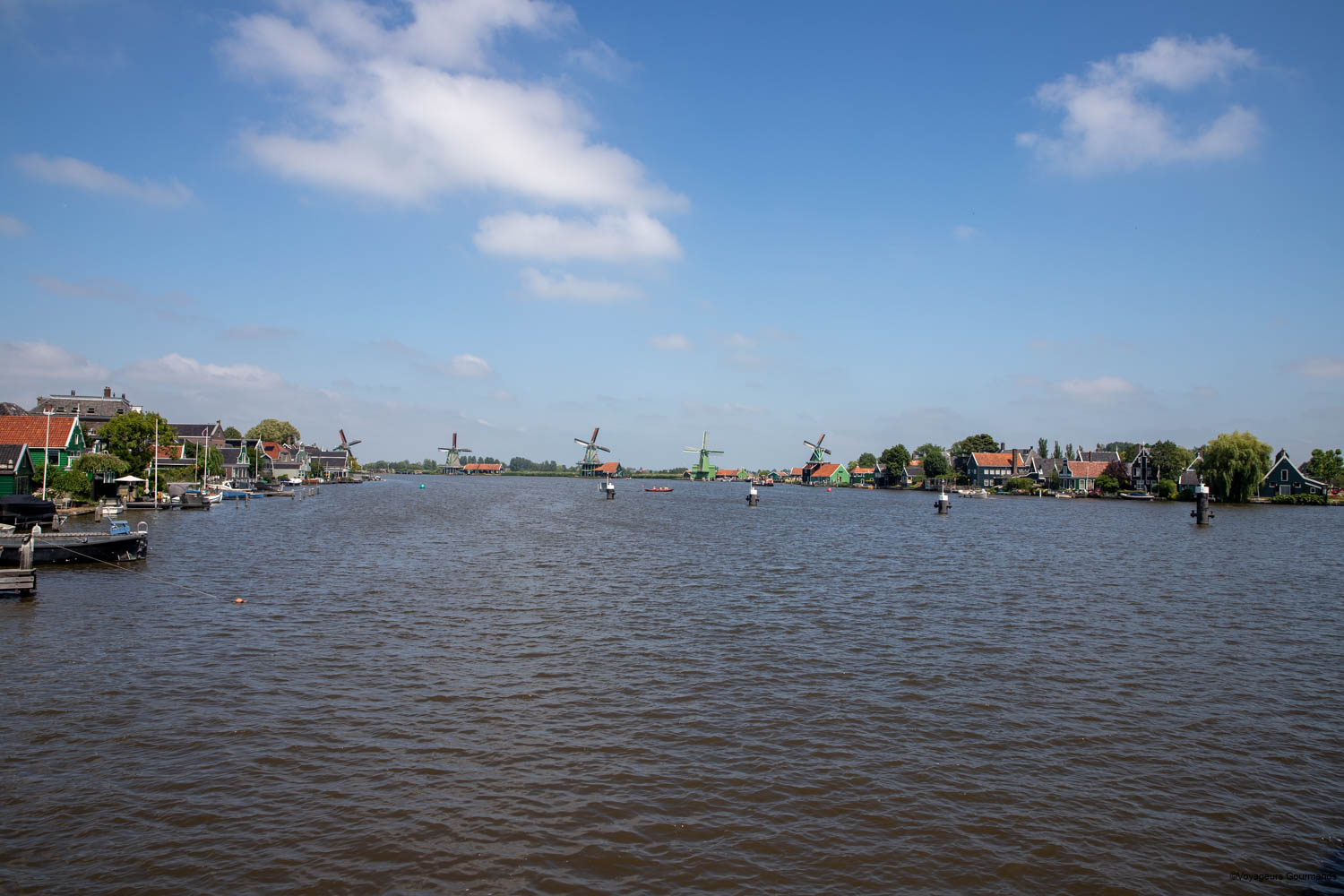
In practical terms, this museum village is a historic ensemble created from 1961 onward, when houses, barns, and windmills threatened with disappearance were brought together here, moved from across the Zaan region. This explains why today you can walk around freely, enter certain buildings, and understand how these places used to work — and still do.
Above all, the site offers a chance to discover the history of the Zaan region, one of Europe’s first industrial areas: between the 17th and 19th centuries, up to 600 windmills operated here to process wood, oil, spices, pigments, or flour. Zaanse Schans is also part of the municipality of Zaanstad, which includes Zaandam and the village of Zaandijk as well: it is hard to fully understand the place without, at some point, also setting foot in its immediate surroundings.
Finally, it is a very easy day trip to organize from Amsterdam: in under an hour, you can leave behind the bustle of the Dutch capital and find yourself in a much calmer landscape, between river, pastures, and traditional houses — while enjoying a series of experiences, from windmills and museums to gourmet workshops.
How much time should you allow to visit Zaanse Schans?
The ideal amount of time mainly depends on what you want to discover. If your goal is simply to see the famous windmills and enjoy the setting, 1.5 to 2 hours may be enough. You’ll have time to walk along the river, take a few photos, and see the main buildings. However, in our opinion, it would be a shame to come all this way only for a quick stroll.
To fully enjoy Zaanse Schans, we recommend allowing half a day instead. That’s the ideal amount of time to:
- visit one or two windmills;
- discover the Zaans Museum and the Verkade Experience;
- watch artisans at work;
- take part in a gourmet experience;
- have lunch on-site or nearby.
Honestly, you could even spend a full day visiting Zaanse Schans: between the windmills, the two museums, the artisan workshops, and the gourmet breaks, there is more than enough to fill a day on-site without ever going in circles.
Our suggested half-day itinerary in Zaanse Schans:
Start with the Albert Heijn museum, then continue with the Zaans Museum and the Verkade Experience before visiting a windmill — this is the most logical sequence geographically, and it leaves you the morning for the paid visits. Then take a lunch break at a local brewery, before devoting your afternoon to the artisan workshops, a walk around the site, and the final viewpoints over the windmills.
What are the must-sees in Zaanse Schans?
Even though the site is relatively compact, there is ultimately much more to see than you might imagine. Here are the essentials not to miss when visiting Zaanse Schans.
The windmills of Zaanse Schans
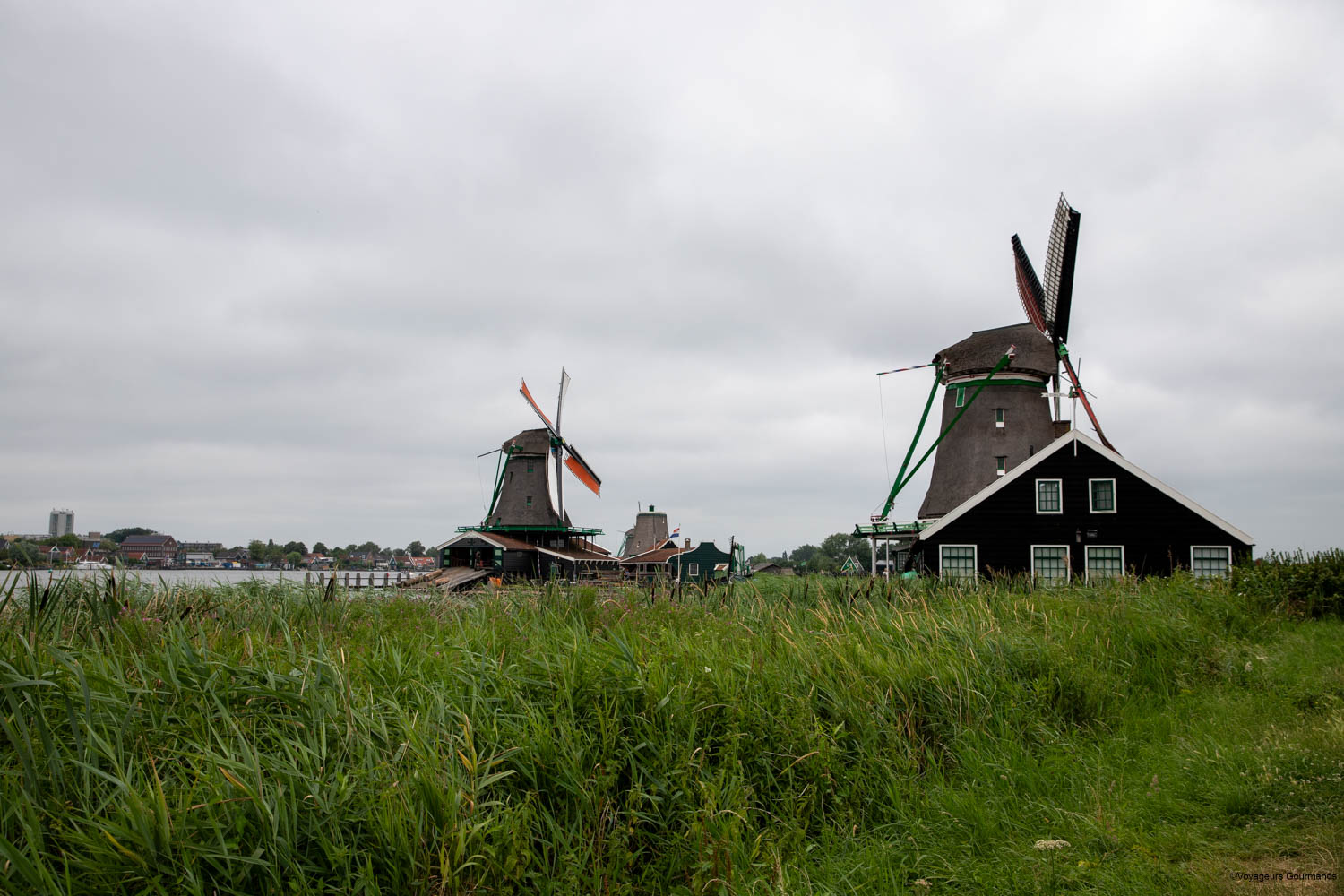
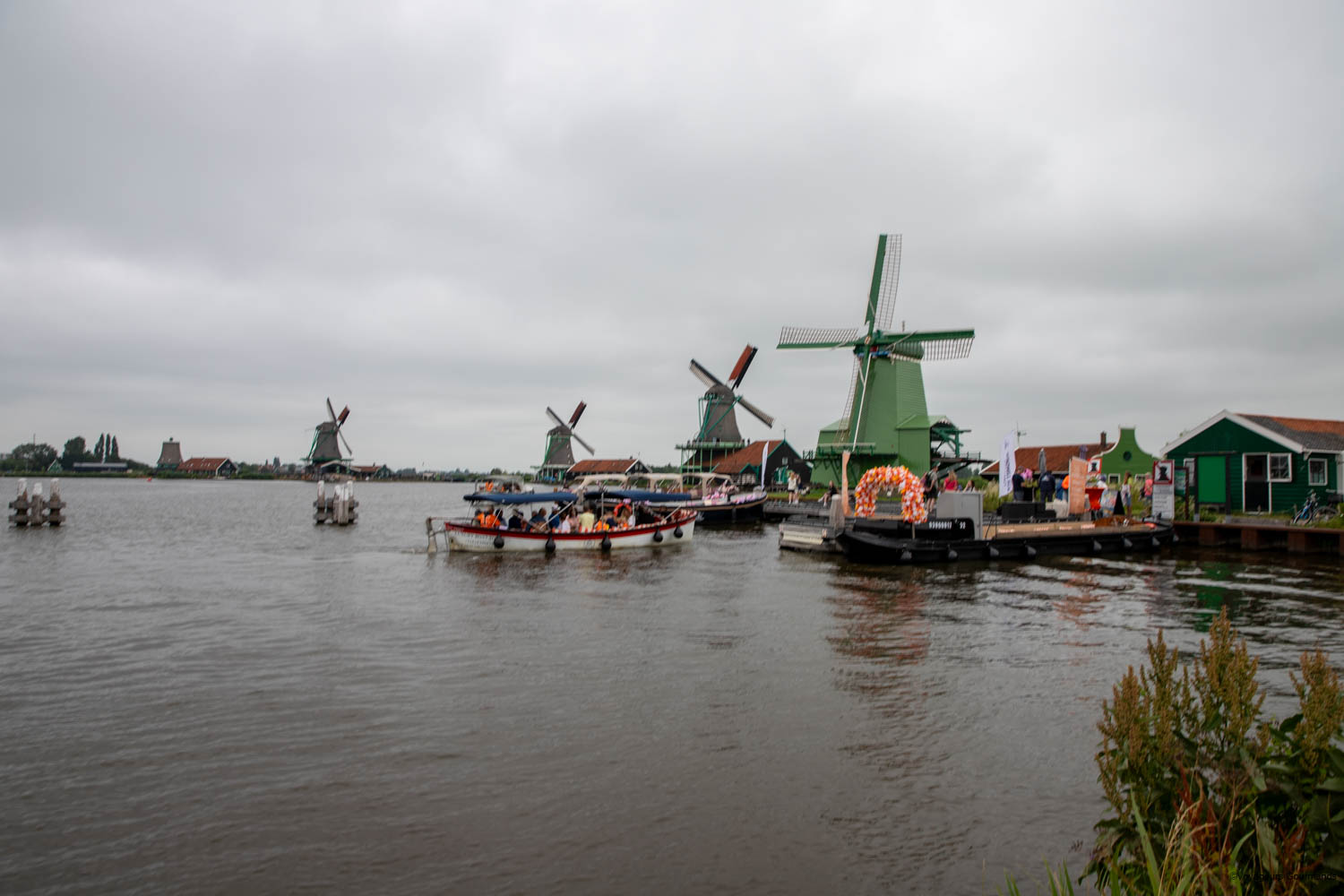
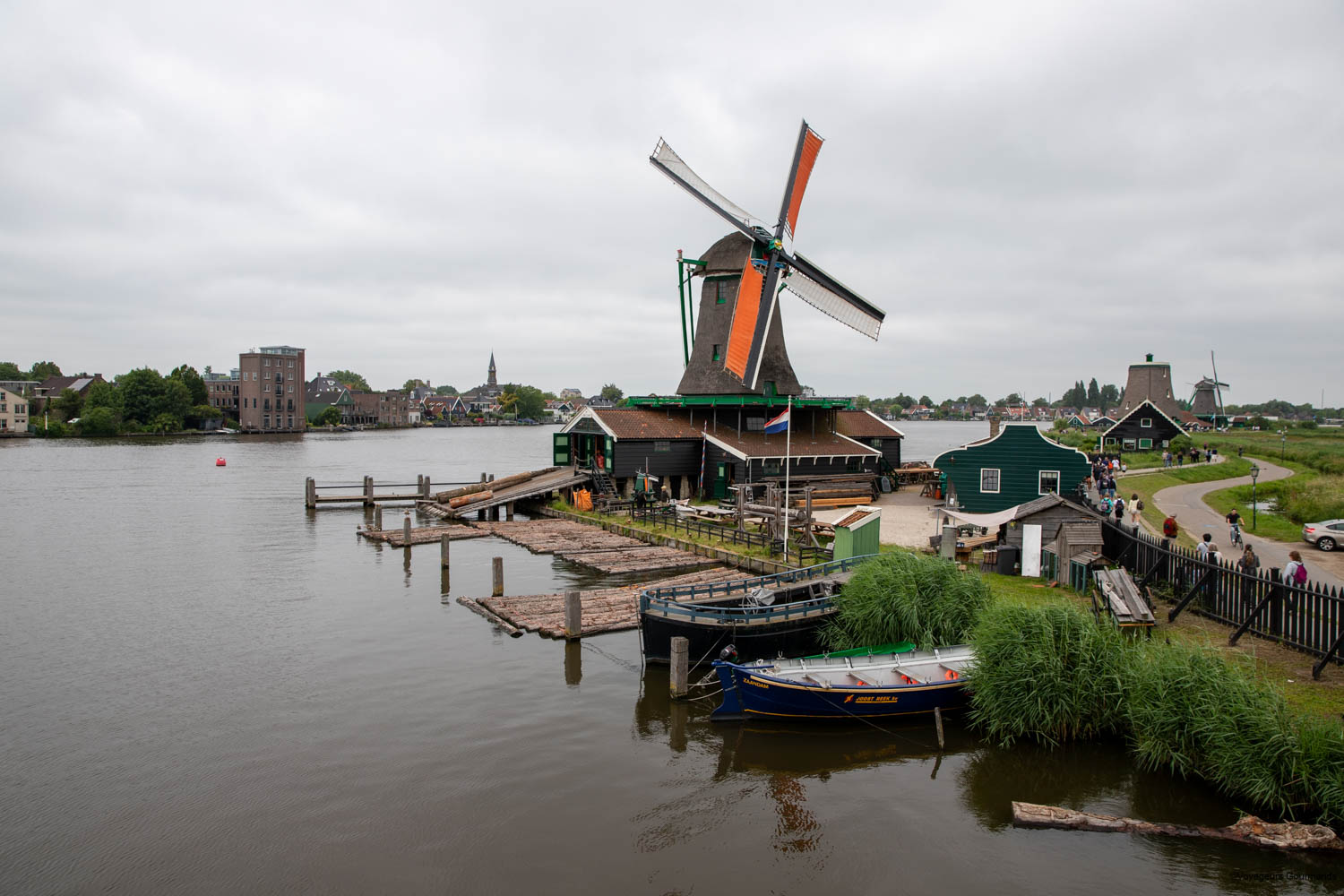
It is hard to imagine a visit to Zaanse Schans without talking about the windmills. They are obviously the site’s main attraction and offer the typically Dutch landscape that many visitors come looking for. But they are not merely decorative: they bear witness to a time when the Zaan region was a true economic powerhouse thanks to wind energy, with windmills used to saw wood for shipbuilding, produce vegetable oil, make pigments for paint, or process many other raw materials.
Today, several windmills are still in operation and some can be visited — this is actually one of the great appeals of Zaanse Schans: being able to step inside these historic buildings and observe the mechanisms still in motion. They do not all serve the same purpose, and if you are short on time, there is no need to try to visit them all: it is better to choose one or two to understand how they work.
Molen De Zoeker: an oil mill still in operation
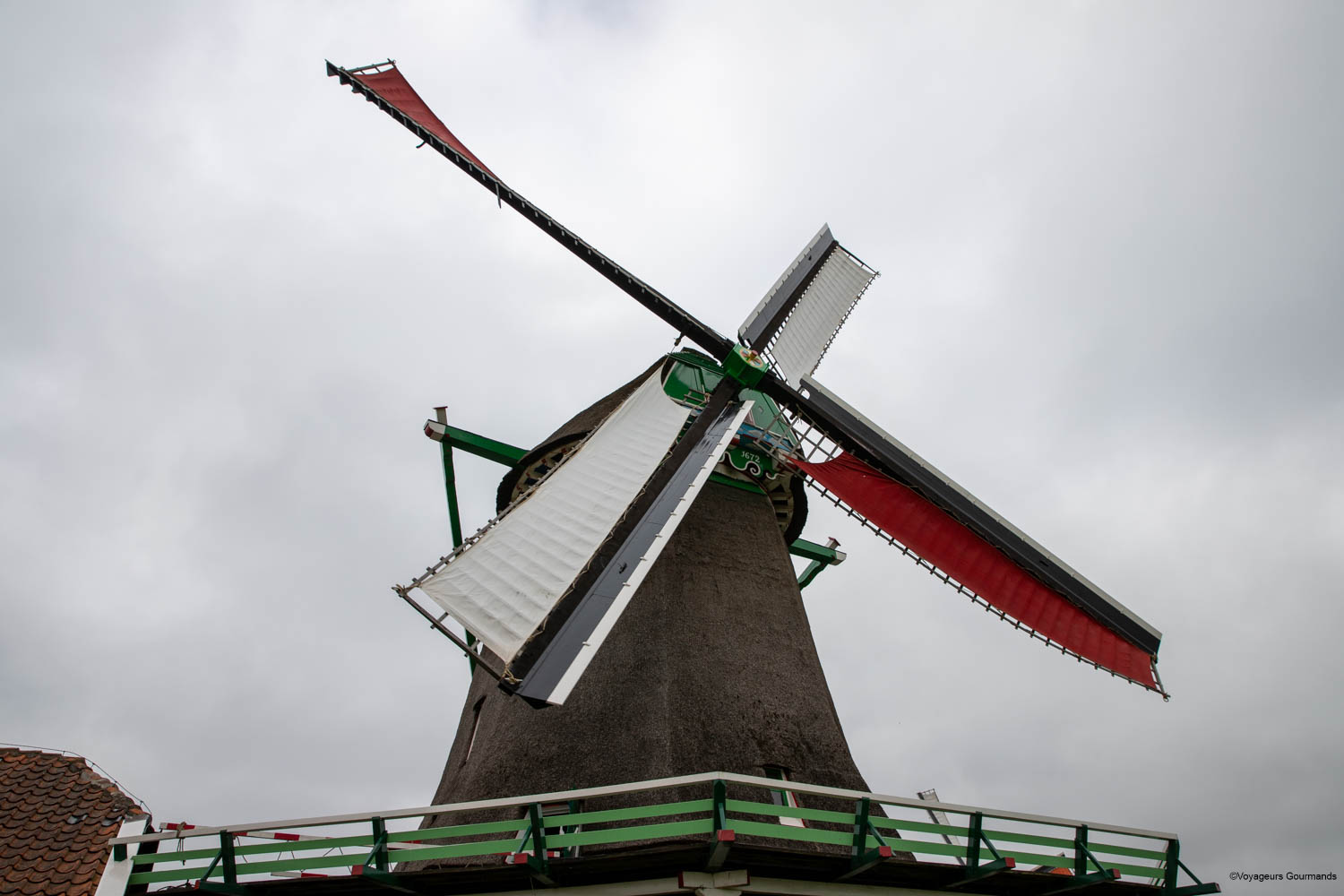
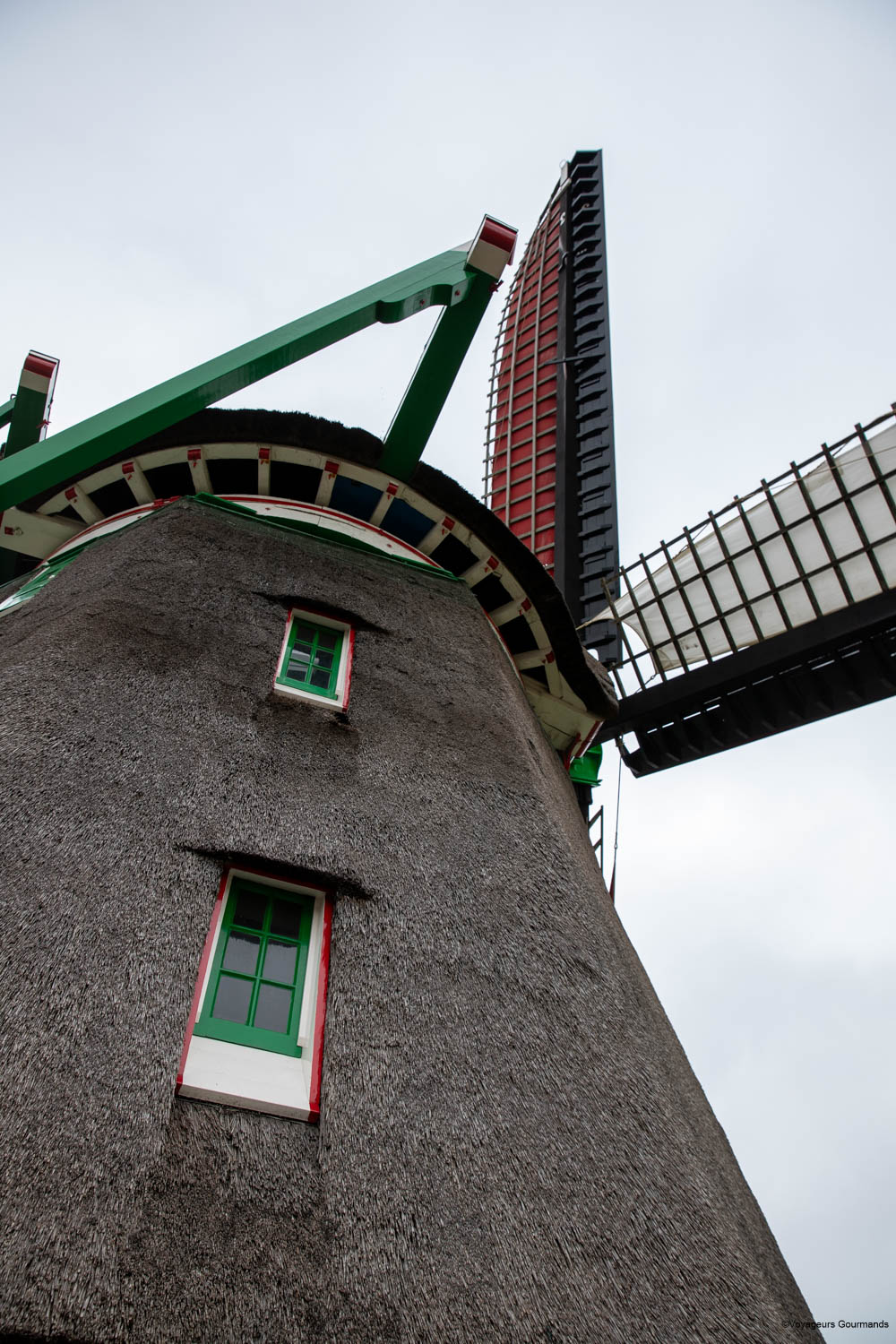
Among the visits we enjoyed the most, De Zoeker is definitely one of them, a windmill built in 1672 that still produces oil today using wind power.
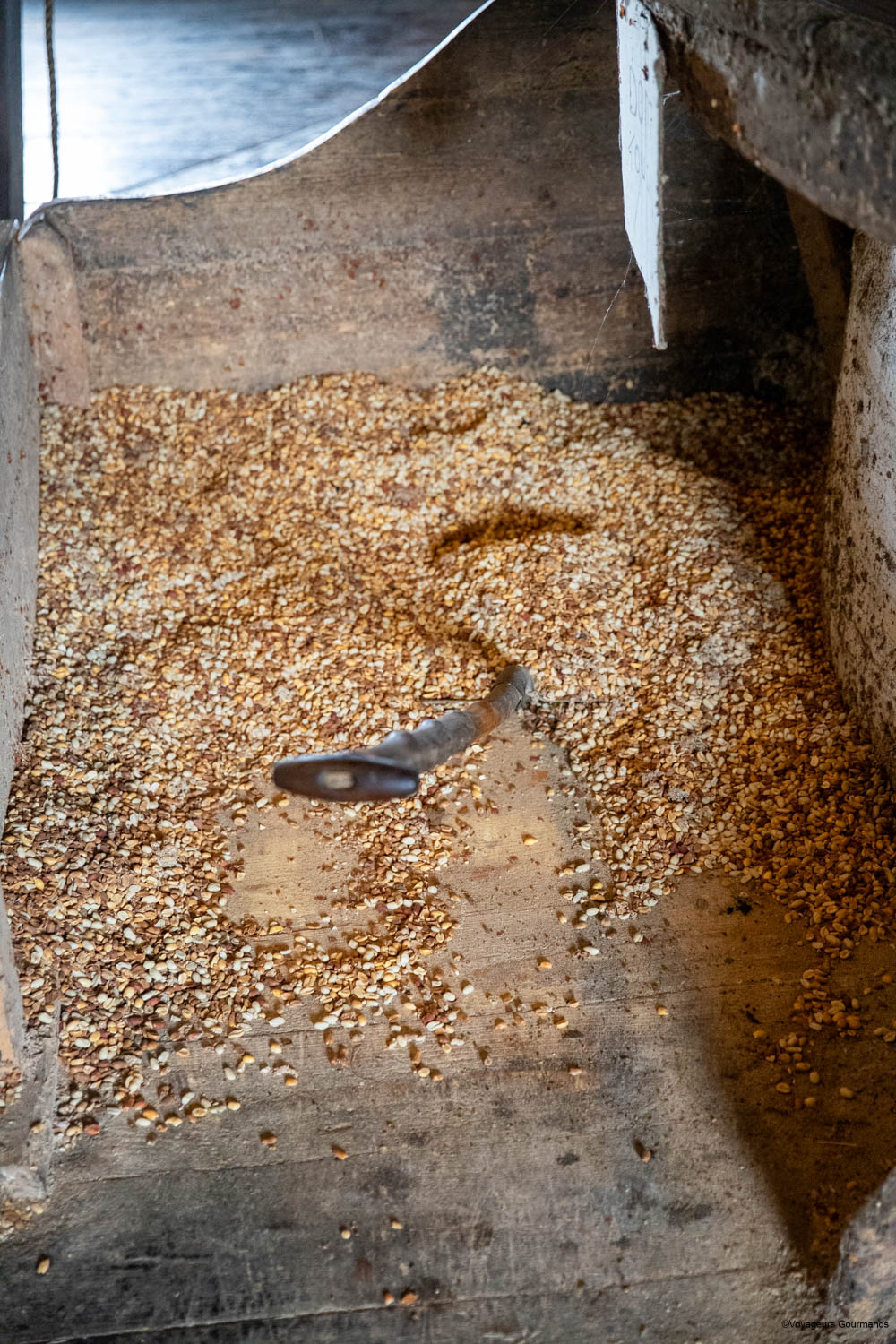
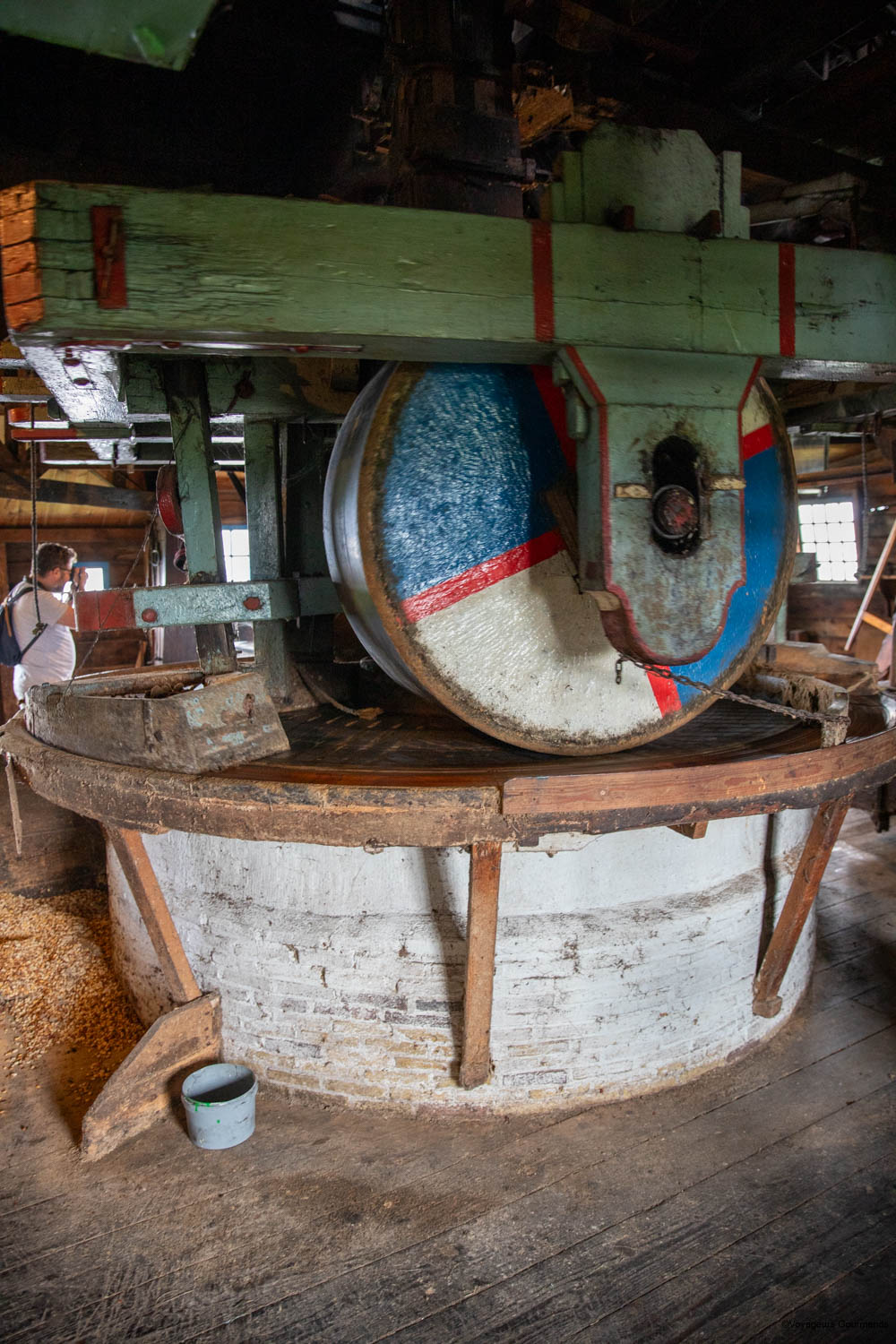
Inside, the visit reveals all the wooden mechanics that drive the different presses. In practical terms, the peanuts are first crushed and then heated, before being wrapped in fiber mats and pressed under high pressure to extract a clear oil capable of withstanding heat. The gears turn above your head, the windmill creaks in the wind, and you quickly understand just how much these installations were true technical feats for their time.
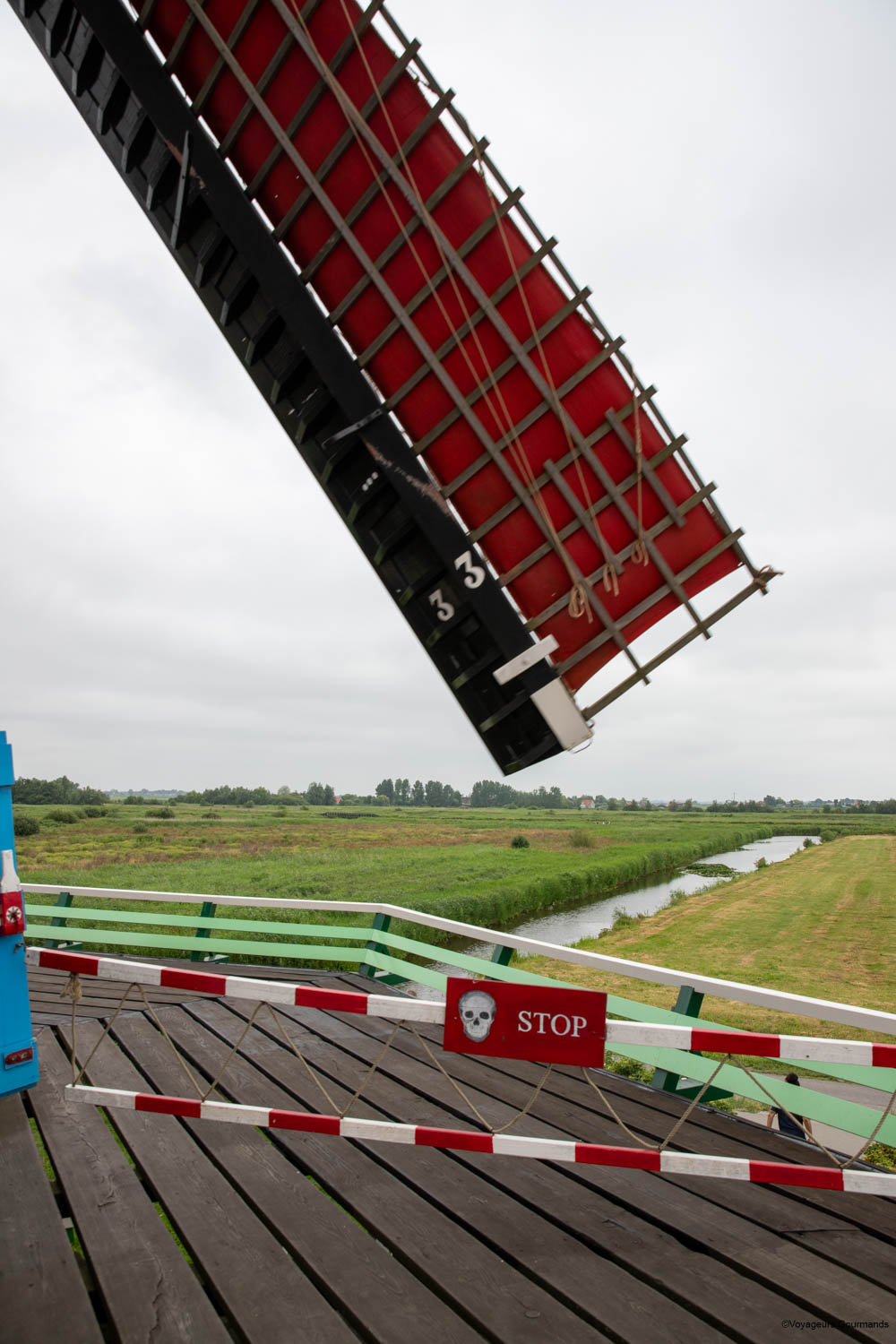
Don’t miss going up to the roof of the windmill: the panorama over Zaanse Schans and the Zaan River is especially beautiful, and it is one more good reason to visit this windmill rather than another if you have to choose. At the end of the visit, you are given a small bottle of peanut oil as a souvenir — a lovely local product to take home.
Other windmills to discover
Depending on how much time you have, several other windmills are also worth visiting:
- De Kat, the last pigment mill still in operation in the world. It produces natural pigments used for paint.
- Het Jonge Schaap, a former sawmill that shows how planks were cut using wind energy.
- De Bonte Hen, specialized in oil production.
- De Huisman, dedicated to grinding spices.
Even without going inside, taking the time to walk around the windmills lets you admire some of the most beautiful landscapes in Zaanse Schans.
The Zaans Museum and the Verkade Experience: much more than just a museum
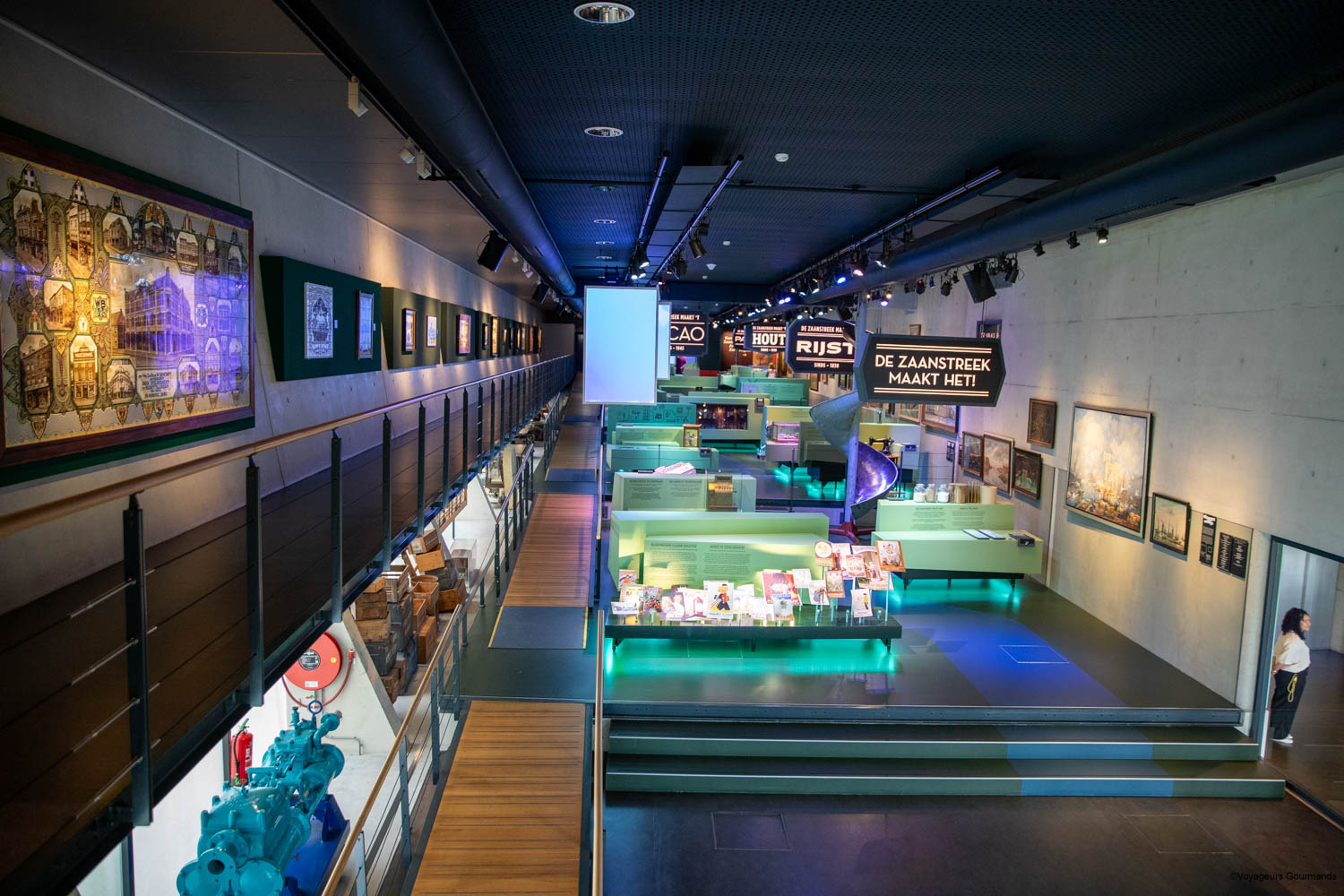
If you were to visit only one museum on-site, we would definitely recommend the Zaans Museum. It helps explain why this region played such an important role in the economic development of the Netherlands: through the permanent collections, you discover local industries, historic trades, traditions, and the daily life of residents.
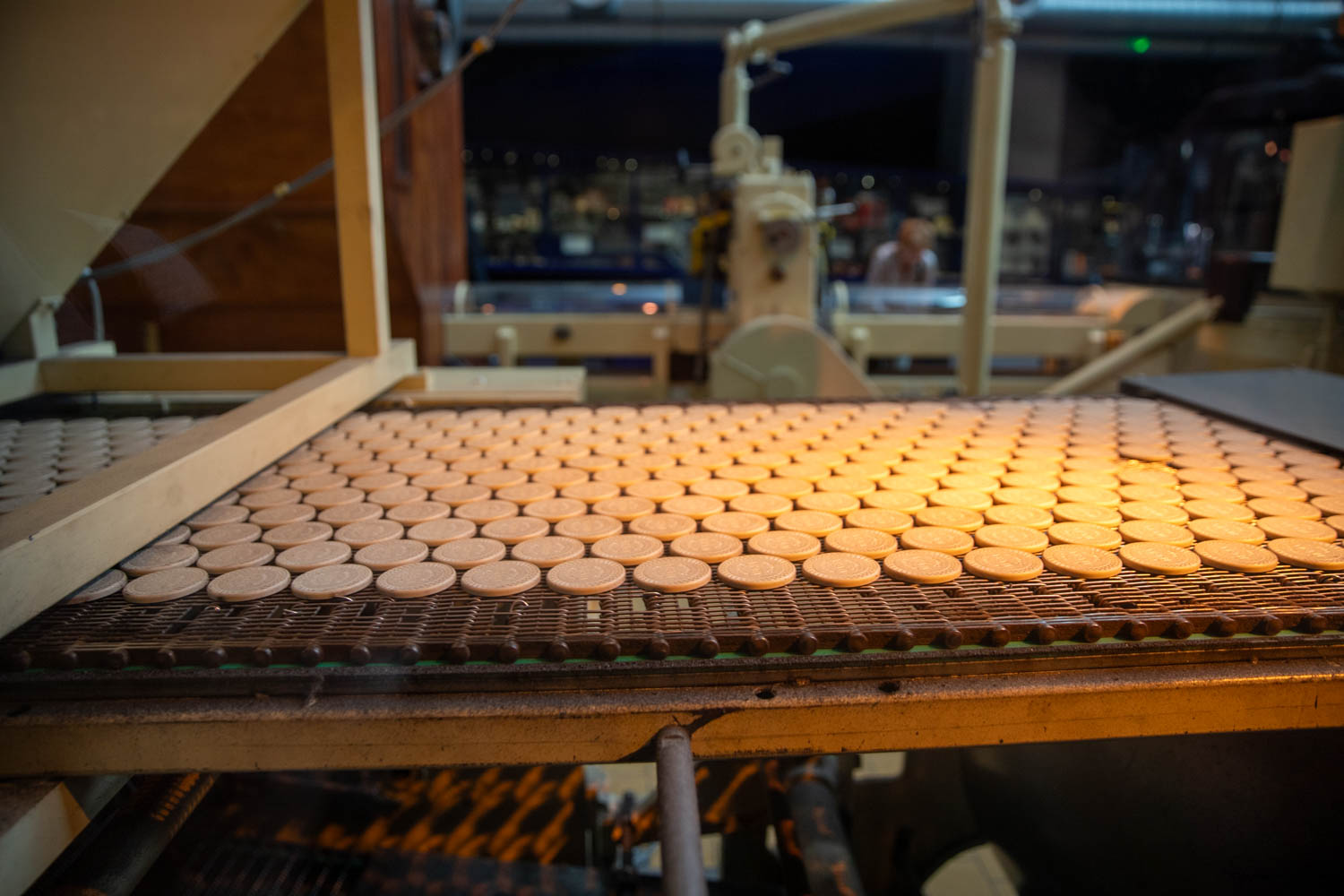
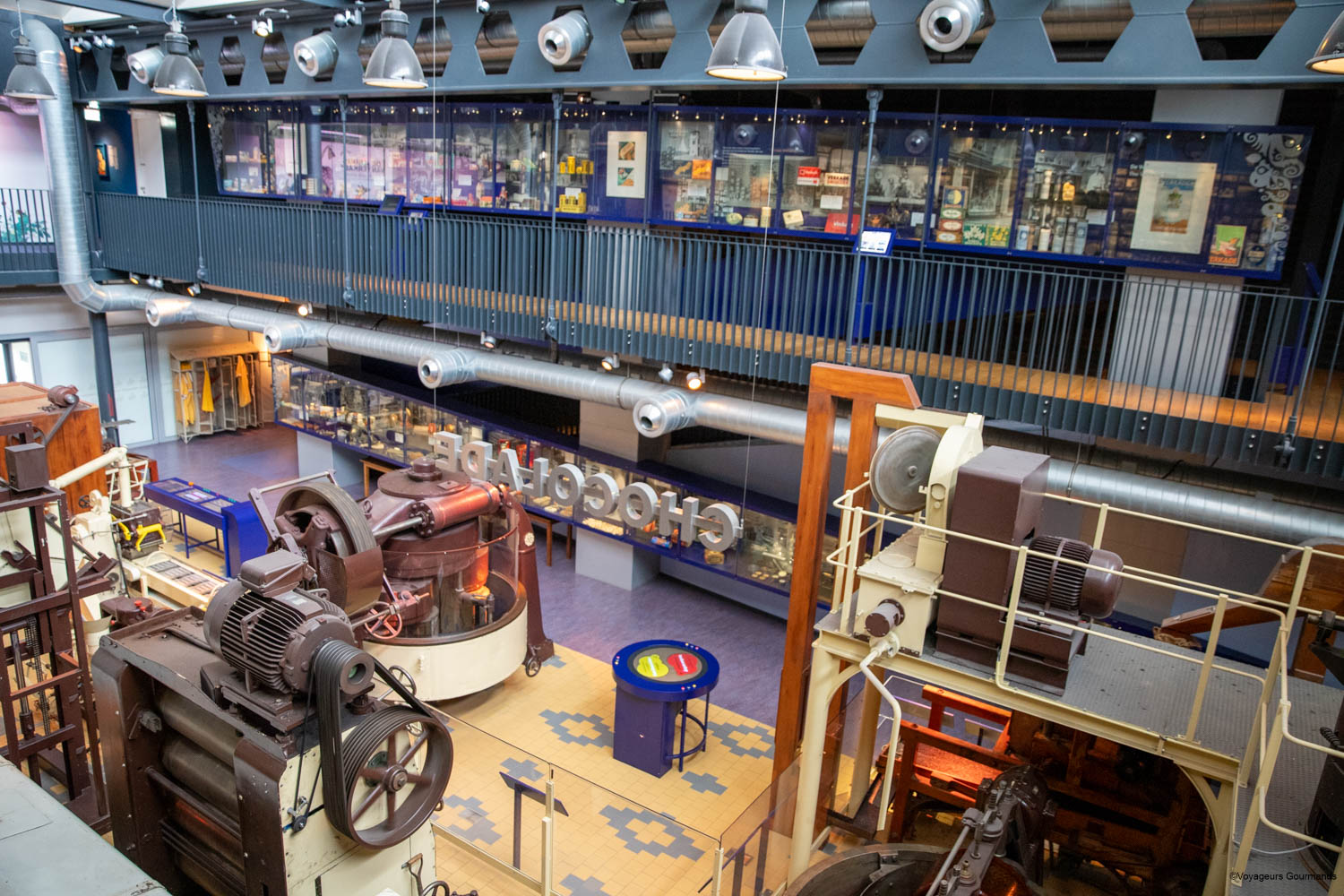
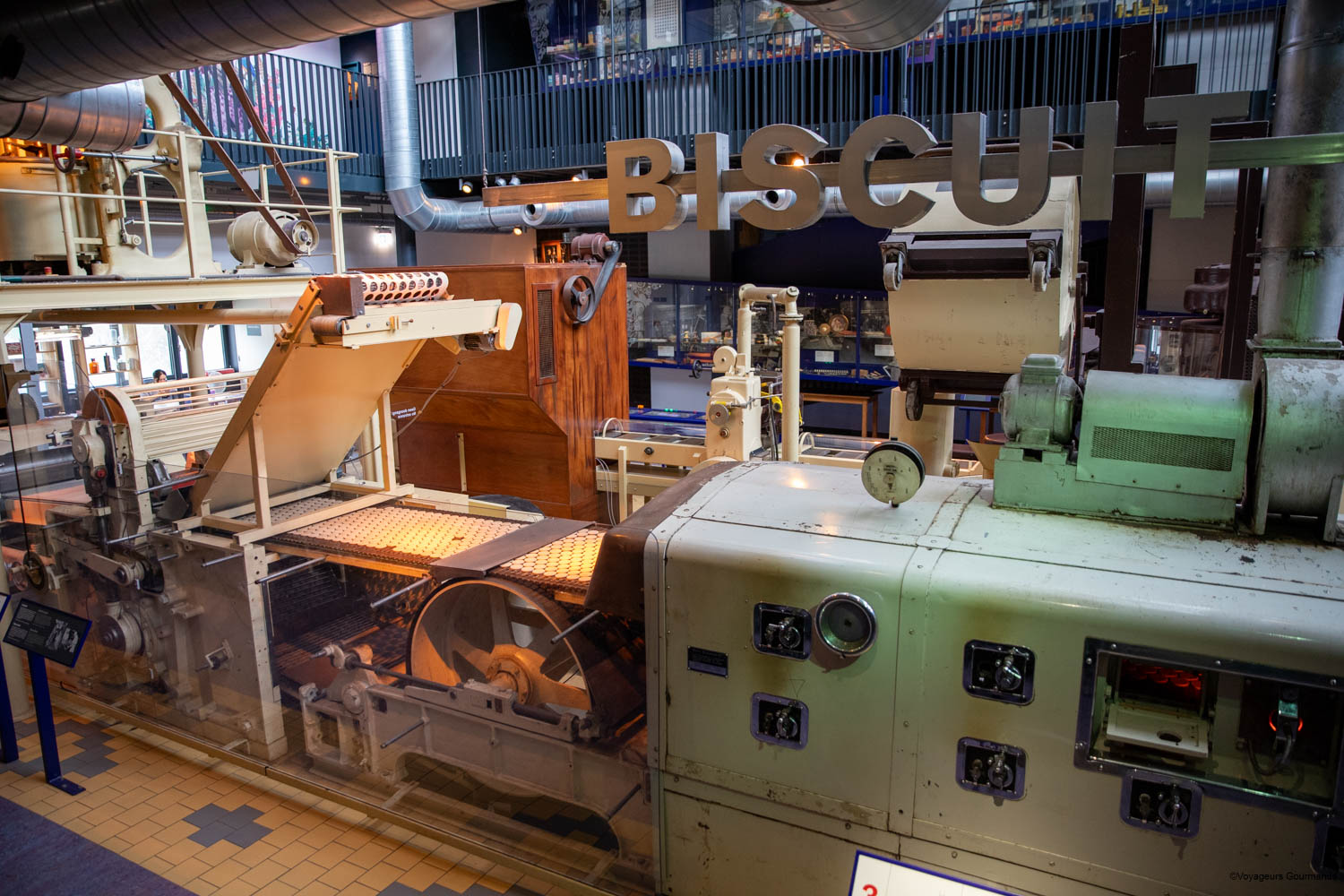
Inside the museum is also the Verkade Experience, dedicated to one of the best-known cookie and chocolate brands in the Netherlands, founded in 1886. Since 1990, the brand has belonged to the international Pladis group.
What strikes you as soon as you enter is the smell: that of cookies, which seems to permeate the entire visit and immediately sets the tone. The old machines, perfectly preserved, are still in motion — conveyor belts, gears, production line — and allow you to picture exactly how a factory operated in the early 20th century. You discover the different stages of cookie and chocolate production, as well as the evolution of production methods. The whole experience is far more immersive than a classic exhibition: it almost feels like being in a factory still in operation rather than in a museum frozen in time.
This immersion brings a very lively dimension to the visit and will especially appeal to lovers of industrial heritage… but also to those with a sweet tooth.
The Albert Heijn museum: the origins of an iconic brand
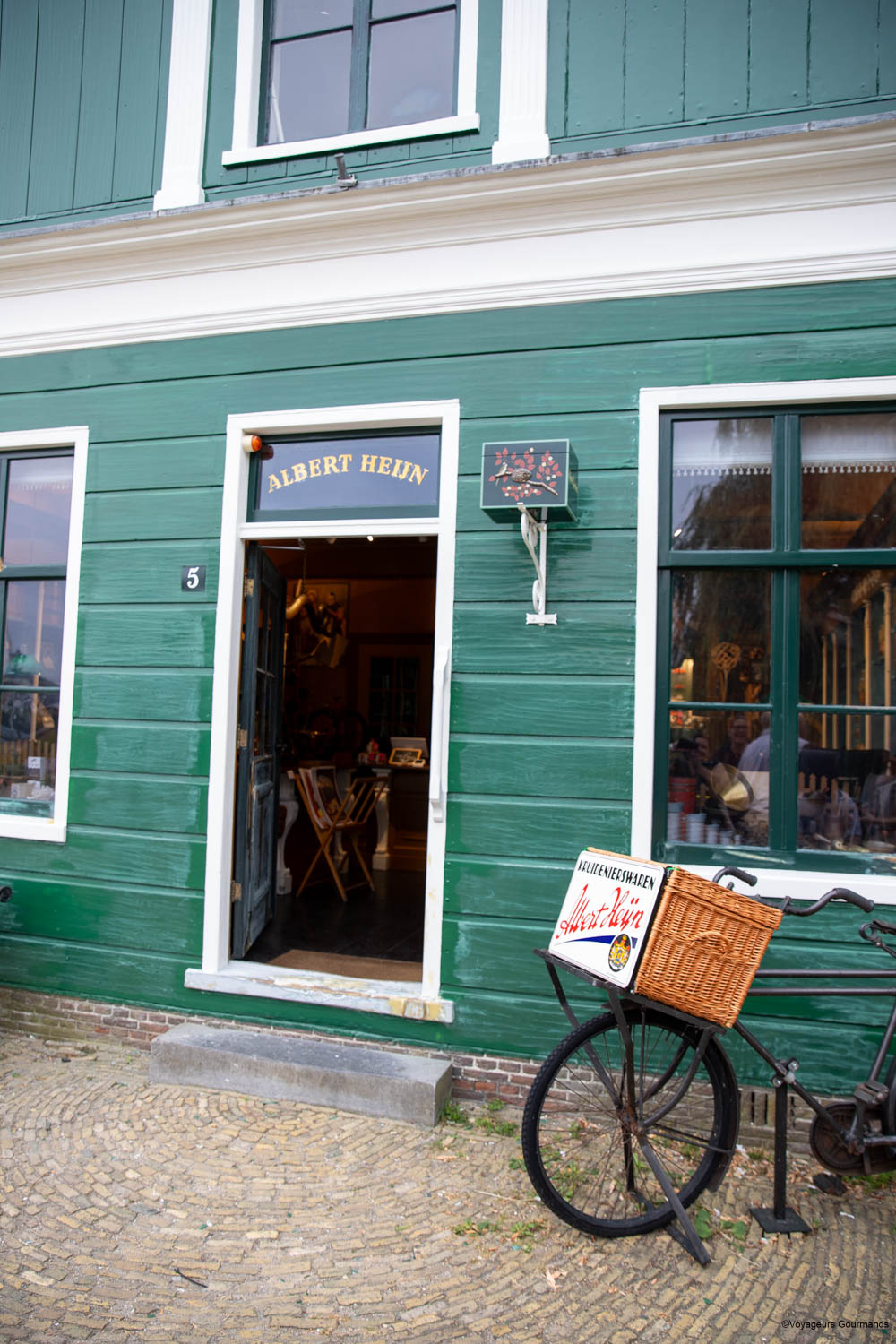
Before becoming the largest supermarket chain in the Netherlands — today a subsidiary of the giant Ahold Delhaize, present as far as the United States with nearly 2,000 supermarkets — Albert Heijn was just a small neighborhood grocery store.
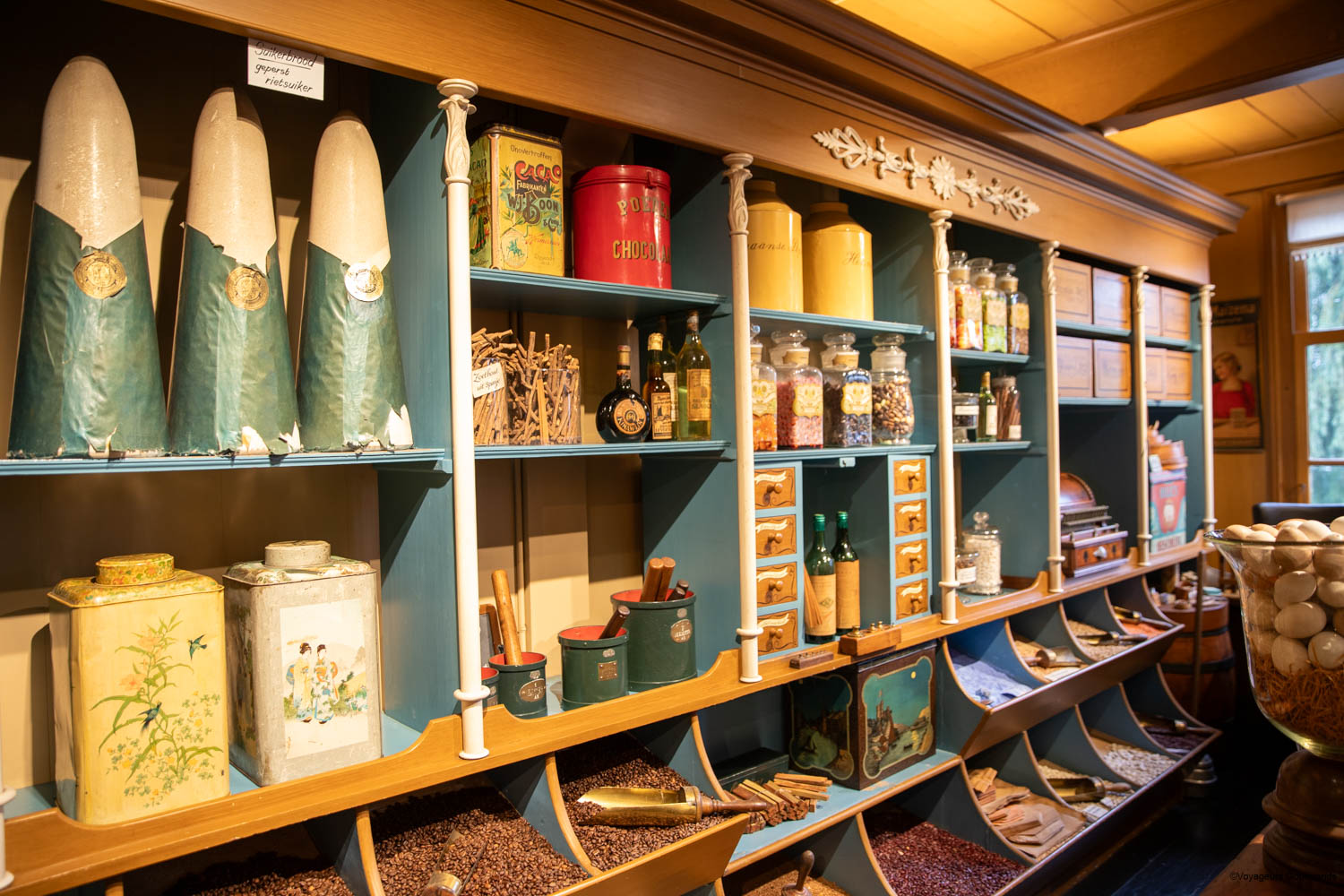
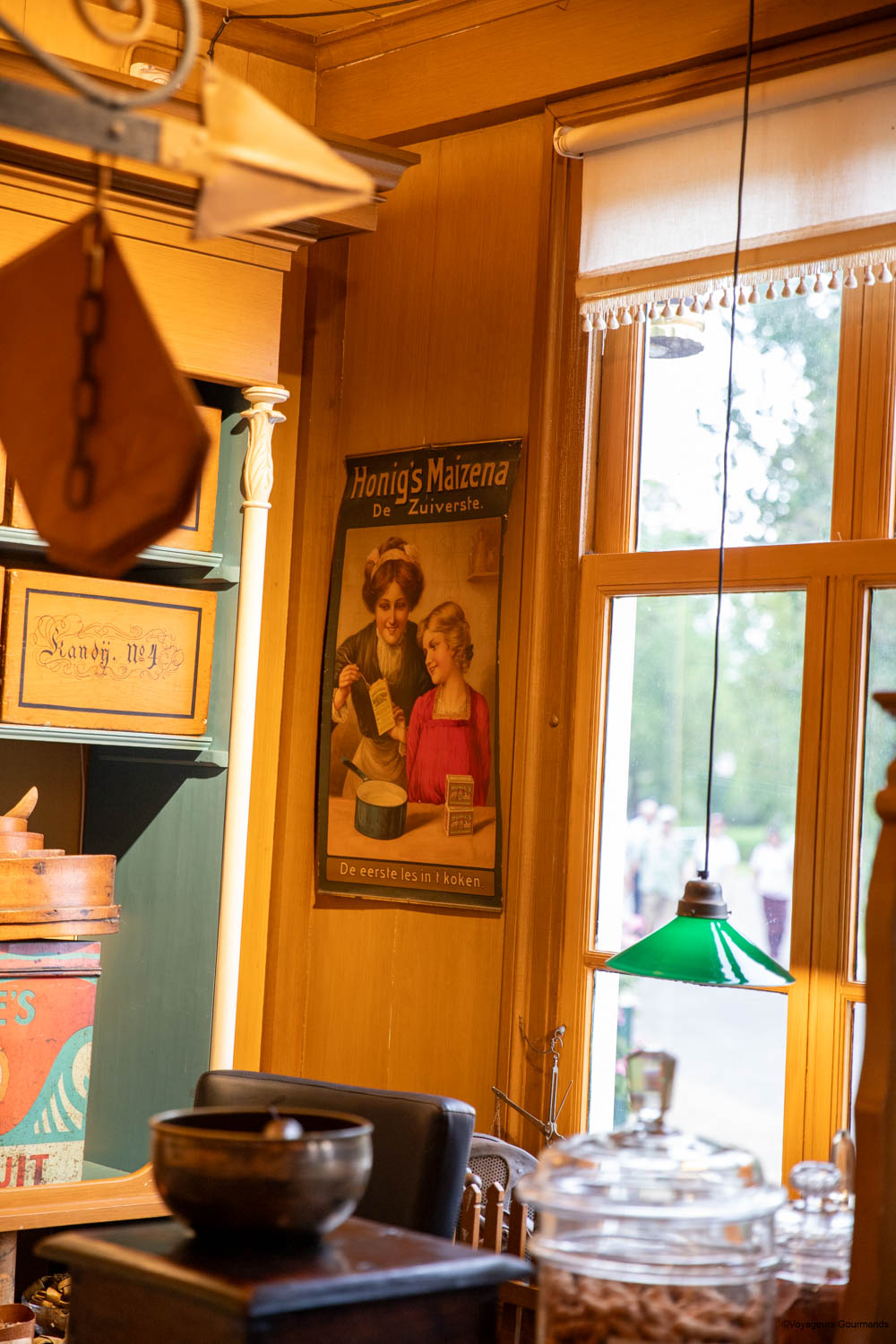
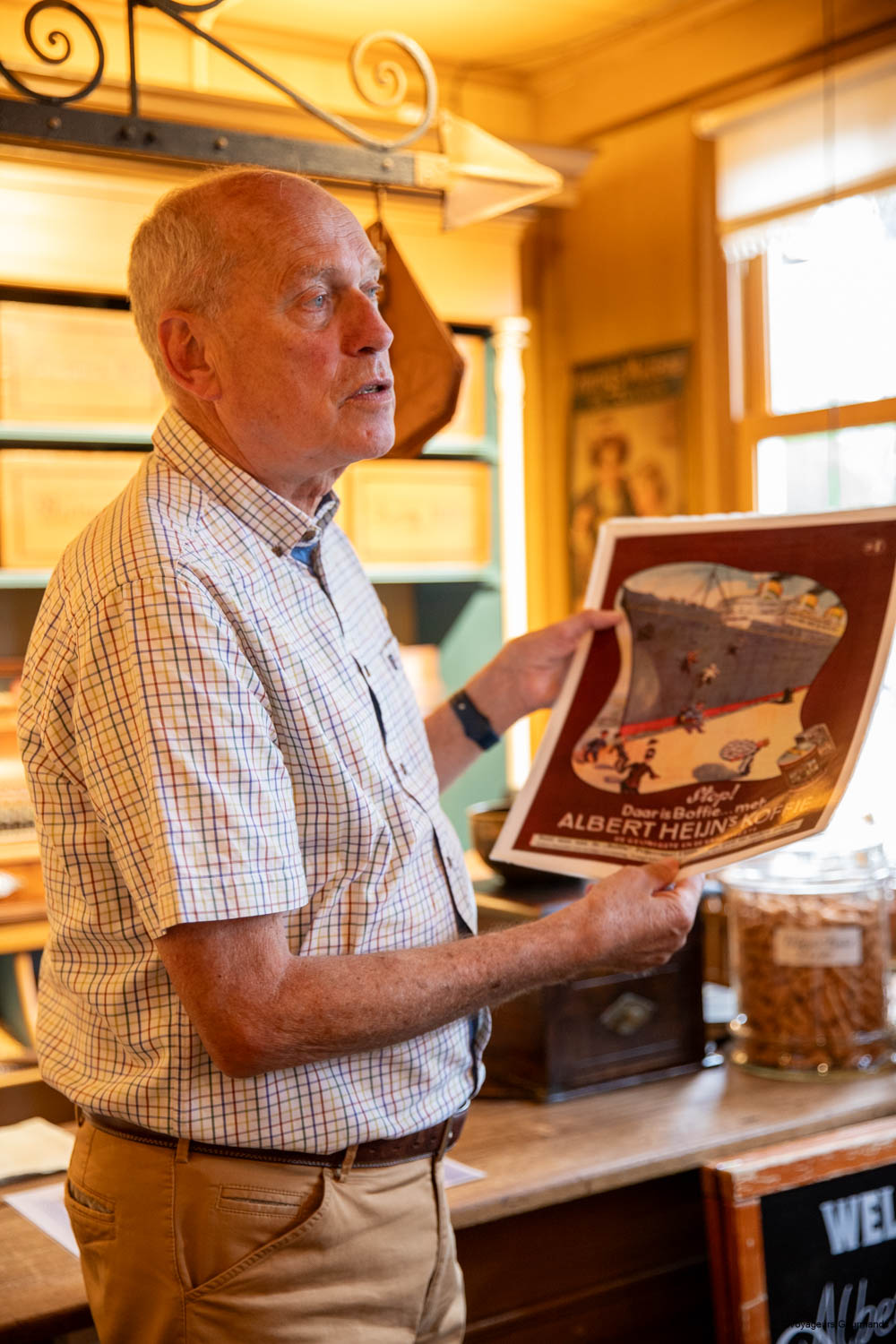
The museum is housed in the original shop, opened in 1887, and preserves authentic furnishings: counter, old scales, boxes, drawers, and even Albert Heijn’s desk. You’ll also notice an unusual detail, the “winkelslang,” a wooden rod suspended above the counter for hanging bags and tickets.
The visit is fairly quick, but it tells a real story: that of the evolution of food retail in the Netherlands, from a simple neighborhood grocery store to one of the largest retailers in the world. If you visited Van der Pigge, Haarlem’s historic pharmacy-grocery store, the comparison is striking: two shops from another era, perfectly preserved, each telling the story of Dutch commerce in its own way.
Gourmet experiences not to miss
If there is one thing that surprised us at Zaanse Schans, it is the importance given to artisanal know-how — and the fact that the region is still one of the world’s largest cocoa processing hubs today. The Zaan Valley is sometimes even called “Cocoa Valley”: depending on the direction of the wind, the smell of roasted beans can be detected in the streets of Zaandam.
Smells Like Chocolate: a gourmet interlude in Zaandijk
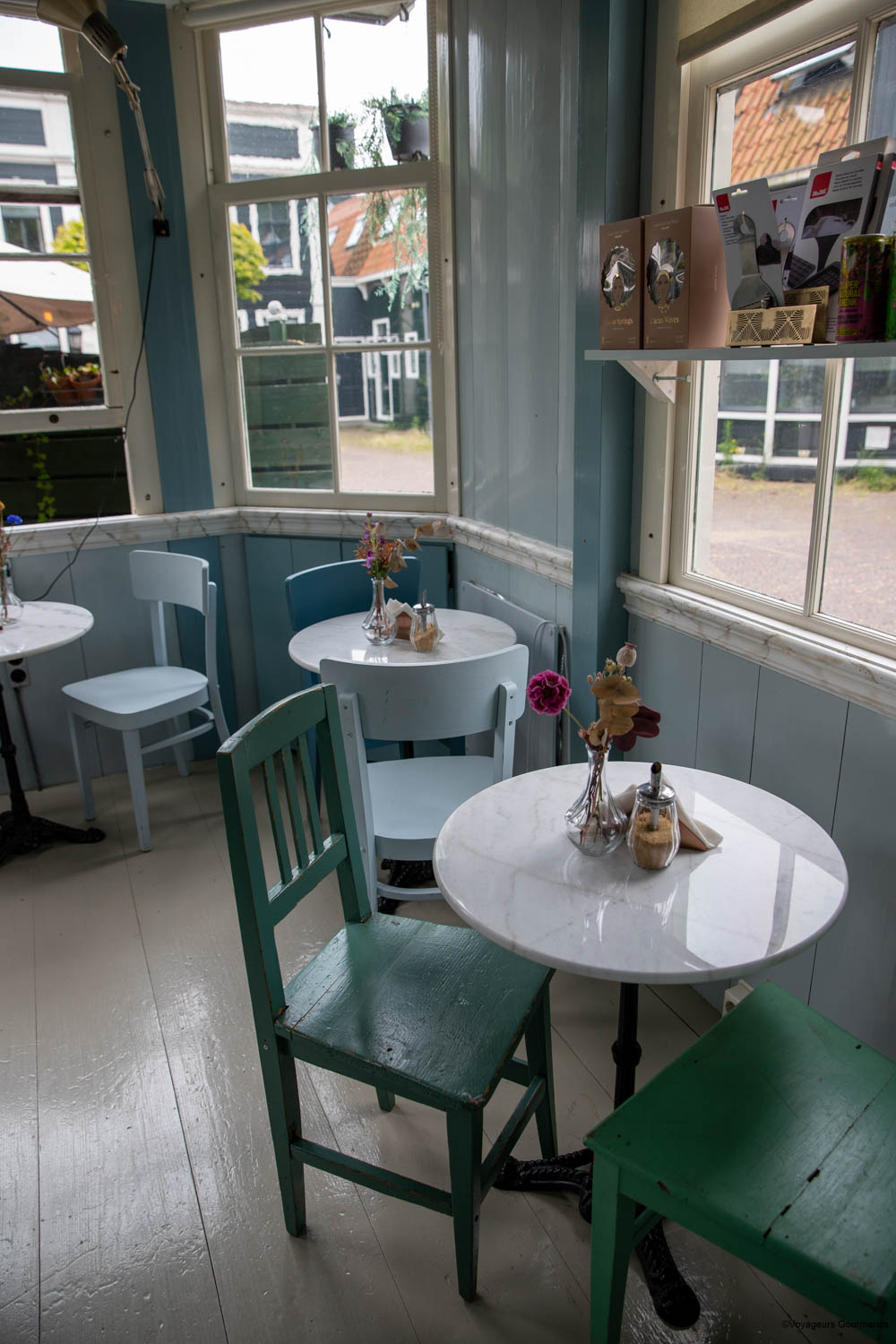
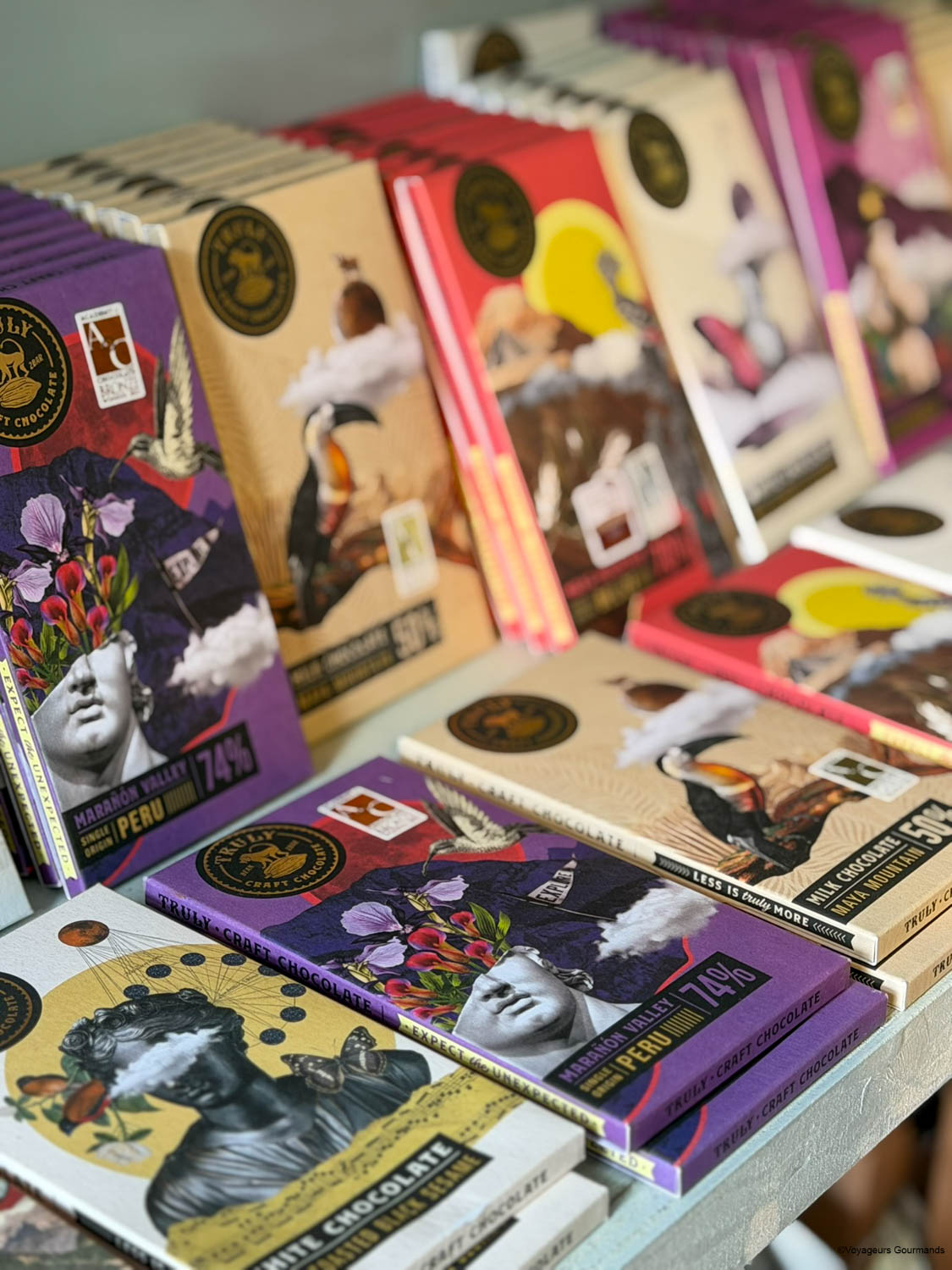
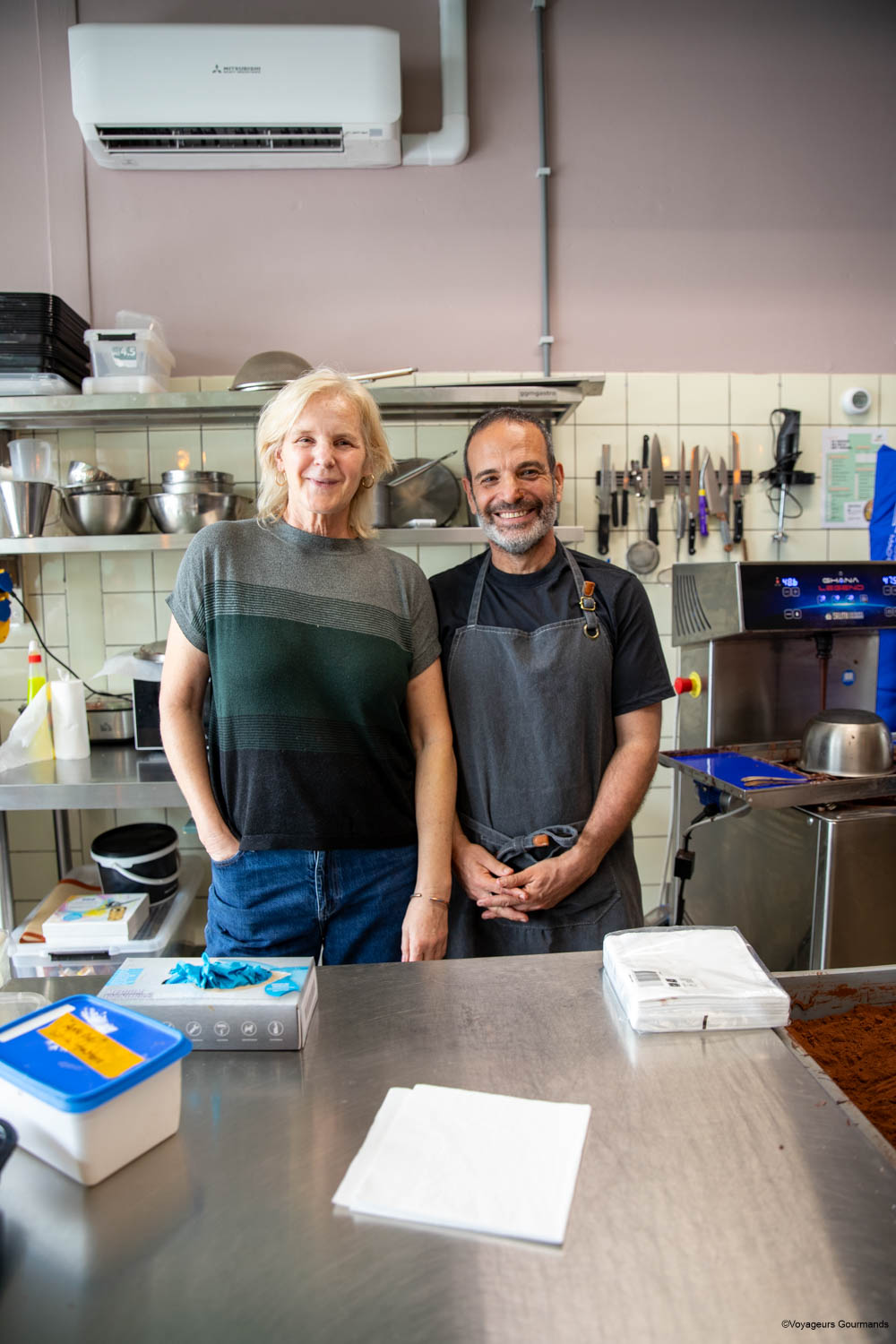
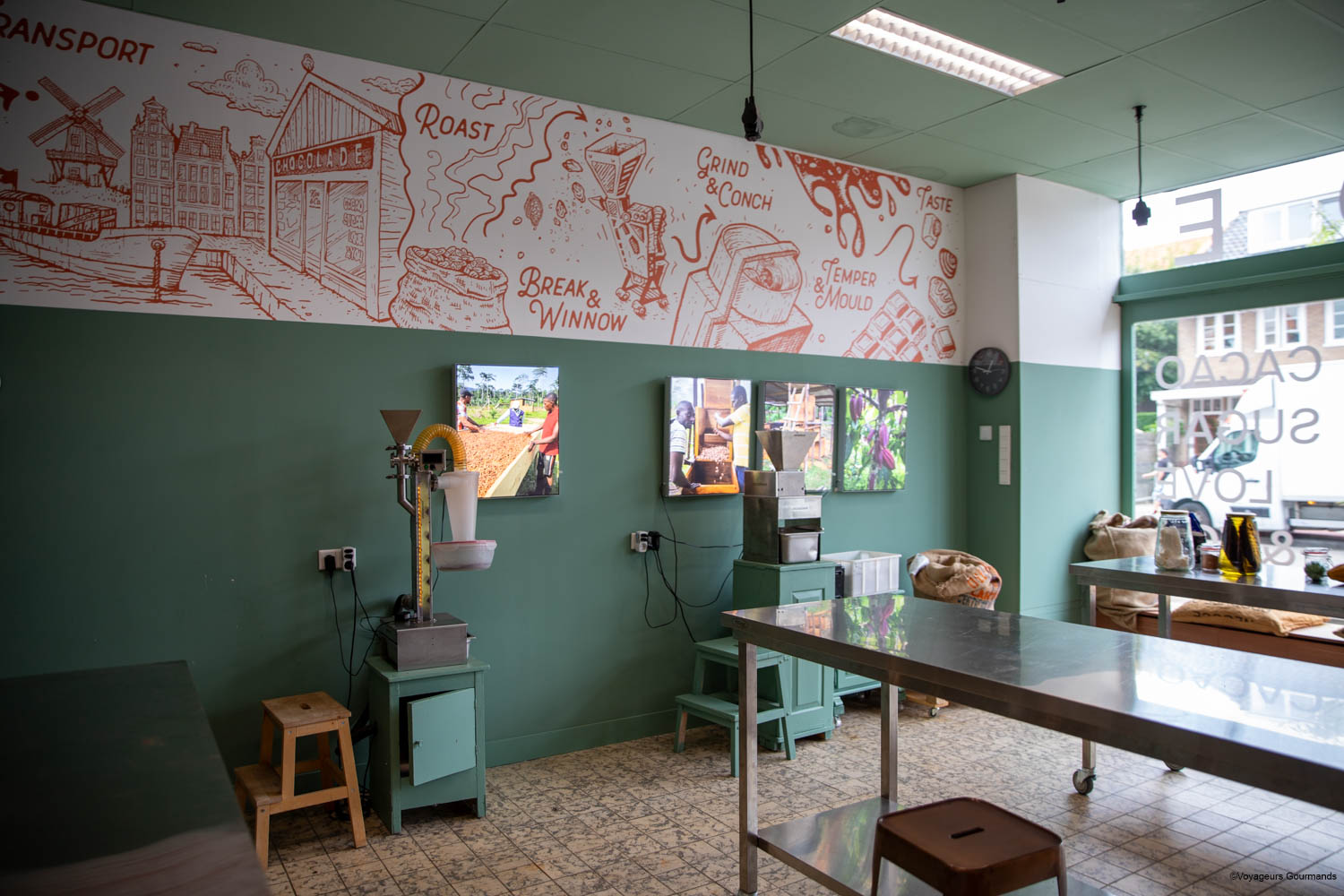
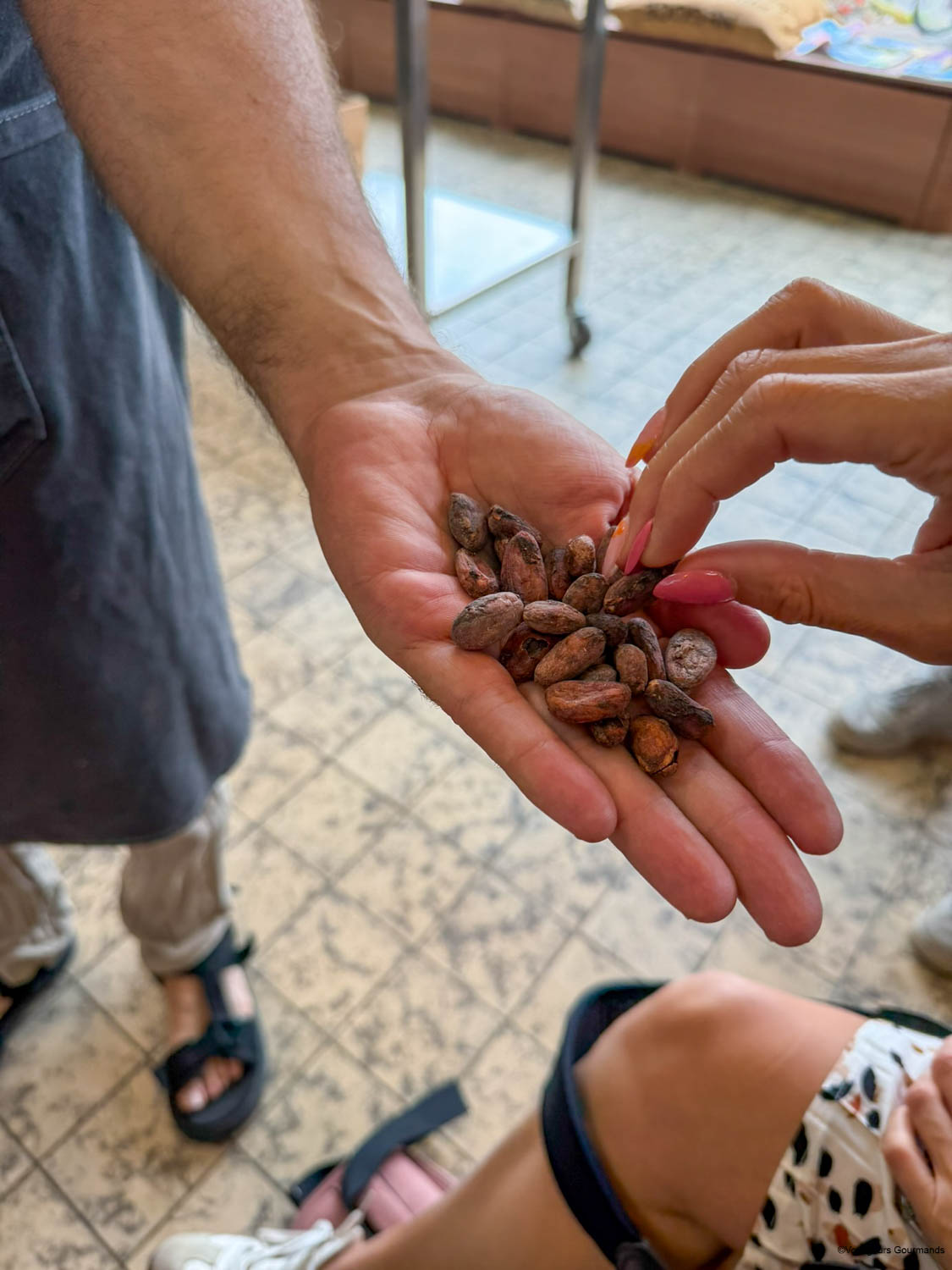
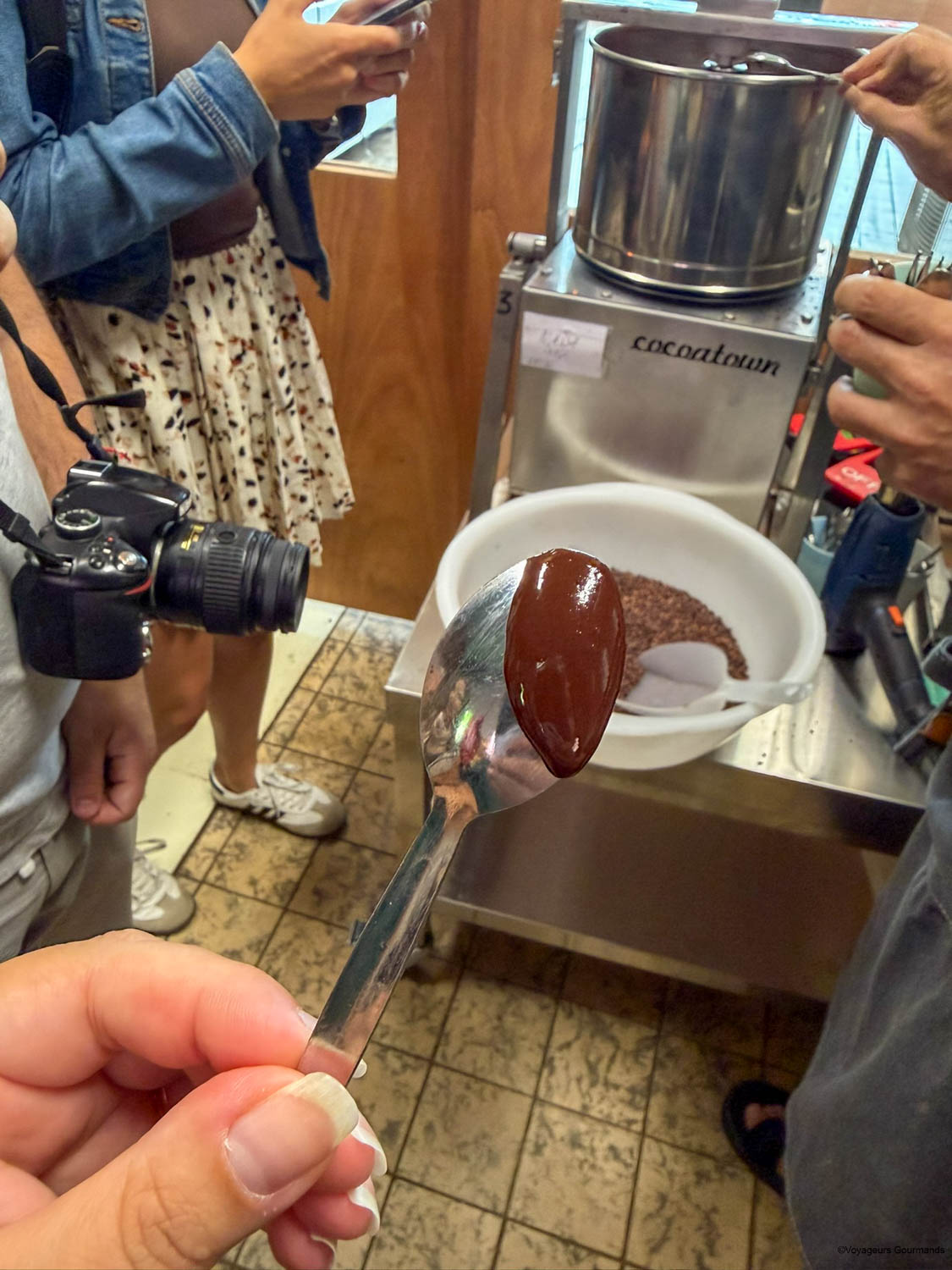
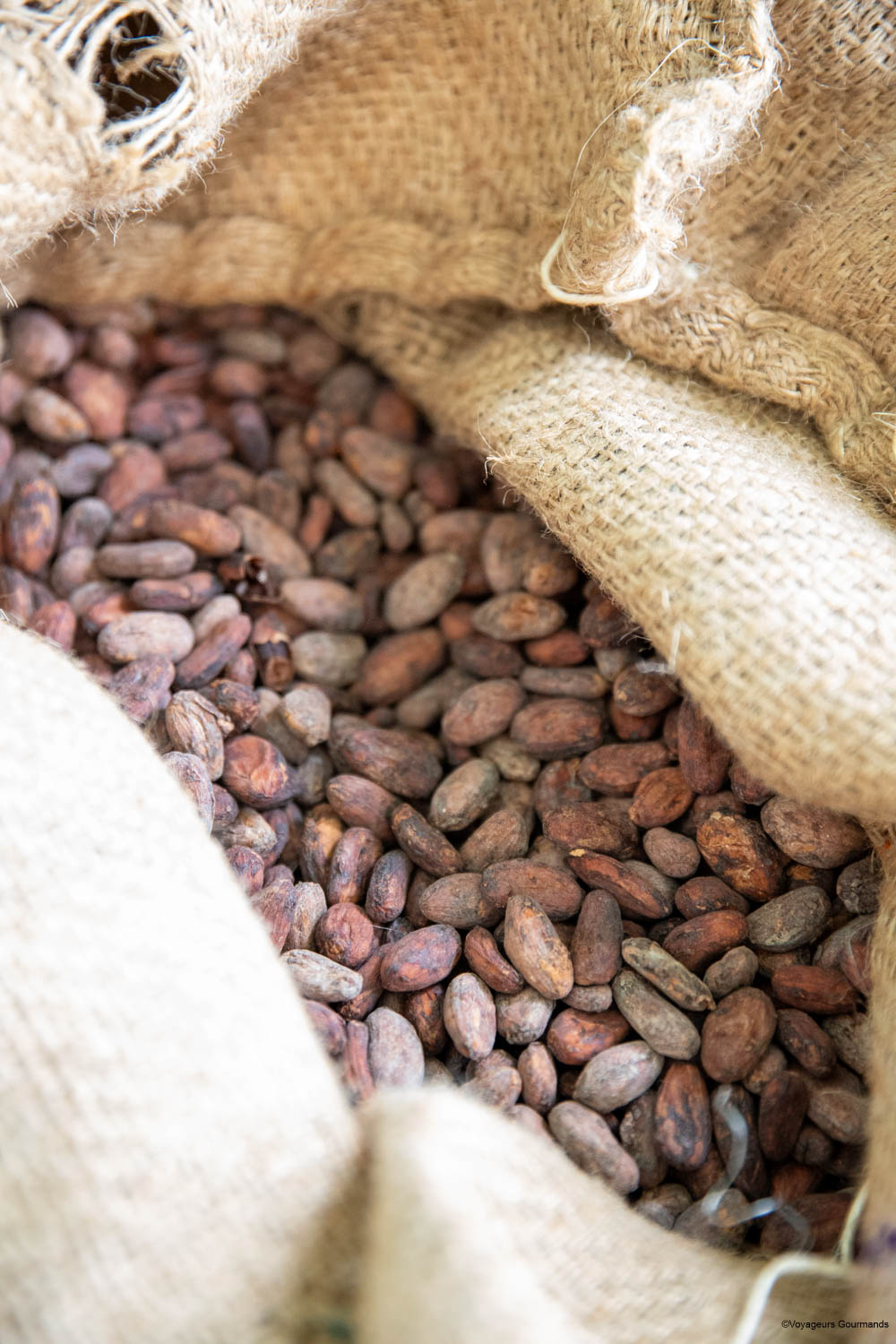
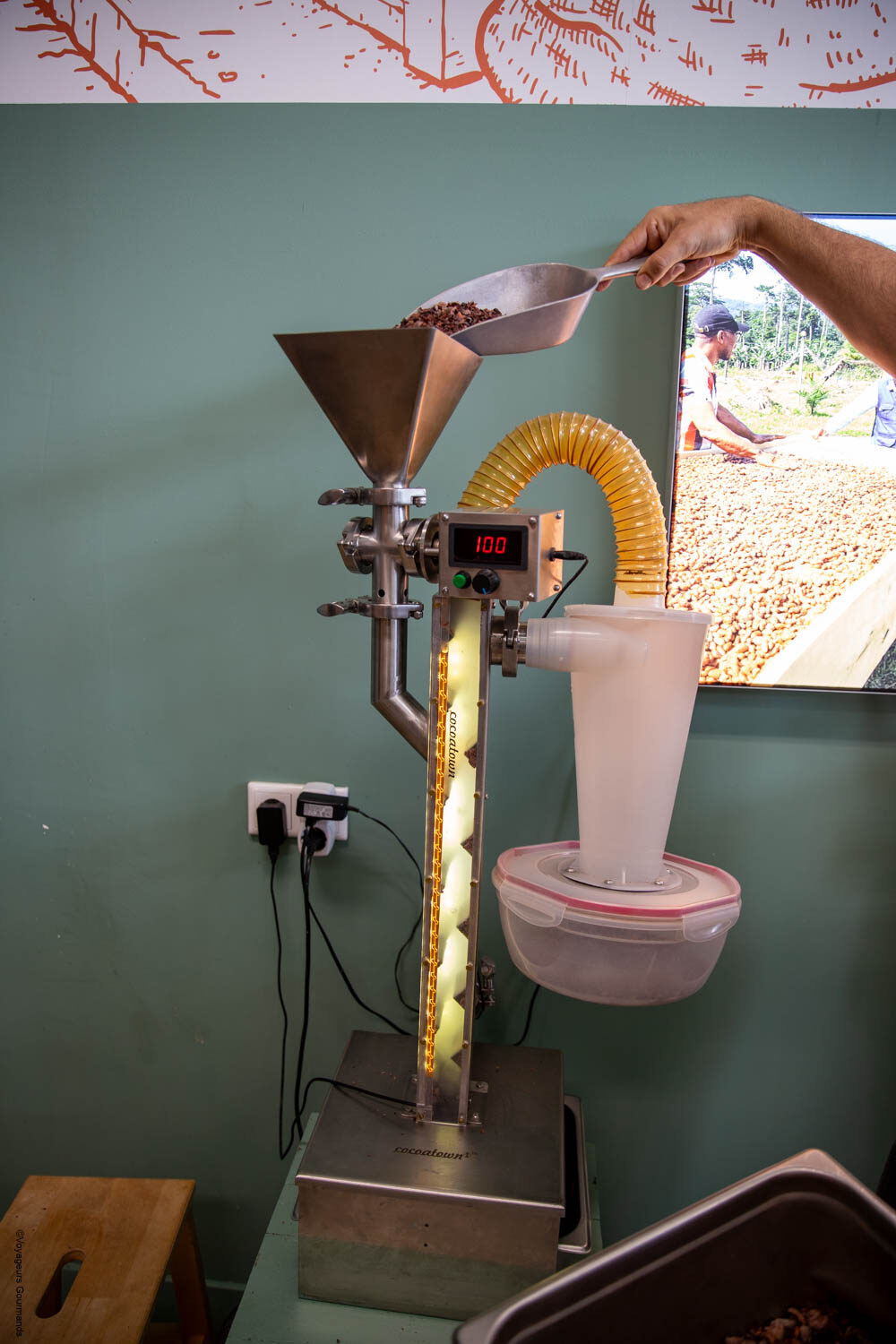
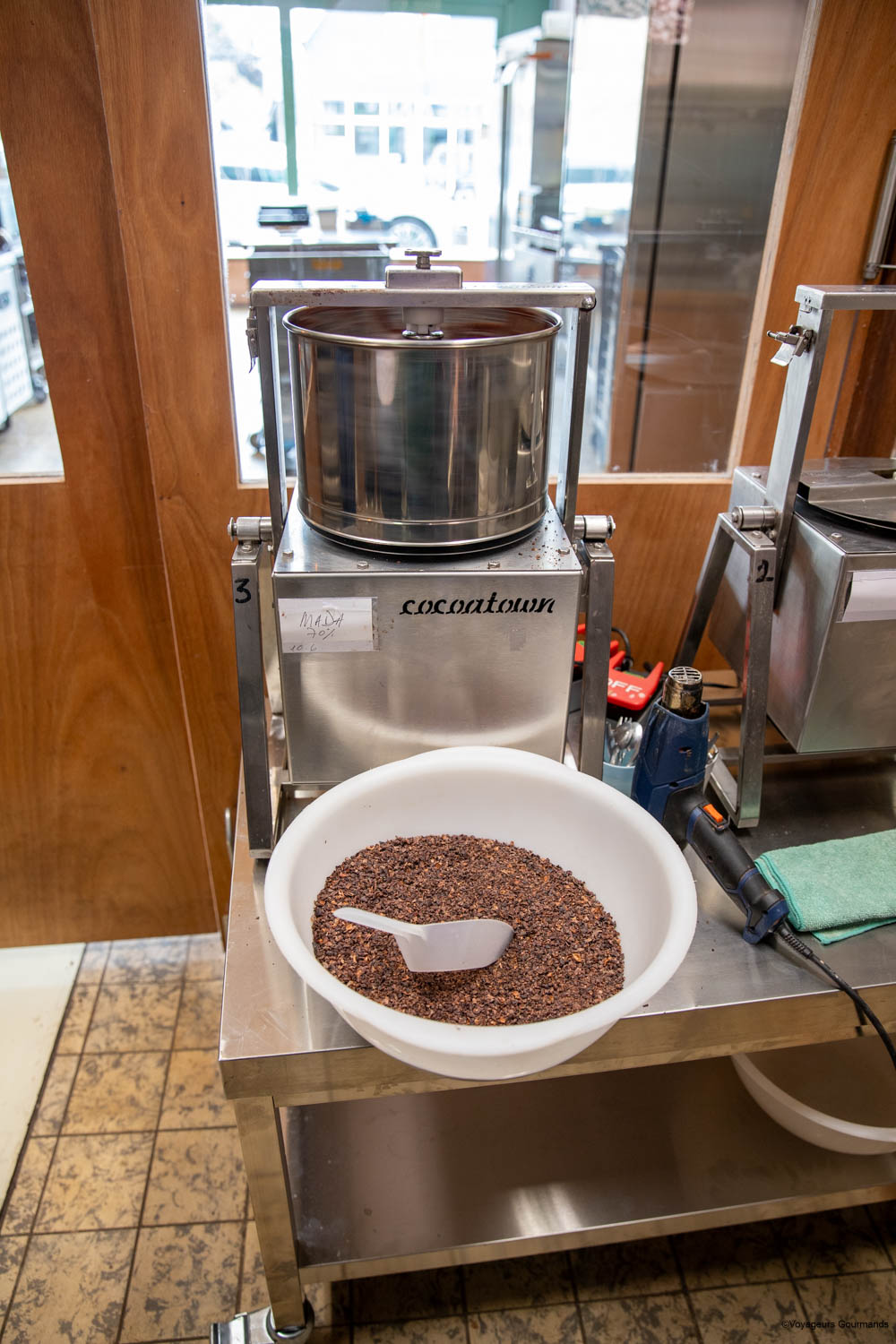
A few minutes on foot from Zaanse Schans, in the neighboring village of Zaandijk, we were lucky enough to discover Smells Like Chocolate, an address entirely dedicated to artisanal chocolate, founded by Kinito, originally from Angola and trained in Brazil and Spain, alongside his partner Ingmar Niezen, a food stylist. The name is no coincidence: just behind the shop is a cocoa processing factory, the very one behind that famous chocolate smell that hangs over the entire city.
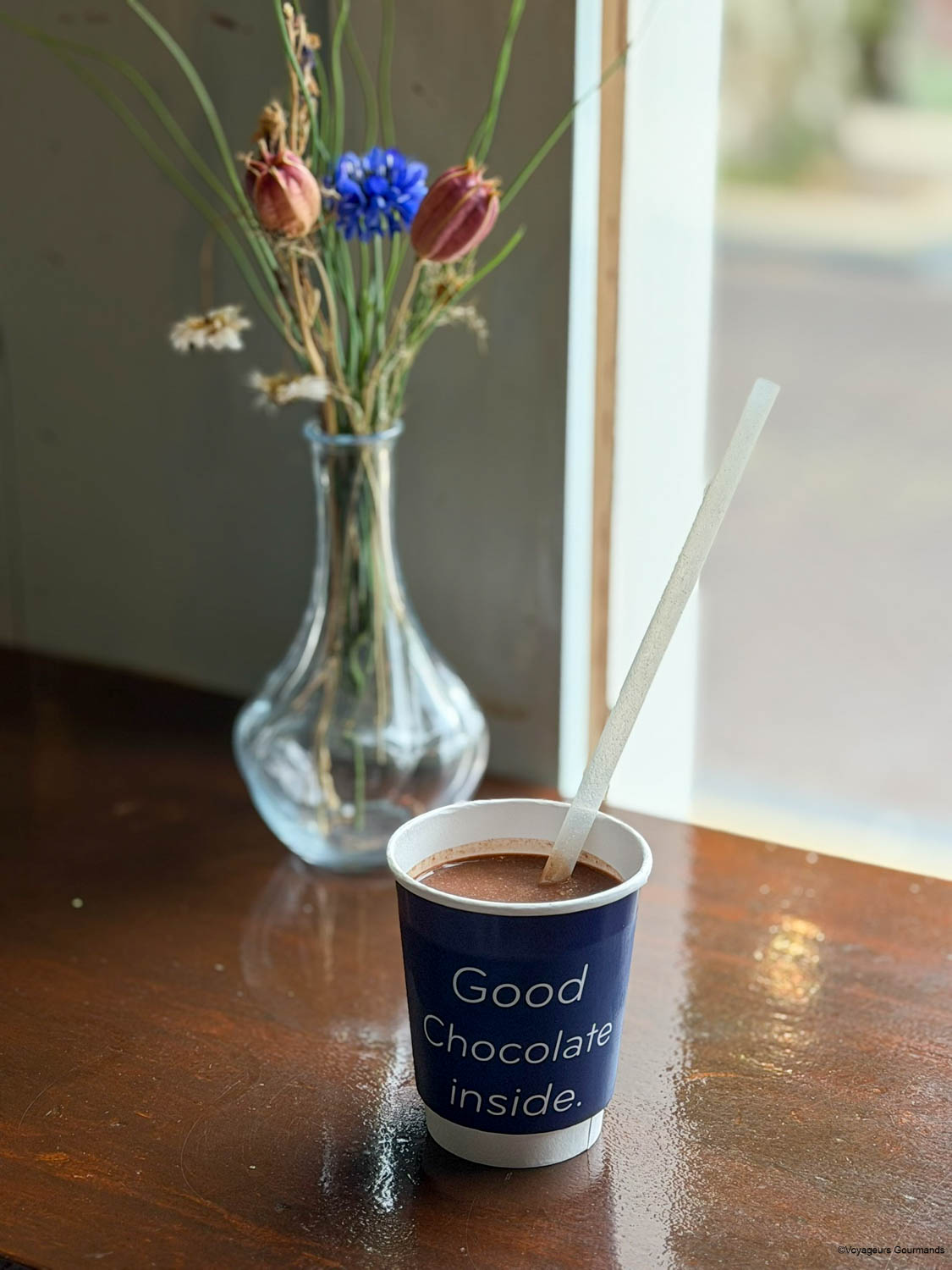
The visit begins directly in the shop, with a first chocolate tasting and an introduction to the work of cocoa, from bean to bar. We then continue in the neighboring workshop, at Kin & Co, for a second tasting session of about 40 minutes: a hot chocolate made with 70% cocoa, a true highlight of the experience, as well as a comparative tasting of several chocolates with very distinct aromatic profiles. The workshop ends with a mini hands-on session, where you make your own praline — a delight!
Beyond chocolate to eat, the shop also offers cocoa butter cosmetics, cocoa-infused beer, paper made from beans ground by a former local paper mill, and fabric bags made from old cocoa sacks. For food lovers, this is clearly an activity not to miss.
Other artisan workshops
As you walk around Zaanse Schans, you will also find several workshops highlighting Dutch craftsmanship: wooden clog making, Dutch cheese tasting, traditional crafts… Even though these visits are very touristy, they remain interesting for discovering local traditions and watching artisans at work.
Specialties to try in Zaanse Schans and the Zaan region
If you like leaving a destination with a few local flavors in mind (or in your suitcase), here is what you should not miss:
- Verkade cookies;
- artisanal chocolate;
- De Zoeker peanut oil;
- Dutch cheeses;
- local beers;
- stroopwafels and other Dutch pastries.
Zaandijk, the picturesque village right next door
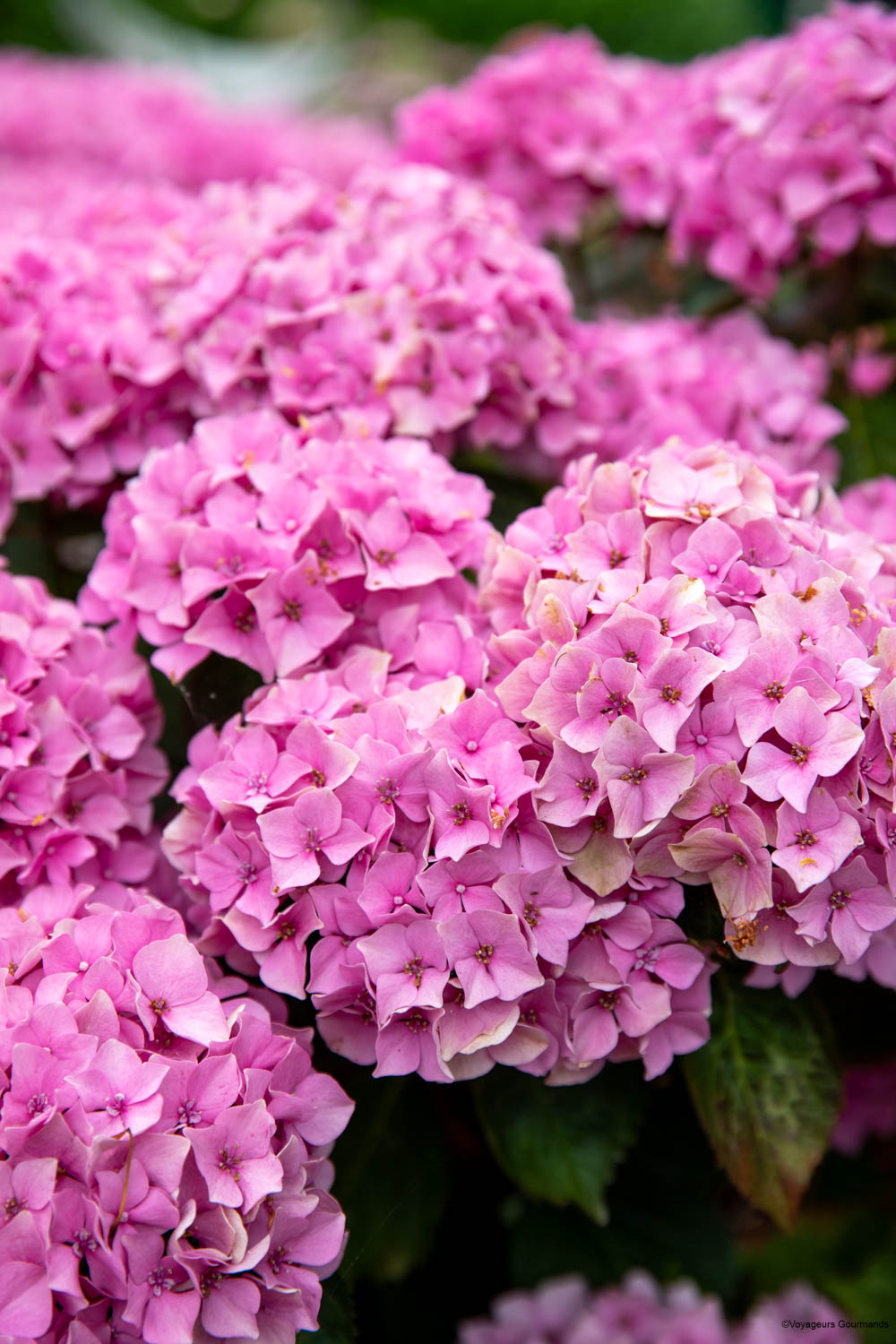
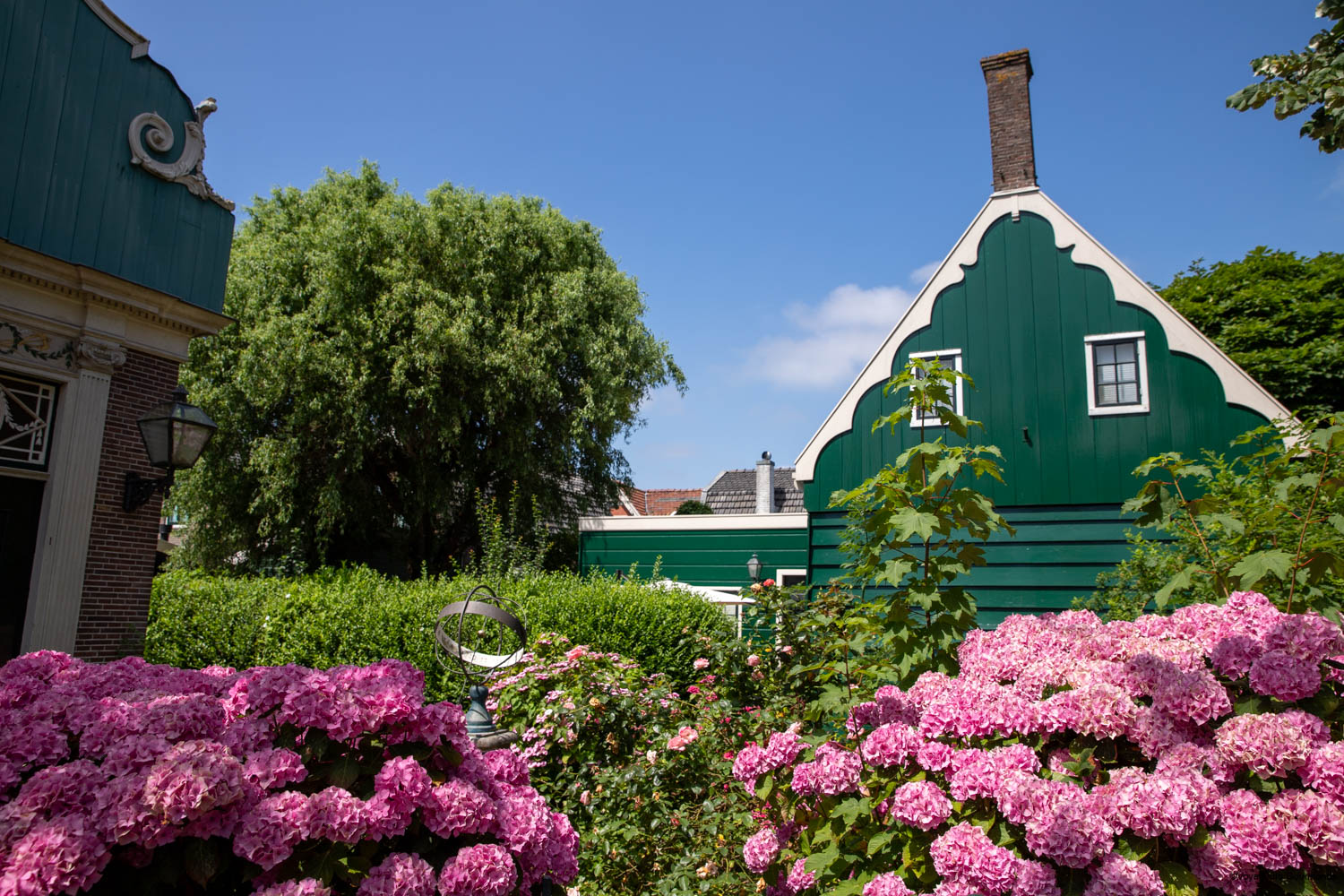
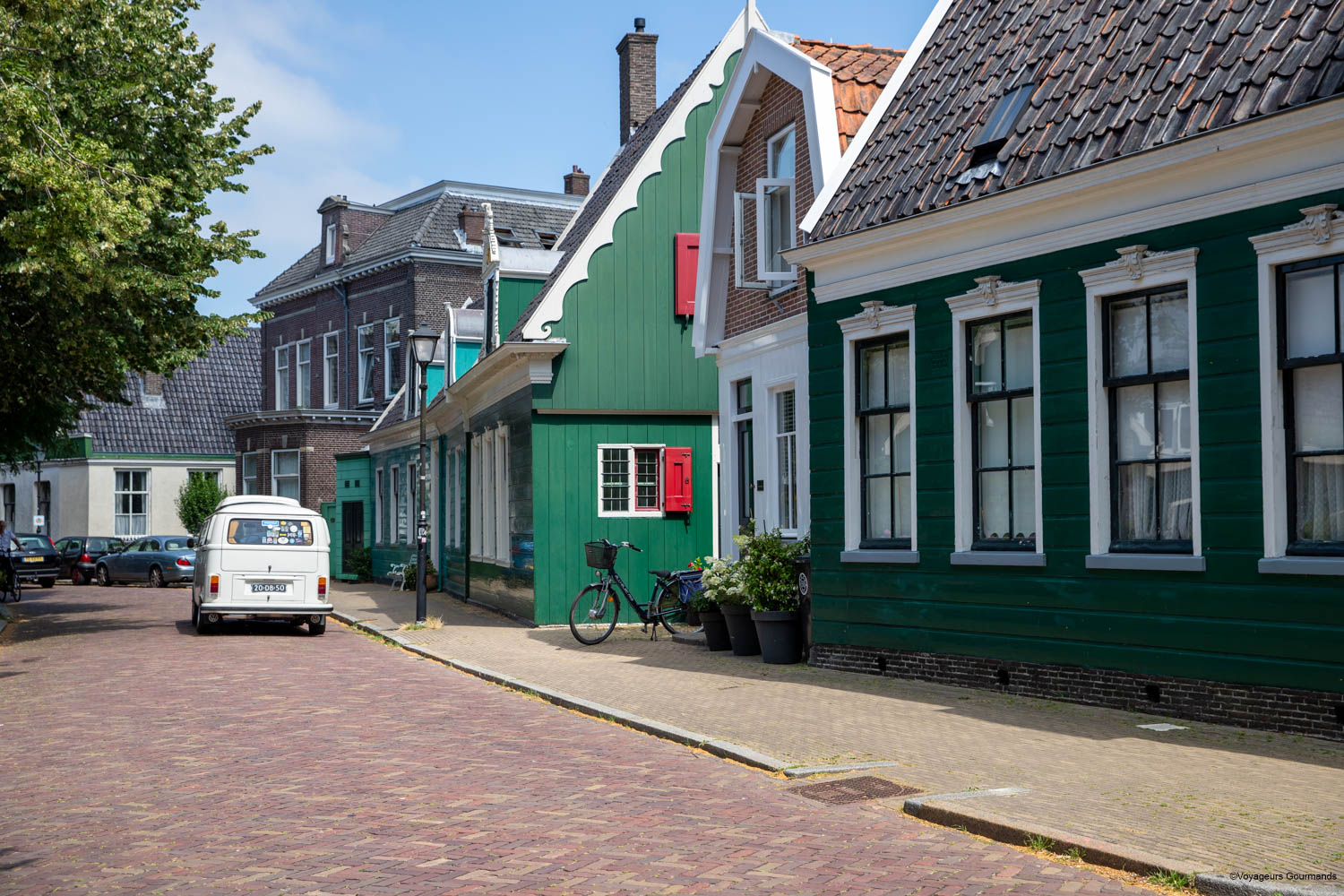
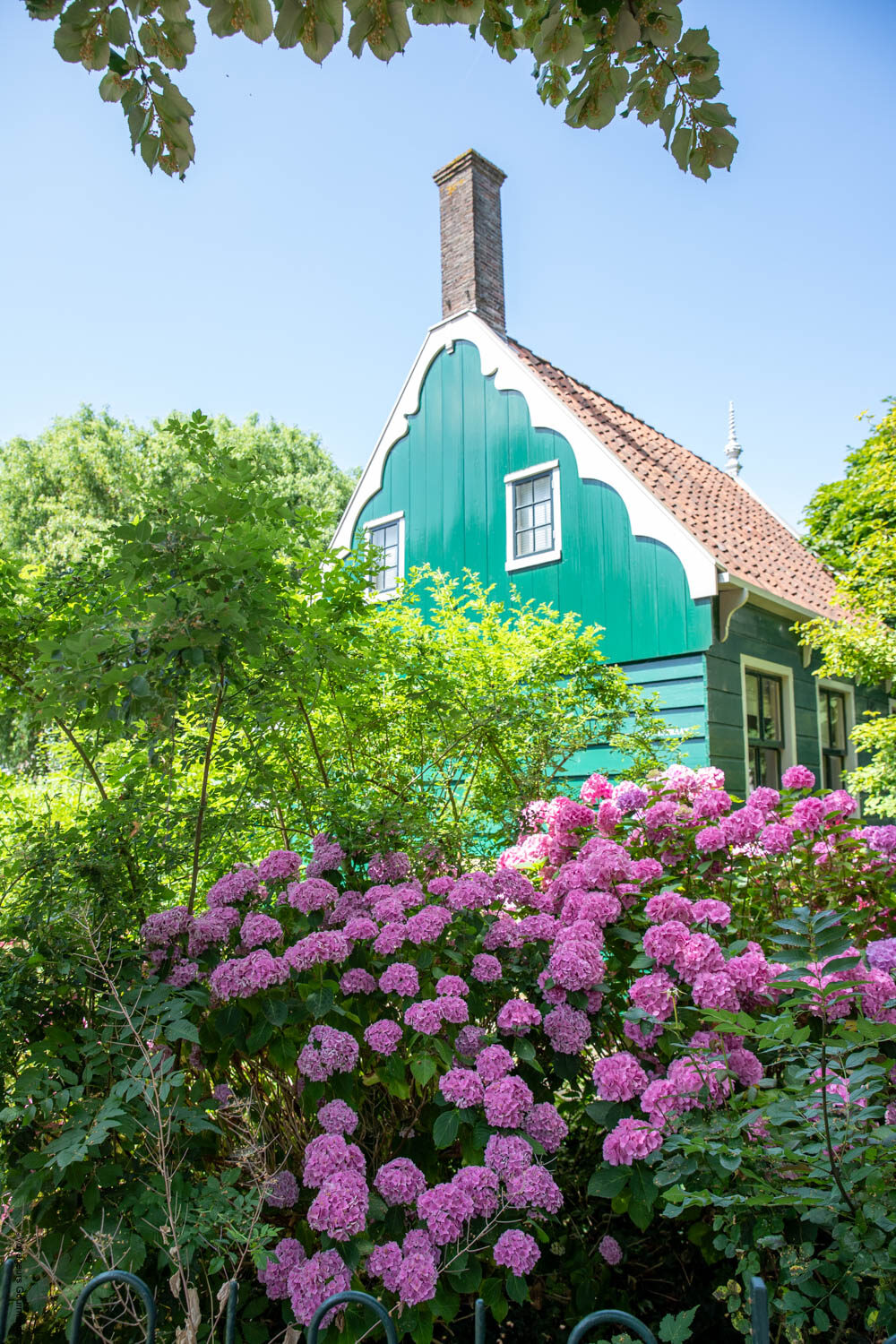
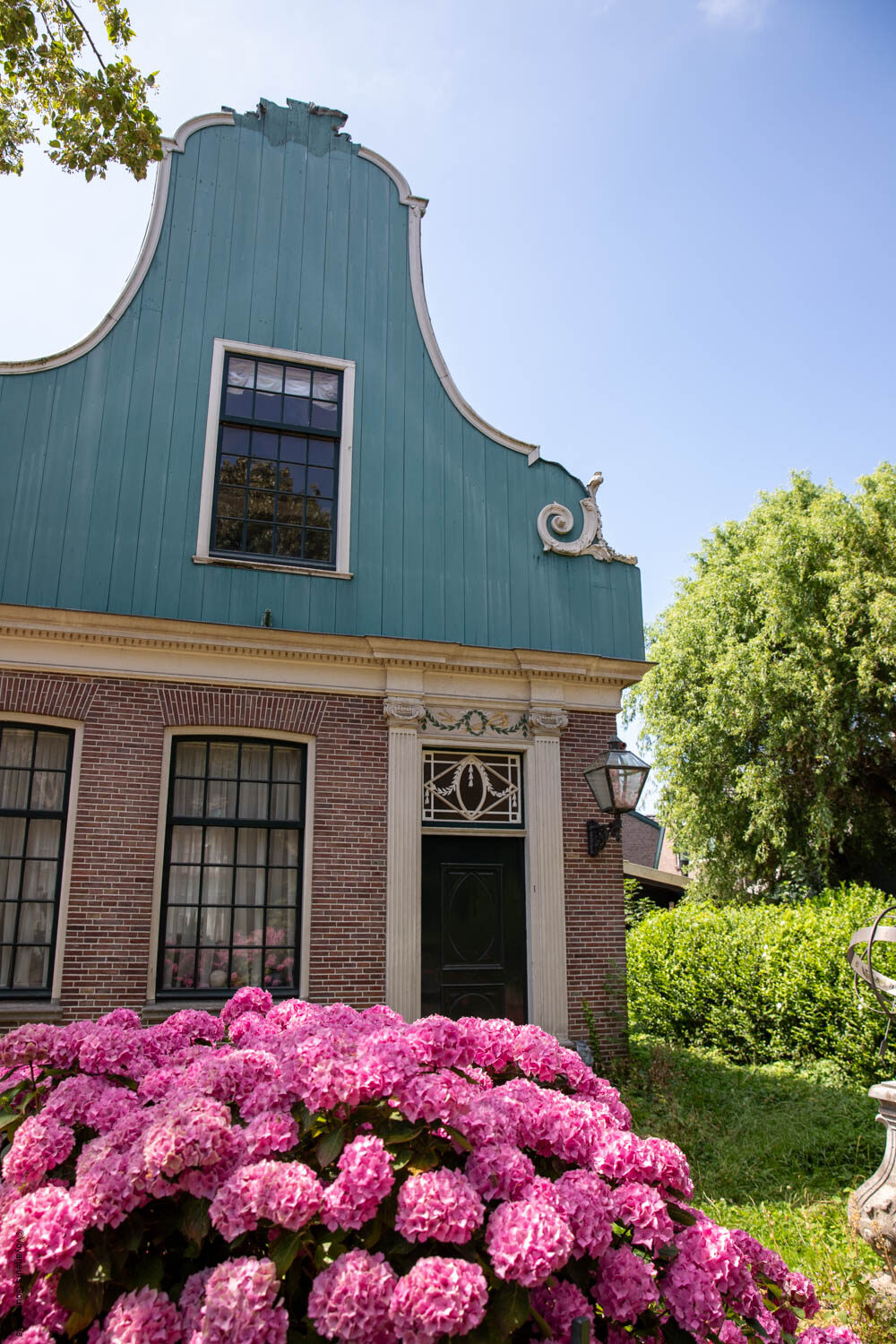
Just opposite Zaanse Schans, on the other bank of the Zaan, lies Zaandijk. It is a village worth dedicating a few minutes of strolling to: the same traditional green or blue wooden houses as in Zaanse Schans, but inhabited, maintained, with pretty flower gardens. Lagedijk Street, paved and lined with beautiful colorful façades, is especially pleasant to walk along — it is one of the places where we took the most photos during the whole trip.
The village is also home to a small museum, the Weefhuis, which displays a lovely collection of paintings, as well as several cafés and craft breweries. This is where we experienced the chocolate tasting at Smells Like Chocolate and Kin & Co (see above), and had our last lunch before heading back toward Amsterdam.
Where to stay: the Inntel Hotel, Zaandam’s iconic hotel
For staying in the region, the Inntel Hotel in Zaandam is hard to beat. It had been sitting on our bucket list for months, spotted and re-spotted on Instagram without ever having the chance to stay there — so naturally, arriving there had a special feeling.
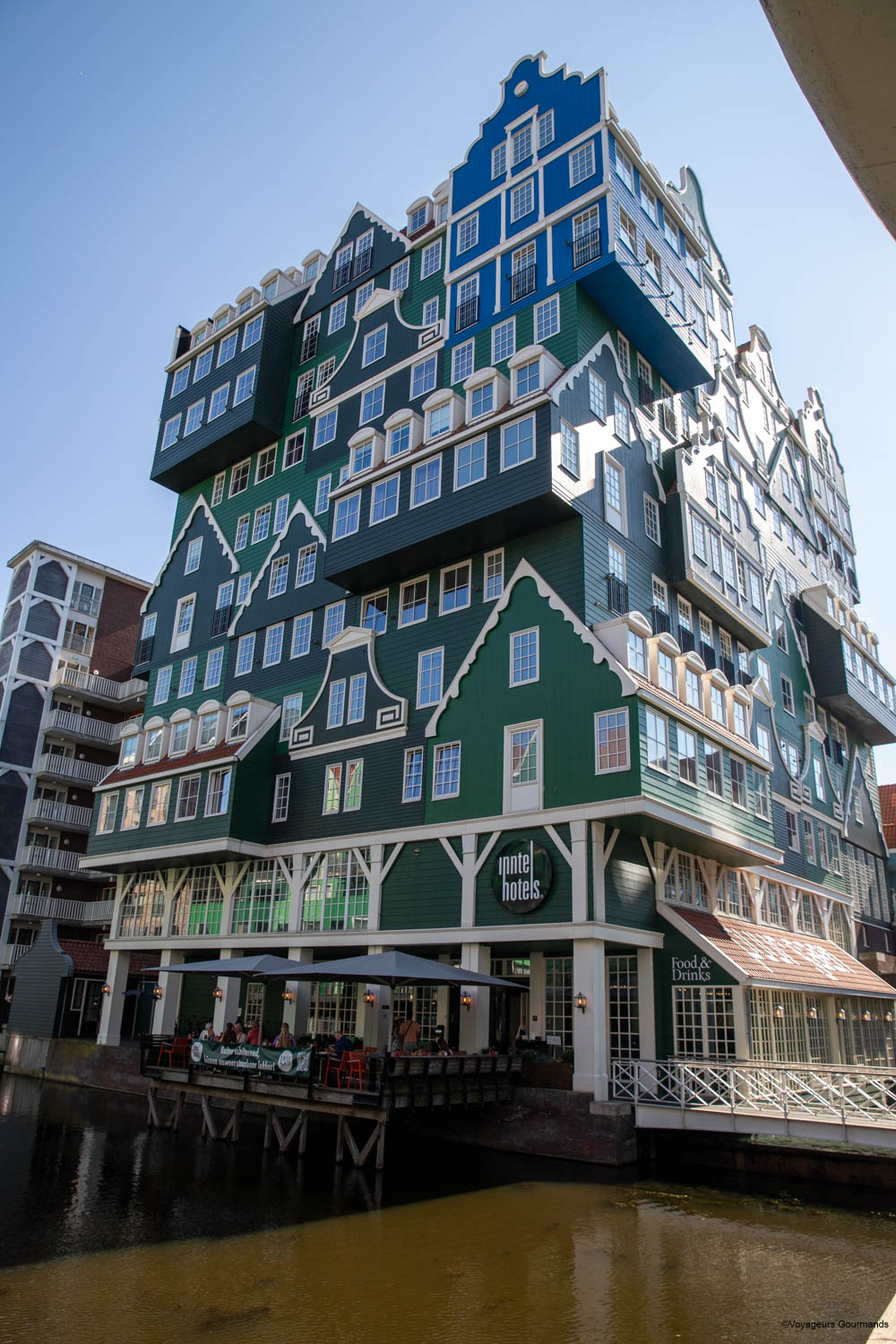
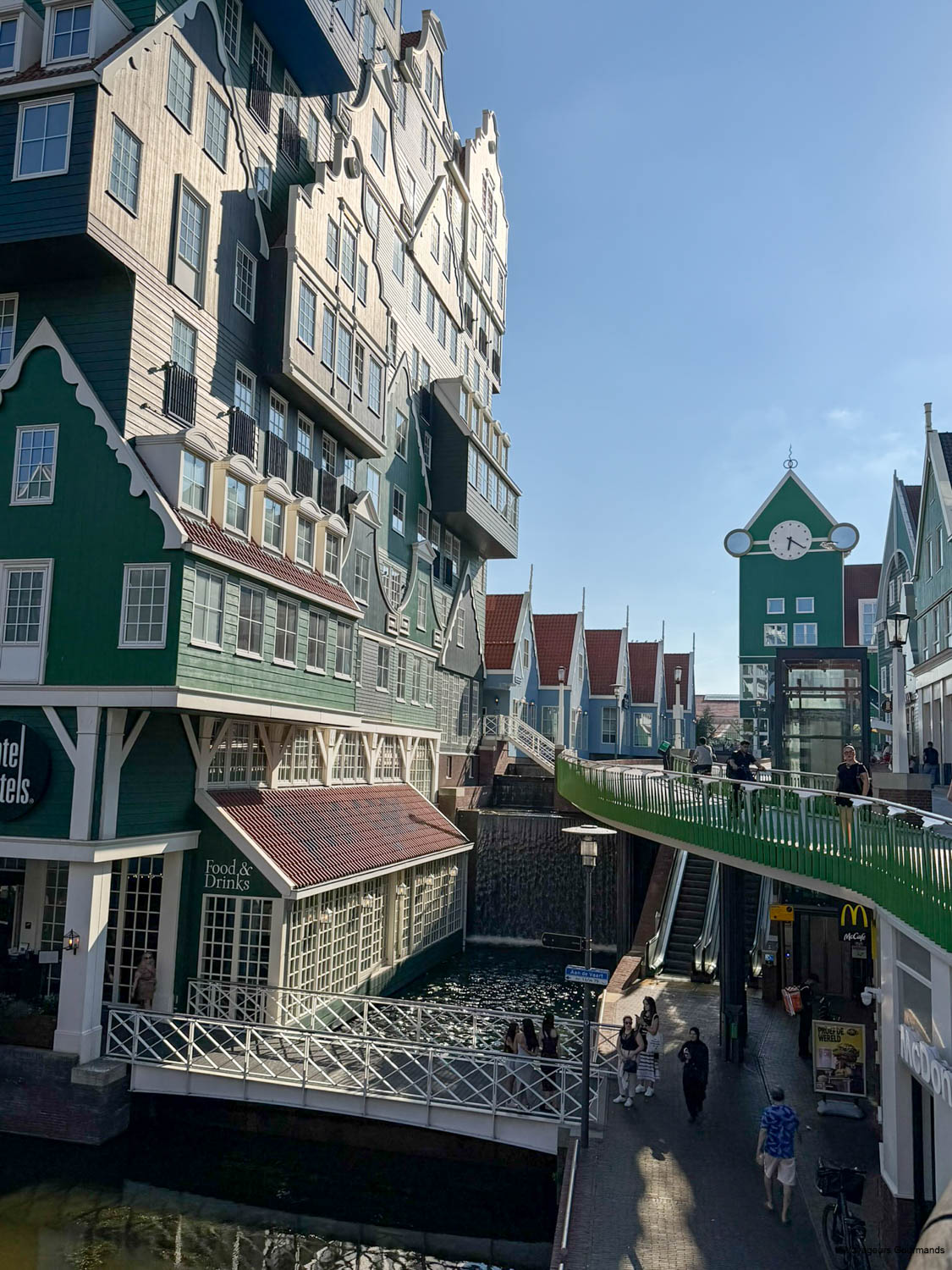
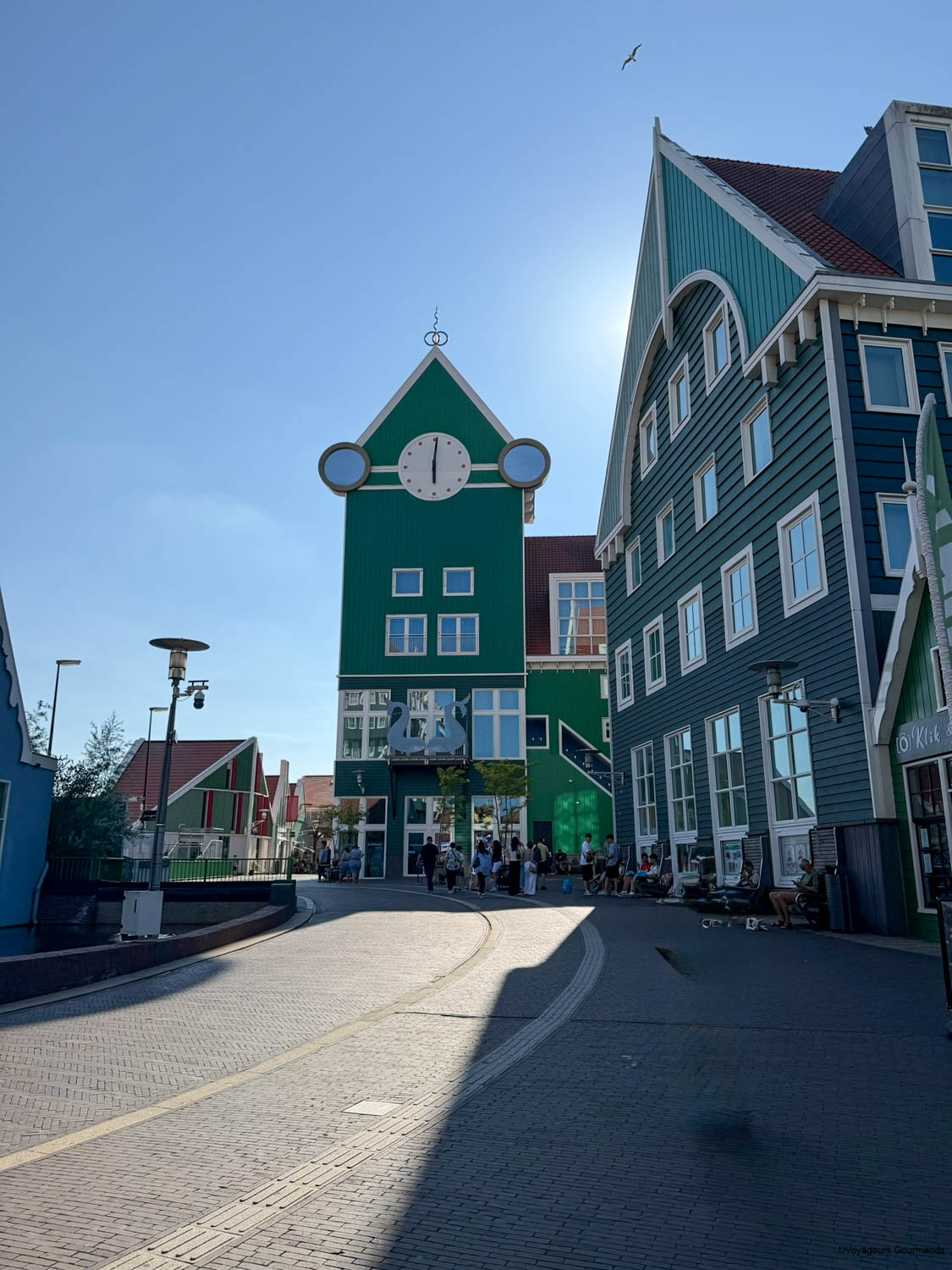
Impossible to miss as you approach: its façade recreates nearly seventy traditional green and blue houses from the region, stacked and interlocked one on top of another, like a gigantic construction set. The result might sound completely crazy on paper, but it is surprisingly harmonious once you are standing in front of it: the hotel blends perfectly into the landscape while adding a real modern touch. You immediately understand why it has become the symbol of Zaandam, and why everyone stops to photograph it from every angle.
Inside, each room is themed around a local specialty. I had the “cheese” room, with its lovely sign “Schipper Westzaan Holland, Kaas fromages cheese” — a nice nod to the cheese-making tradition of the Zaan region. The rooms are spacious and comfortable, and despite being close to the center, you sleep in surprising quiet. A very good base, ideally located for reaching Zaanse Schans right when it opens.
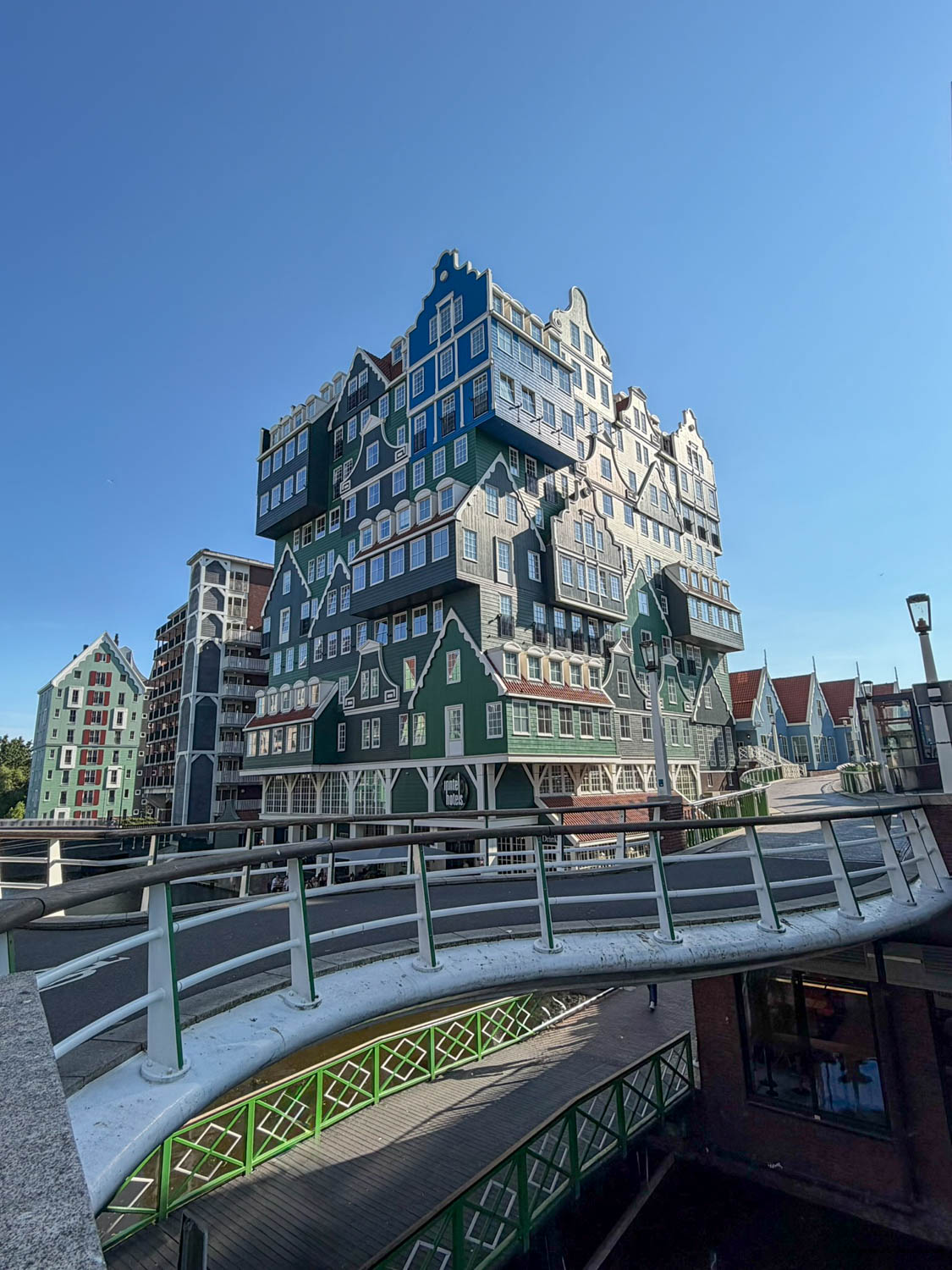
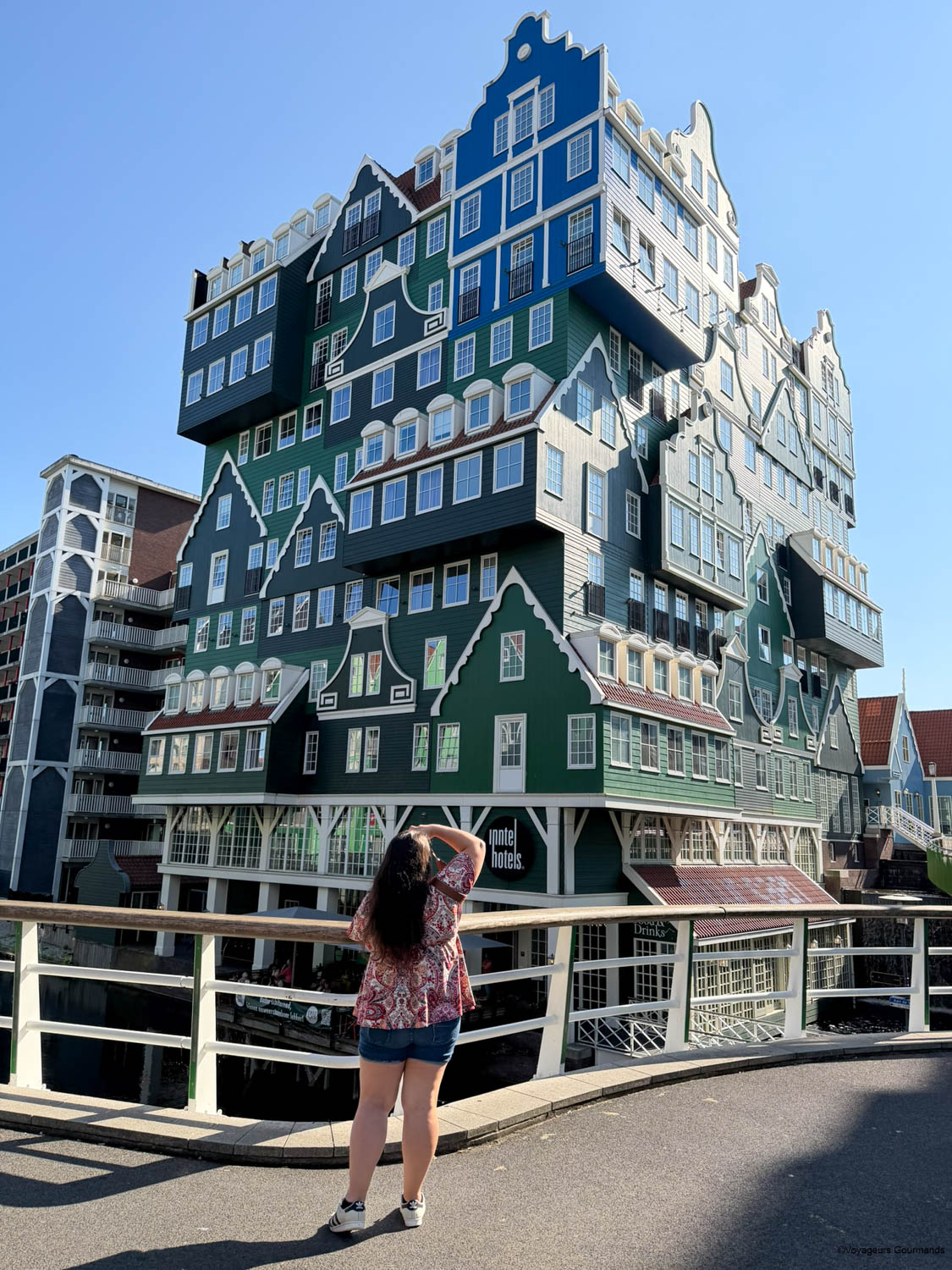
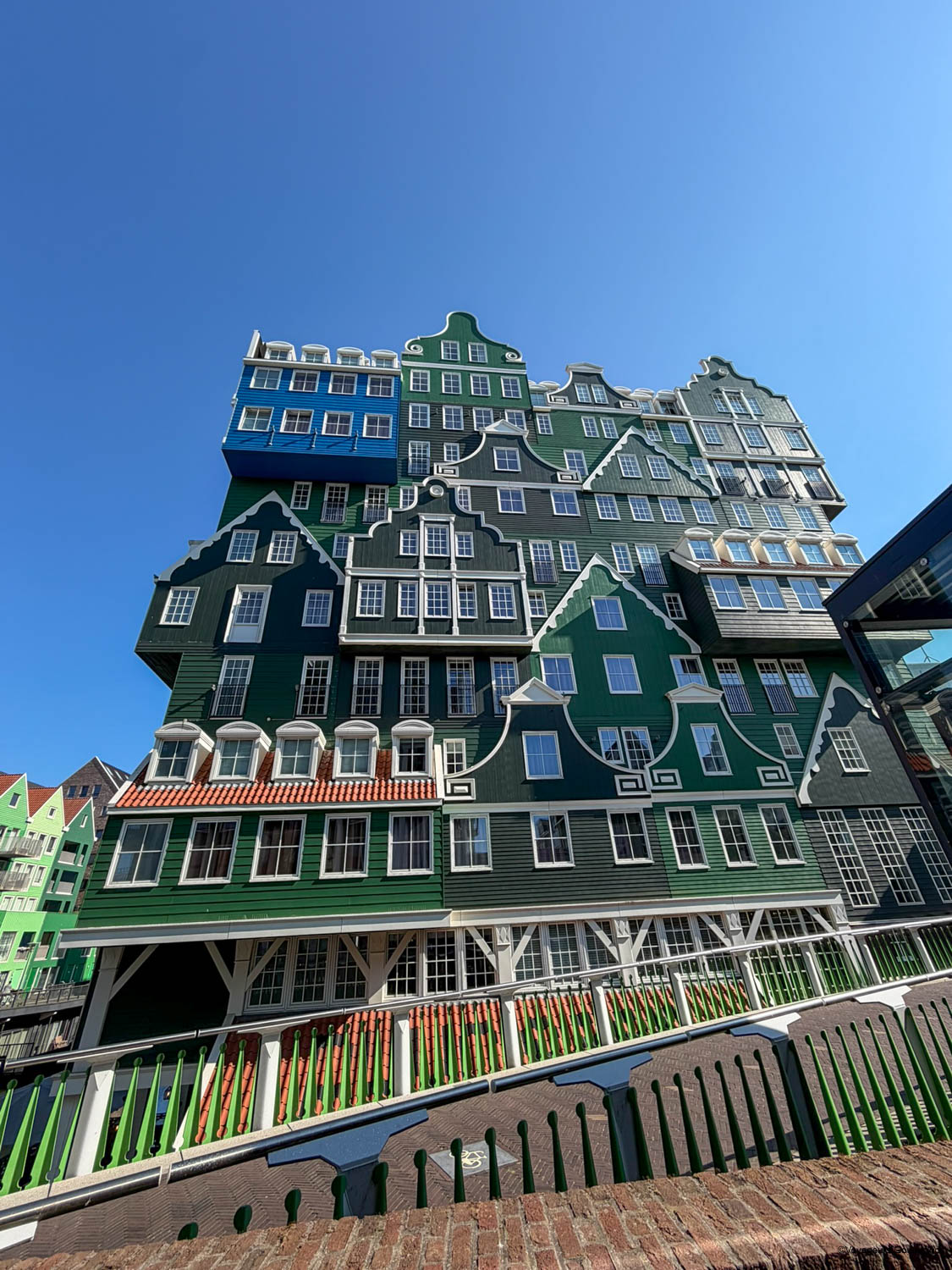
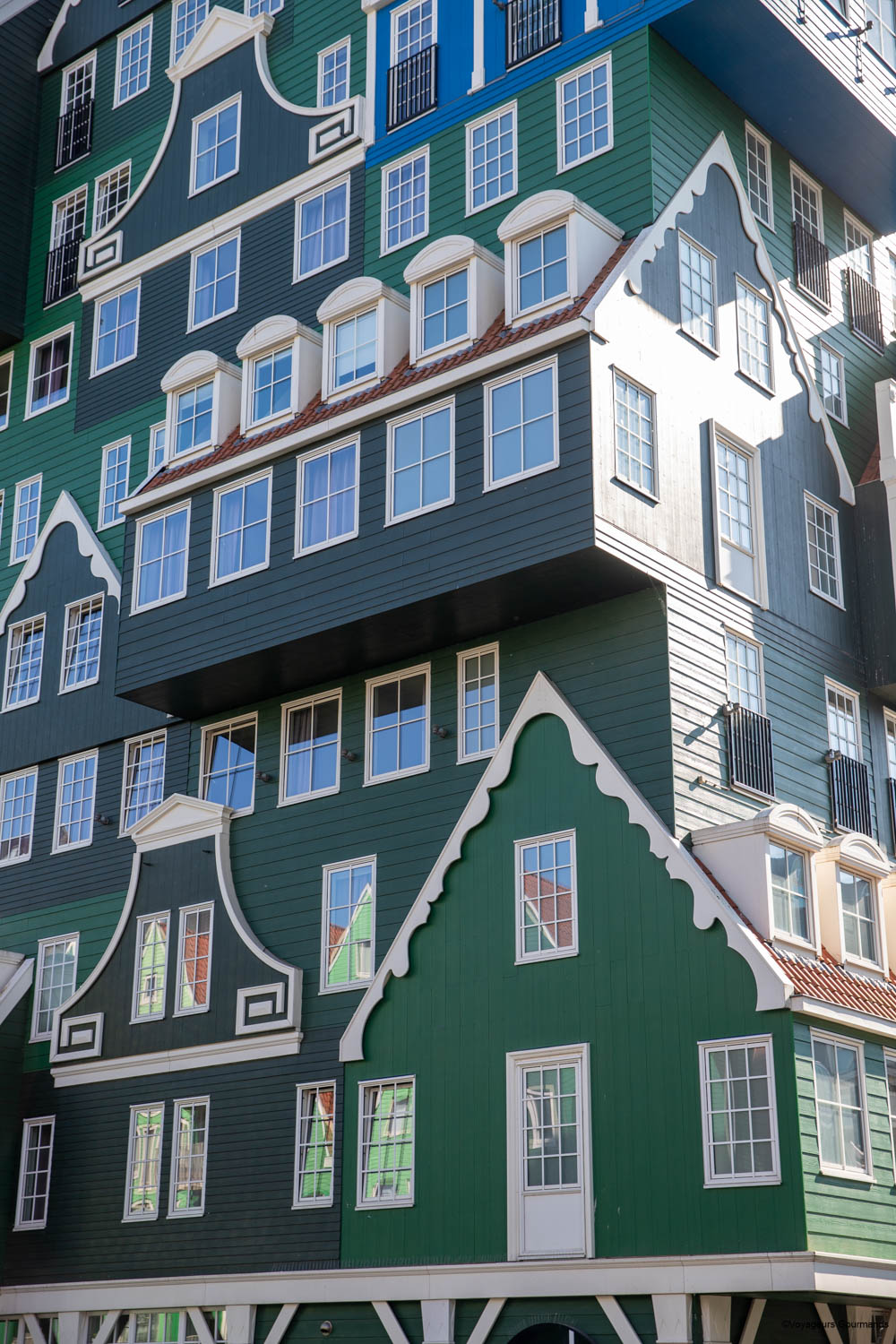
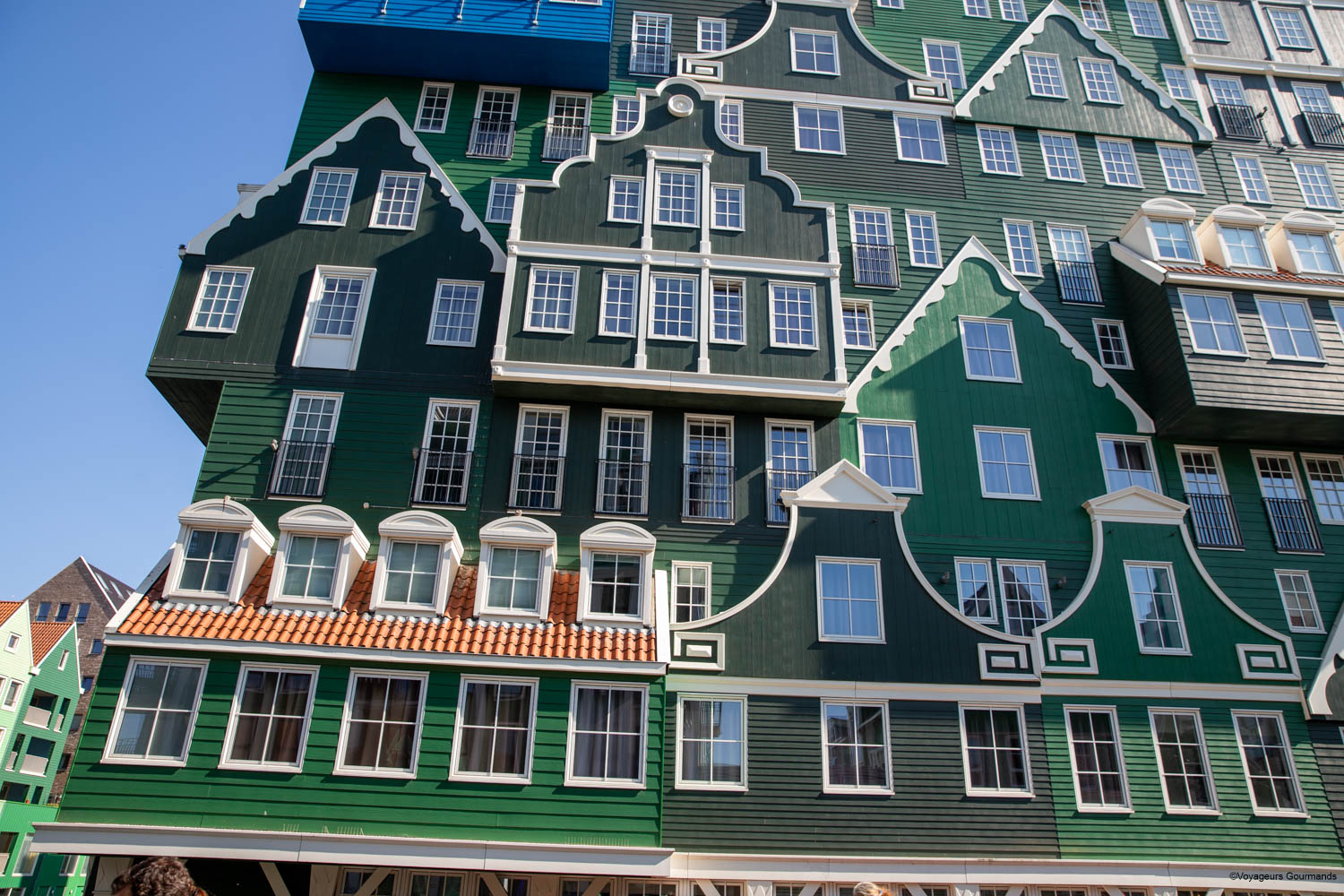
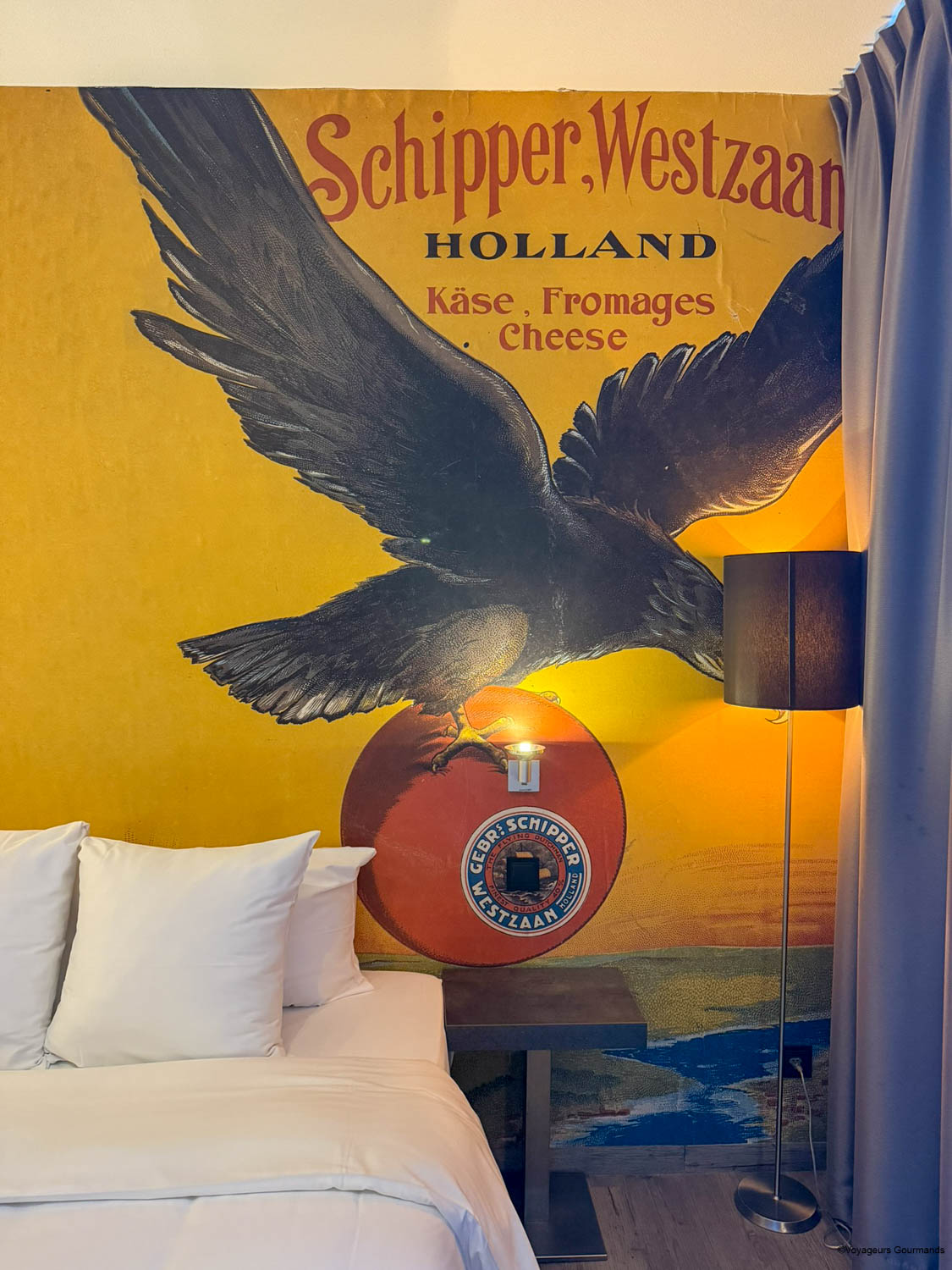
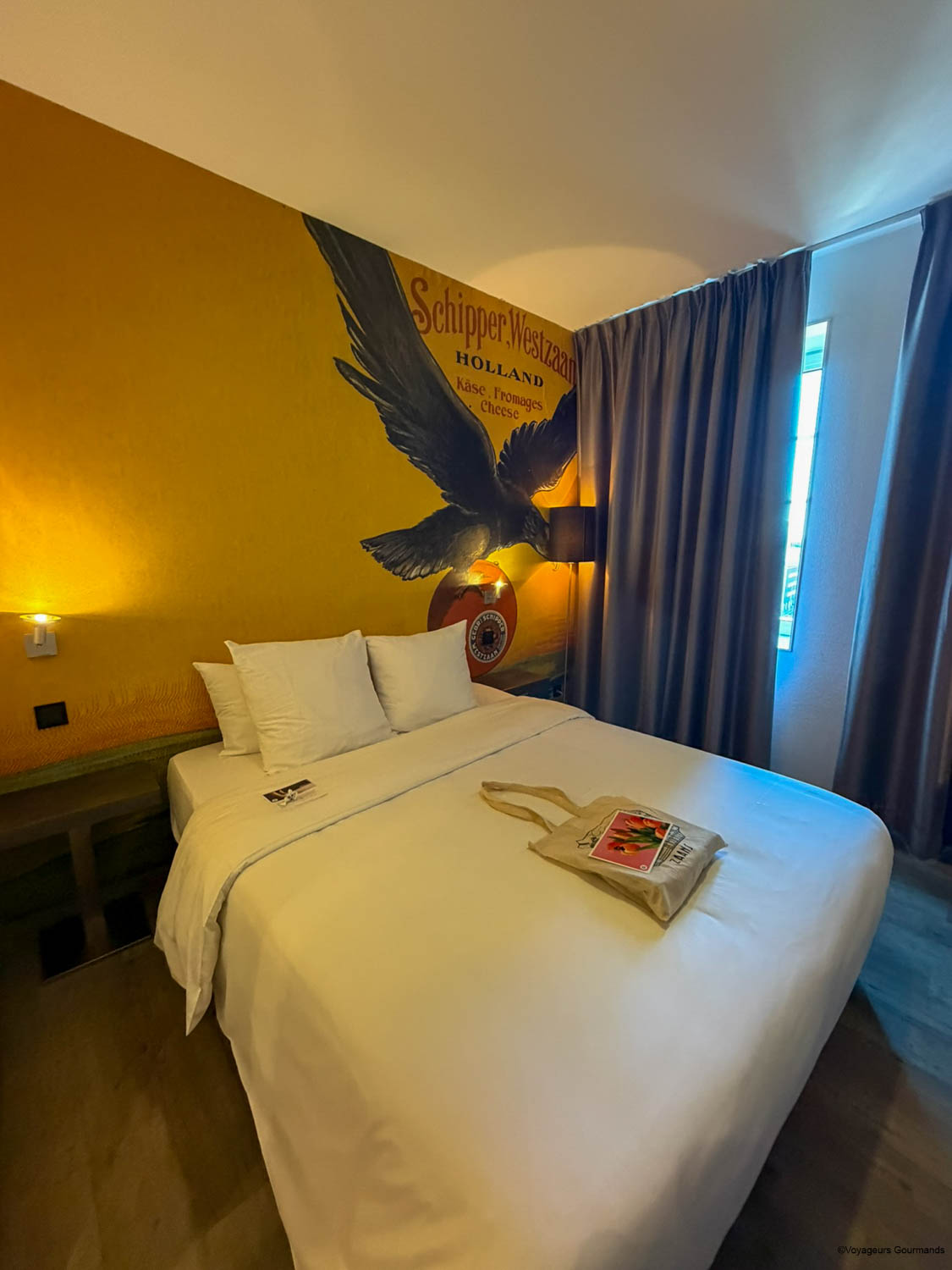
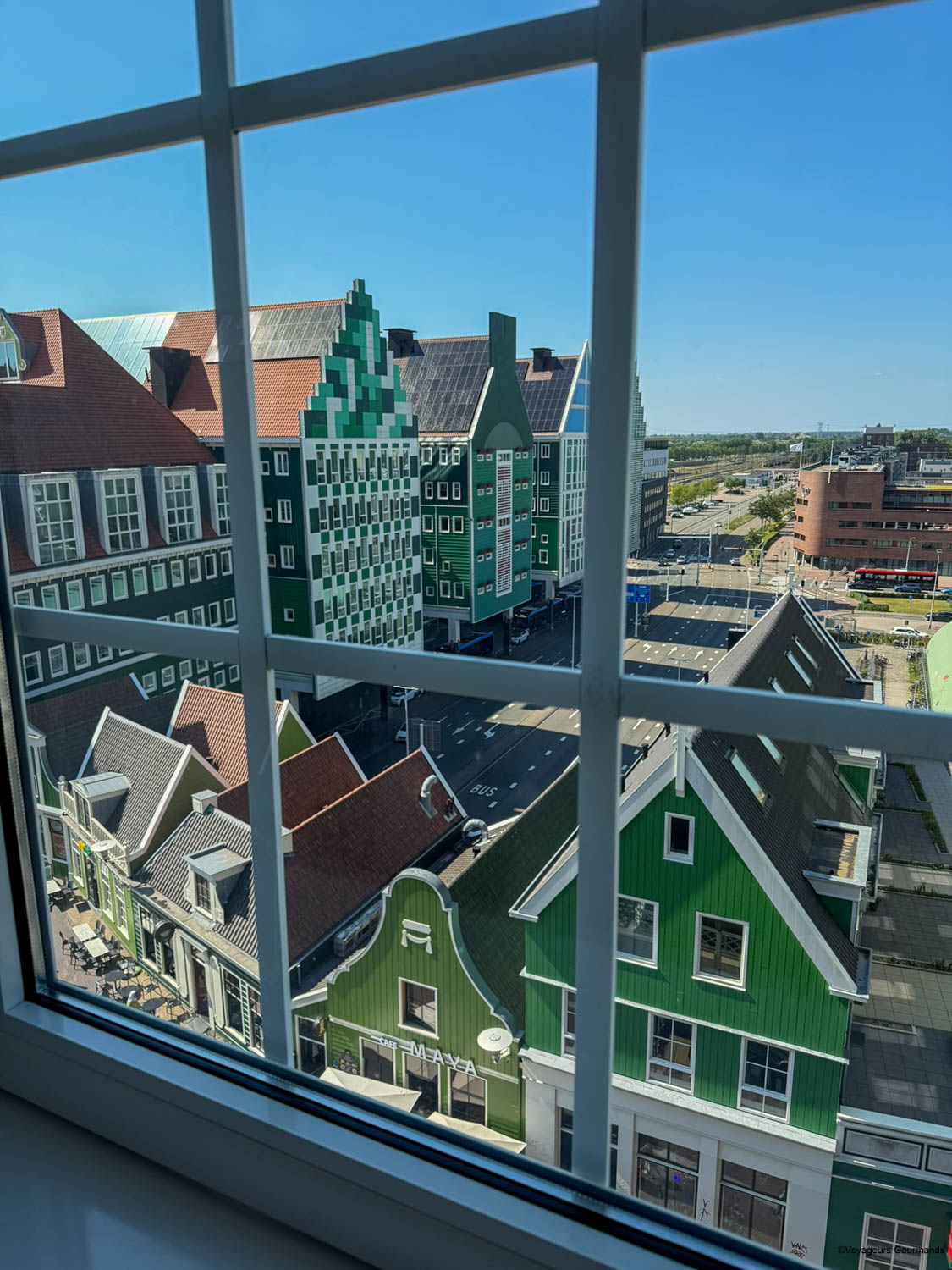
Inntel Hotels Amsterdam Zaandam (the official website, here).
Provincialeweg 102, 1506 MD Zaandam, Netherlands
Where to eat?
Verrassing aan de Zaan, in Zaandam, for a dinner that is out of the ordinary. Set on a waterfront terrace, invisible from the street, the restaurant prepared a surprise menu for us: you discover each dish as it arrives, without knowing what it contains, plated with a level of care that borders on a work of art. Yet the highlight of the evening was the one I did not expect: a tartare, even though I am usually wary of it for fear of getting sick. This one completely changed my mind — one of the best dishes of the trip, without hesitation. A huge favorite for this address.

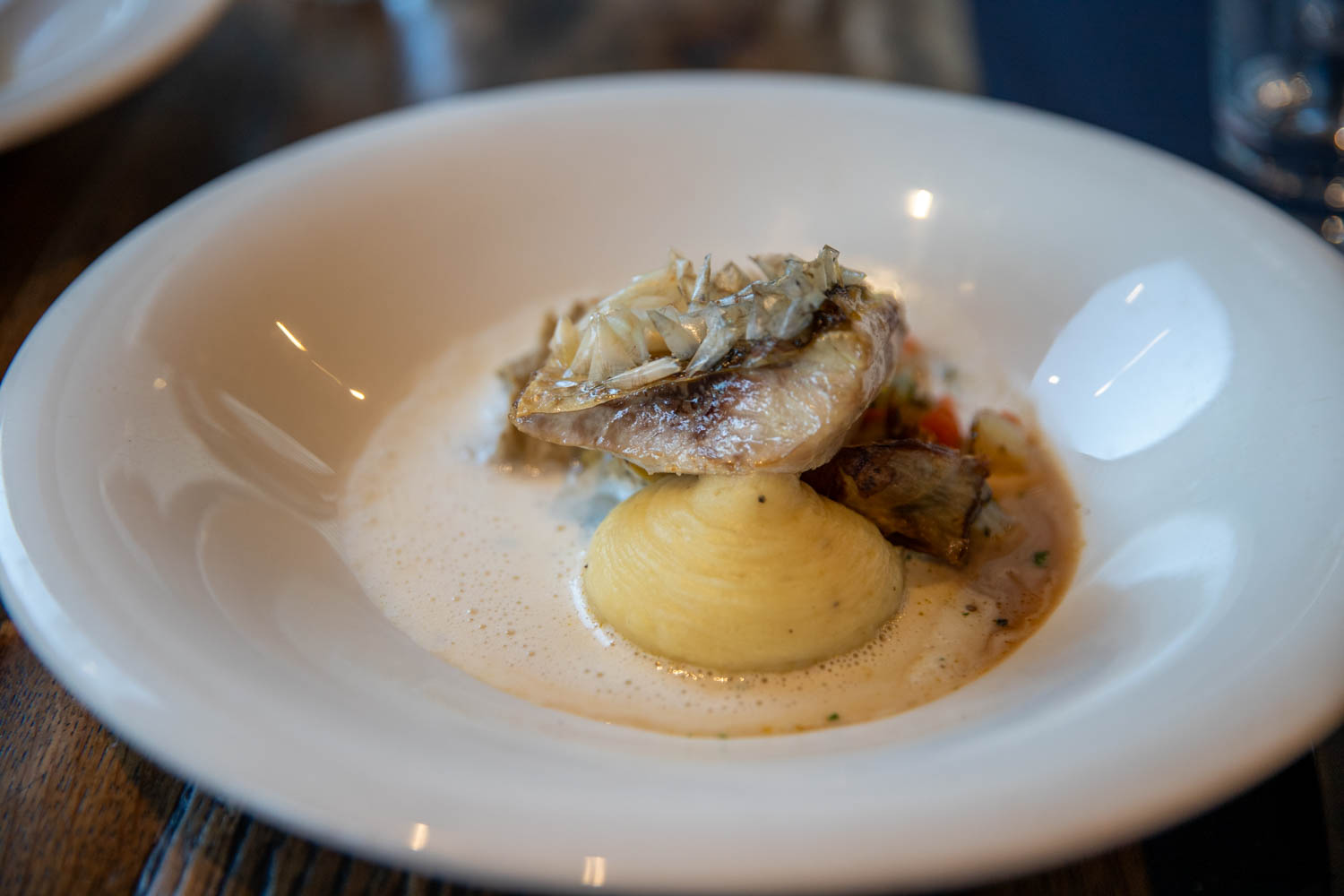
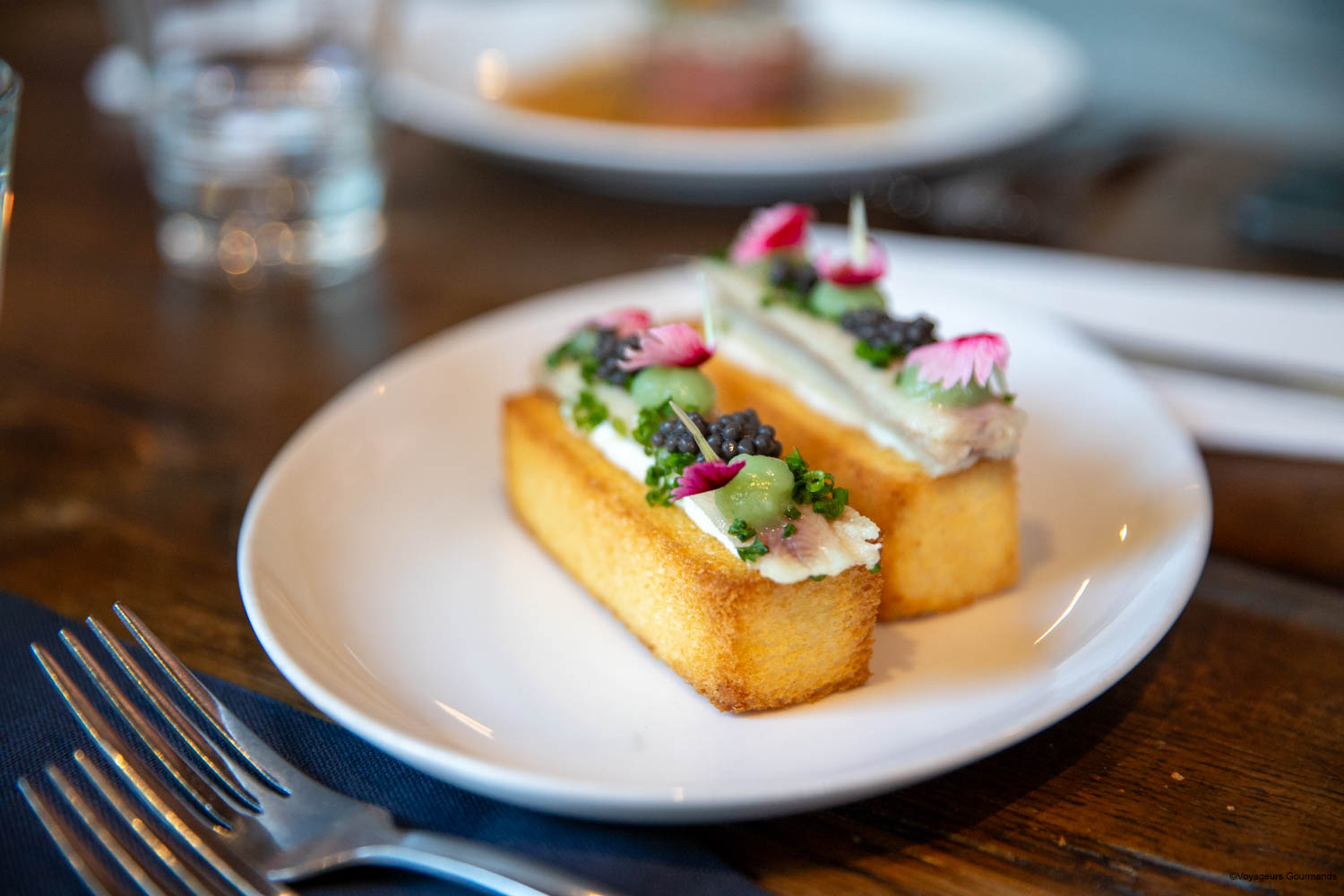
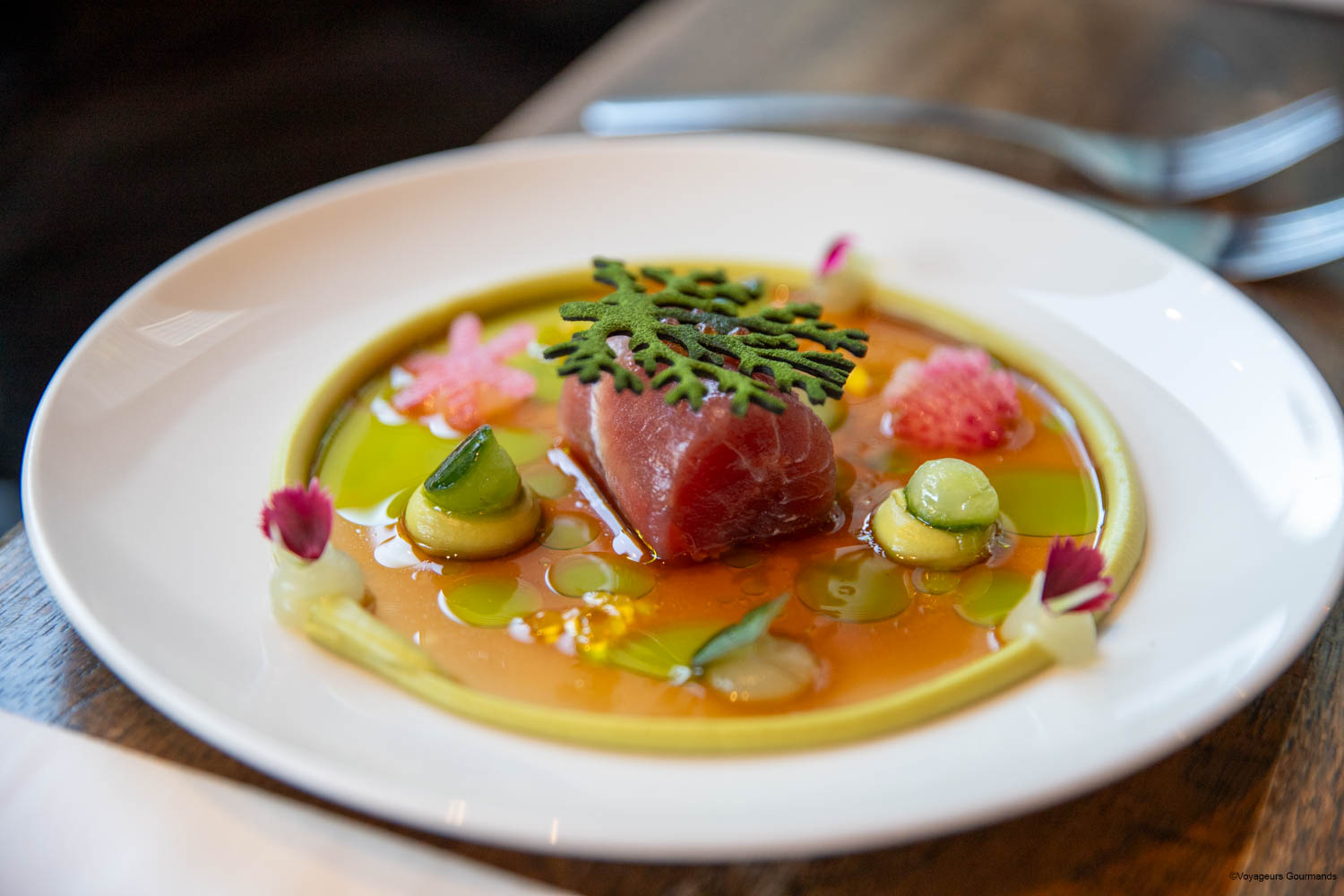
Bierbrouwerij Hoop, in Zaandijk, for a friendly lunch. This former brewery that produces its own beers combines industrial heritage with a warm atmosphere, with a menu that highlights local products and several pairings between house beers and regional specialties. Even if you don’t drink beer, the address is worth the detour for its atmosphere and generous cooking.
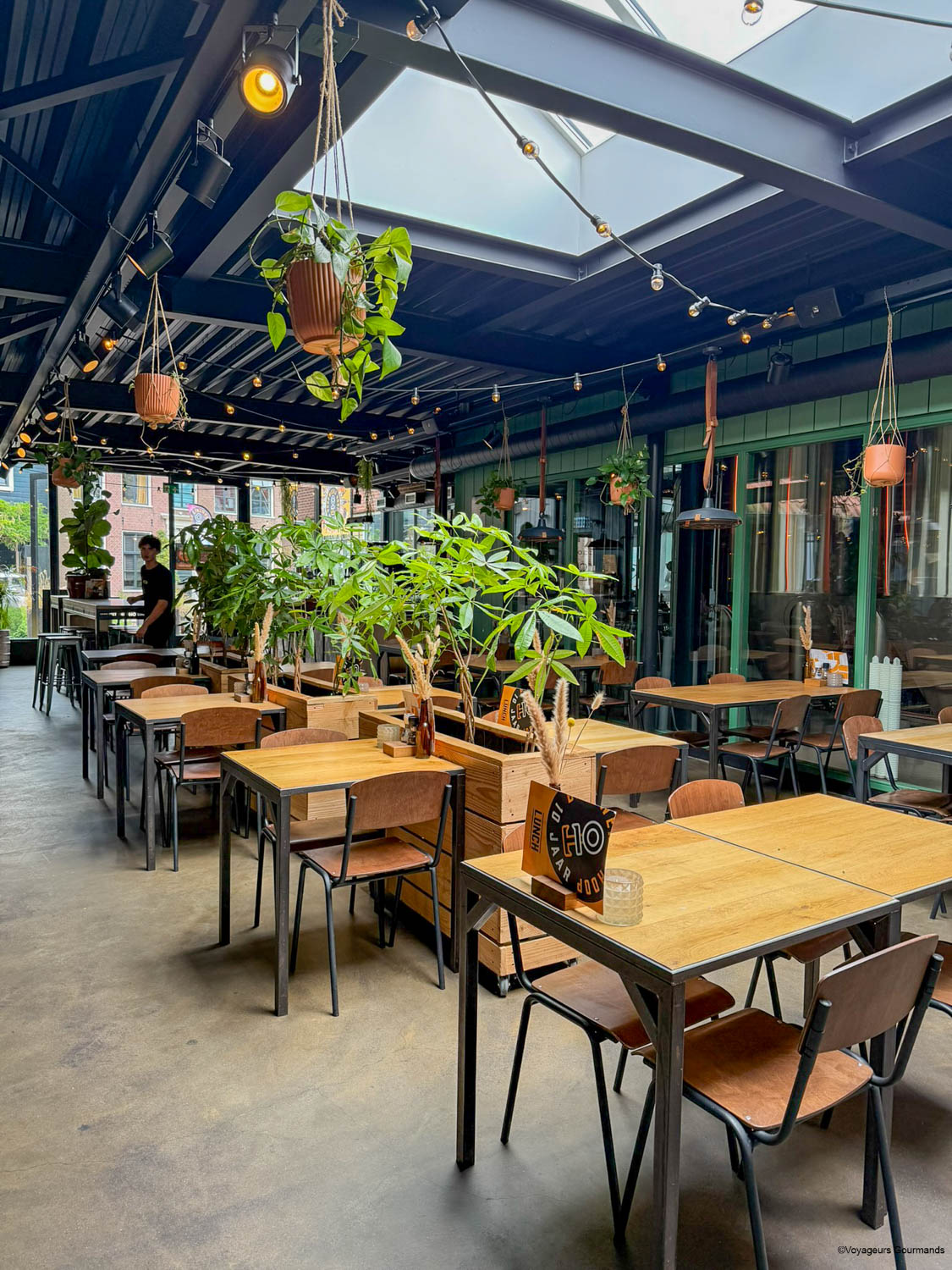

If you are only passing through Zaanse Schans, several cafés and restaurants on-site also allow you to have lunch with a view of the windmills.
Practical tips for visiting Zaanse Schans
How to get to Zaanse Schans from Amsterdam?
One of the major advantages of Zaanse Schans is its proximity to Amsterdam. The site is easy to reach whether you are traveling by train, bus, or car.
By train — In our opinion, this is the easiest option. From Amsterdam Central Station, trains reach Zaandijk – Zaanse Schans station in about twenty minutes. Then you simply need to walk about fifteen minutes to reach the village.
By bus — Several bus lines also connect Amsterdam to Zaanse Schans, with a stop very close to the site.
By car — A large paid parking lot is available at the entrance to Zaanse Schans. In high season, however, we recommend arriving early in the morning so you can easily find a space and enjoy the site before the groups arrive.
On-site — The bike paths are reserved for locals traveling quickly to get to work: it is best not to walk on them, even if they seem deserted. Also bring flat, comfortable shoes, as the village streets are paved.
Opening hours, prices, and tickets: do you have to pay to visit Zaanse Schans?
The good news is that access to the village of Zaanse Schans is completely free. You can freely walk through the streets, admire the traditional houses, view the windmills from the outside, and enjoy the different viewpoints without buying a ticket.
However, some visits require payment, notably entry to several windmills, the Zaans Museum, the Verkade Experience, and certain artisan workshops. A combined ticket (windmills + Zaans Museum) costs around €29.50, available online or directly on-site.
If you have the iAmsterdam City Card, note that it gives free access to certain museums and windmills in Zaanse Schans, but it does not cover transportation to the site: remember to plan your journey separately.
Before your departure, also remember to check the official opening hours of the museums and windmills, which may vary depending on the season.
What is the best time to visit Zaanse Schans?
Zaanse Schans can be visited year-round, but the atmosphere changes with the seasons. Spring and early summer generally offer the best conditions, with lush greenery and longer days.
To fully enjoy the site, we recommend arriving right when it opens or in the late afternoon. Organized groups are especially numerous between late morning and mid-afternoon, particularly in summer. If you enjoy photography, the morning light shows off the windmills and traditional houses especially well.
✤✤✤
Before our visit, we expected to discover a pretty windmill village, very photogenic but ultimately fairly quick to explore. We were pleasantly surprised by everything Zaanse Schans has to offer: beyond the iconic landscapes, the entire history of the region comes to life through the windmills, museums, and many skills that are still preserved.
If you are planning a stay in Amsterdam, we think Zaanse Schans is well worth half a day, or even a full day. And if you have the opportunity to add a night in Zaandam, don’t pass it up: the city naturally extends the Zaanse Schans experience and is well worth stepping out of the shadow of its famous windmills.
FAQ: visiting Zaanse Schans
Click here for the FAQ
Is Zaanse Schans free?
Access to the village of Zaanse Schans is completely free: you can walk freely through the streets, admire the windmills from the outside and enjoy the viewpoints without buying a ticket. However, admission to several windmills, the Zaans Museum, the Verkade Experience and some traditional workshops is paid. A combined ticket (windmills + Zaans Museum) costs around €29.50.
How much time do you need to visit Zaanse Schans?
Allow 1.5 to 2 hours if you simply want to see the windmills and enjoy the scenery. For a more complete visit, including one or two windmills, the Zaans Museum and a food experience, allow around half a day. You can also easily spend a full day visiting if you want to take your time.
How do you get to Zaanse Schans from Amsterdam?
The easiest option is to take the train from Amsterdam Central Station to Zaandijk – Zaanse Schans station (around 20 minutes), followed by a walk of about 15 minutes. Several bus routes also serve the site, and a large paid parking lot is available for those arriving by car.
Is Zaanse Schans suitable for families?
Yes, absolutely. The working windmills, traditional craft demonstrations, food workshops and many outdoor spaces make the visit fun for children. The paths are flat and easy to navigate, including with a stroller.
Which windmill should you visit if you are short on time?
If you can only choose one, go for De Zoeker. It is a working oil mill built in 1672 and also offers one of the best views of the site from its roof.
What is the difference between Zaanse Schans and Zaandam?
Zaanse Schans is the open-air museum village famous for its windmills, while Zaandam is the larger nearby city, where you can stay and find plenty of places to eat. Both are part of the same municipality of Zaanstad, with the village of Zaandijk between them.