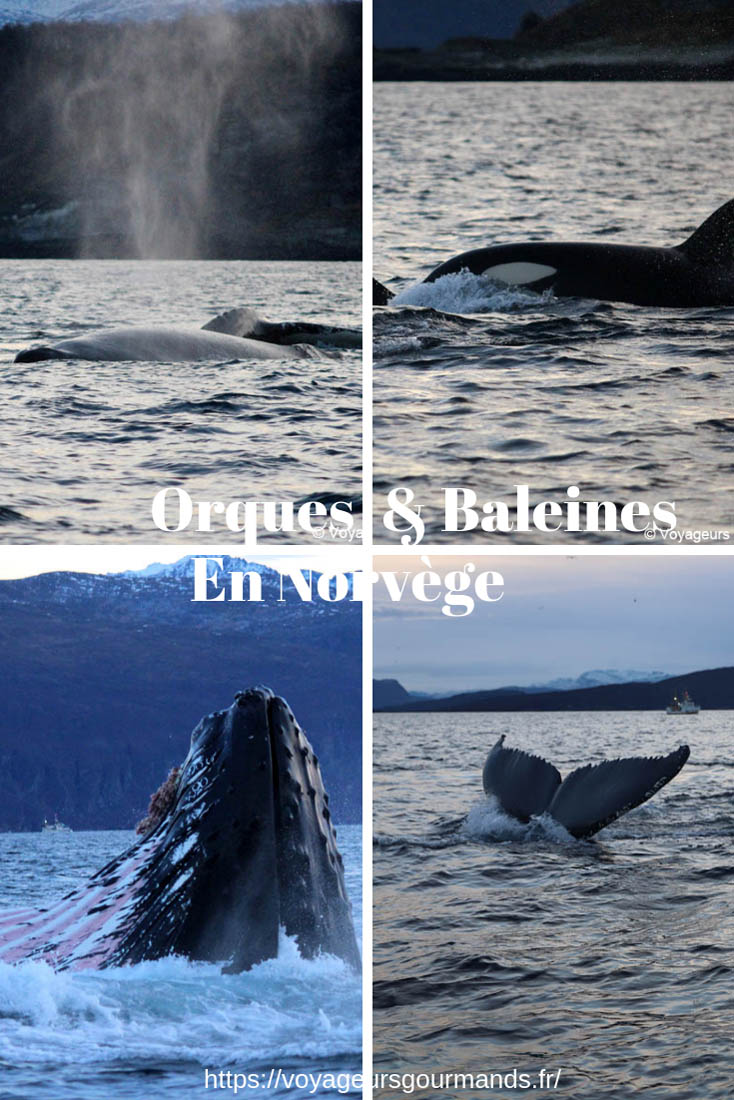
I’ve always dreamed of seeing certain animals in the wild: dolphins, koalas and kangaroos, whales… For years I’ve kept a mental list of countries I’d travel to just to see them. Norway was right there on our bucket list, because it combined the chance to see whales and the northern lights, two of our dreams. In mid-November, we set off to meet the orcas and whales of Norway, in Skjervøy, north of Tromso.
In this guide I’ll tell you about that magical day, and give you everything you need to do the same: where to go, the best season, how to organise your trip from Tromso, and which boat to choose. Shall we?
Updated in September 2026. We took this trip in November 2018: the story and our opinions are from that visit, and the practical details (locations, season, how to get there) are refreshed.
✤✤✤
Orca and whale watching in Norway: our verdict at a glance
No time to read the whole thing? Here’s where and when to see orcas and whales in Norway, region by region.
| Region | Season | What you can see | Our take |
|---|---|---|---|
| Skjervøy and Kvænangen | Late October to late January | Orcas, humpback whales, sometimes fin whales | Our pick |
| Alta | Late October to late January | Orcas and humpback whales | Fewer crowds, no long drive |
| Andenes and Vesterålen | Mainly summer | Sperm whales | The one to pick for a summer trip |
| Lofoten Islands | Winter | Far fewer orcas than they used to have | Stunning, but not for whale watching |
The whales follow the herring: the best spots can shift from one year to the next.
Where to see orcas and whales in Norway
Skjervøy and Kvænangen, north of Tromso
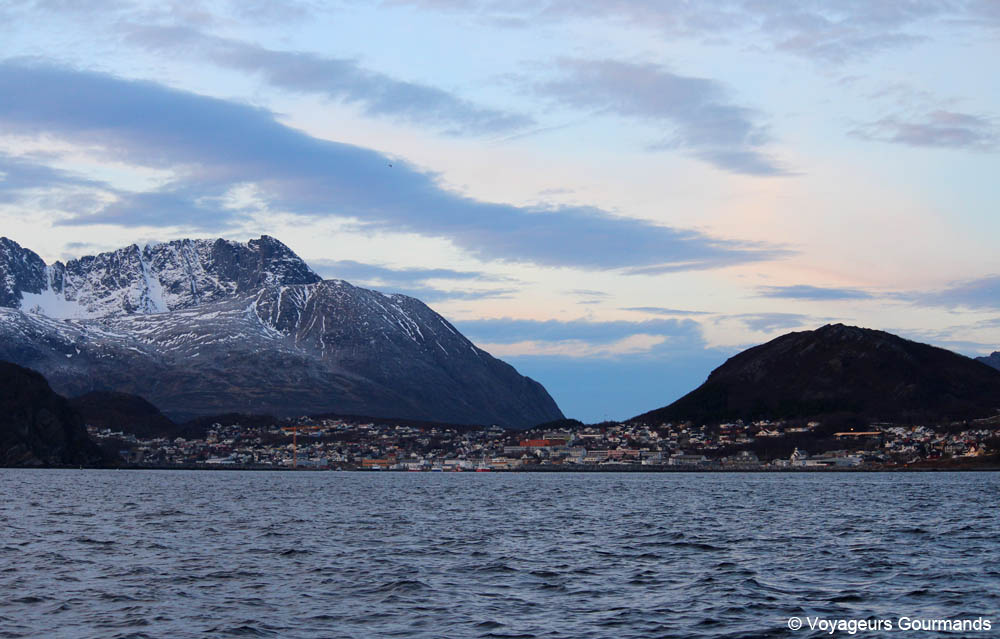
This is where we went, and it’s still THE winter spot. In recent years the fjords north of Tromso, especially around Skjervøy and the Kvænangen, have become the main feeding grounds where orcas and humpback whales gather. A few years ago the whales still came into the fjords around Tromso, but by 2017 and 2018 they had moved up to Skjervøy, roughly a four-hour drive from the city.
One thing to watch when you book! On our trip, some less scrupulous operators were still selling whale watching tours in the Tromso fjords even though the whales had gone. The night before, they let you know the whales aren’t around, but tell you to keep the faith and see how tomorrow goes… Your tour turns into a cruise through the fjords. Beautiful, sure, but not what you came for!
Our tip: always check where the boat actually goes before you book. If the description doesn’t mention Skjervøy, the Kvænangen, or an area where whales have been spotted recently, ask.
Alta, the quieter alternative
We haven’t been ourselves, but Alta, in Finnmark, has become a very good alternative: the orcas and whales come right into the Altafjord. No hours of driving before you board, and far fewer people than in Tromso. The season is the same.
Andenes and Vesterålen, for sperm whales
Further south, Andenes, at the northern tip of the Vesterålen islands, is known for sperm whale watching. If you’re heading to Norway in summer, that’s where to go.
What about the Lofoten Islands?
The Lofoten were long known for their winter orcas. But since the herring moved further north, the action now happens around Tromso and Alta instead. The Lofoten are still stunning, but if seeing orcas is your priority, aim north.
When to see orcas and whales in Norway
In theory you can see whales in Norway all year round, but the species change with the month and the region. You’ll notice that some operators run “summer” safaris and “winter” safaris.
For orcas and humpback whales, the season runs roughly from late October to late January. It isn’t an exact science though: depending on the year they show up a little earlier or stay a little later, sometimes into early February. If you’re going in January, check with the operators before booking, as the reputable ones will tell you whether the whales are still around.
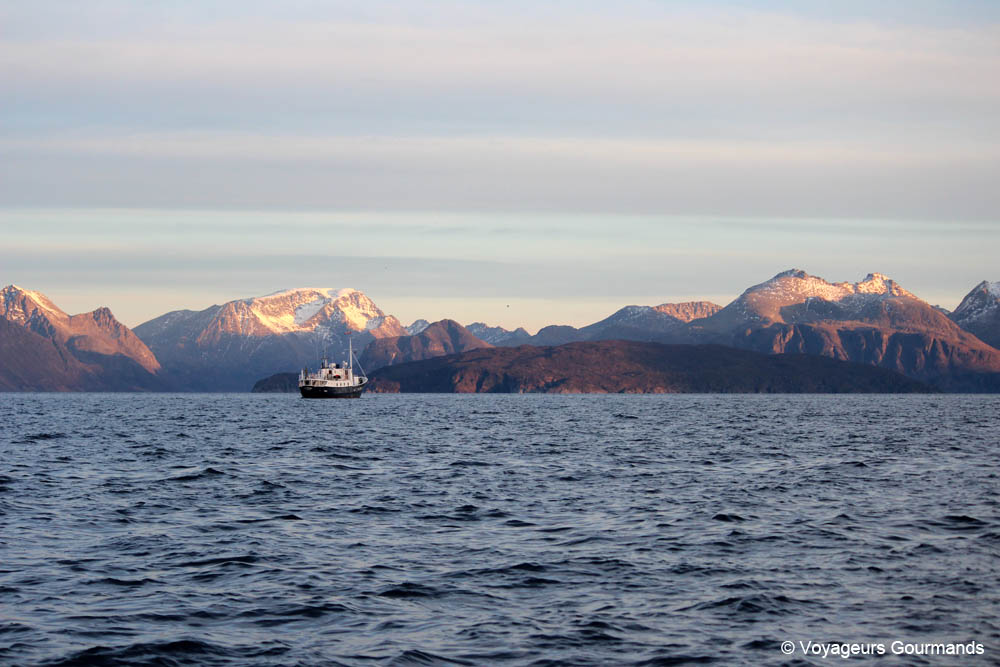
We picked November because around Tromso you can see whales and the northern lights in the same window. On top of that it isn’t polar night yet (when it stays dark around the clock), so we had beautiful light and it wasn’t too cold. We saw humpback whales and orcas.
Whale watching from Tromso: how it works
Like us, most travellers stay in Tromso. That means setting aside a full day to go and see the whales, and you have a few options.
| Option | Duration | Who it suits |
|---|---|---|
| Bus and boat from Tromso | Around 12 hours | The classic option, and the one we chose. A long day, but the scenery on the drive is worth it on its own. |
| Boat straight from Tromso | Around 10 to 12 hours | Anyone who’d rather skip the bus. Usually large, comfortable catamarans, but more people on board and a crossing that can get rough. |
| Driving to Skjervøy yourself | 2.5 hours by road, then 2 to 3 hours at sea | Anyone renting a car. Often cheaper, and you can stop wherever you like for photos. |
To reach Skjervøy under your own steam you’ll take two ferries (Breivikeidet–Svensby, then Lyngseidet–Olderdalen) and board there. Just remember to check the ferry timetables and the state of the roads in winter!
Small boat, RIB or catamaran?
The type of boat completely changes the experience. Here’s what should help you choose.
| Type of boat | What it’s like on board | Good to know |
|---|---|---|
| RIB | Right down at water level, the biggest thrill. Thermal suit and harness provided. | It’s bumpy and it’s cold. Not advised if you have back problems. |
| Small boat | The sweet spot, in a small group. | Our pick Pricier, and spots sell out fast. |
| Large catamaran | Stable and comfortable, with indoor lounges and big windows. | Many more people on board, and you stay further from the animals. |
We were on a small boat, in a thermal suit and harness, and you really do feel close to the animals. It comes down to your budget and your tolerance for the cold… and for seasickness!
Whale watching in Norway: our day in Skjervøy
An early start
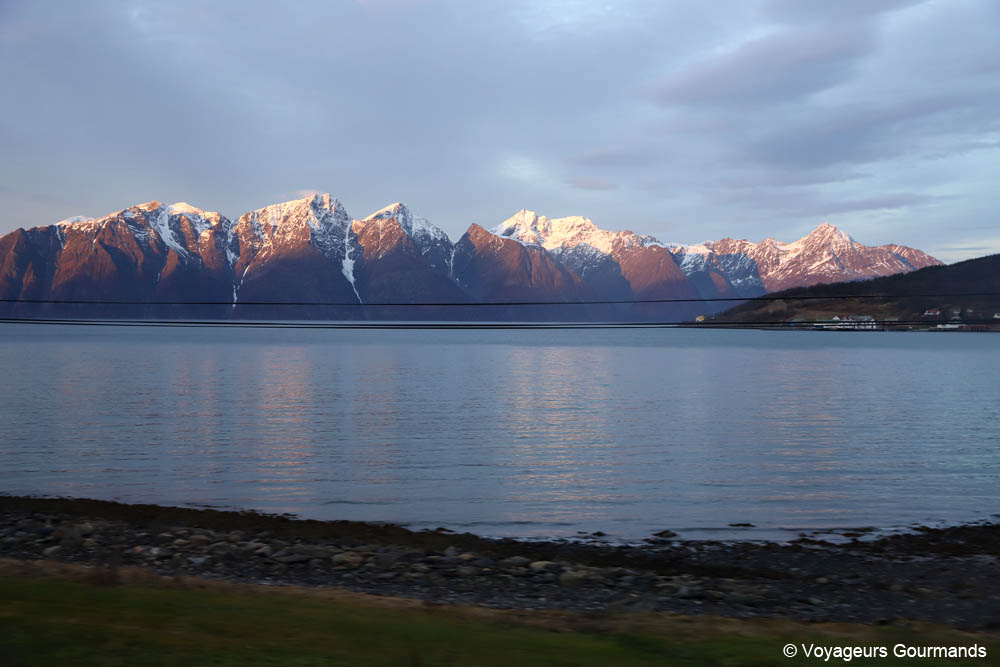
Getting up at 6am was rough, but it was for a good cause! We’re meeting at 6:30 outside the Radisson hotel. Now that the animals have moved away from Tromso, it’s a four-hour drive to go and watch them at Skjervøy. We climb onto a coach and there are a lot of us, which worries me a little, because we were supposed to be a group of about ten… I doze off at the start of the drive, but the scenery wakes me up fast. We keep saying “wow, that’s beautiful”, “wow, look at that”! Right then, we wished we had our own car so we could stop wherever we wanted.
Getting ready
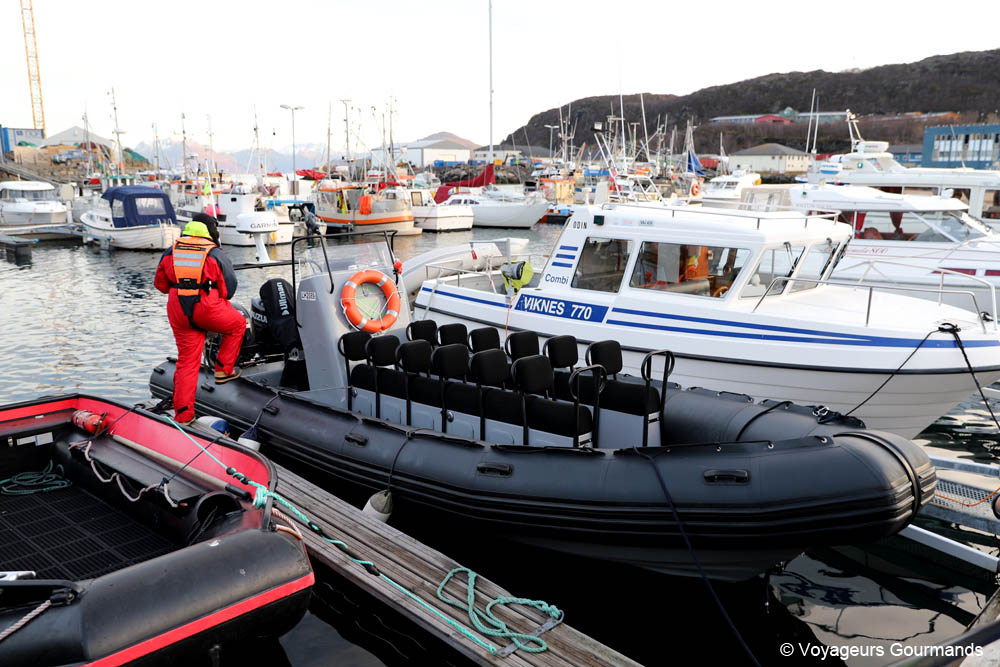
Four hours later, at 10:30, we arrive in Skjervøy, at a small harbour. We head into a building and everything is rushed, with the suits pointed out on one side and the boots on the other. We change, they clip us into a harness, and we’re handed a hat, a balaclava, gloves and goggles. Our things stay in that room, which is then locked.
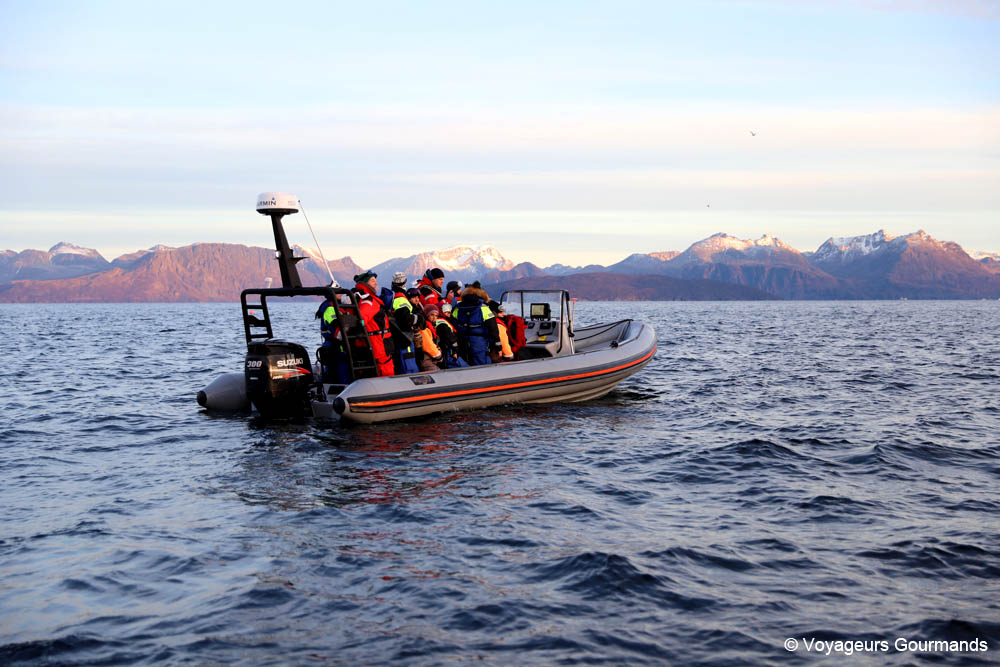
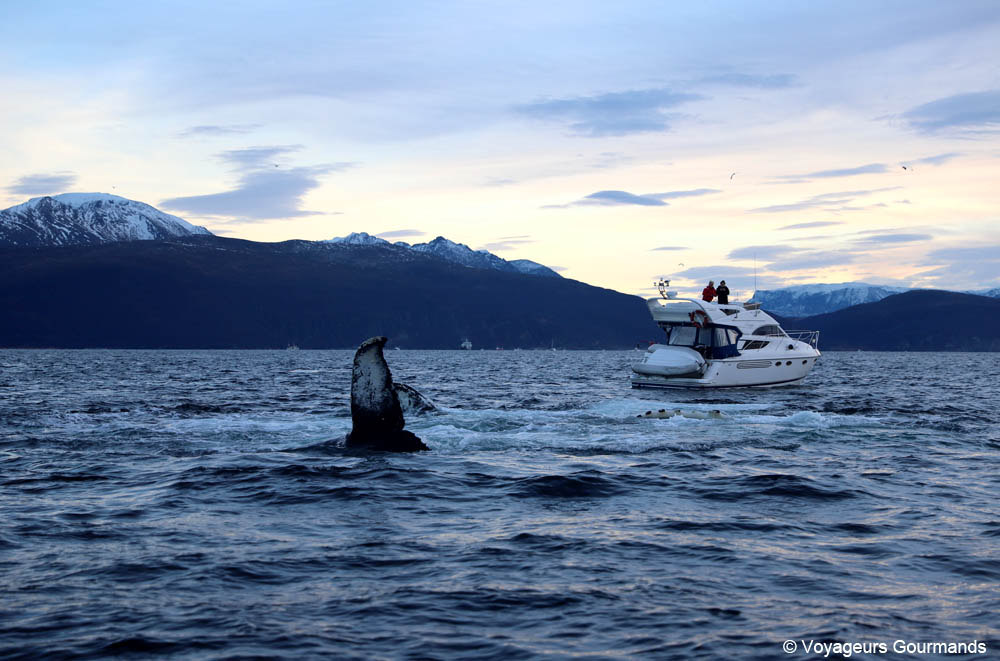
The group is split in two and we board a small boat with our guide. He runs through a few safety points and off we go! We’re about to see orcas and whales in Norway!!
Out on the water
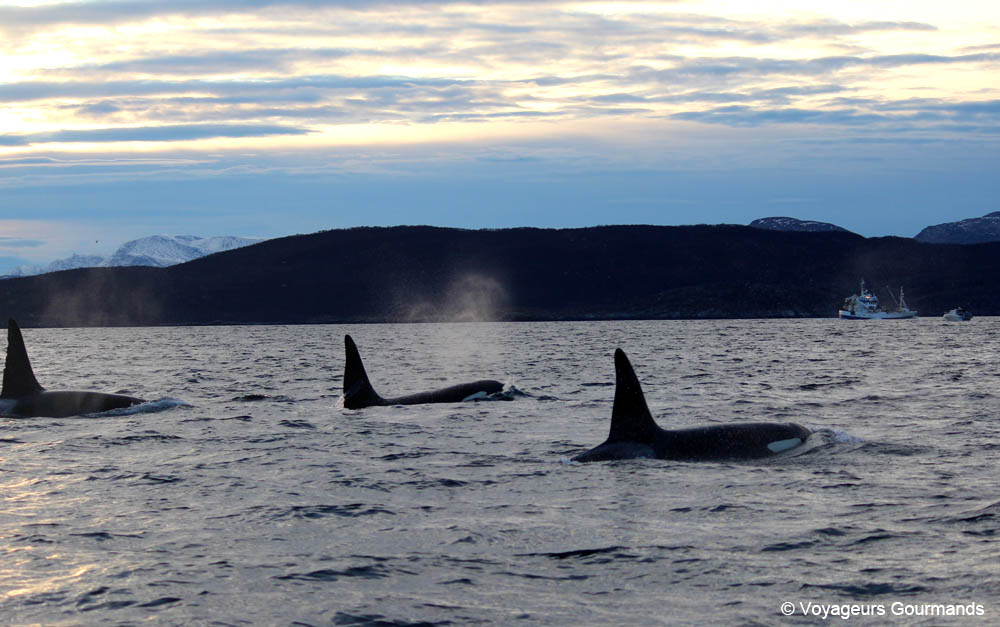
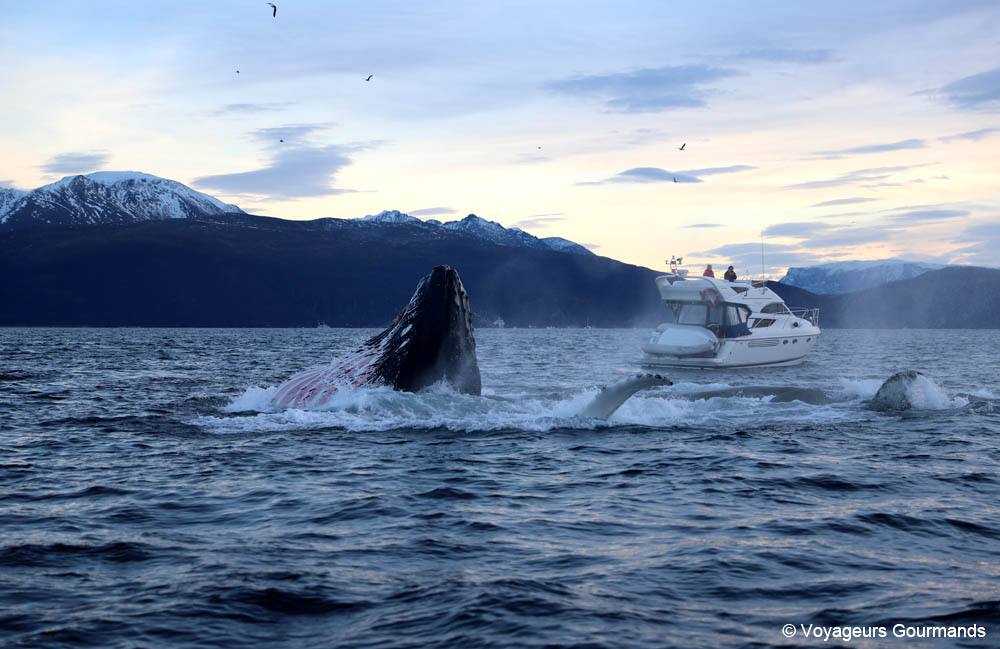
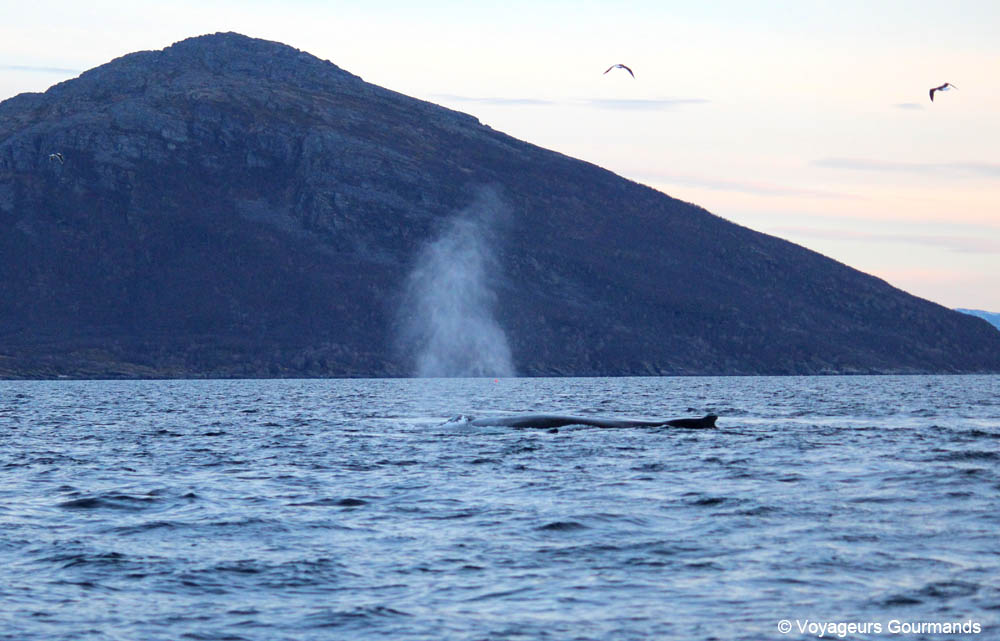
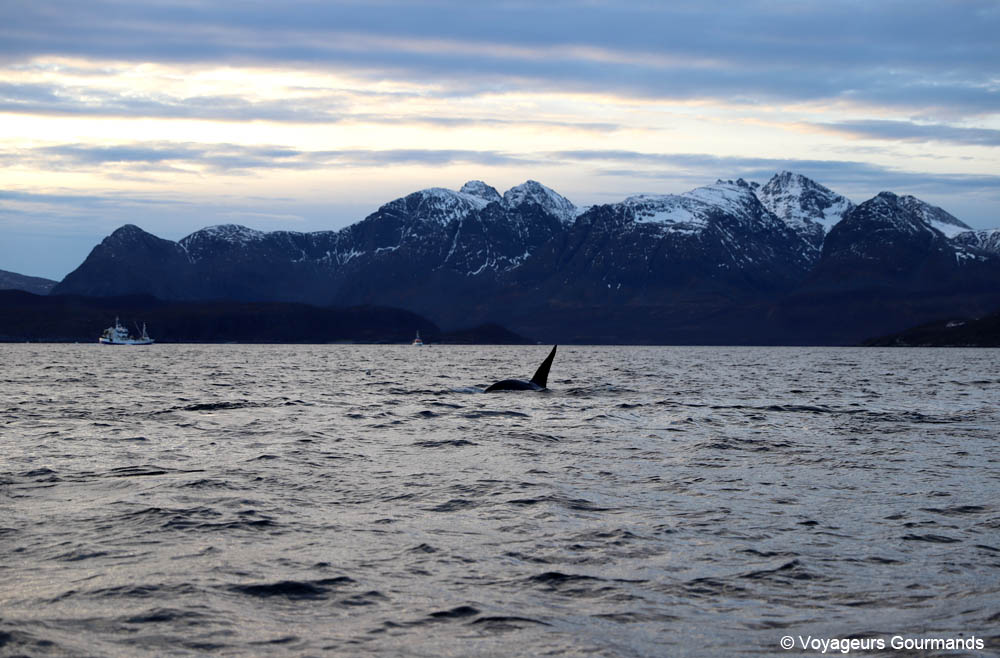
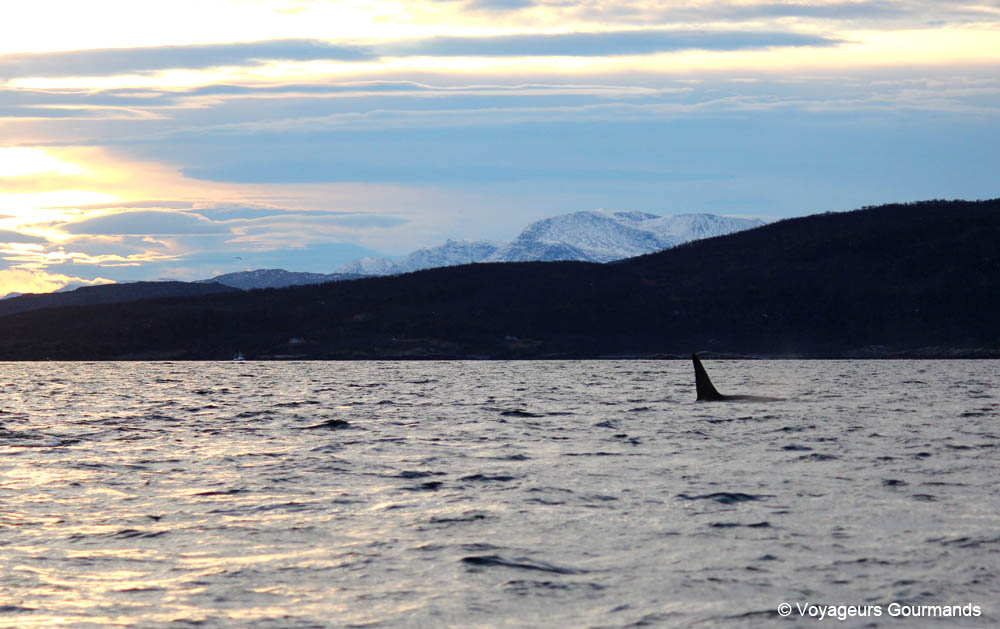
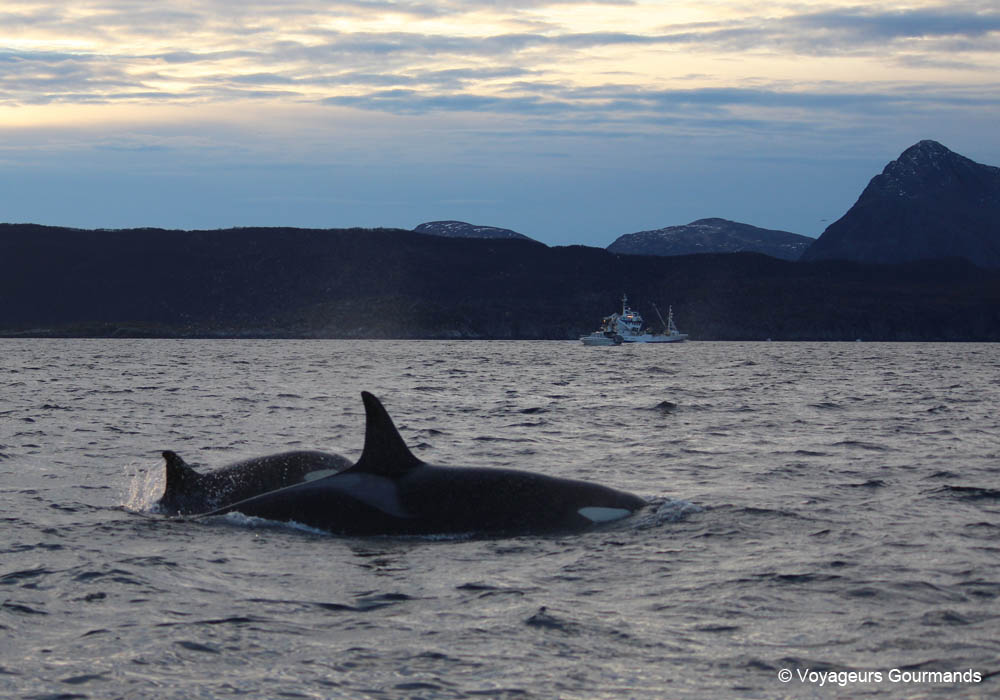
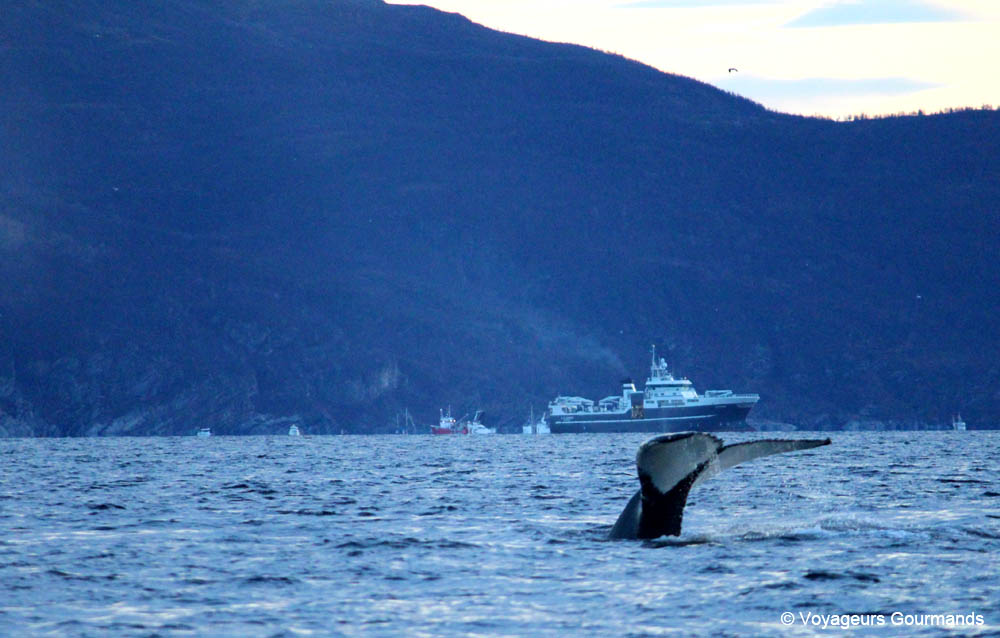
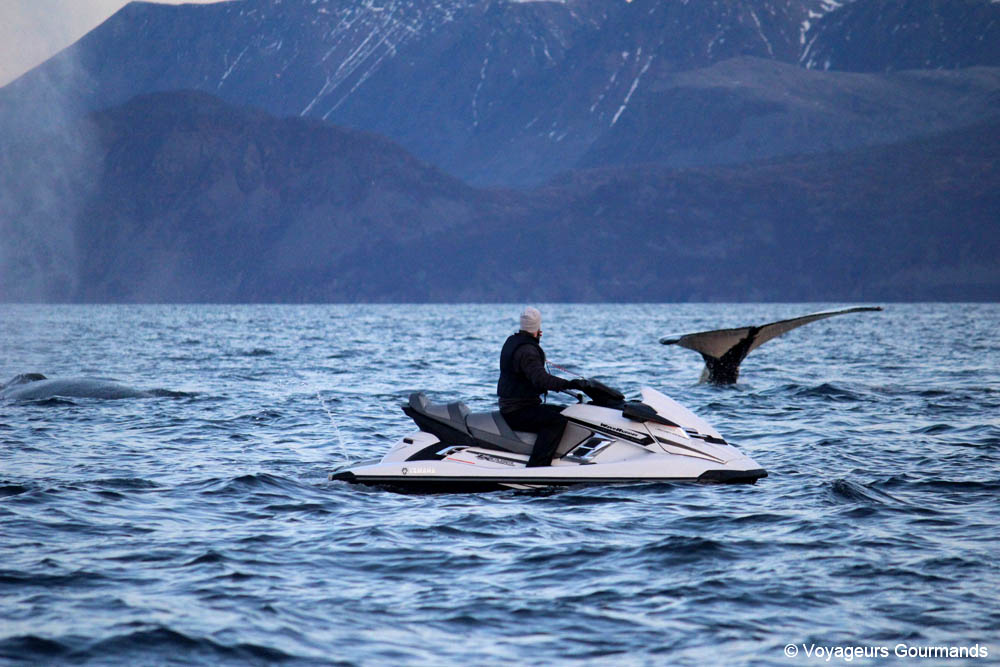
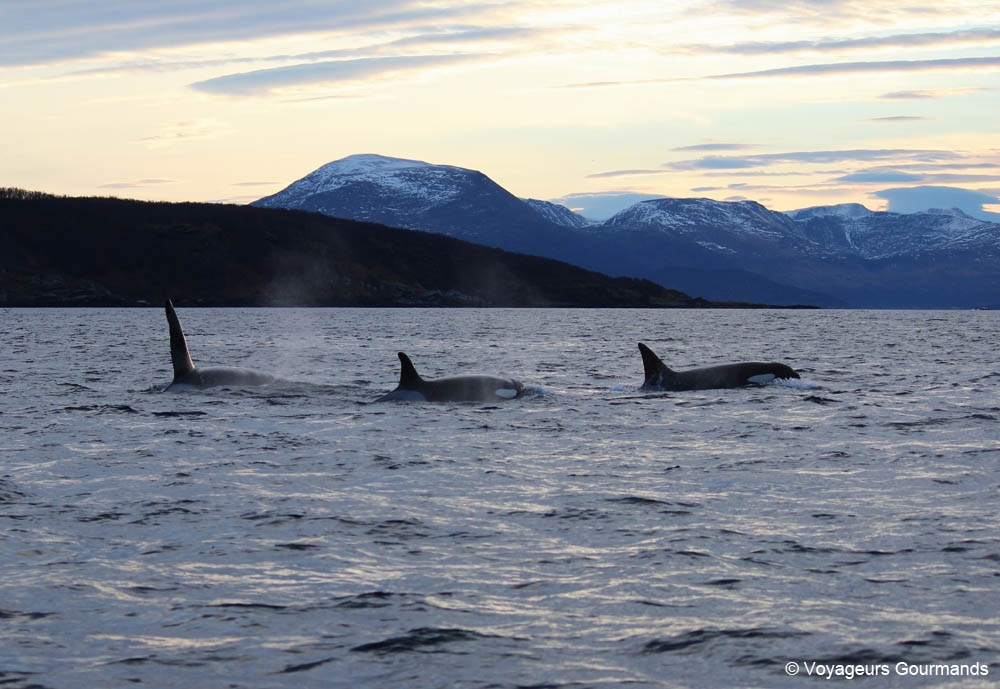
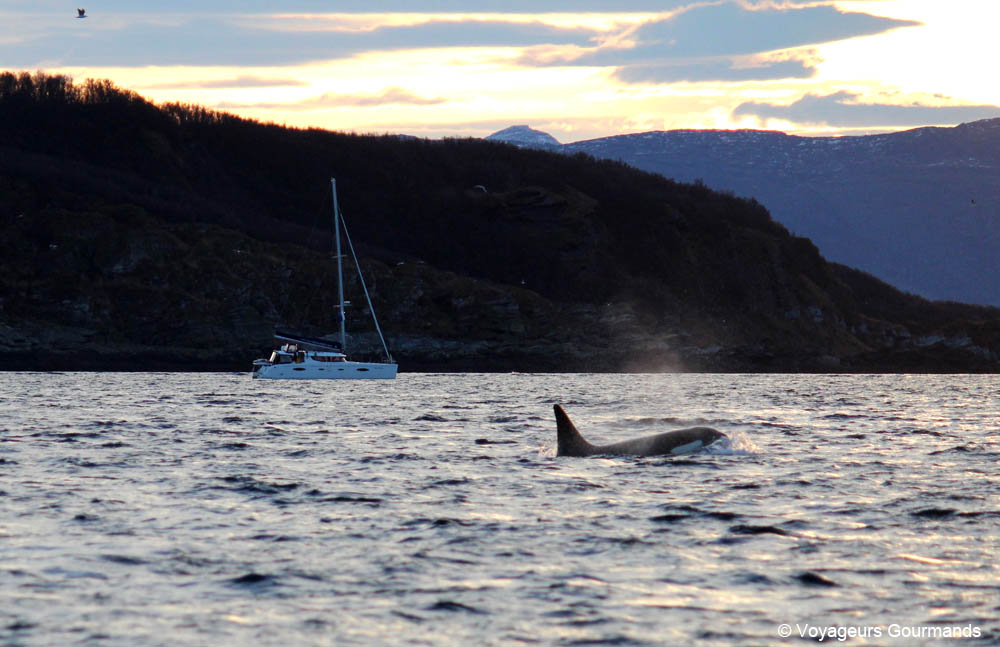
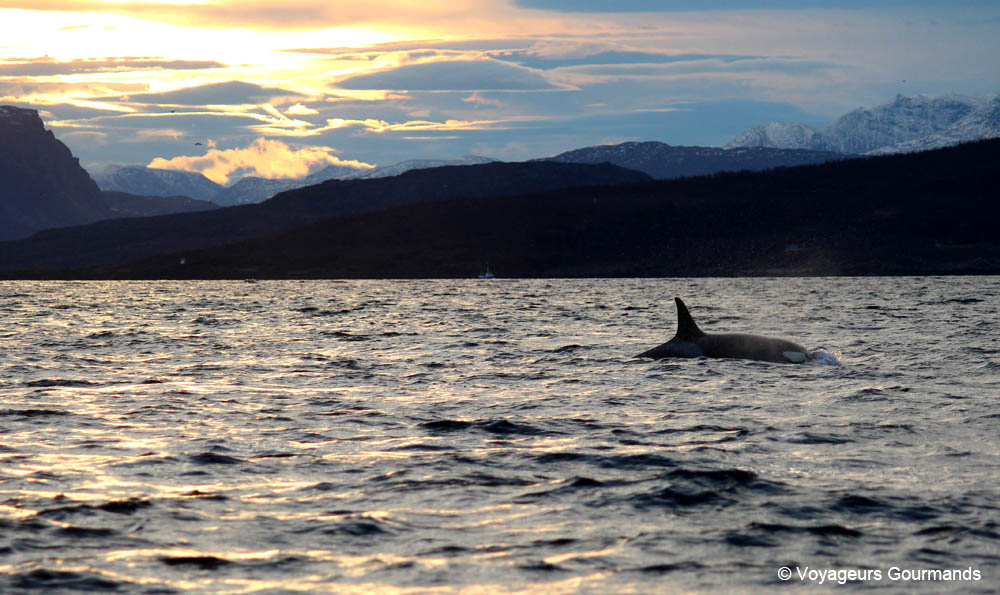
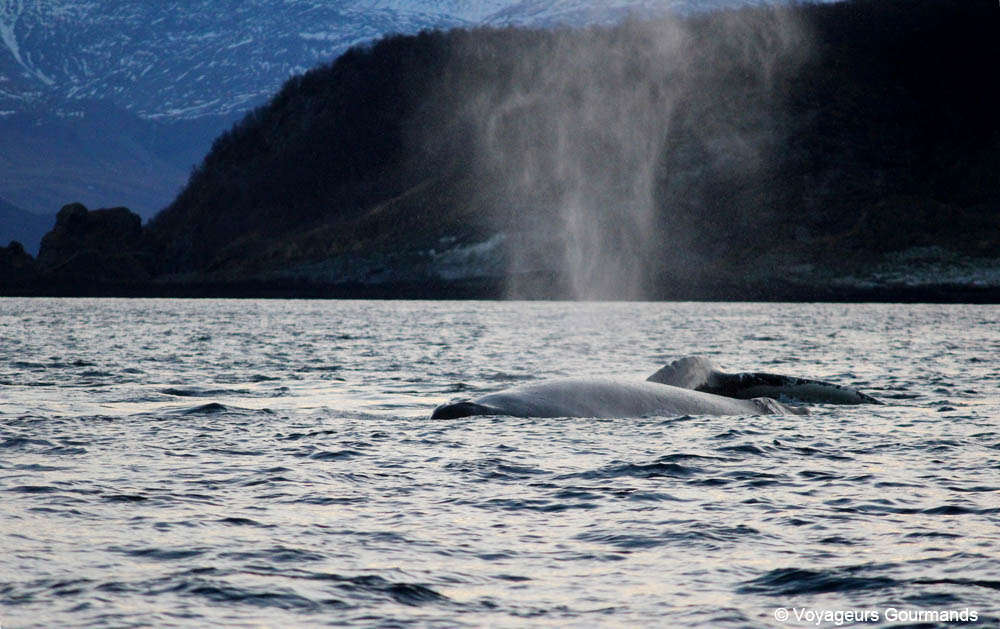
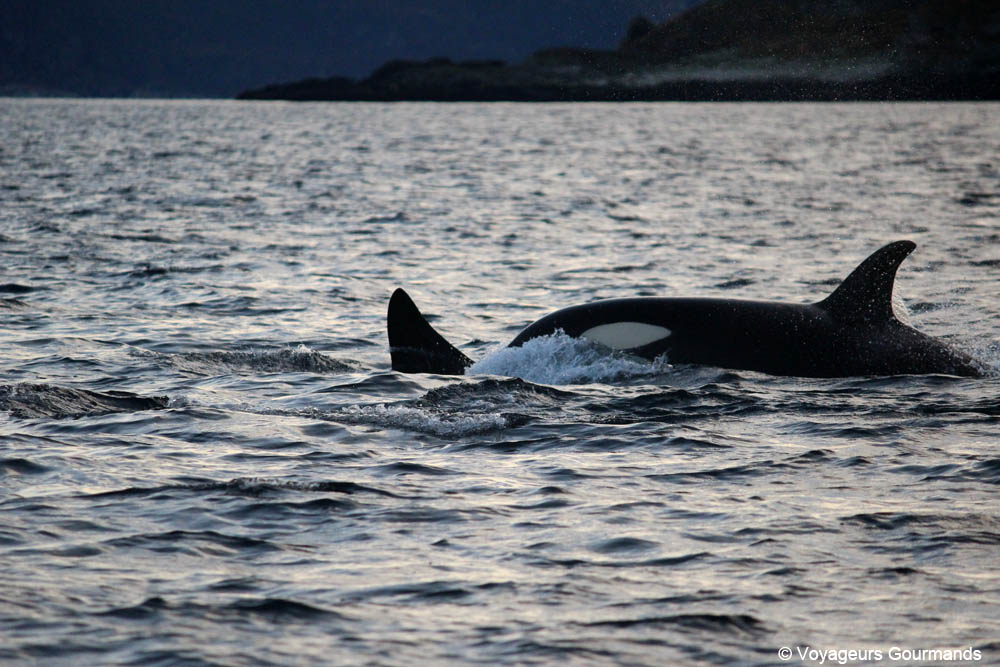
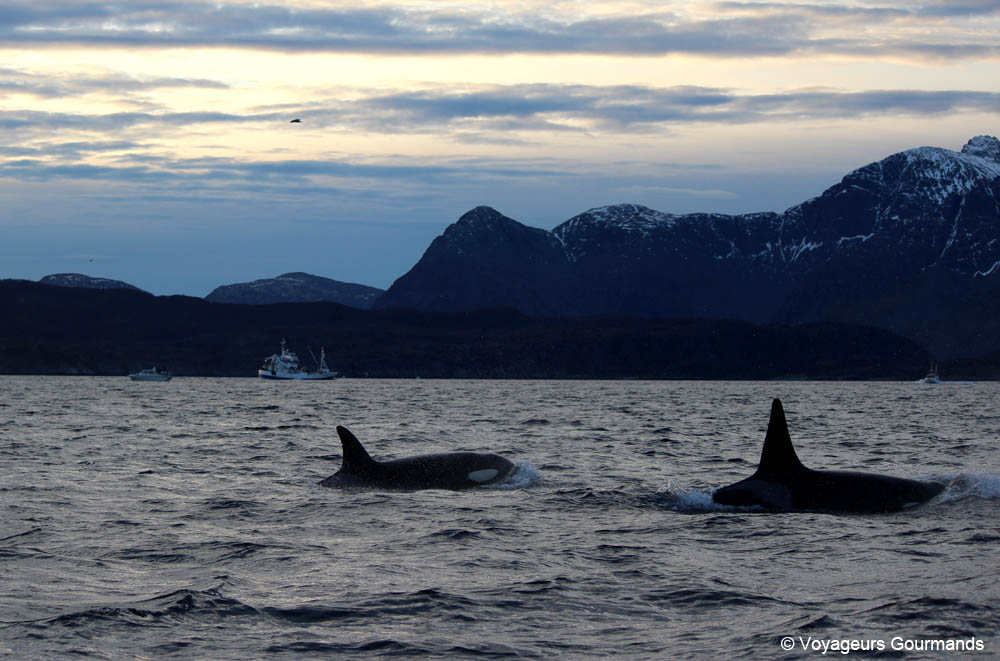
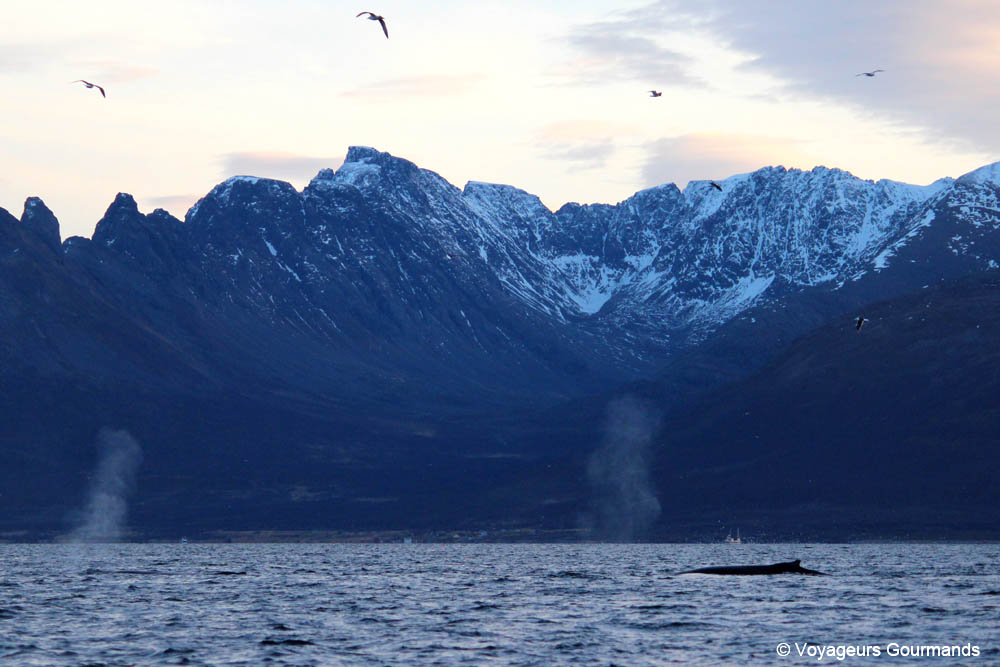
We’ve been sailing barely ten minutes when we spot our first orcas! The boat moves closer, but not too close, then cuts the engine. They travel as a family and there are already five or six of them. This is only the start of the show and we’re already beside ourselves. In the distance our guide points out a spout and tells us there’s a whale over there; we get closer and boom, there she is!
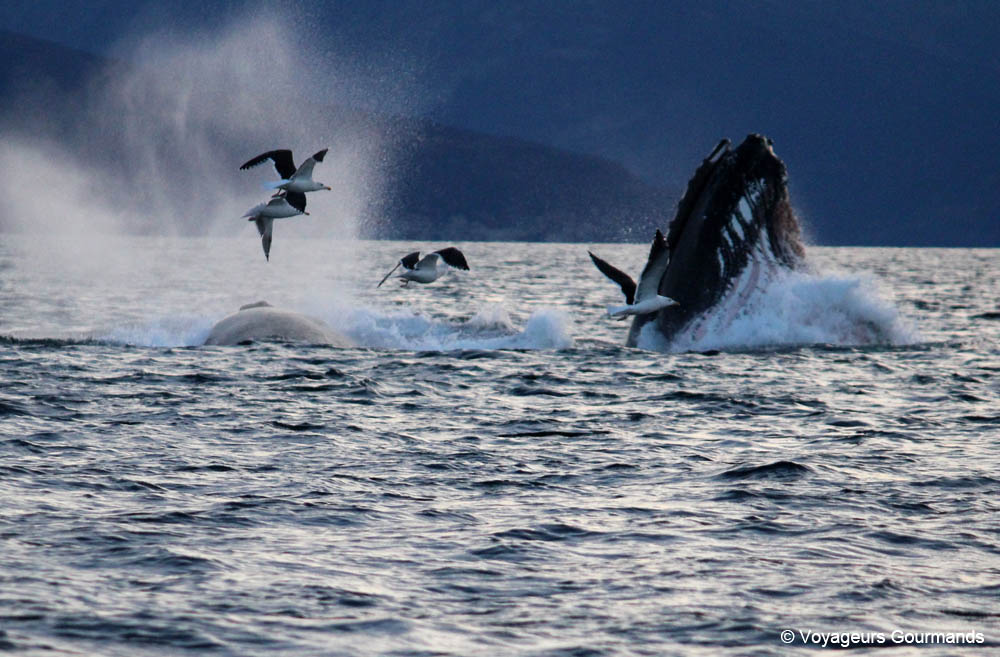
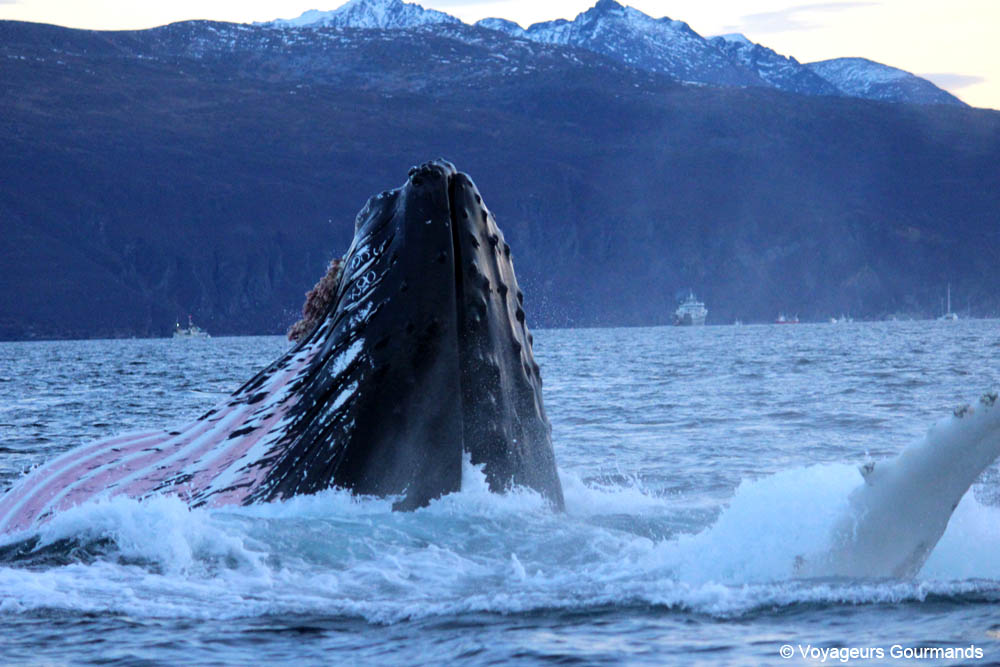
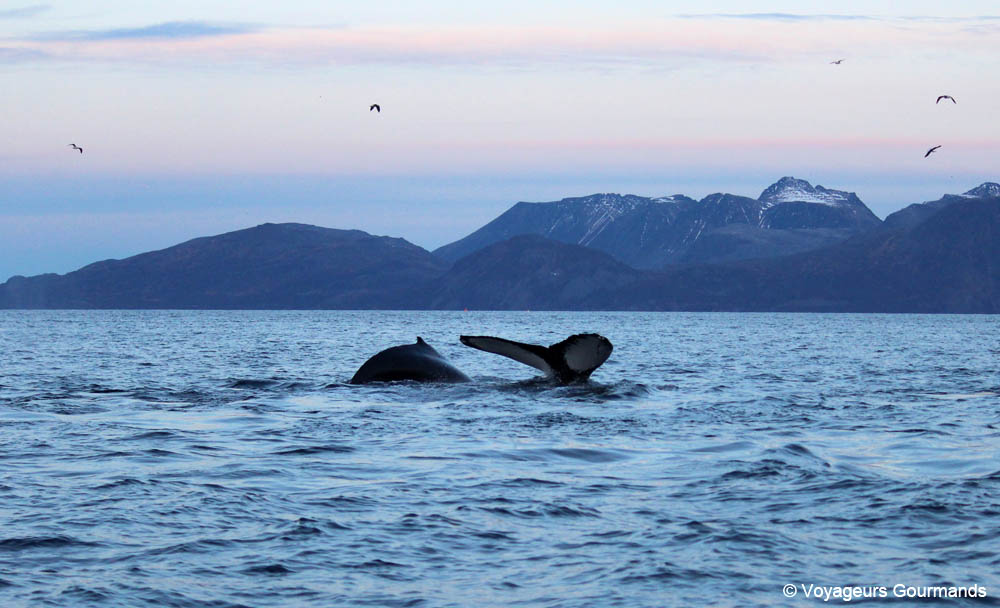
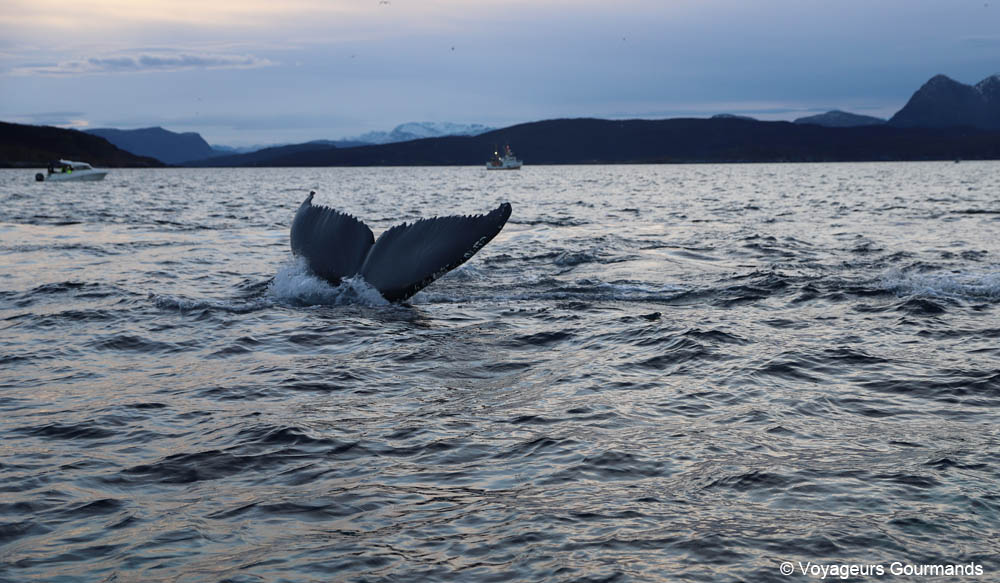
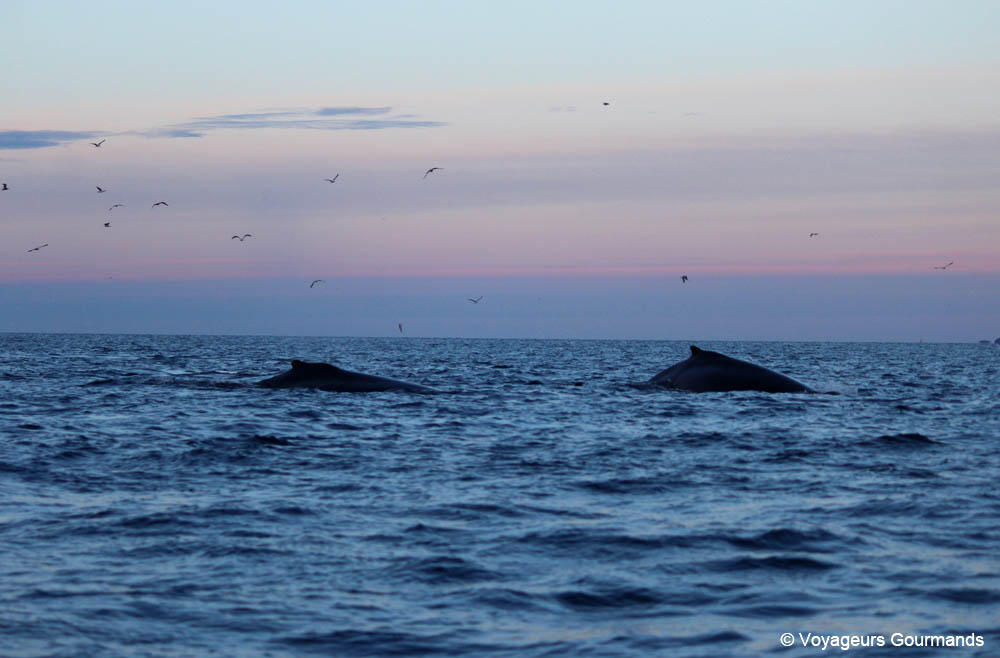
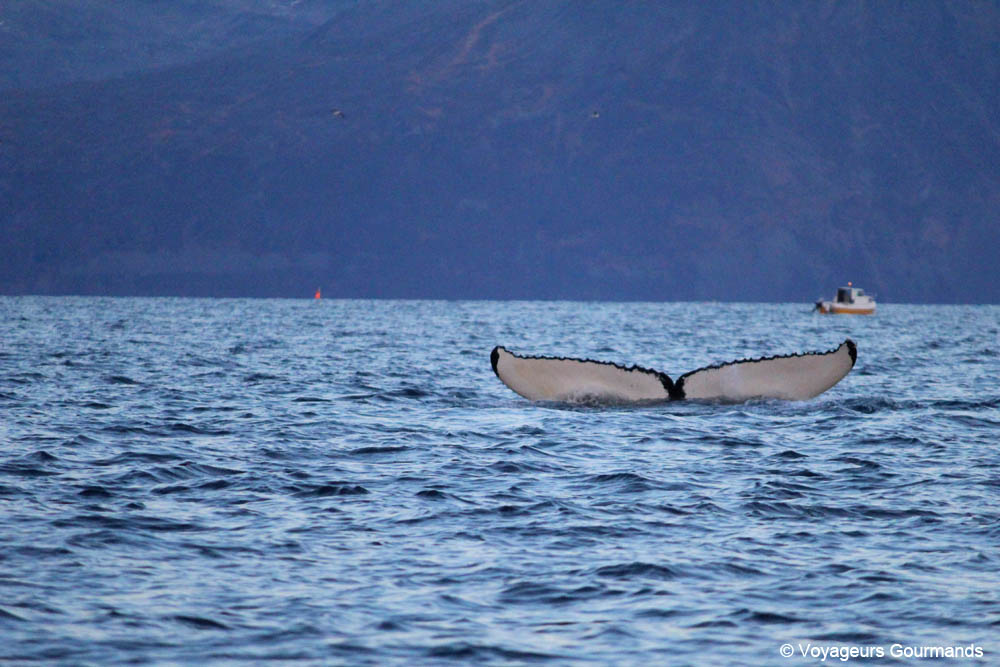
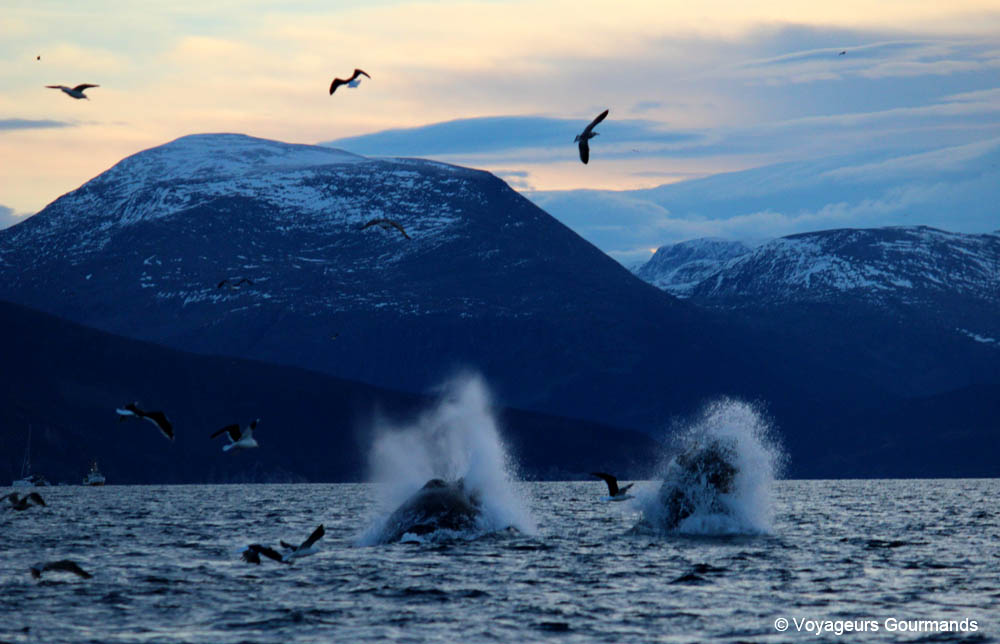
He explains that they come up to the surface, then “disappear” for five minutes before coming back up in one big lunge. The whale dives down, accelerates to create a curtain of bubbles that stuns the fish, which are pushed towards the surface, and then all she has to do is open her mouth!
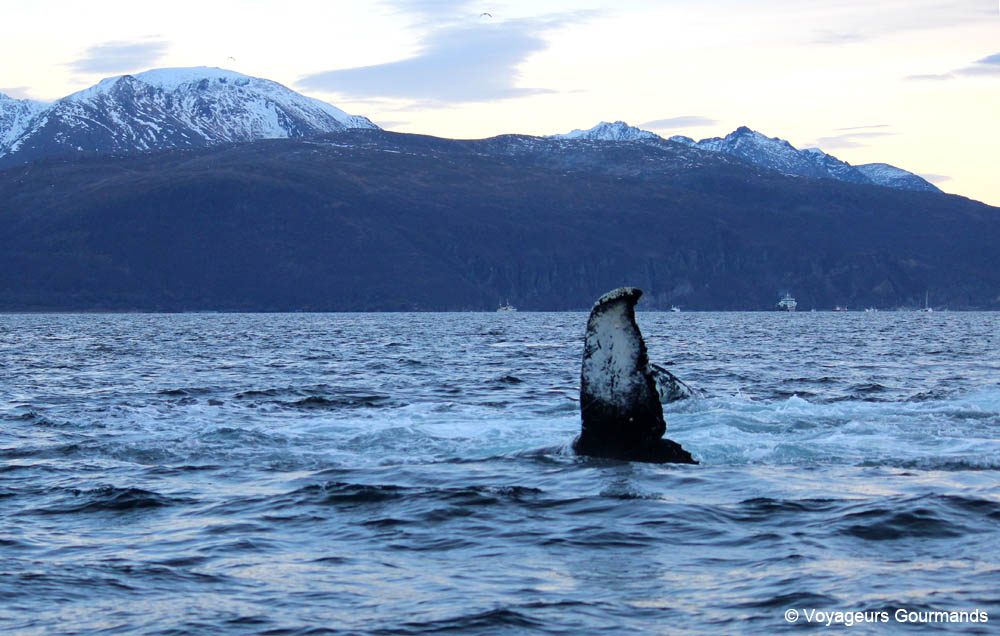
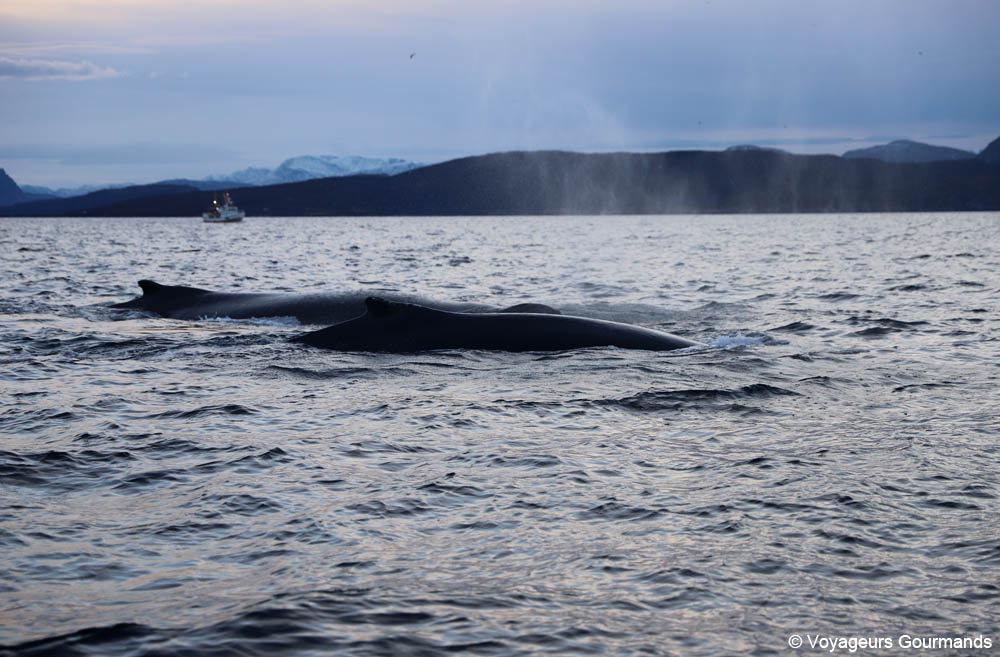
A second whale joins the first, and we watch for that moment when they vanish before bursting back up. What a sight! We’re like little kids! And then, as time goes on, it isn’t two humpback whales “dancing” in front of us, but five!
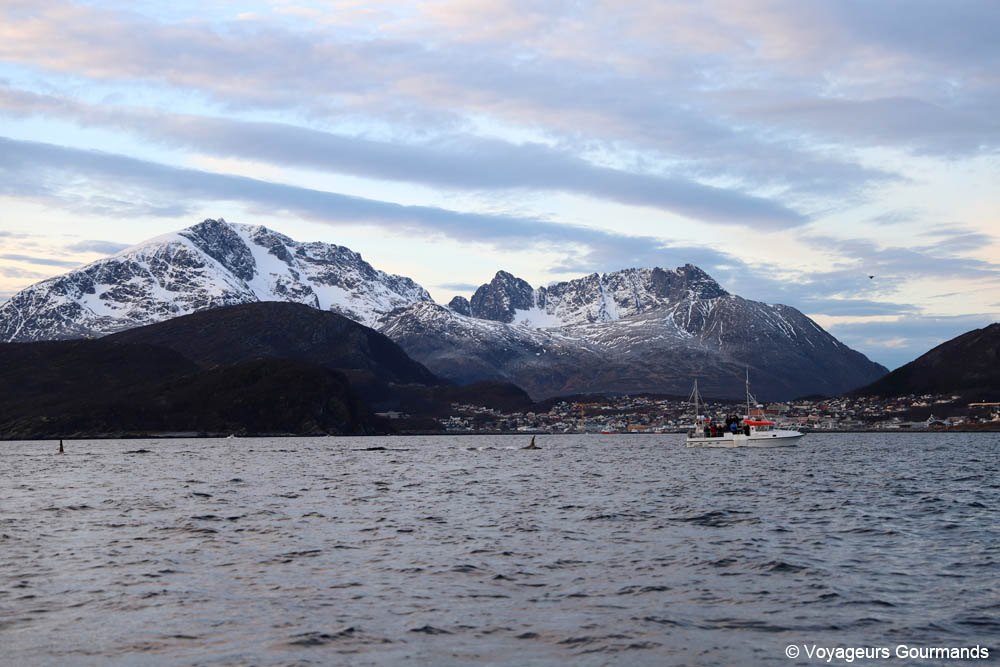
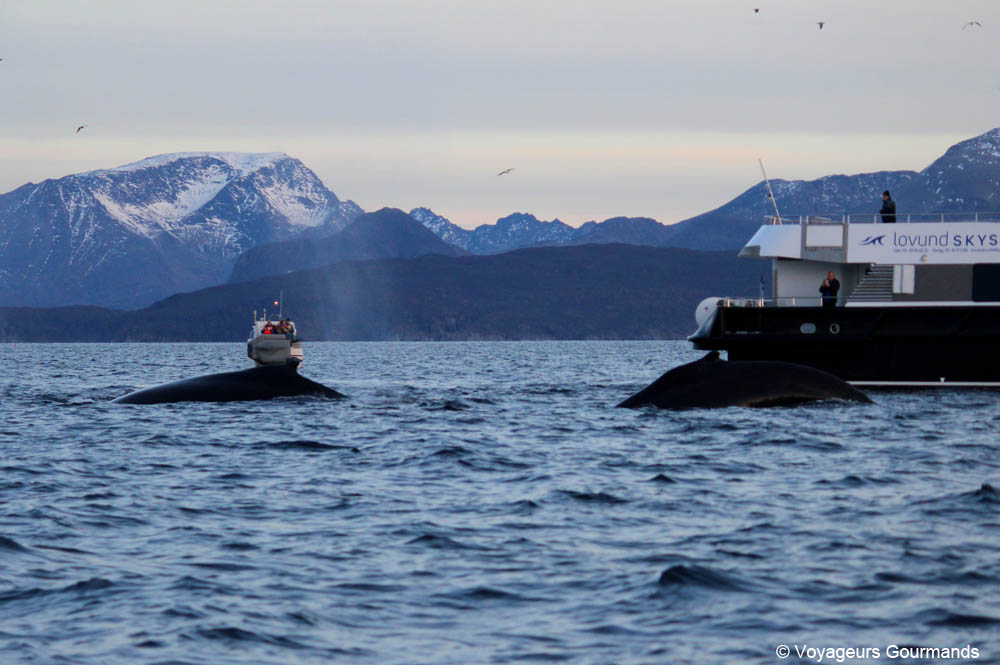
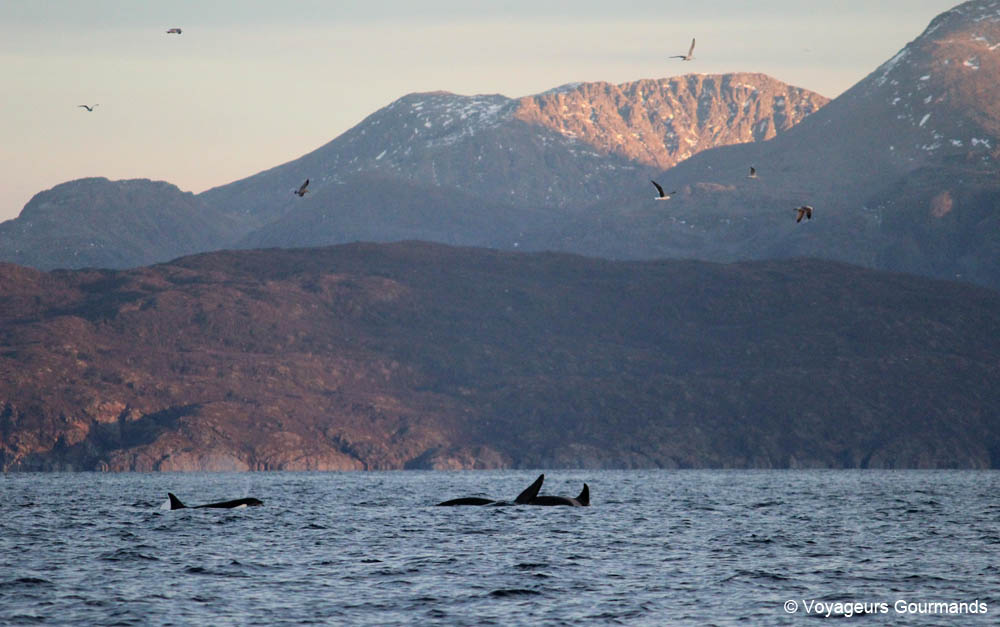
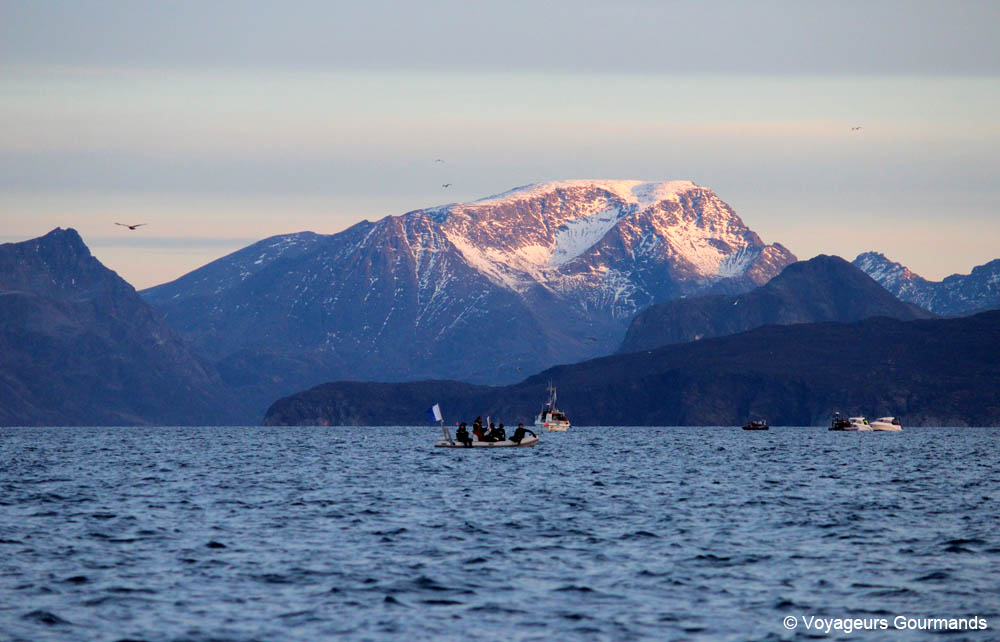
We stay out there for two hours, cruising back and forth, scanning the water, moving closer to the whales and then to the orcas. There are at least three or four orca families around us, travelling in groups of five or six, sometimes more. We keep alternating, first beside the orcas, then near the whales. We move towards the orcas, and it’s the whales that come to us. A magical, unforgettable moment.
It didn’t feel short at all, it felt like we’d been out there for hours. I look at the other passengers and everyone looks like a child. And that setting, the fjords all around us, the light and the weather both perfect…
We head back to the harbour with stars in our eyes.
Our tips for orca and whale watching in Norway
➺ We went out with Green Gold of Norway. For whale watching in Norway, they run trips between November and January. The package we booked was “whale watching plus a night in a crystal lavvo at Francisco’s place” (our article about our night in a lavvo is here).
➺ At the end of the trip we were given a sandwich (salmon, to keep things a little “Norwegian food“, ha ha), biscuits and coffee to take on the bus back.
➺ We’d encourage you to pick a serious operator, one that cares about animal welfare, rather than the ones that push in at any cost and ignore the rules. Some now use hybrid-electric boats that switch to silent mode as they approach the whales, to disturb them as little as possible.
➺ If you can, avoid going on a Sunday. That’s the day we went, and there were a lot of boats out, because locals come along in their own boats too.
➺ Dress warmly, even though the gear they lend you has you well covered! For us, in mid-November, it wasn’t “that cold” after all.
➺ Bring a good zoom lens, because the boats don’t get too close so as not to startle the animals. Sometimes they surface right beside you, but you have to be quick! Photographing them is no easy task. We each took our own camera on board (we were too afraid of missing a second of it), and had no trouble at all with the water: not a single splash.
➺ We A-DORED this trip, and we don’t regret those four hours on the road one bit!
➺ Everything about our stay in Norway is in this article: visiting Tromso in winter, plus all our articles on Norway.
FAQ: orca and whale watching in Norway
Click to show the FAQ.
Can you see orcas and whales right in Tromso?
It’s possible but rare: in recent years the orcas and humpback whales have fed mainly in the fjords north of Tromso, around Skjervøy and the Kvænangen. From Tromso you should plan on a full-day trip.
What is the best time to see orcas in Norway?
Around Tromso and Alta, the season usually runs from late October to late January. We went in mid-November, which is also northern lights season and not yet polar night.
Can you still see whales in late January?
Often yes, but it isn’t guaranteed: depending on the year, the whales leave around late January or a little later. Check with the operators before booking, as the reputable ones will tell you whether the whales are still around.
Do you have to leave from Tromso to see the whales at Skjervøy?
No. If you have a car you can drive to Skjervøy yourself (about 2.5 hours, including two ferries) and board there. Otherwise most tours include transport from Tromso, either by bus or by boat.
How long does a whale watching trip from Tromso take?
Set aside a full day, around 12 hours round trip. For us: a 6:30am departure, four hours on the road, two hours at sea among the orcas and whales, then the drive back.
Can you see dolphins in Tromso?
They aren’t the main draw, but you may come across the more discreet species that live in the fjords, such as white-beaked dolphins or harbour porpoises. Trips sold as dolphin watching from Tromso are generally whale watching tours.
Can you take a camera on the boat?
Yes! We each had our own and didn’t get a single splash. Bring a good zoom, because the boats keep their distance from the animals.
Can you see whales and the northern lights on the same trip?
Yes, and that’s the whole appeal of going to the Tromso area between November and January. It’s exactly why we chose November!
✤✤✤
You’ve probably picked up on it while reading our story… We loved this day of orca and whale watching in Norway. A one-off experience that left us with stars in our eyes. Seeing animals in their natural habitat is such a magical thing, and that day we felt incredibly lucky to see so many of them in two hours out on the water.