


Where to stay in Guadeloupe? It sounds like a simple question, but the answer changes everything. The archipelago is bigger than it looks and full of contrasts between Grande-Terre, Basse-Terre and the surrounding islands: depending on where you stay, you’ll have a completely different trip.
Between white sand beaches, tropical rainforest, winding roads and small villages, the real question isn’t just “where to stay in Guadeloupe?”, but rather “what kind of trip do I want?”.
In March 2026, during our 10-day road trip in Guadeloupe as a family, we really wanted two different vibes: nature and the beach. In the end, we stayed in three very different places: an ecolodge surrounded by nature in Deshaies, a quiet bungalow in Trois-Rivières and a seafront holiday residence in Sainte-Anne. In this guide, we share the best areas to stay in Guadeloupe depending on your travel style, followed by our honest review of these three places.
✤✤✤
Where to stay in Guadeloupe at a glance
Understanding Guadeloupe before choosing where to stay
Seen from the sky, Guadeloupe looks like a butterfly: two “wings”, Grande-Terre and Basse-Terre, separated by a narrow channel, the Rivière Salée, and linked by bridges. And the two islands couldn’t be more different:
- Grande-Terre: the most “postcard” side, with white sand beaches, hotels, restaurants and a livelier atmosphere.
- Basse-Terre: wilder and mountainous, covered in rainforest, with its waterfalls and La Soufrière volcano.
Then there are the other islands of the archipelago, such as Les Saintes and Marie-Galante, which offer a different experience again: slower and more remote.
So the real challenge isn’t finding “the best hotel”, but choosing the right area for your itinerary and travel style.
Another key point: the car. Public transport is very limited and most accommodation is off the beaten track. We hired ours with BSP Auto, and we can’t see how we could have managed without it.
The best areas to stay in Guadeloupe
Sainte-Anne and Saint-François: postcard Grande-Terre
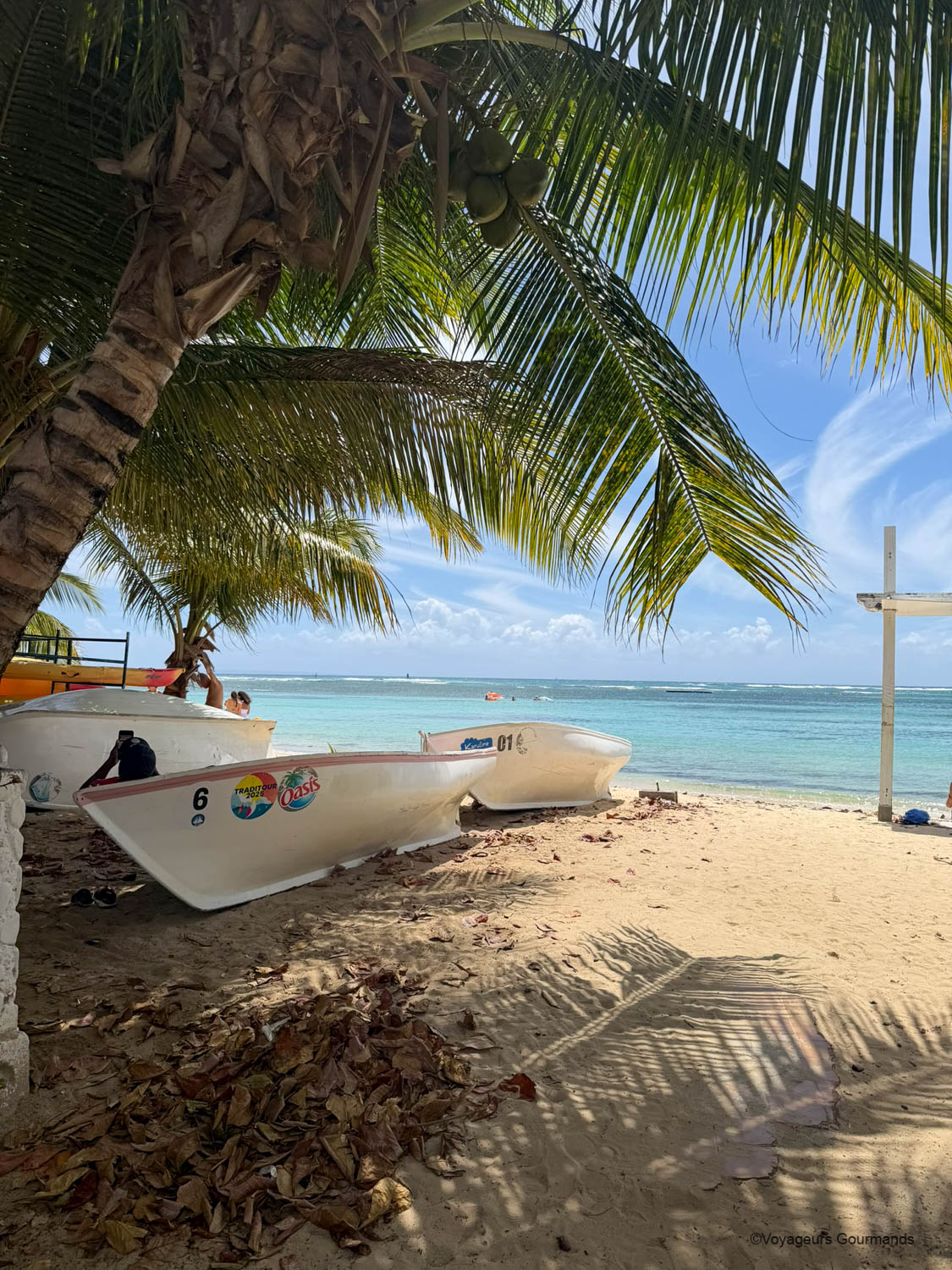
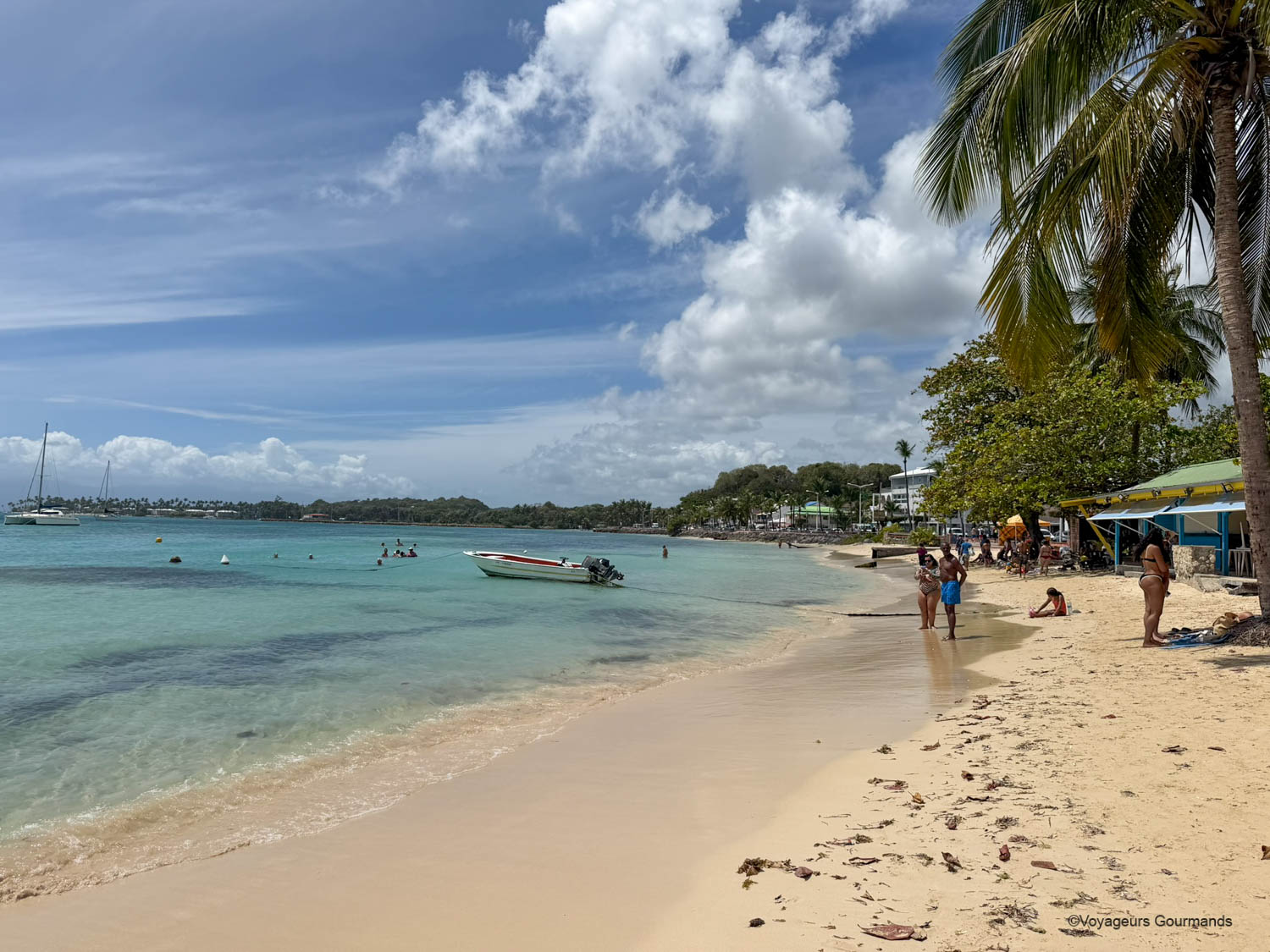
If you’re coming to Guadeloupe for turquoise beaches, calm lagoons and an easy-going holiday feel, Sainte-Anne and Saint-François are the best choices.
This is the most accessible side of Guadeloupe, with very photogenic beaches such as La Caravelle beach in Sainte-Anne or Raisins Clairs in Saint-François. There’s a wide choice of accommodation: hotels, holiday residences, villas and holiday rentals.
It’s also the most practical area for a first trip or a family holiday: restaurants, water sports, excursions and supermarkets are all close by. From Saint-François, Pointe des Châteaux is only about fifteen minutes’ drive away.
It’s the easiest area on the island, but also the most touristy. Between the two, we have a slight preference for Sainte-Anne, which is a touch more central. Once there, choose somewhere to stay in the town centre: you’ll be able to walk to the beach, the restaurants and the market.
Le Gosier and Pointe-à-Pitre: convenient, but not for a long stay
Le Gosier is often chosen by default, as it’s close to the airport and central on the map. It’s a functional area, with standard hotels, a few beaches and livelier nightlife than elsewhere.
Pointe-à-Pitre is mainly a place you pass through, and rarely somewhere you’d sleep for pleasure. It’s still worth a few hours, between the market, the Creole houses and the Mémorial ACTe: here are our ideas for things to do in Pointe-à-Pitre in a day.
These areas are handy for 1 or 2 nights at the start or end of your trip, especially if your flight lands late or leaves early, but not for a whole stay.
Deshaies, Bouillante and Trois-Rivières: Guadeloupe for nature lovers
This is where Guadeloupe gets really exciting. Basse-Terre is greener, wilder and less touristy: winding roads, hidden waterfalls, rainforest and La Soufrière volcano.
Deshaies wins you over with its village feel, its small bay and its beaches, including Grande Anse, the largest on Basse-Terre. The Deshaies Botanical Garden is just a few minutes away.
Bouillante is ideal for snorkelling and diving around the Pigeon islets, in the heart of the Cousteau reserve, and for its hot springs.
Finally, Trois-Rivières is the perfect starting point for Les Saintes, the Carbet Falls or the climb up La Soufrière.
It’s the best area if you want a more immersive, nature-focused trip. Just allow for longer journeys: Basse-Terre’s roads are narrow and very winding.


Northern Grande-Terre: peace and wild landscapes
Port-Louis, Anse-Bertrand, Petit-Canal: the north of Grande-Terre is much quieter than the south coast. You’ll find spectacular cliffs, such as the Porte d’Enfer and the Pointe de la Grande Vigie, and almost deserted beaches, like Le Souffleur in Port-Louis.
Accommodation is scarcer and you’ll be a little far from the rest of the island: it’s a good option for a second visit or a few quiet nights, less so for a first trip. You can browse available accommodation in northern Grande-Terre and find our favourite spots in our article on the wild north of Grande-Terre.


Sainte-Rose and Petit-Bourg: the other side of Basse-Terre
Less well known, these two towns in north-east Basse-Terre are nonetheless well located. Sainte-Rose is the departure point for trips into the Grand Cul-de-Sac Marin, with its lagoon and islets. Petit-Bourg, more central, gives easy access to the Route de la Traversée and the national park, while staying close to Pointe-à-Pitre.
A good alternative if you want to explore Basse-Terre without changing accommodation too often.
Les Saintes and Marie-Galante: a step back in time
If you really want to slow down, spend a few nights on one of the archipelago’s islands. On Terre-de-Haut, in Les Saintes, people mostly get around on foot, by scooter or in small electric buggies: little noise, a stunning bay, and in the evening, once the day-trippers have caught the boat back, the island finds its calm again.
Marie-Galante, about an hour by ferry from Pointe-à-Pitre, is all about the countryside: sugar cane fields, rum distilleries and long, often deserted beaches. We really wanted to go, but we didn’t have time on this trip: we’re saving it for next time!
These islands are ideal for 1 to 3 nights at the end of your trip, but not for your whole stay. If you’re short on time, Les Saintes are also easy to explore in a day: here’s our plan for visiting Les Saintes in one day.


The 3 places we stayed in Guadeloupe
To go beyond the theory, here are the three places where we stayed, in the order of our itinerary. When booking, we had two very clear wishes: a nature stay and a beach stay. Trois-Rivières was added later, for practical reasons: it was the ideal stop for Les Saintes and La Soufrière. For each one, we share what we loved, the downsides and the type of traveller it suits.
Jardin des Colibris: immersed in nature in Deshaies
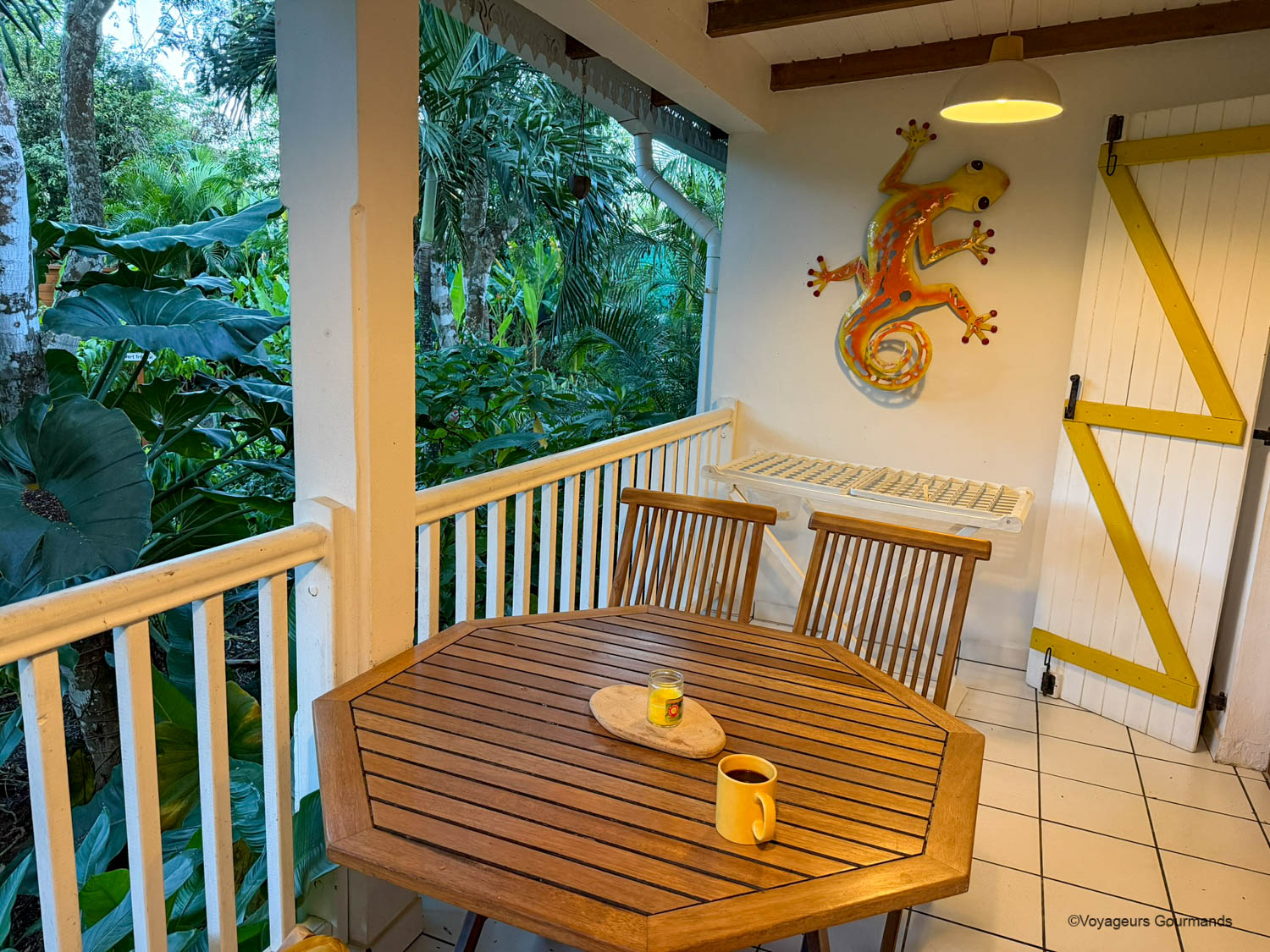
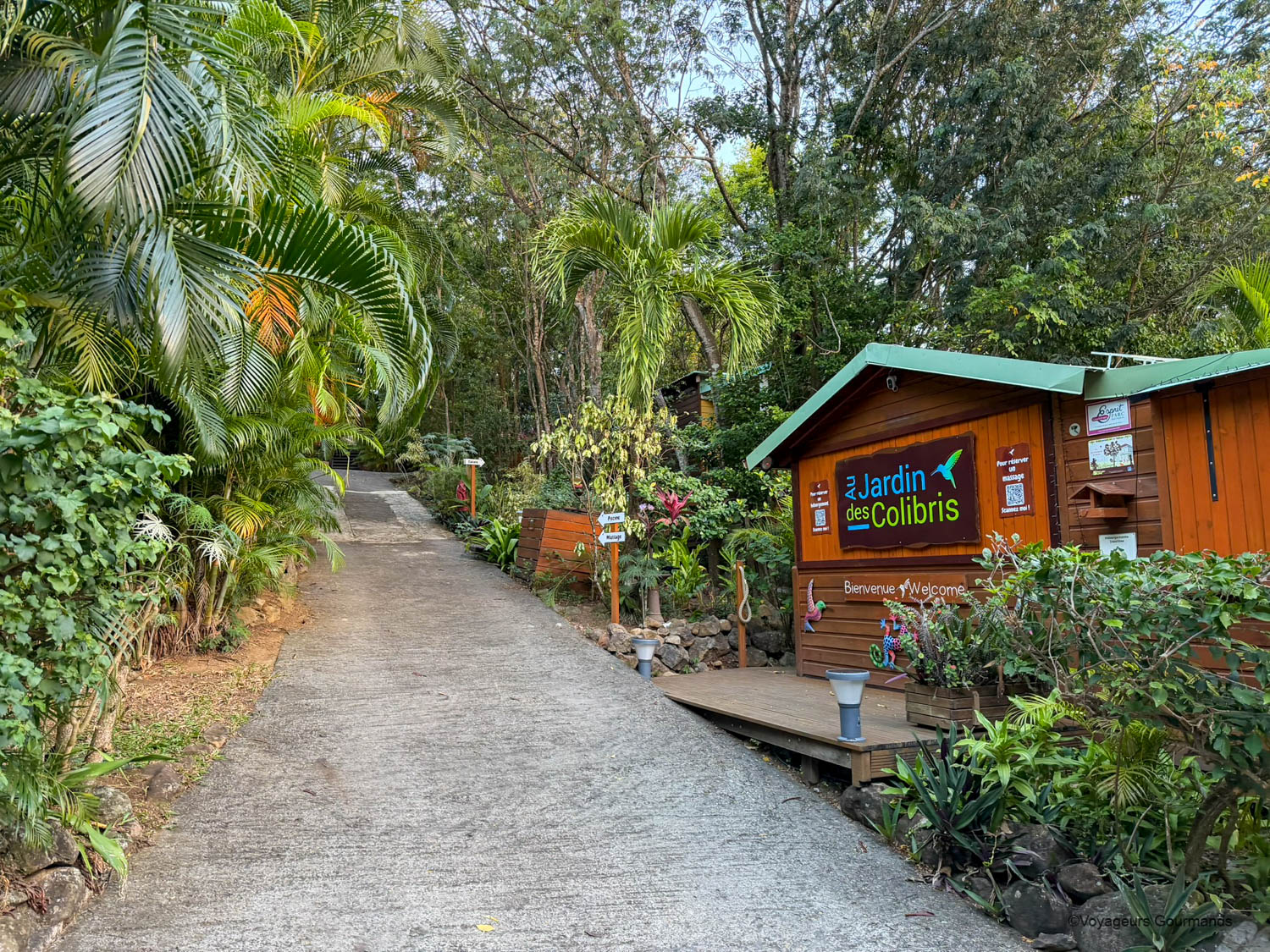
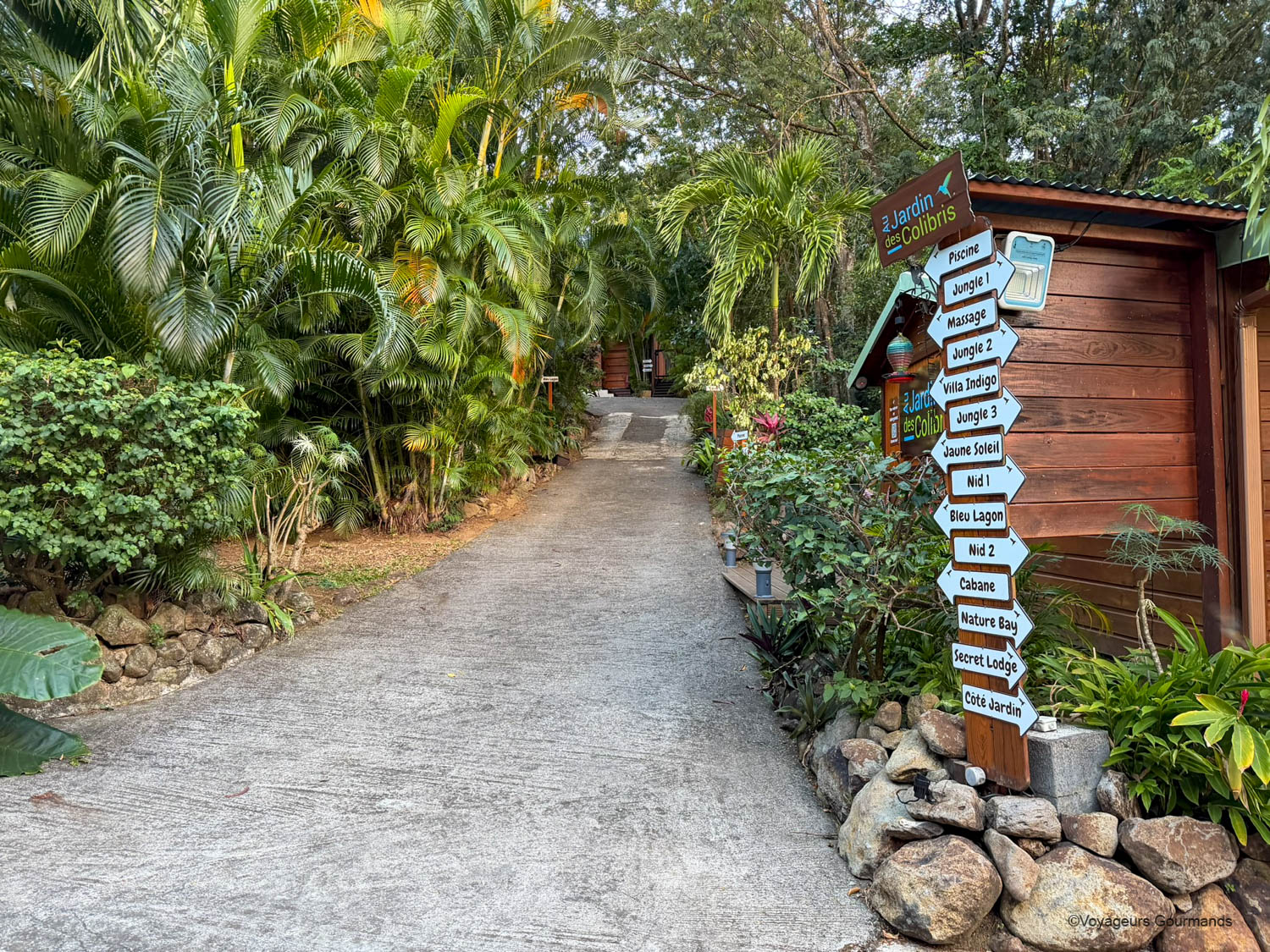
Perched in the Villers neighbourhood, in the hills above Deshaies, Jardin des Colibris is an ecolodge with around fifteen units (gîtes, Creole cottages, a treehouse, villas) scattered across a tropical garden. It was our “nature” stay, the one we’d dreamt of while planning the trip, and we spent three nights there.
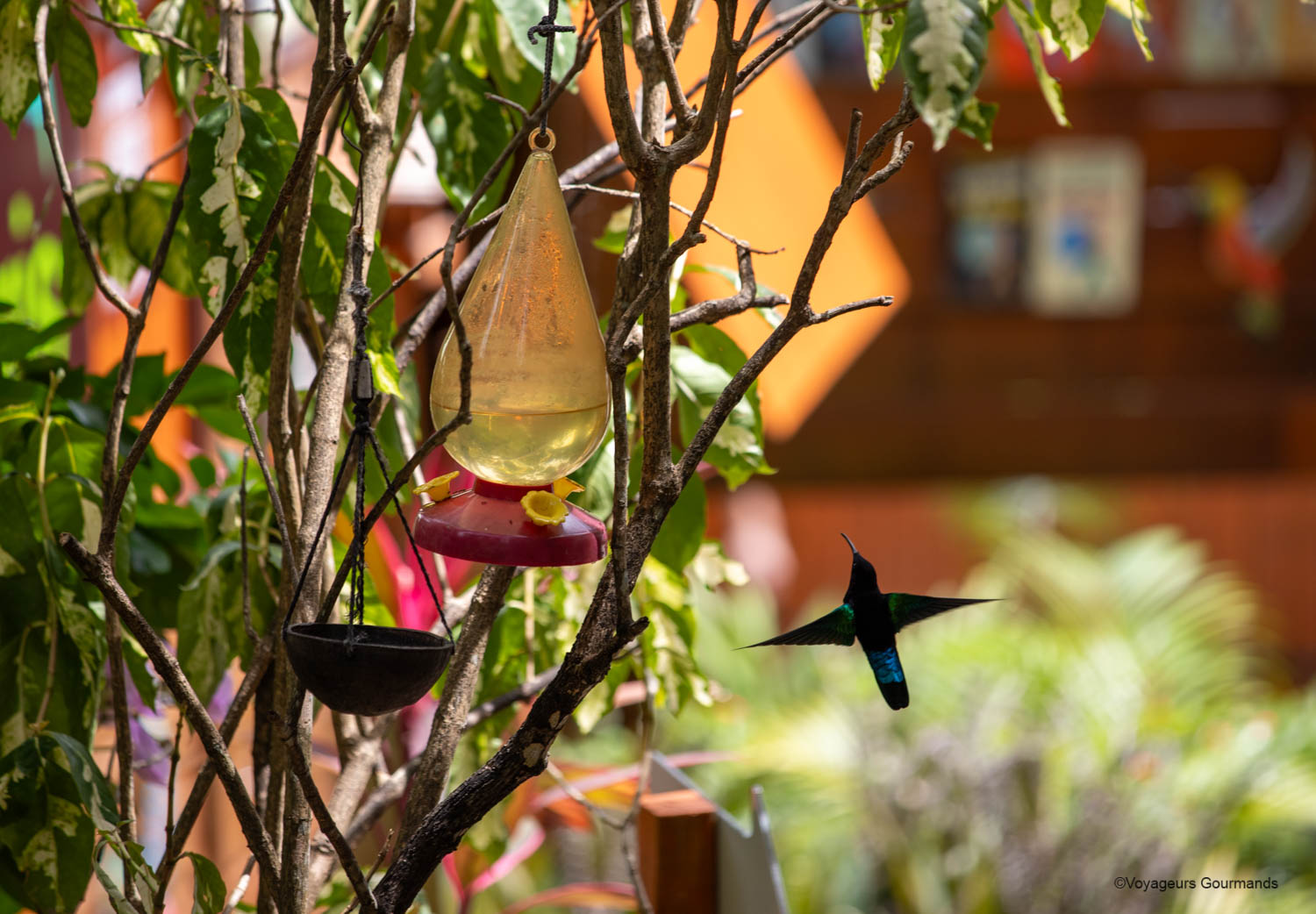
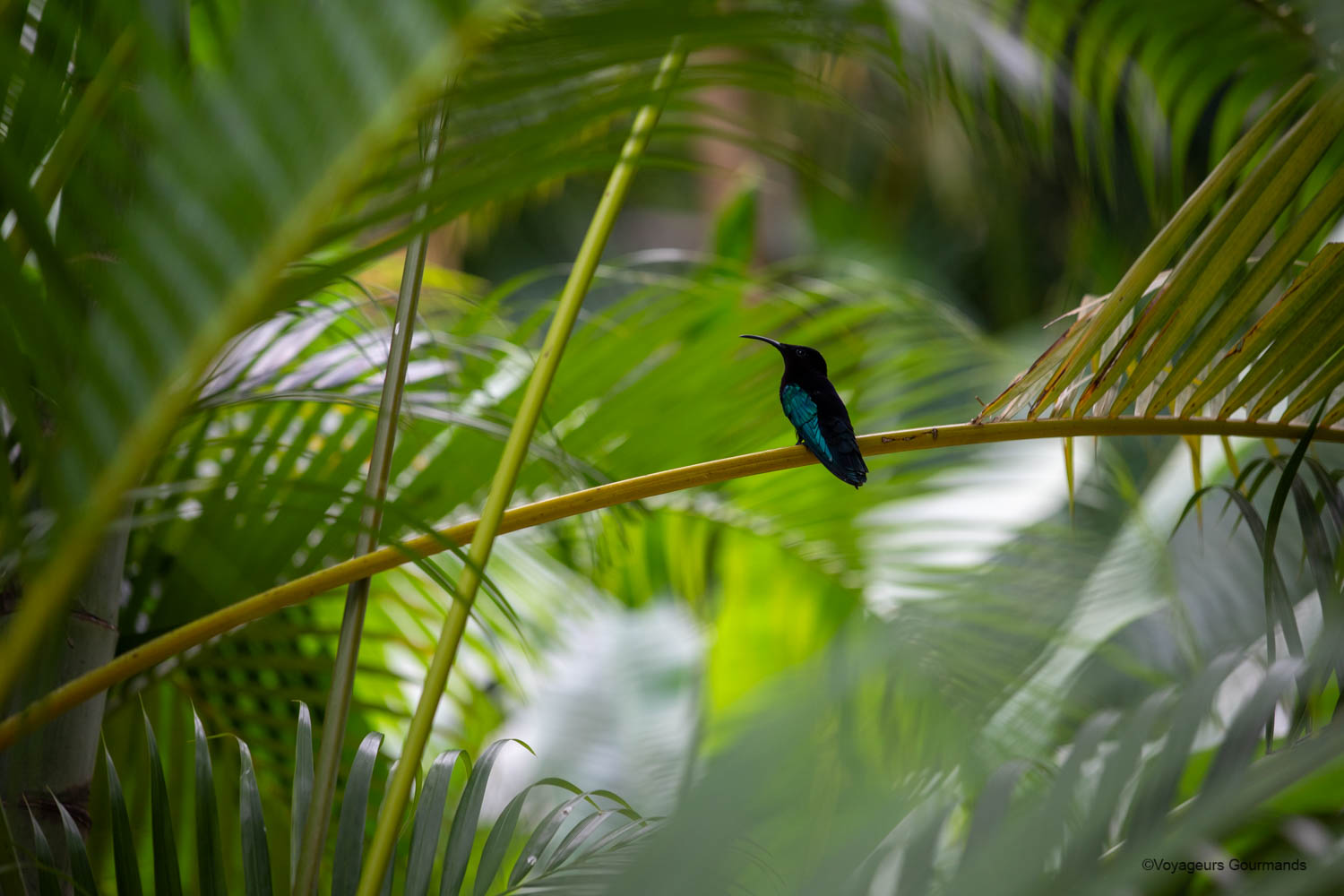
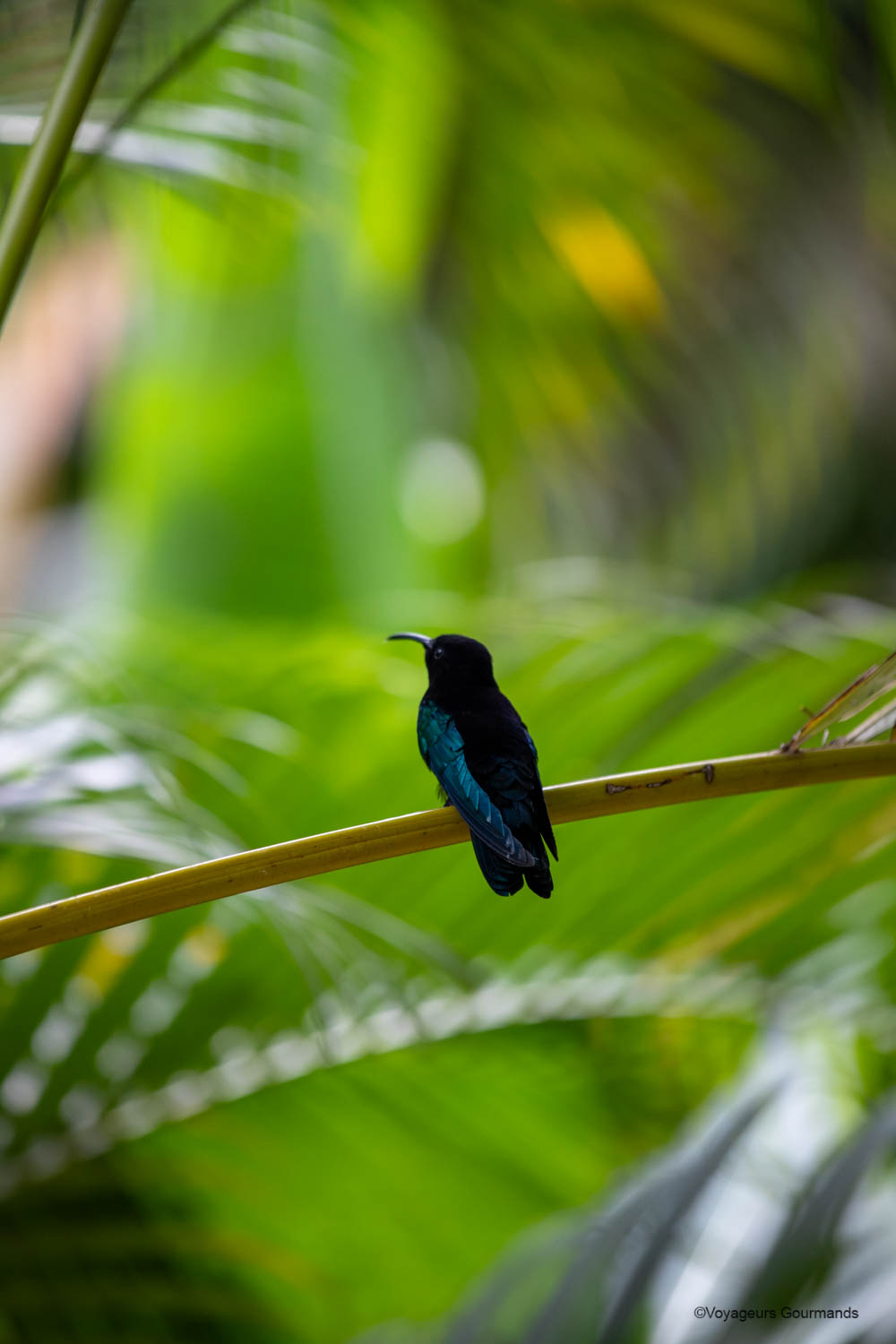
What we loved most was the feeling of total immersion. In the evening, tree frogs cling to the terrace railings and lizards dart out between the plant pots. In the morning, the birds are your alarm clock, and with a little patience, you can watch hummingbirds feeding on the flowers in the garden.
What we liked:
- the garden and the wildlife everywhere
- the complete peace and quiet
- the location, perfect for exploring northern Basse-Terre
- the eco-friendly approach
Good to know:
- a car is essential, ideally a small one: the access roads are narrow and steep
- do your food shopping in town before heading up
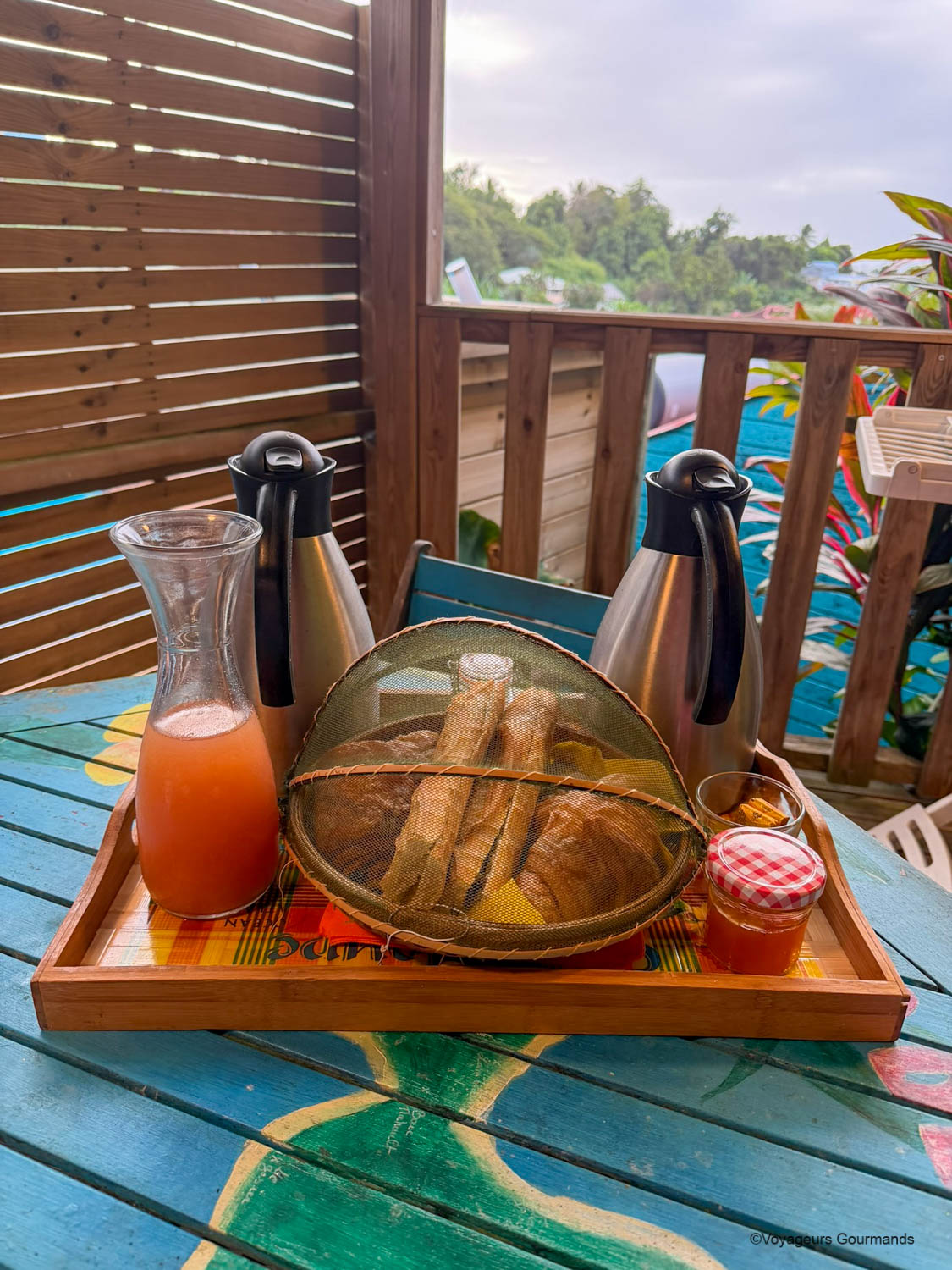
- breakfast comes as a kit, not well suited to several nights
- not for you if creepy-crawlies bother you
We recommend it if you want to experience a wilder, nature-focused Guadeloupe, away from the usual tourist areas. For all the details (accommodation, pool, breakfast, access), read our full review of Jardin des Colibris.
An Eol Caraïbes: warm welcome and peace in Trois-Rivières
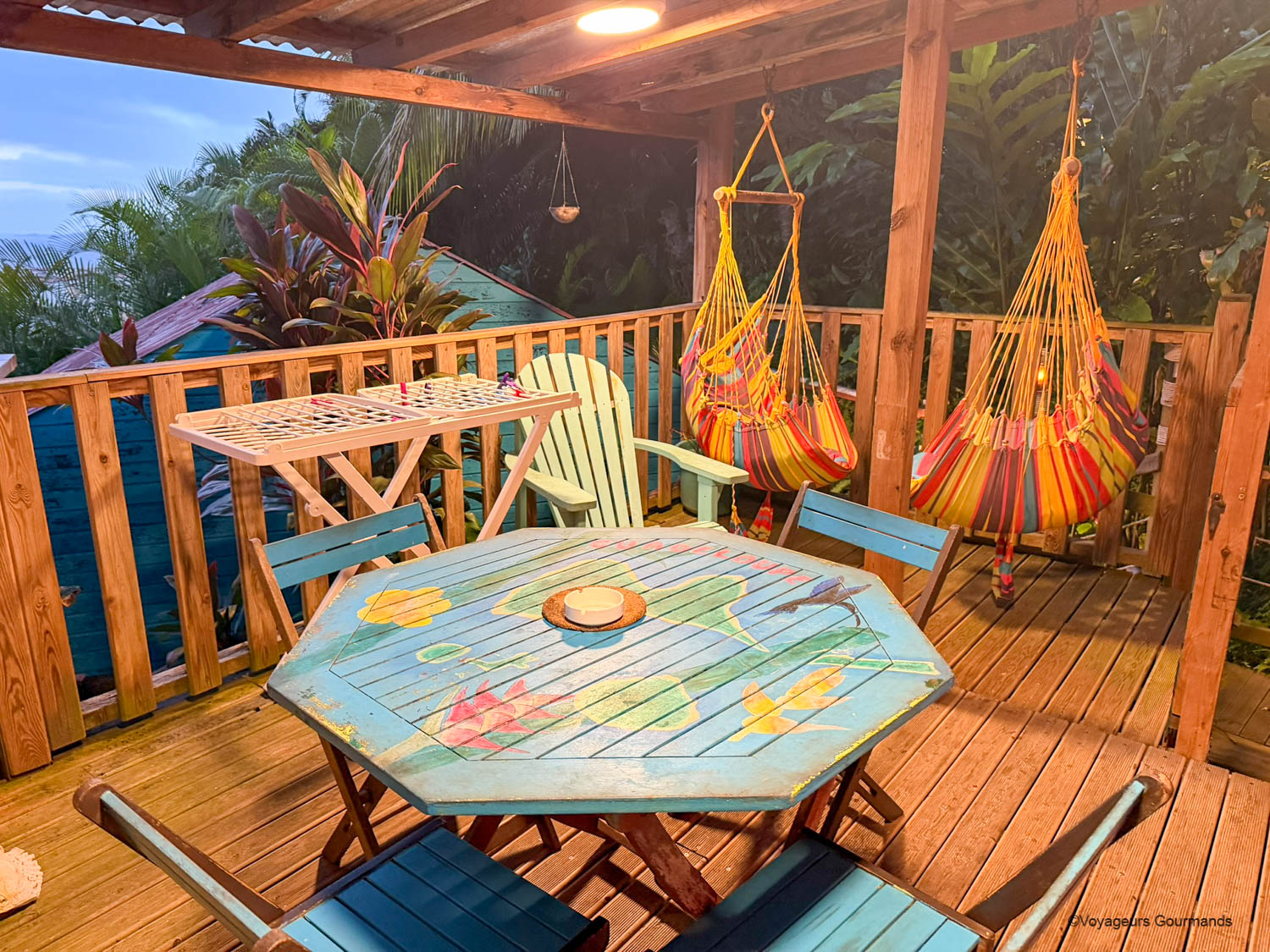
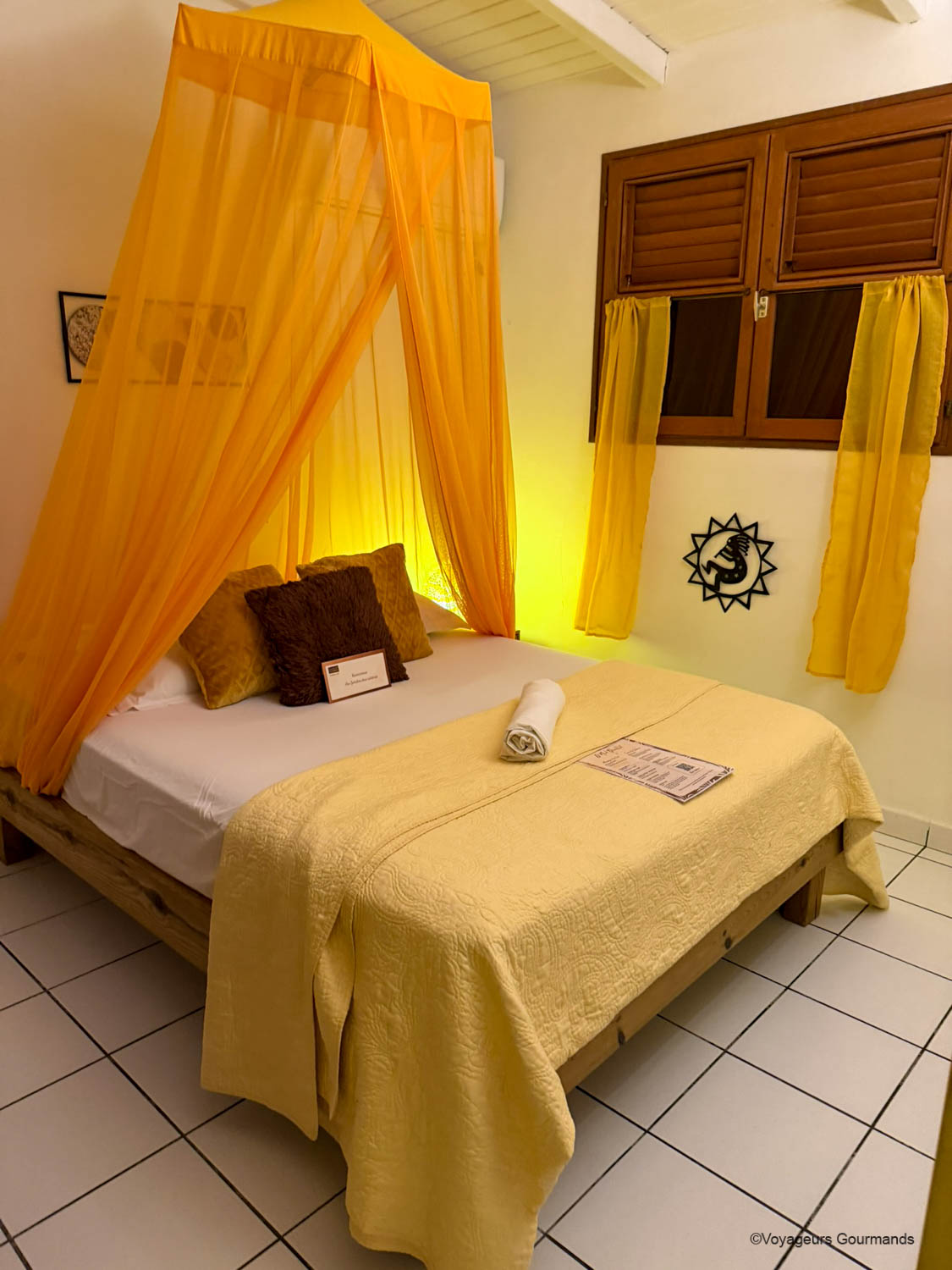
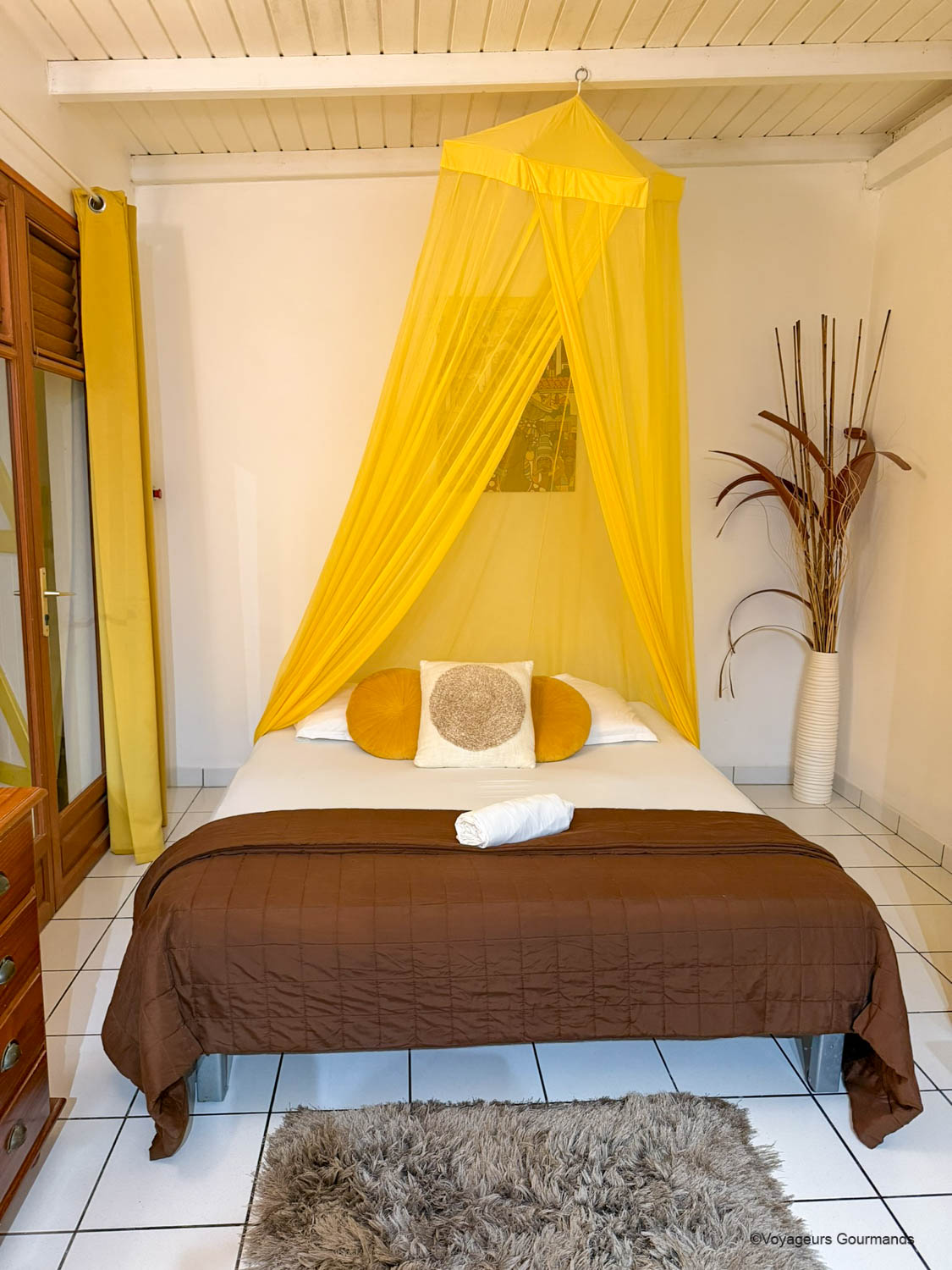
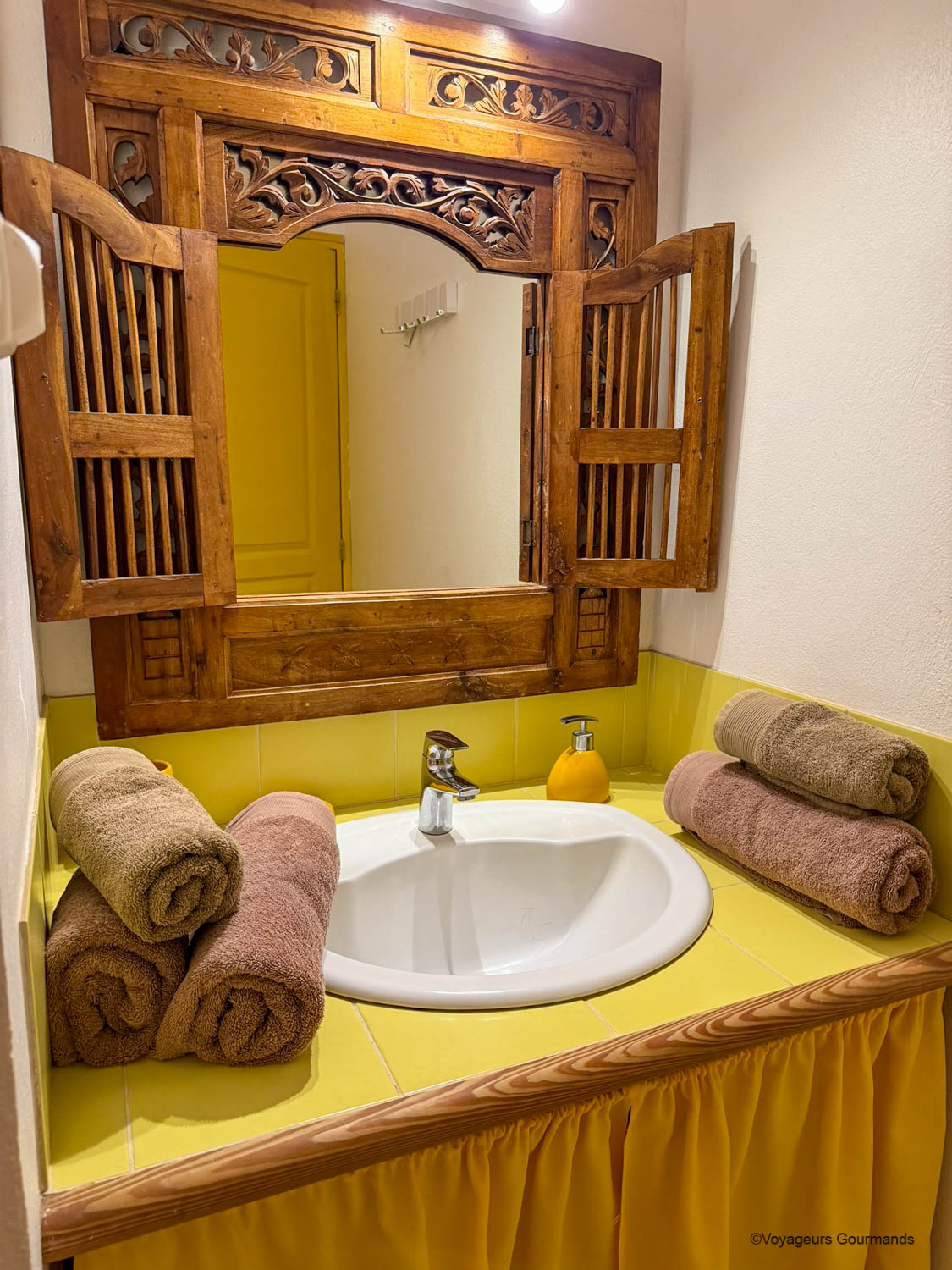
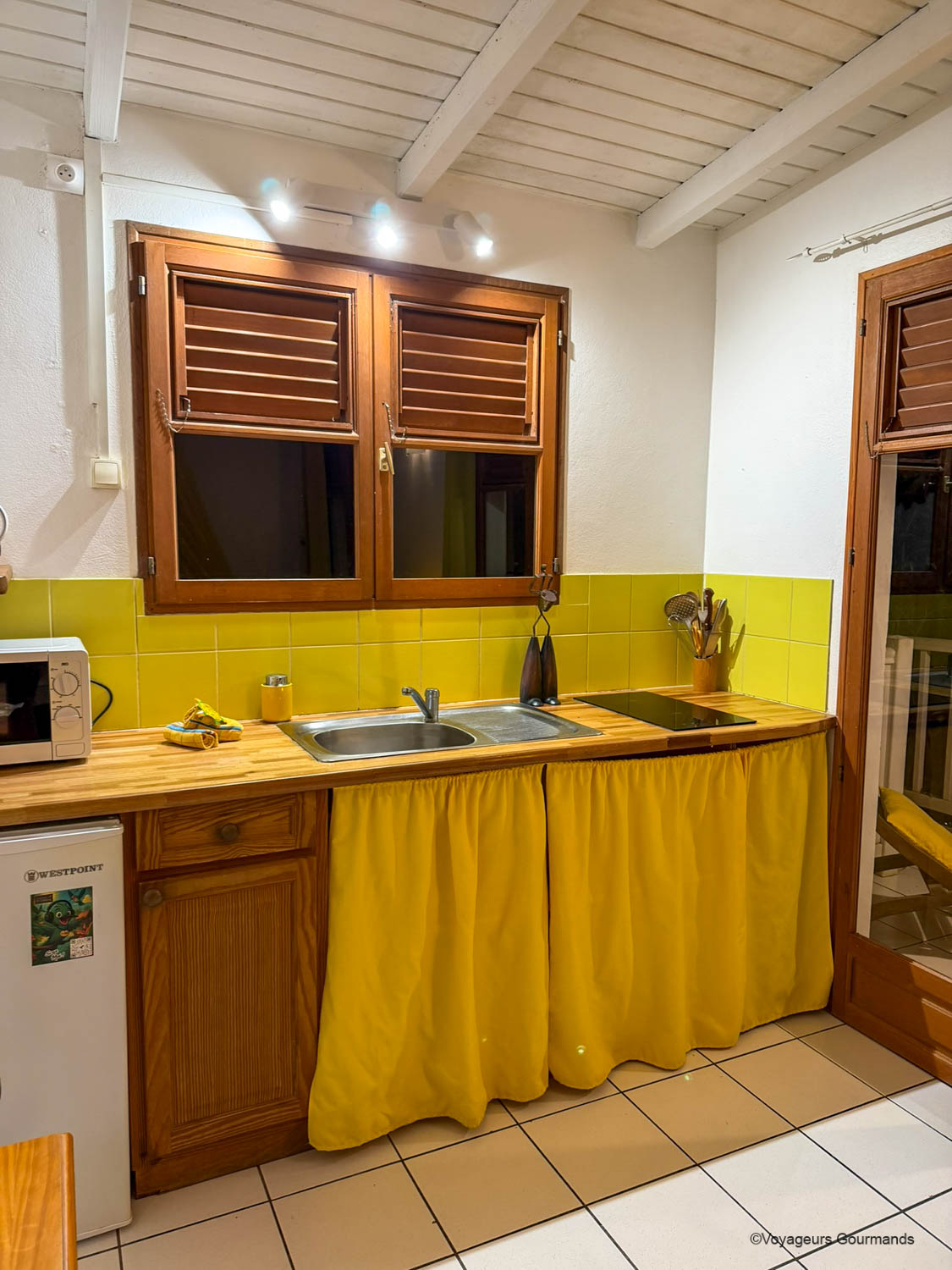
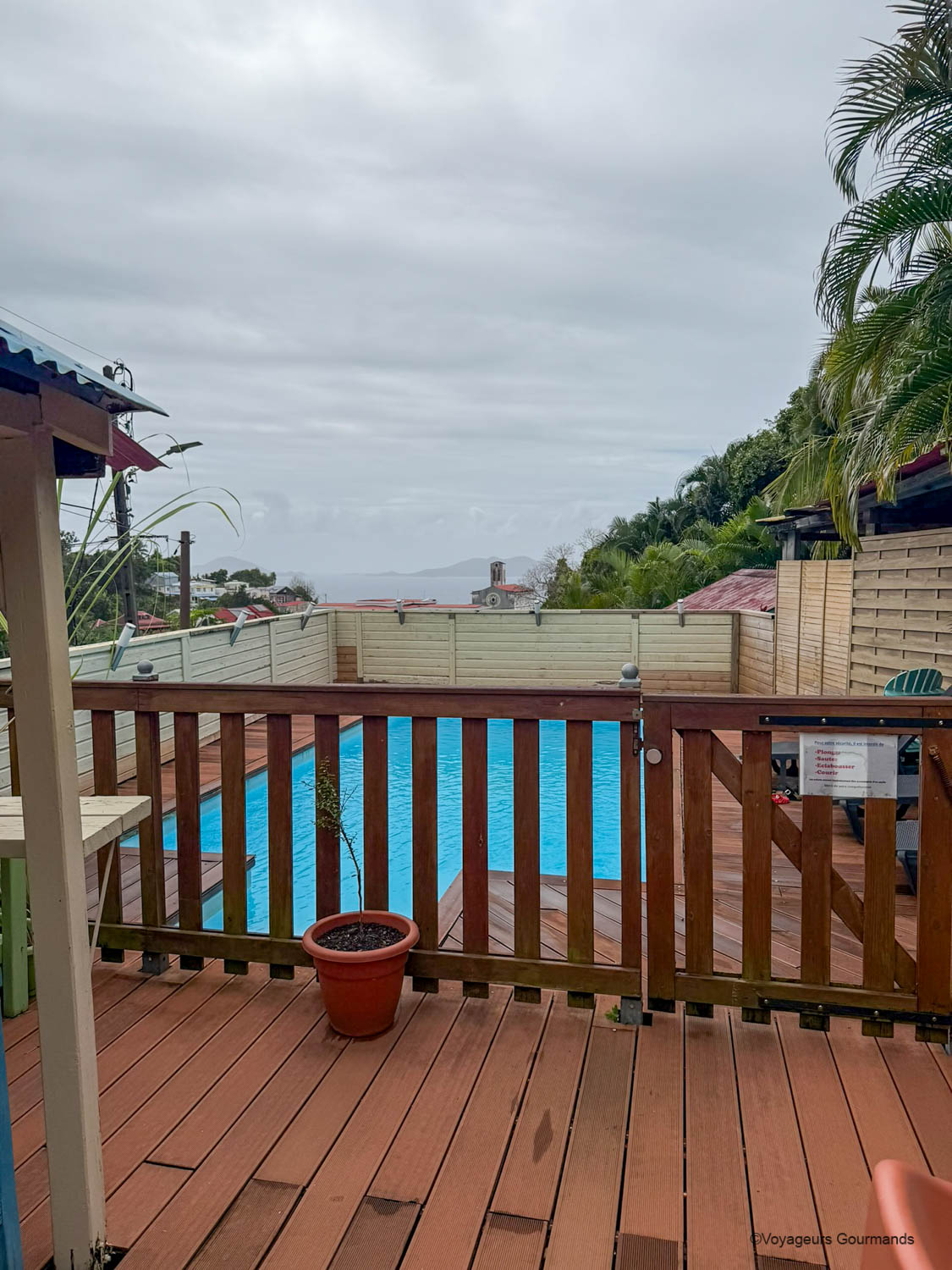
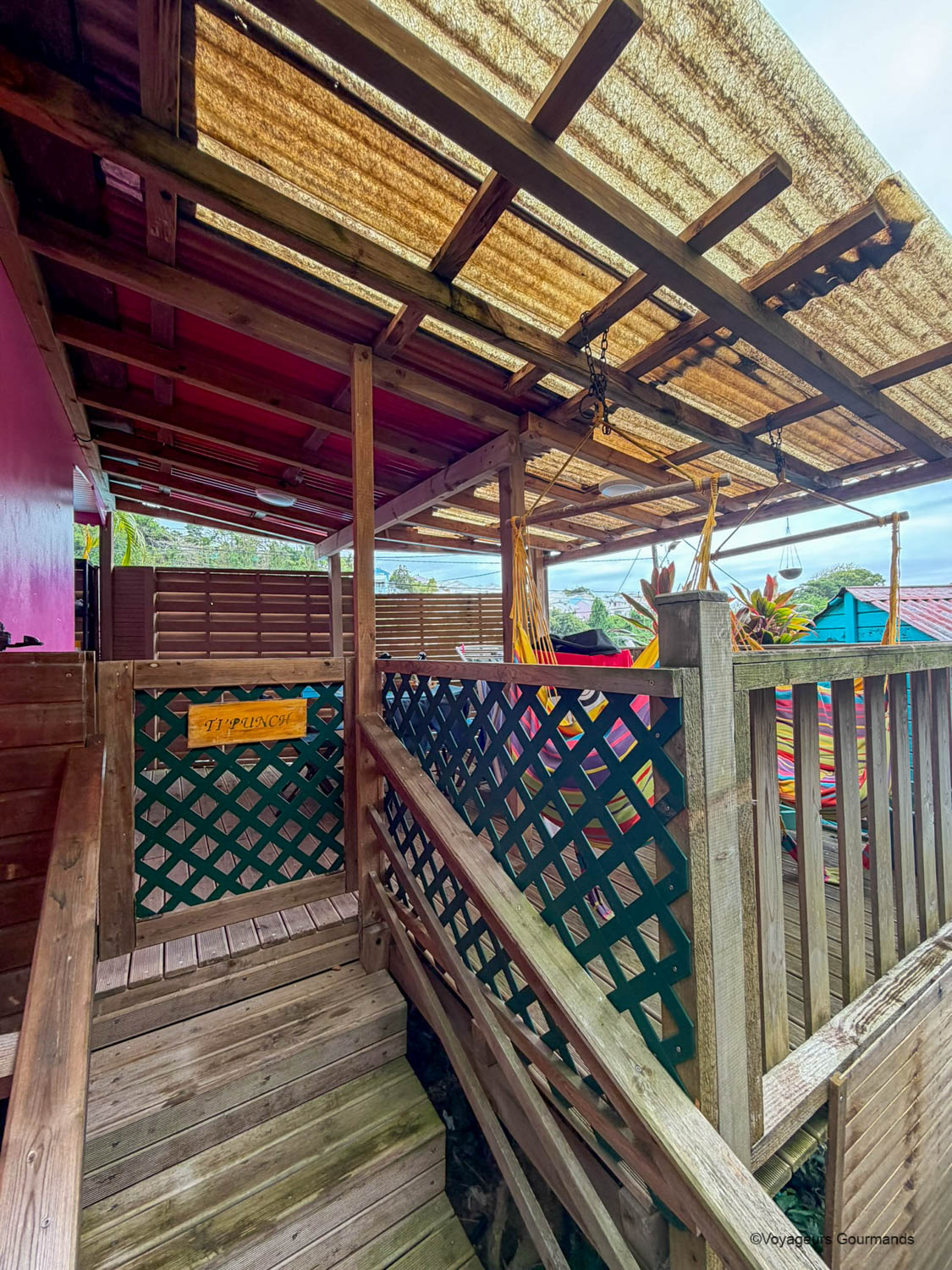
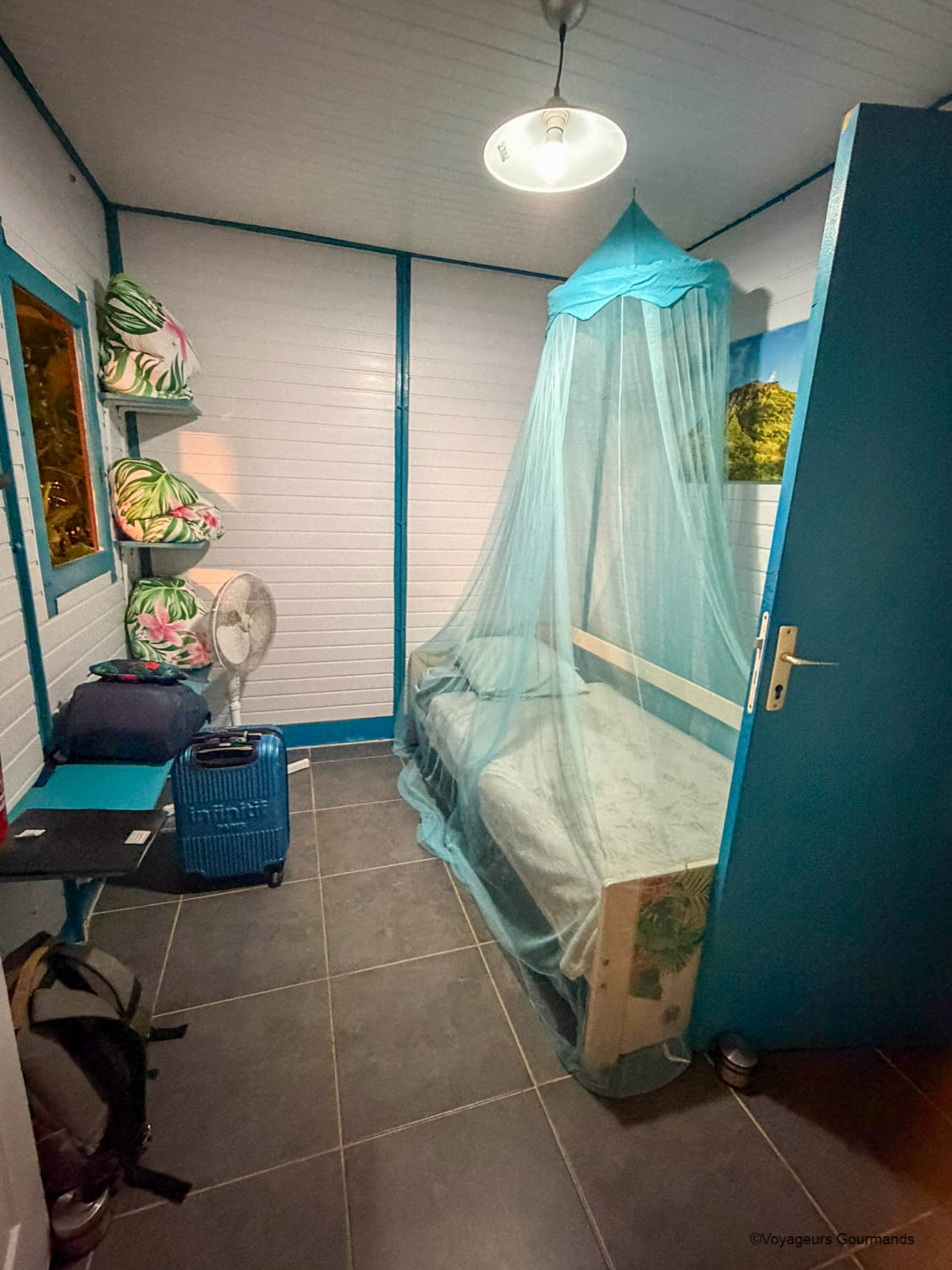
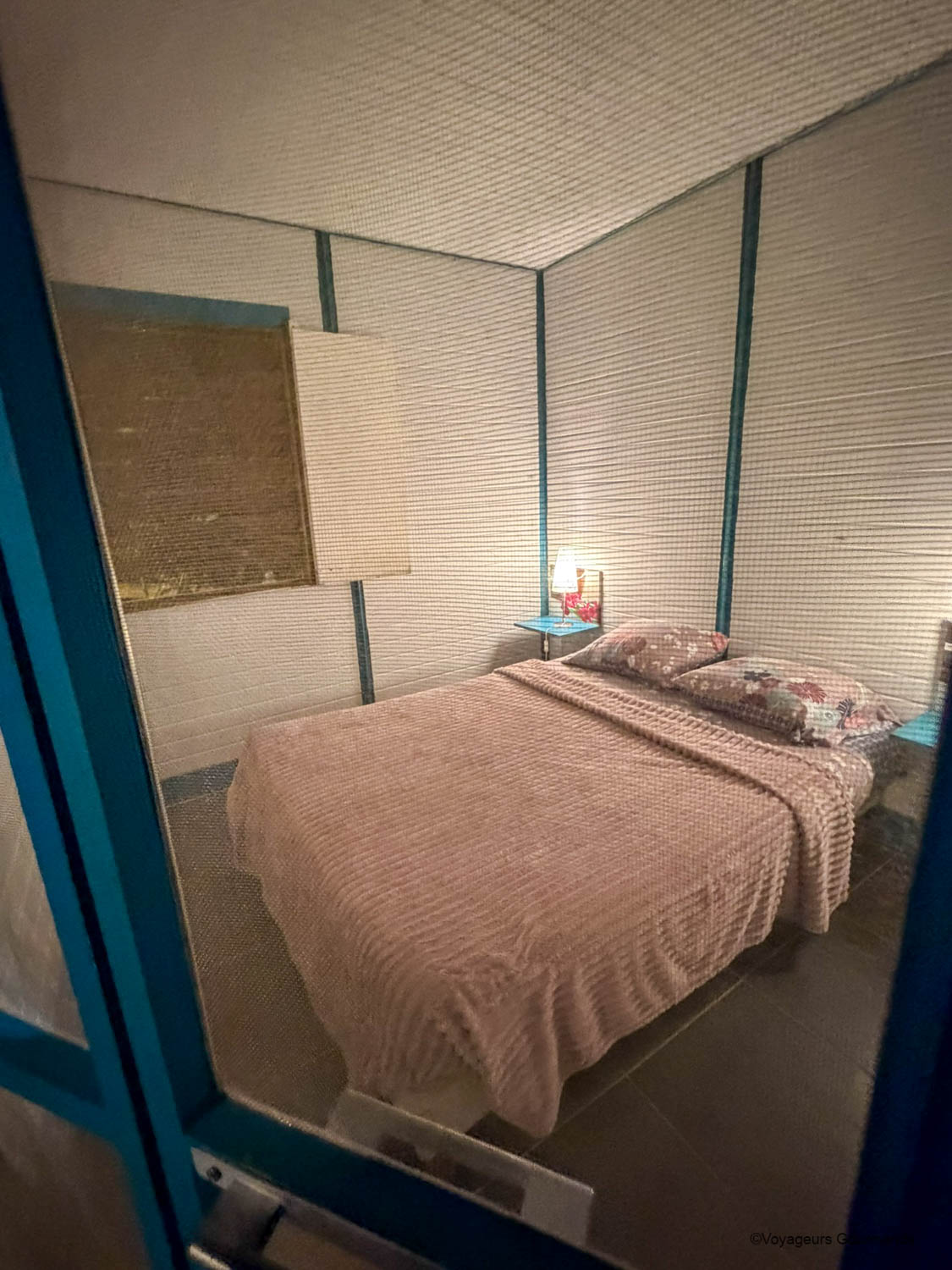
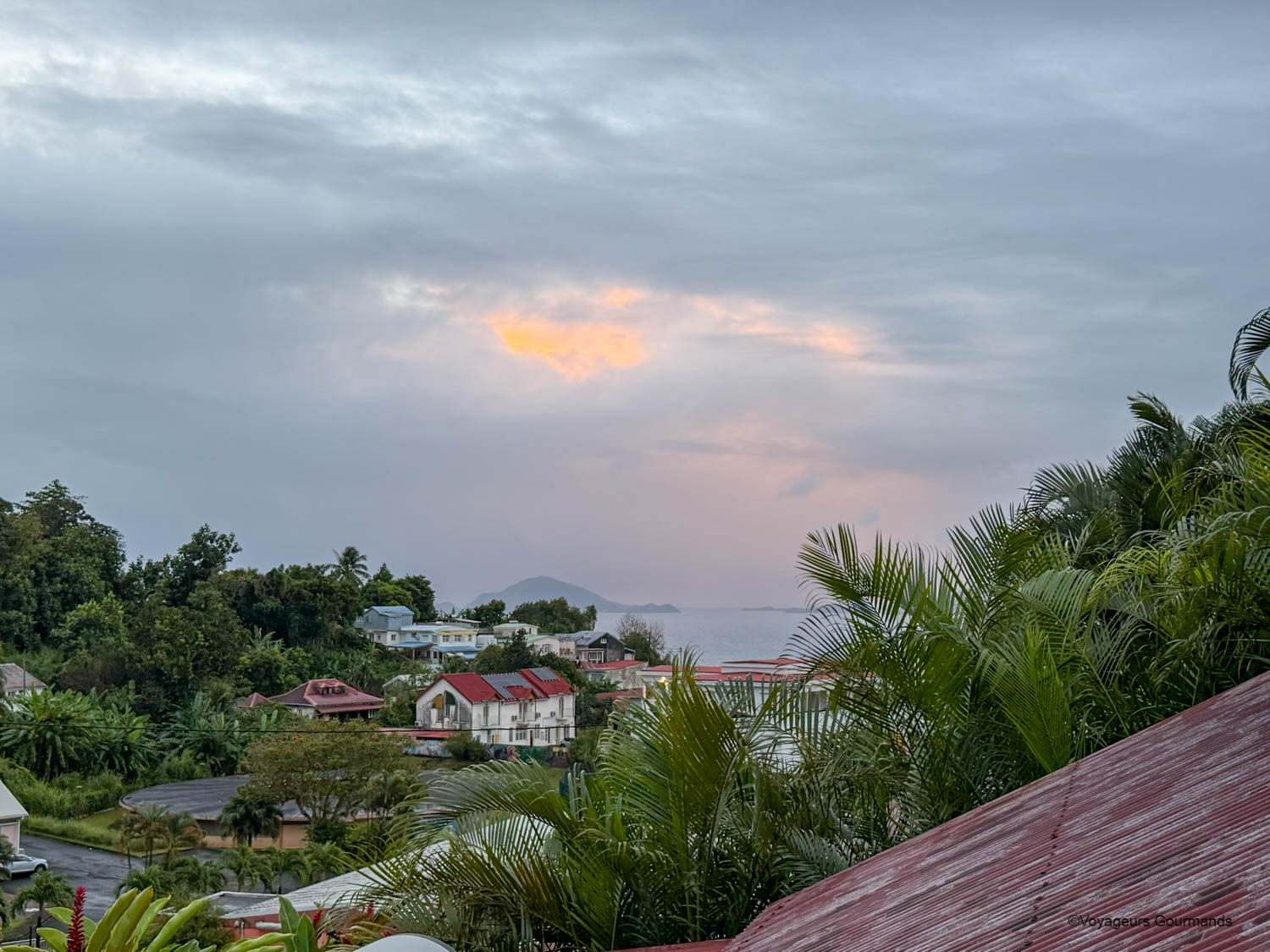
In Trois-Rivières, we had first set our sights on Jardin Malanga, but it was fully booked for our dates. We ended up staying in a small bungalow we fell in love with, perfectly located for trips to Les Saintes: the ferry terminal is just a few minutes away. It’s also a good starting point for the climb up La Soufrière, which isn’t far, and for the Carbet Falls.
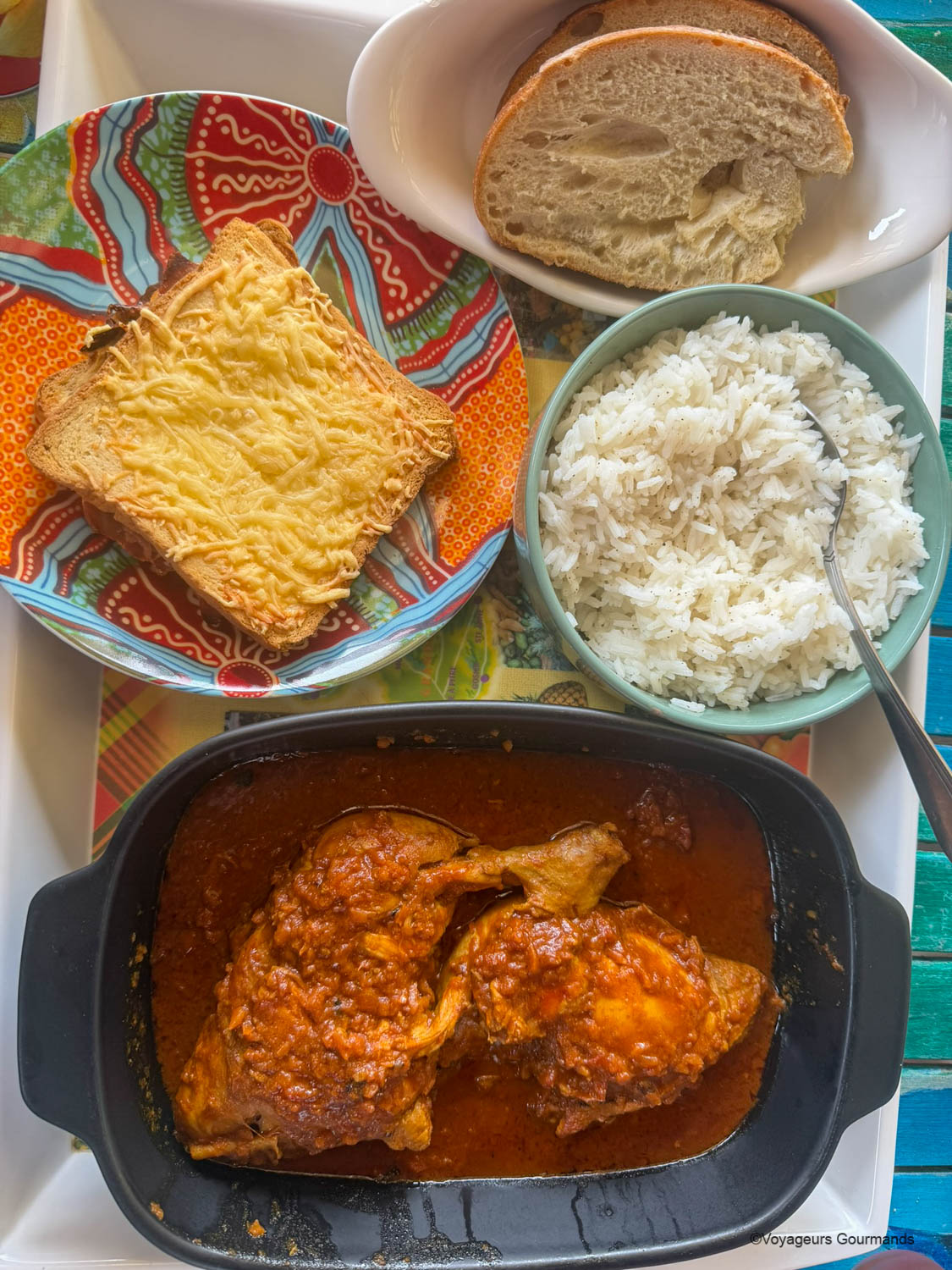
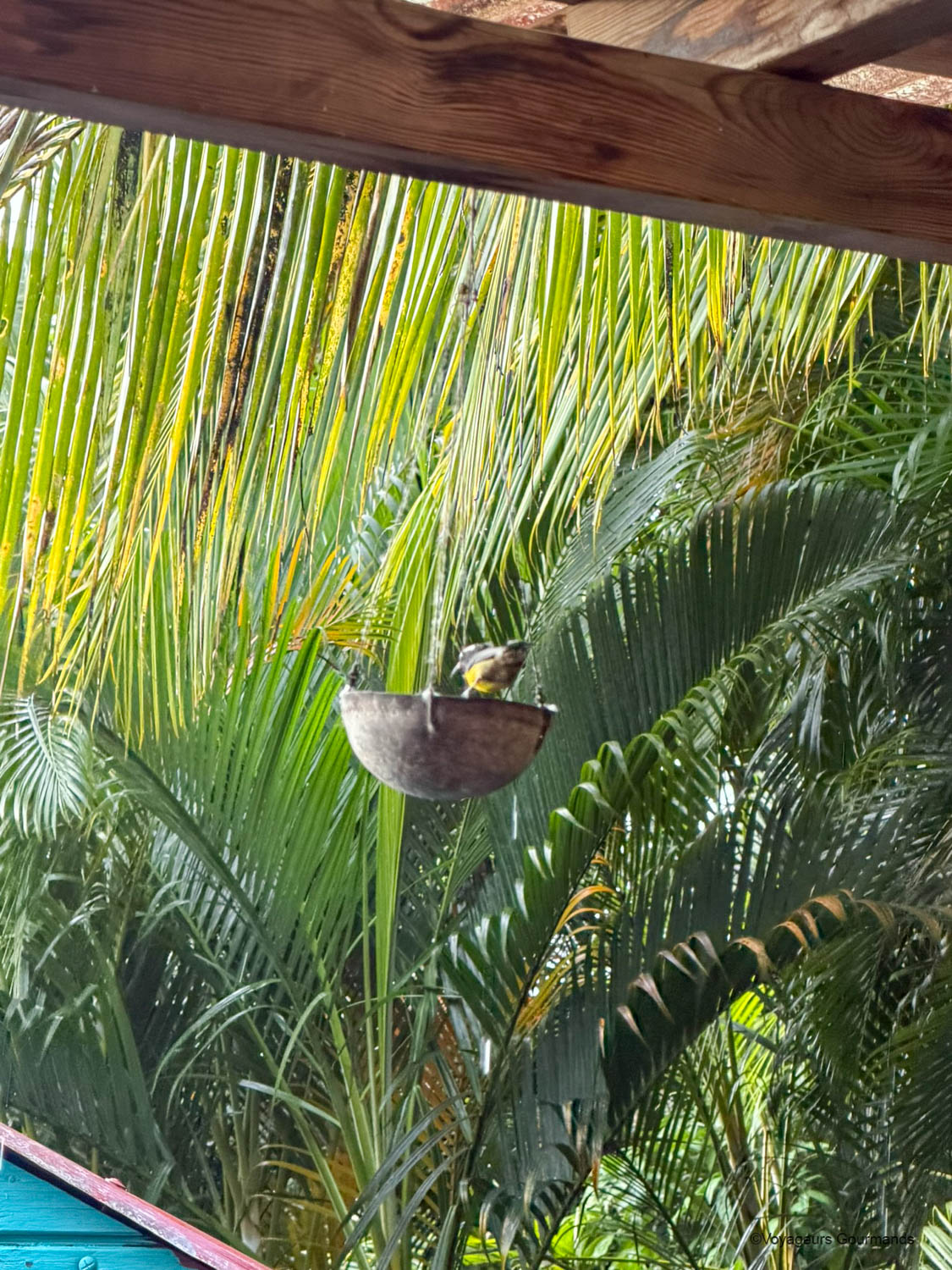
But what struck us most was the welcome: our hosts couldn’t do enough for us. You can also have your meals on site, which is very handy after a long day, and the breakfast basket is generous. All in a very peaceful setting, where we loved watching the bananaquits: these little birds kept coming to drink from a small coconut shell hanging on the terrace, and even more when we added a little brown sugar!
What we liked:
- the warm welcome from our hosts
- the option of having meals on site
- the generous breakfast basket
- the peace and quiet
- the perfect location for Les Saintes, and not far from La Soufrière for the climb
Good to know:
- not much going on nearby
- a car is essential to get around
An excellent compromise between nature, tranquillity and travel logistics.
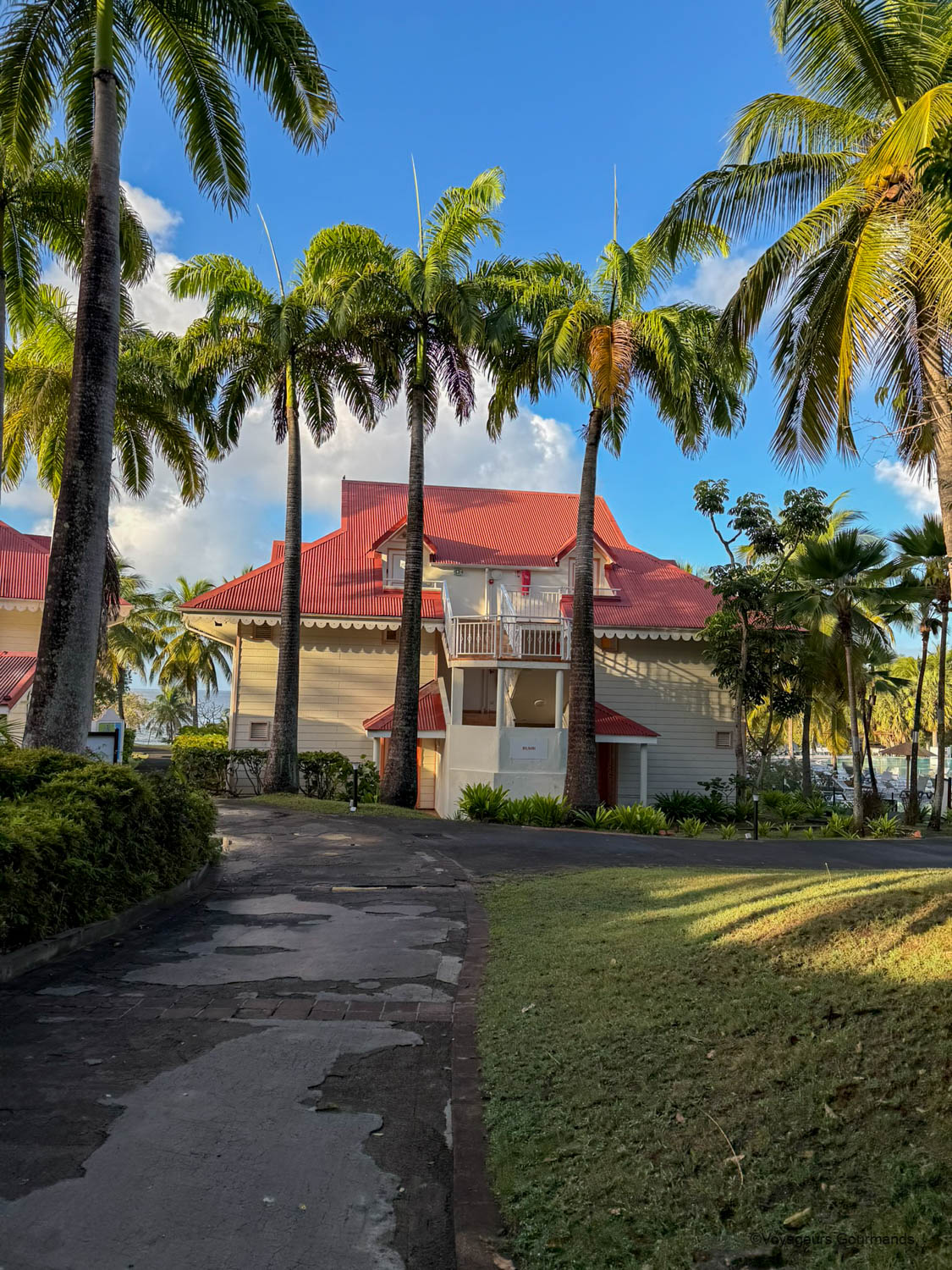
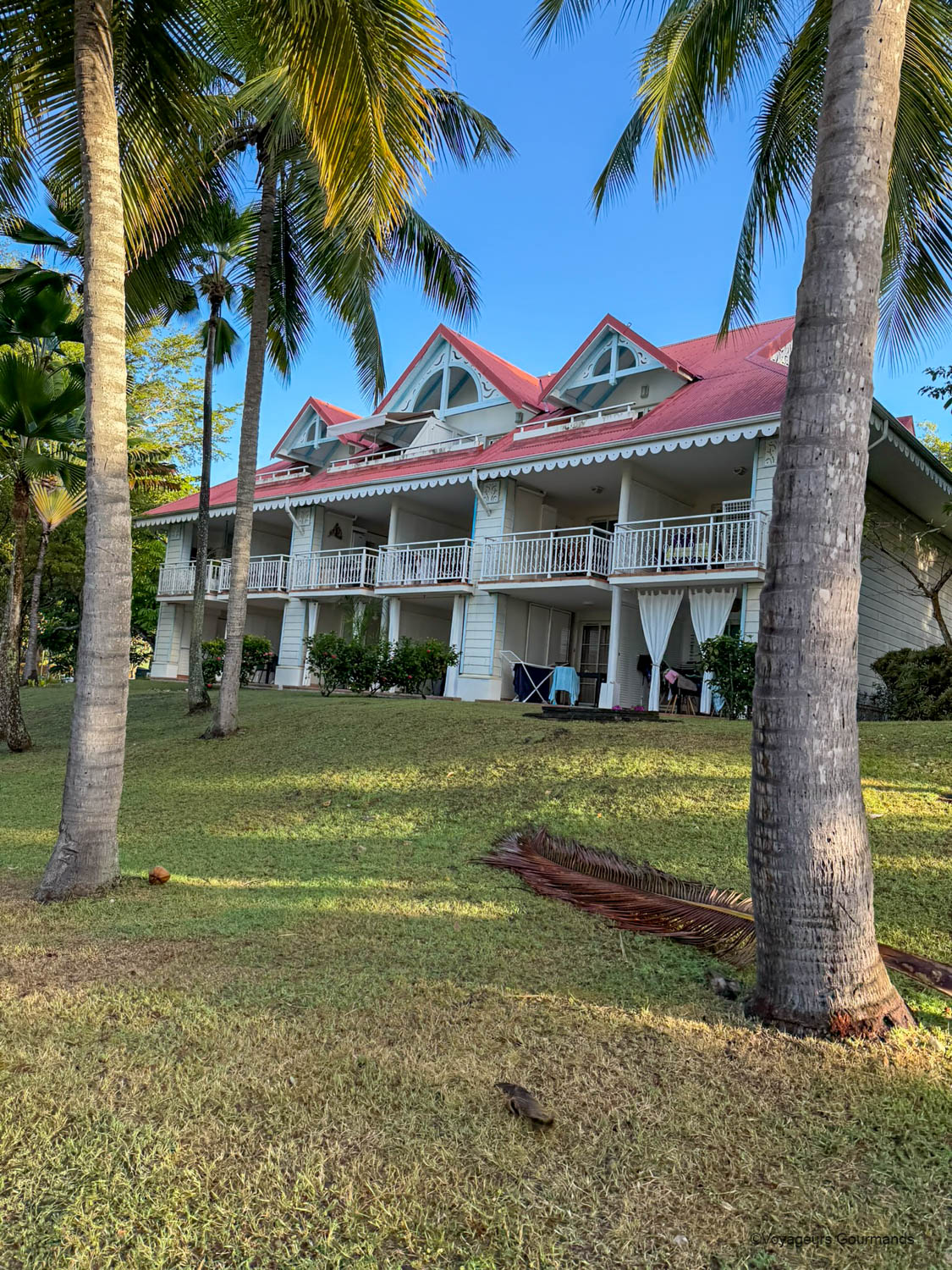
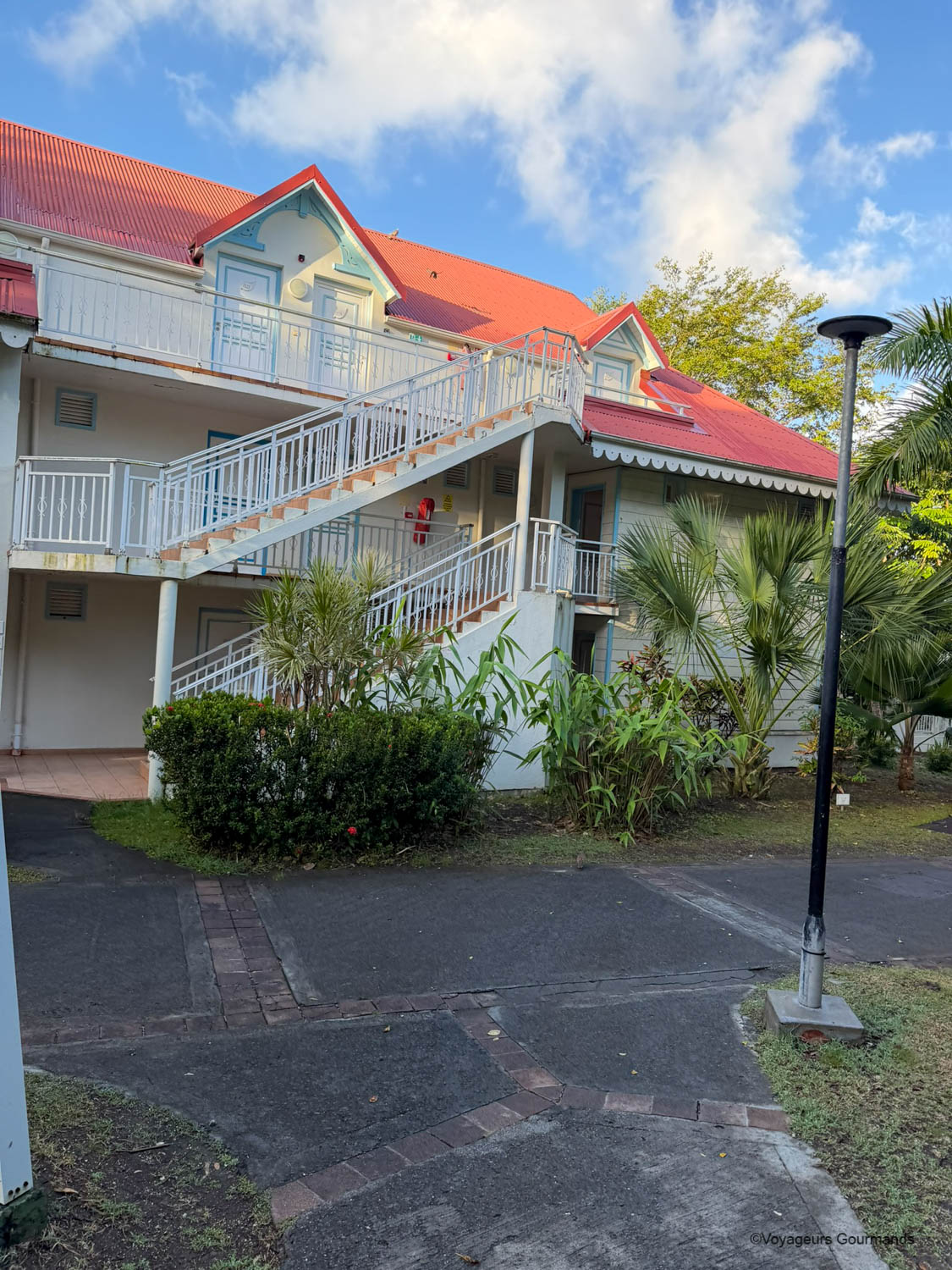
Pierre & Vacances Sainte-Anne: practical for families, mixed feelings
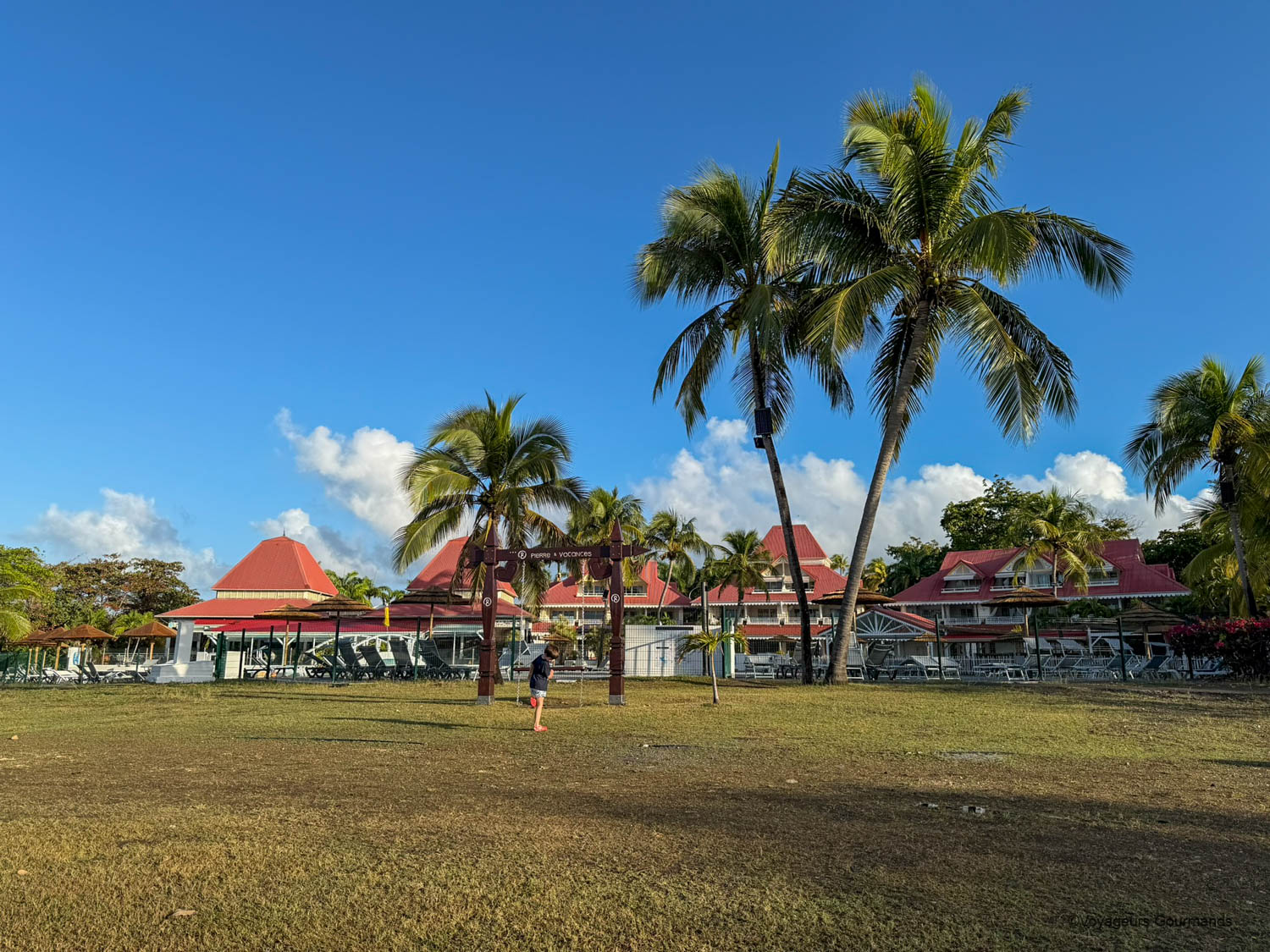
To end the trip, a complete change of scene: after the rainforest, we really wanted a beach stay. We had long had our eye on Le Toubana, in Sainte-Anne, but it was over our budget. So we settled into this seafront holiday residence, which we also chose because we had an employee discount.
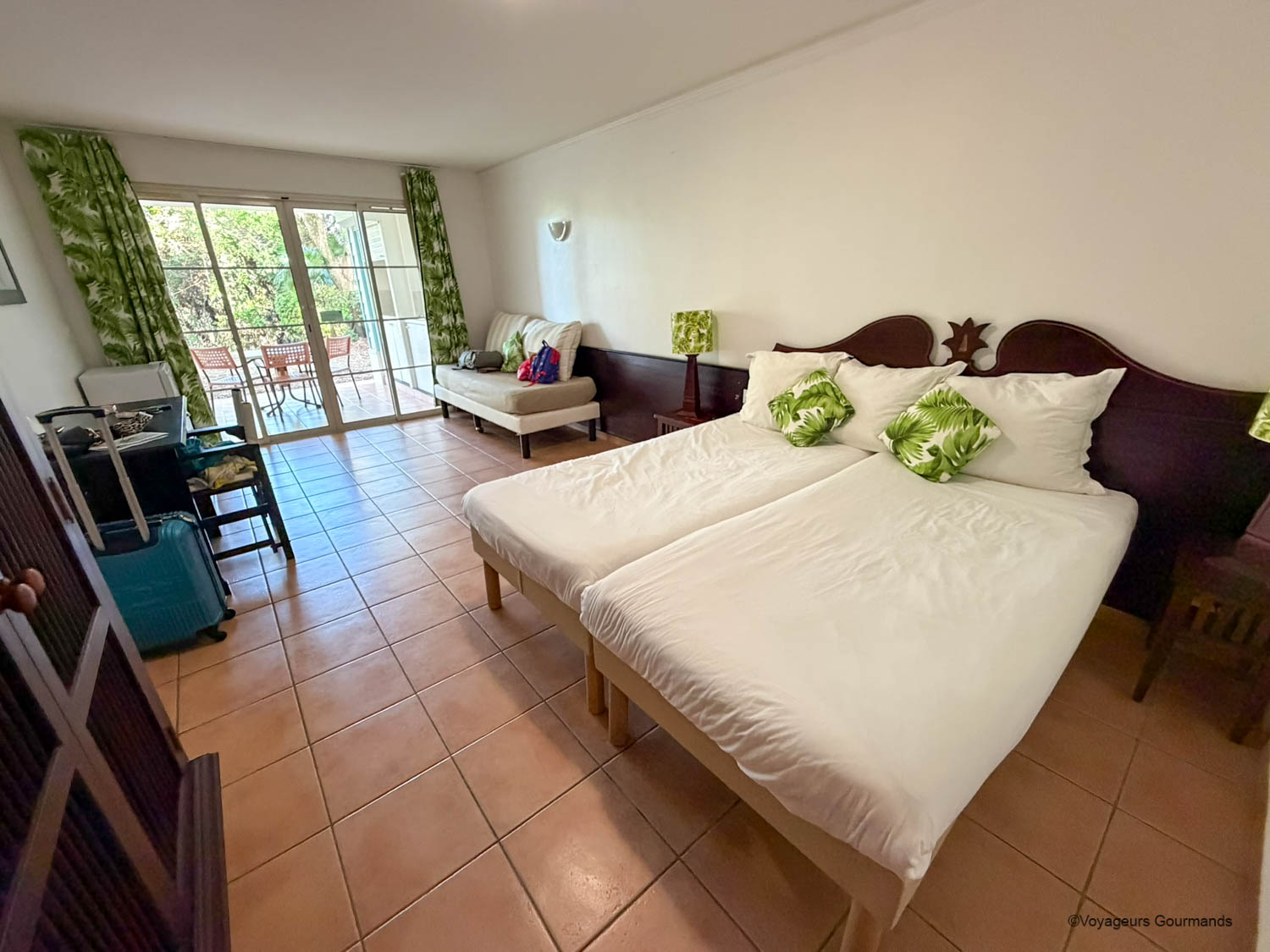
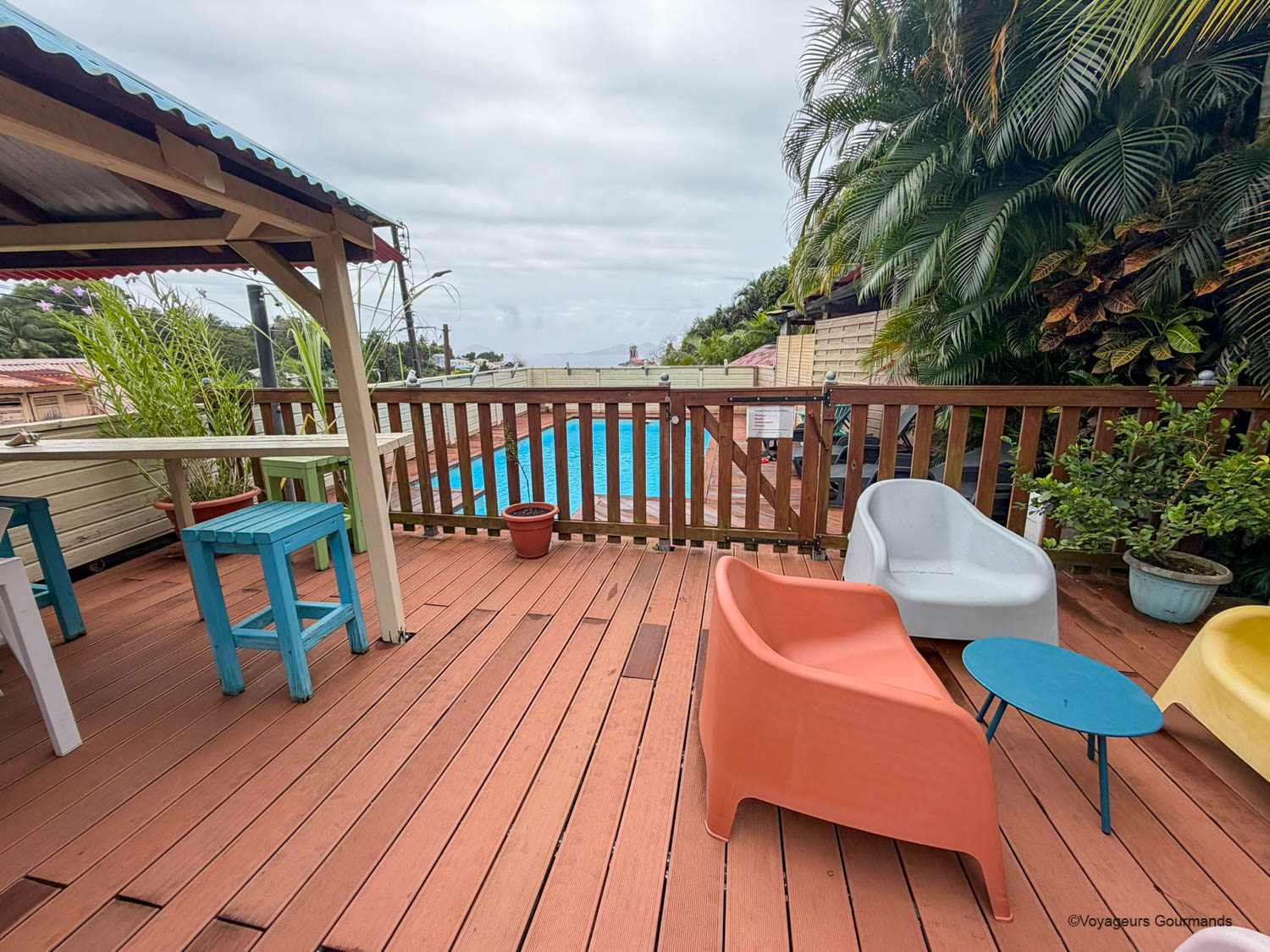
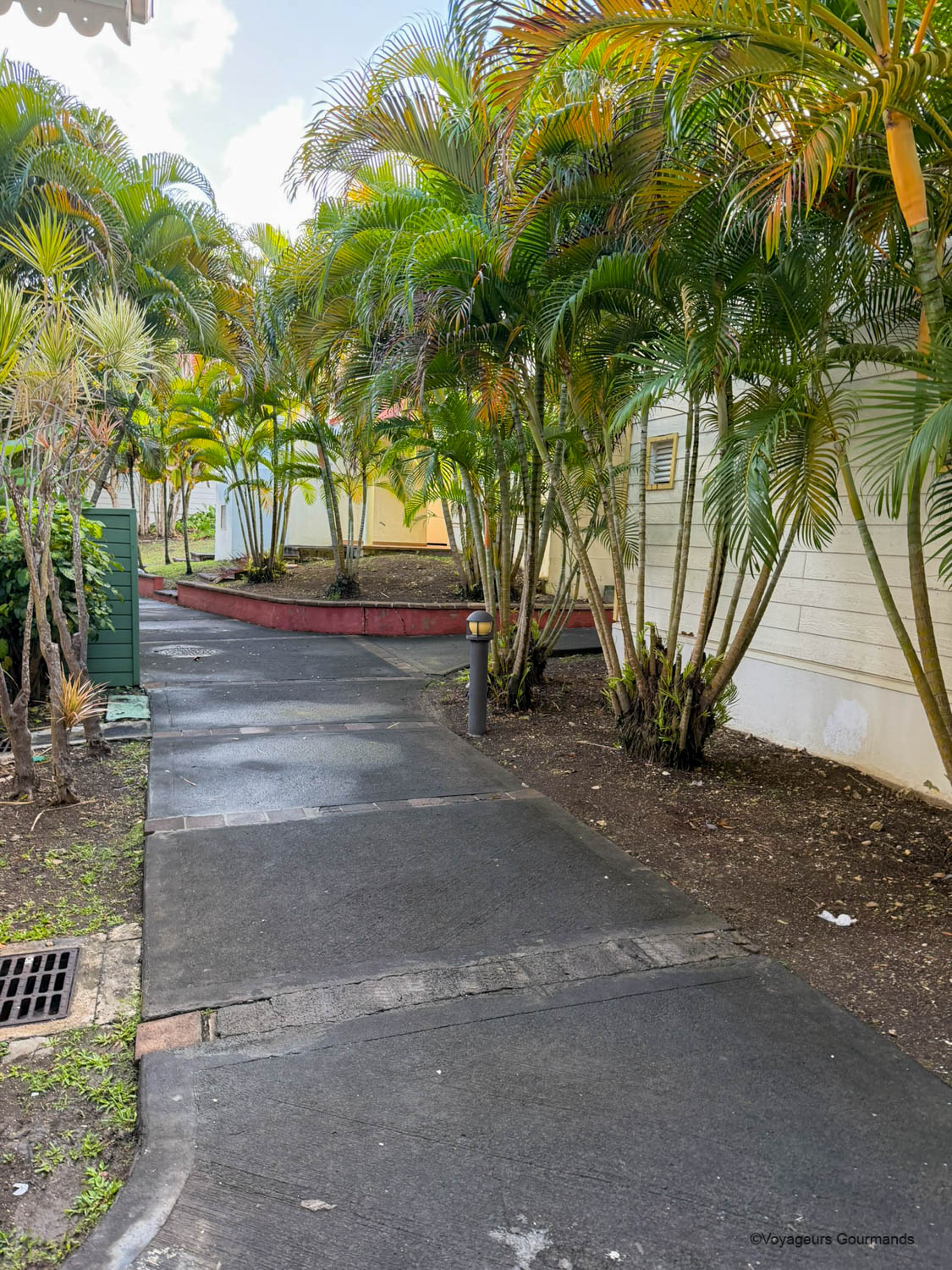
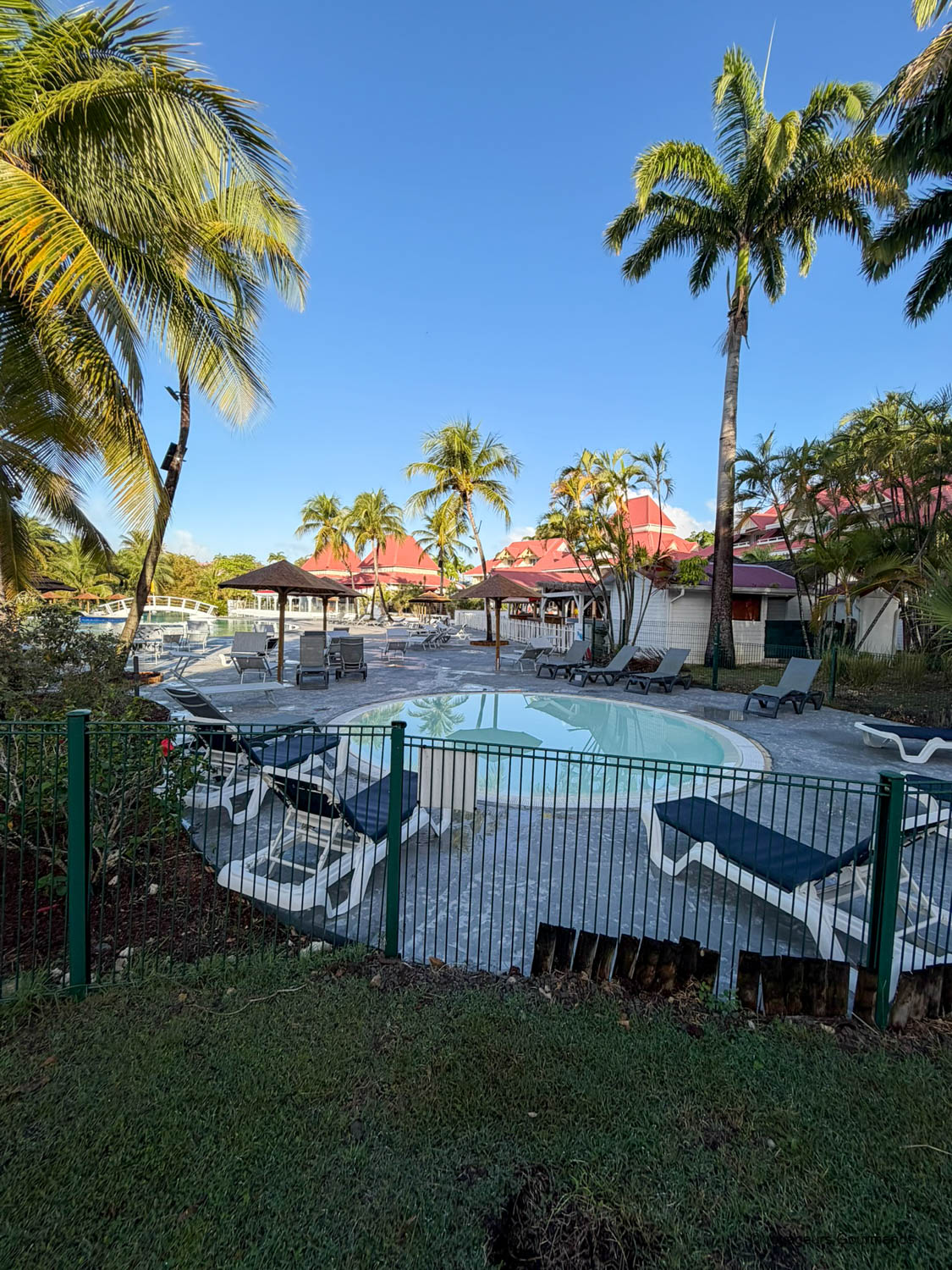
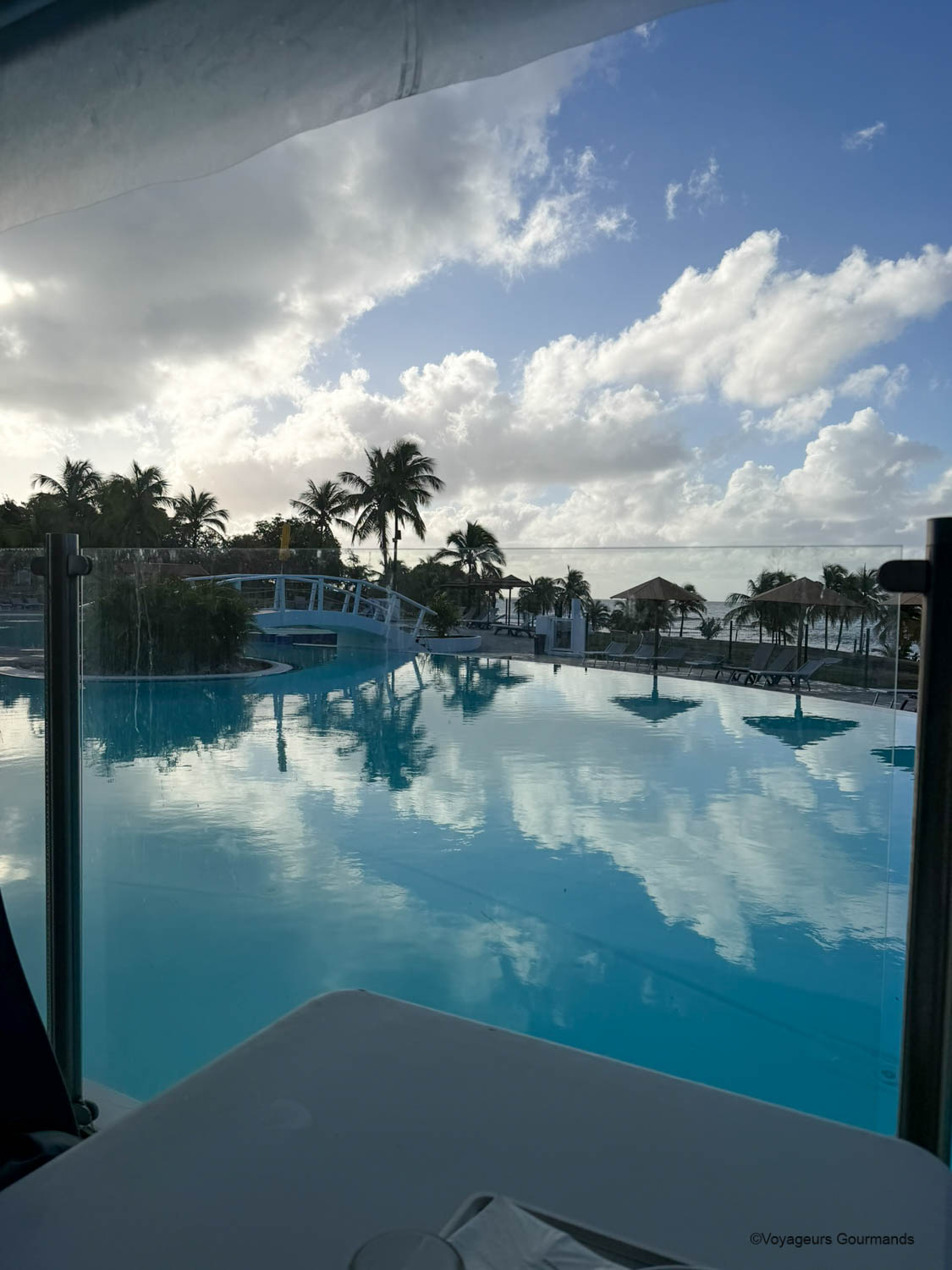
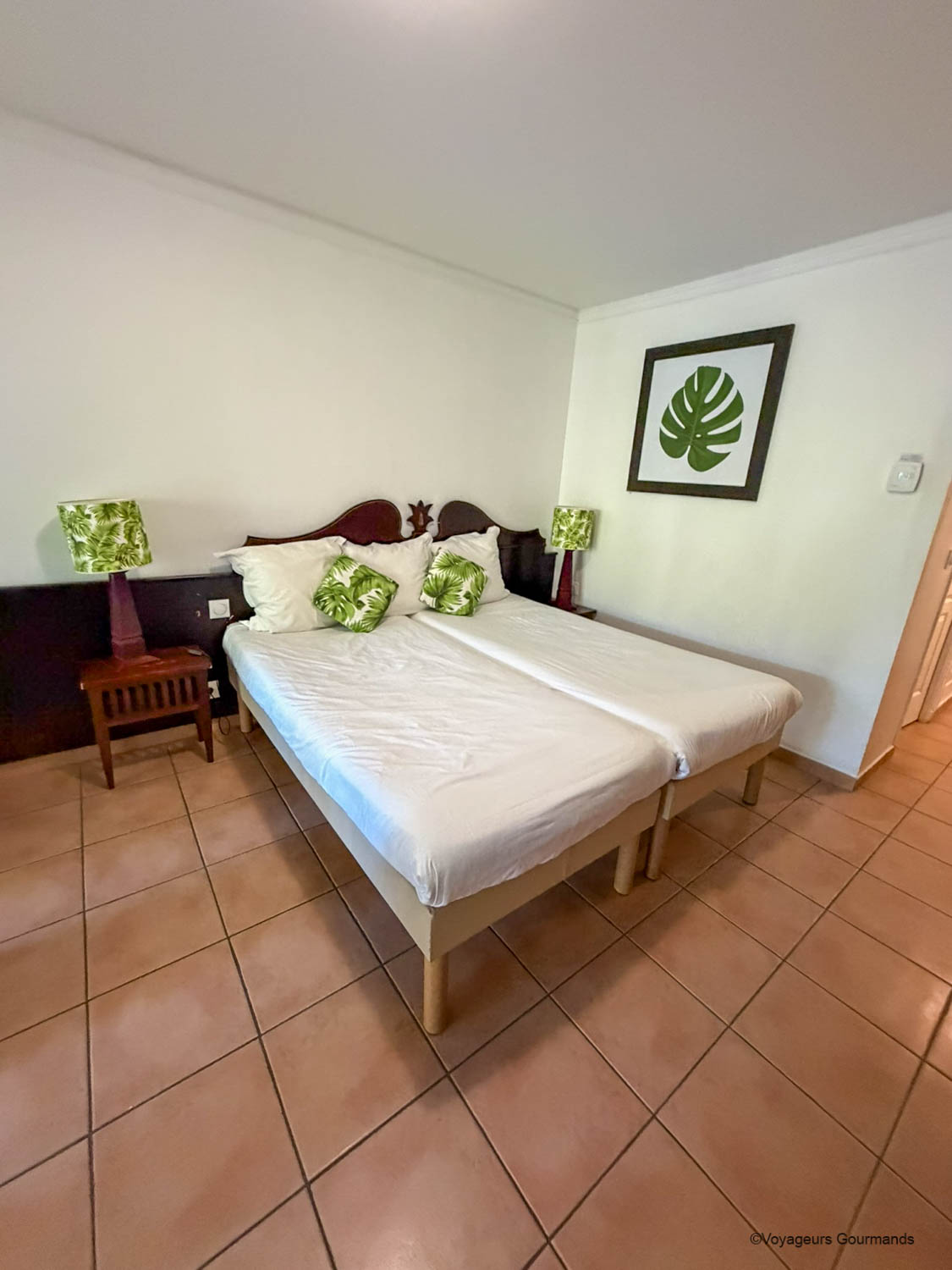
On paper, it’s very convenient: the pools and the sea are a 5-minute walk away, and the residence offers lots of activities, such as table tennis and table football for teens, or evening entertainment. As for us, we mostly enjoyed the pool: we didn’t try the beach, and the club activities aren’t really our thing. All in all, our experience was mixed: our room wasn’t very modern, everything on site is expensive, and the “holiday resort” atmosphere didn’t win us over.
What we liked:
- the pools and the sea a 5-minute walk away
- how practical it is with children
- lots of on-site activities for teens (table tennis, table football, evening entertainment)
What we liked less:
- a dated room
- high prices on site: €50 for breakfast for the three of us (€20 per adult, €10 per child)
- a very touristy atmosphere, with little local character
If we did it again, we’d stay in Sainte-Anne, but we’d rather choose somewhere in the town centre. Pierre & Vacances is still a decent option for a relaxing family beach holiday, especially at a good rate.
What is the best area to stay in Guadeloupe?
It mostly depends on your itinerary. For a first trip, Sainte-Anne or Saint-François are easy, comfortable choices, with the finest beaches of Grande-Terre right on your doorstep.
For a richer trip, it’s best to combine Grande-Terre and Basse-Terre. That’s what we recommend: you get the beaches, but also the rainforest, the waterfalls and the wilder roads.
Over 10 days, our ideal combination: Deshaies for northern Basse-Terre, Trois-Rivières for La Soufrière and Les Saintes, then Sainte-Anne to finish on the beaches. All the day-by-day details are in our 10-day Guadeloupe itinerary.
Finally, if you’re looking for a slower pace, Basse-Terre alone or a few nights in Les Saintes or on Marie-Galante are ideal.
Mistakes to avoid when choosing where to stay in Guadeloupe
Many travellers make the same mistakes:
- Staying only in an “easy” area like Le Gosier, without exploring the rest of the island: the experience remains very limited.
- Underestimating distances: even though Guadeloupe looks small, the roads are slow and winding, especially on Basse-Terre, and traffic jams are common around Pointe-à-Pitre.
- Changing hotels every day to see everything: 2 or 3 places to stay at most is better.
- Booking too late: in high season, from December to April, and during school holidays, the best-located places go fast.
- Hiring a car that’s too big: access to some accommodation on Basse-Terre is narrow and steep, so a small car is much more practical.
✤✤✤
Conclusion: the real key to choosing where to stay in Guadeloupe
In Guadeloupe, it’s the area rather than the hotel that shapes your trip. Grande-Terre gives you ease and the most beautiful beaches, Basse-Terre the rainforest, the waterfalls and wilder landscapes.
If we were booking again, we’d keep the same approach: a nature stay, a beach stay, and a practical stop in between if your itinerary calls for it. It’s by combining these different vibes that Guadeloupe becomes truly unforgettable.
FAQ: where to stay in Guadeloupe
Frequently asked questions are here!
What is the best area to stay in Guadeloupe?
It depends on your trip: Sainte-Anne or Saint-François for the beaches, Deshaies, Bouillante or Trois-Rivières for nature, or a combination of both for the full experience.
Do you need a car in Guadeloupe?
Yes. Public transport is very limited and most accommodation is off the beaten track. A small hire car is the most practical option, unless you’re staying on a small island like Terre-de-Haut.
Where to stay in Guadeloupe for a first trip?
Sainte-Anne or Saint-François are the easiest options: beautiful beaches, restaurants, shops and activities nearby.
Can you stay only on Basse-Terre?
Yes, it’s even ideal for a nature-focused trip. However, you’ll be around 1 hr 30 by car from the white sand beaches of Grande-Terre.
How many places to stay should you book for 10 days in Guadeloupe?
Two or three are enough. We went from Deshaies to Trois-Rivières and then Sainte-Anne, and we’d do it again without hesitation.
Where to stay to visit Les Saintes?
Trois-Rivières is the most convenient option, with a crossing of around twenty minutes. You can also stay on Terre-de-Haut itself to enjoy the island in peace once the day-trippers have left.
Where to stay near Pointe-à-Pitre airport?
Le Gosier and Pointe-à-Pitre are the closest, about twenty minutes away. Handy for a first or last night.
Where to stay in Guadeloupe with kids?
Sainte-Anne and Saint-François are the easiest with children: calm lagoons, shallow beaches and services nearby. The ecolodges of Basse-Terre, such as Jardin des Colibris, are also a big hit with kids who love nature.